
Top 10 EdTech Careers in India : Skills, Salary & How to Get Started
Table of Contents
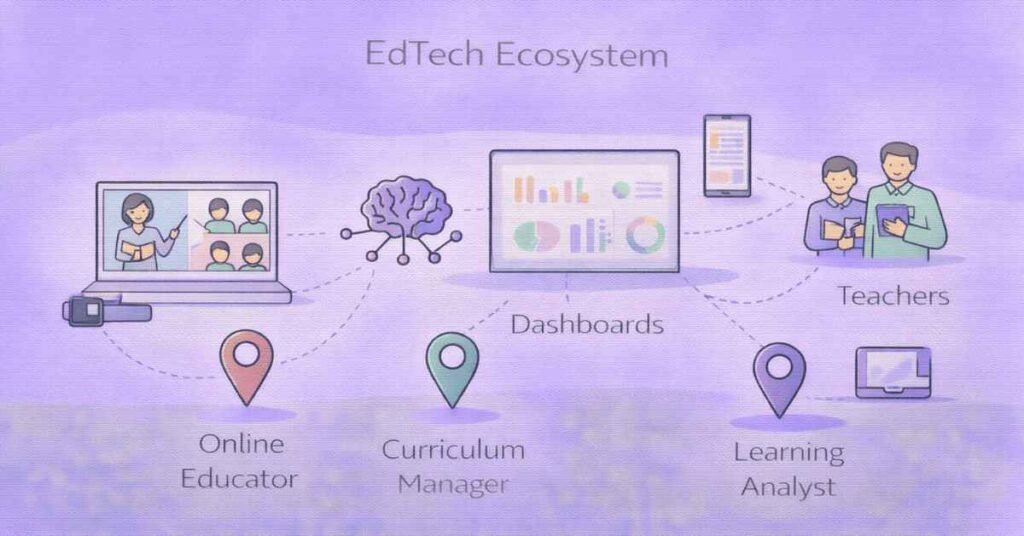
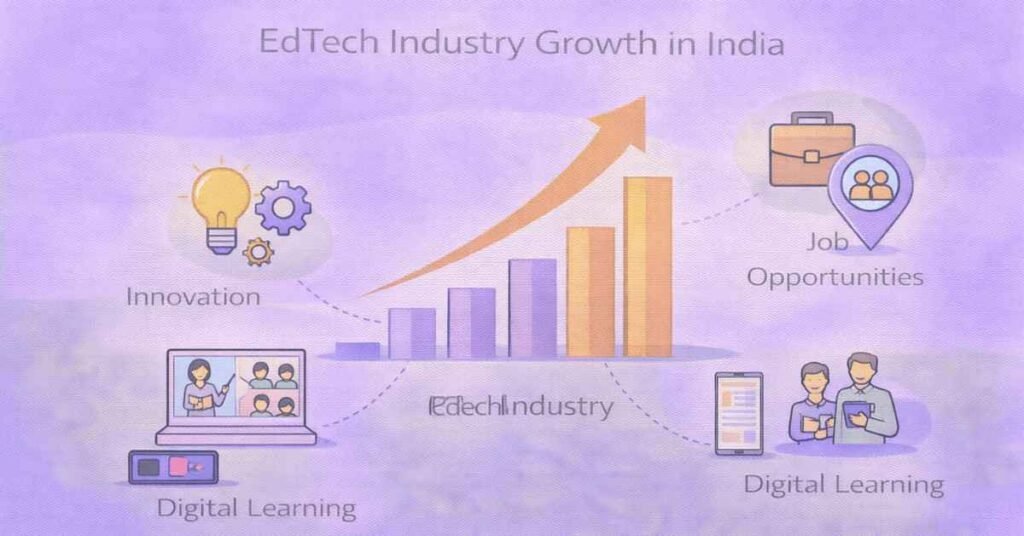
Just a decade ago, a career in education meant one thing: standing in front of a classroom. Today, the landscape has been completely transformed by technology. The Indian EdTech industry, valued at over $10.4 billion in 2025 and growing at nearly 40% annually, has created a universe of exciting new career opportunities that blend teaching with technology, creativity, and data.
If you are a teacher looking for a change, a recent graduate with a passion for education, or a tech professional wanting to make a real-world impact, the EdTech sector is calling. But what do these jobs actually involve? What skills do you need, and what kind of salary can you expect?
This guide breaks down the top 10 most in-demand EdTech careers in India for 2025, giving you a clear roadmap to enter this dynamic field.
1. Instructional Designer
What they do: Instructional Designers are the architects of the learning experience. They take raw subject matter and transform it into a structured, engaging, and effective learning journey. They don’t just decide what to teach, but how to teach it in a digital format. They apply theories of cognitive psychology and adult learning to create courses that lead to real understanding, not just memorization.
Day-to-day tasks:
- Analyzing learning needs and defining course objectives.
- Structuring course content into logical modules and lessons.
- Designing interactive elements like quizzes, simulations, and case studies.
- Collaborating with Subject Matter Experts (SMEs), graphic designers, and video producers.
Skills needed:
- Strong understanding of learning theories (like Bloom’s Taxonomy, ADDIE model).
- Excellent writing and storyboarding skills.
- Familiarity with authoring tools like Articulate Storyline or Adobe Captivate.
- Problem-solving and analytical thinking.
Salary Potential:
- Entry-Level (0-2 years): ₹4 – ₹7 lakhs per annum
- Mid-Level (3-7 years): ₹8 – ₹15 lakhs per annum
Senior-Level (8+ years): ₹15 – ₹25+ lakhs per annum
2. Content Developer / Subject Matter Expert (SME)
What they do: If Instructional Designers are the architects, Content Developers are the master builders. They are the subject experts who create the actual learning material—the text, the video scripts, the practice questions, and the explanations. An SME in Physics for an EdTech company would be responsible for creating all the content related to Physics for a particular grade level.
Day-to-day tasks:
- Researching and writing accurate, simple, and engaging explanations of complex topics.
- Creating scripts for video lessons.
- Developing a large bank of practice questions, from easy to difficult.
- Reviewing content for factual accuracy and pedagogical effectiveness.
Skills needed:
- Deep expertise in a specific subject (Math, Science, History, etc.).
- The ability to simplify complex ideas without losing accuracy.
- Excellent written communication skills.
- Creativity in presenting information.
Salary Potential:
- Entry-Level: ₹3 – ₹5 lakhs per annum
- Mid-Level (with experience): ₹6 – ₹9 lakhs per annum
Senior SMEs (in high-demand subjects): ₹10 – ₹14+ lakhs per annum
3. Online Educator / Tutor
What they do: This is the most direct teaching role in EdTech. Online educators conduct live classes for students across the country (or the world) using digital platforms. Unlike a traditional classroom, they use interactive whiteboards, polls, and chat functions to engage students remotely.
Day-to-day tasks:
- Conducting live online classes according to a schedule.
- Creating engaging presentations and lesson plans for a virtual environment.
- Answering student doubts during and after class.
- Monitoring student progress and providing personalized feedback.
Skills needed:
- Strong screen presence and engaging communication style.
- Proficiency with video conferencing tools (Zoom, Google Meet) and interactive whiteboards.
- Patience and empathy to handle a diverse group of online learners.
- Subject matter expertise.
Salary Potential:
- Part-time: ₹20,000 – ₹50,000 per month
- Full-time (at major EdTech firms): ₹5 – ₹12 lakhs per annum
Top Educators (with a strong personal brand): ₹20 lakhs – ₹1 Crore+ per annum
4. Curriculum Manager
What they do: A Curriculum Manager oversees the entire content strategy for a particular subject or grade level. They lead a team of Instructional Designers and SMEs to ensure that the overall curriculum is cohesive, meets learning objectives, and aligns with the company’s educational philosophy. They are the strategic thinkers who decide the long-term direction of the content.
Day-to-day tasks:
- Developing the curriculum framework and syllabus for new courses.
- Managing project timelines and ensuring content is delivered on schedule.
- Recruiting, training, and mentoring a team of content creators.
- Analyzing user data and feedback to continuously improve the curriculum.
Skills needed:
- A strong background in education and curriculum development.
- Excellent project management and leadership skills.
- Data analysis skills to interpret learning analytics.
- Strategic thinking and business acumen.
Salary Potential:
- Mid-Level (Team Lead): ₹12 – ₹18 lakhs per annum
Senior-Level (Head of Curriculum): ₹20 – ₹40+ lakhs per annum
5. Learning & Development (L&D) Specialist (Corporate EdTech)
What they do: Not all EdTech is focused on K-12 or test prep. A huge segment is corporate training. L&D Specialists work with companies to upskill their employees using technology. They design and deliver training programs on everything from leadership skills to new software tools, often using a blend of online courses, virtual workshops, and simulations.
Day-to-day tasks:
- Conducting training needs analysis within an organization.
- Designing and developing online training modules and workshops.
- Managing the company’s Learning Management System (LMS).
- Measuring the impact and ROI of training initiatives.
Skills needed:
- Understanding of adult learning principles.
- Experience in corporate training or HR.
- Familiarity with corporate LMS platforms (like Cornerstone, Workday Learning).
- Strong presentation and facilitation skills.
Salary Potential:
- Entry-Level: ₹5 – ₹8 lakhs per annum
- Mid-Level Manager: ₹10 – ₹18 lakhs per annum
Senior L&D Leader: ₹20 – ₹35+ lakhs per annum
6. EdTech Product Manager
What they do: A Product Manager is the “CEO” of a specific learning product or feature. They are responsible for defining the vision for a product (e.g., a new doubt-solving app, an interactive learning game) and leading the cross-functional team (engineers, designers, marketers) to build and launch it. They bridge the gap between educational needs and technological solutions.
Day-to-day tasks:
- Conducting user research to understand student and teacher pain points.
- Defining product requirements and creating a product roadmap.
- Prioritizing features for the engineering team to build.
- Analyzing product usage data to make informed decisions.
Skills needed:
- A mix of business, technology, and user experience (UX) understanding.
- Strong analytical and data-driven decision-making skills.
- Excellent communication and leadership abilities.
- Deep empathy for the user.
Salary Potential:
- Associate Product Manager: ₹10 – ₹15 lakhs per annum
- Product Manager: ₹18 – ₹30 lakhs per annum
Senior Product Leader: ₹40 – ₹80+ lakhs per annum
7. Learning Analyst
What they do: As students learn online, they generate massive amounts of data—how long they watch a video, what questions they get wrong, where they pause. A Learning Analyst’s job is to analyze this data to uncover insights about how students learn. They help answer questions like, “Which teaching method is most effective for this concept?” or “At what point do students lose interest in a lesson?”
Day-to-day tasks:
- Using tools like SQL, Python, or R to query and analyze large datasets.
- Creating dashboards (using tools like Tableau or Power BI) to visualize learning trends.
- Presenting data-driven insights to the curriculum and product teams.
- Designing A/B tests to compare the effectiveness of different learning interventions.
Skills needed:
- Strong quantitative and statistical analysis skills.
- Proficiency in data analysis tools (SQL, Python/R, Excel).
- Data visualization skills.
- An interest in educational research.
Salary Potential:
- Entry-Level: ₹6 – ₹10 lakhs per annum
- Senior Analyst: ₹12 – ₹20+ lakhs per annum
8. Academic Counselor
What they do: An Academic Counselor in an EdTech company is a blend of a salesperson and a career guide. They are the first point of human contact for potential customers (students and parents). Their job is to understand a student’s learning needs and goals and guide them to the right educational product or course.
Day-to-day tasks:
- Speaking with prospective students and parents over the phone or video call.
- Assessing a student’s academic strengths and weaknesses.
- Explaining the features and benefits of the company’s courses.
- Guiding families through the enrollment and payment process.
Skills needed:
- Excellent communication and interpersonal skills.
- Empathy and active listening.
- Persuasive ability and sales acumen.
- A good understanding of the education system and career paths.
Salary Potential:
- Base Salary: ₹3 – ₹5 lakhs per annum
With Incentives/Commission: ₹6 – ₹15+ lakhs per annum (top performers can earn significantly more)
9. Community Manager (Education)
What they do: Learning is often a social activity. A Community Manager is responsible for building and nurturing a vibrant online community of learners. They run forums, host online events, facilitate discussions, and ensure that students feel connected and supported throughout their learning journey.
Day-to-day tasks:
- Moderating online forums and social media groups (like Discord, Telegram).
- Organizing webinars, expert Q&A sessions, and online competitions.
- Collecting user feedback and acting as the voice of the student community.
- Creating engaging content to keep the community active.
Skills needed:
- Strong social media and online communication skills.
- Empathy and the ability to build rapport with users.
- Event planning and moderation skills.
- Content creation abilities.
Salary Potential:
- Entry-Level: ₹4 – ₹6 lakhs per annum
- Senior Community Manager: ₹8 – ₹14+ lakhs per annum
10. UX Researcher (Education)
What they do: A UX Researcher focuses on understanding the user experience of a learning product. They conduct interviews, surveys, and usability tests to figure out if the product is easy to use, enjoyable, and effective. They are the advocates for the user, ensuring that the technology is designed with the learner’s needs at its core.
Day-to-day tasks:
- Planning and conducting user research studies.
- Interviewing students and teachers to understand their behaviors and motivations.
- Analyzing qualitative data to identify user pain points and needs.
- Presenting research findings to designers and product managers.
Skills needed:
- Knowledge of qualitative and quantitative research methods.
- Strong observational and analytical skills.
- Empathy and a deep curiosity about human behavior.
- Excellent communication skills.
Salary Potential:
- Entry-Level: ₹7 – ₹12 lakhs per annum
Senior UX Researcher: ₹15 – ₹25+ lakhs per annum
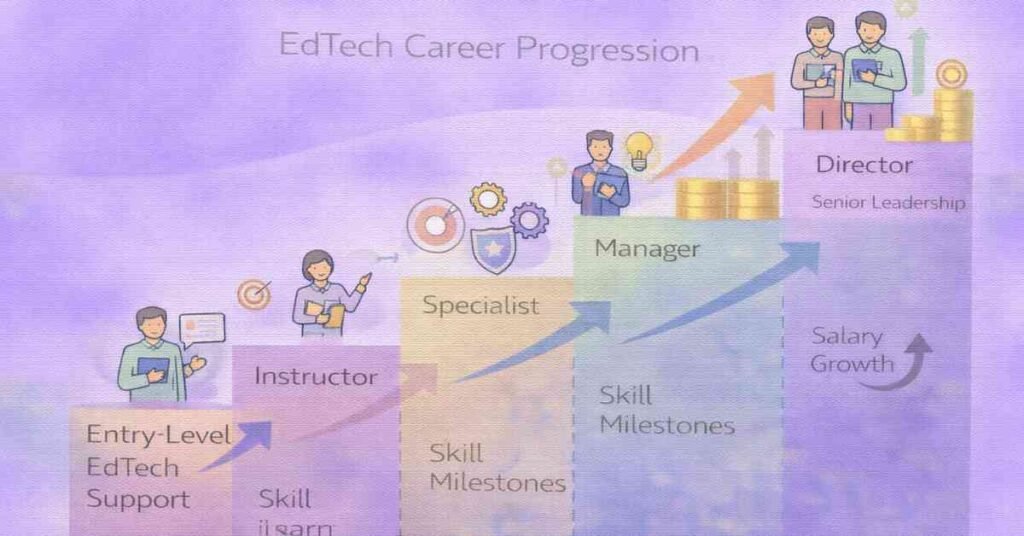
How to Get Started in EdTech
Entering the EdTech field doesn’t always require a specific degree. It’s more about a combination of skills and passion.
- Identify Your Strength: Are you a subject expert? A great communicator? A data whiz? A natural leader? Your core strength will determine which role is the best fit.
- Upskill Strategically: If you’re a teacher wanting to become an Instructional Designer, take an online course on the ADDIE model. If you’re a data analyst interested in education, learn about learning analytics.
- Build a Portfolio: This is crucial. Create a sample lesson plan, write a blog post explaining a complex topic, or analyze a public education dataset. A portfolio of your work is more powerful than a degree.
- Network: Connect with people working in EdTech on LinkedIn. Follow EdTech news and companies. Understand the trends and the language of the industry.
The EdTech revolution is here to stay. It offers a unique opportunity to combine a passion for education with the dynamism of the tech industry, leading to careers that are not only financially rewarding but also deeply meaningful.