
Special Education Teaching: A High-Demand Career with a Lifelong Impact
Table of Contents
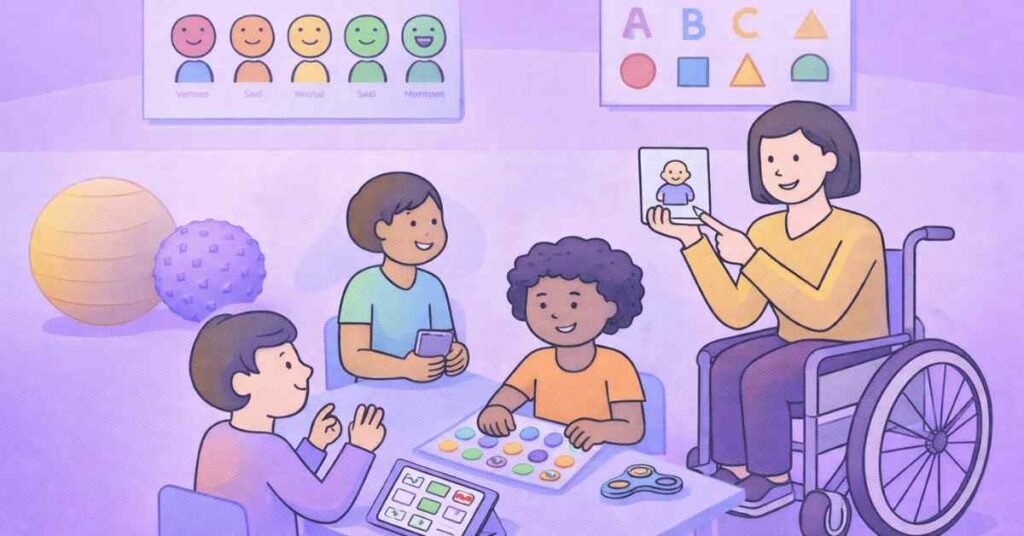
In a country with over 20 million children with special needs, a regular classroom can often feel like an insurmountable barrier. For these children, learning isn’t about memorizing facts; it’s about overcoming unique challenges related to hearing, vision, speech, mobility, or learning disabilities like dyslexia and autism. This is where a Special Education Teacher comes in.
They are not just teachers; they are advocates, innovators, and compassionate guides who create inclusive learning environments where every child, regardless of their ability, has the chance to thrive. While the role is demanding, it is also one of the most emotionally rewarding and professionally secure careers in the entire education sector.
With a massive shortage of qualified professionals and increasing government focus on inclusive education, becoming a Special Education Teacher is not just a job—it’s a high-demand calling. This guide will walk you through what it takes to enter this special field, the career paths it opens, and the profound impact you can have.
Part 1: What is a Special Education Teacher?
A Special Education Teacher, also known as a Special Educator or Remedial Teacher, is a professional trained to work with children who have a wide range of physical, cognitive, emotional, or learning disabilities. Their primary goal is to adapt teaching methods and materials to meet the unique needs of each child.
They work with children who may have:
- Learning Disabilities: Dyslexia (difficulty reading), Dysgraphia (difficulty writing), Dyscalculia (difficulty with math).
- Developmental Disabilities: Autism Spectrum Disorder (ASD), Down Syndrome.
- Sensory Impairments: Visual or hearing impairments.
- Physical Disabilities: Cerebral palsy or other conditions affecting mobility.
- Behavioral and Emotional Disorders: Attention Deficit Hyperactivity Disorder (ADHD), anxiety disorders.
Key Responsibilities:
- Assessment: Evaluating a student’s abilities and needs to understand their specific challenges.
- Individualized Education Plan (IEP): This is the core of their work. A Special Educator develops a customized learning plan for each student, setting achievable goals and outlining the specific strategies and support the child will receive.
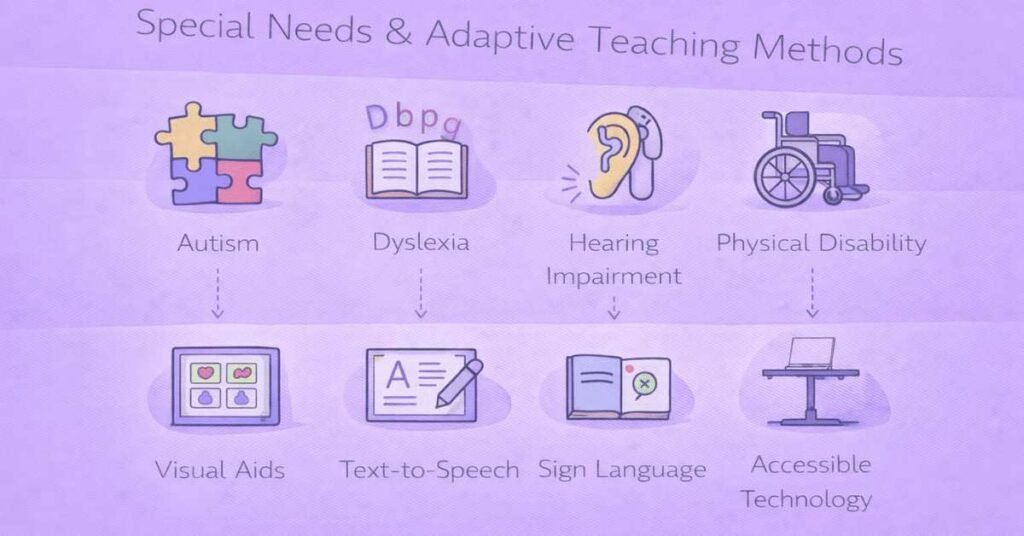
- Differentiated Instruction: Adapting the standard curriculum to make it accessible. This could involve using visual aids for a student with dyslexia, providing audio materials for a student with a visual impairment, or breaking down complex tasks into smaller steps for a student with ADHD.
- Teaching Life Skills: Beyond academics, they often teach crucial life skills such as communication, social interaction, and self-care to help students become more independent.
- Collaboration: Working closely with parents, regular classroom teachers, therapists (speech, occupational, physical), and school counselors to create a holistic support system for the child.
Part 2: Why is This Career in Such High Demand?
The demand for Special Education Teachers in India far outstrips the supply. Here’s why:
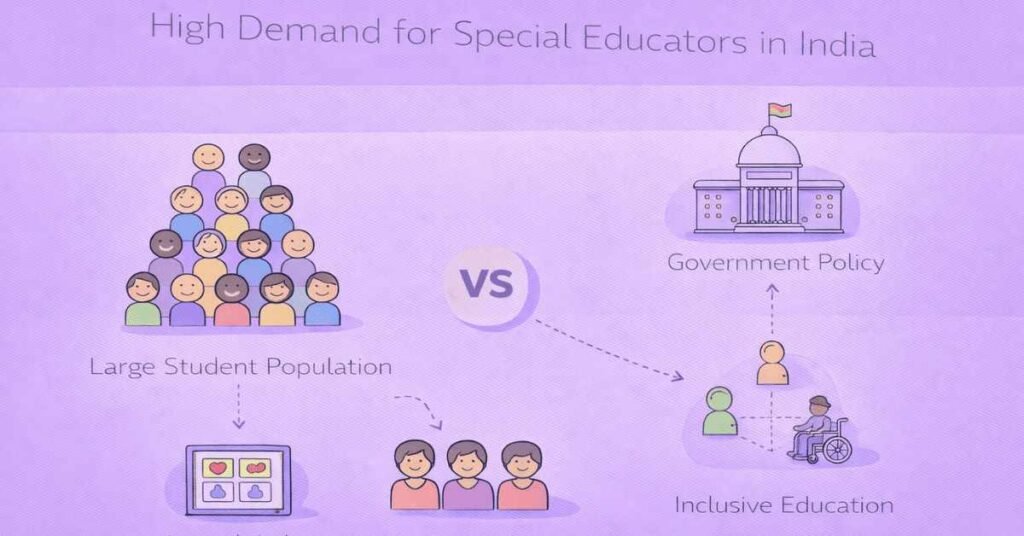
- Massive Need: India has an estimated 20 million children with special needs, but only about 5% of them are currently in school. There is a huge underserved population.
- Shortage of Professionals: The country needs at least 1.5 million special educators to meet the current demand, but there are only around 100,000 who are qualified. This creates a massive employment gap.
- Government Mandates: The Right to Education (RTE) Act and the National Education Policy (NEP) 2020 have put a strong emphasis on inclusive education, mandating that mainstream schools accommodate children with special needs. This requires every school to have trained special educators on staff.
- Growing Awareness: Parents are more aware of learning disabilities and developmental disorders than ever before. They are actively seeking professional help for their children, further driving up demand.
This isn’t a temporary trend. The need for qualified special educators will continue to grow for the foreseeable future, making it one of the most secure career paths in education.
Part 3: Qualifications – How to Become a Special Educator
To become a qualified Special Education Teacher, you need specialized training beyond a standard B.Ed. The Rehabilitation Council of India (RCI) is the statutory body that regulates the training of professionals in this field.
The Typical Pathway:
- Complete your 10+2 Education.
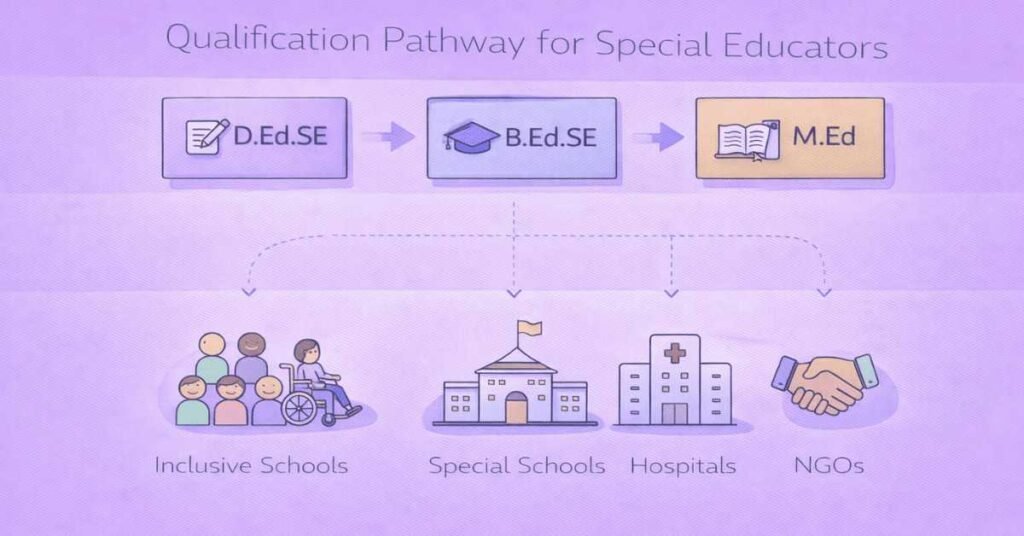
- Option A (Diploma Level): Pursue a Diploma in Education – Special Education (D.Ed.SE). This is a 2-year program you can do after Class 12. It qualifies you to teach at the primary level in special schools or as a resource teacher.
- Option B (Bachelor’s Level): After your undergraduate degree (like a B.A., B.Sc., or B.Com), pursue a Bachelor of Education – Special Education (B.Ed.SE). This is a 2-year professional degree and is the most common qualification.
- Option C (For Existing Teachers): If you already have a general B.Ed degree, you can pursue a 1-year Post Graduate Professional Diploma (PGPD) in Special Education to become qualified.
- Master’s Level: For those wanting to go into research, policy, or higher education, an M.Ed. in Special Education is the next step.
Important: Ensure that the institution you choose is recognized by the Rehabilitation Council of India (RCI). Only an RCI-approved qualification makes you eligible to be registered as a professional special educator in India.
Specializations: During your B.Ed.SE or D.Ed.SE, you will often choose a specialization based on a specific disability, such as:
- Visual Impairment (VI)
- Hearing Impairment (HI)
- Autism Spectrum Disorder (ASD)
- Learning Disability (LD)
- Intellectual and Developmental Disabilities (IDD)
Part 4: The Career Paths & Work Environments
A qualification in special education opens up a diverse range of career opportunities.
- Inclusive Mainstream Schools: This is the fastest-growing area of employment. You would work as a Resource Teacher or Remedial Educator in a regular CBSE, ICSE, or State Board school. Your job is to support students with special needs who are part of the regular classroom, either by providing in-class support or by taking them for one-on-one or small-group sessions in a resource room.
- Special Schools: These are schools dedicated exclusively to children with specific disabilities (e.g., a school for the blind or a school for children with autism). Here, you would be the primary classroom teacher.
- Hospitals and Clinics: Working as part of a multi-disciplinary team alongside doctors, psychologists, and therapists to provide educational support to children undergoing treatment.
- NGOs and Early Intervention Centers: Working with young children (ages 0-6) who have been identified with developmental delays to provide crucial early support.
- Private Practice (as a Remedial Therapist): Once you have significant experience, you can set up your own practice and provide one-on-one therapy sessions to children after school hours. This can be very lucrative.
Higher Education and Research: With an M.Ed and a PhD in Special Education, you can become a professor, training the next generation of special educators.
Part 5: Salary and Earning Potential
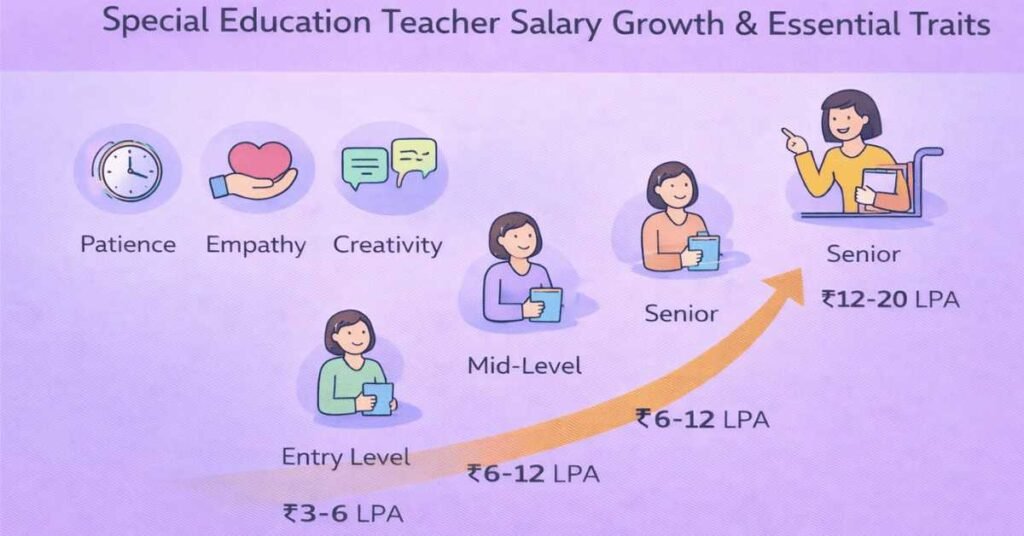
Due to the high demand and specialized skills required, Special Education Teachers often command higher salaries than their general education counterparts, especially in the private sector.
Salary Ranges in India (2025):
- Entry-Level (in private inclusive schools): ₹4 lakhs – ₹7 lakhs per annum
- Government Schools (as per pay scales): ₹5 lakhs – ₹8 lakhs per annum
- Experienced Educators (5-10 years): ₹8 lakhs – ₹15 lakhs per annum
- Private Practitioners (running their own center): ₹12 lakhs – ₹30+ lakhs per annum (highly variable based on client base and reputation)
Source: Based on salary data from recruitment agencies specializing in education and top-tier inclusive schools.
The earning potential for experienced private practitioners is particularly high, as parents are willing to invest significantly in specialized, one-on-one support for their children.
Part 6: The Skills and Qualities of a Great Special Educator
This is a career that requires more than just academic qualifications. The personal qualities you bring to the job are paramount.
- Patience and Empathy (Non-negotiable): Progress can be slow, and you will face challenges. The ability to remain patient, understand a child’s frustration, and celebrate small victories is the most important trait.
- Creativity and Flexibility: There is no one-size-fits-all approach. You need to be able to think on your feet and constantly adapt your teaching methods to suit an individual child’s learning style.
- Strong Observational Skills: You need to be a detective, carefully observing a child’s behavior to understand the root cause of their difficulties.
- Excellent Communication Skills: You must be able to communicate effectively and compassionately with children, parents, and other professionals.
- Resilience and a Positive Attitude: This can be an emotionally taxing job. The ability to stay positive, focus on a child’s strengths, and not get discouraged by setbacks is crucial for long-term success and your own well-being.
Conclusion: A Career That Truly Matters
Choosing to become a Special Education Teacher is a decision to pursue a career of profound purpose. While the academic journey requires specialized training and the daily work demands immense patience, the rewards are immeasurable.
It’s the moment a non-verbal child speaks their first word with you. It’s seeing a student with dyslexia finish reading their first book. It’s watching a child who struggled with social interaction make their first friend.
In a world full of jobs, this is a vocation. It offers not only financial stability and high demand but also the rare and precious opportunity to fundamentally change the trajectory of a child’s life, empowering them to overcome barriers and reach their full potential. If you are looking for a career that challenges your mind and fills your heart, special education is waiting for you.