
Performance Marketing Manager Career Guide
Table of Contents
What is Performance Marketing and Why It's High-Paying
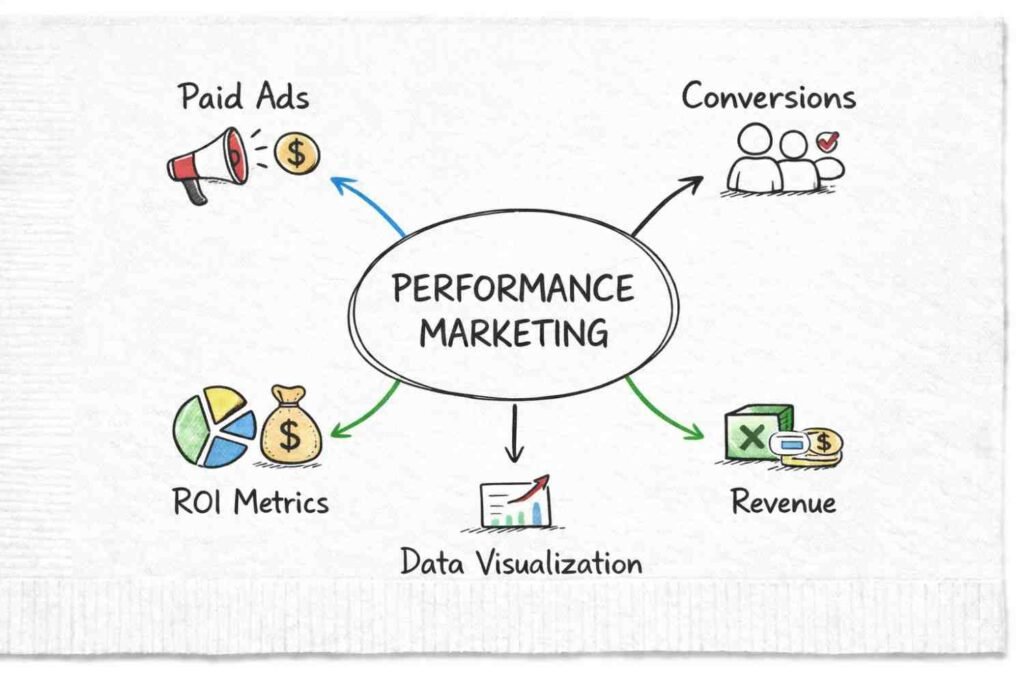
Performance marketing is marketing where you pay only for measurable results—clicks, leads, sales, or specific actions. Unlike traditional marketing where you pay for impressions or brand exposure hoping for eventual impact, performance marketing delivers direct, trackable ROI on every rupee spent.
Performance marketing managers are the ROI obsessed professionals who orchestrate campaigns across paid channels—Google Ads, Facebook Ads, LinkedIn Ads, affiliate marketing, influencer partnerships—with laser focus on measurable outcomes. They’re not satisfied with “brand awareness” or “engagement.” They want to know: For every ₹1 invested, how many rupees came back?
This results-driven focus makes performance marketers incredibly valuable to businesses. An e-commerce store launching a sale needs guaranteed traffic and sales, not maybe-someday brand building. A SaaS company burning through funding needs qualified leads today, not theoretical future awareness. A fintech app needs user acquisitions at profitable costs, not impressive vanity metrics. Performance marketing managers deliver these concrete outcomes.
In India’s competitive digital landscape in 2026, skilled performance marketers command premium salaries because they directly drive revenue. Companies know exactly what they’re getting—measurable business results—making performance marketing one of the highest ROI functions in any organization.
Performance Marketing vs. Growth Marketing: Understanding the Difference
These terms are often confused but represent distinct approaches
Performance Marketing:
- Focus: Bottom-of-funnel conversions
- Timeline: Short-term, immediate results
- Primary Channels: Paid advertising (Google Ads, Facebook Ads, display ads)
- Metrics: CPA, ROAS, conversion rate, CTR
- Goal: Direct, measurable actions (sales, leads, sign-ups)
- Mindset: “What delivers ROI right now?”
Growth Marketing:
- Focus: Entire customer lifecycle
- Timeline: Long-term, sustainable growth
- Primary Channels: Multi-channel (paid, organic, product, referral, retention)
- Metrics: Customer lifetime value, retention rate, viral coefficient, engagement
- Goal: Sustainable business growth and customer relationships
- Mindset: “How do we grow sustainably?”
Key Differences:
Performance marketing is transactional—get customer, make sale, measure ROI. Growth marketing is relational—acquire customer, engage them, retain them, turn them into advocates.
Most companies need both. Performance marketing drives immediate revenue while growth marketing builds sustainable competitive advantage. Many performance marketers evolve into growth marketers after mastering paid channel optimization.
What Performance Marketing Managers Do Daily
Performance marketing combines analytical rigor with strategic creativity:
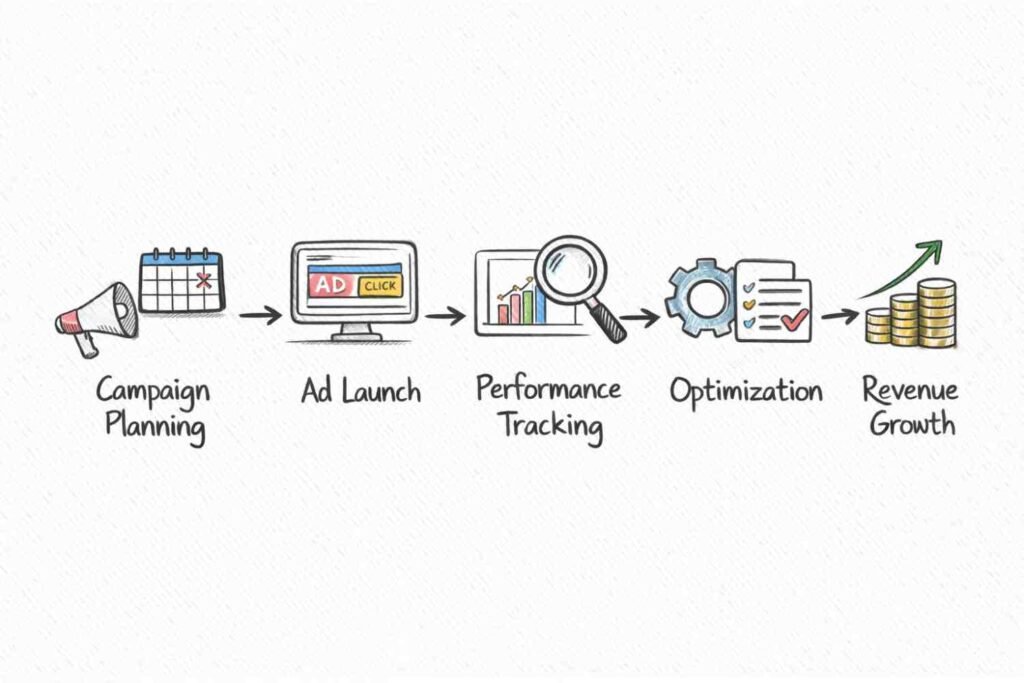
Campaign Planning and Strategy
- Set campaign objectives aligned with business goals (leads, sales, app installs)
- Determine target cost-per-acquisition (CPA) and return-on-ad-spend (ROAS) goals
- Allocate budgets across channels based on expected performance
- Define target audiences and create buyer personas
- Plan promotional calendars and campaign timelines
Campaign Execution
- Launch campaigns across Google Ads, Facebook Ads, LinkedIn Ads, and other platforms
- Create or brief ad copy and creative assets
- Set up conversion tracking and attribution
- Implement A/B tests on audiences, creatives, and messaging
- Manage daily budgets and bidding strategies
Optimization and Analysis
- Monitor campaign performance multiple times daily
- Adjust bids, budgets, and targeting based on real-time data
- Identify underperforming elements and pause or optimize them
- Scale winning campaigns by increasing budgets strategically
- Analyze customer acquisition costs and optimize for profitability
Cross-Channel Management
- Orchestrate campaigns across multiple platforms simultaneously
- Ensure consistent messaging while adapting to platform best practices
- Test new channels and platforms for expansion opportunities
- Manage relationships with affiliate partners and influencers
Reporting and Stakeholder Communication
- Create performance dashboards showing real-time metrics
- Generate weekly and monthly reports for management
- Present ROI analysis and recommendations
- Justify marketing spend with concrete revenue attribution
- Forecast future performance based on historical data
Essential Skills for Performance Marketing Managers
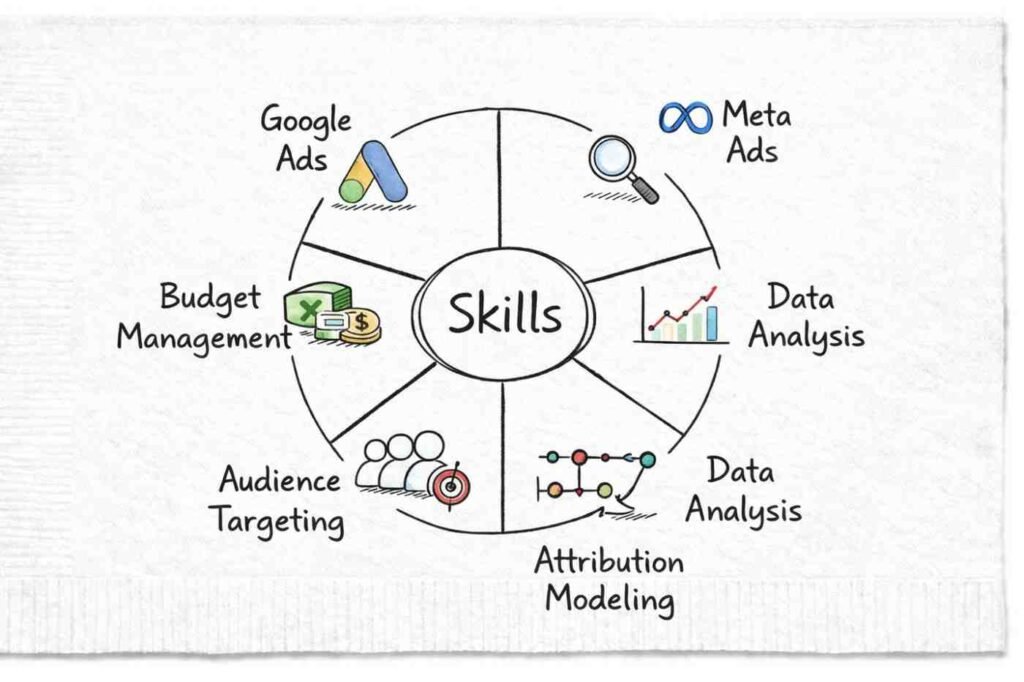
Paid Advertising Expertise
Multi-Platform Proficiency: Deep knowledge of Google Ads (Search, Display, Shopping, Video), Meta Ads (Facebook and Instagram), LinkedIn Ads, Twitter Ads, TikTok Ads.
Campaign Structure and Optimization: Understanding how to structure campaigns for maximum efficiency, when to use different bidding strategies, how to optimize Quality Scores and relevance scores.
Audience Targeting: Mastering demographic, interest-based, behavioral, and custom audience targeting across platforms.
Creative Testing: Developing frameworks for systematically testing ad copy, images, videos, and landing pages.
Analytical and Technical Skills
Data Analysis: Interpreting complex performance data, identifying patterns, calculating ROI, and making data-driven optimization decisions.
Conversion Rate Optimization (CRO): Understanding how to optimize landing pages, checkout flows, and user experiences to improve conversion rates.
Marketing Analytics Tools: Proficiency in Google Analytics, Google Tag Manager, marketing attribution software, and data visualization tools.
Excel and Data Manipulation: Advanced spreadsheet skills for analyzing large datasets, building models, and forecasting.
Attribution Modeling: Understanding different attribution models (first-click, last-click, linear, time-decay, data-driven) and their implications.
Strategic and Business Skills
Customer Lifetime Value (LTV) Understanding: Knowing how much you can spend to acquire customers based on their long-term value.
Funnel Optimization: Mapping and optimizing entire customer journeys from awareness to conversion.
Budget Management: Allocating and reallocating spend across campaigns and channels for maximum ROI.
Growth Hacking Mindset: Creative, scrappy approaches to rapid growth with limited resources.
Experimentation Framework: Designing valid experiments, controlling variables, and scaling winners systematically.
Leadership and Communication
Stakeholder Management: Communicating performance, managing expectations, and educating non-technical stakeholders about performance marketing.
Vendor and Agency Management: Managing relationships with ad platforms, creative agencies, and affiliate networks.
Team Collaboration: Working with creative teams for ad assets, developers for tracking implementation, product teams for landing page optimization.
Growth Hacking Strategies for 2026
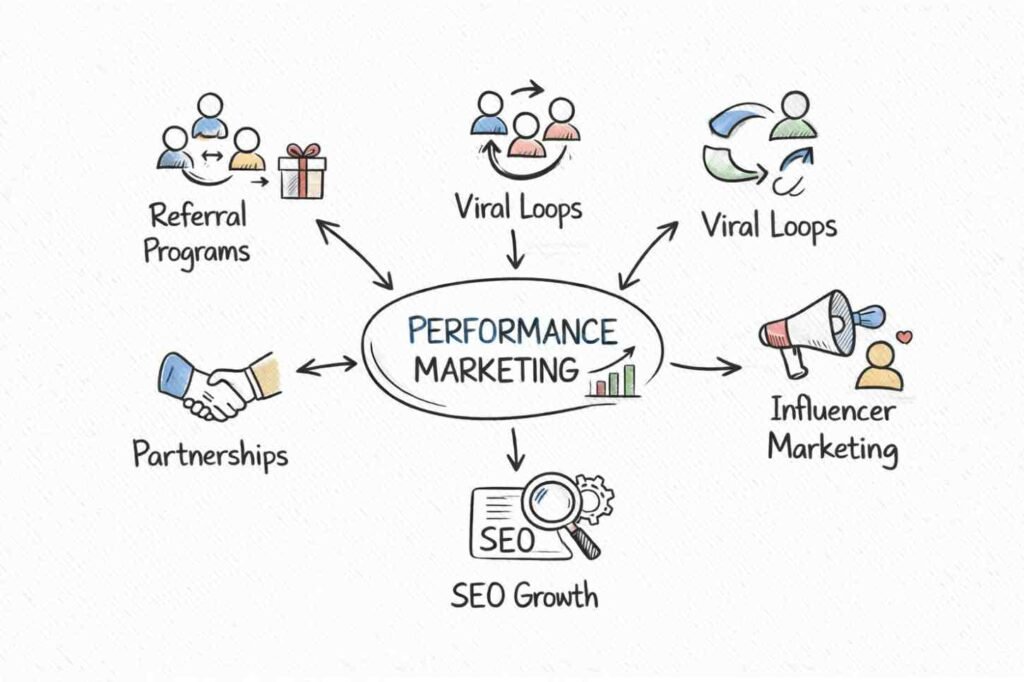
Growth hacking combines performance marketing with creative experimentation for rapid scaling
1.Referral Programs
Leverage existing customers to acquire new ones at fraction of paid advertising cost.
Implementation:
- Offer incentives to both referrer and referee
- Make sharing frictionless (one-click share)
- A/B test incentive structures
- Track referral source and optimize high-performing channels
Example: Paytm’s “Refer & Earn” drove millions of sign-ups by rewarding both parties.
2.Strategic Partnerships and Co-Marketing
Partner with complementary brands to access each other’s audiences.
Tactics:
- Joint webinars with complementary SaaS tools
- Bundle offers with non-competing products
- Content partnerships (guest blogging, podcast appearances)
Cross-promotions to email lists
3.Freemium to Premium Conversion Optimization
Acquire users for free, convert them to paid through optimized onboarding and value demonstration.
Key Elements:
- Minimize friction in sign-up process
- Deliver quick wins in first session
- Strategic feature gating (free users get value, but premium offers more)
- Targeted upgrade prompts at high-intent moments
Time-limited offers for free users
4.Viral Loops and Network Effects
Build product features that incentivize users to invite others.
Examples:
- Zoom: Free users limited to 40-minute meetings, encouraging paid upgrades or new sign-ups
- Notion: Generous free tier with collaboration features naturally bringing teams onto platform
Canva: Easy template sharing spreads awareness organically
5.Micro-Influencer Partnerships
Work with smaller influencers (10K-100K followers) for authentic reach at lower cost than mega-influencers.
Strategy:
- Identify niche influencers aligned with your audience
- Offer product access or affiliate commissions instead of large fees
- Track performance with unique codes or links
Build long-term relationships with top performers
6.Content-Led SEO Growth
Create high-value content targeting bottom-of-funnel keywords for sustainable organic acquisition.
Approach:
- Research keywords with commercial intent
- Create comprehensive guides and comparison content
- Optimize for featured snippets
- Build internal linking structure
Promote content through paid channels initially for velocity
7.Retargeting and Abandoned Action Recovery
Re-engage users who showed interest but didn’t convert.
Tactics:
- Retarget website visitors with relevant ads
- Email abandoned cart recovery sequences
- Browser push notifications for engaged users
- Exit-intent popups with special offers
- Multi-touch retargeting sequences across channels
Conversion Rate Optimization (CRO) Best Practices
Performance marketers must optimize beyond just ad performance—landing pages and conversion funnels are equally critical
Landing Page Optimization
Clear Value Proposition: Immediately communicate what you offer and why it matters. Visitors should understand within 3 seconds.
Strong Headlines: Use benefit-driven headlines addressing customer pain points or desires.
Minimal Distractions: Remove navigation menus on landing pages. One page, one goal.
Social Proof: Display customer testimonials, reviews, case studies, trust badges, and client logos.
Compelling CTAs: Use action-oriented button text (“Get My Free Guide” vs. generic “Submit”). Make buttons visually prominent.
Mobile Optimization: Over 70% of Indian traffic is mobile. Design mobile-first with large buttons, minimal typing, and fast loading.
Fast Load Times: Every second of delay reduces conversions. Optimize images, minimize code, use CDNs.
A/B Testing: Continuously test headlines, images, CTA button colors, form lengths, and layouts.
Checkout Flow Optimization:
Guest Checkout Option: Don’t force account creation before purchase.
Minimal Form Fields: Ask only essential information. Every additional field reduces completion.
Progress Indicators: Show users where they are in multi-step checkout.
Multiple Payment Options: Offer UPI, cards, wallets, COD to accommodate preferences.
Clear Error Messages: Make validation helpful, not frustrating.
Exit-Intent Popups: Offer discounts or incentives to users about to abandon.
Trust Signals Throughout: Display security badges, return policies, customer support options.
High-Impact Quick Wins:
- Add live chat support on high-traffic pages
- Showcase customer reviews prominently
- Use compelling product photography and videos
- Create urgency with limited-time offers or stock scarcity
- Optimize for mobile experience
- Speed up page load times
Performance Marketing Manager Salary in India
Performance marketing managers earn premium salaries due to direct revenue impact:
Experience-Based Salary Ranges
- Performance Marketing Executive (0-2 years): ₹4-8 lakhs per year
- Performance Marketing Specialist (2-4 years): ₹8-14 lakhs per year
- Performance Marketing Manager (4-7 years): ₹14-24 lakhs per year
- Senior Performance Marketing Manager (7-10 years): ₹24-38 lakhs per year
- Head of Performance Marketing (10+ years): ₹35-60 lakhs per year
Average salary for performance marketing managers with 5+ years experience is ₹18-25 lakhs annually.
Industry Variations
- E-commerce: ₹8-35 lakhs (highest demand, direct revenue attribution)
- Fintech: ₹10-40 lakhs (high customer value justifies acquisition costs)
- Edutech: ₹8-28 lakhs (competitive space, strong focus on CAC)
- SaaS/Technology: ₹10-38 lakhs (long-term contracts justify higher CAC)
- Gaming/Entertainment: ₹9-32 lakhs (app install campaigns, in-app purchases)
- Agencies: ₹7-30 lakhs (managing multiple client accounts)
City-Wise Comparison
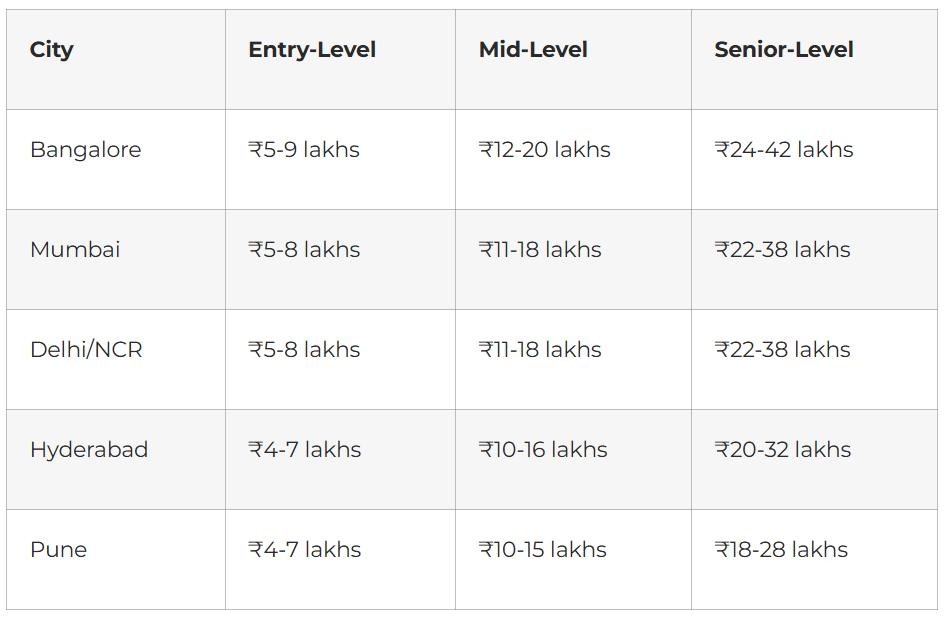
Freelance Performance Marketing
Freelance performance marketers often work on commission or performance-based models:
- Retainer fees: ₹60,000-2,00,000 per month per client
- Commission-based: 10-20% of revenue generated through their campaigns
- Project-based: ₹50,000-2,00,000 for campaign setup and initial optimization
- Hourly consulting: ₹3,000-8,000 per hour for senior consultants
Top freelancers managing multiple client campaigns earn ₹3-8 lakhs monthly.
How to Become a Performance Marketing Manager
Year 1-2: Build Paid Advertising Foundation
Start in Entry-Level Paid Marketing Roles:
- PPC Executive
- Paid Media Executive
- Performance Marketing Executive
- Digital Advertising Specialist
Master Core Platforms:
- Earn all Google Ads certifications (Search, Display, Video, Shopping)
- Complete Meta Blueprint certifications (Facebook and Instagram ads)
- Learn LinkedIn Campaign Manager basics
- Understand programmatic display advertising
Gain Hands-On Experience:
- Manage campaigns with real budgets (even if small)
- Track ROI obsessively on every campaign
- Build reporting dashboards
- Learn from failures and successes
Year 2-4: Develop Multi-Channel Expertise
Expand Platform Knowledge:
- Add new channels: Twitter Ads, Pinterest Ads, Snapchat Ads, TikTok Ads
- Explore affiliate marketing networks
- Test influencer marketing campaigns
- Experiment with emerging channels
Deepen Optimization Skills:
- Master advanced bidding strategies
- Learn audience segmentation and targeting
- Develop creative testing frameworks
- Study conversion rate optimization
- Understand attribution modeling
Build Growth Mindset:
- Study growth hacking case studies
- Experiment with viral loops and referral programs
- Test unconventional acquisition channels
- Focus on scalable, repeatable strategies
Year 4-6: Move into Manager Role
Demonstrate Strategic Thinking:
- Develop full-funnel acquisition strategies
- Present data-driven recommendations to leadership
- Forecast campaign performance accurately
- Manage larger budgets with accountability
Build Leadership Skills:
- Mentor junior team members
- Manage agency and vendor relationships
- Collaborate cross-functionally with product, creative, analytics teams
- Present to senior management and executives
Portfolio Projects to Build:
Project 1: Multi-Channel Campaign Case Study
- Document complete campaign across Google Ads, Facebook Ads, LinkedIn
- Show planning process, execution, optimization, results
- Include ROI calculations and lessons learned
- Present with clear metrics: CAC, ROAS, conversion rates
Project 2: Landing Page Optimization Project
- Take underperforming landing page
- Identify issues through heatmaps and user testing
- Redesign page applying CRO best practices
- A/B test variations
- Document conversion rate improvements
Project 3: Growth Hacking Experiment
- Design and execute creative growth experiment
- Could be referral program, partnership, viral content, or unconventional channel
- Track results meticulously
- Analyze scalability and unit economics
- Present as replicable framework
Project 4: Full-Funnel Strategy Presentation
- Choose a real company (or create fictional one)
- Develop comprehensive performance marketing strategy
- Include channel selection, budget allocation, targeting, creative strategy, measurement framework
- Present professional deck with projections
Career Growth Path for Performance Marketers
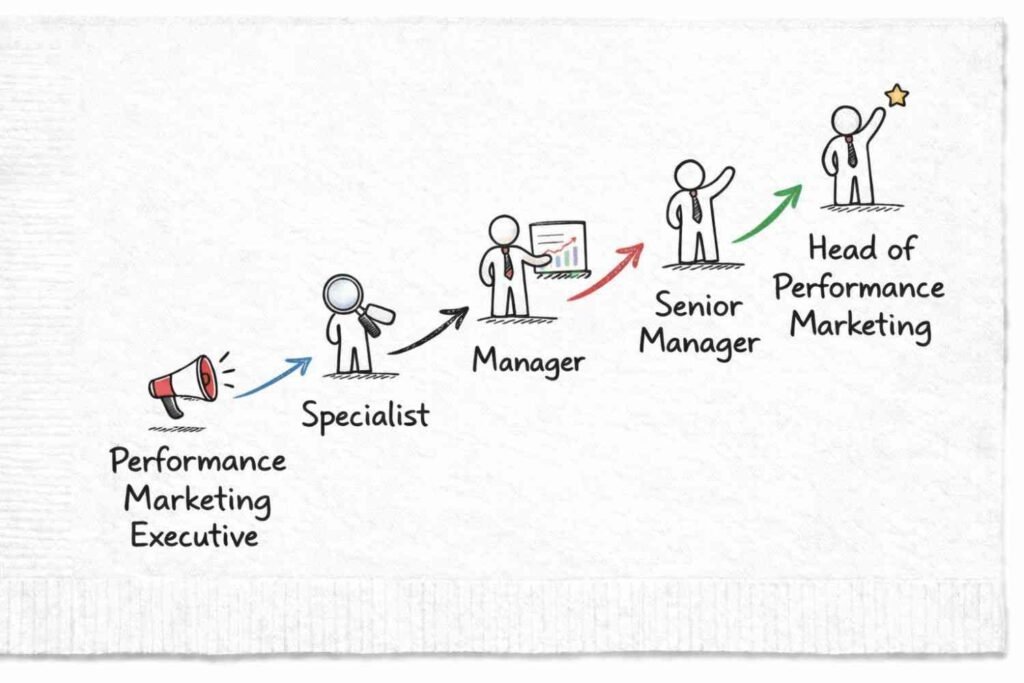
Year 0-2: Performance Marketing Executive
Execute campaigns managed by seniors. Set up ads, monitor performance, conduct basic optimizations. Expected salary: ₹4-8 lakhs.
Year 2-4: Performance Marketing Specialist
Own campaigns independently across 1-2 channels. Manage budgets, develop strategies, report to managers. Expected salary: ₹8-14 lakhs.
Year 4-7: Performance Marketing Manager
Lead multi-channel performance strategy. Manage team of 2-4 people, significant budget responsibility, present to senior leadership. Expected salary: ₹14-24 lakhs.
Year 7-10: Senior Performance Marketing Manager
Shape company’s entire paid acquisition strategy. Manage larger teams, cross-functional collaboration, major P&L impact. Expected salary: ₹24-38 lakhs.
Year 10+: Head of Performance Marketing / Growth
Oversee all performance and growth channels. Build teams, set company growth strategy, report to CMO or CEO. Expected salary: ₹35-60 lakhs.
Alternative paths:
- VP of Marketing: Transition into overall marketing leadership
- Growth Manager: Expand from performance marketing to full growth stack
- Agency Owner: Start performance marketing agency
- Consultant: Advise multiple companies on performance marketing
Common Performance Marketing Challenges
Challenge 1: Rising Ad Costs
CPCs and CPMs increase as competition intensifies on popular platforms.
Solutions:
- Improve Quality Scores and relevance scores for lower costs
- Test new, less competitive channels early
- Invest in CRO to get more value from same traffic
- Build owned channels (email, organic) to reduce paid dependency
- Focus on customer LTV to justify higher acquisition costs
Challenge 2: Attribution Complexity
Multi-touch customer journeys make it hard to credit right channels.
Solutions:
- Use data-driven attribution models when available
- Look at incrementality, not just last-click attribution
- Run holdout tests to measure true incrementality
- Accept that attribution is imperfect but directionally useful
- Focus on blended CAC across all channels
Challenge 3: Creative Fatigue
Ad creatives lose effectiveness quickly as audiences see them repeatedly.
Solutions:
- Build systematic creative testing processes
- Refresh creatives every 2-4 weeks
- Test multiple variations simultaneously
- Use dynamic creative optimization
- Invest in quality design resources
Challenge 4: Platform Algorithm Changes
Facebook, Google, LinkedIn frequently update algorithms affecting campaign performance.
Solutions:
- Diversify across multiple platforms to reduce dependency
- Stay updated through official platform blogs and communities
- Test new features early (platforms reward early adopters)
- Build first-party data assets less dependent on platform targeting
- Maintain flexibility in strategies
Challenge 5: Pressure for Immediate Results
Stakeholders expect instant ROI while campaigns need time to optimize.
Solutions:
- Set realistic expectations during planning phase
- Educate stakeholders about learning periods (2-3 weeks minimum)
- Show leading indicators even when lagging metrics haven’t moved
- Balance quick-win tactics with long-term strategy
- Document and communicate optimization process
FAQs: Performance Marketing Manager Career
Q: Is performance marketing only about paid ads?
Primarily yes, but best performance marketers expand into affiliate marketing, influencer partnerships, and growth experiments beyond traditional paid channels.
Q: Do I need agency experience or can I work in-house?
Both paths work. Agencies offer faster learning across industries; in-house roles offer depth in one business. Many start in agencies then move in-house.
Q: What’s more important—creative skills or analytical skills?
Analytical skills are fundamental. Creative understanding helps, but you can collaborate with designers. You must personally analyze data and optimize campaigns.
Q: Can performance marketers work remotely?
Yes. Performance marketing is highly remote-friendly since all work is digital. Many companies hire remotely for these roles.
Q: How long to become a performance marketing manager?
Typically 4-6 years from entry-level to manager role. MBA graduates or those with strong initial experience can accelerate to 3-4 years.
Your Next Steps: Launch Your Performance Marketing Career
Performance marketing offers one of the clearest paths from effort to income in digital marketing. Your results directly determine your value. When you can point to a campaign that generated ₹50 lakhs in revenue from ₹10 lakhs in ad spend, your career trajectory changes dramatically. Companies fight to hire and retain people who can reliably turn ad budgets into profitable revenue.
Start today by running your first paid campaign. Even ₹2,000 on Google Ads or Facebook Ads teaching yourself the fundamentals sets you apart from theoretical learners. Document everything. Calculate your ROI. Learn what works and what doesn’t. Build your first case study.
The performance marketing managers earning ₹25-40 lakhs today started with their first ₹1,000 campaign wondering if they were wasting money. They learned, optimized, and proved they could generate returns. Your performance marketing career starts with your first ad and your first conversion. Will you launch it today?