
Leadership and Influence Strategies
Table of Contents
Blog Content:

Picture this: A GD starts. The moderator says, “Discuss this topic,” and then sits down. There’s silence for 5 seconds. Everyone’s waiting for someone to start. Then suddenly, one person speaks up confidently. Everyone else follows their lead.
That person just became the informal leader.
Here’s what most students don’t realize: You don’t need an official title to be a leader in a Group Discussion. Real leadership in a GD means guiding the conversation toward meaningful discussion without making others feel small or excluded.
Let’s explore how.
🔍 Explore structured learning resources to strengthen communication and leadership clarity →
1. How to Initiate a Discussion (And Why It Matters)
The first person to speak sets the tone for the entire discussion. But here’s the critical part: Only initiate if you have something valuable to say.
What NOT to do: “Uh, so, I think this topic is interesting and we should discuss it.” This adds nothing. Don’t do it.
What TO do: Start with a clear, thoughtful opening.
Examples:
Weak opener: “I think artificial intelligence is important. Let me share my thoughts about it.”
Strong opener: “I think the real question here isn’t whether AI is good or bad—it’s how we ensure it benefits everyone, not just tech companies. Let me break this down into two parts: immediate opportunities and long-term risks.”
See the difference? The strong opener immediately structures the discussion. Now everyone knows there are “two parts” to explore. The discussion has a roadmap.
Why this matters to recruiters: Starting well shows confidence, clarity, and leadership. Immediately, they think, “Okay, this person can organize thoughts.”
2. Guiding the Conversation Without Dominating
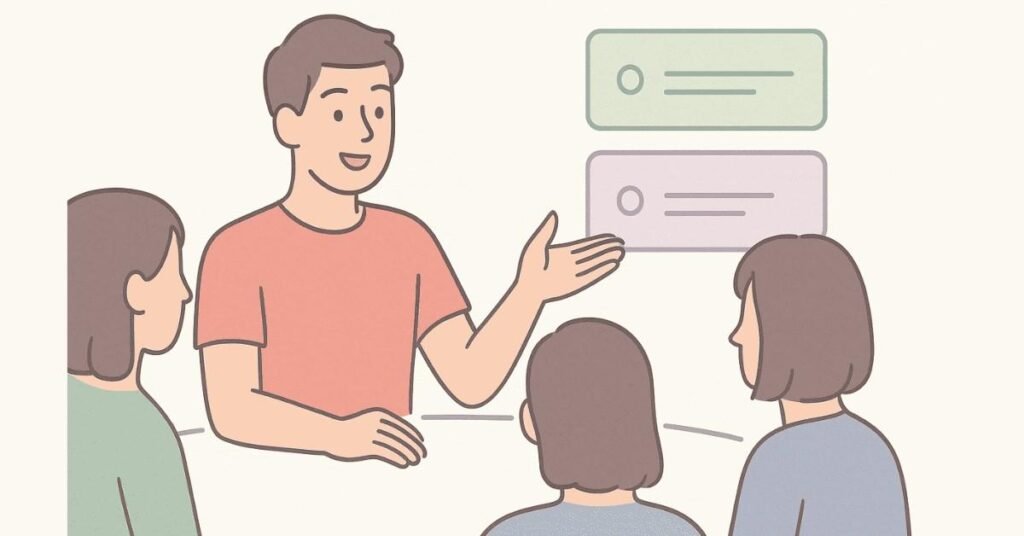
Here’s the mistake most “wannabe leaders” make: They talk too much.
Talking a lot doesn’t equal leadership. Being overbearing and never letting others speak? That gets you marked as “Doesn’t work well in teams.” You’ll probably get rejected.
Real leadership is the opposite. Here’s how:
Collaborative Leadership Technique:
Instead of always offering your own ideas, ask questions and build on others’ ideas.
Example of dominating (BAD):
- Person A says something
- You immediately say, “No, that’s wrong. Here’s what’s actually correct…”
- You talk for 3 minutes about your idea
- Everyone’s annoyed because you didn’t listen
Example of collaborative leadership (GOOD):
- Person A says something incomplete
- You say, “I hear what you’re saying about cost-effectiveness. But what about the sustainability angle? Does automation help or hurt environmental goals?”
- Now Person A responds, or someone else adds on
- You’ve guided the conversation deeper without dominating
Another collaborative technique: “Bridging”
When someone makes a good point that gets lost, you bring it back: “Earlier, Rohan mentioned that automation creates job displacement. I think that’s crucial to our discussion because it connects to our earlier point about retraining programs.”
Now you look like a leader who brings people together. That’s gold in recruitment.

📘 Discover more preparation content designed to enhance collaborative performance →
3. Building on Others' Ideas (The Real Secret to Leadership)
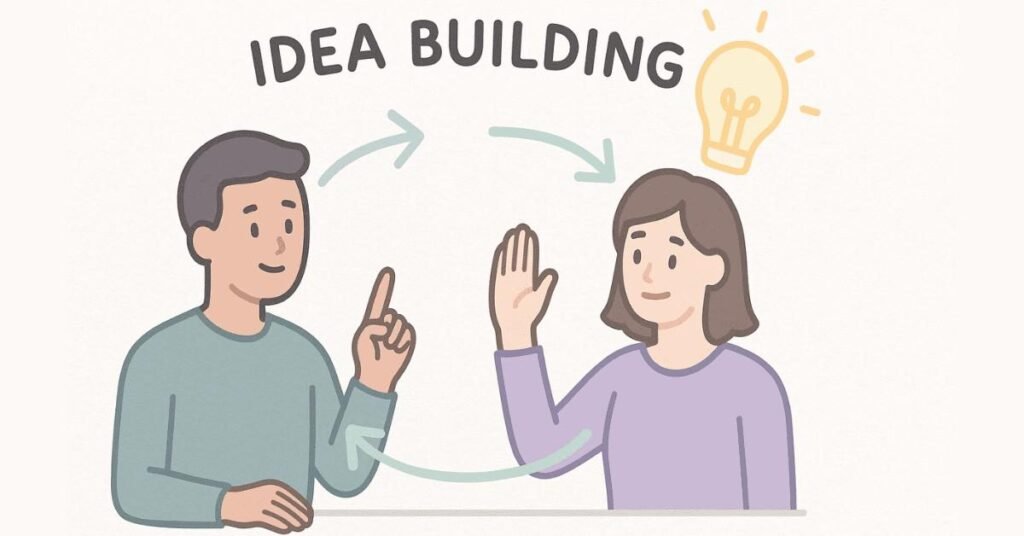
Recruiters are literally watching to see if you’re selfish or team-oriented. One of the easiest ways to show you’re team-oriented? Take someone else’s average idea and make it better.
Example:
Person A: “I think companies should stop using single-use plastic bags.”
Weak response: “I disagree. Plastic bags are necessary because they’re cheap.”
Leadership response: “I agree with the environmental concern. But instead of stopping plastic bags completely, companies could offer incentives for reusable bags—like loyalty points or discounts. This way, companies don’t lose business, and customers still have a choice. It’s a middle ground that works for both sides.”
Notice what happened? You took Person A’s idea, acknowledged it, and enhanced it with a practical solution. Now you look like someone who can:
- Listen to diverse opinions
- Find common ground
- Think of win-win solutions
That’s what companies want.
4. Handling Disagreements Professionally (The Test of Character)
Here’s where many students fail: When someone disagrees with them, they get defensive or rude.
Disagreements in GDs are natural and expected. How you handle them shows your maturity.
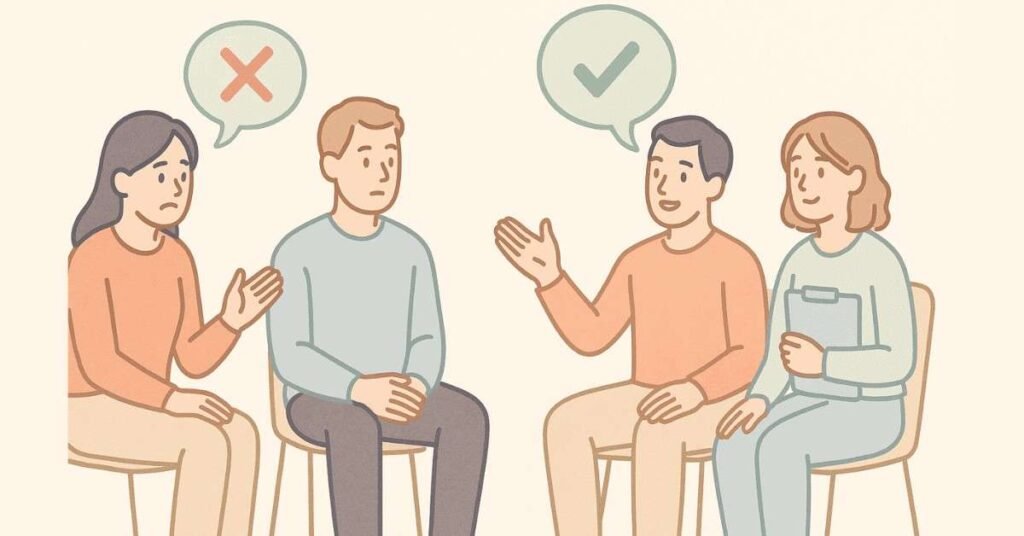
Bad way to handle disagreement:
- Person B says, “I think your point is flawed because…”
- You respond, “No, YOUR point is flawed. You don’t even understand the issue.”
- Now it’s personal, and you look immature.
Professional way to handle disagreement:
- Person B says, “I think your point is flawed because…”
- You pause, listen fully, then respond: “I see your concern. You’re right that my example was specific to tech companies. Let me adjust—even in retail, automation has led to job creation in areas like customer service and quality control. Does that address your point?”
What happened here? You:
- Acknowledged their concern
- Adjusted your point with a better example
- Checked if they agreed
This is mature communication. Recruiters eat this up.
The key principle: In a GD, disagreement isn’t personal. It’s professional. Treat it that way.
📂 Access complete learning materials to improve decision-making and interpersonal effectiveness →
5. Summarizing and Steering Toward Conclusions
Towards the end of a GD (last 2-3 minutes), the discussion often becomes messy. People have said many things, and there’s no clear direction.
This is your moment to shine.
Summarize what the group discussed and steer toward a conclusion. This is peak leadership.
Example:
“Okay, I think we’ve explored three main areas: cost implications, environmental impact, and job creation. Most of us agree that automation is inevitable. The disagreement is about how fast it should happen and what support systems need to be in place. I think the consensus is: ‘Automation is necessary, but government and companies need to invest in worker retraining.’ Does that capture what we’ve discussed?”
What you just did:
- Organized messy thoughts into clear points
- Identified areas of agreement
- Identified remaining disagreements
- Proposed a balanced conclusion
- Verified with the group
This is what leadership looks like in a GD. And recruiters will note this immediately.
Common Leadership Mistakes to Avoid:
- Talking too much — You’re not a lecturer. Stop after 2 minutes of speaking.
- Interrupting constantly — Let people finish. Then speak.
- Dismissing ideas you disagree with — Even bad ideas can lead to good discussions.
- Trying to “win” the GD — There’s no winner. There’s only “good team player” or “difficult to work with.”
- Staying silent to look humble — If you never speak, you can’t be a leader.
The Balance You Need:
Leadership in a GD is about balance:
- Speak confidently, but don’t dominate
- Share your ideas, but build on others’
- Disagree respectfully, not aggressively
- Guide the conversation, but let others contribute
- Summarize effectively at the end
Master this balance, and you won’t just clear the GD—you’ll be one of the candidates they remember positively.