
HR JOB INTERVIEW PREPARATION
Table of Contents
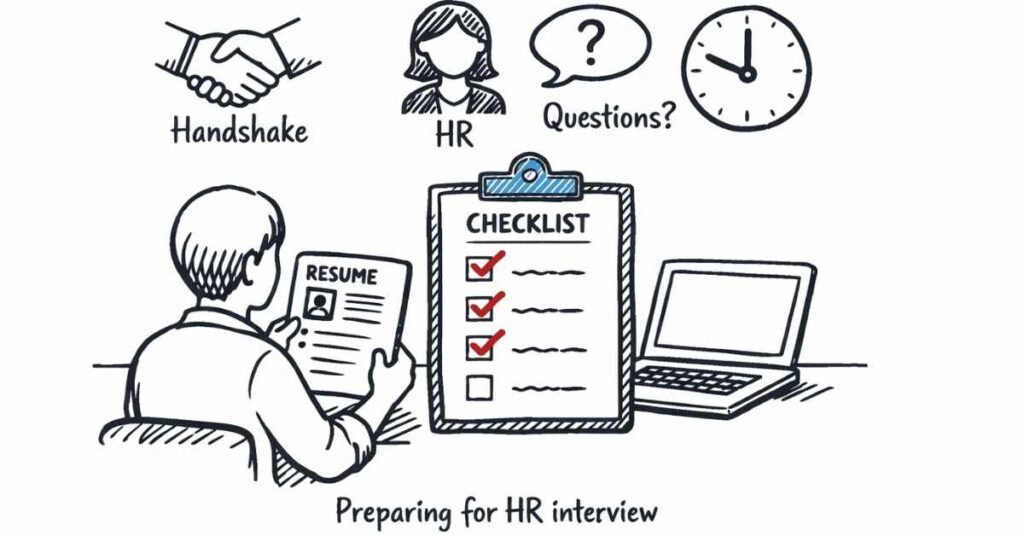
You’ve landed an interview for your target HR role—congratulations! That’s a significant achievement given the competition. But now comes the crucial part: preparing to perform brilliantly in the interview. The difference between receiving an offer and hearing “We’ve decided to go with another candidate” often comes down to interview preparation.
HR interviews are particularly unique because you’re being interviewed by fellow HR professionals who are expert interviewers themselves. They know every technique, can spot rehearsed answers, and are skilled at probing beyond surface responses. This means you need exceptional preparation to stand out.
This comprehensive guide provides everything you need to ace your HR interview including understanding what interviewers are really assessing, mastering the STAR method for behavioral questions, preparing for 30+ common HR interview questions with sample answers, developing compelling questions to ask interviewers, and handling challenging scenarios and salary discussions.
Recruitment isn’t just about posting jobs and waiting for applications to roll in. Today’s talent acquisition specialists are strategic partners who build talent pipelines, compete for passive candidates, create compelling employer brands, and use data to optimize every step of the hiring process. In India’s competitive talent market—especially for in-demand skills in technology, finance, and specialized functions—effective recruiters literally make or break organizational growth.
If you enjoy connecting with people, love the thrill of competitive challenges, and want to see immediate impact from your work, talent acquisition might be your perfect career path. This guide explores what recruiters actually do, the skills that make you successful, realistic salary expectations, and how to build a thriving career in this dynamic field.
What HR Interviewers Are Really Assessing
Before diving into specific questions, understand what interviewers evaluate:
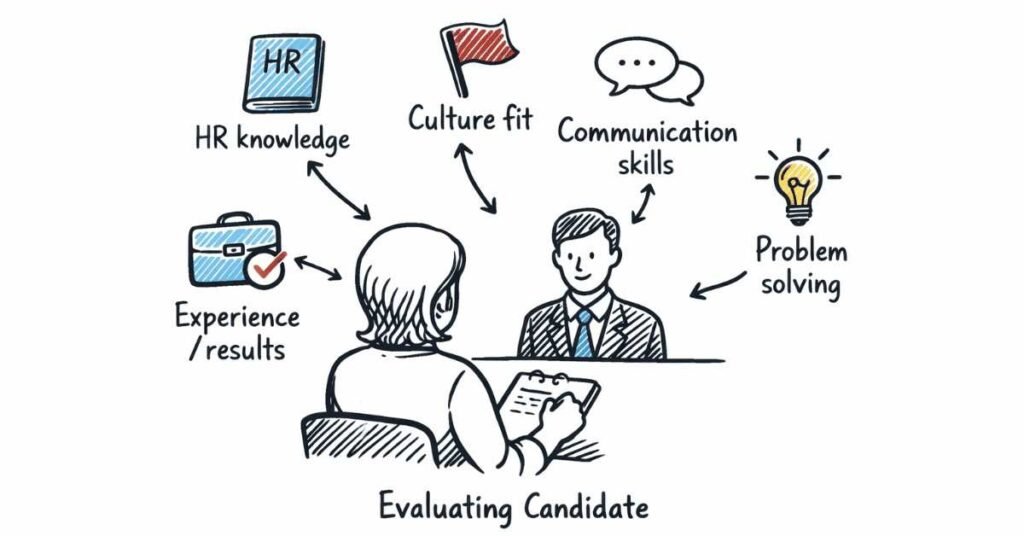
HR Knowledge and Competence
They’re assessing whether you understand HR fundamentals (recruitment, performance management, employee relations, compliance), know relevant labor laws and regulations, can apply HR concepts to real situations, and stay current on HR trends and best practices.
Cultural and Values Alignment
HR professionals must embody organizational culture. Interviewers evaluate whether your values align with company values, you’d fit within the existing HR team and broader organization, and you demonstrate behaviors the company prizes (collaboration, innovation, customer focus, etc.).
Interpersonal and Communication Skills
Since HR is fundamentally about people, interviewers closely observe your communication clarity and confidence, active listening skills, emotional intelligence and empathy, ability to build rapport, and professionalism and presence.
Problem-Solving and Judgment
They assess your analytical thinking and problem-solving approach, judgment in ambiguous situations, ability to balance competing priorities (employee advocacy vs. business needs), and decision-making frameworks.
Practical Experience and Results
Interviewers want evidence of relevant experience (even if from non-HR contexts), specific examples of skills in action, measurable results and impact, and ability to learn from successes and failures.
Understanding these evaluation dimensions helps you tailor your preparation and responses strategically.
Mastering the STAR Method for Behavioral Questions
Behavioral questions (“Tell me about a time when…”) are central to HR interviews. The STAR method provides the optimal structure for these responses.
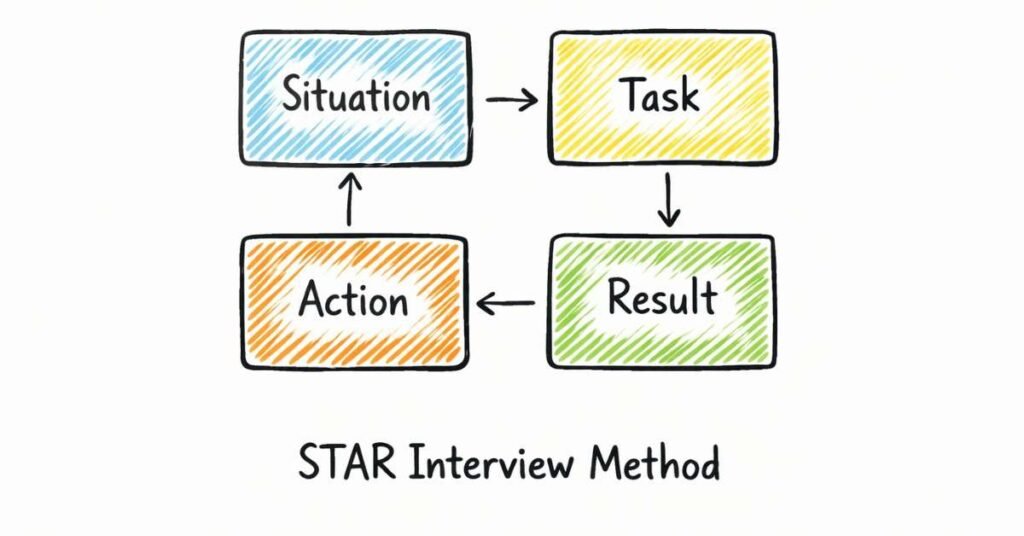
STAR Framework Breakdown
S – Situation (20% of response): Set the context in 1-2 sentences. Where were you? What was happening? Who was involved?
T – Task (10% of response): Explain your responsibility or what you needed to accomplish in 1-2 sentences.
A – Action (60% of response): Detail the specific steps YOU took. This is the heart of your answer—3-4 sentences describing your actions.
R – Result (10% of response): Share the outcome in 1-2 sentences. Quantify when possible (reduced turnover by 15%, hired 20 candidates in 3 months, improved engagement scores from 65% to 78%).
Why STAR Works
Structure: Provides clear, organized answers that are easy to follow.
Specificity: Forces you to provide concrete examples rather than vague generalities.
Focus on You: Emphasizes YOUR actions, not your team’s or company’s.
Outcome-Oriented: Demonstrates the impact of your actions.
AI-Compatible: STAR responses align perfectly with AI screening tools increasingly used in hiring.
STAR Method Example
Question: “Tell me about a time you had to manage a difficult conflict between employees.”
Poor Answer (No Structure):
“I’ve dealt with conflicts before. I’m good at listening to both sides and finding solutions that work for everyone. In my last role, people would come to me when there were issues because they trusted me to be fair.”
Strong Answer (STAR Method):
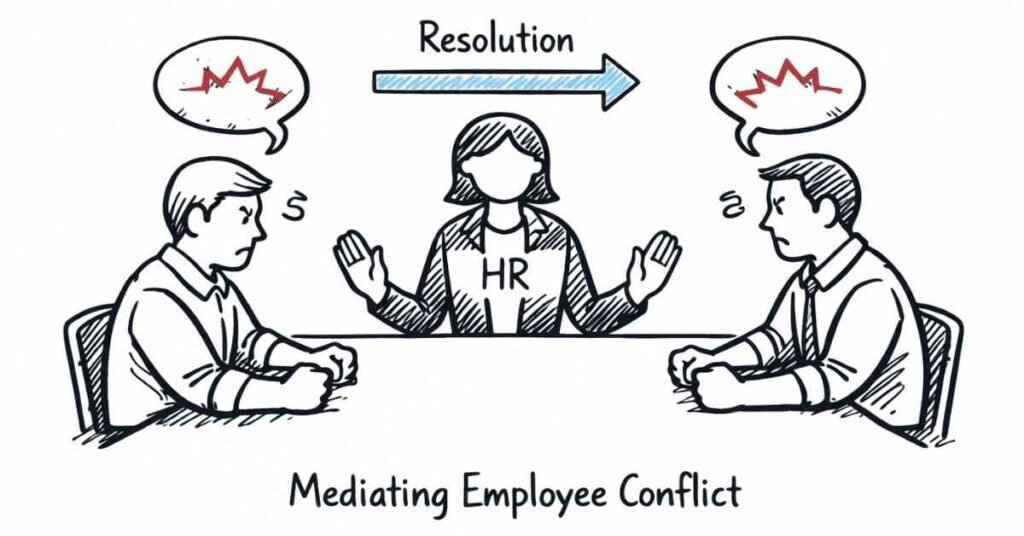
Situation: “In my previous role as HR Assistant, two team members in the marketing department had an escalating conflict over project responsibilities that was affecting the entire team’s dynamics.”
Task: “My manager asked me to mediate the situation and help them reach a workable solution since the conflict was impacting project deadlines.”
Action: “I met individually with each person first to understand their perspectives and concerns without the other present. I discovered the root issue was ambiguous role definitions causing overlap and frustration. I then facilitated a joint meeting where I helped them articulate their concerns respectfully, identify common ground, and together we drafted clear role boundaries and collaboration norms. I documented these agreements and scheduled follow-up check-ins.”
Result: “Within two weeks, the tension decreased significantly. The team completed their project on time, and three months later, both individuals reported improved working relationships. The manager shared that having clear role definitions prevented similar conflicts with other team members.
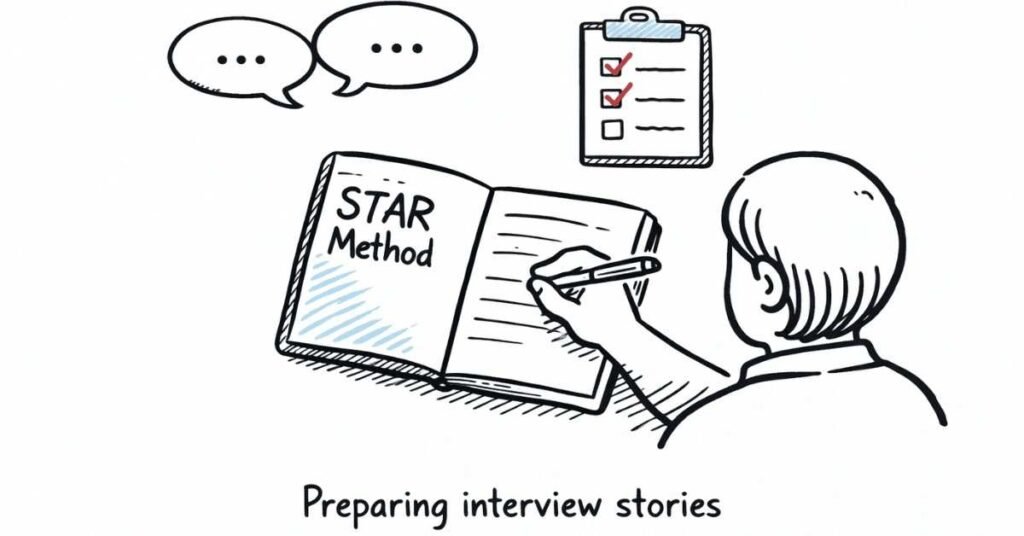
Preparing STAR Stories
Identify 8-10 Key Experiences: Select diverse situations demonstrating different competencies (conflict resolution, leadership, creativity, handling failure, working under pressure, etc.).
Write STAR Outlines: For each experience, outline the four STAR components. You won’t memorize word-for-word but having structure helps.
Practice Out Loud: Saying your stories aloud multiple times makes delivery smoother and more natural.
Adapt to Different Questions: The same experience can often answer multiple questions. Practice flexibility.
30+ Essential HR Interview Questions with Sample Answers
Let’s explore the most common HR interview questions across categories:
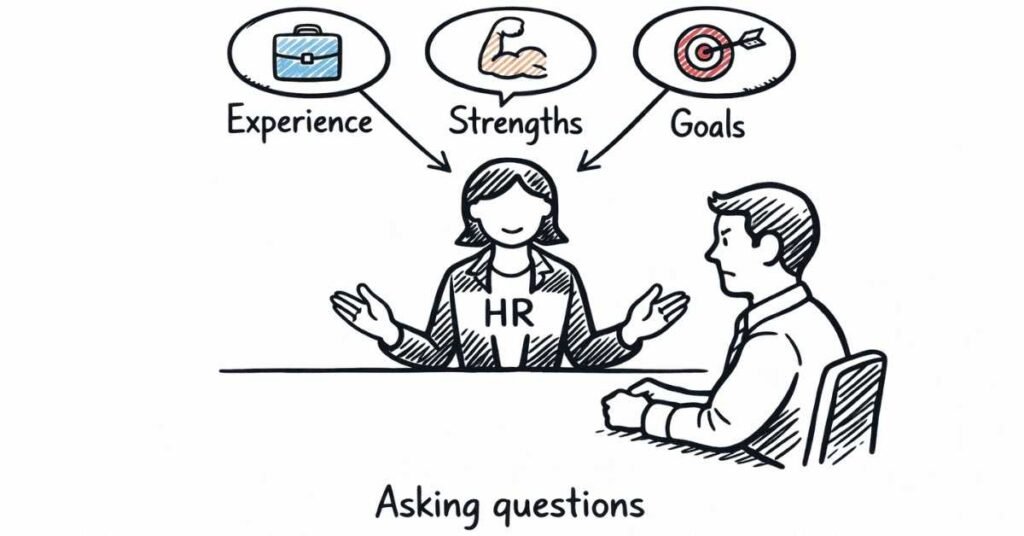
General/Introduction Questions
- “Tell me about yourself.”
What They’re Assessing: Communication skills, professionalism, how you position yourself, and relevance to the role.
How to Answer: Use a 2-3 minute structured response covering:
- Brief professional background (education, years in HR)
- Relevant experience and accomplishments
- Why you’re interested in this specific role
- What value you’ll bring
Sample Answer (Mid-Career Professional):
“I’m an HR professional with six years of progressive experience in talent acquisition and employee relations. I completed my MBA in HR from XYZ University in 2019 and started my career as a Recruitment Coordinator at ABC Tech, where I supported hiring for engineering roles. Over three years, I progressed to Senior Recruiter, successfully placing 80+ candidates and reducing average time-to-hire from 45 to 32 days.
For the past three years, I’ve worked as an HR Generalist at DEF Company, where I’ve broadened my scope to include employee relations, performance management, and HR compliance. I’ve conducted 15+ workplace investigations, managed our performance review process for 200 employees, and implemented a new onboarding program that increased new hire retention by 18%.
I’m excited about this HR Manager position because it aligns perfectly with my experience and allows me to take on greater strategic responsibility. Your company’s reputation for employee development and your commitment to building inclusive culture particularly resonates with my values. I believe my combination of talent acquisition expertise and employee relations background would allow me to make immediate contributions to your team.”
- “Why do you want to work in HR?”
What They’re Assessing: Genuine interest in HR (not just defaulting to it), understanding of what HR entails, and alignment with HR’s people-focused nature.
Sample Answer:
“I’m drawn to HR because I’m genuinely energized by helping people thrive professionally while contributing to organizational success. During my business degree, I discovered through projects and internships that I excelled at understanding people dynamics, resolving conflicts, and finding solutions that balanced individual needs with business objectives.
What particularly appeals to me about HR is the strategic impact—HR decisions directly affect organizational culture, employee engagement, and ultimately business results. I find it intellectually stimulating to navigate the complexity of people issues where there’s rarely one perfect answer, and I value the continuous learning required as workforce expectations and employment laws evolve.
On a personal level, few things are more rewarding than seeing someone you hired succeed, helping resolve a workplace conflict that was damaging relationships, or creating programs that improve employee wellbeing. That combination of strategic challenge and human impact makes HR the perfect career for me.”
- “What do you know about our company?”
What They’re Assessing: Whether you’ve done homework, genuine interest in THIS company specifically, and understanding of their business.
How to Answer: Research thoroughly. Mention:
- Core business and products/services
- Recent news, achievements, or challenges
- Company culture and values
- Specific aspects that attract you
Sample Answer:
“I’ve researched your company extensively and am impressed by several aspects. You’re a leading player in the fintech space with your flagship product serving 2 million+ customers. I read about your recent Series C funding round raising $50 million, which signals strong growth trajectory.
What particularly attracted me is your emphasis on employee development—your Learning Lab program and commitment to internal mobility align with my belief that investing in people drives business success. I also noticed you’ve been recognized as a Best Place to Work for three consecutive years, suggesting strong culture and employee engagement.
From a personal perspective, I’m excited about contributing to a company at this growth stage. Your current expansion from 200 to 400 employees over the next 18 months means HR will play a critical strategic role in scaling while maintaining culture, which is exactly the challenge I find most compelling.”
Behavioral Questions
- “Tell me about a time you disagreed with your manager. How did you handle it?”
STAR Response:
Situation: “In my previous role, my manager wanted to implement a new performance rating system that I felt would damage employee morale.”
Task: “I needed to respectfully share my concerns while supporting my manager’s authority.”
Action: “I requested a private meeting and came prepared with data. I explained that the proposed forced ranking system might create unhealthy competition and disproportionately impact newer employees. I shared research on companies that had moved away from forced rankings and proposed alternative approaches like individual goal-based assessments. I framed it as ‘here’s what I’m concerned about and some possible solutions’ rather than just criticism.”
Result: “My manager appreciated the data-driven approach and agreed to pilot a modified version incorporating my feedback. We tested it with one department first, gathered feedback, and refined before company-wide rollout. The final system was better than either of our original proposals, and my manager later thanked me for speaking up constructively.”
- “Describe a time when you had to work under significant pressure or tight deadlines.”
STAR Response:
Situation: “During annual performance review season, our HRIS system crashed just three days before reviews were due to be submitted.”
Task: “As the HR Coordinator, I needed to ensure 150 reviews were completed on deadline despite the technical failure.”
Action: “I immediately created a backup Excel template maintaining all required fields. I communicated the situation to all managers with clear instructions and a new deadline extension of two days we negotiated with leadership. I prioritized reviews by urgency and stayed late two consecutive nights validating data accuracy and compiling results. I maintained calm communication despite the stress, providing regular updates to leadership.”
Result: “We completed 100% of reviews within the extended timeline. While stressful, the experience taught me valuable lessons about building contingency plans and staying composed under pressure. We also used this incident to advocate for backup systems, which were subsequently implemented.”
- “Tell me about a time you failed or made a significant mistake. What did you learn?”
What They’re Assessing: Self-awareness, accountability, ability to learn from failures, and resilience.
Sample Answer:
“Early in my career as a recruiter, I was eager to fill a difficult software engineering position. I rushed a candidate through the process because he had impressive credentials and I wanted to meet my hiring targets. I downplayed some concerns from the interview team about cultural fit because I was focused on technical skills.
The candidate accepted the offer but struggled significantly with our collaborative team environment. Despite interventions, he left after just four months, which was expensive for the company and disruptive to the team. This failure taught me several crucial lessons: never compromise on cultural fit regardless of pressure to fill roles quickly, always give serious weight to interviewer concerns, and hiring for long-term success matters more than short-term metrics.
Since then, I’ve built much more rigorous assessment processes that evaluate both technical capability and team fit. My retention rates for hires have improved to 88% at 18 months. That early mistake, while painful, made me a significantly better recruiter.”
Technical HR Questions
- “How would you handle a situation where an employee files a harassment complaint?”
Sample Answer:
“Harassment complaints require immediate, careful handling. My approach would be:
First, I’d thank the employee for coming forward and reassure them that the complaint will be taken seriously and investigated thoroughly. I’d explain the investigation process and timelines, emphasizing confidentiality to the extent possible.
Second, I’d immediately document the complaint in detail and notify appropriate parties—my HR manager, potentially legal counsel, and the Internal Complaints Committee if applicable under POSH Act.
Third, I’d assess whether interim measures are needed to separate the parties during investigation—temporary reporting structure changes or leave arrangements if appropriate.
Fourth, I’d conduct a thorough investigation following established protocols—interviewing the complainant, accused, and witnesses; gathering relevant evidence like emails or messages; maintaining detailed documentation; and ensuring objectivity throughout.
Finally, based on findings, I’d recommend appropriate action—disciplinary measures if harassment occurred, policy training if behaviors were inappropriate but not illegal, or closure if allegations were unfounded. Throughout, I’d keep the complainant informed and ensure no retaliation occurs.
The keys are treating it seriously, moving quickly, maintaining confidentiality, following consistent process, and documenting everything.”
- “What’s your approach to conducting performance reviews?”
Sample Answer:
“Effective performance reviews require thoughtful preparation and structure. My approach includes:
Before meetings, I review the employee’s goals set at the beginning of the review period, compile 360-degree feedback from peers and managers, analyze objective performance data and metrics, and document specific examples of both strong performance and development areas.
During the review meeting, I create a two-way dialogue—not just me evaluating them but also hearing their self-assessment and perspective. I start with strengths before addressing development areas. I’m specific with examples rather than vague generalizations. For development areas, I focus on behaviors and impact rather than personal attributes.
Critically, I collaborate on goal-setting for the next period ensuring goals are SMART (Specific, Measurable, Achievable, Relevant, Time-bound) and aligned with both individual growth and business needs.
Post-review, I ensure action items are documented, schedule check-ins to monitor progress, and provide ongoing feedback rather than saving everything for annual reviews.
The philosophy is that reviews should contain no surprises—regular feedback throughout the year means the formal review confirms what’s already been discussed.”
Situational Questions
- “How would you handle an employee who is consistently underperforming?”
Sample Answer:
“Underperformance requires a structured, supportive approach. I would:
First, investigate the root cause—is it lack of capability, unclear expectations, personal issues, insufficient resources, or motivation problems? Understanding ‘why’ shapes the solution.
Second, have a direct conversation with the employee about the performance gap. I’d be specific about expectations versus current performance using concrete examples, seek their perspective on causes, and collaboratively identify solutions.
Third, if performance doesn’t improve after coaching, I’d implement a formal Performance Improvement Plan (PIP) with specific, measurable goals, a defined timeframe (typically 30-90 days), resources and support provided, clear consequences if improvement doesn’t occur, and documented regular check-ins to monitor progress.
Throughout this process, I’d maintain dignity and respect while being clear about expectations. If improvement occurs, great—we’ve helped someone succeed. If not, we’ve followed fair process that protects the organization if termination becomes necessary.
The goal is always to help people succeed, but we also owe it to high performers and the organization to address chronic underperformance.”
- “If an employee came to you confidentially with concerns about their manager, how would you respond?”
Sample Answer:
“This situation requires balancing confidentiality with responsibility to address issues. I would:
First, listen actively and empathetically without immediately problem-solving or defending the manager. People often need to be heard before they’re ready for solutions.
Second, ask clarifying questions to understand the specific behaviors or situations causing concern. Vague complaints about ‘bad management’ need to become specific examples I can address.
Third, explain what I can and cannot keep confidential. I’d be honest that if the concerns involve policy violations, harassment, or significant issues, I have an obligation to investigate. But I’d reassure them I’ll handle it sensitively and professionally.
Fourth, discuss potential solutions—sometimes employees want guidance on addressing it directly with their manager, and I can coach them through that conversation. Other times, concerns warrant my direct involvement with the manager or escalation to senior leadership.
Fifth, if the employee doesn’t want formal action, I’d explain that while I’ll respect their wishes where possible, I need to be aware of patterns. If multiple people raise similar concerns about the same manager, that indicates systemic issues requiring intervention.
Throughout, I’d maintain the employee’s trust while fulfilling my responsibility to address concerning patterns.”
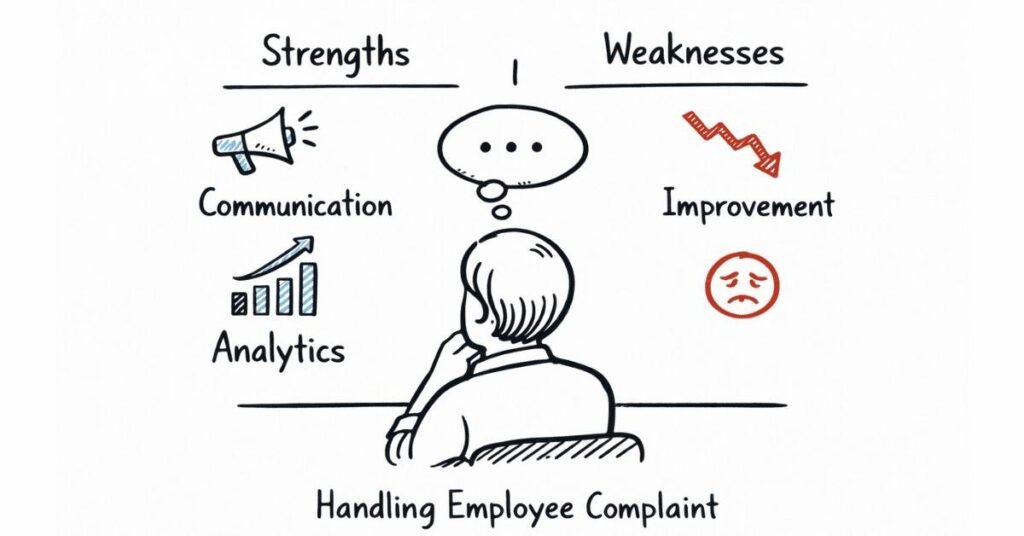
Questions About You
- “What are your greatest strengths?”
How to Answer: Choose 2-3 strengths relevant to the role, provide specific examples demonstrating each strength, and connect to the value you’ll bring.
Sample Answer:
“My greatest strengths are relationship building, analytical problem-solving, and adaptability.
For relationship building, I naturally connect with people across all organizational levels. In my current role, I’ve built trusted relationships with both frontline employees and C-suite executives, which allows me to understand diverse perspectives and bridge gaps between groups.
Regarding analytical problem-solving, I approach challenges systematically using data. When our turnover increased last year, rather than implementing generic retention programs, I analyzed exit data, identified that turnover concentrated in two departments and specific tenure ranges, uncovered root causes through interviews, and designed targeted interventions that reduced turnover by 22%.
Finally, adaptability is crucial in HR. When COVID-19 required our entire organization to shift remote, I quickly pivoted our onboarding, performance management, and engagement programs to virtual formats, ensuring continuity despite massive disruption.
These strengths will allow me to quickly build credibility in this role, bring data-driven problem-solving to your HR challenges, and navigate the fast-paced environment you’ve described.”
- “What is your greatest weakness?”
How to Answer: Choose a real weakness (not humble-brags like “I work too hard”), show self-awareness, demonstrate you’re actively working to improve, and keep it brief.
Sample Answer:
“I sometimes struggle with delegating because I want to ensure quality and have a tendency to think ‘it’s faster if I just do it myself.’ I’ve recognized this limits my capacity and doesn’t develop others.
I’m actively working on this by consciously identifying tasks that others can handle, providing clear instructions and expectations when delegating, checking in at midpoints rather than micromanaging, and reminding myself that short-term time investment in developing others pays long-term dividends.
In my current role, I recently delegated our monthly HR metrics report to a junior colleague. While it required initial coaching, she now owns it completely and has even suggested improvements I hadn’t considered. That experience reinforced that delegation benefits everyone when done well.”
Career Goals and Motivation
- “Where do you see yourself in five years?”
What They’re Assessing: Career ambition and direction, whether this role fits your trajectory, realistic expectations, and commitment to growth.
Sample Answer:
“In five years, I see myself having progressed into a senior HR leadership role—perhaps Senior HR Manager or HR Director—where I’m setting strategy for an entire HR function and partnering directly with executive leadership on people matters.
More specifically, I want to deepen my expertise in areas like organizational development and change management while maintaining strong operational HR execution. I’m particularly interested in leading HR through periods of transformation—whether growth, restructuring, or cultural change—because navigating complexity while keeping people at the center is what energizes me.
This HR Manager role is an ideal step toward that vision. It would give me broader strategic scope, people leadership experience managing an HR team, and the opportunity to drive initiatives end-to-end rather than just contributing. I see this as a substantial role I’d invest in for 3-4 years, making significant impact while building capabilities that position me for that senior leadership step.”
- “Why are you leaving your current role?”
How to Answer: Be honest but positive, focus on what you’re moving toward (growth, new challenges) more than what you’re leaving behind, never bash previous employers.
Sample Answer:
“I’ve truly valued my three years at my current company and have learned tremendously. I’ve progressed from HR Executive to Senior HR Generalist, taken on increasing responsibility, and delivered results I’m proud of—like reducing time-to-hire by 35% and leading our employee engagement program.
However, I’ve reached a point where growth opportunities are limited. The company is relatively small with a flat HR structure, and there’s no clear path to HR management in the near term. I’m ready for that next step—managing people, contributing more strategically, and taking on broader scope.
This role excites me because it offers exactly that progression. The opportunity to manage an HR team, partner with senior leaders on strategy, and work in a larger, more complex organization aligns perfectly with where I want to develop. I’m not leaving because of problems but because I’m ready for challenges my current role can’t provide.”
Salary and Compensation
- “What are your salary expectations?”
How to Answer: Research market rates thoroughly, provide a range rather than exact number, and be prepared to justify based on your experience and value.
Sample Answer:
“Based on my research of market rates for HR Manager roles in Bangalore with my level of experience—six years in HR including three in generalist roles—along with the scope of this position managing a team and supporting 400+ employees, I’m looking for compensation in the range of ₹12-15 lakhs annually.
That said, I’m flexible and want to understand the complete compensation package including benefits, bonuses, and growth opportunities. If the overall package is compelling and the role offers the development and impact I’m seeking, I’m open to discussion on the specific base salary figure.
Can you share what budget range you have in mind for this role?”
Questions to Ask Your Interviewer
Asking thoughtful questions demonstrates interest, critical thinking, and helps you assess if the role is right for you.

About the Role
- “What would success look like in this role after six months? After one year?”
- “What are the biggest challenges someone in this position would face?”
- “Can you describe a typical day or week in this role?”
- “What projects would I work on initially?”
About the Team and Manager
- “Can you tell me about the HR team structure and who I’d work most closely with?”
- “What’s your management style?” (if interviewing with direct manager)
- “How does the HR team collaborate with business leaders?”
About the Company
- “How would you describe the company culture?”
- “What do you enjoy most about working here?”
- “How has the company navigated recent challenges?”
About Growth
- “What professional development opportunities does the company offer?”
- “What does career progression typically look like for this role?”
- “How does the company support ongoing learning for HR professionals?”
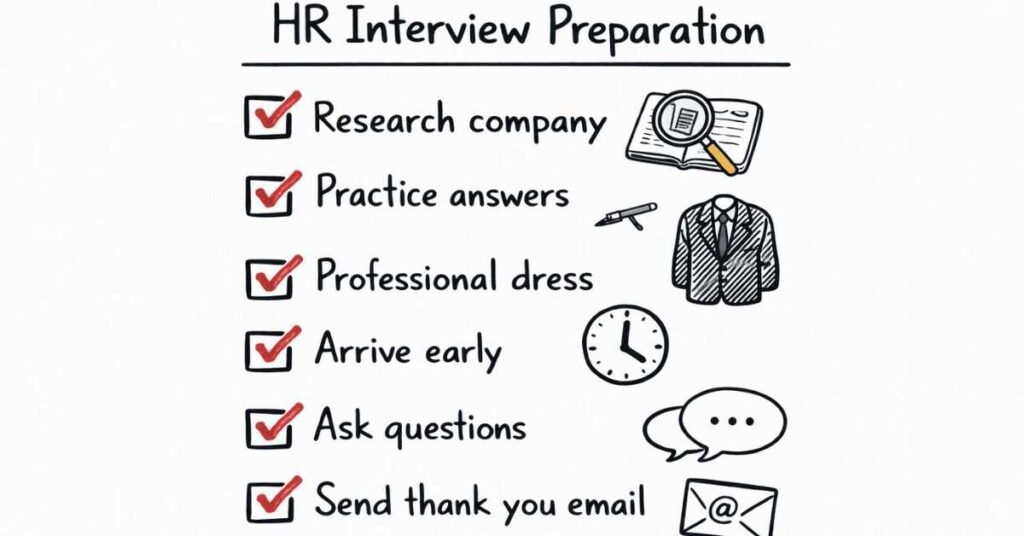
Final Interview Preparation Tips
- Practice, But Don’t Memorize: Rehearse answers to sound natural, not robotic.
- Research the Interviewers: If you know who’s interviewing you, check their LinkedIn profiles to understand their backgrounds.
- Prepare Your Materials: Bring extra copies of your resume, a notepad and pen, a list of references, and portfolio of work if relevant.
- Dress Professionally: HR roles require professional appearance. When in doubt, err on formal side.
- Arrive Early (Or Log In Early for Virtual): Plan to arrive 10-15 minutes early. For video interviews, test technology 30 minutes beforehand.
- Demonstrate Enthusiasm: Show genuine excitement about the role and company throughout.
- Mind Your Body Language: Maintain eye contact, sit up straight, smile naturally, and offer firm handshakes.
- Send Thank-You Notes: Within 24 hours, email each interviewer thanking them and reiterating your interest.
Interview success is the result of thorough preparation meeting authentic presence. Research the company deeply, prepare strong STAR stories demonstrating your capabilities, practice answering common questions out loud, develop thoughtful questions to ask, and most importantly—bring your genuine self to the conversation. HR professionals can spot inauthentic responses, so while preparation gives you structure, authenticity makes you memorable.
Remember: interviews are two-way evaluations. While they’re assessing you, you’re also determining if this role and organization align with your career goals and values. Approach with confidence, preparation, and curiosity. You’ve got this!