
How to Start a Customer Success Career: Entry-Level Guide for 2026
Table of Contents
Introduction
“I want to start a Customer Success career, but every job posting asks for 2+ years of experience. How do I get experience without getting hired first?”
Ankit from Delhi sent me this message last month, frustrated after applying to 30 Customer Success roles and receiving zero callbacks. His resume showed a commerce degree, six months in a call center, and genuine enthusiasm for helping customers. But companies weren’t looking past the “no CS experience” line.
Three months later, Ankit landed a Customer Success Associate role at a growing SaaS startup in Gurgaon, earning ₹5.2 lakhs annually. What changed? He stopped applying randomly and started following a strategic entry plan.
Here’s the truth about breaking into Customer Success: the “2 years experience required” is negotiable if you know how to position yourself. Companies struggle to find candidates with the right combination of communication skills, customer empathy, technical comfort, and cultural fit. If you can demonstrate these qualities even without formal CS experience you’re hirable.
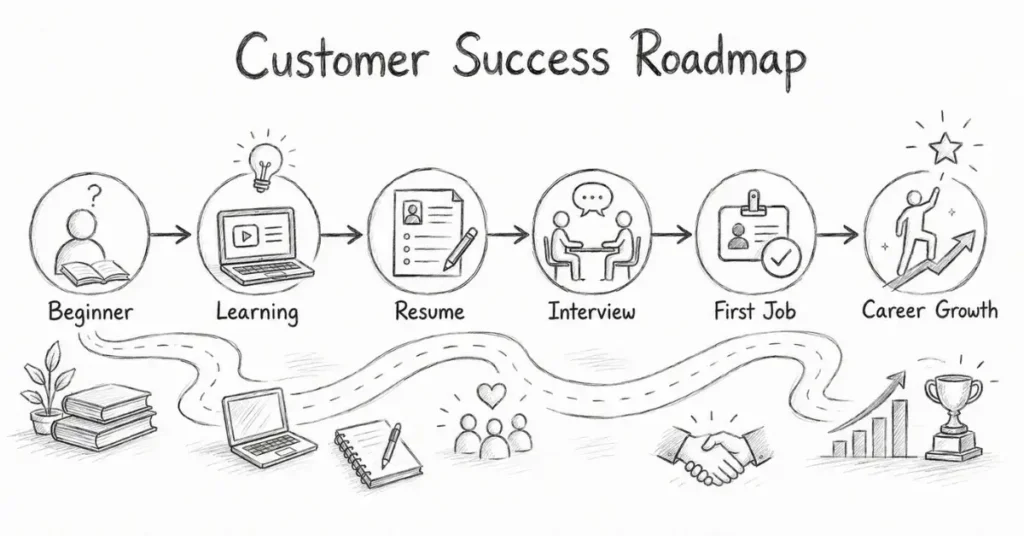
This comprehensive guide provides a step-by-step roadmap for breaking into Customer Success from scratch, whether you’re a fresh graduate, a career switcher, or someone currently in a support or sales role looking to transition. By following this plan systematically, you can land your first CS role within 3-6 months.
Reality Check: What Entry-Level Really Means
Let’s start with honesty about what “entry-level” Customer Success roles actually require.
Job Posting Says:
- 2-3 years of experience
- Bachelor’s degree in Business/Technology
- CRM experience (Salesforce, HubSpot)
- Proven track record of customer retention
- Experience with SaaS products
- Excellent communication skills
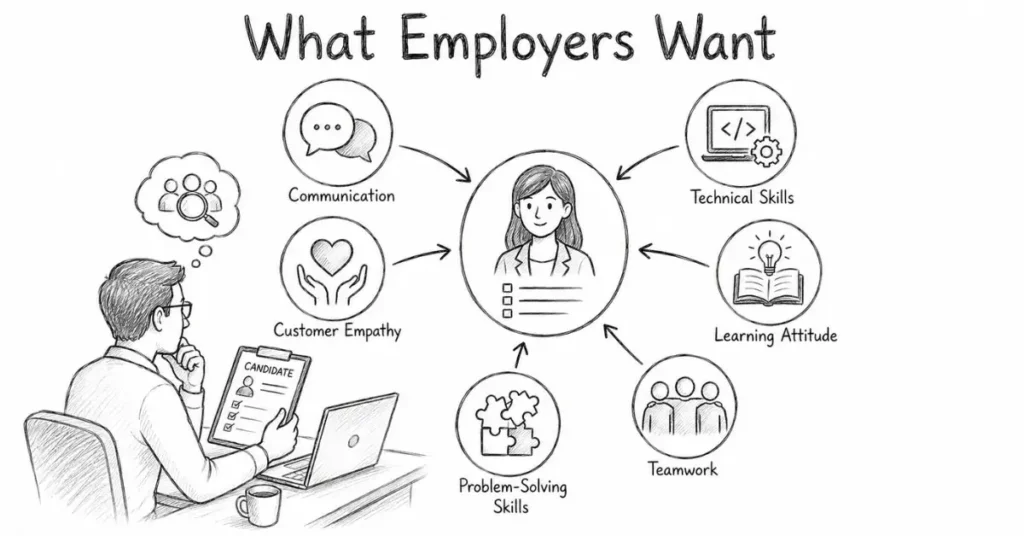
What Companies Actually Need:
- Someone who can communicate clearly (proven through interview)
- Basic comfort with technology (willing to learn tools)
- Customer-facing experience (even from non-CS roles)
- Coachable attitude and learning agility
- Cultural fit with the team
- Not going to quit in 3 months
The Gap Between Job Posting and Reality:
Companies write wish lists, not minimum requirements. When they can’t find the “perfect” candidate after 2-3 months of searching, they compromise. That’s your opening.
According to recent data, about 40% of Customer Success Associates hired in Indian startups have no prior CS experience. They come from customer support, sales, account management, retail, hospitality, teaching, and even completely unrelated fields.
Your Goal: Position yourself as the best available candidate who can learn quickly and deliver value, even if you don’t check every box.
Step 1: Assess Your Starting Point (Week 1)
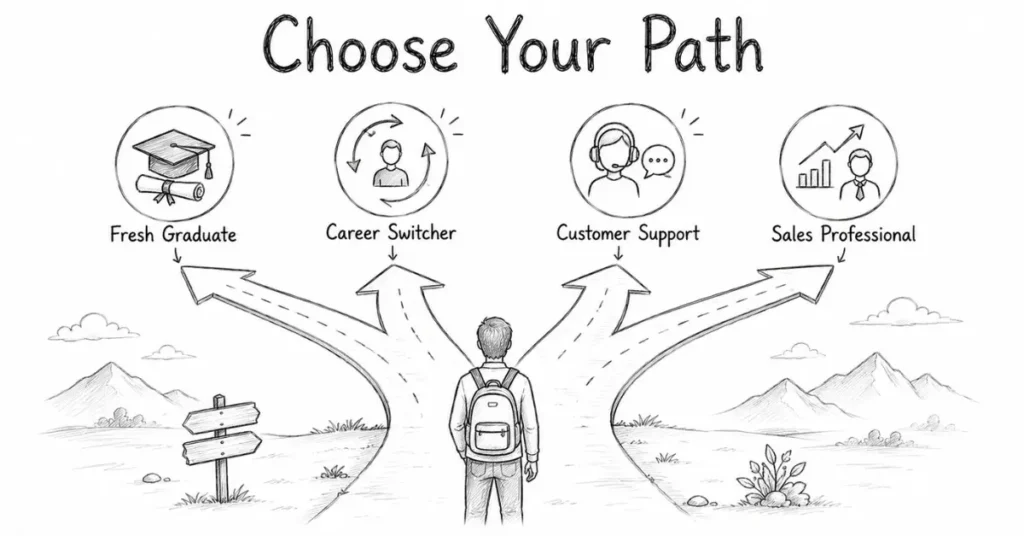
Before creating your action plan, honestly assess where you’re starting from. Different backgrounds require different strategies.
Scenario A: Fresh Graduate (0-1 year total experience)
Your Advantages:
- Clean slate, no bad habits
- Recent education (theoretical knowledge fresh)
- Energy and eagerness
- Lower salary expectations (companies appreciate this)
- Tech-savvy generation
Your Challenges:
- No professional experience
- Competing with experienced candidates
- May lack business understanding
- Need to prove maturity and reliability
Your Strategy: Emphasize communication skills, academic projects involving customer research or service design, internships, extracurricular leadership, and voracious learning ability. Target startups (50-200 employees) more likely to train fresh talent.
Scenario B: Career Switcher from Non-Customer-Facing Role
Your Advantages:
- Professional experience (understands workplace norms)
- Potentially valuable previous expertise (engineering, finance, marketing)
- Maturity and seriousness
- Clear motivation for change
Your Challenges:
- No direct customer interaction track record
- Explaining career pivot convincingly
- May face “why didn’t you do this earlier?” questions
- Possibly higher salary expectations
Your Strategy: Build bridge experience (volunteer customer-facing work, freelance consulting, side projects). Emphasize transferable skills. Create compelling narrative about why CS aligns with your strengths and values.
Scenario C: Currently in Customer Support/Service
Your Advantages:
- Customer interaction experience (highly relevant)
- Understanding of customer pain points
- Familiarity with support tools and processes
- Proven customer empathy
Your Challenges:
- Companies may pigeonhole you as “support person”
- Salary expectations may be lower than CS roles offer
- Need to demonstrate strategic thinking, not just reactive problem-solving
Your Strategy: Document how you’ve gone beyond ticket resolution to drive customer success. Showcase proactive outreach, relationship building, identifying expansion opportunities. Position yourself as strategically-minded, not just operationally-focused.
Scenario D: Currently in Sales/Account Management
Your Advantages:
- Customer relationship skills
- Revenue awareness and business acumen
- Negotiation and communication experience
- Understanding of sales-to-CS handoff
Your Challenges:
- Companies may worry you’re too sales-aggressive for CS
- Perception that you couldn’t succeed in sales
- Need to demonstrate genuine customer empathy over revenue focus
Your Strategy: Emphasize long-term relationship building, post-sale customer development, and genuine interest in customer outcomes vs. just closing deals. Highlight retention and expansion work, not just new business.
Step 2: Build Foundational Knowledge (Weeks 1-3)
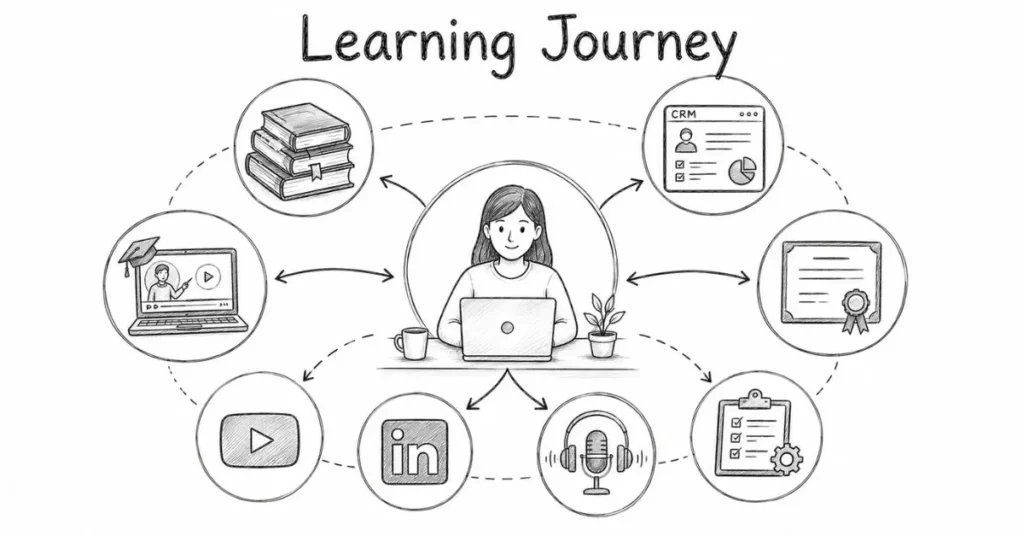
Before applying to jobs, invest 2-3 weeks understanding Customer Success deeply. This knowledge will show in interviews.
Week 1: Understand What Customer Success Actually Is
Daily Investment: 1-2 hours
Activities:
- Read foundational CS content (Gainsight blog, ChurnZero resources, Practical CSM)
- Watch YouTube videos: “What is Customer Success?” from multiple sources
- Listen to 3-4 episodes of “The Customer Success Podcast”
- Join Customer Success Network India (LinkedIn group) and read discussions
- Follow 10 CS leaders on LinkedIn (Nick Mehta, Lincoln Murphy, Indian CS professionals)
Goal: Speak intelligently about CS philosophy, understand terminology (churn, NRR, health scores, customer lifecycle), explain how CS differs from support and sales.
Week 2: Learn About Tools and Processes
Daily Investment: 1-2 hours
Activities:
- Sign up for HubSpot CRM free account: Spend 3-4 hours exploring (add contacts, create deals, run reports)
- Complete HubSpot Service Hub certification: Free, takes 3-4 hours, gives you actual credential
- Watch Gainsight demo videos (understand what CS platforms do)
- Learn Excel/Google Sheets basics if weak: pivot tables, charts, formulas
- Watch webinars about CS best practices (Gainsight Pulse, ChurnZero, etc.)
Goal: Demonstrate tool familiarity in interviews, add HubSpot certification to resume, understand CS workflows conceptually.
Week 3: Research Target Companies and Roles
Daily Investment: 1-2 hours
Activities:
- Create list of 30-40 Indian SaaS companies (use AngelList, LinkedIn, Crunchbase)
- Research each: What do they do? Who are their customers? Recent funding/news?
- Identify 10-15 companies you’re genuinely excited about
- Check their careers pages for open CS roles
- Find CS professionals at these companies on LinkedIn, understand their backgrounds
- Read their blog posts, case studies, product documentation
Goal: Apply to companies strategically, not randomly. Demonstrate genuine interest and knowledge in interviews.
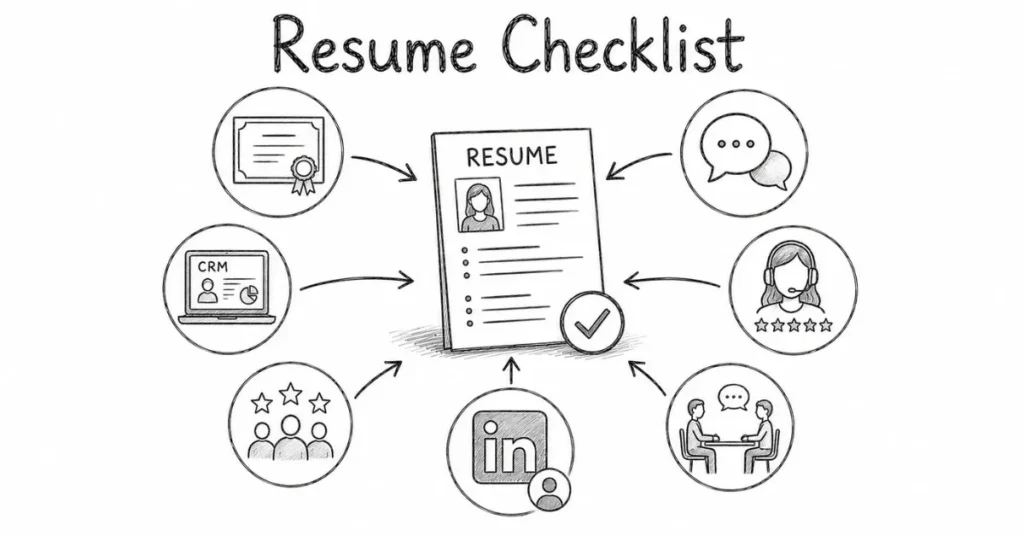
Step 3: Create a Compelling Resume (Week 3)
Your resume needs to position your experience (even if non-CS) as relevant to Customer Success roles.
Structure:
Professional Summary (2-3 lines):
Weak Example:
“Recent graduate seeking Customer Success role to learn and grow in SaaS industry.”
Strong Example:
“Customer-focused professional with 2 years of client-facing experience in [industry], skilled in relationship building, problem-solving, and technical communication. Seeking to leverage strong communication abilities and analytical thinking to drive customer retention and satisfaction as a Customer Success Associate. HubSpot Service Hub certified.”
Experience Section (Reframe Everything Through CS Lens):
Weak Example:
Customer Support Agent, XYZ Company (2023-2024)
- Answered customer calls
- Resolved technical issues
- Updated tickets in system
Strong Example:
Customer Support Specialist, XYZ Company (2023-2024)
- Managed 50+ daily customer interactions, maintaining 94% satisfaction rating (CSAT)
- Proactively identified recurring product issues and collaborated with Product team, reducing related tickets by 30%
- Created customer-facing help documentation improving self-service resolution by 25%
- Recognized as “Customer Champion” Q3 2024 for exceptional customer advocacy
- Utilized Zendesk and Salesforce daily for customer interaction management
See the difference? Same job, but second version emphasizes customer outcomes, proactive behavior, cross-functional collaboration, and quantifiable results all CS qualities.
Skills Section:
Technical Skills:
- CRM Platforms: HubSpot CRM, Salesforce (basic), Zoho CRM
- Tools: Microsoft Excel (pivot tables, data analysis), Google Workspace
- Communication: Zoom, Slack, Email management
- Languages: English (fluent), Hindi (native), [others]
Soft Skills:
- Customer Empathy & Active Listening
- Problem-solving & Critical Thinking
- Clear Written & Verbal Communication
- Time Management & Organization
- Adaptability & Learning Agility
Certifications:
- HubSpot Service Hub Certification (2026)
- [Any other relevant certifications]
- [Online courses completed: mention Coursera, LinkedIn Learning CS courses]
Education:
- Standard education details
- If relevant projects: “Capstone Project: Analyzed customer retention patterns for [company/case study], identifying key factors driving churn”
Key Principles:
- Quantify Everything: Numbers prove impact (50+ customers, 94% satisfaction, 25% improvement)
- Use CS Keywords: Retention, satisfaction, proactive, relationship, lifecycle, onboarding, adoption
- Show Initiative: Highlight instances where you went beyond job description
- One Page Maximum: For entry-level, one page is enough
- Tailor to Each Job: Customize for each application (yes, it’s tedious, but essential)
Step 4: Build Your Online Presence (Week 4)
In 2026, your digital presence matters as much as your resume.
LinkedIn Optimization (Critical):
Headline:
Don’t: “Looking for opportunities”
Do: “Customer Success Enthusiast | Customer-Focused Problem Solver | Building Relationships That Drive Retention”
About Section (200-300 words):
Structure:
- Opening hook: Why you’re passionate about customer success
- Your relevant experience and strengths
- What you’re looking for
- Call to action
Example:
“I believe businesses succeed when their customers succeed it’s that simple.
Over the past two years at [Company], I’ve worked directly with 500+ customers, turning frustrated users into advocates. The moment a customer says ‘Thank you, you really helped me’ that’s what drives me. Customer Success formalizes this passion into a strategic career.
My strengths lie in clear communication (consistently 90%+ satisfaction ratings), proactive problem-solving (identified and resolved systemic issues reducing complaints by 30%), and genuine empathy. I’m comfortable with technology, having quickly mastered Salesforce, Zendesk, and HubSpot. I’m analytical, using data to identify patterns and improve processes.
I’m seeking a Customer Success Associate or CSM role where I can apply these skills to drive retention, adoption, and customer satisfaction in a growing SaaS company. I’m particularly interested in [specific industry/type of company].
HubSpot Service Hub certified. Based in [City], open to remote roles.
Let’s connect if you’re building CS teams or know of opportunities!”
Content Strategy:
Week 4-8: Post 2-3 times per week on LinkedIn
Content Ideas:
- Share CS articles with your commentary (1 paragraph perspective)
- Write about lessons from your customer interactions
- Discuss CS concepts you’re learning
- Comment thoughtfully on CS leaders’ posts
- Share your certification achievements
- Write about why you’re transitioning to CS
Goal: Build visibility, demonstrate knowledge, appear in searches when recruiters look for CS candidates.
Twitter/X (Optional but Valuable):
- Follow CS leaders and companies
- Engage with CS community
- Share learnings
- Less critical than LinkedIn but helpful
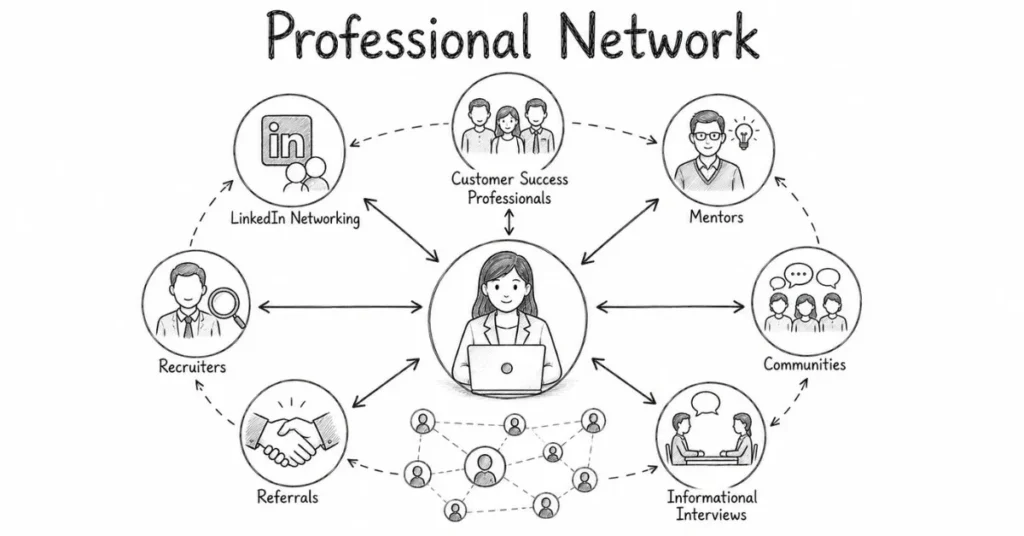
Step 5: Network Strategically (Weeks 4-8)
Networking is how 40-50% of CS roles get filled before they’re even posted publicly.
Informational Interviews (Most Powerful Strategy):
Target: 5-10 Customer Success professionals across different companies
Outreach Message Template:
“Hi [Name],
I came across your profile while researching Customer Success careers in India. Your journey from [previous role] to [current role] at [Company] is exactly the kind of transition I’m working toward.
I’m currently building skills to break into CS (recently completed HubSpot certification, working at [company] in customer-facing role). I’d greatly appreciate 15-20 minutes of your time for advice on:
- How you broke into CS
- Skills that matter most early in your career
- Any suggestions for someone in my position
I understand you’re busy, so I’m happy to work around your schedule. Even a quick call would be incredibly valuable.
Thank you for considering!
[Your Name]
[LinkedIn Profile URL]”
Success Rate: Approximately 20-30% response rate if personalized and respectful.
During Informational Interview:
Ask:
- How did you get into Customer Success?
- What skills do you use most frequently?
- What do you wish you’d known when starting?
- Are there any companies you know that are hiring for entry-level roles?
- Would you be willing to review my resume briefly?
- Can I stay in touch as I progress?
Don’t:
- Ask directly for a job (yet)
- Take more than promised time
- Fail to follow up with thank you
Follow-up:
Send thank-you email within 24 hours. Stay in touch monthly with updates on your progress. When they see openings, they’ll think of you.
Join CS Communities:
Must-Join:
- Gain Grow Retain (Slack community global CS professionals)
- Customer Success Network India (LinkedIn group)
- Local CS meetups in your city (Bangalore, Pune, Hyderabad have active groups)
Participate genuinely: Answer questions, share insights, ask thoughtful questions. Don’t just lurk.
Company-Specific Networking:
For your top 10 target companies:
- Connect with 2-3 CS professionals at each company
- Engage with their LinkedIn content
- When they post job openings, you’re a warm connection, not cold applicant
Step 6: Apply Strategically (Weeks 4-12)
Quality Over Quantity:
Don’t spray 100 generic applications. Better: 30-40 highly customized applications to companies you’ve researched.
Application Strategy:
Tier 1 (Dream Companies – 10 companies):
- Thoroughly research
- Customize resume and cover letter extensively
- Network with employees first
- Apply through referral if possible
- Follow up after application
Tier 2 (Good Fit Companies – 15 companies):
- Solid research
- Customize resume
- Brief, targeted cover letter
- Apply directly
Tier 3 (Practice/Backup – 10-15 companies):
- Basic customization
- Apply to build interview experience
- Companies you’d accept if offered, but not top choices
Cover Letter (Yes, Write One):
Structure:
Paragraph 1: Why this specific company excites you (show research)
Paragraph 2: Your relevant experience and how it translates to CS
Paragraph 3: Specific value you’ll bring (reference something from their website/product)
Paragraph 4: Call to action
Length: 250-350 words maximum
Example Opening:
“I was genuinely excited to see the Customer Success Associate opening at [Company]. As a daily user of [their product] for [specific use case], I’ve experienced firsthand how intuitive onboarding and proactive support drive customer loyalty exactly the principles behind great Customer Success.”
Follow-Up:
One Week After Application:
If no response, send brief LinkedIn message to recruiter or hiring manager:
“Hi [Name], I applied for the Customer Success Associate role last week and wanted to express my continued interest. I’m particularly excited about [specific thing about company]. Would love the opportunity to discuss how my [relevant experience] could contribute to your CS team. Happy to provide any additional information needed.”
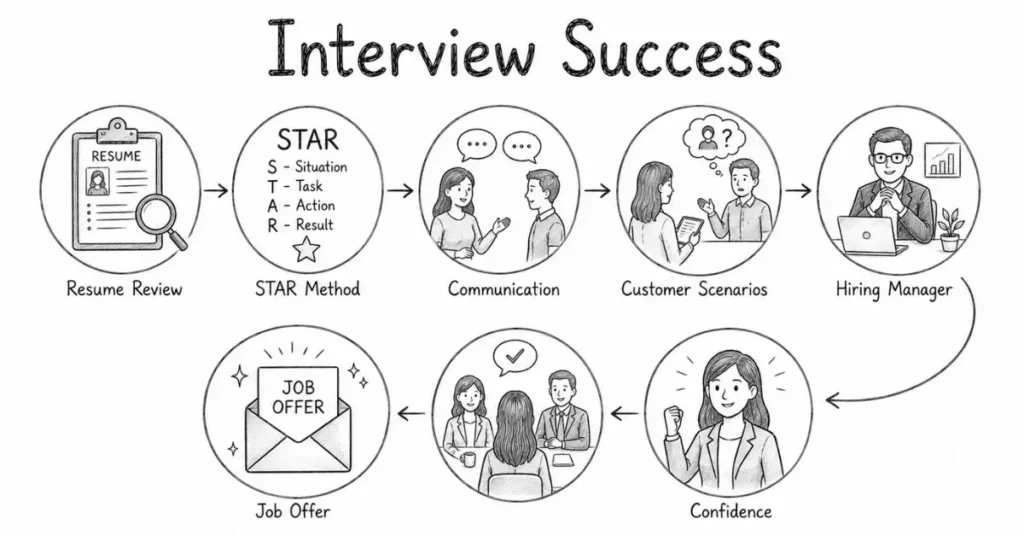
Step 7: Ace the Interview (Ongoing)
You’ll face several interview rounds, typically:
Round 1: Recruiter Screen (15-30 minutes)
Common Questions:
- Tell me about yourself
- Why Customer Success?
- Why this company?
- Walk me through your resume
- Salary expectations
Strategy:
- Concise, structured answers (2-3 minutes max)
- Show enthusiasm and culture fit
- Ask intelligent questions about the role
Round 2: Hiring Manager Interview (45-60 minutes)
Common Questions:
“Tell me about a time you dealt with a difficult customer.”
Weak Answer:
“I had a customer who was angry about a billing issue. I apologized and fixed it.”
Strong Answer (STAR Method):
“Situation: At [Company], a customer called extremely frustrated they’d been billed twice due to a system error, and this was their third call about it.
Task: I needed to resolve the billing issue, but more importantly, restore their trust in our company.
Action: First, I acknowledged their frustration without being defensive: ‘I completely understand why you’re upset being charged twice and having to call multiple times is unacceptable.’ I immediately processed the refund while on the call (rather than promising to follow up). Then I proactively credited their account for the inconvenience. Finally, I scheduled a follow-up call for the next week to ensure everything was resolved and they were satisfied.
Result: The customer thanked me for taking ownership and became one of our most loyal customers, even referring two other businesses to us. This taught me that how you handle mistakes matters more than the mistakes themselves.”
"Why do you want to work in Customer Success?"
Weak Answer:
“I like helping people and I’m good at communication.”
Strong Answer:
“I’ve spent the past two years in customer-facing roles, and I’ve noticed something: I get more satisfaction from helping customers succeed long-term than just solving immediate problems. When I help a customer implement a solution that transforms their workflow, or when they reach out months later saying our product became essential to their business that’s incredibly rewarding.
Customer Success formalizes this approach strategically. Instead of reactive problem-solving, CS proactively ensures customers achieve their goals, which benefits both the customer and the company. That alignment is what excites me. I want to build a career where my success depends on customer success.”
"How would you handle a customer threatening to cancel?"
Answer Framework:
- Listen and understand root cause (is it price, functionality, adoption, support?)
- Acknowledge concerns without being defensive
- Explore solutions based on specific issues
- Involve appropriate teams if needed (product, sales, management)
- Find win-win outcome when possible
- If cancellation is inevitable, conduct exit interview to learn
Round 3: Role-Play or Case Study
Many CS interviews include practical scenarios.
Common Scenarios:
- Customer onboarding call simulation
- Handling customer objection/complaint
- Analyzing customer data and recommending actions
- Presenting product value
Preparation:
- Practice with friends or record yourself
- Focus on listening, asking clarifying questions, structured thinking
- Show your process, not just your conclusion
- Demonstrate empathy and problem-solving
Round 4: Cultural Fit / Team Interview
Strategy:
- Be authentic
- Ask questions showing interest in team dynamics
- Demonstrate collaboration and coachability
- Show you’ve researched the company culture
Questions YOU Should Ask:
To Hiring Manager:
- What does success look like in the first 90 days?
- What’s the typical customer onboarding process?
- How is CS measured at this company?
- What’s the biggest challenge your CS team faces currently?
- How does CS collaborate with Product and Sales teams?
To Team Members:
- What do you love about working here?
- What’s the team culture like?
- How are you supported in your growth?
- What’s the most challenging aspect of the role?
Never Ask in Early Interviews:
- Vacation policy, work hours, benefits (save for offer stage)
- “Do you check emails after hours?” (implies you won’t)
Step 8: Handle Rejection and Iterate (Ongoing)
Reality Check: You’ll face rejection. Average candidates apply to 30-50 roles before landing their first CS job.
When You Get Rejected:
Ask for Feedback:
“Thank you for letting me know. I’m committed to breaking into Customer Success. Would you be willing to share any feedback on how I could strengthen my candidacy for future roles?”
30% of the time, they’ll provide valuable insights.
Analyze Patterns:
- Rejected at resume stage? Improve resume, apply to smaller companies, network more
- Rejected after phone screen? Improve your story, practice answers
- Rejected after manager interview? Improve technical knowledge, practice case studies
- Getting to final rounds but not selected? You’re close keep refining
Don’t:
- Give up after 10 applications
- Take rejection personally
- Argue with feedback
- Stop learning and improving
Step 9: Evaluate and Accept Offers (When They Come)
When You Receive an Offer:
Evaluate Beyond Salary:
- Learning opportunities (training, mentorship)
- Company trajectory (growing? Funded? Stable?)
- Manager quality (you’ll learn most from them)
- Team culture (will you enjoy working with these people?)
- Career progression potential (can you grow here?)
Sometimes the lower-paying offer at a better company is the smarter choice long-term.
Negotiate Professionally:
“I’m very excited about this opportunity. Based on market research and the value I’ll bring, I was expecting compensation in the [X] range. Additionally, I’d like to discuss [signing bonus, professional development budget, equity]. Can we explore options?”
Entry-level candidates can typically negotiate 10-15% improvement.
Step 10: Set Yourself Up for Success (First 90 Days)
You got the job! Now what?
First Week:
- Absorb everything (product, processes, team dynamics)
- Ask questions freely (you’re expected to not know things)
- Build relationships with team members
- Understand how you’ll be measured
First Month:
- Master core tools and systems
- Shadow experienced CSMs
- Take on small accounts or tasks
- Document everything you learn
First 90 Days:
- Demonstrate reliability and initiative
- Exceed expectations on assigned tasks
- Identify one process improvement you can suggest
- Build rapport with customers assigned to you
- Get positive feedback from customers or colleagues
Goal: By day 90, be seen as valuable team member who will succeed long-term. This sets foundation for rapid career progression.
Timeline Summary: Entry-Level CS Job in 3-6 Months
Weeks 1-3: Learn CS fundamentals, build knowledge, research companies
Weeks 4-6: Optimize resume/LinkedIn, start networking, begin applications
Weeks 6-12: Active applications (30-40 total), informational interviews, improve based on feedback
Weeks 10-16: Interview rounds, negotiate offers
Month 4-6: Land and start first CS role
This assumes consistent effort (10-15 hours/week). Some land roles faster, some take longer. Stay persistent.
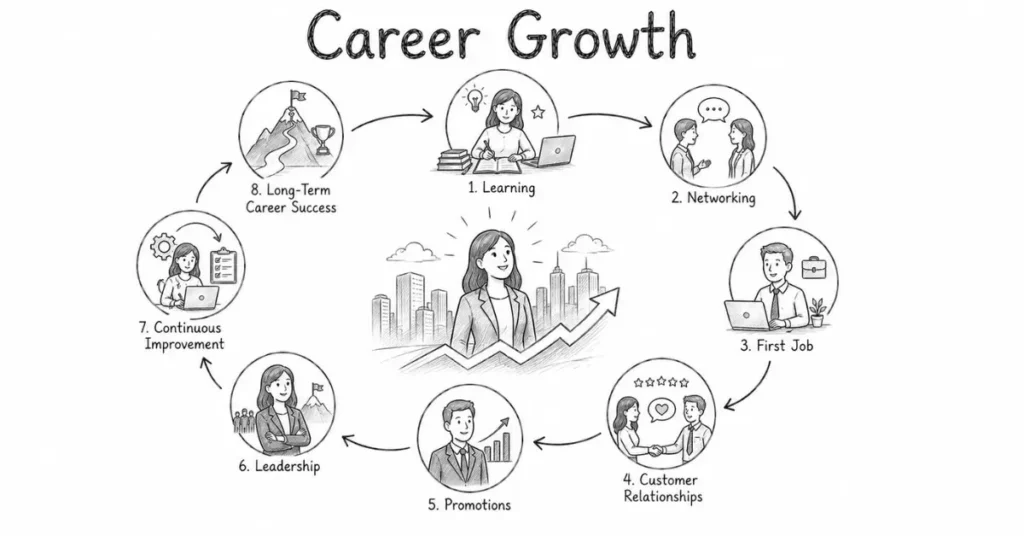
Conclusion: Your First CS Job is Just the Beginning
Breaking into Customer Success is challenging but absolutely achievable. You don’t need perfect qualifications or years of experience. You need:
- Strategic approach (not random applications)
- Relevant skills (communication, empathy, tech comfort)
- Persistence (handling rejection professionally)
- Continuous learning (showing growth mindset)
- Authentic passion (genuine interest in customer outcomes)
Thousands of people break into Customer Success every year in India. Many had less experience than you. Many faced more obstacles than you. They succeeded because they followed systematic approaches and didn’t give up.
Your first CS role might not be perfect maybe the salary is lower than hoped, or the company is smaller than ideal. Take it anyway. You need that first experience on your resume. Once you have 12-18 months of CS experience, doors open dramatically. You’ll have leverage to move to better roles, higher salaries, more prestigious companies.
The question isn’t whether you can break into Customer Success. The question is: are you willing to invest 3-6 months of focused effort to make it happen?
If yes, start today. Week 1 begins now.