
How to Become a Game Programmer in India: Languages, Tools & Career Path (2026)
Table of Contents
Introduction:
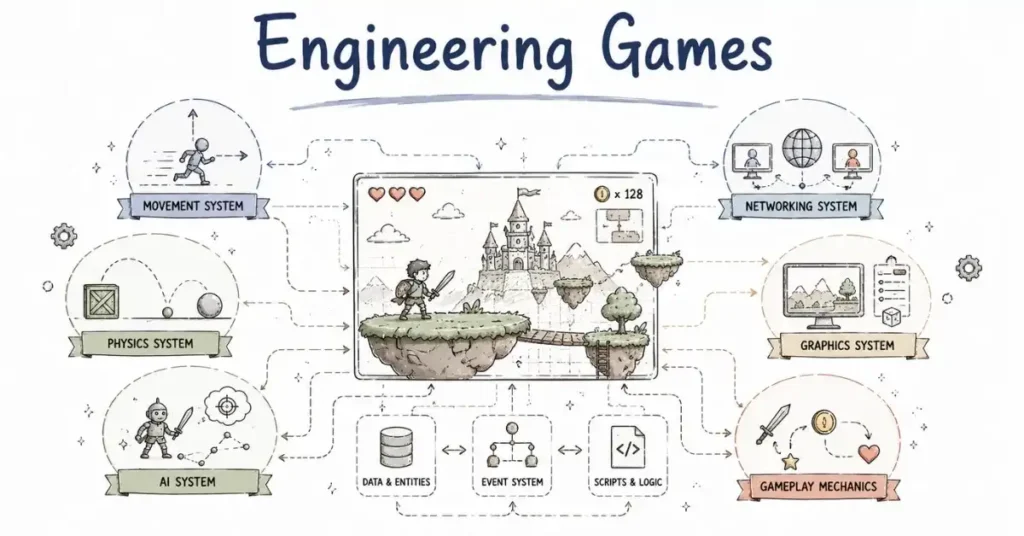
If game development is building a house, game programming is the foundation, walls, and wiring everything invisible that holds the visible parts together. The character that runs and jumps, the enemy that follows you through a corridor, the leaderboard that updates in real time, the frame rate that stays smooth on a budget Android phone all of that is programming work.
Game programmer is one of the most technically demanding roles in the gaming industry, and in India, it is also one of the most consistently in-demand. This guide covers the full picture: which languages actually matter, how the career path progresses, what studios expect at each level, and the step-by-step roadmap to get there.
Game Programmer vs Game Developer: Is There a Difference?
In everyday conversation, the terms are used interchangeably. In a large studio, they mean different things.
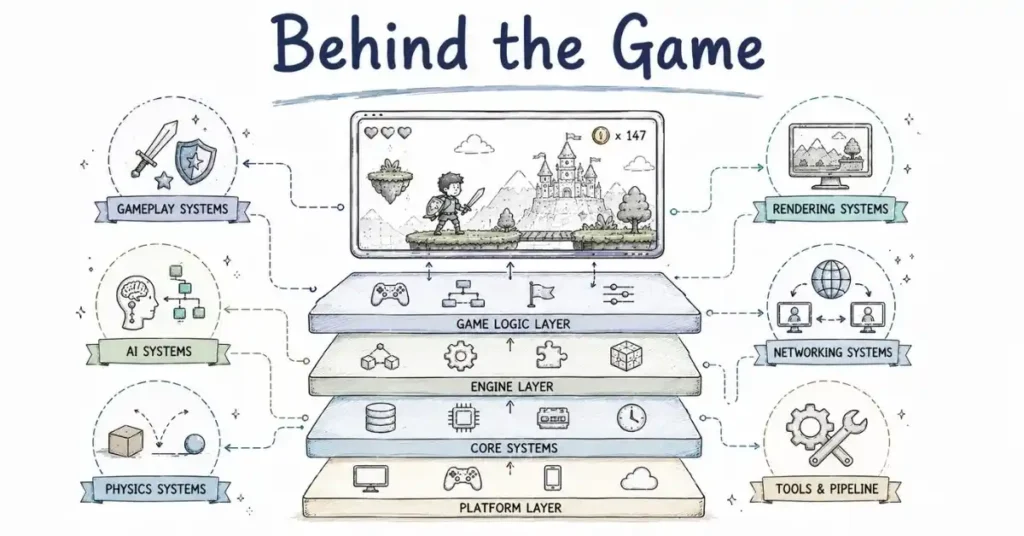
A game developer is a broad term that covers anyone writing code for a game from UI to networking to gameplay. A game programmer typically refers to someone who has gone deeper into a specific technical domain within game development: graphics rendering, physics simulation, AI programming, engine architecture, or network programming.
At a small indie studio in India, one person does all of it and the titles overlap. At a studio like Ubisoft India or Electronic Arts, there are distinct teams one focused on graphics, one on gameplay systems, one on engine tools each with programmers who specialise narrowly and deeply.
For the purpose of this guide, “game programmer” means the technical specialist: someone whose primary job is writing high-performance, complex code that powers the systems inside a game.
The Programming Languages That Actually Matter
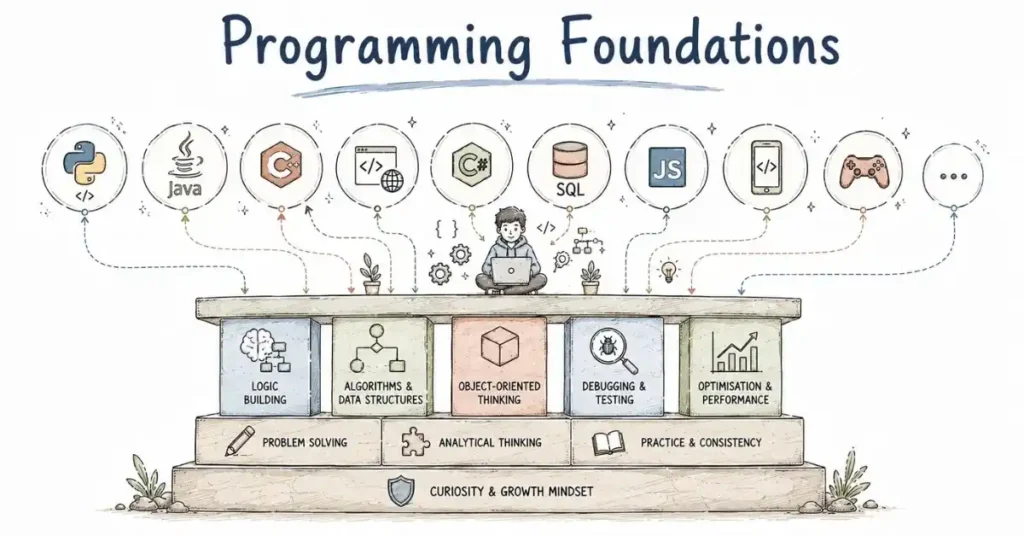
This is where most beginners make their first wrong turn either learning a language with no game industry demand, or spreading themselves across five languages before mastering one. Here is what the Indian game development market actually uses.
C# The Practical Starting Point
C# is the primary language for Unity development. It is object-oriented, readable, and significantly easier to learn than C++. For anyone targeting mobile game studios, indie development, or entry-level roles at mid-size Indian companies, C# is where to start.
Why it matters in India: Unity powers the majority of mobile games built by Indian studios nCore Games, Nazara Technologies, Moonfrog Labs, and dozens of smaller studios all use Unity and therefore hire C# developers. The entry-level job market is wider in C# than in any other game-specific language.
What you need to know: Variables, data types, OOP principles (classes, inheritance, polymorphism), LINQ, coroutines (specific to Unity), and memory management basics. You do not need to master everything before building learn as you build.
C++ The High-Performance Language of AAA Games
C++ is the language of Unreal Engine and of the underlying engine code at most large studios. It is significantly harder than C# it requires understanding pointers, memory allocation, manual memory management, and a more complex syntax. But it also gives programmers direct control over performance in a way that C# does not.
Why it matters in India: Ubisoft India, Electronic Arts, Rockstar Games India, and Sony all use C++ for core development work. Programmers who know C++ well earn significantly more than those who only know C#, and they qualify for roles at the largest studios in the country.
What you need to know: Pointers and references, memory management (heap vs stack), the STL (Standard Template Library), OOP in C++, templates, and multithreading basics. These take longer to learn than the C# equivalents plan for 6–9 months of focused study before you are comfortable.
Python Useful but Not Central
Python is not used to write games. It is used for tooling automation scripts, build pipelines, data analysis, and internal tools that make a development team more efficient. Many studios have Python in their toolchain, and programmers who can write Python scripts alongside their primary language are useful team members.
For game programming specifically: Learn Python after C# or C++, not instead of them.
Java and Kotlin For Specific Mobile Contexts
Some older mobile games in India were built in Java. Kotlin, its modern successor, is used for Android native development. Neither is a primary game development language, but if you are specifically targeting Android-native game projects (without an engine), Kotlin is worth knowing.
For most people: Stick to C# or C++. Java/Kotlin are niche here.
Shader Languages: GLSL and HLSL
These are specialized languages used for graphics programming writing the code that tells a GPU how to render a surface. Not a starting point, but essential for graphics programmers. HLSL is used in Unreal and DirectX environments; GLSL is used in OpenGL contexts.
Specialisation Paths: What Type of Game Programmer Do You Want to Be?
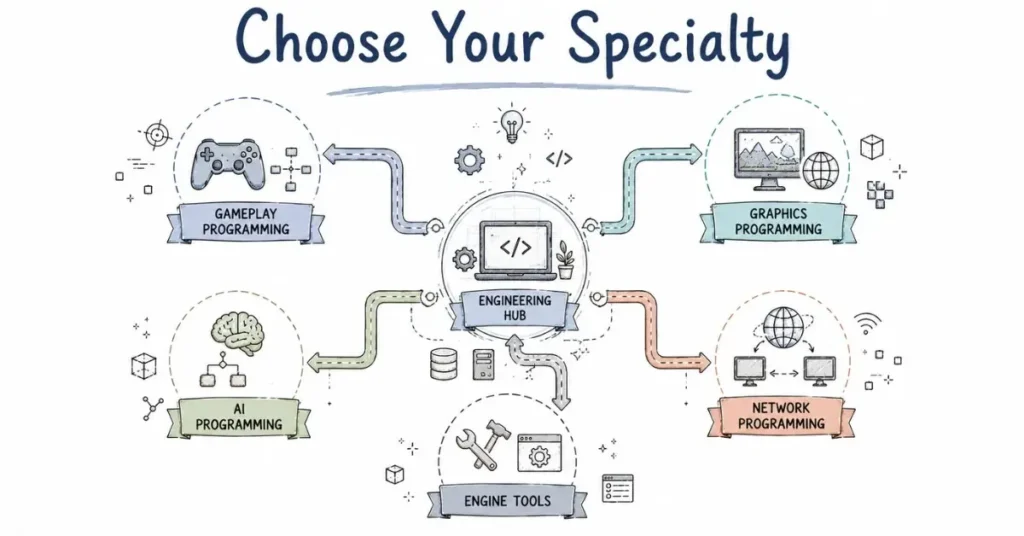
Once you have a foundation in C# or C++, the career branches into several specialisations. Each one demands different secondary skills and leads to different roles.
Gameplay Programmer
What they do: Write the systems players interact with directly character movement, combat mechanics, ability systems, AI behaviour trees. This is the broadest and most common game programming role.
Who it suits: Developers who want to work close to the “fun” their code is what players feel directly when they play.
Secondary skills needed: Unity or Unreal Engine proficiency, state machines, behaviour trees, basic physics.
Graphics Programmer
What they do: Write the rendering code that determines how a game looks lighting systems, post-processing effects, shadow rendering, and visual effects. They work at the boundary between game development and GPU architecture.
Who it suits: Programmers with a strong maths background linear algebra, matrix transformations, and calculus come up regularly in graphics work.
Secondary skills needed: HLSL or GLSL, linear algebra, GPU profiling tools, Unreal’s rendering pipeline or Unity’s Universal Render Pipeline.
Salary premium: Graphics programmers earn 20–30% more than equivalent-experience gameplay programmers at the same studio, because fewer programmers have the mathematical background required.
Network/Multiplayer Programmer
What they do: Build the systems that connect players over the internet server architecture, lag compensation, data synchronisation, anti-cheat systems. With BGMI, Valorant, and online multiplayer being India’s dominant gaming formats, this specialisation is in serious demand.
Who it suits: Programmers interested in distributed systems, server-side development, and the technical challenge of making a game feel smooth across varying internet connections.
Secondary skills needed: TCP/IP fundamentals, UDP (most multiplayer games use UDP, not TCP), server architecture basics, and experience with multiplayer frameworks like Photon, Mirror (Unity), or Unreal’s built-in networking.
Engine Tools Programmer
What they do: Build the internal tools that artists, designers, and other developers use to create the game custom editors inside Unity or Unreal, build pipeline automation, asset processing tools, and workflow systems.
Who it suits: Programmers who enjoy making other people’s work easier. This role is less glamorous than gameplay or graphics programming but is consistently in demand at larger studios, and experienced tools programmers are rarely unemployed.
Secondary skills needed: Understanding of engine editor APIs, UI frameworks, scripting, and build systems.
AI Programmer
What they do: Write the code governing how non-player characters (NPCs) behave pathfinding, decision-making, enemy combat patterns, and squad behaviour. Increasingly, AI programmers also work on procedural generation systems.
Who it suits: Programmers with an interest in algorithms, state machines, and the behavioural logic that makes a game world feel alive.
Secondary skills needed: Behaviour trees, finite state machines, A* pathfinding, NavMesh systems (in Unity and Unreal), and increasingly, machine learning fundamentals for more sophisticated NPC behaviour.
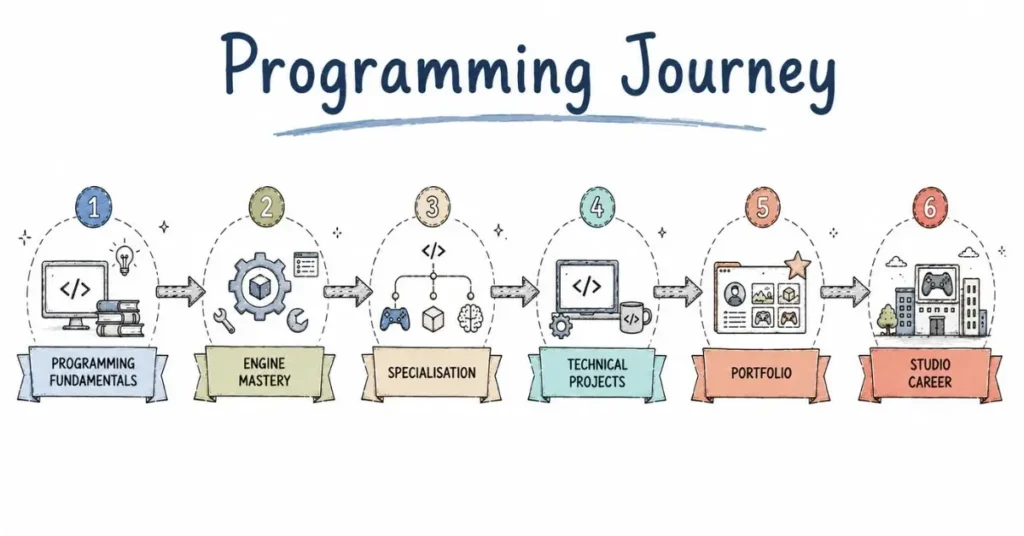
Step-by-Step Roadmap: 14 Months to a Specialist Game Programmer Role
This roadmap assumes you are starting from basic programming knowledge. Adjust the timeline based on your current skill level.
Month 1–2: Solidify your primary language
If targeting mobile studios (more jobs, faster hire): deepen C#. Complete Microsoft’s C# intermediate path, build five small programmes that use OOP principles, and practice writing clean, well-commented code from day one.
If targeting AAA studios (higher salary, longer runway): start C++ now. Use Learncpp.com it is free, comprehensive, and specifically structured for people learning C++ seriously. Spend these two months purely on language fundamentals before touching an engine.
Month 3–5: Master your engine
For C# go deep on Unity. Not just “how to make a game” tutorials, but the engine internals: how the update loop works, how coroutines are executed, how the physics engine communicates with gameplay code, how to profile performance on an Android device.
For C++ start with Unreal Engine’s Blueprint system first (two to three weeks), then switch to C++ within Unreal. Understanding Blueprints first gives you a visual model of how Unreal thinks before you translate that into code.
Month 6–8: Pick your specialisation
By this point, you have enough foundation to make an informed choice. Look at what genuinely excites you: graphics, gameplay, networking, tools. Spend three months going deep on one. Build a project that specifically demonstrates that specialisation a multiplayer prototype for networking, a custom shader system for graphics, a complex AI enemy for AI programming.
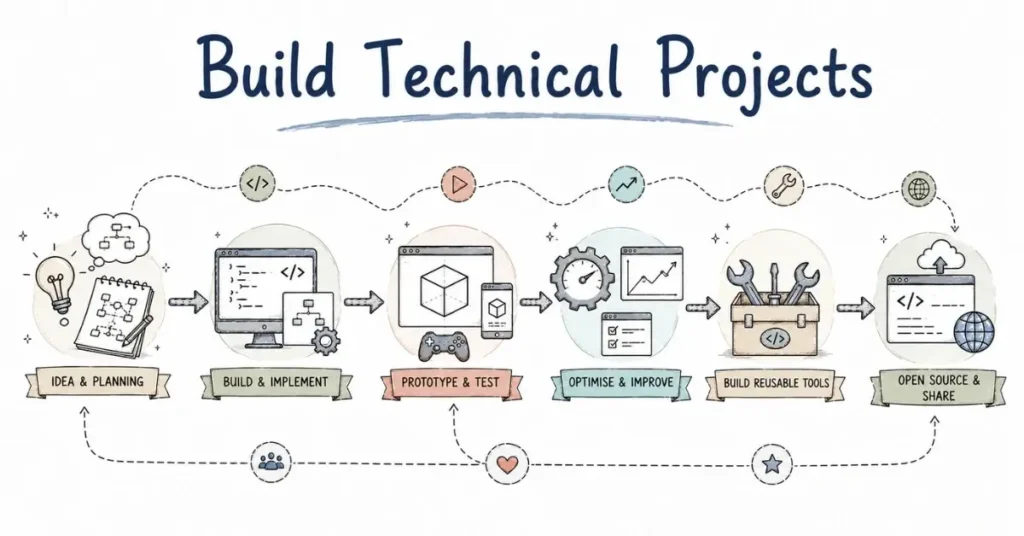
Month 9–11: Build a technical portfolio
Your portfolio needs two things: evidence you can build things that work, and evidence you understand why they work.
- Two to three complete projects on GitHub with clean code and README documentation
- One technical write-up (blog post or PDF) explaining how you solved a specific hard problem “How I implemented lag compensation in a Unity multiplayer game” or “How I optimized a mobile game from 45 FPS to 60 FPS on a budget Android device”
- One project that specifically showcases your chosen specialisation
Month 12–14: Target companies and interview preparation
- Apply to 15–20 companies in the first month. Track everything.
- Prepare for technical interviews: data structures, algorithms (arrays, linked lists, trees, sorting), and engine-specific questions (Unity coroutines, Unreal’s garbage collection, object pooling patterns)
- Practice writing code in front of someone this is different from writing code alone and requires separate practice
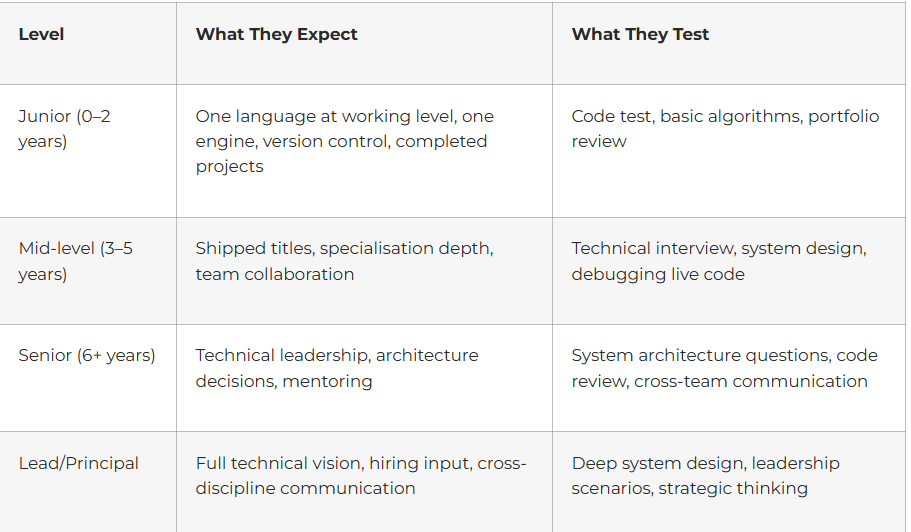
What Studios Look for at Each Level
Salary Ranges for Game Programmers in India
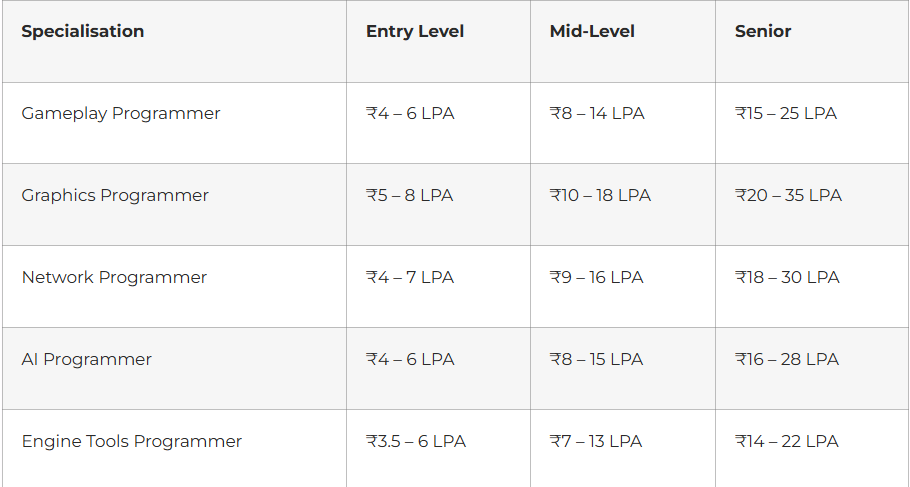
Graphics programmers consistently earn the highest premiums across all levels due to the mathematical background required and the relative scarcity of qualified candidates in India.
The Technical Interview: What to Expect
Game programming interviews in India differ from standard software engineering interviews in one important way: they test game-specific knowledge alongside general CS fundamentals.
What comes up in every interview:
- Object-oriented programming concepts you will be asked to explain and apply them, not just define them
- Data structures arrays, dictionaries, queues (all commonly used in game systems)
- Memory management particularly for C++ roles: stack vs heap, when to use smart pointers
- Design patterns relevant to games object pooling, state machine, observer, command patterns
What comes up depending on your specialisation:
- Gameplay: “How would you implement a double-jump mechanic?” walk through your logic out loud
- Graphics: “Explain the rendering pipeline” from vertex shader to pixel output
- Networking: “How do you handle packet loss in a real-time multiplayer game?”
- AI: “Walk me through how you would implement enemy pathfinding in an open-world game”
One thing interviewers universally notice: Candidates who think out loud, acknowledge when they do not know something, and reason through problems systematically get hired over candidates who give confident wrong answers and stay silent when stuck. Nobody expects a junior programmer to know everything. They do expect intellectual honesty.
Resources Worth Your Time
For C#:
- Microsoft Learn C# Fundamentals free, official, structured
- Unity Learn “Junior Programmer” pathway free, game-specific
For C++:
- Learncpp.com the most comprehensive free C++ resource available
- “A Tour of C++” by Bjarne Stroustrup (the creator of C++) worth reading once you have three months of C++ under your belt
For graphics programming:
- learnopengl.com free, project-based graphics programming curriculum
- “Real-Time Rendering” by Akenine-Möller et al. the industry reference book for graphics programmers
For multiplayer/networking:
- Gabriel Gambetta’s “Fast-Paced Multiplayer” series (free online) the clearest explanation of game networking concepts available anywhere
YouTube channels:
- The Cherno C++ fundamentals with game engine context
- Sebastian Lague Unity and game systems programming, excellent for visual learners
- ThinMatrix Java-based but the game programming logic translates across languages
The One Habit That Separates Good Programmers from Great Ones
Read other people’s code. Not tutorials actual open-source game projects on GitHub. Find a project in your engine and language, read through how experienced developers structured their systems, and ask yourself why they made each decision.
Most self-taught programmers only ever write code. Reading code understanding patterns, spotting what could be improved, borrowing good ideas is how you compress years of learning into months. One hour of reading good code per week will change how you write faster than ten hours of tutorials.