
How to Become a Game Developer in India: Roadmap, Skills & Salaries
Table of Contents
Introduction
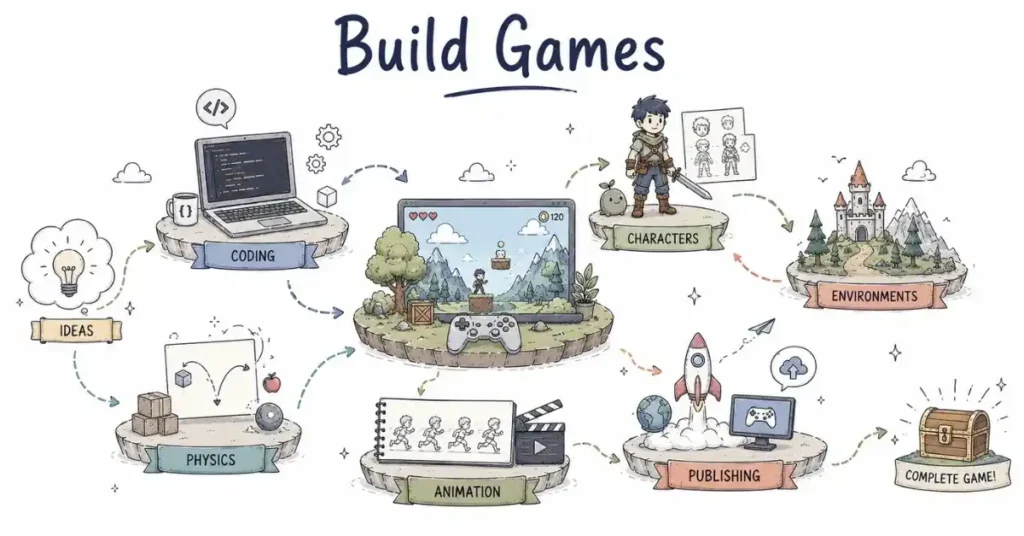
Three years ago, Arjun was a Computer Science student in Bengaluru who spent more time modding games than attending lectures. Today he works at a mid-size studio building mobile games played by 2 million people. He did not get there through luck he got there because he built the right skills in the right order, made a portfolio that proved it, and applied to the right companies.
This guide follows that same logic. Whether you are a student figuring out where to start, a fresh graduate who wants to enter game development, or a software developer thinking about switching into gaming this is the step-by-step picture of how it actually works in India.
What Does a Game Developer Actually Do?
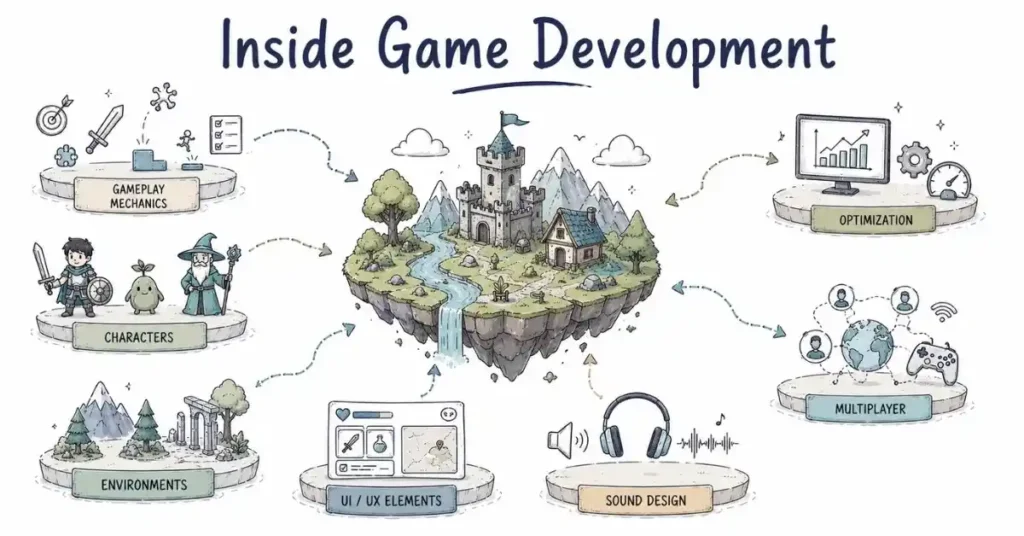
Before anything else, get clear on what the job looks like day-to-day because “game developer” covers a wide range of actual work.
At a small indie studio, one developer might write gameplay code, set up the physics system, connect the UI, and also handle the Android build. At a large studio like Ubisoft India, the same job title means something far narrower you might spend six months working exclusively on character movement mechanics.
At its core, a game developer writes the code that makes a game function. That includes:
- Gameplay systems how a character jumps, how enemies behave, how the score is calculated
- Physics and collision how objects interact in the game world
- UI programming menus, HUD elements, loading screens
- Performance optimisation making the game run smoothly on target devices
- Multiplayer and networking for games where players connect and compete online
- Build and deployment packaging the game for Android, iOS, PC, or console
The code that powers all of this is written inside a game engine most commonly Unity or Unreal Engine. Understanding which engine to learn first is so important it has its own dedicated guide in this series. For now: if you are starting from zero in India, start with Unity. More on that shortly.
Do You Need a Degree?
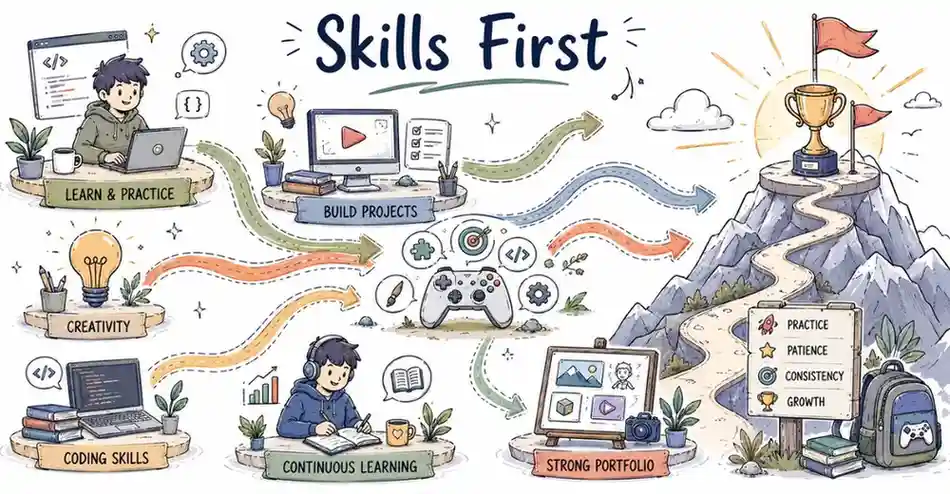
Short answer: no. Slightly longer answer: a degree helps, but your portfolio matters more.
Studios like Zynga, EA, and Ubisoft list a B.Tech or B.Sc. as “preferred” on most job descriptions not “required.” Hiring managers at these companies have said publicly, and repeatedly, that a strong GitHub profile and shipped projects outweigh a degree from a low-ranked college.
That said, if you are already enrolled in a Computer Science, Information Technology, or Software Engineering programmer, do not drop out. Use your degree years to build everything in this guide simultaneously. The combination of a degree and a portfolio is stronger than either alone.
If you are not in a degree programmer, do not let that stop you. Several working game developers in India are self-taught, came from non-CS backgrounds, or completed short-term certification programmer.
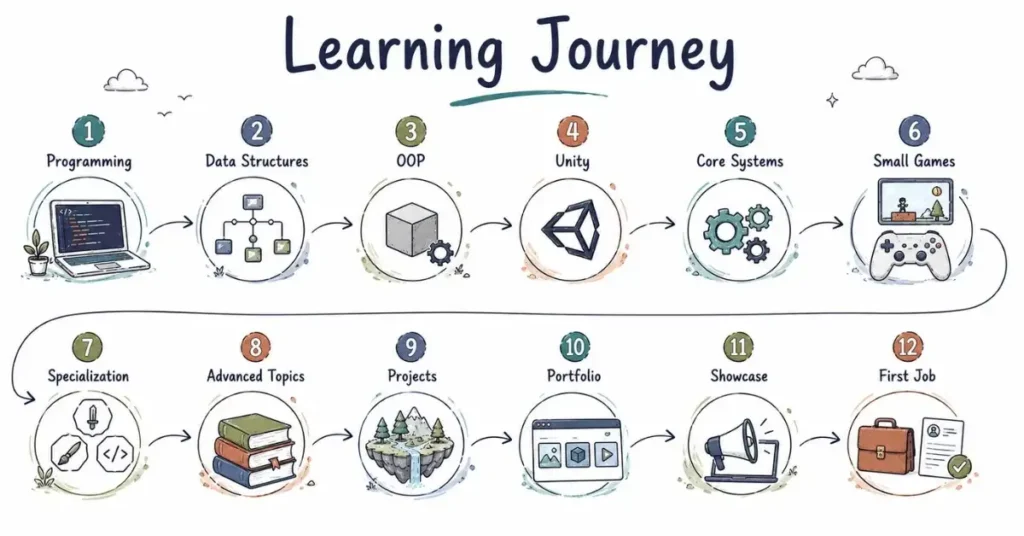
Step-by-Step Roadmap: 12 Months to Your First Game Dev Job
This roadmap assumes you are starting with basic familiarity with computers but no prior programming experience. If you already code, skip to Month 4.
Month 1–2: Learn Programming Fundamentals
Start with C#. Not Python, not Java, not C++ C# first. Here is why: Unity, which has the most entry-level job listings in India, uses C# as its primary language. Learning C# gets you into a game engine faster than any other starting point.
What to do:
- Complete the free CS50P (Introduction to Programming with Python) or the C# Fundamentals course on Microsoft Learn both are free
- Spend 1–1.5 hours daily writing small programmes: calculators, number guessing games, text-based adventures
- Do not spend more than two months on pure programming before touching a game engine you will lose momentum
Milestone: Write a simple console game (even a text-based quiz) entirely in C# without looking up syntax.
Month 3–5: Learn Unity
Unity is where most Indian game developers start their careers. There are 181 live Unity developer job listings in India compared to 27 for Unreal Engine. The gap exists because Unity dominates mobile game development, and India’s gaming market runs primarily on mobile.linkedin+1
What to do:
- Work through Unity Learn (learn.unity.com) it is free and structured for beginners
- Complete the “Create with Unity” pathway it takes roughly 40–50 hours
- Build your first three small projects: a 2D platformer, a basic endless runner (very common in Indian mobile games), and a simple puzzle game
Common mistake: Watching tutorials without building anything yourself. Every tutorial you watch should be followed by a project where you change something the level, the mechanic, the art. Passive watching does not build skill.
Milestone: A playable 2D game built entirely by you, hosted on itch.io, that someone else has downloaded and played.
Month 6–8: Go Deeper on One Area
Game development has several specialisations. At this stage, you are good enough to start going deeper on one rather than staying shallow on all.
Choose based on what genuinely interests you:
- Gameplay programming writing the systems that make the game fun to play (most common entry-level path)
- Mobile optimisation making games run smoothly on budget Android phones (extremely in demand in India)
- Multiplayer/networking a technical specialisation with higher pay, steeper learning curve
- UI programming menus, inventory systems, HUD good fit if you have a design sensibility
What to do:
- Pick one area, find three tutorials specifically for that area in Unity
- Start building a second, more complex game that specifically uses that specialisation
- Read the code of open-source Unity games on GitHub reading other people’s code is as important as writing your own
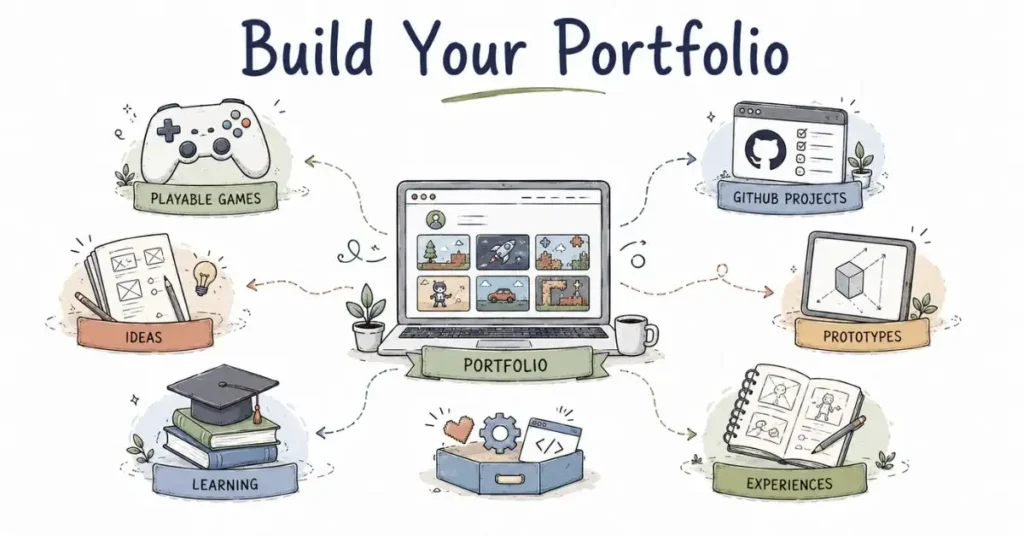
Month 9–11: Build a Portfolio That Gets Responses
This is the single most important phase. A portfolio is not a list of courses you completed. It is proof that you can build things that work.
Your portfolio should have:
- Two to three playable games hosted on itch.io each one demonstrating different skills
- Source code on GitHub every project, cleanly organised with a README that explains what the project is and what you learned
- One written postmortem per project a short document (500–700 words) explaining what you built, what broke, and how you fixed it. This is what separates you from the hundreds of other applicants who just list “Unity” on their resume
- A simple personal site or LinkedIn page that ties everything together
What your portfolio says to a hiring manager:
- itch.io games → “You can ship something that runs”
- GitHub code → “You are comfortable with version control and clean code”
- Postmortems → “You reflect on your work and learn from problems”
Month 12: Apply, Iterate, and Do Not Stop Building
Apply to 15–20 companies in your first month. Track every application. Follow up once after 10 days.
Where to apply:
- LinkedIn filter “Game Developer” + “Bengaluru” or “Remote”
- Naukri.com search “Unity Developer,” “Game Programmer India”
- Cutshort.io good for startup game studios
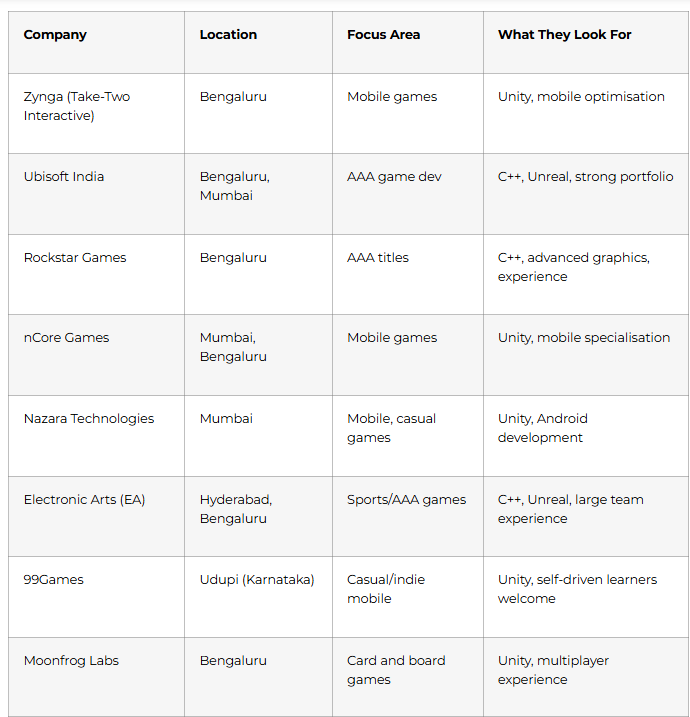
- Company career pages Zynga (zynga.com/careers), Ubisoft (careers.ubisoft.com), nCore Games, Nazara Technologies
If you get rejected: Apply for QA (game testing) roles at your target studios. QA is a real entry point into development teams many senior developers at Indian studios started in QA. It is not a fallback. It is a strategy.
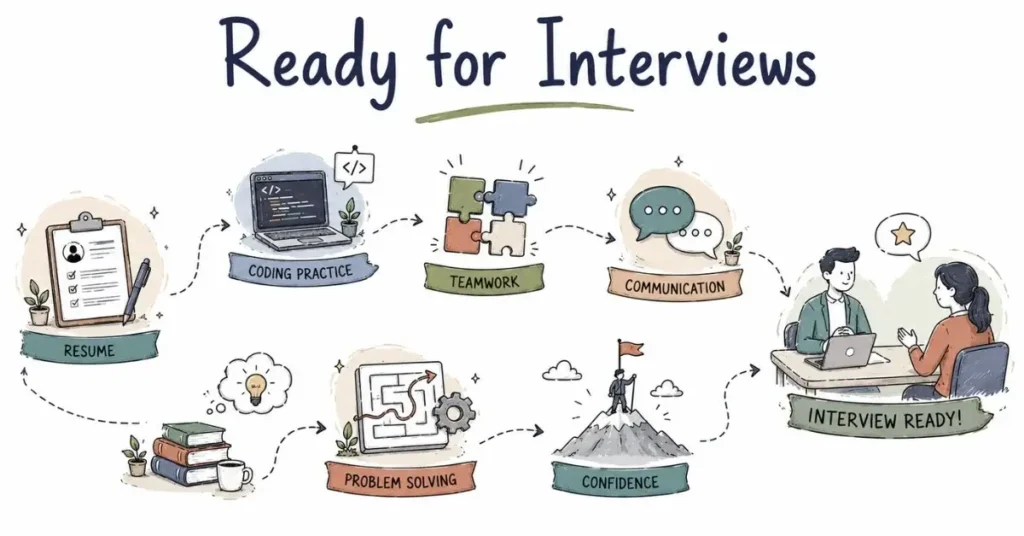
What the Interview Process Looks Like
Most game dev interviews in India follow this structure:
Round 1: Screening call 20–30 minutes with HR. Basic questions about your background, portfolio, and which engine you use.
Round 2: Technical test You will be given a small programming task. Common formats: “Build this mechanic in Unity within 3 days” or “Fix these three bugs in this Unity project.” This is where your portfolio preparation pays off directly.
Round 3: Technical interview Live coding or whiteboard questions. Expect questions on OOP concepts, Unity-specific topics (coroutines, ScriptableObjects, object pooling), and general problem-solving.
Round 4: Cultural/team fit A conversation with the team lead about how you approach collaboration, handle feedback, and manage deadlines.
The whole process takes 2–4 weeks at most companies. At large studios like Ubisoft, it can take 6–8 weeks.
Salary Breakdown: What to Expect at Each Stage
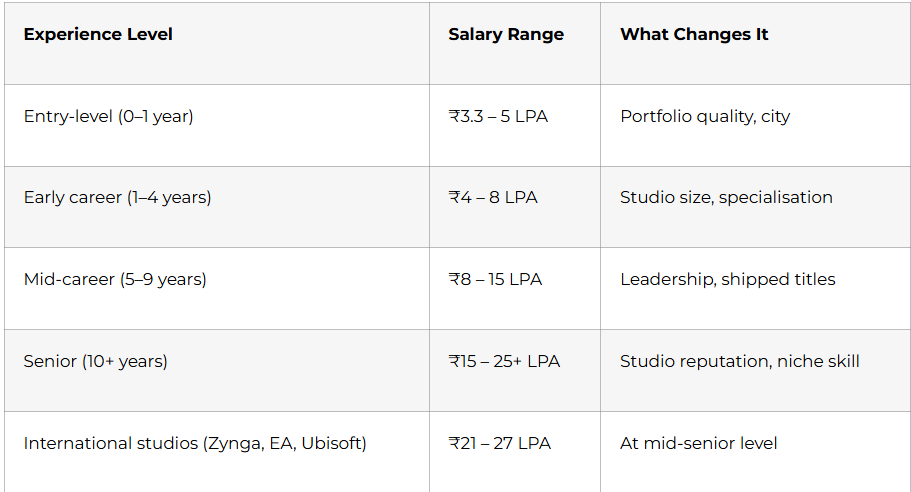
Bengaluru consistently pays the highest salaries. A junior developer there earns ₹7–8 LPA on average roughly 30–40% more than the same role in Delhi-NCR or Pune.
Remote roles are available and growing, particularly at international studios with India operations. Remote pay varies some companies pay Bengaluru rates regardless of location; others adjust for city.
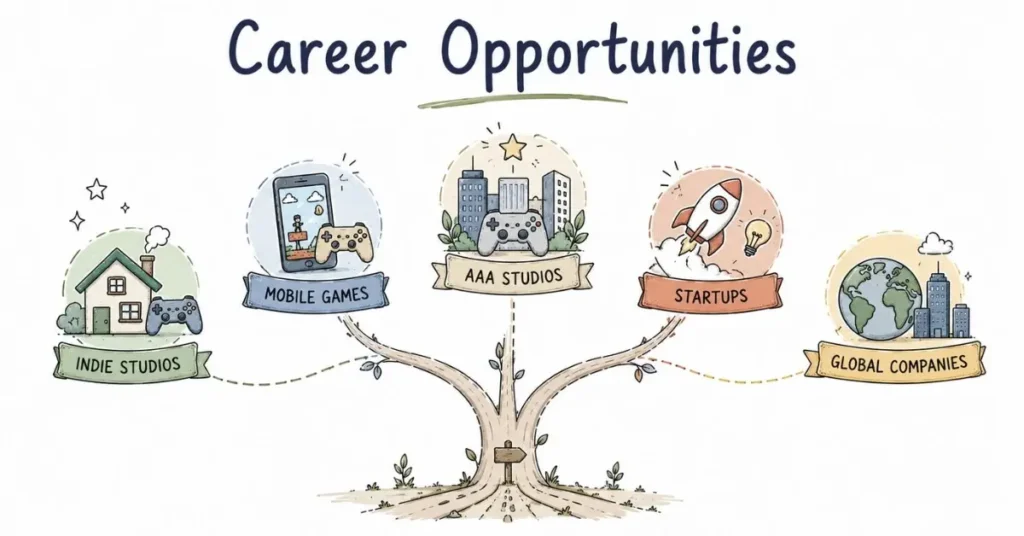
Top Companies Hiring Game Developers in India (2025–2026)
The Most Common Mistakes Beginners Make
You do not need to figure everything out before you begin. Here is the first week, mapped out concretely:
- Day 1–2: Install Unity (free) and VS Code. Watch the Unity “Roll-a-Ball” tutorial it is 45 minutes and gets you inside the engine immediately.
- Day 3–4: Create a GitHub account and push your first project even if it is just the Roll-a-Ball tutorial. The habit of using version control starts now.
- Day 5–7: Start the “Create with Unity” learning pathway at learn.unity.com. Work for 1 hour per day minimum.
One hour per day, consistently, for 12 months will get you to a hireable level. The only thing that actually stops people is stopping.
How to Get Started Today
Switching tools every month. Unity one week, Godot the next, Unreal the week after. Pick one engine and stay with it for six months minimum. Depth beats breadth at the entry level.
Building only what tutorials tell you to build. Every game developer who got hired built something that was not in a tutorial. Your portfolio needs at least one project where you made every design decision yourself.
Ignoring version control. Not knowing Git in 2025 is a dealbreaker at most studios. Learn the basics commit, push, pull, branch in week one. Use GitHub from your very first project.
Waiting until the portfolio is “perfect.” A playable game with rough art and clean code is better than a beautiful game that does not run. Ship something. Then make the next thing better.