
Unity vs Unreal Engine: Which Should You Learn for a Game Dev Career in India? (2026)
Table of Contents
Introduction
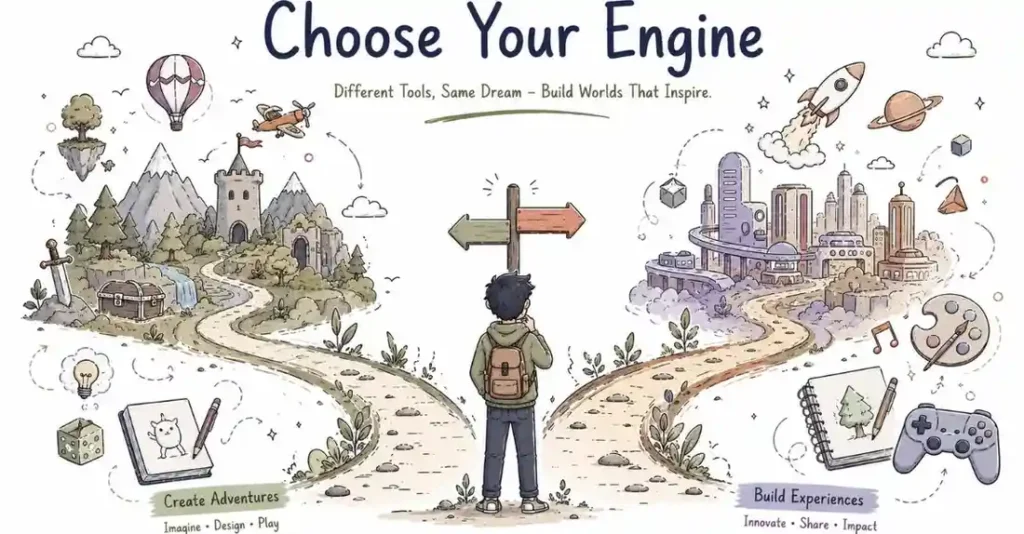
This is the question every beginner asks, usually after spending two hours reading contradictory advice online. One forum says Unity is dying. Another says Unreal is too hard for beginners. A YouTube comment says just use Godot. Meanwhile, you have not built a single thing yet.
Here is the reality: both Unity and Unreal Engine are used professionally in India. Both get people hired. The decision between them is not about which is “better” it is about which one matches your career goals, your starting skill level, and the jobs actually available in the Indian market right now.
This guide gives you that picture clearly, so you can decide and start building instead of spending another week deciding.
What Each Engine Actually Is
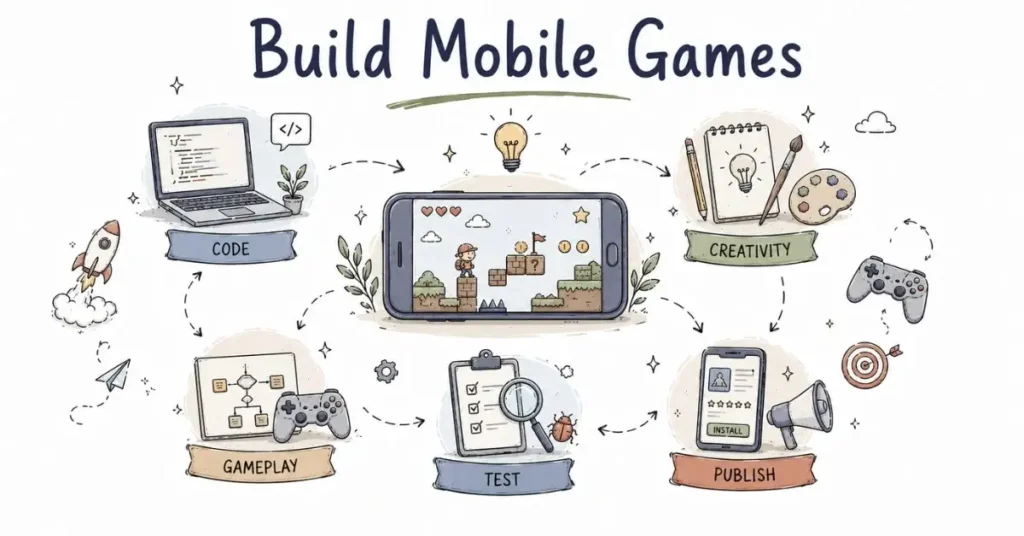
Unity is a game engine developed by Unity Technologies. It uses C# as its scripting language and works well across mobile, PC, console, AR, and VR platforms. It is particularly dominant in mobile game development which matters a great deal in India, where over 85% of gamers play on mobile devices. Unity’s interface is beginner-friendly, its documentation is thorough, and its asset store gives developers access to thousands of ready-made components.
Unreal Engine is developed by Epic Games. It uses C++ for deep programming and Blueprints a visual scripting system for logic that does not require writing code. Unreal is known for its photorealistic graphics capabilities and is the preferred engine for AAA (big-budget, high-production) games. Studios building console games, open-world titles, and cinematic experiences tend to use Unreal. Its learning curve is steeper, but its visual output is harder to match.
Both engines are free to download and use. Unity takes a small royalty once your game earns above a threshold. Unreal takes 5% royalties on revenue above $1 million per quarter. For students and early-career developers, both are effectively free.
The Job Market in India: What the Numbers Actually Say
Before getting into features and learning curves, look at what the hiring market tells you.+
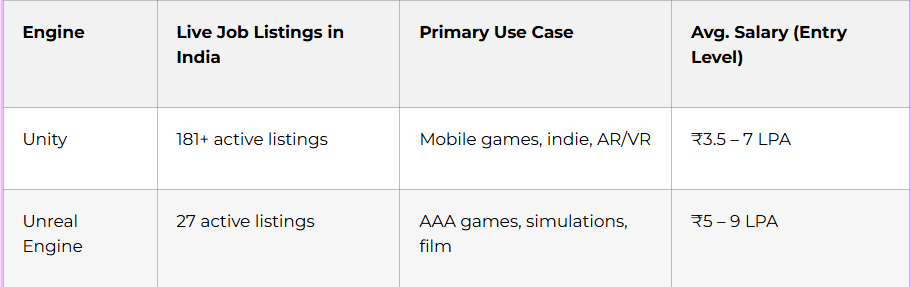
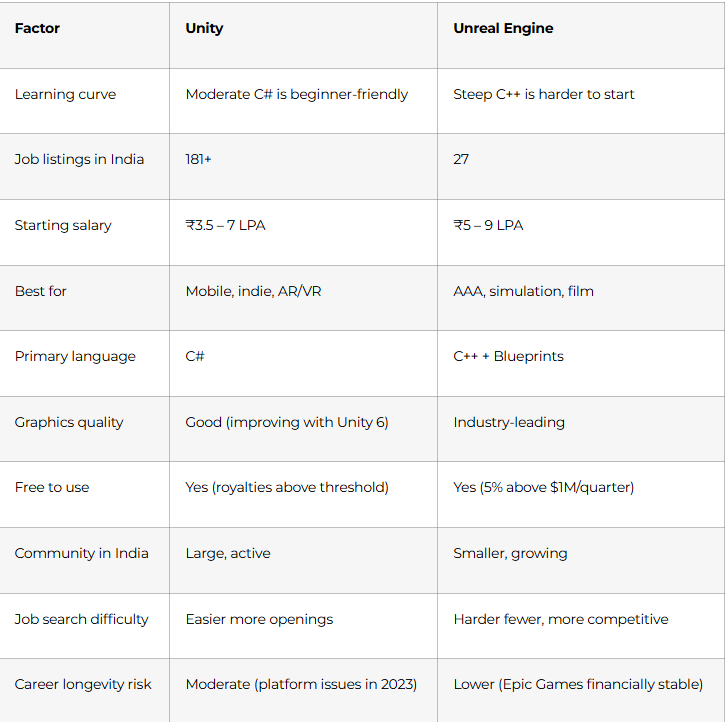
The gap is significant. Unity has roughly 6–7 times more job listings in India than Unreal Engine at any given point. This is not because Unity is better it is because India’s game development industry is dominated by mobile gaming, and Unity is the mobile game engine.
However, notice the salary column. Unreal Engine roles start at a higher floor. Fewer companies need Unreal developers, but those that do pay more for them because the supply of qualified Unreal developers in India is lower.
This creates two different career strategies, which we will break down shortly.
Unity: The Full Picture
Where Unity is Used in India
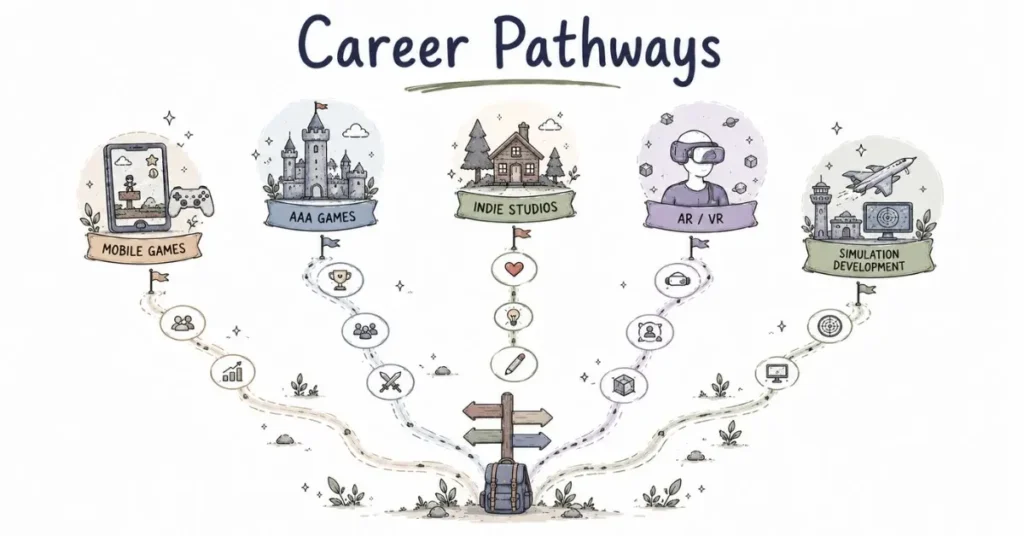
- Mobile games (Android and iOS) the largest segment of Indian game development by far
- Hyper-casual games the quick, addictive games that dominate app store charts
- Indie PC games
- AR applications education, retail, training
- VR simulations increasingly used in corporate training, medical education, and real estate
Companies like nCore Games (BGMI’s development partner), Nazara Technologies, Moonfrog Labs, and 99Games all use Unity as their primary engine.
What You Need to Learn Unity Professionally
- C# programming (intermediate level minimum)
- Unity Editor navigation and project structure
- Physics system, animation system, UI toolkit
- Mobile build pipeline for Android (APK builds, performance profiling)
- Unity’s Addressables system (for managing large asset libraries in mobile games)
- Basic shader knowledge (not mandatory early, but valuable by mid-career)
Who Unity Suits
Unity works well for people who want to enter the job market quickly, target mobile game studios, or build indie games as a side project alongside employment. The learning resources are vast Unity Learn, YouTube tutorials, Udemy courses, and India-specific communities on Discord all cover Unity extensively.
If your goal is a job within 12 months, Unity gives you the most direct path. The volume of job listings means more attempts, faster feedback, and a higher chance of landing an interview before you feel “ready.”
Unity's Weaknesses
Unity went through significant public controversy in 2023 when it announced a controversial runtime fee policy that it later revised. Several indie developers publicly moved to Godot as a result. The long-term platform risk is real Unity has had leadership instability and financial pressure. For now, it remains dominant in mobile game development, but it is worth monitoring over the next two to three years.
Unreal Engine: The Full Picture
Where Unreal Engine is Used in India
- AAA game development at studios like Ubisoft India and Electronic Arts
- Architectural visualisation and virtual production (film/TV)
- Defence and aerospace simulations
- High-end VR experiences
Unreal Engine‘s strength in India is partly outside gaming itself. Architects, filmmakers, and simulation engineers increasingly use Unreal for real-time 3D work which means an Unreal developer’s skills transfer across more industries than a Unity developer’s.
What You Need to Learn Unreal Engine Professionally
- C++ programming (a more complex language than C#)
- Blueprints visual scripting (a good starting point before C++)
- Unreal’s material editor and Lumen (global illumination system)
- Nanite (Unreal’s virtual geometry system for high-detail environments)
- Level design and world-building tools built into the engine
- Unreal’s multiplayer framework (significantly more complex than Unity’s)
Who Unreal Engine Suits
Unreal rewards patience. If you have a longer runway 18–24 months before needing a job and your goal is to work at a AAA studio or in high-end simulation work, Unreal is worth the harder initial investment.
It also suits people who already have C++ experience. If you studied Computer Science and are comfortable with pointers, memory management, and object-oriented design, Unreal’s C++ codebase will feel manageable sooner than it would for a complete beginner.
Unreal Engine's Weaknesses
The learning curve is genuinely steep. Beginners often spend months in Unreal without building anything they are proud of which kills motivation. C++ is harder to learn than C#, and Blueprints (while powerful) can create spaghetti logic in larger projects that becomes difficult to maintain. The job market in India is also smaller, which means fewer attempts and longer job searches if you specialise in Unreal only.
A Direct Comparison on What Matters Most
What About Godot?
Godot is a free, open-source engine that gained significant attention after Unity’s 2023 fee controversy. It uses GDScript (a Python-like language) and is genuinely good for 2D games and small 3D projects.
However, in the Indian job market, Godot job listings are nearly zero. It is worth learning as a personal project tool or for indie game development, but it will not get you hired at a studio in 2025–2026. Learn Unity or Unreal first. Godot can come later as a side skill.

The Decision Framework: Three Scenarios
Rather than a blanket recommendation, here is how to decide based on your actual situation.
Scenario 1: You are a complete beginner with no programming background.
Learn Unity. C# is easier to pick up than C++, the job market is larger, and your first employer will most likely be a mobile studio. Get your first job in Unity, build 2–3 years of experience, then learn Unreal on the job or through side projects if you want to move into AAA development.
Scenario 2: You have a Computer Science background and are comfortable with C++.
You can go directly to Unreal Engine. The learning curve flattens significantly if you already understand memory management, pointers, and OOP well. Target studios like Ubisoft India, EA, or high-end simulation companies in Bengaluru.
Scenario 3: You want to work in film, architecture, or virtual production not traditional gaming.
Learn Unreal Engine. Its use in virtual production (LED volume stages), architectural visualisation, and real-time film rendering is growing fast, and this path has less competition than game development specifically.
Can You Learn Both?
Yes but not at the same time. Learning two engines simultaneously is the number one reason beginners take 24 months to reach a skill level that should take 10–12 months.
The right sequence:
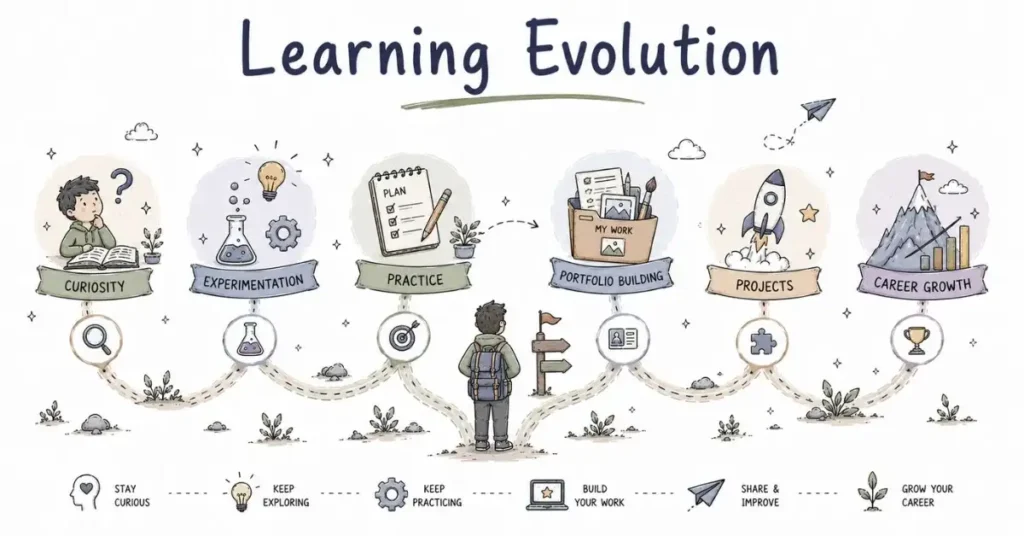
- Learn Unity first build two to three shipped projects
- Get your first job or complete a serious internship
- Add Unreal as a second skill once you have professional Unity experience
Employers value depth over breadth at the entry level. A developer with two polished Unity games and clean GitHub code will beat a developer who has dabbled in Unity, Unreal, and Godot but shipped nothing.
Resources to Start Learning Right Now
For Unity:
- Unity Learn (learn.unity.com) free, structured, official
- Brackeys on YouTube the most-watched Unity tutorial channel globally, beginner-friendly
- Code Monkey on YouTube intermediate Unity tutorials with clean coding practices
- Unity Certified Associate exam worth taking once you have 6 months of experience
For Unreal Engine:
- Unreal Online Learning (dev.epicgames.com/learning) free official courses
- Matt Aspland on YouTube clear Unreal Engine 5 tutorials for beginners
- Unreal Engine 5 Beginner’s Course by Udemy (paid, but frequently discounted to ₹500–700)
- Epic’s MetaHuman and Nanite documentation read these once you are past beginner stage
The One Thing Most People Get Wrong
The Unity vs Unreal debate gets treated like a permanent life decision. It is not. These are tools. Developers switch engines mid-career regularly especially as they move from smaller studios to larger ones. The underlying skills programming logic, game design thinking, debugging methodology, version control transfer between engines.
Pick the one that matches where you want to work in the next two years. Build things. Ship them. The engine debate stops mattering the moment you have two games in your portfolio and a GitHub full of clean code.