
Game Designer Career in India: Roles, Skills, Salary & How to Get Hired (2026)
Table of Contents
Introduction
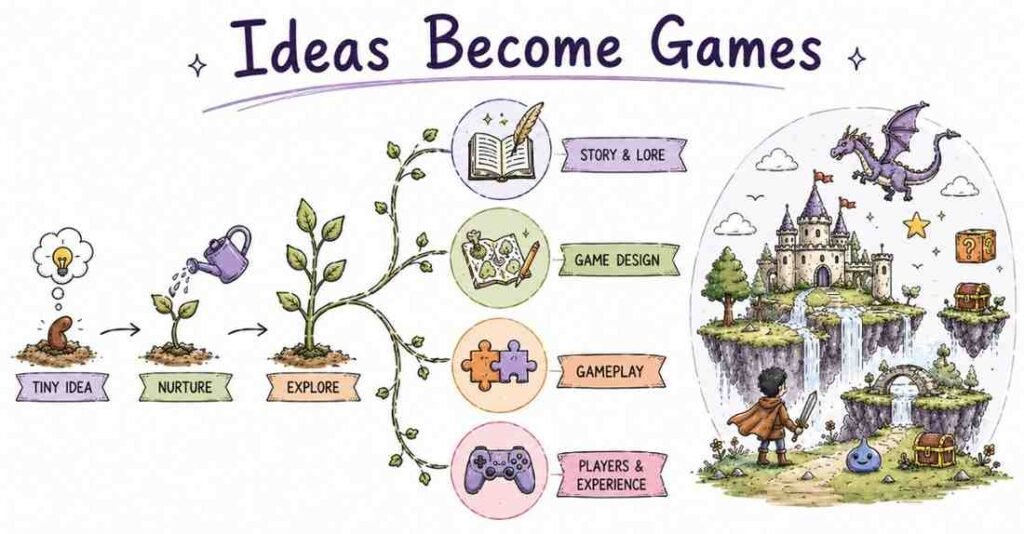
Most people who say they want to “make games” actually mean they want to be a game designer. They want to create worlds, build stories, design levels, and decide what makes a game fun to play. What they do not always realise is that game designer and game developer are two different jobs with different skill sets, different hiring processes, and different career paths.
This guide covers the game designer career specifically: what the job actually involves, what it pays in India, which skills you need to build, and how to create a portfolio that gets you through the door at a real studio.
Game Designer vs Game Developer: The Actual Difference
This confusion costs people months. Here is a clean distinction.
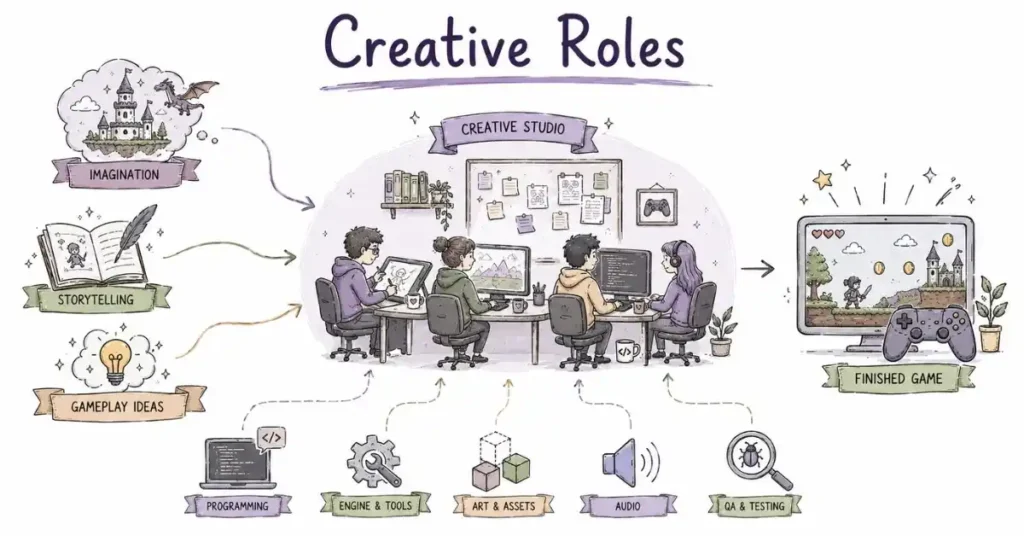
A game developer writes code. They build the technical systems that make a game function the physics, the AI behaviour, the rendering pipeline. Their primary tool is a programming language.
A game designer decides what the game should feel like to play. They define the rules, the level structure, the difficulty curve, the economy of a game (how players earn and spend in-game resources), and the overall experience. Their primary tools are documents, prototypes, and clear communication.
In a small indie studio, one person often does both. At a large studio like Ubisoft India or Electronic Arts, these are separate departments with separate hiring pipelines. When you apply for a game designer role at a large studio, they are not expecting you to write production-level C++ code. They are expecting you to think deeply about player experience and communicate those ideas clearly enough for a developer to build them.
That said, a game designer who can build rough prototypes in Unity even with basic, messy code is significantly more hireable than one who cannot. More on that shortly.
What Types of Game Designers Exist?
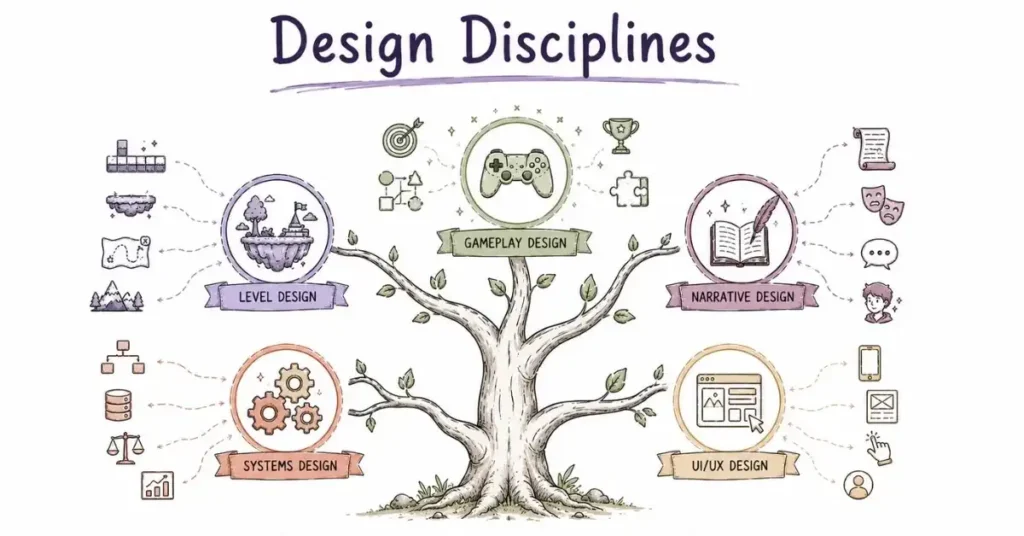
Game design is not one role. It splits into several specialisations, and understanding which one interests you shapes every other decision.
Gameplay Designer
Designs the core mechanics how movement feels, how combat works, how abilities interact. This is the closest to the “pure fun” part of making games. Gameplay designers prototype mechanics early in development, test them obsessively, and refine them based on how players actually behave (which is almost never how designers expect).
Level Designer
Designs the spaces players move through. This involves layout, pacing, enemy placement, environmental storytelling, and guiding the player without obvious signposting. Level designers work heavily inside the game engine, blocking out spaces and testing them in real-time.
Narrative Designer
Writes the story, dialogue, and world-building elements that give a game meaning beyond its mechanics. Narrative designers also design the structure of storytelling branching dialogue systems, choice-consequence mechanics, and environmental storytelling. This role sits at the intersection of writing and game design.
Systems Designer
Designs the underlying systems that govern a game’s economy, progression, and balance loot tables, skill trees, crafting systems, matchmaking logic. Systems designers think in spreadsheets and probability. This role is particularly in demand at mobile game studios because free-to-play mobile games live or die by their monetisation and progression systems.
UI/UX Designer (Games)
Designs the interfaces players use to navigate a game menus, inventory screens, HUD elements, and the overall information architecture. This role overlaps with general UX design but requires understanding the specific context of gameplay and how players think under pressure.
In India, the most in-demand specialisations right now are Systems Designer (driven by the mobile gaming boom) and Level Designer (driven by AAA studio expansion).
What Does the Day-to-Day Job Look Like?
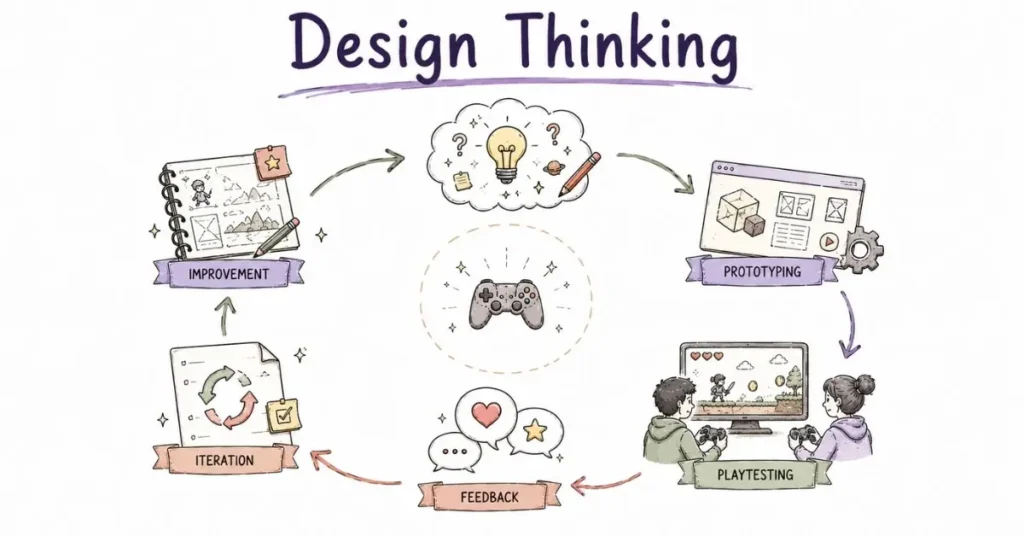
A game designer’s typical work week looks something like this:
Monday–Tuesday: Write or update a Game Design Document (GDD) for a feature being built by developers. A GDD explains in detail what a mechanic does, how it interacts with existing systems, what the player experience should feel like, and what edge cases need to be handled.
Wednesday: Playtest a build with the team. Note what works, what feels wrong, and what confuses playtesters. Write up feedback in a structured format for developers and artists.
Thursday: Prototype a new mechanic idea in Unity or on paper. A paper prototype using cards, dice, or a physical board is a legitimate and fast way to test a game idea before anyone writes a line of code.
Friday: Meetings with the lead designer, producers, and sometimes the marketing team. Game design decisions are not made in isolation they affect development timelines, monetisation plans, and the marketing story.
The work is collaborative by nature. A game designer who cannot clearly explain their ideas in a meeting, a document, or a prototype will struggle regardless of how creative their ideas are.
Salary Data: What Game Designers Earn in India
Experience Level | Annual Salary Range |
Fresher (0–1 year) | ₹1.9 – 3 LPA |
Junior Designer (1–3 years) | ₹4 – 8 LPA |
Mid-level Designer (4–6 years) | ₹8 – 18 LPA |
Senior Designer (7+ years) | ₹15 – 48 LPA |
Lead Designer / Creative Director | ₹30 – 60+ LPA |
The average game designer salary in India in 2025 sits around ₹8 LPA across experience levels. Senior designers at top studios in Bengaluru Ubisoft India, EA earn between ₹42–48 LPA.
The industry is projected to generate around 32,000 new game design jobs by 2029. That sounds large, but keep in mind: these jobs are spread across development, mobile, AR/VR, and adjacent sectors like educational game design and simulation.
City-wise salary range for mid-level game designers:
City | Mid-Level Salary |
Bengaluru | ₹9 – 18 LPA |
Mumbai | ₹8 – 14 LPA |
Hyderabad | ₹7 – 13 LPA |
Pune | ₹6 – 11 LPA |
Delhi-NCR | ₹6 – 10 LPA |
Freshers should be realistic: ₹1.9–3 LPA for first roles is common, particularly at indie studios and mid-size mobile game companies. The salary curve steepens quickly with experience and a strong portfolio.
Skills Every Game Designer Needs
Healthcare and education value compassion, continuous learning, attention to quality, and commitment to mission. These are mission-driven industries where people work because they care about outcomes.
Thinking Skills
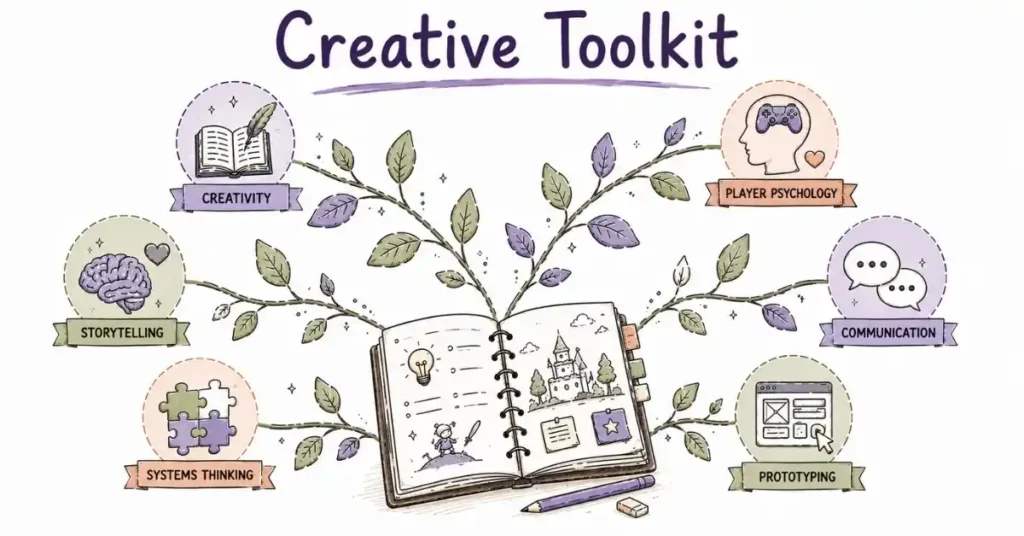
Systems thinking the ability to understand how one game mechanic affects every other mechanic. Change the speed of the player character and you change how enemies need to be placed, how levels need to be sized, how the UI needs to display information. Game designers think in interconnected systems, not isolated features.
Player psychology understanding why players feel frustrated, rewarded, bored, or excited. This is partly intuition built from playing many games analytically, and partly learnable through books like The Art of Game Design by Jesse Schell (consider this required reading).
Analytical thinking game design is increasingly data-informed. Mobile games especially use A/B testing, funnel analytics, and retention data to make design decisions. A designer who can read a data dashboard and form a hypothesis about what it means is significantly more valuable than one who relies purely on intuition.
Tool Skills
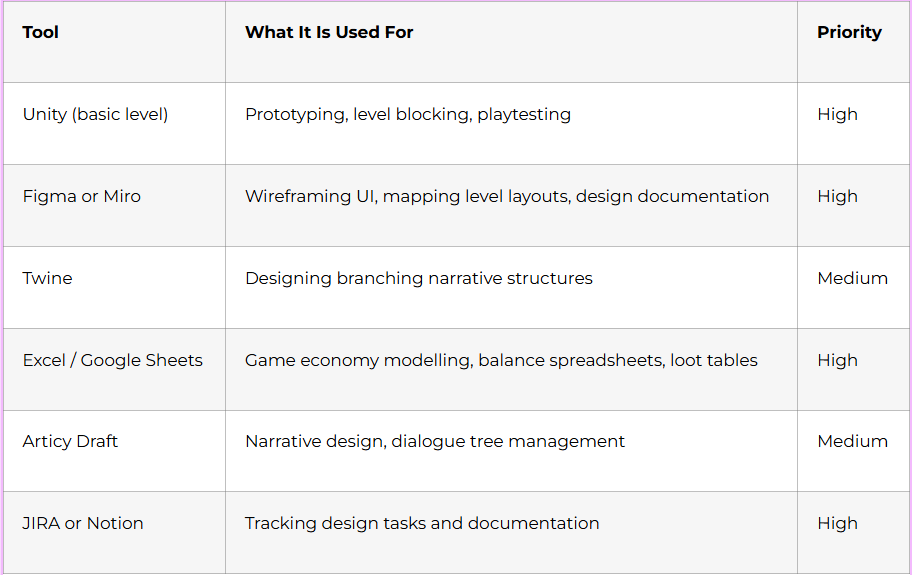
Do not let the list intimidate you. Start with Unity (basic), Figma, and Google Sheets. These three tools cover 70% of what entry-level designers use daily.
Communication Skills
This one surprises people. Game design is a communication-heavy job. You spend a significant portion of your time explaining your ideas to developers, artists, producers, and executives people who did not come up with the idea and may not immediately see why it is good.
A game designer who writes clear, structured GDDs gets their ideas built. One who writes vague, assumption-heavy documents creates confused developers and broken features. Writing well is a job skill here, not a bonus.
How to Build a Game Design Portfolio
A game design portfolio is not a CV. It is a collection of evidence that you can think like a game designer.
What to include:
- Game Design Documents (GDDs)
Write two complete GDDs one for a mobile game concept, one for a PC game concept. Each document should cover: the core concept, target audience, core gameplay loop, level structure, monetisation (for mobile), and a risk analysis (what could go wrong with this design?). Keep each GDD to 8–12 pages clear and specific, not exhaustive. - A Playable Prototype
Build at least one prototype in Unity, even if the art is boxes and circles. The goal is not to demonstrate development skill it is to show that you can translate a design idea into something playable. A 10-minute prototype that demonstrates one mechanic clearly is better than an ambitious half-finished game. - Design Analysis Write-ups
Pick three games you know well. Write 600–800 words on each one analysing: what the core loop is, why it works (or does not), and what you would change about one specific mechanic and why. This demonstrates the analytical thinking that separates designers from people who just like games. - A Postmortem
After building your prototype, write a postmortem: what you planned, what you built, what broke, and what you learned. One page is enough. This document shows self-awareness and the ability to learn two qualities every hiring manager values.
Where to host it:
- itch.io for your playable prototype
- A personal website (made on Wix, Notion, or Webflow free tiers work fine) for your GDDs and write-ups
- LinkedIn link to everything above from your profile
- Game Design Documents (GDDs)
The Hiring Process for Game Designers
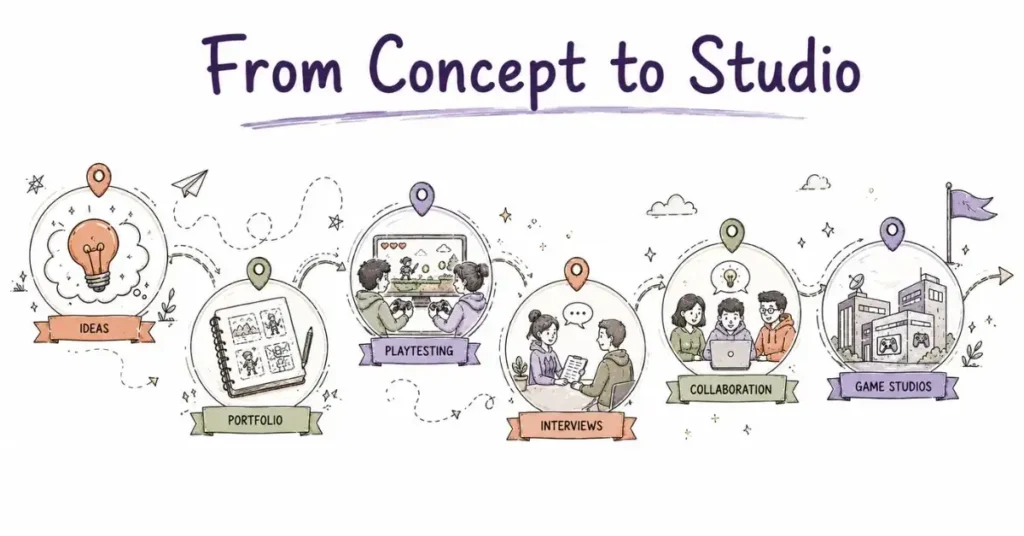
The process at most Indian studios looks like this:
Step 1: Portfolio screening
Your application gets evaluated before you get a call. If your portfolio is weak or missing, you do not move forward. This is the step most applicants fail at.
Step 2: Design test
Most studios give a take-home design challenge “Design a new feature for this existing game” or “Design a level for this prototype.” You typically have 48–72 hours. Approach it like a GDD: structured, specific, evidence-based.
Step 3: Design interview
You present your test solution to the design team. They will push back, ask why you made specific choices, and test whether you can defend your decisions with clear reasoning or adapt them when given new constraints. The right answer is never “because I thought it would be fun.” The right answer explains the player experience you were targeting and why this design achieves it.
Step 4: Team fit conversation
A conversation with the lead designer or producer about how you work in a team. Collaboration, handling feedback, and communication style all get assessed here.
Where to Apply for Game Design Jobs in India
- LinkedIn search “Game Designer,” “Level Designer,” or “Systems Designer” with location set to Bengaluru or Remote
- Naukri.com search “game designer India,” “game design fresher”
- ArtStation game designers with strong visual portfolios often post job-seeking notices here; studios also scout here
- Global Game Jam India participate once, and you will meet the designers and leads who actually make hiring decisions at Indian studios
Studios actively hiring game designers in India:
- Ubisoft India (Pune, Mumbai) level design, gameplay design
- nCore Games (Bengaluru) systems design, mobile game design
- Nazara Technologies (Mumbai) mobile game design
- Moonfrog Labs (Bengaluru) card game systems design
- 99Games (Udupi, Karnataka) indie mobile game design
- Emerging AR/VR startups in Bengaluru and Hyderabad UX/UI game design
One Honest Thing Nobody Tells You
Game design is one of the most competitive entry points in the entire gaming industry. Everyone who loves games thinks they can do it. Very few of them have ever written a GDD, built a prototype, or sat in a playtest session watching someone misunderstand a mechanic they designed.
The designers who get hired are not the ones with the best game ideas. They are the ones who proved through documents, prototypes, and analysis that they think systematically about player experience and can communicate that thinking clearly.
Start with one GDD. Write it for a game you would genuinely want to play. Make it specific. Share it with someone who is not a gamer and ask if they understand how the game works after reading it. If they do, you are on the right track