
EDUCATIONAL QUALIFICATIONS FOR HOSPITALITY CAREERS
Table of Contents
Choosing Your Hospitality Education Path: Degree, Diploma, or Certification
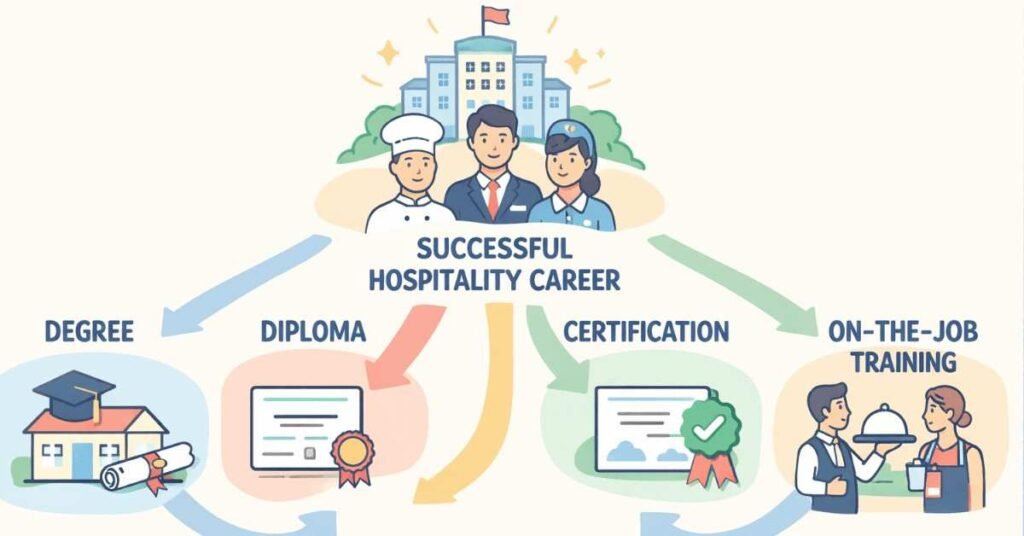
Understanding Your Education Options
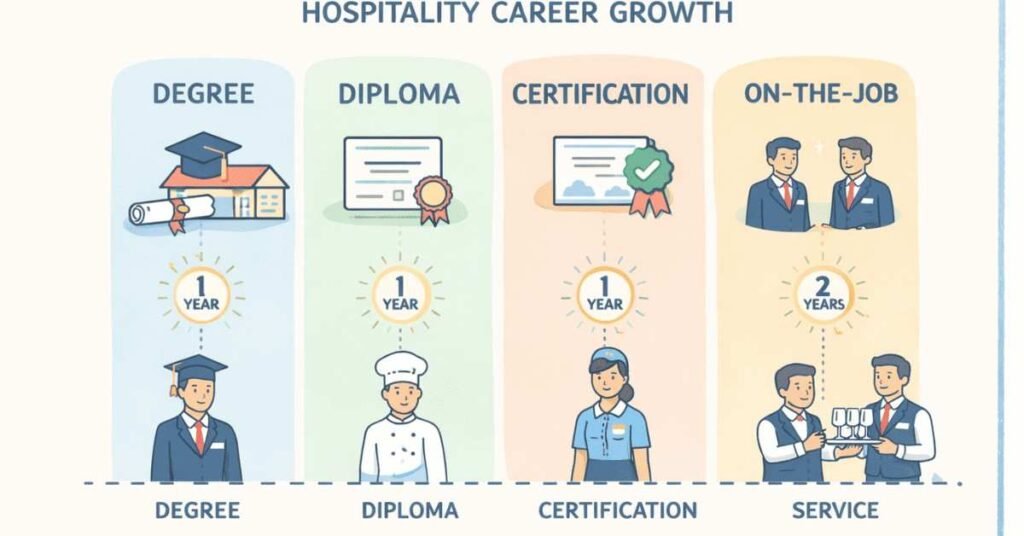
One of the most common questions from hospitality aspirants is: “What education do I need?” The honest answer: it depends on your timeline, budget, and career goals. Unlike medicine or law where a specific degree is mandatory, hospitality offers multiple pathways to success. You can start without formal qualifications and learn on the job, or invest in structured education that accelerates your career. Understanding these options helps you make strategic decisions aligned with your goals.
In 2025, hospitality education has become more flexible and specialized. Traditional 3-year bachelor’s degrees coexist with intensive 6-month boot camps, online certifications, and on-the-job training programs. Each path has distinct advantages and disadvantages.
Educational Pathway Comparison
Bachelor's Degree in Hotel Management (3 Years)
What It Is:
A comprehensive undergraduate degree covering all aspects of hospitality—operations, F&B, marketing, finance, HR, and service management. You gain theoretical knowledge combined with practical internships.
Curriculum Typically Includes:
- Hotel Operations Management
- F&B Operations and Management
- Hotel Accounting & Finance
- Hospitality Marketing
- HR Management
- Event Management
- Tourism Management
- Food Safety & Hygiene
- Communication Skills
- Business Law
- Practical internships (6-12 months)
Duration: 3 years full-time
Cost: INR 2-8 lakhs depending on institute (government INR 2-3 L, private INR 4-8 L)
Eligibility: 12th pass
Top Institutes in India:
- Institute of Hotel Management (IHM) – Government, highly respected
- Welcomgroup Graduate School of Hotel Administration (Manipal)
- Ashoka Centre for Hospitality Management
- Institute of Culinary Education (ICE)
- NMIMS School of Hospitality Management
- Vivekananda Institute of Professional Studies
Entry Salary: INR 22,000-30,000/month (slightly higher than non-qualified entry-level)
Advantages:
- Comprehensive knowledge across all functions
- Internship experience with major hotel chains
- Recognized credential valued by international hotels
- Access to campus placements
- Networking with peers and alumni
- Time to develop professional maturity
- Eligibility for management trainee programs
Disadvantages:
- 3-year time investment
- Significant cost (INR 4-8 lakhs for private institutes)
- Theoretical focus; limited practical skills initially
- Job starts at same entry salary as diploma holders
- Opportunity cost (not earning for 3 years)
Best For:
- Those seeking comprehensive hospitality education
- Those with time and financial resources
- Those planning international careers (degree highly valued globally)
- Those aiming for management positions from career start
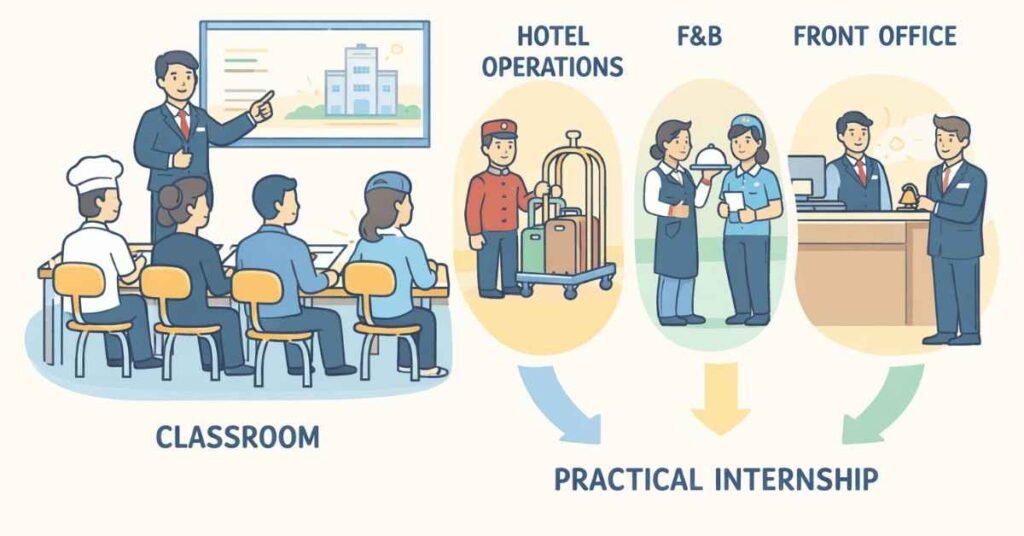
Diploma in Hotel Management (2 Years)
What It Is:
A practical, hands-on hospitality qualification with less theoretical focus than bachelor’s degrees. More emphasis on actual skills needed in hospitality roles. Many diploma programs include mandatory 6-12 month industry internships.
Curriculum Typically Includes:
- Hotel Operations
- F&B Production & Service
- Housekeeping Management
- Front Office Operations
- Hospitality Communication
- Food Safety & Sanitation
- Hotel Accounting
- Customer Service Excellence
- Practical training (6-12 months internship)
Duration: 2 years (including internship)
Cost: INR 1.5-4 lakhs depending on institute
Eligibility: 12th pass
Colleges Offering Diplomas:
- Institute of Hotel Management (IHM) – Diploma program
- Ashoka Centre for Hospitality Management
- State Hotel Management Institutes
- Private hospitality training institutes
Entry Salary: INR 20,000-28,000/month (similar to degree holders initially)
Advantages:
- Shorter duration (2 years vs. 3 years)
- Lower cost than bachelor’s degrees
- Strong practical orientation
- Internship builds real industry experience
- Faster entry to workforce
- Balanced theory and practice
- Good for international hotel applications
Disadvantages:
- Less comprehensive than bachelor’s degree
- Primarily focuses on operational roles (not strategic)
- Fewer management trainee program eligibility
- Limited to operational entry-level initially
- Smaller campus network
Best For:
- Those wanting quick entry to hospitality sector
- Those with budget constraints
- Those preferring practical over theoretical learning
- Those aiming for supervisory/operational roles initially
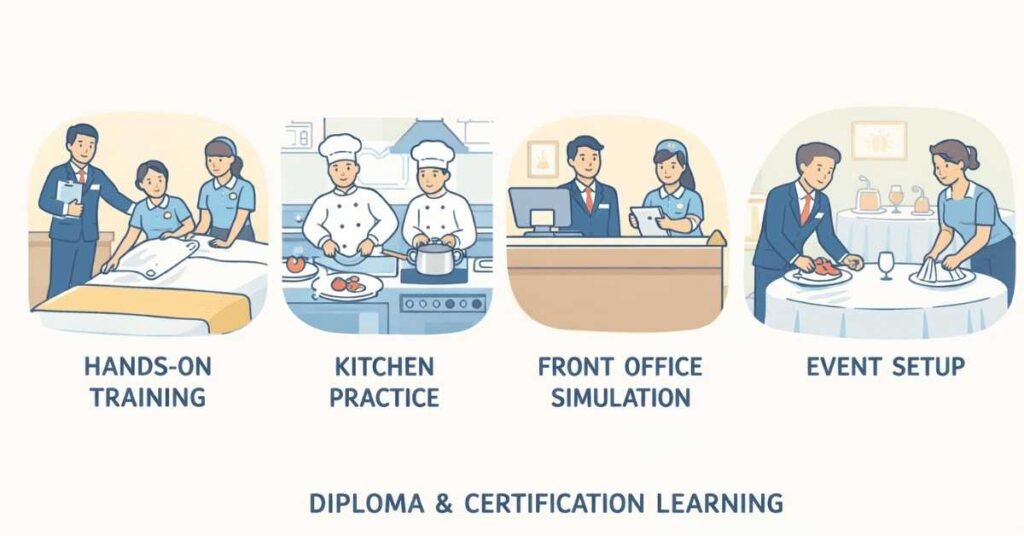
Short-Term Certification Programs (3-12 Months)
What It Is:
Specialized, focused training on specific hospitality skills or functions. Intensive programs designed for quick skill development.
Types of Certifications:
- Specialized Culinary Programs (6-12 months)
- Professional Chef Certification
- Pastry & Baking Specialization
- International Cuisine Specialization
Cost: INR 1.5-4 lakhs
Entry Salary: INR 20,000-30,000/month (for culinary roles)
- Event Management Certificate (3-6 months)
- Wedding Planning Specialization
- Corporate Events Management
- Conference Coordination
Cost: INR 50,000-2 lakhs
Entry Salary: INR 18,000-28,000/month
- Front Office & Guest Services (3 months)
- Front Desk Operations
- Guest Relations Excellence
- Hotel PMS Training
Cost: INR 30,000-1 lakh
Entry Salary: INR 15,000-25,000/month
- F&B Service (3 months)
- Restaurant Service Excellence
- Bar Management
- Sommelier Training
Cost: INR 50,000-1.5 lakhs
Entry Salary: INR 15,000-25,000/month
- Digital & Marketing Specialization (3-6 months)
- Hotel Marketing & Revenue Management
- Digital Marketing for Hospitality
- Social Media Management
Cost: INR 50,000-1.5 lakhs
Entry Salary: INR 20,000-30,000/month
- FSSAI Food Safety Certification (Online, 40 hours)
- Food Safety & Hygiene
- Sanitation Management
- Health Compliance
Cost: INR 5,000-15,000 (varies by provider)
Mandatory for F&B roles
Advantages:
- Quick entry to workforce (3-6 months)
- Low cost compared to degrees
- Specialized focus on specific skills
- Flexible scheduling (many online options)
- Can be combined with work
- High relevance to specific roles
- Frequent updates to latest trends
Disadvantages:
- Limited in scope (specific function, not entire hospitality)
- Not recognized as comprehensive qualification
- Career advancement limited without additional qualifications
- Entry salary same or lower than degree/diploma holders
- Employer preference varies by program credibility
Best For:
- Those with limited time/budget
- Those with specific career focus (pastry chef, event manager)
- Those already working who need specialization
- Those seeking quick certification for immediate employment
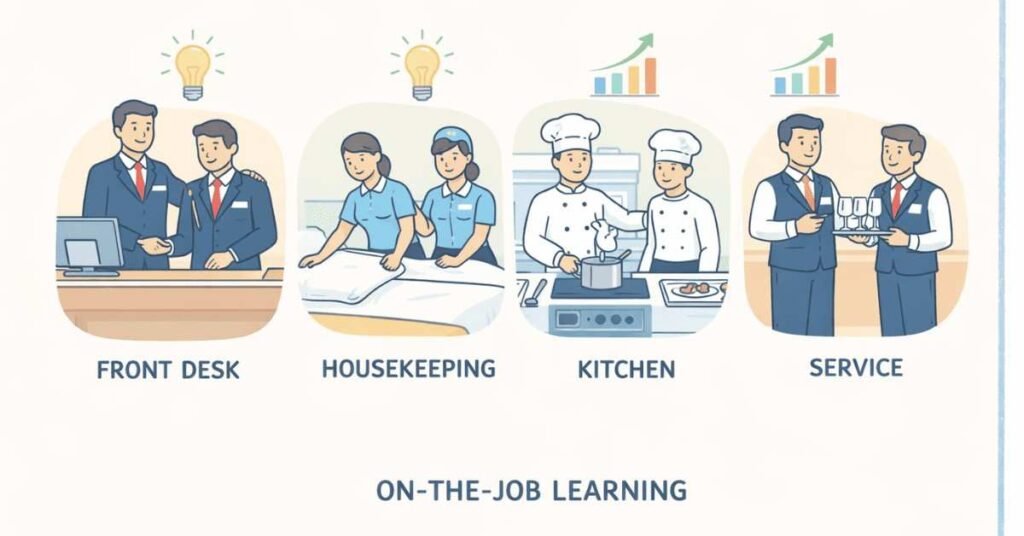
On-the-Job Training (No Formal Education)
What It Is:
Starting as entry-level staff in hotels and learning through work experience without formal qualification. Many successful hospitality professionals started this way.
How It Works:
- Apply for entry-level positions (front desk, housekeeping, kitchen, server)
- Learn operational procedures through mentorship
- Develop skills through experience and observation
- Advance based on performance and capability
- Take certifications if desired
Timeline to Career Progress:
- Months 1-6: Basic competency
- Months 6-12: Productive, independent work
- Year 2: Ready for supervisory role
- Years 3-5: Supervisor to manager potential
- Years 5+: Leadership positions
Entry Salary: INR 12,000-20,000/month
Advantages:
- No education cost
- Immediate income (learn while earning)
- Real, practical experience from day one
- Natural career progression based on performance
- No student debt or financial burden
- Understand actual hospitality dynamics
Disadvantages:
- Slower career progression initially (need to learn while working)
- Advancement limited without formal credentials eventually
- Harder to transition to management without qualifications
- Limited international opportunities without education
- May lack business/strategic knowledge
- Harder to get supervisory roles without credentials
Best For:
- Those with financial constraints
- Those preferring learning by doing
- Those starting with immediate job need
- Those in remote areas without access to education
- Those with strong aptitude for hospitality
Educational Qualification Impact on Career Trajectory
Example: Three Paths to Hotel Manager
Path 1: Degree + Direct Track
- Years 0-3: Bachelor’s degree
- Years 3-5: Management trainee, supervisor roles
- Years 5-8: Manager positions
- Timeline to Management: 5-8 years
- Total Cost: INR 4-8 lakhs
Path 2: Diploma + Experience
- Years 0-2: Diploma
- Years 2-4: Operational roles
- Years 4-7: Supervisor/Manager development
- Timeline to Management: 5-7 years
- Total Cost: INR 1.5-4 lakhs
Path 3: On-the-Job Learning
- Years 0-2: Entry-level learning
- Years 2-5: Developing capabilities
- Years 5-10: Progressing to management
- Timeline to Management: 8-10 years
- Total Cost: INR 0 (learning while earning)
Key observation: Degree holders reach management slightly faster, but all three paths lead to management positions eventually.
Certifications That Add Value
Beyond formal education, certifications that enhance employability:
Hospitality-Specific:
- FSSAI Food Safety Supervisor
- Hotel PMS Certification (Opera, Fidelio)
- Revenue Management Certification
- Event Management Professional (EMP)
- International Travel Agent License
Business & Leadership:
- Project Management Professional (PMP)
- Digital Marketing Certification
- Data Analytics Certification
- Business Management Programs
Specialized:
- IATA Travel Agent Certification
- Sommelier Certification
- Hospitality Interior Design
- Revenue Optimization Specialist
These certifications cost INR 20,000-2 lakhs and add credibility and salary premium.
Making Your Education Choice
Decision Framework:
Choose Bachelor’s Degree If:
- You have 3 years and budget
- You want comprehensive hospitality knowledge
- You plan international career
- You want management track from start
- You value networking and campus life
Choose Diploma If:
- You want practical skills quickly
- You have 2 years available
- You want to balance cost and quality
- You prefer hands-on learning
- You plan to start working after 2 years
Choose Certification If:
- You want to specialize in specific area
- You have limited time/budget
- You already work in hospitality
- You need quick skill upgrade
- You’re transitioning roles (e.g., kitchen staff to pastry chef)
Choose On-the-Job If:
- You cannot afford formal education
- You prefer learning by doing
- You need immediate income
- You’re in location without hospitality institutes
- You want zero financial burden
The Value of Continuous Learning
Regardless of initial education choice, successful hospitality professionals continue learning:
- Annual training on new systems and procedures
- Industry certifications for career advancement
- Leadership development programs
- Specialized skill workshops
- Online courses for digital skills
- Language learning for international roles
Reality Check: Your initial education provides foundation, but your career success depends 70% on your performance, attitude, and continuous learning—not your initial qualification.