
Educational Content Writing: Earn ₹30,000-₹1 Lakh Monthly as a Freelance Writer
Table of Contents
Part 1: Understanding Educational Content Writing Career
Introduction
If you’re a teacher with a passion for writing or a subject matter expert looking for additional income, educational content writing could be your ideal freelance career. Unlike traditional teaching bound by classroom walls and timetables, this career offers flexibility, higher earning potential, and the satisfaction of creating materials that help thousands of students learn at their own pace.
The global EdTech market is booming. India alone has seen a 10x increase in online learning platforms in the last three years. This growth means constant demand for quality educational content—textbooks, test papers, blog posts, video scripts, and study materials. Teachers and writers who can bridge the gap between expertise and engaging content are in high demand, with monthly earnings ranging from ₹30,000 to over ₹1 lakh for experienced writers.
What is Educational Content Writing?
Educational content writing is the creation of learning materials designed to educate, inform, and assess students across various subjects and levels. Unlike marketing or general writing, educational content must balance accuracy, simplicity, and engagement while following pedagogical principles.
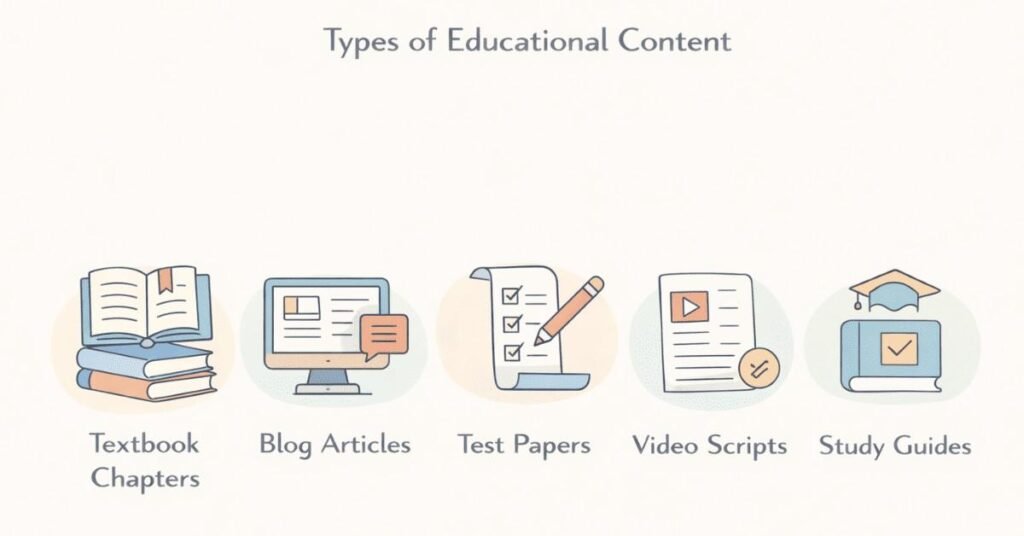
Types of content you can write:
- Textbook chapters – Complete units with explanations, examples, and summaries
- Test preparation materials – Mock papers, question banks, previous year papers, answer keys
- Blog posts & articles – Career guides, concept explanations, study tips
- Examination papers – Board exams, entrance tests, competitive exam questions
- Study guides & notes – Comprehensive revision materials and quick reference guides
- Video scripts – Educational video content for platforms like YouTube, BYJU’S, Unacademy
- Worksheets & assignments – Classroom practice materials
- Quiz content – Interactive assessment materials
Why Educational Content Writing is Perfect for Teachers
- Leverage Your Expertise
You already have subject knowledge. You know what students struggle with and how to explain complex concepts simply. This expertise is valuable in the content writing market. - Work-Life Balance
Unlike full-time teaching with fixed hours and daily classes, freelance writing offers flexibility. You can write during evenings, weekends, or whenever convenient, while maintaining your teaching job. - Passive Income Potential
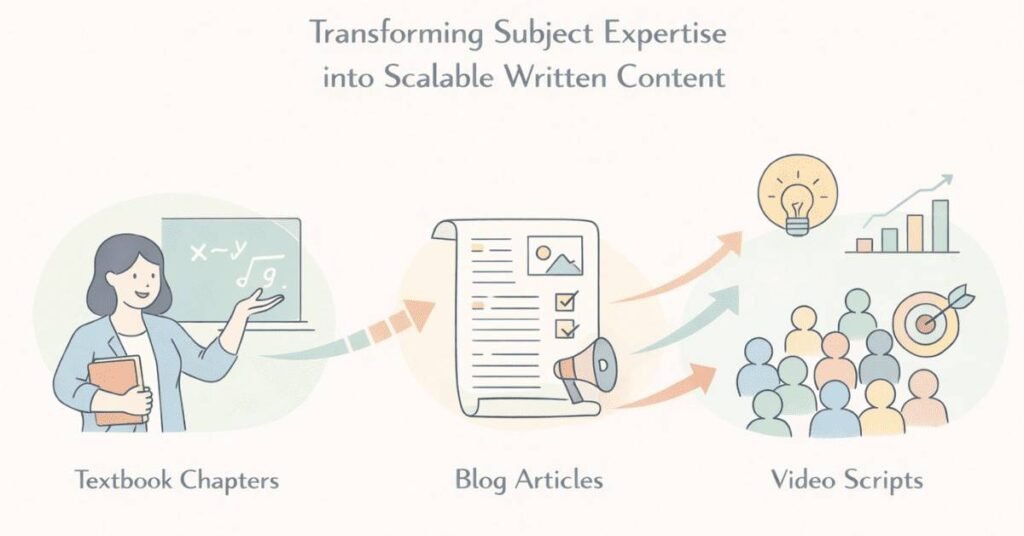
Unlike hourly tutoring where you stop earning once you stop teaching, written content generates recurring revenue. A textbook chapter you write today can earn you royalties for years. - Scalability
One blog post reaches millions; one tutoring session reaches one student. Your content can impact far more learners without additional effort. - Higher Earning Potential
Experienced educational content writers earn ₹50,000-₹1,00,000+ monthly. This is significantly more than most full-time teaching positions in India. - Entrepreneurial Freedom
Build your personal brand, choose your clients, set your rates, and grow at your pace. No boss, no office politics, just you and your expertise.
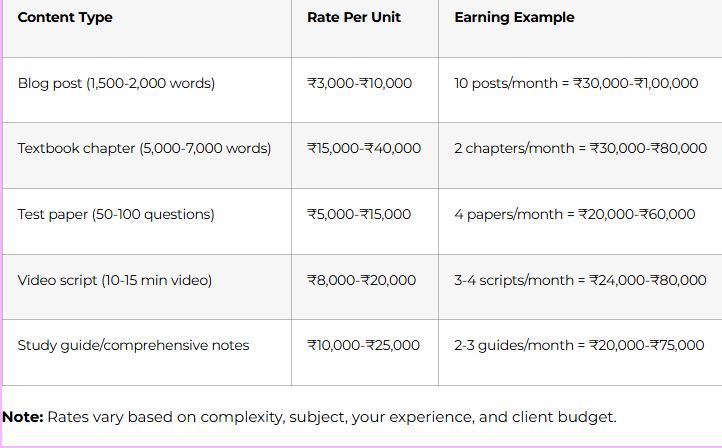
Real Income Breakdown
Essential Skills for Success
While traditionally used for answering behavioral interview questions, the STAR method (Situation, Task, Action, Result) can b
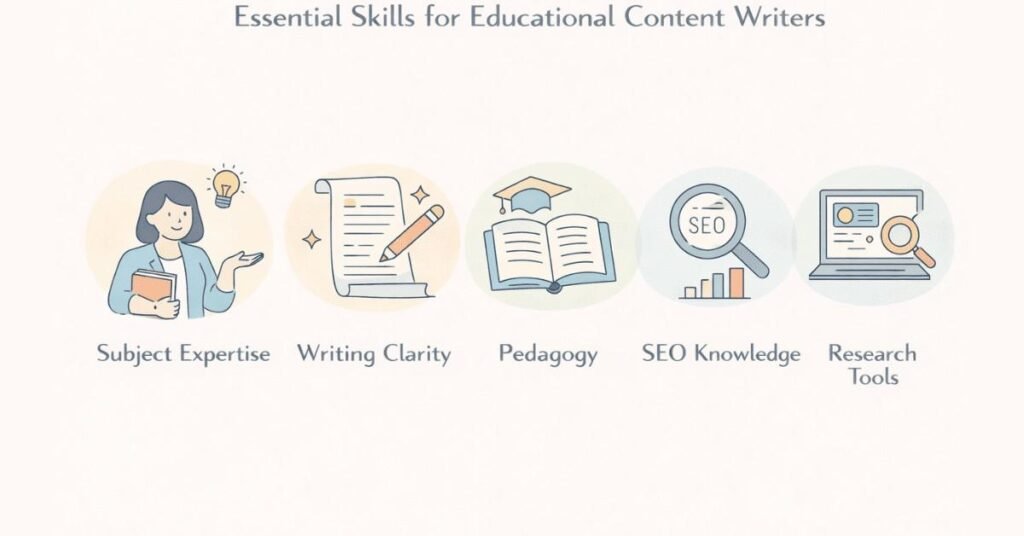
- Subject Matter Expertise
Deep knowledge in your subject ensures accuracy and credibility. You should be able to explain concepts at different difficulty levels. - Writing Skills
Clear, concise, engaging writing is non-negotiable. Your content must be easy to understand without being oversimplified. - SEO Knowledge (Bonus)
Understanding keywords and writing SEO-friendly content helps blogs rank higher and get discovered. This adds value to your services. - Understanding Pedagogy
Know how students learn. Use examples, analogies, and step-by-step explanations. Structure content for comprehension, not just information. - Research Skills
Ability to research, verify facts, and stay updated with current information ensures content accuracy.
6. Time Management
Balancing teaching and freelance writing requires excellent planning and discipline.e adapted to create powerful self-introductions that tell your professional story. This approach is particularly effective for experienced candidates who want to showcase specific achievements.
Situation: Briefly describe your professional context or background. “I’m a marketing professional with seven years of experience in the SaaS industry.”
Task: Explain your key responsibilities or challenges you’ve faced. “I specialize in developing go-to-market strategies for B2B software products.”
Action: Highlight the specific actions you’ve taken or skills you’ve developed. “I’ve led cross-functional teams to launch five successful product campaigns.”
Result: Share measurable outcomes that demonstrate your impact. “These campaigns generated over $3 million in new revenue and increased customer acquisition by 45%.”
This framework naturally positions you as a results-oriented professional who understands business impact.
Part 2: Getting Started - Skills Assessment & First Steps
Step 1: Assess Your Readiness
Before diving into freelance educational content writing, honestly evaluate whether you have the necessary foundation.
Quick Readiness Checklist:
- Do you have minimum 2+ years of teaching or subject expertise? (Essential)
- Can you write clearly without grammatical errors? (Essential)
- Are you comfortable with digital tools and platforms? (Important)
- Can you meet tight deadlines? (Important)
- Do you have 5-10 hours weekly for freelance work? (Important)
- Are you open to feedback and revisions? (Critical)
If you’ve answered yes to most questions, you’re ready to start. Don’t wait for perfection—your experience is your biggest asset.
Common Misconception: Many teachers think they need to be professional writers first. Wrong. You need to be a great teacher who can write clearly. Clients value accuracy and pedagogical insight over flowery prose.
Step 2: Identify Your Niche
Not all educational content is created equal. Identifying your niche helps you specialize, build expertise, and command higher rates.
Choose your niche based on:
By Subject Matter:
- Science (Biology, Physics, Chemistry)
- Mathematics
- Languages (English, Hindi, Regional languages)
- Social Studies (History, Geography, Economics)
- Professional courses (CA, UPSC, Banking, IT)
- Vocational skills (Plumbing, Electrical, Nursing)
By Student Level:
- K-12 (School education)
- Competitive exams (NEET, JEE, UPSC, Banking)
- Higher education (Bachelor’s, Master’s)
- Professional certification (Google courses, Microsoft)
By Content Type:
- Blog writing (Lower barrier, easier to start)
- Textbook writing (Higher pay, requires expertise)
- Test paper creation (Quick turnaround, good income)
- Video script writing (Growing demand, high pay)
- Curriculum design (Specialized, premium rates)
Pro Tip: Choose niches where you have personal teaching experience. A physics teacher writing physics content will earn more and work faster than a teacher trying random subjects.
Step 3: Build Your Writing Portfolio
Clients want proof you can deliver quality. Your portfolio is your resume in the freelance world.
Portfolio Building Strategy:
Phase 1: Create Sample Pieces (2-4 weeks)
- Write 2-3 blog posts on your subject (1,500-2,000 words each)
- Create one sample textbook chapter
- Design a 20-question test paper with answer key
- Write one video script (10-minute content)
Write on topics you know deeply. Don’t worry about finding paying clients yet. This is about demonstrating capability.
Phase 2: Host Your Portfolio (1 week)
Choose one platform:
- Google Sites (Free, professional-looking, easy)
- Medium.com (Free, great for blog portfolio, good SEO)
- Wix/Squarespace (Paid, more customizable)
- WordPress (Best for long-term, what you already use at Frontlines)
Your portfolio should include:
- Clear bio highlighting teaching/subject expertise
- 3-5 sample pieces (different types if possible)
- Testimonials (ask previous students, colleagues)
- Contact information and rates
- Links to LinkedIn and social profiles
Phase 3: Optimize for Search
- Write SEO-friendly titles on sample pieces
- Add meta descriptions
- Use header tags properly
- Include relevant keywords naturally
Step 4: Find Your First Clients
Getting your first client is the hardest part. After that, referrals flow naturally.
Best Platforms to Find Clients:
Freelance Marketplaces (Start Here)
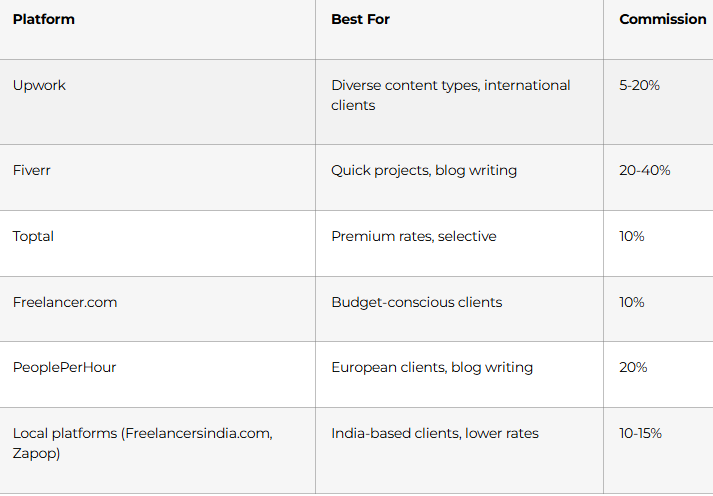
Getting Started:
- Choose 2-3 platforms
- Create professional profiles with your portfolio link
- Submit 5-10 quality proposals weekly
- Accept lower rates initially (₹2,000-₹5,000 per piece) to build reviews
- After 5 positive reviews, raise rates by 50%
- Direct Outreach (Higher Rates)
Contact potential clients directly:
- EdTech companies: BYJU’S, Unacademy, Vedantu, Khan Academy India
- Publishing houses: NCERT, local state boards, textbook publishers
- Online tutoring platforms: Chegg, Course Hero, Expert exchanges
- Coaching institutes: NEET/IIT coaching centers, competitive exam institutes
- Corporate L&D departments: Companies needing training content
Email template for outreach:
Subject: Educational Content Writing Services – [Your Specialization]
Dear [Hiring Manager/Founder],
I’m [Your Name], a [X years] experienced [subject] teacher with expertise in creating engaging, accurate educational content. I’ve developed [mention 1-2 achievements: number of students taught, published work, etc.].
I offer:
- Blog posts: ₹[Your rate] per 1,500-2,000 words
- Test papers: ₹[Your rate] per 50 questions
- Textbook chapters: ₹[Your rate] per 5,000 words
[Portfolio link]
Would you be open to discussing content needs?
Best regards,
[Your name]
[Phone number]
- Networking & Communities
- Join Facebook groups for educators and content writers
- Participate in LinkedIn discussions about education
- Attend online webinars and conferences (many have job boards)
- Engage with EdTech companies on social media
- Attend local education conferences and networking events
Pro Tip: Referrals are your best client source. One satisfied client recommends you to 3-5 others, saving you from constant pitching.
Step 5: Set Your Initial Rates
Pricing is psychological. Too low undermines your value; too high loses clients.
Rate-Setting Framework:
Calculate your baseline:
- Decide your target hourly rate: ₹300-₹500/hour (freelance writer standard)
- Estimate time per piece: Blog post (3-4 hours), textbook chapter (8-10 hours)
- Initial rates: Blog post (₹1,500-₹2,500), Textbook chapter (₹3,000-₹5,000)
Beginner Phase (0-10 projects):
- Blog posts: ₹1,500-₹2,500
- Test papers: ₹1,000-₹2,000
- Video scripts: ₹2,000-₹3,500
- Textbook chapters: ₹3,000-₹5,000
Growing Phase (10-50 projects):
- Blog posts: ₹3,000-₹5,000
- Test papers: ₹2,500-₹4,000
- Video scripts: ₹4,000-₹7,000
- Textbook chapters: ₹8,000-₹15,000
Expert Phase (50+ projects, strong portfolio):
- Blog posts: ₹5,000-₹10,000+
- Test papers: ₹4,000-₹8,000+
- Video scripts: ₹8,000-₹20,000+
- Textbook chapters: ₹15,000-₹40,000+
Pricing factors that increase your rate:
- Subject complexity (NEET/JEE content pays more than general knowledge)
- Specialized expertise (rare subjects command premium)
- Turnaround time (rush jobs = 25-50% premium)
- Content volume (regular monthly work = better rates than one-off)
- Client budget (corporate clients pay 2-3x more than startups)
Negotiation Tips:
- Never quote hourly rates; always quote per-project rates
- Get clear deliverables before pricing
- Include 2 rounds of revisions; charge for additional changes
- For long-term clients, offer 10-15% discount for monthly retainers
Part 3: Building a Sustainable Business & Scaling
Managing Multiple Clients Efficiently
Once you land your first clients, the next challenge is delivering quality work on time without burning out. Many freelancers fail not from lack of skill, but from poor project management.
System 1: Time Blocking
Allocate specific days/times for specific clients:
- Monday-Tuesday: Client A projects
- Wednesday-Thursday: Client B projects
- Friday: New client pitches and revisions
- Weekends: Batching content for the upcoming week
This prevents context-switching (jumping between clients), which wastes 15-20% of your productive time.
System 2: Content Calendar
Create a shared Google Sheet with deadlines:
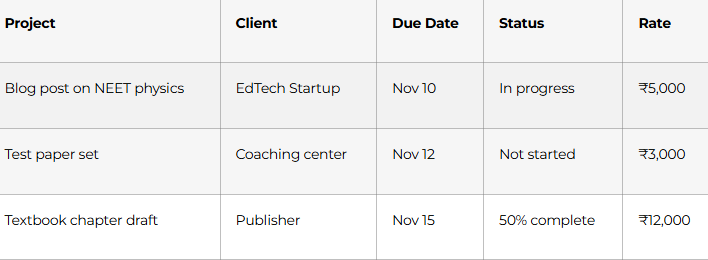
This helps you:
- See workload at a glance
- Spot bottlenecks before they become crises
- Communicate timelines clearly with clients
- Prioritize high-paying work
System 3: Template Creation
Don’t reinvent the wheel. Create templates for common projects:
- Blog post template (intro structure, word count guides, SEO checklist)
- Test paper template (question formats, marking scheme structure)
- Textbook chapter template (learning objectives, summary format)
- Video script template (pacing, transitions, visual cues)
Templates reduce creation time by 30-40%, letting you take more projects at the same quality level.
System 4: Communication Protocol
Set clear expectations to reduce revision cycles:
Client onboarding email:
“Thank you for choosing me! To deliver exceptional work, here’s what we’ll follow:
- Scope: You’ll receive [specify deliverable] by [date]
- Revisions: 2 free revision rounds included. Additional revisions: ₹[amount]
- Feedback: Please provide detailed comments (not ‘make it better’)
- Communication: Response time = 24 hours on weekdays
- Payment: Due within [X days] of completion
This clarity prevents endless revisions and scope creep (clients asking for more work without paying more).”
Creating Recurring Income Streams
One-off projects are unstable. The most successful freelancers create recurring revenue that doesn’t require constant client hunting.
Recurring Revenue Model 1: Monthly Retainers
Offer clients a retainer: “For ₹50,000/month, receive 4 blog posts + 2 test papers + 1 textbook chapter.”
Benefits:
- Guaranteed monthly income (predictable)
- Better rates than project-based (₹12,500/piece vs ₹8,000)
- Stronger client relationships
- Referral quality improves
How to sell retainers:
- After completing 2-3 projects for a client, pitch: “I’d love to become your dedicated content partner. For ₹50,000/month…”
- Target EdTech companies and coaching institutes (they always need content)
- Current status: 1-2 retainers = ₹50,000-₹1,00,000 base income
Recurring Revenue Model 2: Digital Products
Create content once, sell repeatedly:
Study guides & question banks: ₹500-₹2,000 per download
- Create comprehensive study guides for competitive exams
- Sell on Gumroad, Teachable, or your own website
- One guide = 100 downloads × ₹1,000 = ₹1,00,000 passive income
Online courses: ₹2,000-₹5,000 per course enrollment
- Package your teaching expertise into online courses
- Platforms: Udemy, Teachable, Skill Share
- Effort: 40 hours to create; earnings: ongoing
Content templates for educators: ₹500-₹2,000 per template
- Sell lesson plan templates, assessment templates to teachers
- Platforms: Etsy, Teachers Pay Teachers
- Target: 10 sales/month × ₹1,500 = ₹15,000/month
Recurring Revenue Model 3: Affiliate Partnerships
Recommend tools you use; earn commission:
- EdTech platforms paying commission for student referrals
- Writing tools (Grammarly, Hemingway Editor) paying referral fees
- Courses and certifications you recommend
- Typical commission: ₹100-₹500 per referral
Target: 5-10 commissions/month = ₹5,000-₹10,000 extra monthly
Income Combination Strategy:
A sustainable ₹1 lakh/month typically looks like:
- 2-3 retainer clients: ₹60,000
- 2-3 project-based clients: ₹30,000
- Digital products: ₹10,000
- Total: ₹1,00,000
This diversification means if one client leaves, you’re not devastated.
Building Your Brand as an Educational Content Writer
Generic freelancers compete on price. Branded freelancers compete on value.
Brand Element 1: Your Origin Story
Clients connect with humans, not portfolios. Share your story:
“I spent 8 years teaching chemistry in Delhi, seeing brilliant students struggle with outdated textbooks. I started writing clearer, more engaging content. What began as helping 50 students now reaches 50,000. Now I help EdTech companies create content that actually clicks with learners.”
Where to share: LinkedIn, your website, email signature, client proposals
Brand Element 2: Expertise Positioning
Specialize deeply in one area rather than being generic. Examples:
❌ “I write educational content”
✅ “I create NEET-qualifying biology content”
✅ is 10x better because it’s specific, memorable, and lets you charge premium rates.
Brand Element 3: LinkedIn Presence
Post 2-3 times weekly about:
- Content writing insights
- Tips for educators
- Your achievements (“Just completed 25 blog posts for [company]”)
- Industry trends
- Student success stories
Sample post:
“After reviewing 500+ test papers, here’s what separates good questions from great ones: [3-4 tips]. If you’re creating assessments, save this. [Link to blog]. #EducationalContent #TeachersOfLinkedIn”
This builds authority and attracts inbound clients (they reach you, not vice versa).
Brand Element 4: Published Work
Getting your writing published adds credibility:
- Write articles for education publications
- Publish on Medium (free, builds audience)
- Guest post on education blogs
- Contribute to industry reports
Brand Element 5: Certifications & Credentials
Add credibility markers:
- Content marketing certification (Hubspot offers free)
- SEO certification (Google Digital Garage)
- Instructional design basics (Coursera, free audit)
- Your teaching credentials (B.Ed, M.Ed, subject expertise)
List these on your LinkedIn profile and portfolio.
Scaling from ₹30K to ₹1 Lakh Monthly
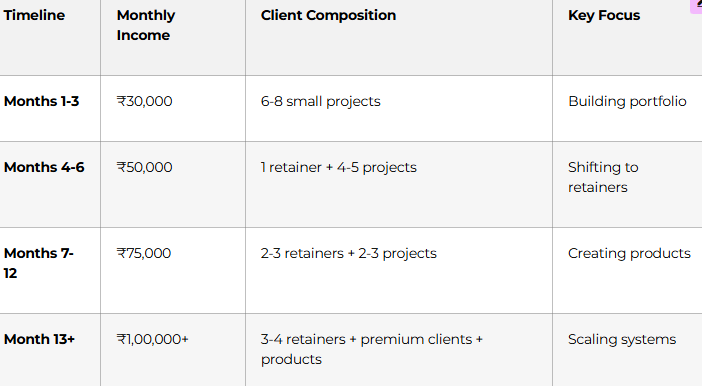
Phase 1 (₹30K/month) – Months 1-3:
- 6-8 project-based clients
- 3-4 blog posts per week
- Average rate: ₹3,000-₹4,000 per piece
- Focus: Building portfolio and reviews
Action items:
- Write 15 sample pieces
- Apply to 20 jobs weekly
- Accept all reasonable work (even lower-paying projects)
Phase 2 (₹50K/month) – Months 4-6:
- 1 retainer client emerges (₹20,000)
- 4-5 project-based clients (₹30,000)
- Average rate: ₹4,000-₹6,000 per piece
- Focus: Client quality over quantity
Action items:
- Pitch retainers to satisfied clients
- Be selective about new clients (reject poor-fit projects)
- Increase rates by 25%
- Start one digital product
Phase 3 (₹75K/month) – Months 7-12:
- 2-3 retainer clients (₹50,000)
- 2-3 project-based clients (₹20,000)
- Digital products: ₹5,000
- Average rate: ₹6,000-₹10,000 per piece
Action items:
- Transition mostly to retainers (more stable)
- Launch second digital product
- Build affiliate partnerships
- Consider hiring freelancer for revisions
Phase 4 (₹1+ Lakh/month) – Months 13+:
- 3-4 retainer clients (₹70,000-₹80,000)
- 1-2 premium project clients (₹15,000-₹20,000)
- Digital products + affiliates: ₹10,000-₹15,000
- Average rates: ₹8,000-₹20,000+ per piece
Action items:
- Stop taking low-paying clients completely
- Focus only on high-value work
- Delegate admin/editing to assistants
- Build speaking/consulting side income
Tax & Legal Considerations (India)
Most freelancers overlook this until the Income Tax department knocks.
Registration Requirements:
GST Registration:
- Mandatory if: Your annual turnover exceeds ₹40 lakhs
- If you exceed this: Register immediately (penalties are strict)
- Process: Apply on GST portal; takes 1-2 days
- Cost: Free
Once registered, you’ll charge 18% GST on invoices and can claim input tax credit on tools/subscriptions.
Income Tax Filing:
- File ITR (Income Tax Return): Even if income is below taxable limit (shows professionalism)
- Keep records: Invoices, receipts, bank statements for 6 years
- Tax saving: You can claim deductions for:
- Tools (Grammarly, Hemingway): ₹5,000-₹10,000/year
- Software subscriptions: ₹3,000-₹8,000/year
- Internet bills (50% of your monthly bill)
- Work-from-home setup: ₹40/sq ft annually
- Professional development courses
- Office furniture and equipment
Income Tax Slabs (FY 2024-25):
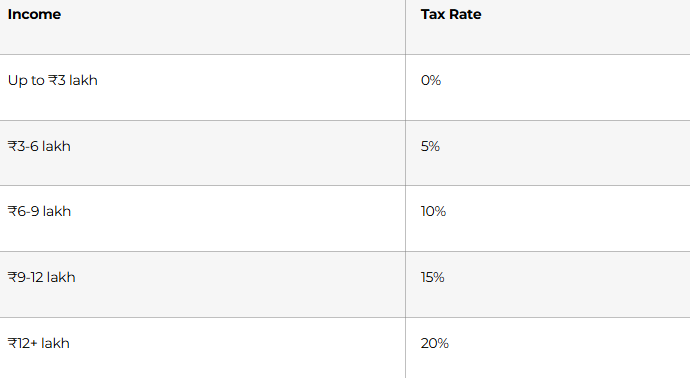
So if you earn ₹12 lakhs yearly (₹1 lakh monthly), your tax liability is approximately ₹1.5 lakhs after deductions.
Invoice Best Practices:
Create professional invoices with:
- Your name, address, contact
- Unique invoice number
- Client details
- Deliverables and rates
- Payment terms (e.g., “Due within 7 days”)
- Your bank details for transfer
- Note: “Invoice is tax document; retain for GST purposes”
Suggested banking setup:
- Open separate business bank account (easier accounting)
- Use accounting software (Zoho Books free tier or Vyapar)
- Keep receipts digitally

Long-Term Career Growth Opportunities
After mastering freelance educational content writing, you have multiple growth paths:
Path 1: Become a Content Agency Owner
- Hire 3-5 freelance writers
- You manage client relationships and quality
- Scale to ₹5-10 lakhs monthly revenue
- Sell to EdTech companies needing bulk content
Path 2: Consulting & Strategy
- Move from writing to advising companies on content strategy
- Charge ₹50,000-₹2,00,000+ for consulting projects
- Fewer projects, higher income
Path 3: In-House Content Director
- Join EdTech company as Content Director (₹30-60 lakhs annually)
- Use freelance writing skills to lead teams
- More stable than freelancing
Path 4: Publishing Your Own Educational Products
- Publish textbooks, study guides, or courses
- Build passive income from royalties
- Establish yourself as subject matter expert/author
Path 5: Training & Workshops
- Teach educators how to write better content
- Conduct workshops for schools and coaching centers
- Charge ₹20,000-₹50,000 per workshop
- Scale through online masterclasses
Complete Summary: Your Educational Content Writing Journey
Final Checklist: Start Your Educational Content Writing Career Today
✅ Week 1:
- Assess your subject expertise and niche
- Write 3 sample pieces for your portfolio
- Choose one portfolio platform
✅ Week 2:
- Upload portfolio online
- Create profiles on 2-3 freelance platforms
- Write 5 compelling job proposals
✅ Week 3:
- Follow up with proposals (persistence matters)
- Start networking on LinkedIn (10 posts from educators)
- Research your first 10 direct client targets
✅ Week 4:
- Accept your first project (even if rates are low)
- Deliver exceptional work
- Ask for testimonial from client
Remember: Your first ₹1,000 is hardest. Once you prove your value, the next ₹99,000 comes much faster through referrals and retainers.
Key Resources to Bookmark:
- Upwork Profile Setup Guide
- Freelance Platforms Comparison
- Invoice Template
- Content Calendar Template
- Tax Deduction Checklist (Available on your request)