
Consulting Fit Interviews: Proving You're the Right Person
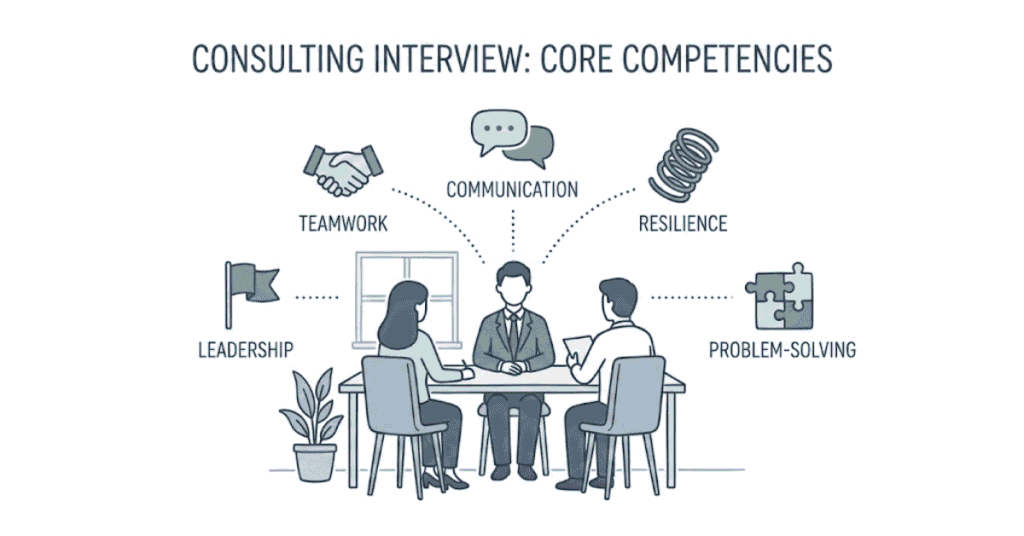
Table of Contents
Case interviews test how you think. Fit interviews test who you are. While many candidates obsess over cases and neglect fit preparation, the truth is that fit interviews carry equal weight in hiring decisions—and at some firms, they matter even more. You can ace every case but still get rejected if interviewers doubt you’ll thrive in consulting’s demanding, team-oriented culture.careerinconsulting+1
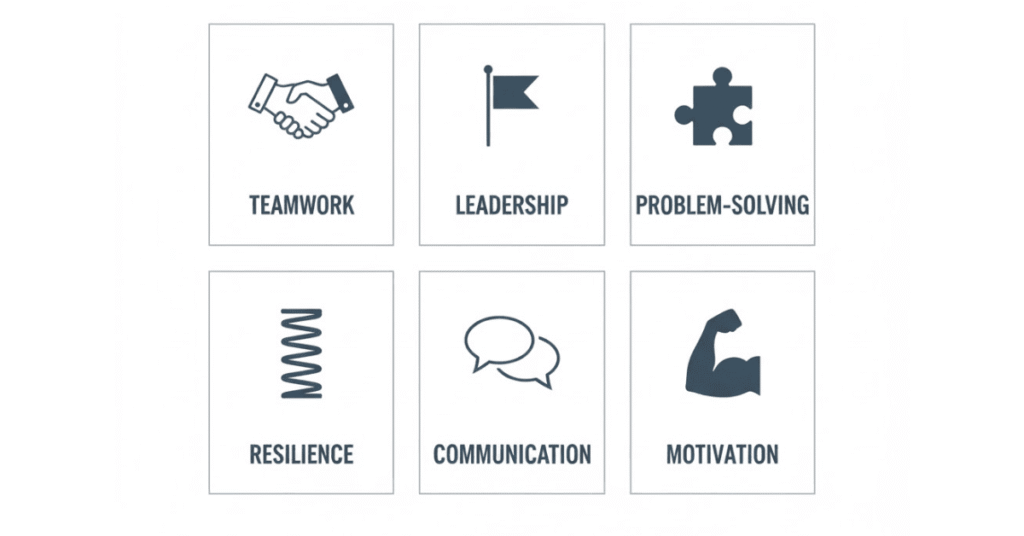
Fit interviews (also called behavioral interviews or Personal Experience Interviews at McKinsey) dig into your past experiences to assess whether you have the soft skills, values, and personality traits that predict consulting success: teamwork, leadership, resilience, problem-solving, communication, and motivation. Unlike cases where there’s some forgiveness for imperfect frameworks, fit interviews are deeply personal—your stories reveal your character, and fabricated or poorly told stories are immediately obvious.upgrad+1
This guide explains what fit interviews actually test, the most common question types, how to structure compelling answers using the STAR method, how to prepare your story bank, firm-specific nuances, and common mistakes that sink otherwise strong candidates.
What Fit Interviews Actually Test
Core Competencies Firms Assess
- Teamwork and Collaboration
Can you work effectively with diverse people under pressure? Consulting teams are small (3-6 people), work intensely together for months, and often include different seniorities, backgrounds, and personalities. Firms want evidence you’re a team player who makes others better.careerinconsulting+1
What they’re looking for:
- Contributing without dominating
- Supporting teammates when they struggle
- Handling team conflicts constructively
- Adapting to different working styles
- Leadership and Influence
Have you led initiatives, driven results, or influenced others without formal authority? Junior consultants regularly lead workstreams, guide analysts, and need to influence client stakeholders who outrank them.upgrad+1
What they’re looking for:
- Taking initiative and ownership
- Motivating others toward shared goals
- Making tough decisions under uncertainty
- Learning from leadership failures
- Problem-Solving and Analytical Thinking
Beyond case interviews, can you demonstrate structured problem-solving in real situations? Firms want stories showing you break down complex problems logically and find creative solutions.
What they’re looking for:
- Identifying root causes, not just symptoms
- Using data and analysis to inform decisions
- Testing hypotheses systematically
- Thinking creatively when standard approaches fail
- Resilience and Handling Pressure
Consulting involves tight deadlines, demanding clients, frequent changes, and occasional failure. Can you handle stress, bounce back from setbacks, and maintain performance when things get hard?careerinconsulting+1
What they’re looking for:
- Staying calm under pressure
- Recovering from failures and learning from them
- Managing criticism constructively
- Maintaining positivity during challenges
- Communication and Interpersonal Skills
Can you build relationships, communicate clearly with diverse audiences, and read social situations? Consulting is fundamentally about working with people—clients, teammates, stakeholders.upgrad
What they’re looking for:
- Adapting communication style to different audiences
- Active listening and empathy
- Giving and receiving feedback gracefully
- Building trust quickly
- Motivation and Fit
Why consulting? Why this firm? Why now? Interviewers want authentic answers showing you understand what consulting entails and genuinely want it—not just the prestige or salary.careerinconsulting
What they’re looking for:
- Genuine interest in business problem-solving
- Understanding of consulting lifestyle (travel, hours, learning)
- Specific reasons for choosing their firm (not generic answers)
Long-term career thinking
Common Fit Interview Questions by Category
Teamwork Questions
- “Tell me about a time you worked on a difficult team.”
- “Describe a situation where you had to work with someone whose style was very different from yours.”
- “Give an example of when you helped a struggling team member.”
- “Tell me about a team conflict you experienced and how you handled it.”
- “When have you had to compromise your own ideas for the team’s benefit?”
Leadership Questions
- “Describe a time you led a project or team.”
- “Tell me about a situation where you influenced others without having formal authority.”
- “Give an example of when you had to make an unpopular decision.”
- “Describe a time you took initiative on something that wasn’t your responsibility.”
- “Tell me about a leadership failure and what you learned.”
Problem-Solving Questions
- “Walk me through a complex problem you solved.”
- “Tell me about a time you faced a challenge with no obvious solution.”
- “Describe a situation where you had to analyze information and make a recommendation.”
- “Give an example of when you identified the root cause of a problem others missed.”
- “Tell me about a creative solution you developed.”
Resilience and Pressure Questions
- “Describe a time you failed at something important.”
- “Tell me about the most stressful situation you’ve handled.”
- “Give an example of when you received harsh criticism and how you responded.”
- “Describe a time you had to deliver results with very limited time.”
- “Tell me about a setback that affected your confidence.”
Communication Questions
- “Tell me about a time you had to explain a complex concept to someone without technical background.”
- “Describe a situation where miscommunication created a problem.”
- “Give an example of when you successfully influenced a skeptical stakeholder.”
- “Tell me about a time you had to deliver bad news.”
- “Describe when you had to adapt your communication style.”
Motivation and Fit Questions
- “Why consulting?”
- “Why our firm specifically?”
- “Why now / why leave your current role?”
- “What do you think are the biggest challenges in consulting?”
- “Where do you see yourself in 5 years?”
- “What would you do if you don’t get this role?”
“Tell me about a time you demonstrated one of our firm’s values.”
The STAR Method: Structuring Compelling Answers
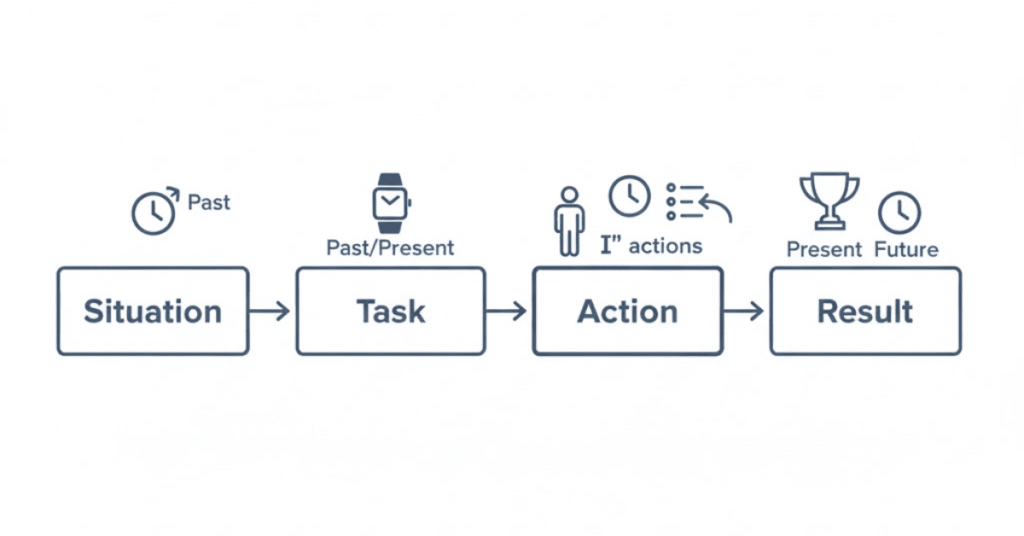
STAR Framework Breakdown
S – Situation (15-20 seconds)
Set the context briefly. Who, what, when, where—but don’t get bogged in unnecessary details.
Example: “In my third year of college, I was part of a 5-person team developing a mobile app for our capstone project. Midway through, our most technical member had to drop out due to family reasons, leaving us behind schedule with no one fully comfortable with backend development.”
T – Task (10-15 seconds)
Clarify your specific role and what needed to be accomplished. What were you responsible for?
Example: “As team lead, I needed to redistribute the technical work while keeping the project on track to meet our 6-week deadline. My task was both filling the skills gap and maintaining team morale when everyone felt overwhelmed.”
A – Action (40-50 seconds – the meat of your story)
Describe what YOU did—not “we.” Use “I” statements. Be specific about your actions, decisions, and reasoning. This is where you demonstrate the competency.upgrad
Example: “First, I organized a team meeting to assess everyone’s skills and capacity honestly. I discovered one teammate had some backend experience but lacked confidence. I spent 3 evenings teaching him the basics and paired him with me on development so he had support.
Second, I renegotiated scope with our project advisor, explaining the situation and proposing to cut one feature that was nice-to-have but not core—this freed up 20 hours.
Third, I restructured our workflow using agile sprints with daily 15-minute check-ins so problems surfaced quickly. I also reached out to a senior student who’d done similar projects for advice.
Throughout, I made sure to acknowledge the team’s extra effort and celebrated small wins to keep motivation up.”
R – Result (20-30 seconds)
Quantify outcomes when possible. What happened? What did you learn? How did this make you better?upgrad
Example: “We delivered the app on time with all core features working. Our project scored 92/100—one of the highest in our batch. More importantly, the team member I coached gained confidence and later thanked me for helping him discover he actually enjoyed backend work—he’s now a software developer.
I learned that leadership isn’t about having all the answers but about resourcefulness, clear communication, and supporting your team through challenges.”
Total STAR story length: 90-120 seconds (1.5-2 minutes)
Building Your Story Bank: Preparation Strategy
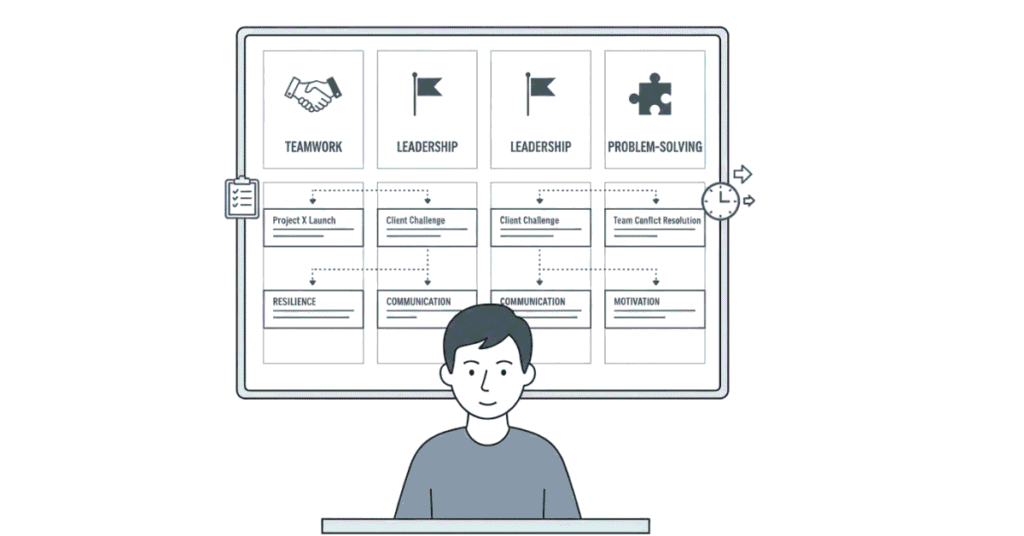
Don’t wing fit interviews. Prepare 6-8 strong stories that can flex across multiple questions.careerinconsulting+1
Story Selection Criteria
Choose stories that:
- Show YOU driving action (not passive observer)
- Have measurable outcomes (numbers, results, impact)
- Demonstrate growth (what you learned, how you improved)
- Are recent and relevant (last 2-3 years ideally, professional/academic)
- Are authentic (you can speak naturally about them, withstand follow-ups)
- Span different competencies (don’t use 5 teamwork stories, 0 leadership)
The 8-Story Template
Prepare stories covering these areas:
- Teamwork success: When collaboration led to great results
- Team conflict resolution: When you navigated difficult team dynamics
- Leadership success: When you led something effectively
- Leadership failure: When you led poorly and learned from it
- Problem-solving: When you solved a complex challenge creatively
- Failure/setback: When something went wrong and how you recovered
- Influencing/persuasion: When you changed someone’s mind without authority
- Personal challenge: When you overcame a difficult situation (stress, pressure, adversity)
Pro tip: Some stories can flex across multiple questions. Your “leadership success” might also work for “problem-solving” or “working under pressure” with different emphasis.
Story Crafting Process
Step 1: Brainstorm 15-20 experiences from the last 3-5 years (work, college, clubs, volunteering, projects)
Step 2: For each, ask:
- What was challenging about this?
- What did I specifically do?
- What was the result?
- What competency does this demonstrate?
Step 3: Select the 8 strongest and write them out in STAR format (each 250-300 words)
Step 4: Practice telling each story out loud 10+ times until it flows naturally (not memorized robotically)
Step 5: Prepare 2-3 alternative endings emphasizing different lessons (same story, different takeaway depending on question)c
Firm-Specific Fit Interview Styles
McKinsey: Personal Experience Interview (PEI)
Structure: More structured than others. Expect 2-3 specific scenarios tied to McKinsey’s values.
Key dimensions McKinsey tests:
- Personal Impact (leadership, initiative)
- Courageous Change (taking risks, challenging status quo)
- Inclusive Leadership (empowering others, diverse perspectives)
Style: Deep follow-up questions. Expect 5-7 probing questions on each story:
- “Why did you make that choice?”
- “What were you thinking in that moment?”
- “What would you do differently now?”
- “How did that person react?”
Advice: Have 2 stories per dimension (6 total). Go very deep—superficial answers fail.careerinconsulting
BCG: Fit is Integrated
Structure: Less formal separate fit round. Questions woven into case conversation and separate 15-20 min behavioral sections.
What they value:
- Entrepreneurial mindset
- Creative thinking
- Collaborative spirit
- Passion for impact
Style: More conversational, less interrogation-like. But don’t be fooled—they’re assessing carefully.
Advice: Show personality. BCG wants people who are interesting, not just competent. Talk about unconventional experiences.
Bain: Results-Oriented
Structure: 20-30 minute behavioral round, often with HR or senior consultant.
What they value:
- Results delivery (outcomes matter)
- Team first mentality
- High energy and positivity
- “Work hard, play hard” culture fit
Style: Looking for concrete achievements and measurable impact. Quantify everything.
Advice: Emphasize results in every story. Bain loves numbers—”increased by X%,” “saved Y hours,” “grew Z users.”
Big 4: Competency-Based
Structure: Formal competency framework. Questions explicitly tied to competencies (teamwork, leadership, analytical thinking, etc.)
What they value:
- Professionalism and reliability
- Continuous learning
- Diverse experiences
- Long-term potential
Style: More predictable questions. Standard STAR works well.
Advice: Prepare stories mapping to common competency frameworks. Show progression and learning over time.
Common Mistakes That Sink Candidates
Mistake 1: The “We” Problem
The error: “We analyzed the data… We decided to… We implemented…”
Why it fails: Interviewer has no idea what YOU did. Sounds like you’re hiding lack of real contribution.
Fix: Use “I” statements. “I analyzed… I proposed… I led the implementation…” Even in team contexts, clarify your specific role.upgrad
Mistake 2: Rambling Without Structure
The error: Starting with context, going into excruciating detail, losing the thread, forgetting the question.
Why it fails: Wastes time, tests interviewer patience, suggests poor communication skills.
Fix: Use STAR. Get to your action quickly. 2 minutes max per story.
Mistake 3: Only Success Stories
The error: Every story shows you being perfect, smart, successful.
Why it fails: Comes across as arrogant, inauthentic, lacking self-awareness. Everyone fails sometimes.
Fix: Include 1-2 genuine failure stories showing vulnerability, learning, and growth. Authenticity beats perfection.careerinconsulting
Mistake 4: Generic Consulting Motivation
The error: “I want to learn, work with smart people, solve problems, and have variety.”
Why it fails: This describes every candidate. No differentiation. Suggests surface-level interest.
Fix: Get specific. What KIND of problems excite you? Why consulting vs product management or investing? Why THIS firm vs others? Use concrete examples from research, conversations with consultants, or relevant experiences.
Mistake 5: Weak Results
The error: Story ends with “…and we finished the project” with no outcome, impact, or learning.
Why it fails: No proof you created value. Consulting is about impact.
Fix: Quantify results wherever possible. “Increased engagement 30%,” “saved 40 hours,” “project scored 95/100.” Add personal learning: “This taught me X about Y.”upgrad
Mistake 6: Unprepared for Follow-Ups
The error: Giving polished initial answer but stumbling when interviewer asks probing questions.
Why it fails: Suggests story is fabricated or you didn’t actually play the role you claimed.
Fix: Know your stories deeply. Practice with partner asking tough follow-ups:
- “Why specifically did you choose that approach?”
- “What was the other person thinking?”
“What would you do differently with hindsight?”
Advanced Tips for Standing Out
Show Self-Awareness
Don’t just describe actions—explain your reasoning. “I decided to X because I recognized the team needed Y.” Shows you think about your own behavior reflectively.careerinconsulting
Acknowledge Complexity
Real situations are messy. Mention competing priorities, difficult trade-offs, imperfect information. “I had to balance X vs Y, and ultimately prioritized Z because…” Demonstrates mature judgment.
Highlight Growth Over Time
If asked about a challenge from 2 years ago, end with: “Since then, I’ve worked on this skill by…” Shows continuous improvement mindset.
Connect to Consulting
Subtly link stories to consulting skills. “This experience taught me the importance of structured problem-solving [case skill] and managing stakeholders with different priorities [consulting reality].” Don’t force it, but smart connections help.
Show Genuine Curiosity
When asked “Why consulting?”, demonstrate you’ve done homework: “I spoke with 5 consultants including 2 from your firm, read McKinsey’s industry reports on fintech, and realized I’m most energized by…” Shows initiative and genuine interest.
Sample Answer: Complete STAR Story
Question: “Tell me about a time you faced a significant obstacle and how you overcame it.”
Answer:
[Situation] “During my internship at a fintech startup last summer, I was tasked with analyzing customer churn data to identify why we were losing 15% of users monthly—well above industry average of 8%.
[Task] Two weeks into the project, our data engineer left abruptly, and I discovered the customer data was incomplete and inconsistent across three different systems. I needed to produce actionable insights in 4 weeks for the executive team, but suddenly had unreliable data and no technical support.
[Action] First, I spent 2 days manually auditing the data to understand gaps and patterns. I discovered that about 60% of user records were complete enough for meaningful analysis if I focused on those segments.
Rather than waiting for a new data engineer, I taught myself basic SQL through online tutorials and worked with our CTO for 3 hours to understand our database structure. This allowed me to extract and clean the usable data myself.
Next, I adjusted my analysis approach—instead of a comprehensive churn analysis, I focused deeply on the complete data segment, which represented our most engaged users. I conducted 20 user interviews to supplement the quantitative analysis.
I found that 70% of churn happened within the first week, primarily because the onboarding process was confusing. I created a visual user journey map showing where people dropped off.
[Result] I delivered my presentation on time with three specific recommendations for improving onboarding. The executive team approved implementing all three. Within 2 months, first-week churn dropped from 10% to 6%, and overall monthly churn improved to 11%.
Beyond the business impact, this taught me that obstacles often require creative pivoting rather than perfect execution of the original plan. I also gained confidence that I can learn technical skills quickly when needed—something I know will be valuable in consulting where you constantly face unfamiliar situations.”
Why this works:
✅ Clear STAR structure
✅ Specific actions using “I”
✅ Quantified results
✅ Shows problem-solving, resilience, learning agility
✅ Connects to consulting value
✅ Authentic (specific details suggest real experience)
✅ ~110 seconds when spoken at natural pace
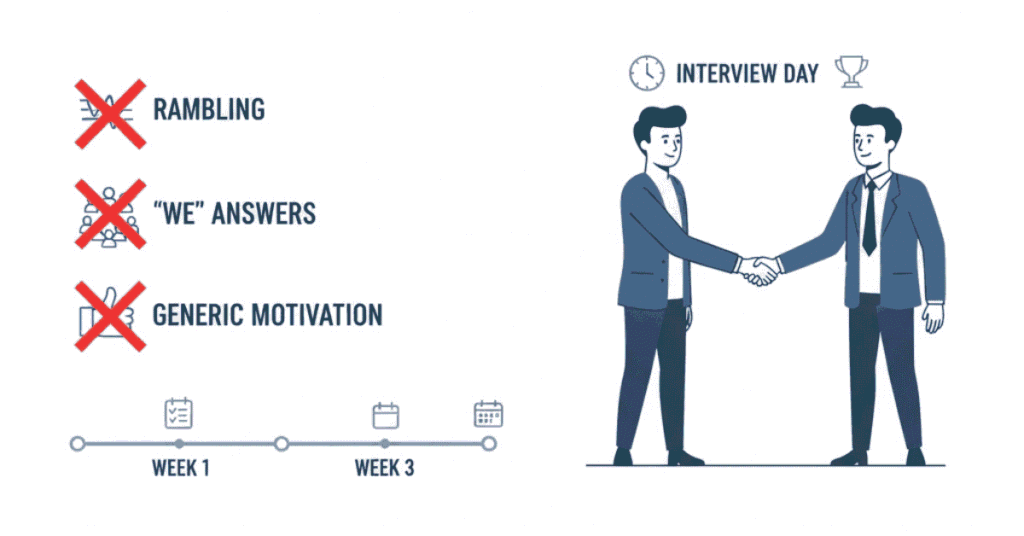
Practice Plan: 3-Week Fit Prep
Week 1: Story Development
- Day 1-2: Brainstorm 20 experiences
- Day 3-4: Select 8 best, write STAR format
- Day 5-7: Practice telling each story aloud 5x, refine
Week 2: Question Practice
- Day 1-2: Map your 8 stories to 15 common questions
- Day 3-5: Practice with partner/friend asking random questions
- Day 6-7: Record yourself, watch for filler words, pace, clarity
Week 3: Advanced Prep
- Day 1-2: Prepare deep follow-ups for each story
- Day 3-4: Research specific firm values, adjust stories
- Day 5: Mock interview with experienced consultant if possible
- Day 6-7: Final review, rest before real interviews
Daily commitment: 30-45 minutes for 3 weeks = fully prepared interviews reveal who you really are. The best preparation isn’t creating a fake persona—it’s reflecting deeply on your genuine experiences, learning from them, and communicating that growth authentically. Firms want real humans who’ve struggled, learned, and grown—not perfect robots.