
Common JAM Mistakes to Avoid
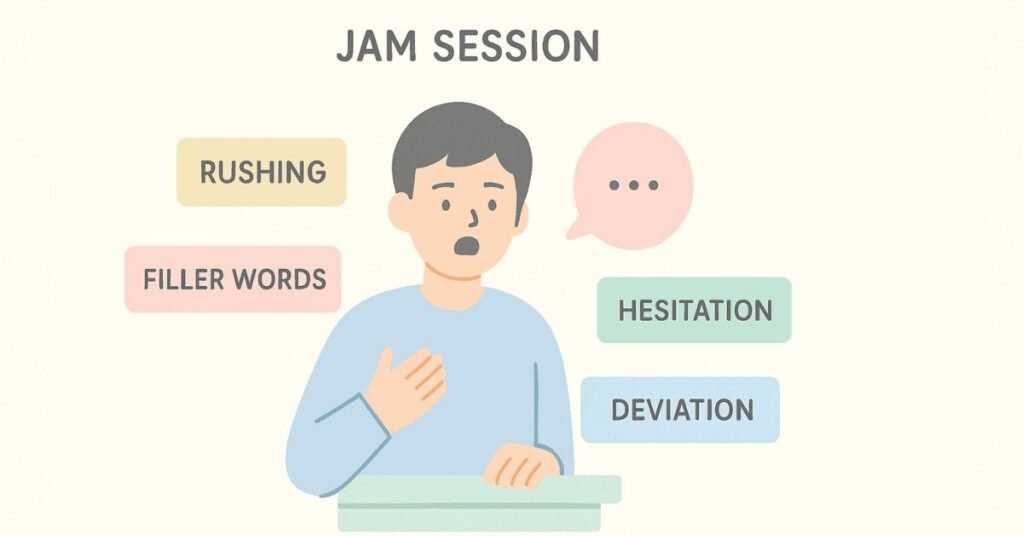
Table of Contents
Blog Content:
The Pattern of JAM Failure
Every campus placement season, certain mistakes appear repeatedly. Not because students are unprepared, but because they make preventable errors that sabotage their delivery.
Understanding these mistakes transforms your preparation from generic practice to targeted improvement. Let’s analyze the 15 most common mistakes and exactly how to fix them.
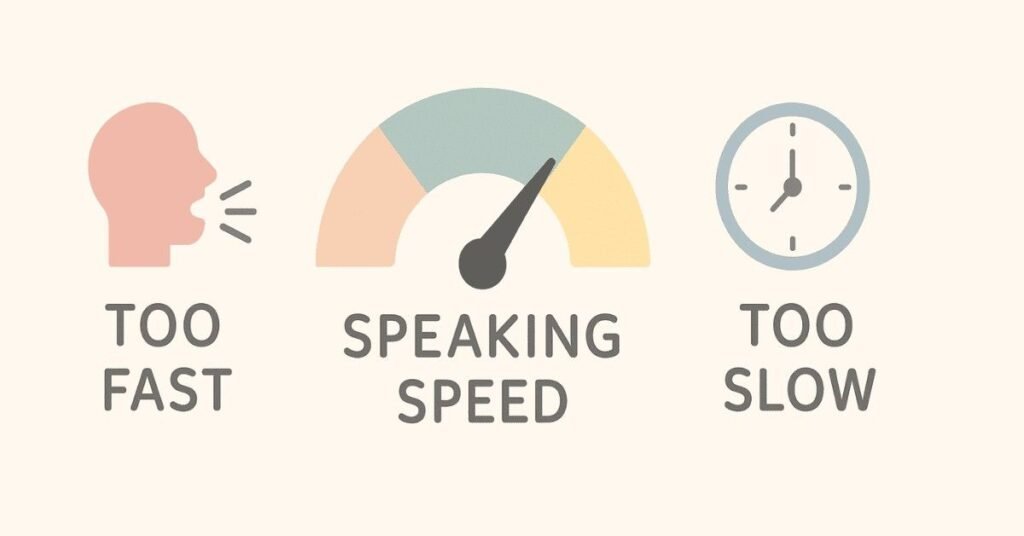
Mistake #1: Speaking Too Fast
The Problem:
You rush through your content, trying to cram as much as possible into 60 seconds. Words blur together. The evaluator struggles to understand you.
Why it happens:
- Nervousness and anxiety
- Fear of running out of content
- Feeling pressure from the time limit
The Fix:
- Practice with a metronome at 120-150 words per minute
- Deliberately pause after each sentence
- Record yourself and count words to verify pace
- Remember: clarity beats quantity
Mistake #2: Speaking Too Slowly
The Problem:
You speak so slowly that you run out of time with content still remaining. You’re forced to pad, repeat, or end awkwardly.
Why it happens:
- Over-nervousness and overthinking
- Trying to appear thoughtful
- Pausing excessively between words
The Fix:
- Find your natural speaking pace (should feel slightly faster than comfortable conversation)
- Practice building content faster so you don’t need to slow down artificially
- Use strategic pauses (after sentences, not between words)
🔍 Access structured learning resources designed to improve clarity, delivery, and confidence →
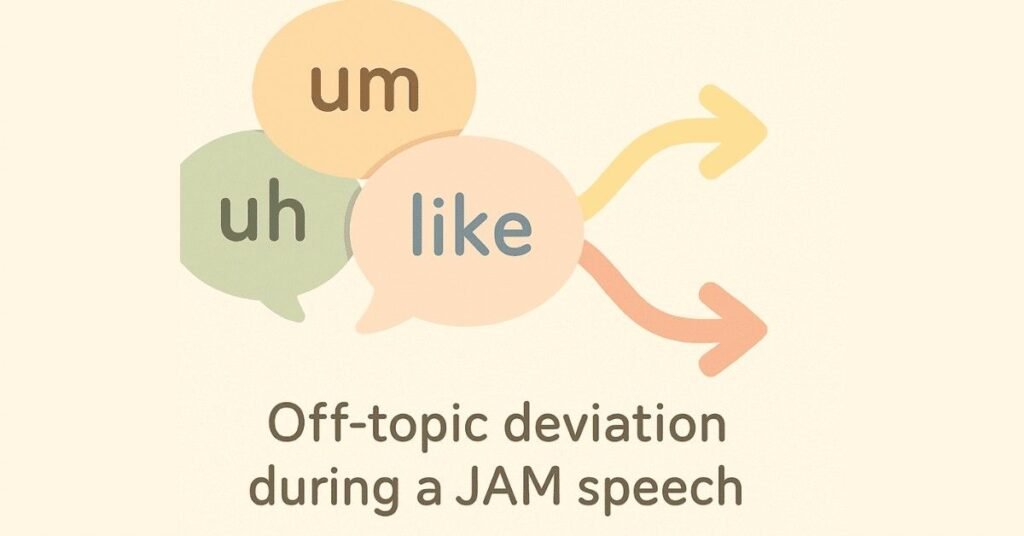
Mistake #3: Excessive Hesitation (“Um,” “Uh,” “Like,” “You Know”)
The Problem:
Your speech is peppered with filler words. “Um, like, I think, um, social media, like, affects people, you know?”
Why it’s deadly: Filler words signal uncertainty and reduce credibility. Evaluators specifically listen for this.
Why it happens:
- Brain needs more processing time than mouth
- Nervousness triggers verbal fillers
- Lack of pre-prepared content
- Trying to fill silence
The Fix:
- Build content faster using frameworks (so your brain isn’t searching)
- Use transitional phrases instead of fillers: “Another important aspect…”
- Practice deliberately pausing instead of saying “um”
- Record yourself daily and count filler words (awareness reduces them)
Mistake #4: Deviation from Topic
The Problem:
You start discussing “Benefits of Reading” but drift into talking about libraries, your favorite bookstore, and how you became a reader—without clearly connecting these to the topic.
Why it’s critical: Deviation is explicitly against JAM rules. It’s an automatic reduction in score.
Why it happens:
- Trying to tell a story instead of analyzing the topic
- Losing focus under pressure
- Not clearly understanding the topic
The Fix:
- Always link personal examples directly back to the topic
- Use the framework approach (STAR, Problem-Solution) which naturally keeps you on track
- Before speaking, spend 5 seconds confirming your understanding
- If your mind wanders, use a transitional phrase to reconnect: “Coming back to the main point…”
Example of Mistake:
“Today I want to talk about reading. I started reading in 5th grade when my teacher gave me a book. I loved that book. I went to the library and got more books. My library is near my house…”
Corrected Version:
“Reading develops critical thinking and imagination. I experienced this personally when I started reading in 5th grade. Books taught me to analyze situations and think creatively. This directly contributed to my academic performance and problem-solving ability. This is why reading matters for student development.”
Notice the correction keeps focus on how reading benefits us.
📘 Explore more performance-focused content created to strengthen your preparation journey →
Mistake #5: Repetition Without Adding Value
The Problem:
You keep saying the same thing: “Social media is bad for mental health. Mental health is affected by social media. The impact on mental health is significant due to social media…”
Why it kills scores: Repetition is explicitly forbidden in JAM rules. It suggests you’ve run out of ideas.
Why it happens:
- Running out of prepared content
- Nervous habit (repeating for emphasis)
- Lack of diverse examples and perspectives
The Fix:
- Pre-plan 3-4 distinct points before speaking
- Use synonyms instead of repeating words: “affects” → “influences,” “impacts,” “determines”
- Each sentence should introduce new information
- If you’ve made your point, move forward
Mistake #6: Grammatical Errors and Poor Language
The Problem:
“The social media are affecting peoples mental health in a very big way because of how the peoples are using it.”
Why it matters: Grammar and language quality signal education level and professionalism.
Why it happens:
- Speaking faster than thinking
- Not reviewing basic grammar rules
- Translating mentally from your mother tongue
- Nervousness affecting speech clarity
The Fix:
- Practice subject-verb agreement daily
- Be conscious of articles (a/an/the)
- Use simple, correct sentences instead of complex, incorrect ones
- If unsure about a structure, use simpler alternatives
- Example: Instead of “If I would have known,” say “If I had known”
Mistake #7: Lack of Examples or Evidence
The Problem:
“Time management is important. It helps you achieve goals. Everyone should do it.”
Why it fails: Vague, unsupported statements don’t impress.
- Insufficient content preparation
- Relying on general knowledge instead of specific examples
- Not understanding what constitutes good evidence
The Fix:
- Include 2-3 specific examples per speech
- Use data: “Studies show…”, “Research indicates…”, “Statistically…”
- Reference real people or companies
- Mix personal examples with universal observations
- Example fix: “Time management is important. For instance, studies show that professionals who time-block complete 40% more meaningful work. I personally increased my productivity by implementing a 90-minute focus block system.”
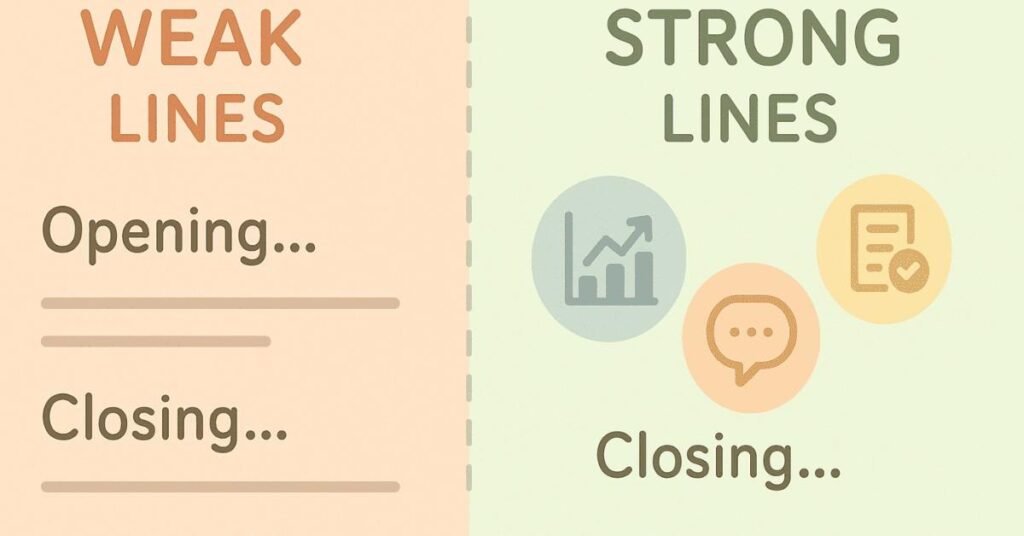
Mistake #8: No Clear Opening or Closing
The Problem:
You start: “Well, so, like, I’m going to talk about education…”
You end: “So yeah, that’s basically it. I think education is important.”
Why it fails: Weak openings lose evaluators. Weak closings leave bad final impressions.
Why it happens:
- Nervousness causing stammering
- Not planning first and last sentences
- Focusing only on middle content
The Fix:
- Write down (don’t memorize—just know) your opening sentence
- Practice it until it sounds natural
- Same for closing sentence
- Use the opening frameworks: statistic, question, personal connection, story, or contrarian statement
- Use closing frameworks: summary, future outlook, personal reflection, call to action
Mistake #9: Monotone Delivery (No Voice Modulation)
The Problem:
Your speech has the same pitch, volume, and tone throughout. It sounds robotic and boring: “Society faces challenges from technology. People use technology daily. Technology changes how we work. Technology affects society globally.”
Why it fails: Even great content sounds dull without vocal variety.
Why it happens:
- Nervousness causing tension in vocal cords
- Lack of awareness about voice modulation
- Reading rather than conversing
The Fix:
- Practice varying pitch for emphasis
- Change volume to show passion or importance
- Modify tone based on content (serious for problems, optimistic for solutions)
- Practice the content until you can speak naturally rather than reading
Mistake #10: Unclear Pronunciation
The Problem:
“Enviroment,” “Technolgy,” “Devlopment,” slurred or mumbled words
Why it fails: If the evaluator can’t understand your words, your content is irrelevant.
Why it happens:
- Speaking too fast
- Not articulating clearly
- Not knowing correct pronunciation
- Mumbling with closed lips
The Fix:
- Speak slower to ensure clarity (not chronologically slower, but articulation slower)
- Open your mouth more when speaking
- Practice tongue twisters: “Red lorry yellow lorry”
- Check pronunciation of difficult words before speaking
- Mirror practice to see your mouth movements
Mistake #11: Going Off on Tangents
The Problem:
Topic: “Importance of Education”
Your speech: “Education is important. My school is great. My principal is amazing. We have a big playground. My friends are in my class. We learn many subjects…”
Why it fails: Every sentence should support your main message. Tangential information dilutes impact.
Why it happens:
- Speaking randomly instead of following a structure
- Using the first example that comes to mind
- Lack of mental framework
The Fix:
- Use STAR or three-point structure
- Before each sentence ask: “Does this support my main message?”
- Focus on quality over quantity
- Example: “Education is important because it develops critical thinking, provides career opportunities, and builds confident citizens. For instance, educated individuals make better-informed decisions affecting themselves and society.”
Mistake #12: Ending with Questions to the Audience
The Problem:
“So in conclusion, don’t you think technology is important? What do you all think about social media?”
Why it fails: JAM is about your ability to speak authoritatively, not solicit opinions.
Why it happens:
- Nervousness causing you to deflect
- Misunderstanding the purpose
- Trying to engage but doing it incorrectly
The Fix:
- End with statements, not questions
- Close with conviction: “Therefore, education must remain a priority”
- Use these endings: summary, call to action, future vision, or personal insight
Mistake #13: Apologizing or Acknowledging Mistakes During Speech
The Problem:
“Wait, I mispronounced that… Actually, let me start over… I’m sorry, I meant to say…”
Why it fails: Apologizing highlights your mistakes and breaks flow. Evaluators might not have noticed otherwise.
Why it happens:
- Perfectionism and self-criticism
- Lack of confidence
- Nervousness triggering self-doubt
The Fix:
- Continue speaking regardless of mistakes
- One mispronunciation is overlooked; multiple apologies draw attention to errors
- Use the word correctly later in your speech
- Maintain confidence
Mistake #14: Running Out of Content Before 60 Seconds
The Problem:
At 40 seconds, you’ve said everything you planned. You either go silent or start repeating.
Why it fails: JAM requires sustained speech. Silence signals you’re unprepared.
Why it happens:
- Insufficient content preparation
- Speaking too fast
- Poor time management
The Fix:
- Pre-plan more content than you think you’ll need
- Build your content repository (50+ examples and statistics)
- Learn expansion techniques: adding examples, exploring different perspectives, discussing implications
- Practice timing to understand your natural pace
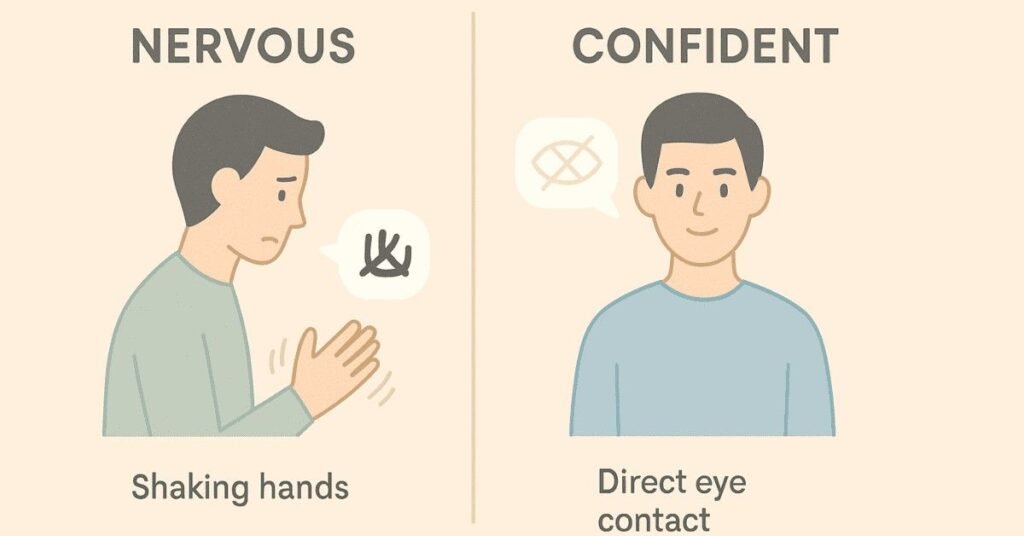
Mistake #15: Showing Nervousness Physically
The Problem:
Your hands shake, your voice quivers, your eyes dart nervously. You’re obviously terrified.
Why it fails: Physical nervousness undermines everything you say. It signals lack of confidence.
Why it happens:
- Genuine anxiety and stress response
- Lack of practice in high-pressure situations
- Negative self-talk
The Fix:
- Practice grounding techniques: feet firmly on ground, hands at sides or on table
- Use power posing 2 minutes before JAM
- Practice with mock audiences to reduce novelty
- Deep breathing exercises
- Remember: The evaluator wants you to succeed
Mistake #16: Not Making Eye Contact
The Problem:
You look at the ground, the ceiling, or your hands—anywhere except the evaluator.
Why it fails: Eye contact signals confidence and engagement. Avoiding it suggests dishonesty or fear.
Why it happens:
- Nervousness and discomfort
- Trying to remember content
- Habit from childhood (being told not to be rude by staring
The Fix:
- Maintain 70-80% eye contact with the evaluator
- If multiple evaluators, alternate between them
- Practice with friends until eye contact feels natural
- Remember: Eye contact demonstrates confidence and truthfulness
📂 Browse guided learning paths built to support consistent growth and effective communication →
The Mistake Prevention Checklist
Before every JAM practice and actual round, verify:
- Speaking at 120-150 words per minute (not too fast, not too slow)
- Minimal filler words (fewer than 2-3 per minute)
- Every statement relates to the topic
- No repeated information without added value
- Grammatically correct sentences
- 2-3 specific examples or evidence points
- Strong opening and closing
- Varied vocal pitch, tone, and volume
- Clear pronunciation of all words
- Every sentence supports main message
- Statements instead of questions for closure
- No apologies for mistakes
- Content planned to fill the full 60 seconds
- Calm body language and expressions
- Strong eye contact with evaluator
Score yourself on each point. Focus on lowest-scoring areas.
⭐Continue learning with fresh insights, practical frameworks, and improvement resources →
Key Takeaways for Avoiding Mistakes
- Pace control is fundamental: 120-150 wpm is ideal
- Filler words are killers: Replace with transitional phrases
- Stay on topic: Use frameworks to maintain focus
- Support claims with examples: Vague statements fail
- Open and close strongly: First and last impressions matter
- Modulate your voice: Monotone delivery bores evaluators
- Clear pronunciation is essential: Articulate every word
- Maintain confidence: Don’t apologize or show excessive nervousness
Use the mistake prevention checklist before every practice