
50+ Customer Success Interview Questions and Answers for 2026
Table of Contents
Introduction
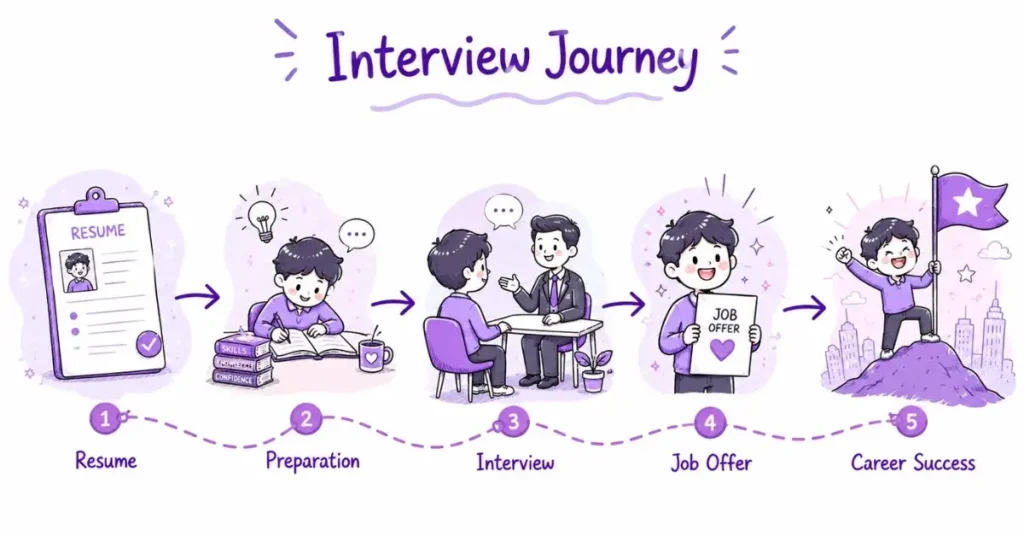
“Tell me about a time you turned around an unhappy customer.”
When Neha faced this question in her first Customer Success interview, she froze. She had plenty of customer service experience, but she’d never prepared for behavioral questions using the structured approach companies expect. She rambled for three minutes without clear structure, and the interviewer’s eyes glazed over. She didn’t get the job.
Three weeks later, armed with preparation and the STAR method (Situation, Task, Action, Result), Neha nailed her next interview and received an offer within days.
Customer Success interviews are challenging because they test multiple dimensions simultaneously: communication skills (how you answer), customer empathy (what stories you share), problem-solving ability (how you approach scenarios), business acumen (understanding of metrics and strategy), and cultural fit (do you align with company values).
The good news? CS interviews follow predictable patterns. While specific questions vary, the categories remain consistent: behavioral questions, situational/scenario questions, technical/process questions, case studies, and culture-fit questions. With proper preparation, you can anticipate 80% of what you’ll be asked.
This comprehensive guide provides 50+ common Customer Success interview questions organized by category, with framework-based answers, real examples, and strategic tips for standing out. Whether you’re interviewing for your first CS Associate role or a Senior CSM position, this guide prepares you to confidently tackle any CS interview.
Understanding CS Interview Structure
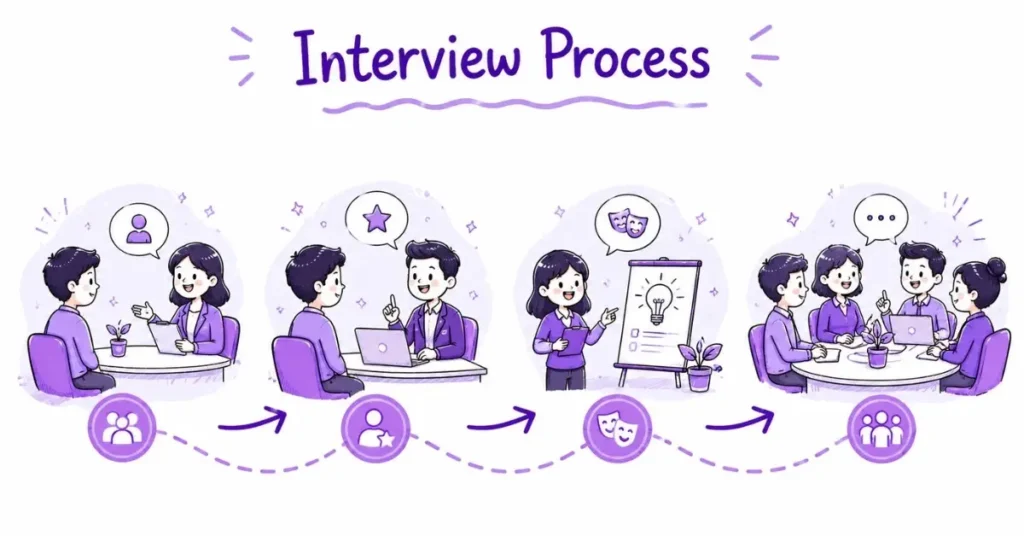
Typical Interview Process:
Round 1: Recruiter/HR Screen (20-30 minutes)
- Basic qualification check
- Culture fit assessment
- Salary expectations
- Logistical details
Round 2: Hiring Manager Interview (45-60 minutes)
- Deep-dive behavioral questions
- Situational scenarios
- Technical knowledge
- Customer-centric thinking
Round 3: Role-Play or Case Study (30-45 minutes)
- Practical demonstration of skills
- Customer interaction simulation
- Problem solving under pressure
Round 4: Team/Panel Interview (30-60 minutes)
- Multiple team members
- Culture fit
- Cross-functional collaboration assessment
Round 5: Executive Interview (30 minutes) – Senior roles only
- Strategic thinking
- Leadership potential
- Long-term fit

Category 1: Behavioral Questions (Your Past Experience)
These questions assess your past behavior as predictor of future performance. Always use STAR method.
STAR Framework:
- Situation: Set context (1-2 sentences)
- Task: Your responsibility/challenge
- Action: Specific steps you took (most important be detailed)
- Result: Quantifiable outcome + what you learned
Q1: "Tell me about yourself."
This is NOT asking for life story. Structure:
Framework:
- Current role and key achievement (30 seconds)
- Relevant background leading here (30 seconds)
- Why you’re excited about this opportunity (20 seconds)
- One personal detail (10 seconds)
Example Answer:
“I’m currently a Customer Success Associate at [Company], where I manage 40 customer accounts and maintain a 96% satisfaction rating. My proudest achievement has been reducing onboarding time by 35% through creating video tutorials that customers love.
Before this, I worked in customer support at [Previous Company] for two years, which taught me the importance of proactive customer engagement rather than reactive problem-solving. That experience made me passionate about Customer Success as a strategic function.
I’m excited about this role at [Target Company] because I’ve been following your product evolution, particularly your recent expansion into [market]. I’d love to bring my onboarding expertise to help scale your CS function during this growth phase.
Outside work, I’m an avid cyclist and recently completed my first 100km ride taught me a lot about persistence and goal-setting!”
Why This Works:
- Concise (under 2 minutes)
- Quantified achievements
- Shows research about target company
- Connects past experience to future opportunity
- Humanizes you with personal detail
Q2: "Why do you want to work in Customer Success?"
Weak Answer:
“I like helping people and I’m good at communication.”
Strong Answer:
“I’ve always been drawn to work where I can see direct impact on people’s success. In my previous role in [field], I noticed I got the most satisfaction not just from solving immediate problems, but from helping clients achieve their long-term goals.
Customer Success formalizes this approach strategically. What excites me is the alignment of interests when my customers succeed, my company succeeds, and I succeed. That’s a much healthier dynamic than many sales environments where there can be tension between what’s good for the customer and what closes the deal.
Additionally, I’m energized by the data-driven nature of modern CS. Using metrics like health scores and product adoption to predict and prevent churn, rather than just reacting to problems, is intellectually engaging and strategically important.
Finally, I see tremendous career growth potential in CS. The field is maturing rapidly, especially in India’s SaaS ecosystem, and I want to build my expertise as it evolves.”
Why This Works:
- Thoughtful, not superficial
- Shows understanding of CS philosophy
- Demonstrates knowledge of CS approaches
- Forward-thinking about career
Q3: "Tell me about a time you dealt with a difficult/angry customer."
STAR Example:
“Situation: At my previous company, we had a major service outage that affected about 50 customers. One customer, who ran a time-sensitive marketing campaign, called extremely upset because our platform failure cost them several hours of work and potentially thousands in lost revenue.
Task: I needed to resolve their immediate issue, address their frustration, and maintain the relationship despite our service failure.
Action: First, I let them vent without interruption or defensiveness. I validated their frustration: ‘You have every right to be upset this outage directly impacted your business, and that’s unacceptable.’
Then I took immediate ownership. Rather than promising to ‘follow up,’ I got our senior technical team on the line within 10 minutes while staying on call with the customer. We identified a workaround that recovered most of their work.
Beyond the technical fix, I proactively offered a 20% credit on their next invoice and scheduled a call with our VP of Engineering for the following day to explain what went wrong and our prevention measures.
I also followed up personally three days later to ensure everything was stable and they felt confident in our platform.
Result: Not only did the customer renew six months later, they actually upgraded their plan and wrote a positive review specifically mentioning our handling of that crisis. This experience taught me that how you handle failures often matters more than the failures themselves. Customers understand things go wrong they want to see ownership, speed, and genuine care.”
Why This Works:
- Concrete, specific situation
- Shows emotional intelligence (let them vent, validated feelings)
- Demonstrates problem-solving (technical + relationship)
- Proactive follow-up
- Quantified positive outcome
- Includes learning/reflection
Q4: "Describe a time you had to manage multiple priorities simultaneously."
Framework:
- Context: What were the competing priorities?
- Decision Process: How did you prioritize?
- Execution: How did you manage?
- Outcome: What happened?
Example Answer:
“Situation: During Q4 last year, I was managing 25 regular accounts while also leading the onboarding project for our largest new customer worth ₹15 lakhs annually and my manager was on medical leave, so I was covering some of her escalations.
Task: I needed to ensure my regular accounts stayed healthy, the enterprise onboarding succeeded (it was critical for our company), and urgent escalations got resolved.
Action: I started by categorizing everything by urgency and impact. The enterprise onboarding had fixed deadlines, so I blocked specific time each day for that project non-negotiable. For my regular accounts, I triaged: green accounts got automated check-ins, yellow accounts got brief personal calls, red accounts got full attention.
I also delegated. I asked a colleague to handle two of my less complex accounts temporarily, and I created detailed documentation so anyone could answer questions about them.
For escalations, I set clear expectations with customers about response times and gave myself permission to say ‘I’ll get back to you by [specific time]’ rather than trying to solve everything instantly.
Result: The enterprise onboarding completed on time with a 95% satisfaction score. My regular accounts actually maintained their average health scores none deteriorated. And I managed the escalations without dropping any balls.
The key learning was that explicit prioritization and communication both with customers and colleagues prevents the feeling of drowning in work.”
Why This Works:
- Realistic scenario (most CS roles involve juggling)
- Specific prioritization framework
- Shows delegation and communication
- Quantified outcomes
- Learning takeaway
Q5: "Tell me about a time you made a mistake. How did you handle it?"
Important: Don’t say “I’m a perfectionist so I rarely make mistakes.” Everyone makes mistakes. Showing how you handle them demonstrates maturity.
Example Answer:
“Situation: Last year, I was preparing for a Quarterly Business Review with a key account. I pulled usage data showing a 40% decline in product adoption which I planned to address in the QBR.
Task: Present concerning data and create action plan.
Mistake: I didn’t verify the data carefully. Turns out there was a tracking error, and their usage was actually fine. I discovered this 30 minutes before our scheduled QBR when the customer mentioned they’d been using the product more than ever.
Action: I immediately owned the mistake. I told them: ‘I need to pause our QBR. The data I was planning to present appears incorrect, and I won’t waste your time with inaccurate information. I’m deeply sorry this is my error for not verifying thoroughly. Can we reschedule for tomorrow once I have accurate data?’
I spent the evening confirming correct data, understanding what caused the error, and preparing a much more thorough presentation. I also created a checklist to verify data quality before future QBRs so this wouldn’t happen again.
The next day’s QBR went well, and I opened by reiterating my apology and explaining the steps I’d taken to prevent recurrence.
Result: The customer actually appreciated my transparency. They told me: ‘We’d rather have someone who catches and admits mistakes than someone who presents wrong data confidently.’ We maintained an excellent relationship, and they renewed at 120% of original value.
Learning: This taught me two things: Verify data rigorously before important presentations, and when you make mistakes, own them immediately and transparently. Trying to cover up mistakes erodes trust much more than the original mistake.”
Why This Works:
- Shows accountability, not excuses
- Demonstrates learning and process improvement
- Ended positively (customer valued honesty)
- Includes concrete change in behavior
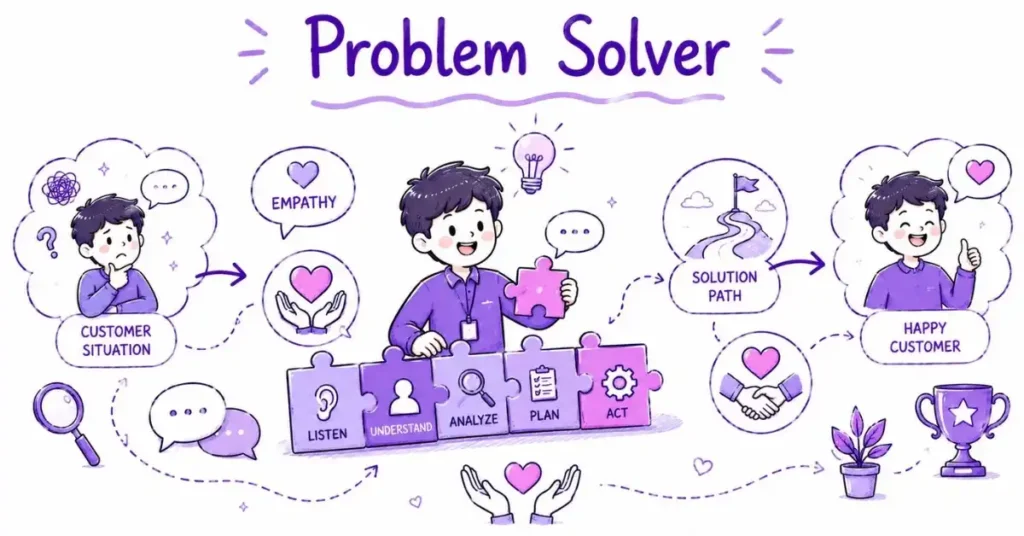
Category 2: Situational/Scenario Questions (Hypothetical Situations)
These assess how you’d handle situations you might face in the role.
Q6: "A customer wants to cancel. How do you handle it?"
Framework: Diagnose → Address → Find Win-Win
Answer:
“My approach would follow this process:
First, I’d seek to understand the real reason. Customers often say they’re canceling due to price, but the root cause is usually lack of value realization, adoption challenges, or changed circumstances. I’d ask open-ended questions: ‘Help me understand what led to this decision?’ ‘When did you start feeling the product wasn’t meeting your needs?’ ‘What would need to change for you to reconsider?’
Second, I’d acknowledge their concerns without being defensive. If they mention a product limitation, I wouldn’t argue I’d validate: ‘I understand why that’s frustrating for your use case.’
Third, I’d explore solutions based on their specific issues:
- If it’s adoption: Offer intensive training, dedicated support
- If it’s missing features: Share roadmap, get them into beta program
- If it’s price: Discuss smaller plan or pause option
- If it’s ROI: Present data showing value they’ve received
- If circumstances changed: Offer to pause account rather than cancel
However, I also know when to let customers go. If they’re genuinely not a fit or their needs fundamentally changed, I’d conduct an exit interview to learn from the situation rather than desperately trying to save an account that shouldn’t be saved.
Finally, I’d document everything. Understanding why customers churn helps prevent future churn.”
Why This Works:
- Systematic, not reactive
- Shows emotional intelligence (acknowledge, don’t argue)
- Demonstrates problem-solving
- Knows when to let go (mature thinking)
- Learning orientation
Q7: "You have 25 accounts. Three are showing concerning health scores. You have 5 hours today. How do you prioritize?"
Answer:
“I’d prioritize based on risk and value using a simple framework:
First, I’d assess each concerning account:
- What’s their contract value?
- When is their renewal?
- What specific factors are driving the low health score?
- What’s the relationship quality do I have strong executive sponsors?
Then I’d categorize:
Immediate Action (High Value + High Risk + Near Renewal):
Example: ₹10 lakh account renewing in 60 days with declining usage and no recent contact
→ I’d spend 2-3 hours here: Call executive sponsor, understand issues, create action plan, schedule follow-up
Quick Win (Moderate Value + Fixable Issue):
Example: ₹3 lakh account with health score decline due to one unused feature
→ I’d spend 1 hour: Quick training call to drive feature adoption, send documentation
Monitor and Plan (Lower Value or Further-Out Renewal):
Example: ₹2 lakh account renewing in 6 months with slight health decline
→ I’d spend 30 minutes: Email check-in, schedule call for next week, set reminder to monitor
For my remaining 22 healthy accounts, I’d send a quick status update or value reminder to maintain momentum.
The key principle: Deploy effort proportional to risk and value, but ensure every concerning account gets some attention even if just acknowledgment that you see the issue and have a plan.“
Why This Works:
- Clear prioritization framework
- Specific examples for each category
- Balances urgency and value
- Doesn’t ignore lower-priority items entirely
- Demonstrates strategic thinking
Q8: "A customer is requesting a feature we don't have and won't build for at least 6 months. How do you respond?"
Answer:
“This situation requires balancing honesty with problem-solving:
Acknowledge: ‘I really appreciate you sharing this need. Let me understand more about your use case and what problem you’re trying to solve.’
Dig Deeper: Often the requested feature is their imagined solution, but there might be alternative ways to achieve their goal. I’d ask: ‘Walk me through your workflow what are you trying to accomplish?’ Sometimes we discover existing features that solve their underlying need differently.
Be Honest About Timeline: If they truly need that specific feature: ‘I want to be transparent that feature isn’t on our immediate roadmap. The earliest we’d likely see it is 6-8 months, and that’s not guaranteed.’
Explore Alternatives:
- Can we create a workaround using existing features + manual process?
- Can they export data and use another tool for this specific function temporarily?
- Are there integration partners that address this need?
Add Value: ‘What I can do is document this request with your specific use case and ensure Product team sees it. Would you be willing to join a user feedback session if they need input on designing this feature?’
Set Expectations: ‘I understand this may not be the answer you wanted. If this feature is critical for your business and the workarounds aren’t sufficient, I want to be honest that it might impact your experience with us in the near term. Let’s discuss what makes sense given your priorities.’
Why This Works:
- Honest, not evasive
- Solution-oriented
- Involves customer in product development
- Sets realistic expectations
- Gives customer agency in decision
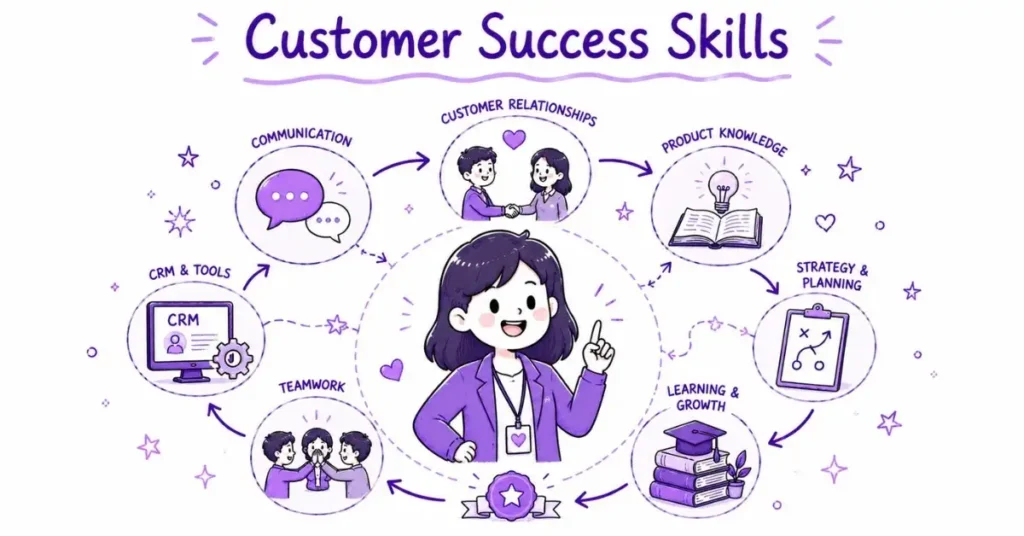
Category 3: Technical/Process Questions
These assess your understanding of CS methodologies and metrics.
Q9: "How do you define customer success?"
Answer:
“I define customer success on two levels:
For individual customers: Success means they’re achieving the outcomes they purchased our product to accomplish. This isn’t about them using every feature or logging in daily it’s about whether our product genuinely helps them solve their business problems and delivers ROI that justifies their investment.
For Customer Success as a function: Our success is measured by ensuring customers achieve their goals in ways that drive retention, expansion, and advocacy. We’re successful when customers:
- Achieve measurable value (quantifiable ROI)
- Adopt and integrate our product into their workflows
- Renew their contracts happily
- Expand their usage as their needs grow
- Become advocates referring others and providing case studies
**The critical insight is that customer success isn’t just about satisfaction or happiness it’s about outcomes. A customer might be happy with our service but still churn if they’re not getting business value. Conversely, they might have occasional frustrations but stay if we’re delivering critical value.
That’s why I believe in measuring success through metrics like product adoption, health scores, and Net Revenue Retention, not just NPS surveys.”
Why This Works:
- Shows deep understanding of CS philosophy
- Distinguishes outcomes from satisfaction
- Mentions specific metrics
- Demonstrates strategic thinking
Q10: "What is NRR (Net Revenue Retention) and why does it matter?"
Answer:
“Net Revenue Retention measures the revenue you retain from existing customers including expansions, downgrades, and churn excluding new customer acquisition.
Formula: NRR = [(Starting MRR + Expansion – Downgrades – Churn) / Starting MRR] × 100
Example: If we started the year with ₹1 crore MRR from existing customers, they expanded by ₹20 lakhs, we lost ₹10 lakhs to churn, and ended with ₹1.1 crores, our NRR is 110%.
Why it matters:
Business Perspective: NRR above 100% means you can grow revenue without acquiring any new customers. This is incredibly valuable because acquiring new customers is expensive. Companies with 120%+ NRR can double revenue in 3 years with zero new customers that’s powerful economics.
CS Perspective: NRR is the ultimate scorecard for Customer Success. It captures both retention (are we preventing churn?) and expansion (are we growing accounts?). Unlike vanity metrics like CSAT, NRR directly ties CS performance to revenue.
Investor Perspective: VCs and public market investors pay close attention to NRR. High NRR (110%+) indicates product-market fit, customer satisfaction, and sustainable growth. Many unicorns achieved their valuations partly due to exceptional NRR.
For Customer Success professionals, NRR is often our north-star metric the single number that best represents whether we’re succeeding.“
Why This Works:
- Accurate definition and formula
- Clear example with Indian context
- Explains why it matters from multiple perspectives
- Connects CS work to business outcomes
- Shows strategic understanding
Q11: "How would you build a customer health score?"
Answer:
“I’d approach this systematically:
Step 1: Identify Leading Indicators of Churn
Analyze historical data: What characteristics do churned customers share?
- Low product usage?
- High support ticket volume?
- Poor payment history?
- Low engagement with CSM?
Step 2: Define Components and Weights
Based on that analysis, I’d create a weighted scoring model. Example:
- Product Usage (40%): Daily/monthly active users, feature adoption, key actions completed
- Engagement (25%): Email opens, meeting attendance, QBR participation, executive sponsor relationship
- Support Health (15%): Ticket volume, sentiment, time-to-resolution
- Financial Health (10%): Payment history, contract value, expansion potential
- Satisfaction (10%): NPS, CSAT scores
Step 3: Create Scoring Ranges
- 80-100: Green (healthy)
- 50-79: Yellow (at risk)
- 0-49: Red (critical)
Step 4: Test and Refine
Apply the model to historical data: Does it accurately predict which customers churned? Adjust weights and components based on accuracy.
Step 5: Operationalize
Create automated scoring in CS platform, set up alerts when accounts change colors, build playbooks for each status.
Step 6: Continuous Improvement
Review quarterly: Is the model still predictive? Do we need to adjust as product or customer base evolves?
The key is making health scores actionable, not just informational. Each score range should trigger specific CSM actions.“
Why This Works:
- Systematic, data-driven approach
- Specific example with realistic weights
- Emphasizes testing and refinement
- Focuses on actionability
- Shows understanding of CS operations
Category 4: Company-Specific Questions
Q12: "Why do you want to work for this company specifically?"
Critical: This cannot be generic. Do deep research.
Framework:
- Product/mission alignment
- Company trajectory/momentum
- Team/culture
- Personal growth opportunity
Example Answer:
“Three main reasons:
First, I genuinely believe in your product. I’ve actually been using [product] for [purpose] for the past six months, and I’ve experienced firsthand how intuitive your onboarding is and how well [specific feature] solves [specific problem]. When you’re in Customer Success, believing in your product authentically makes everything easier.
Second, your company trajectory is compelling. Your Series B funding last quarter, expansion into [market], and recent customer wins with [name companies if public] suggest you’re entering a scaling phase. That’s exactly when strong CS becomes critical, and I want to be part of building that function.
Third, I’m impressed by your customer-centric culture. Reading your blog posts about [specific company value] and seeing how your founders engage on LinkedIn about customer feedback shows this isn’t just CS-department work customer success is embedded in company DNA. That alignment is rare and valuable.
**Additionally, from speaking with [name, if you’ve networked with employees], I’m excited about the team culture collaborative, data-driven, and focused on continuous improvement. That’s the environment where I thrive.”
Why This Works:
- Specific, not generic
- Shows actual product usage
- Demonstrates research (funding, expansion, culture)
- Names people if possible
- Connects company attributes to personal values
Q13: "What do you know about our product/company?"
Preparation Required: Before every interview:
- Use their product (free trial if available)
- Read last 5 blog posts
- Check recent funding news
- Understand competitors
- Know their customers (case studies)
Answer Framework:
- Product overview (what it does, target customers)
- Recent developments (funding, product launches, expansions)
- Market position
- One insightful observation or question
Example:
“From my research and trial of your product, you’re a [category] platform targeting [customer type] to solve [problem]. What differentiates you is [specific capability] I noticed this particularly in [feature] which handles [use case] much better than [competitor].
You recently raised Series B from [investors] and announced expansion into [market], which makes sense given [market trend/insight].
Your customers include [name companies from case studies], and from reading those case studies, the common thread is customers achieve [specific outcome] within [timeframe].
One thing I’m curious about: I noticed [specific product observation] how do customers typically [question showing deep engagement]?”
Why This Works:
- Demonstrates thorough research
- Specific observations (not surface-level)
- Ends with intelligent question
- Shows genuine engagement
Category 5: Questions About You
Q14: "What are your salary expectations?"
Strategy: Delay this conversation until you have offer, or let them anchor first.
If Asked Early:
“I’m still learning about the full scope of the role and the value I’d bring. I’m confident we can find mutually agreeable compensation once we both determine this is a great fit. What’s the budgeted range for this position?”
If Pressed:
“Based on my research of market rates for Customer Success [level] roles in [city] with my experience level, I’m targeting the ₹[X-Y] range, but I’m flexible based on total compensation including growth opportunities.”
Important:
- Give range, not single number
- Base on research, not current salary
- Show flexibility
- Focus on total compensation
Q15: "What questions do you have for us?"
Critical: Always ask thoughtful questions. “No questions” suggests disinterest.
Strong Questions to Ask:
About Role:
- “What does success look like in the first 90 days of this role?”
- “What are the biggest challenges your CS team is facing currently?”
- “How is CS measured and evaluated here?”
- “Walk me through a typical customer journey from sale through renewal.”
About Team/Culture:
- “How would you describe the CS team culture?”
- “What do people love most about working here?”
- “How does CS collaborate with Product and Sales?”
About Company:
- “What’s your biggest company goal for the next year, and how does CS contribute?”
- “What excites you most about the company’s direction?”
About Growth:
- “What does career progression typically look like for CS professionals here?”
- “What learning and development opportunities are available?”
Avoid:
- Questions easily answered by website
- Salary/benefits in early rounds
- Negative-sounding questions (“What’s your turnover rate?”)
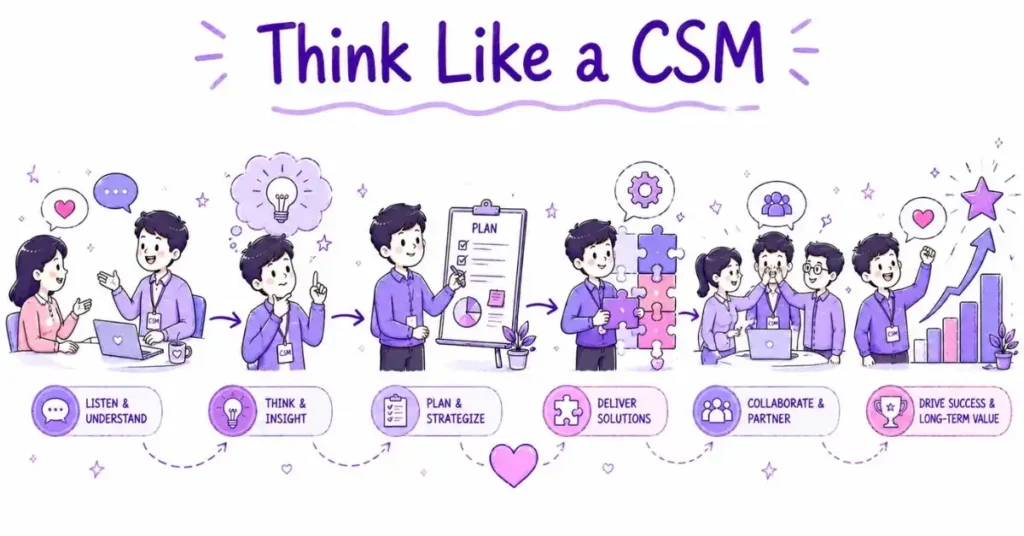
Category 6: Case Study/Role-Play Preparation
Many CS interviews include practical exercises.
Common Case Study Scenarios:
Scenario 1: Customer Onboarding Call
You’ll role-play first call with new customer
Preparation:
- Research the product thoroughly
- Prepare questions to understand customer goals
- Practice screen-sharing product demo
- Prepare to set expectations and next steps
Framework:
- Build rapport (2 minutes)
- Understand their goals and use case (5 minutes)
- Tailor demo to their needs (10 minutes)
- Set next steps and success criteria (3 minutes)
Scenario 2: Customer Health Analysis
Given data about customer, recommend actions
Preparation:
- Practice analyzing health score components
- Develop prioritization frameworks
- Prepare action plans for each risk level
Framework:
- Assess situation: What’s concerning?
- Diagnose root cause: Why is this happening?
- Prioritize actions: Most impactful interventions?
- Create timeline: What happens when?
Scenario 3: Churn-Risk Intervention
Customer showing signs of churn, how do you approach?
Framework:
- Research account thoroughly
- Develop hypothesis about root cause
- Plan conversation: questions to ask, data to present
- Prepare multiple solutions based on different root causes
- Know when to escalate vs handle personally
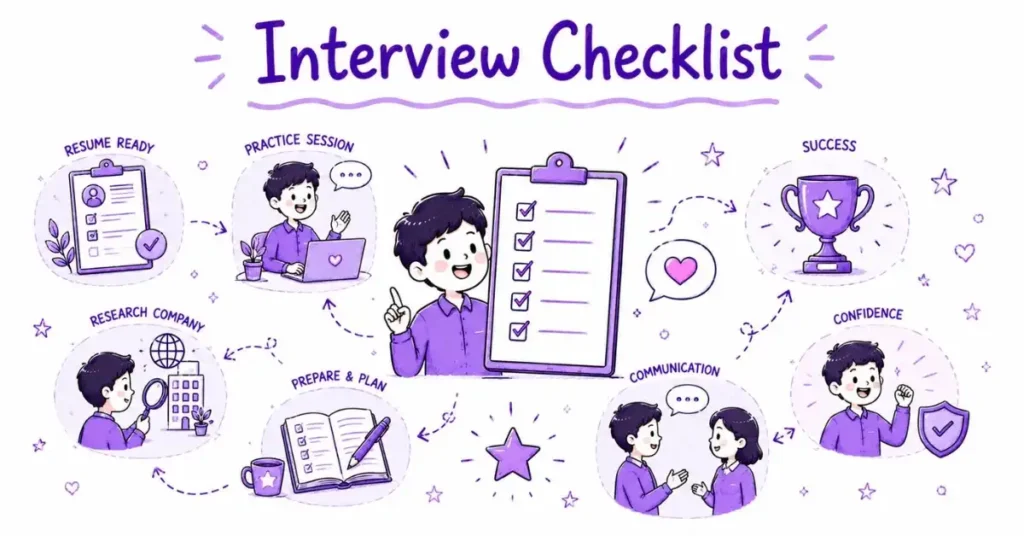
Final Interview Tips
Day Before:
- Review company research
- Re-read job description
- Prepare specific examples for common questions
- Plan professional outfit
- Test technology (for video interviews)
- Get good sleep
Day Of:
- Arrive 10 minutes early (or log in 5 minutes early for video)
- Bring notebook and pen
- Bring extra resume copies
- Turn off phone
- Breathe and be present
During Interview:
- Listen actively don’t interrupt
- Take brief notes
- Pause before answering (1-2 seconds to collect thoughts)
- Be concise (2-3 minute answers max)
- Show enthusiasm through energy and body language
- Ask for clarification if question is unclear
After Interview:
- Send thank-you email within 24 hours
- Reference specific conversation points
- Reiterate enthusiasm
- Mention anything you forgot to address
- Don’t pester respect their timeline
What Interviewers Are Really Assessing
Behind every question, interviewers evaluate:
Can you do the job? (Skills and experience)
Will you do the job? (Motivation and culture fit)
Can we work with you? (Personality and communication)
Will you stay? (Career goals alignment)
Your answers should address not just the surface question, but these underlying concerns.
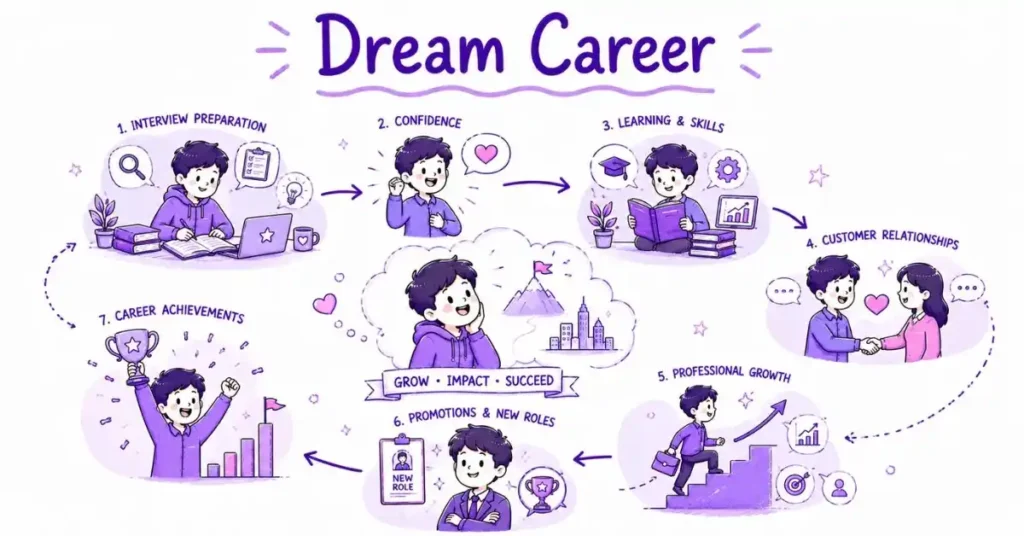
Conclusion: Preparation Separates Good from Great
Customer Success interviews are challenging, but they’re also predictable. The same categories of questions appear across companies. The same frameworks produce strong answers.
The candidates who succeed aren’t necessarily the most experienced they’re the best prepared.
Invest time reviewing these questions. Practice your STAR stories aloud. Research companies thoroughly. Develop your frameworks for approaching scenarios.
When interview day comes, you’ll walk in confident, prepared, and ready to demonstrate why you’re the right Customer Success professional for their team.
Now go prepare. Your next CS opportunity is waiting.