
Green Infrastructure & Smart Cities
Table of Contents
Introduction
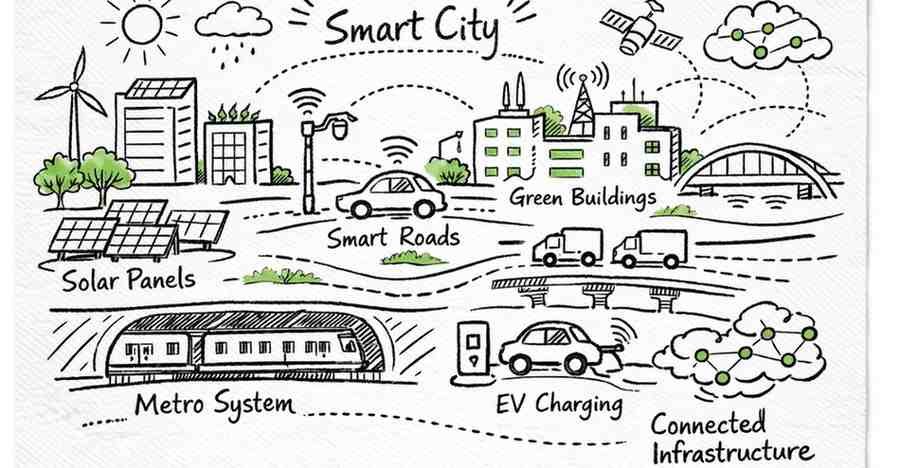
Imagine a city where:
- Buildings generate their own solar power
- Roads have sensors that optimize traffic flow in real-time
- Rainwater is harvested and recycled automatically
- Public transport runs on clean energy
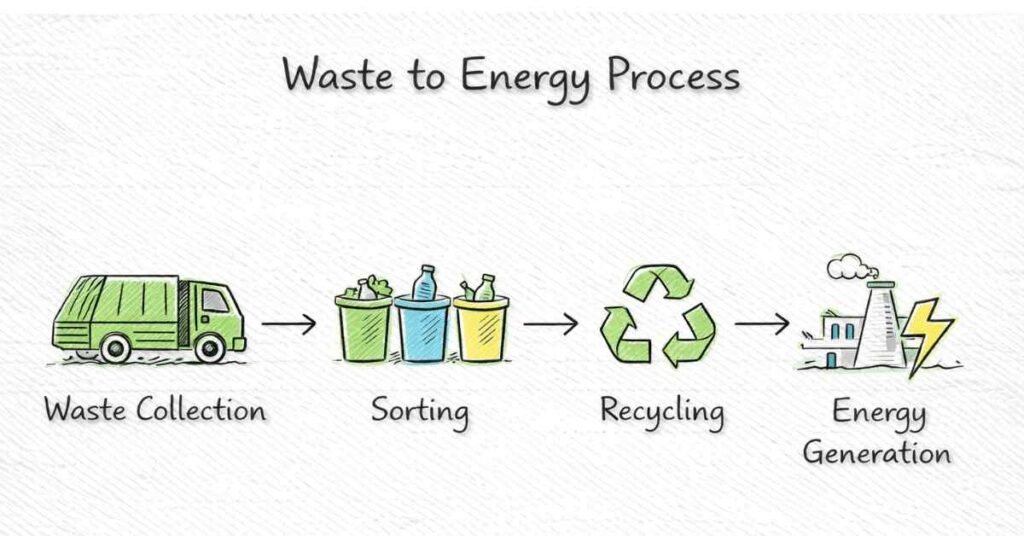
- Waste is converted to energy
- Green spaces cool the urban environment naturally
This isn’t science fiction. This is what civil engineers are building right now in India’s smart cities.
If you’re starting your career today, understanding green infrastructure and smart cities isn’t optional—it’s essential. This is where the future of civil engineering is headed.
What Are Smart Cities?
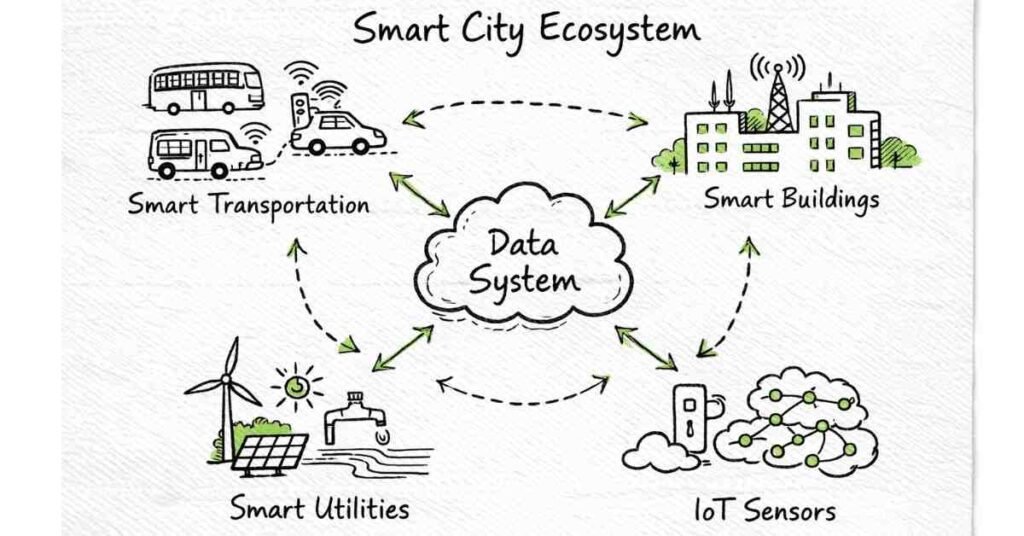
A smart city uses technology, data, and intelligent systems to improve quality of life, sustainability, and efficiency.
Key characteristics:
- Smart transportation: Intelligent traffic management, app-based public transport
- Smart buildings: Energy-efficient, sensor-equipped structures
- Smart utilities: Automated water supply, smart electricity grids
- Data-driven governance: Using sensors and IoT for city management
- Sustainable practices: Green buildings, renewable energy, waste-to-energy
India’s Smart Cities Mission: 100 cities across India are being developed or upgraded as smart cities with investment exceeding ₹2 lakh crores. This creates massive opportunities for civil engineers who understand both traditional infrastructure and modern technology.
Why Smart Cities Matter for Your Career
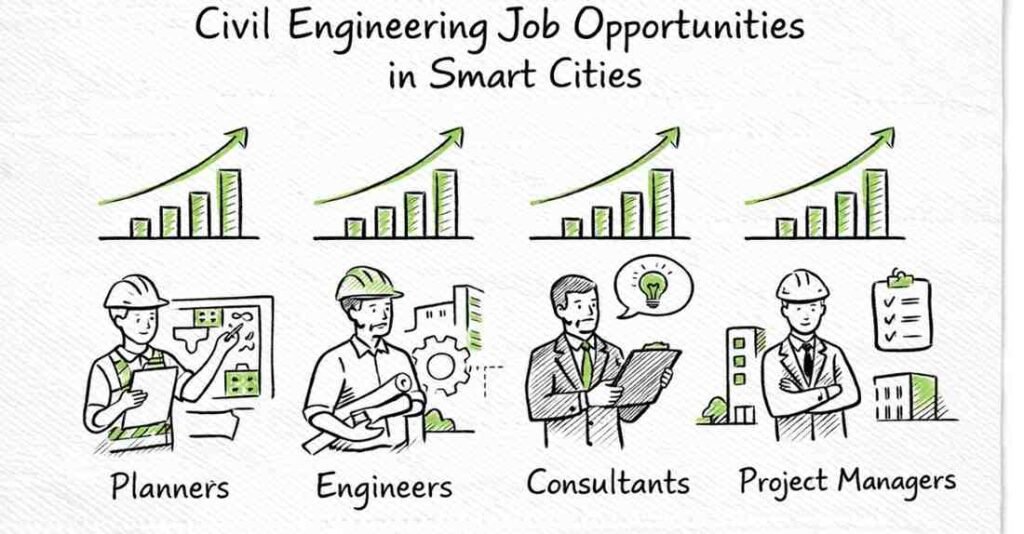
Massive Job Creation
The Smart Cities Mission alone has created opportunities for:
- Urban planners and infrastructure designers
- Civil engineers with IoT knowledge
- Project managers for smart city projects
- Sustainability consultants
- Transportation engineers for intelligent mobility
Higher Pay
Smart city engineers often earn 15-30% more than traditional roles due to specialized skill requirements.
Future-Proof Skills
As conventional cities transform into smart cities, engineers with smart infrastructure expertise will be in continuous demand.
Meaningful Impact
You’re not just building structures—you’re creating sustainable, livable urban environments that improve millions of lives.
Green Infrastructure: Building Sustainably
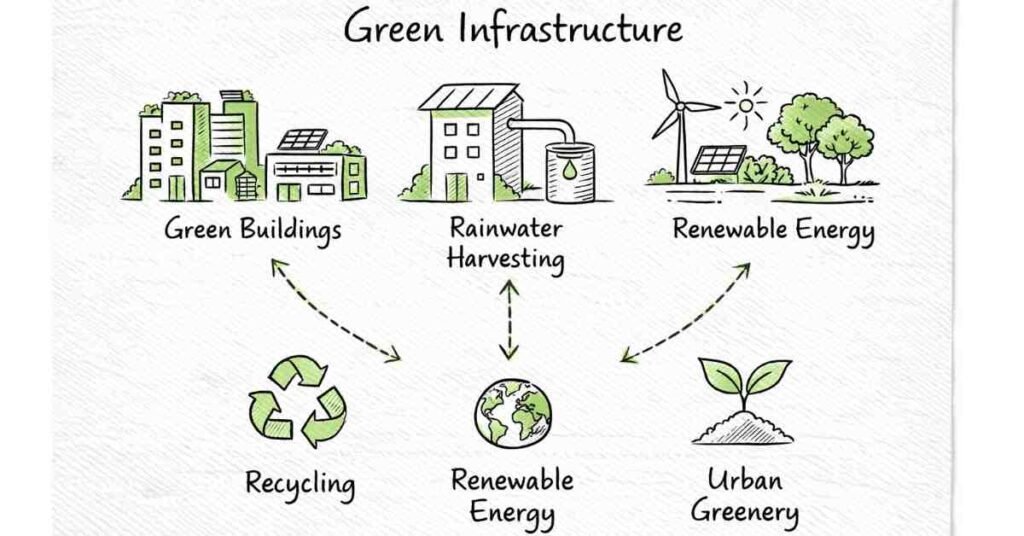
Green infrastructure integrates natural and engineered systems to create environmentally sustainable solutions.
Key Components
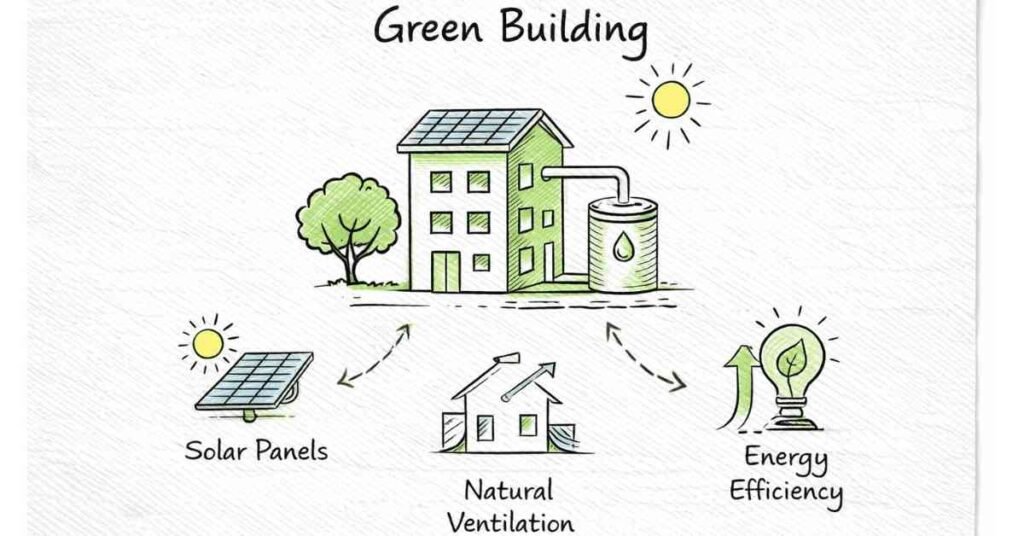
1.Green Buildings
Buildings that minimize environmental impact through:
- Energy-efficient design (optimized orientation, natural lighting, insulation)
- Renewable energy integration (solar panels, wind turbines)
- Water conservation (rainwater harvesting, greywater recycling)
- Sustainable materials (recycled content, low-carbon concrete)
- Waste reduction during construction
LEED and IGBC Certification: Buildings are rated on sustainability parameters. LEED-certified engineers are in high demand.
2.Zero-Waste Construction
Modern construction aims for:
- Prefabrication to minimize on-site waste
- Recycling construction debris
- Using industrial byproducts (fly ash in concrete)
Modular construction techniques
3.Green Urban Spaces
- Urban forestry and green corridors
- Permeable pavements (allowing water infiltration)
- Green roofs and vertical gardens
- Urban wetlands for natural water treatment
4.Renewable Energy Infrastructure
Civil engineers design and build:
- Solar power plant foundations and structures
- Wind turbine foundations
- Hydroelectric facilities
- Biomass and waste-to-energy plants
Smart Transportation: Moving People Intelligently
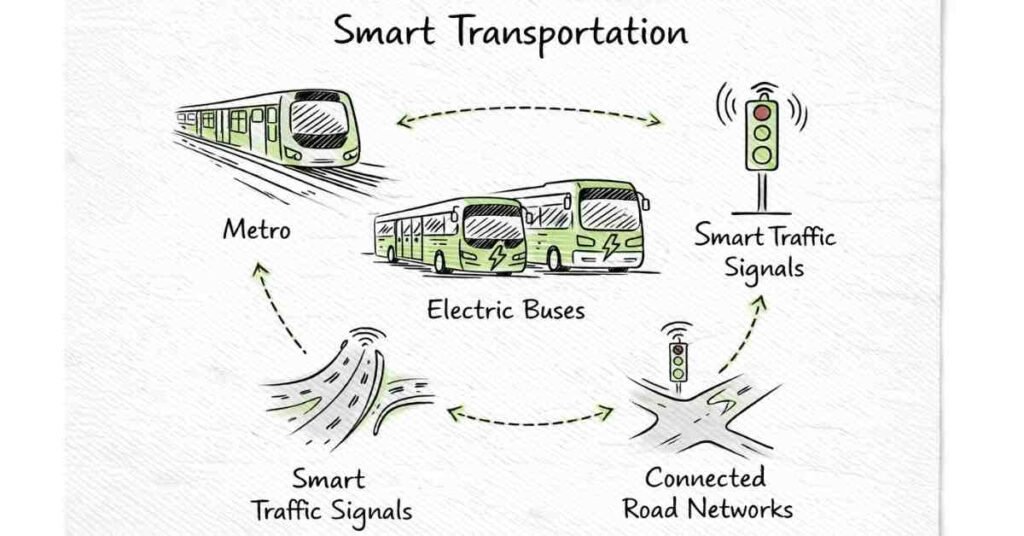
Transportation is one of the biggest smart city focus areas.
Intelligent Traffic Management
- Smart traffic signals: Adapt timing based on real-time traffic flow
- Traffic sensors and cameras: Monitor congestion, detect violations
- Integrated traffic command centers: Manage city-wide traffic from central systems
Civil engineers design the physical infrastructure (roads, signals, sensors) that makes this possible.
Smart Public Transport
- Metro and BRT systems: Clean, efficient mass transit
- Electric buses: Charging infrastructure, depot planning
- App-based tracking: Real-time bus/metro location systems
- Integrated ticketing: Single card for multiple transport modes
Smart Roads
- IoT-enabled pavements: Sensors monitoring road conditions
- Smart street lighting: LED lights that adjust brightness based on activity
- Electric vehicle charging stations: Infrastructure for EV adoption
- Smart parking: Sensors indicating available parking spots
Smart Water Management
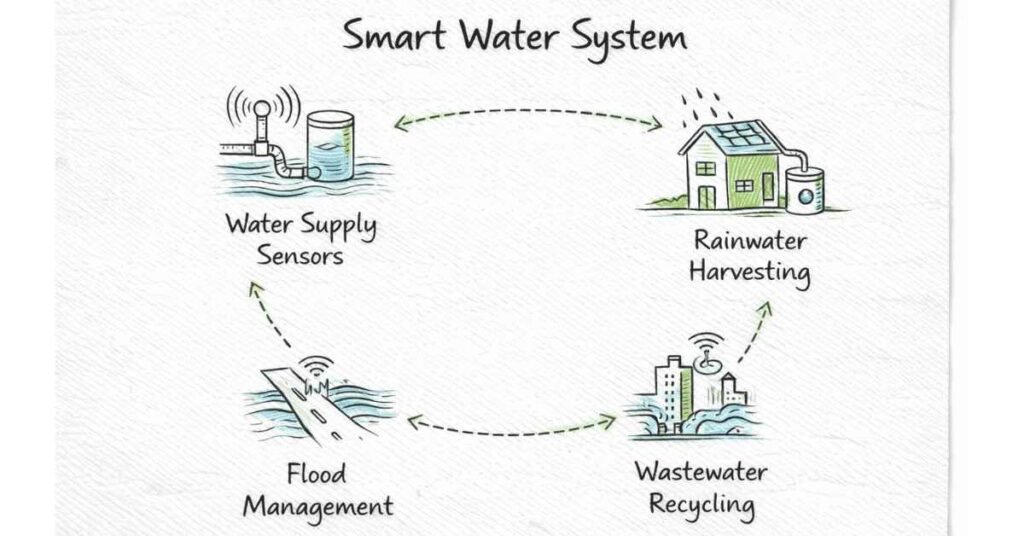
Water scarcity makes smart water systems critical.
What Civil Engineers Build
Smart Water Supply Networks:
- Sensors monitoring water quality and pressure
- Leak detection systems (saving 20-40% water loss)
- Automated distribution based on demand
Rainwater Harvesting Systems:
- Building-level and community-level harvesting
- Groundwater recharge structures
- Storage and filtration systems
Wastewater Treatment & Recycling:
- Tertiary treatment for water reuse
- Sensor-based treatment process optimization
- Recycled water for landscaping, industrial use
Flood Management:
- Smart drainage with real-time monitoring
- Permeable surfaces reducing runoff
- Urban wetlands and retention ponds
Smart Energy Systems
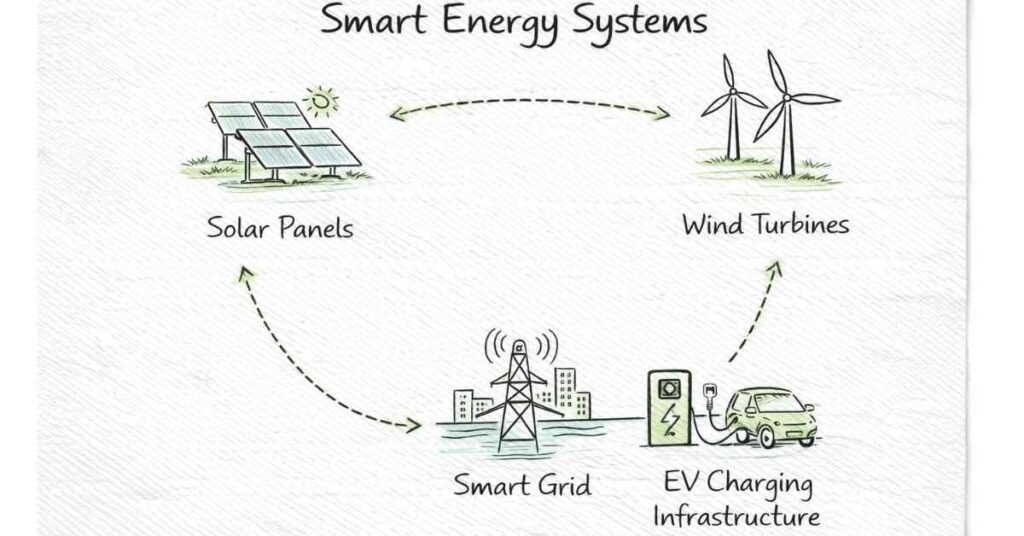
Civil engineers contribute to energy infrastructure:
Smart Grid Infrastructure:
- Underground cabling for reliability
- Substation design and placement
- Integration with distributed renewable energy
Building-Integrated Energy:
- Solar panel mounting structures
- Battery storage rooms
- EV charging infrastructure in buildings
District Cooling/Heating:
- Centralized cooling for multiple buildings
- Thermal energy storage
- Reduces energy consumption by 30-50%
Waste-to-Energy and Circular Economy
Modern waste management creates resources from trash.
What Civil Engineers Design:
- Material Recovery Facilities: Automated sorting and recycling
- Waste-to-Energy Plants: Converting garbage to electricity
- Biogas Plants: Organic waste to cooking gas
- E-waste Processing Centers: Safe recycling of electronic waste
Prefabricated and Modular Construction: Enables reuse and recycling of building components.
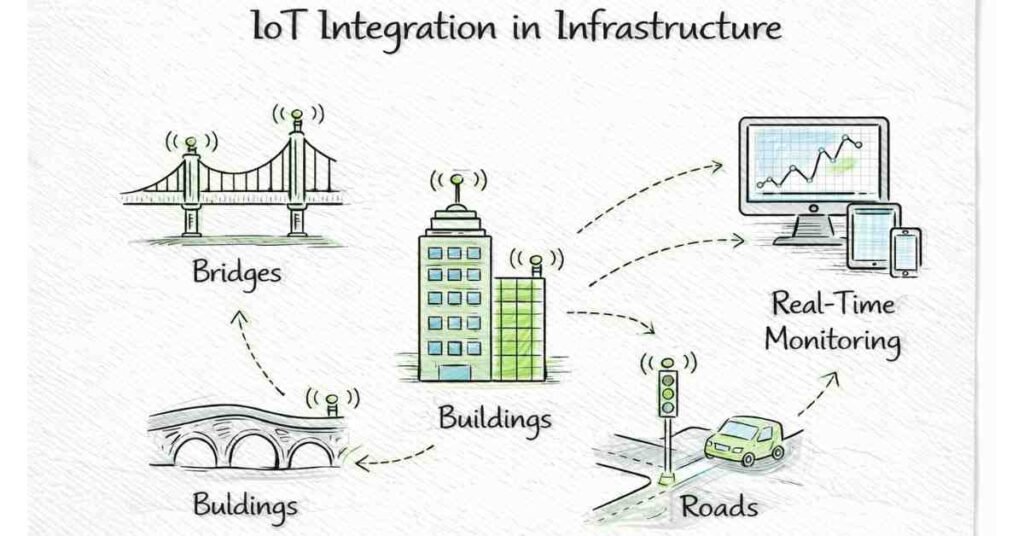
IoT and Smart Infrastructure Integration
Civil engineers now work with IoT specialists to embed technology into infrastructure.
Sensors in Infrastructure:
- Structural health monitoring: Sensors on bridges, buildings detecting stress and damage early
- Environmental sensors: Air quality, noise levels, temperature
- Utility sensors: Water flow, electricity consumption, waste levels
Data-Driven Infrastructure Management:
- Using sensor data to optimize maintenance
- Predictive analytics to prevent failures
- Real-time monitoring of infrastructure performance
Civil engineers need to understand:
- Where and how to install sensors
- Designing infrastructure that accommodates smart systems
- Collaborating with IT and IoT specialists
Job Roles in Smart Cities & Green Infrastructure
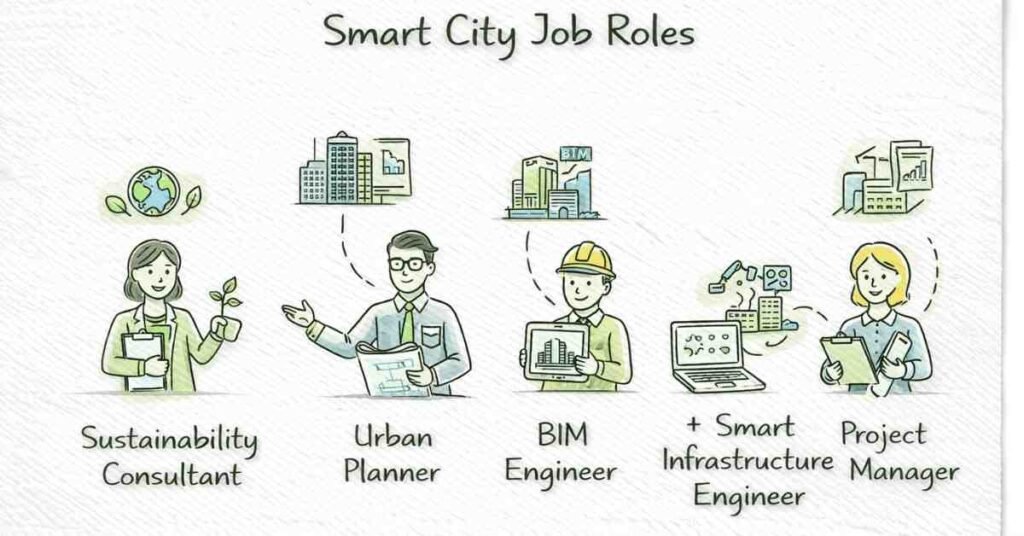
1. Smart City Civil Engineer
Responsibilities:
- Design infrastructure integrating smart technologies
- Coordinate with architects, urban planners, IoT specialists
- Ensure compliance with sustainability and safety standards
- Manage smart infrastructure projects
Skills Needed:
- Traditional civil engineering knowledge
- Understanding of IoT and sensor systems
- Sustainability principles
- Data analysis basics
- Collaboration across disciplines
Salary: ₹6-15 LPA depending on experience
2. Sustainability Consultant
Responsibilities:
- Advise on energy-efficient and environmentally friendly infrastructure
- Conduct environmental impact assessments
- LEED/IGBC certification consulting
- Green building design guidance
Skills Needed:
- LEED AP or IGBC certification
- Knowledge of green building materials and technologies
- Life cycle assessment expertise
- Environmental regulations
Salary: ₹7-18 LPA
3. Urban Infrastructure Planner
Responsibilities:
- Combine civil engineering and urban planning for sustainable city development
- Plan integrated infrastructure (transport, water, energy, waste)
- Use GIS and data analytics for spatial planning
- Smart city master planning
Skills Needed:
- Urban planning principles
- GIS and remote sensing
- Understanding of smart city technologies
- Stakeholder engagement
Salary: ₹6-14 LPA
4. Infrastructure Project Manager (Smart Projects)
Responsibilities:
- Oversee smart infrastructure construction and implementation
- Coordinate multiple technologies and systems
- Ensure on-time, on-budget delivery
- Manage cross-functional teams (civil, electrical, IT)
Skills Needed:
- Project management (PMP beneficial)
- Technical knowledge across disciplines
- Smart city technology awareness
- Budget and schedule management
Salary: ₹10-22 LPA
5. Transportation Systems Engineer
Responsibilities:
- Design intelligent transportation systems
- Integrate sensors, cameras, control systems
- Optimize traffic flow using data
- Plan electric vehicle infrastructure
Skills Needed:
- Transportation engineering
- Traffic modeling software
- IoT and sensor technology
- Data analytics
Salary: ₹7-15 LPA
Skills You Need to Build
To succeed in smart cities and green infrastructure:
Technical Skills:
- BIM and digital tools: Essential for smart infrastructure design
- Sustainability knowledge: Green building principles, LEED standards
- Basic IoT understanding: How sensors and smart systems work
- GIS and data analytics: For urban planning and data-driven decision-making
- Renewable energy basics: Solar, wind, waste-to-energy systems
Soft Skills:
- Interdisciplinary collaboration: Working with IT, electrical, environmental teams
- Systems thinking: Understanding how different infrastructure components interact
- Innovation mindset: Openness to new technologies and methods
- Communication: Explaining technical concepts to non-technical stakeholders
How to Enter This Field
During BTech:
- Take electives in environmental engineering, urban planning, renewable energy
- Learn BIM tools (Revit)
- Do projects on sustainable construction or smart infrastructure
- Participate in smart city competitions or hackathons
Early Career:
- Join companies working on smart city projects
- Work on green building projects to understand sustainable practices
- Get LEED Green Associate certification
- Learn GIS software (QGIS, ArcGIS)
Mid-Career:
- Pursue LEED AP or IGBC AP certification
- Specialize in one area (smart transportation, green buildings, water management)
- Take courses on smart city technologies and IoT
Work on at least 2-3 smart/sustainable projects to build portfolio
Major Smart City Projects in India (Opportunities)
100 Smart Cities: Bhubaneswar, Pune, Jaipur, Surat, Kochi, Ahmedabad, Jabalpur, Visakhapatnam, Solapur, Davangere, and 90 others
Smart City Features Being Built:
- Intelligent traffic management systems
- Smart water supply and waste management
- Integrated command and control centers
- Wi-Fi enabled public spaces
- Solar-powered buildings and streetlights
- Green buildings and LEED-certified structures
- Smart parking and EV charging infrastructure
Where to Find Jobs:
- Smart City SPVs (each smart city has one)
- Consulting firms (AECOM, Jacobs, Arup working on smart city projects)
- Technology firms (providing smart solutions)
- Construction companies executing smart infrastructure
- Government urban development departments
Challenges You'll Face
- Multidisciplinary Complexity: You need to understand civil, electrical, IT systems
- Rapid Technology Change: What’s cutting-edge today might be standard tomorrow
- Higher Initial Costs: Sustainable solutions often cost more upfront (though they save money long-term)
- Data Security: Smart systems are vulnerable to cyber threats
- Retrofitting Old Infrastructure: Upgrading existing cities is harder than building new ones
- Stakeholder Coordination: Smart city projects involve multiple agencies and stakeholders
But these challenges also mean opportunities for engineers who can navigate them.
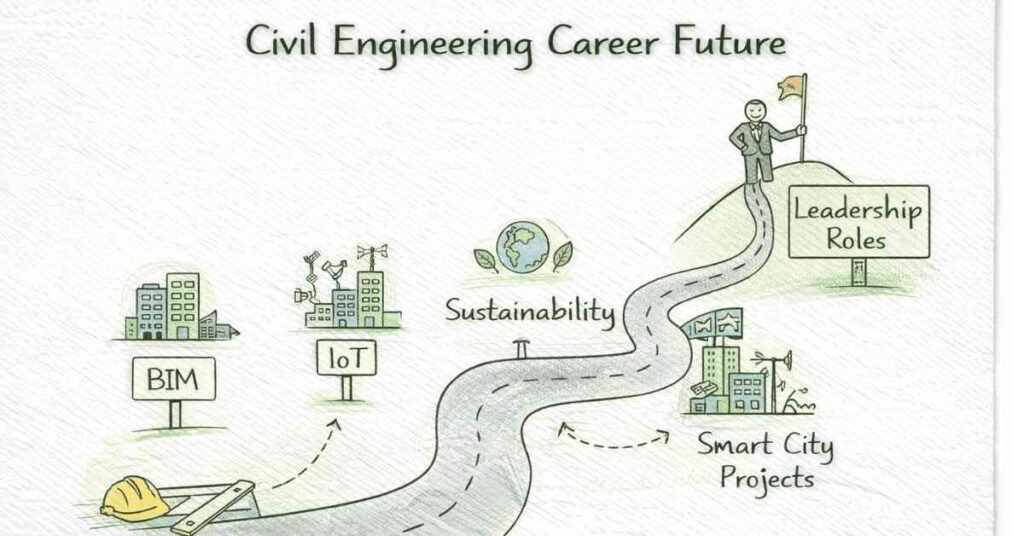
The Future is Green and Smart
By 2030:
- Over 600 million Indians will live in cities
- Climate change will demand sustainable solutions
- Technology will be deeply integrated into all infrastructure
- Green building will be mandatory, not optional
- Data-driven infrastructure management will be standard
Civil engineers who understand both traditional infrastructure AND modern sustainability/technology will be the most valuable professionals.
Why This Matters to You
If you’re starting your career now, you have a choice:
- Learn only traditional civil engineering and struggle to stay relevant
- OR embrace smart and green infrastructure and ride the wave of transformation
The field is evolving fast. Engineers who adapt will thrive. Those who resist will find fewer opportunities.
Smart cities and green infrastructure aren’t just career paths—they’re the future of how humanity will live. And as a civil engineer, you get to build that future.