
CULTURAL INTELLIGENCE & MULTILINGUAL SKILLS
Table of Contents
Cultural Intelligence: Your Gateway to Global Hospitality Leadership
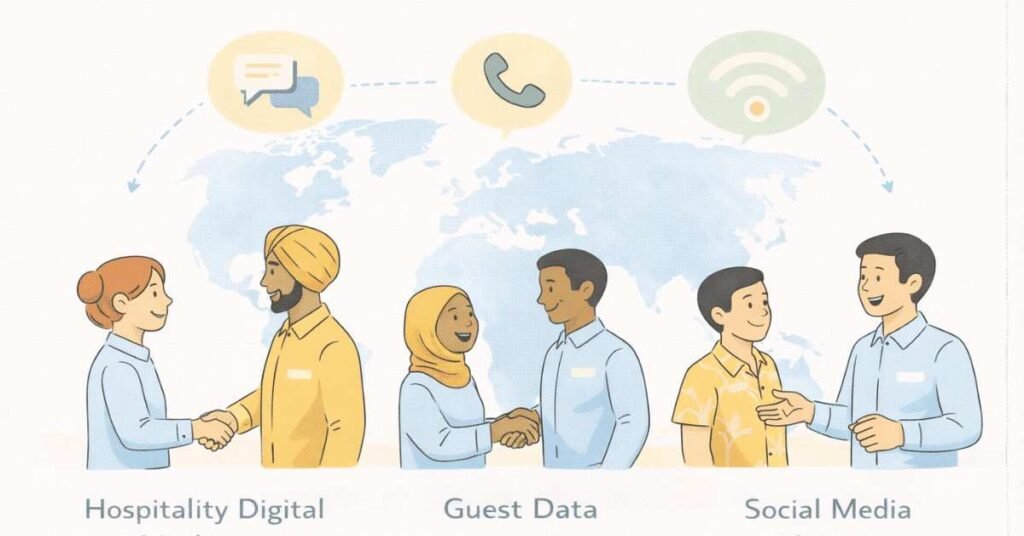
Why Cultural Intelligence Defines Hospitality Excellence
In 2025, hospitality isn’t confined to borders or homogeneous guest populations. International travelers, migrant workers, multicultural teams, and diverse guest preferences are the norm, not the exception. In this context, cultural intelligence—the capability to function effectively across different cultures—isn’t a nice-to-have skill; it’s essential to career success.
Cultural intelligence (CQ) enables you to bridge differences, avoid misunderstandings, and create genuine connections with guests and colleagues from diverse backgrounds. Hotels and tourism companies recognize this: professionals with strong cultural intelligence command respect, advance faster, and create experiences that generate loyalty and positive reviews.
More importantly, cultural intelligence positions you for international opportunities. As the global hospitality market expands, professionals who understand and respect diverse cultures work for international hotel chains, manage multinational teams, and access opportunities and compensation beyond domestic markets.
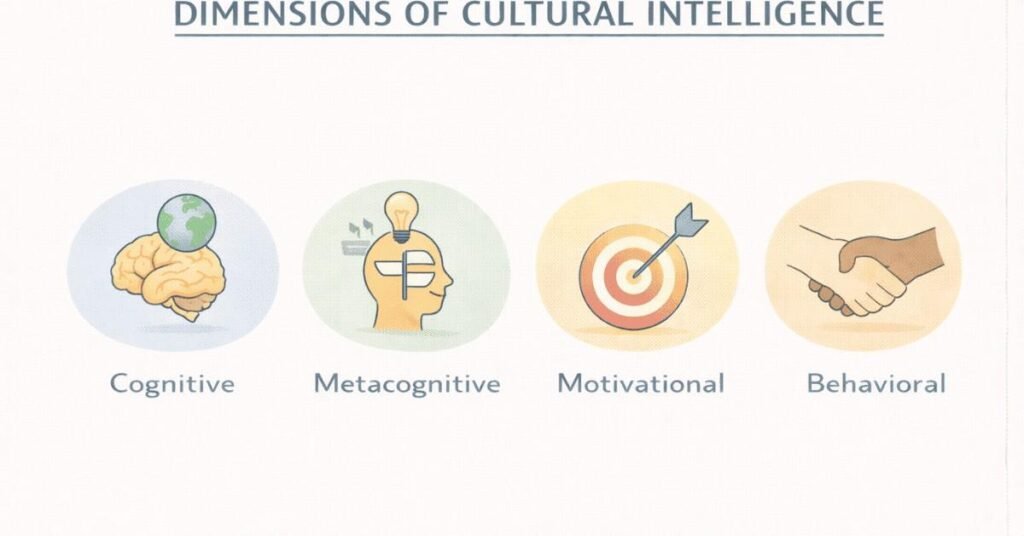
Understanding Cultural Intelligence Framework
Cultural intelligence has four dimensions:
1. Cognitive CQ – Understanding Different Cultures
This is knowledge—understanding cultures, their values, customs, communication styles, and business practices.
What It Includes:
- Historical background of cultures
- Belief systems and values
- Communication styles (direct vs. indirect, formal vs. informal)
- Time orientation (monochronic vs. polychronic)
- Relationship building approaches
- Business etiquette and protocols
Practical Application:
If a Japanese guest seems to decline your enthusiasm, understand that Japanese business culture values restraint and formality. This isn’t coldness; it’s cultural norm. Your understanding prevents misinterpretation.
2. Metacognitive CQ – Awareness & Planning
This is awareness of your own culture and ability to plan for cultural interactions.
What It Includes:
- Recognizing your own cultural assumptions and biases
- Planning interactions considering cultural differences
- Checking assumptions during interactions
- Adjusting approaches based on feedback
Practical Application:
You assume all guests want extended eye contact (friendly). But in some cultures, prolonged eye contact with authority figures is disrespectful. Metacognitive CQ means recognizing your assumption and adjusting accordingly.
3. Motivational CQ – Drive to Work Across Cultures
This is genuine interest in and respect for different cultures—not grudging tolerance but authentic curiosity.
What It Includes:
- Genuine interest in understanding different perspectives
- Confidence in intercultural situations
- Respect for cultural differences
- Openness to learning from different cultures
Practical Application:
Motivational CQ means when a Middle Eastern guest requests gender-specific service staff, you don’t just comply (compliance), you genuinely understand the cultural reason and accommodate respectfully without judgment.
4. Behavioral CQ – Adapting Your Actions
This is the ability to actually change your behavior appropriately.
What It Includes:
- Adjusting communication style
- Changing body language and gestures
- Adapting service approaches
- Flexibility in decision-making
Practical Application:
With American guests, you might be casual and quick. With German guests, you might be more formal and thorough. With Indian guests, you might be more relational and personable. Behavioral CQ is adjusting naturally based on cultural context.
Common Cultural Differences in Hospitality
Communication Styles
Direct Cultures (Germany, Netherlands, Australia):
- Value straightforwardness
- Honest critique is feedback, not disrespect
- Prefer clear, concise communication
- Task-focused conversations
Approach: Be direct, efficient, clear. “Here’s the issue and here’s how we’ll solve it.”
Indirect Cultures (Asia, Middle East, Latin America):
- Preserve harmony and face
- Critique is usually private, not public
- Build relationships before discussing issues
- Context-rich communication
Approach: Build relationship first, deliver difficult news diplomatically. Private conversations appreciated over public correction.
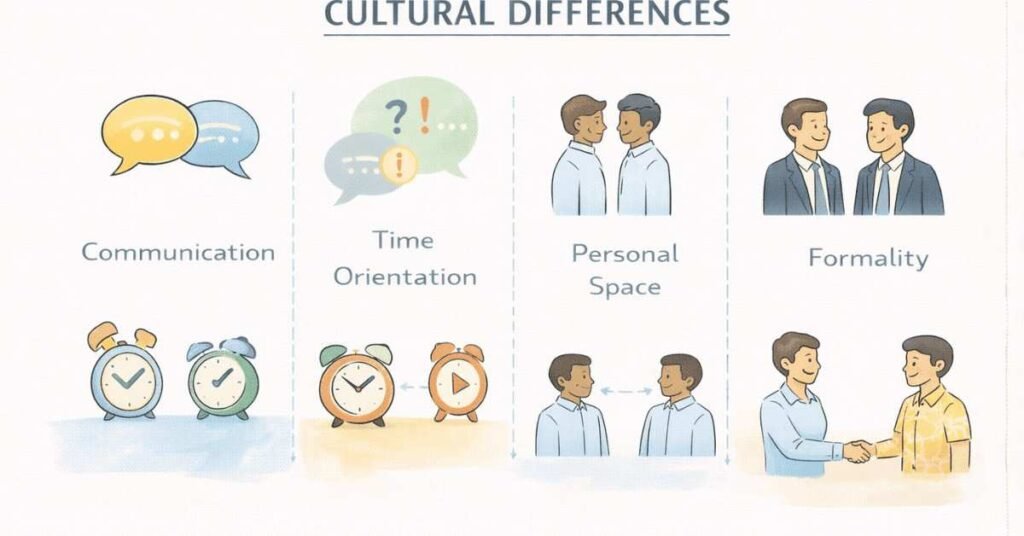
Time Orientation
Monochronic Cultures (North America, Northern Europe):
- Time is linear—do one thing at a time
- Schedules are sacred
- Punctuality shows respect
- Efficiency is valued
Approach: Respect schedules, keep to timelines, don’t keep guests waiting.
Polychronic Cultures (Latin America, Middle East, Southern Europe):
- Time is flexible—multiple simultaneous activities acceptable
- Relationships trump schedules
- Building rapport takes time
- Rushing seems disrespectful
Approach: Invest time building relationships, don’t rush interactions, accommodate flexible timing.
Personal Space & Physical Touch
High-Context Touch Cultures (Latin America, Middle East, Southern Europe):
- Comfortable with closer personal space
- Touch during conversation is normal
- Warmth and physical connection expected
Low-Context Touch Cultures (Northern Europe, North America, East Asia):
- Larger personal space preferred
- Limited physical touch expected
- Professionalism means distance
Approach: Observe and follow guest cues. If they seem uncomfortable with closeness, provide space.
Business Formality
Formal Cultures (Germany, Japan, India’s business sector):
- Titles and hierarchy matter
- Formal dress expected
- Professional distance appropriate
- Decisions respect hierarchy
Casual Cultures (Australia, California, Scandinavia):
- First names used quickly
- Casual dress acceptable in some contexts
- Personal connection encouraged
- Decisions can be collaborative
Approach: Start formal, follow guest cues for relaxation. Better to be too formal initially.
Directness About Money/Price
Direct Cultures:
- Comfortable discussing prices, costs, bargaining
- Negotiation expected
- Transparency about costs appreciated
Indirect Cultures:
- Uncomfortable direct price discussions
- Relationship established before discussing money
- Transparency comes later
Approach: Let guests set the pace for cost discussions.
Developing Your Multilingual Skills
Why Multilingual Ability Matters
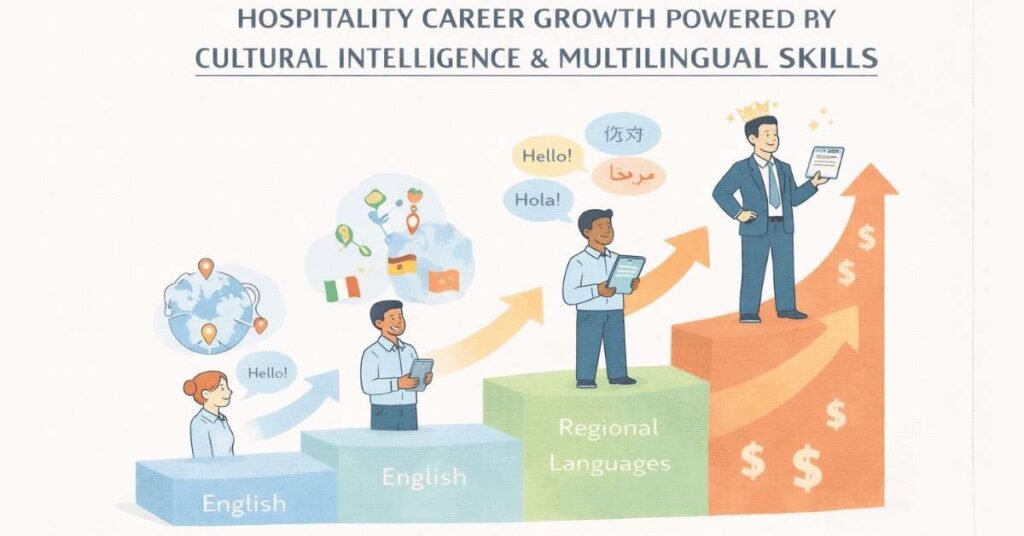
Language proficiency dramatically impacts hospitality career prospects:
- Guest Experience – Guests feel welcomed when you speak their language
- Employability – International hotels prioritize multilingual staff
- Salary Premium – Each additional language typically adds 10-15% to salary
- Career Acceleration – Multilingual professionals access international roles faster
- Differentiation – Stand out in competitive job markets
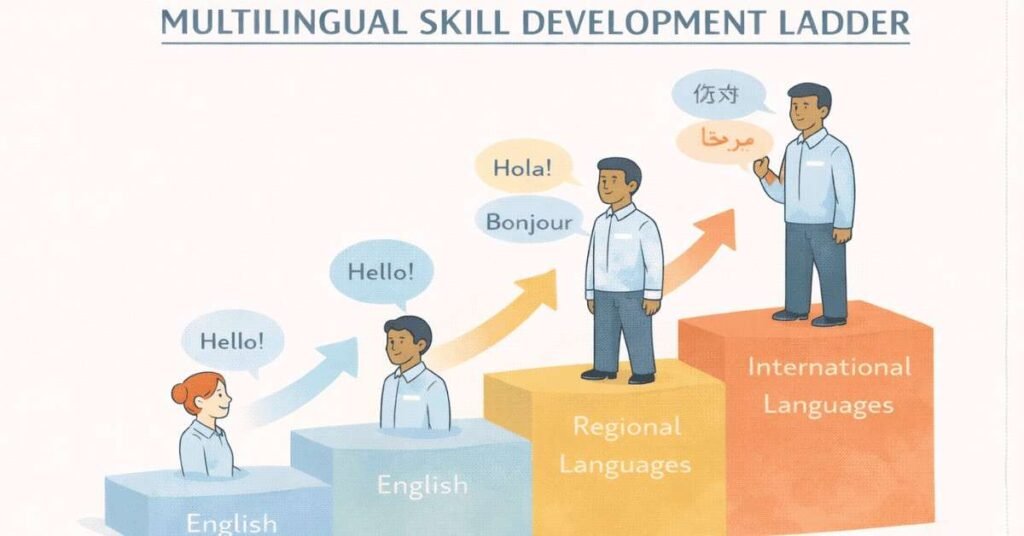
Priority Languages for Indian Hospitality
Tier 1 (Essential):
- English – International hospitality standard
- Hindi – Domestic tourism, domestic staff coordination
Tier 2 (High Value):
- Regional Languages – Telugu, Tamil, Marathi, Kannada (depending on your location and tourist patterns)
- Mandarin Chinese – Largest outbound tourism market
- Spanish – Growing tourism from Spanish-speaking countries
- French – European market, luxury segment
Tier 3 (Specialized):
- German – Wealthy European tourists
- Japanese – High-spending market
- Arabic – Gulf tourism, Middle Eastern guests
- Portuguese – Brazilian tourists
Language Learning Strategy
For Your Current Role:
- Start with English mastery if not strong
- Add one regional language (Telugu, Tamil, Marathi, Kannada)
- Focus on hospitality-specific vocabulary
- Practice with actual guests
For Career Advancement:
- Add Mandarin or Spanish (highest ROI)
- Achieve conversational fluency (not just basic phrases)
- Get formal certification if possible
- Regularly practice to maintain fluency
For International Opportunities:
- Master English to professional level
- Choose 1-2 additional languages based on target countries
- Work toward B2 proficiency (conversational fluency)
- Consider certification (IELTS, TOEFL for English)
Language Learning Resources
Immersive (Best for Fluency):
- Duolingo (free/paid, gamified)
- Rosetta Stone (comprehensive, expensive)
- Babbel (structured courses)
- Conversation exchange partners
Hospitality-Specific:
- Hotel language training programs
- Role-specific vocabulary courses
- On-the-job learning from colleagues
- Practice with international guests
Proficiency Testing:
- IELTS (English)
- TOEFL (English)
- Cambridge Exams (English)
- Language-specific proficiency tests
Quick Wins: Hospitality Phrases
Even without full language fluency, learning key hospitality phrases creates impact:
“Welcome” / “Thank you” / “Can I help you?” in guest languages
Greeting in their language – Shows respect and effort
Understanding “thank you” – Recognize when guests express gratitude
Basic courtesies – Please, excuse me, sorry in multiple languages
Room/facility vocabulary – Understand requests: “hot water,” “towel,” “Wi-Fi”
Guests deeply appreciate effort to communicate in their language, even if imperfect.
Managing Multicultural Teams
Beyond guest interaction, you’ll likely manage or work with diverse teams.
Key Principles:
- Avoid Stereotyping – “All [nationality] people…” is always wrong. Individuals vary within cultures.
- Respect Diverse Work Styles – Some prefer individual recognition, others group recognition
- Accommodate Religious/Cultural Practices – Prayer times, dietary restrictions, religious holidays
- Watch Your Language – Slang, idioms, colloquialisms might not translate or might offend
- Explain Your Culture – Help colleagues understand your perspective, just as you learn theirs
- Address Conflicts Directly – Misunderstandings happen; address them respectfully
Cultural Intelligence & Career Impact
Why Hospitality Organizations Value CQ:
- Guest Satisfaction – Culturally intelligent service creates loyalty
- Fewer Complaints – Understanding prevents misunderstandings that lead to complaints
- International Growth – As hospitality expands globally, CQ becomes leadership requirement
- Team Cohesion – Multicultural teams work better when members have cultural intelligence
- Brand Reputation – One viral negative review about cultural insensitivity damages brands
Salary Impact: Professionals with high cultural intelligence and multilingual ability earn 15-25% premiums compared to monolingual peers. International hospitality roles often require demonstrated cultural intelligence.
Education and Training
“Good morning, I’m [Name], an educator with [X] years of experience teaching [subject/grade level]. I’m passionate about [teaching philosophy or educational approach]. At [current institution], I [achievement related to student outcomes, curriculum development, or program implementation]. I hold [relevant certifications] and am committed to [aspect of educational excellence]. I’m drawn to your institution’s focus on [specific educational value or methodology].”
Your Cultural Intelligence Development Plan
Phase 1: Self-Awareness (Weeks 1-2)
- Reflect on your own cultural values, assumptions, biases
- Identify situations where cultural differences caused confusion
- Recognize your communication style and how others perceive it
Phase 2: Learning (Weeks 3-8)
- Study cultures you interact with frequently
- Read, watch documentaries, learn history
- Learn basic phrases in guest languages
- Take cultural competency courses
Phase 3: Practice (Ongoing)
- Interact intentionally with diverse people
- Ask questions when uncertain
- Observe excellent cross-cultural communicators
- Seek feedback on your cultural interactions
- Reflect on interactions and learn
Phase 4: Integration (Months 3+)
- Bring cultural knowledge into your service naturally
- Mentor others on cultural intelligence
- Lead multicultural teams effectively
- Transition to international roles
Key Insight: Cultural Intelligence Is Learnable
Unlike IQ (relatively fixed), cultural intelligence is absolutely learnable. It requires genuine interest, intentional practice, and humility to learn from mistakes. The investment pays dividends throughout your career, opening opportunities beyond what most hospitality professionals access.