
LEADERSHIP & MANAGEMENT SKILLS DEVELOPMENT
Table of Contents
Leadership in Hospitality: Transform Good Managers Into Great Leaders
Why Leadership Matters More Than Management in Hospitality
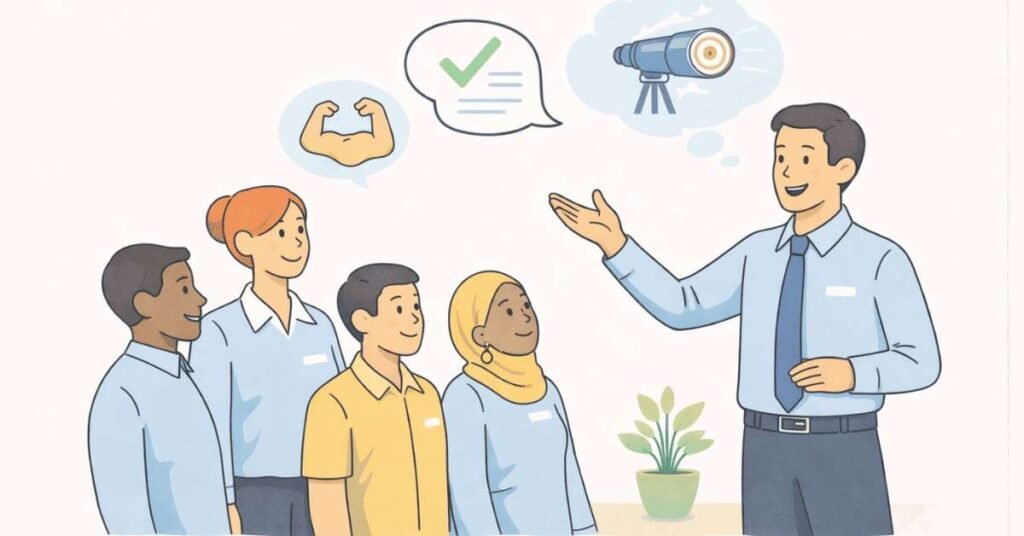
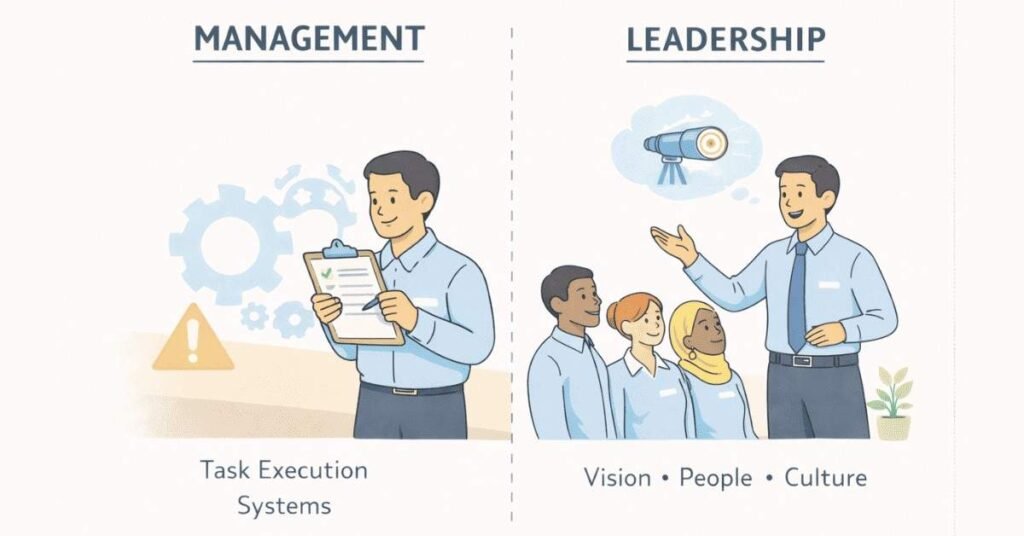
There’s a critical difference between management and leadership. Managers ensure tasks are completed—rooms are cleaned, food is served, guests are checked in. Leaders inspire teams to deliver exceptional experiences consistently. In hospitality, this distinction determines whether a property merely operates or truly excels. Guests sense whether staff genuinely cares or are just following procedures. That difference comes from leadership.
In 2025, hospitality leadership is evolving. Traditional hierarchical “command and control” management is giving way to collaborative, empowering leadership. Hospitality professionals aspiring to management roles must understand this shift. Developing leadership skills early—even in entry-level positions—accelerates your path to senior roles and makes you invaluable to any organization.
Understanding Leadership vs. Management in Hospitality Context
Management focuses on:
- Task execution
- Efficiency and systems
- Compliance with standards
- Problem-solving
- Short-term results
Leadership focuses on:
- Vision and direction
- People development
- Culture and values
- Inspiration and motivation
- Long-term growth
Effective hospitality leaders do both—they ensure operations run smoothly (management) while inspiring their teams to deliver extraordinary experiences (leadership).
Core Leadership Skills for Hospitality Professionals
1. Vision & Strategic Thinking
Why It Matters:
Hospitality involves countless small decisions daily. Leaders provide the “why” behind these decisions—a shared vision that guides choices.
Developing Vision:
- Understand the Business – Know your hotel’s strategy, market position, competitive landscape
- Think Long-Term – While managing daily operations, anticipate future needs and changes
- Connect Dots – Help your team understand how their daily work contributes to larger goals
- Communicate Clearly – Share vision repeatedly, consistently, and in ways your team understands
Real Example:
Generic Manager Says: “We need to reduce housekeeping costs by 10%.”
Visionary Leader Says: “Our goal is to become the most-loved hotel in the city—known for spotless rooms and exceptional cleanliness. This reputation drives premium pricing and bookings. To maintain our reputation efficiently, we’re implementing these practices…”
Same goal, different approach. The leader’s vision inspires compliance rather than demanding it.
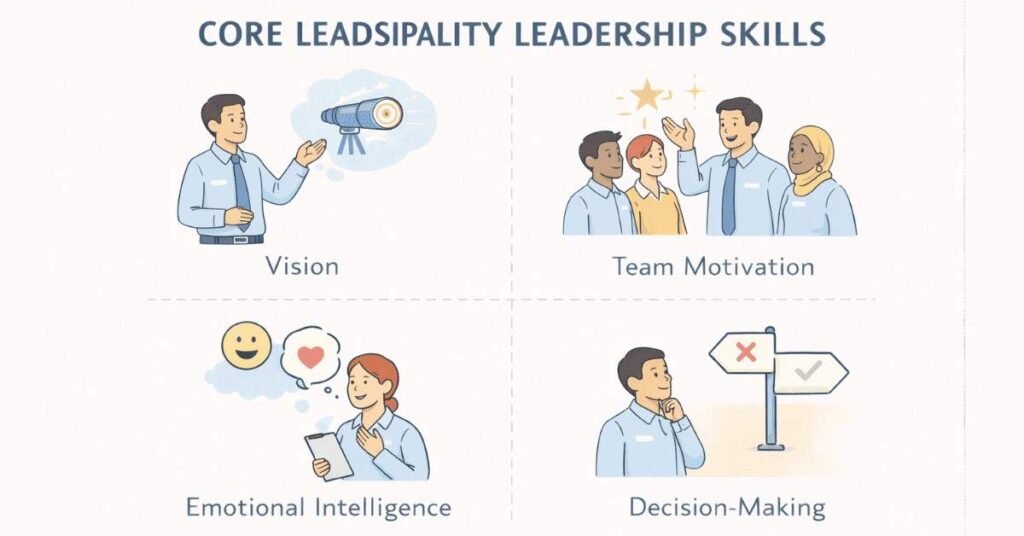
2. Team Motivation & Engagement
Why It Matters:
Hospitality work is demanding—long hours, repetitive tasks, emotional labor, dealing with difficult situations. Staff motivation directly impacts service quality. Unmotivated staff deliver mediocre service; motivated staff deliver excellence.
Motivation Strategies:
- Recognition & Appreciation – Acknowledge good work publicly: “Arjun, your housekeeping standards were exemplary this month—thank you!”
- Career Development – Help staff see growth opportunities: “You’re ready for shift manager training. Let’s plan your development.”
- Autonomy – Give staff control over how they work: “Here’s what needs to be done. How would you approach it?”
- Purpose Connection – Help staff understand impact: “Your excellent service is why guests give us 5-star reviews and return.”
- Fair Treatment – Consistent, impartial, equitable treatment builds trust
- Listening – Actually hear staff concerns and implement suggestions where possible
Motivation Insight:
Research shows compensation is important, but beyond a certain level, other factors drive engagement: appreciation, growth opportunities, meaningful work, and feeling valued. Great leaders leverage these insights.
3. Emotional Intelligence (EI)
Why It Matters:
Leadership involves understanding and managing emotions—yours and others’. Emotionally intelligent leaders navigate complex interpersonal situations effectively.
EI Components:
- Self-Awareness – Understanding your emotions, triggers, strengths, weaknesses
- Self-Regulation – Managing emotions, staying calm under pressure
- Empathy – Understanding others’ perspectives and emotions
- Social Skills – Building relationships, managing conflict, collaborating
- Motivation – Internal drive, persistence, resilience
Practical Application:
Scenario: A staff member makes a costly mistake.
Low EI Manager: “This is unacceptable. How could you be so careless?” (reactive, emotional)
High EI Manager: “I understand you’re upset about this. Let’s understand what happened and how we prevent it. Here’s how I’ll support you.” (calm, empathetic, solution-focused)
4. Decision-Making Under Pressure
Why It Matters:
Hospitality rarely allows lengthy decision-making periods. A guest’s room has a problem. A staff member is absent. An event has unexpected changes. Leaders must decide quickly, often with incomplete information.
Decision-Making Framework:
- Gather Information – Ask clarifying questions (even quickly)
- Consider Options – Think of 2-3 approaches, not just one
- Make Decision – Choose decisively, not hesitantly
- Communicate – Explain decision and rationale
- Monitor & Adjust – Check if decision worked; adjust if needed
- Learn – Reflect on decisions to improve future choices
Example:
Situation: Guest arrives to overbooked hotel (overbooking error). Manager has 10 minutes to decide.
Quick decision: Offer compensation, arrange alternative hotel, cover costs, provide upgrade when guest returns.
This decisive approach prevents escalation and often builds loyalty.
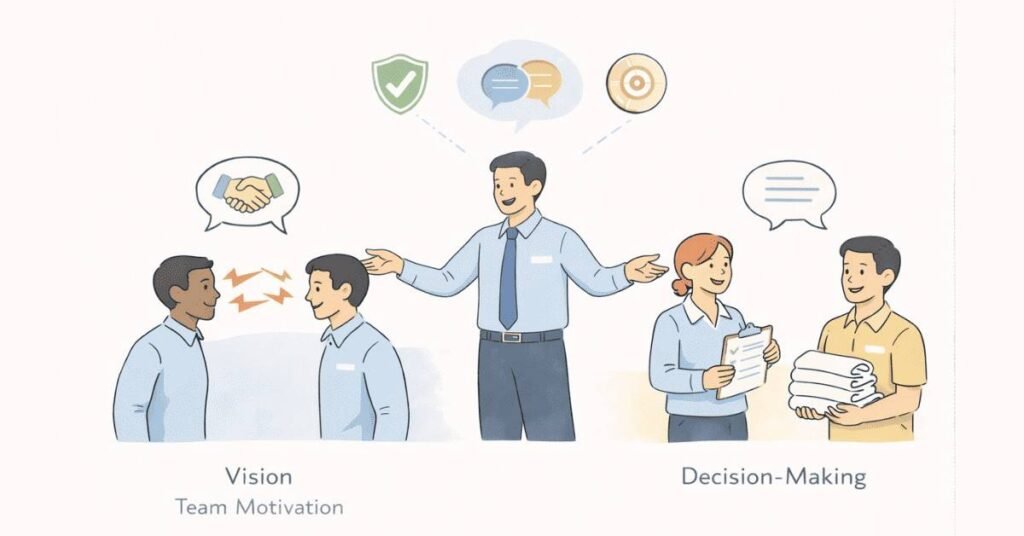
5. Delegation & Empowerment
Why It Matters:
Many new managers struggle with delegation, trying to do everything themselves. This creates bottlenecks and prevents team development. Great leaders delegate effectively.
Delegation Principles:
- Match Task to Person – Give growth opportunities, not just grunt work
- Provide Training – Ensure they can succeed: “Here’s what needs to be done and how I’d approach it. Try it. I’ll support you.”
- Give Authority – Delegation without authority is just passing work around. Give decision-making power.
- Monitor Progress – Check in, but don’t micromanage. Allow learning from mistakes.
- Recognize Success – Acknowledge when they handle delegated responsibilities well
Benefit:
Staff develop skills, feel valued, and management gets time for strategic work. Win-win.
6. Conflict Resolution
Why It Matters:
Where people work together, conflict arises—between staff members, with guests, across departments. Leaders must resolve conflict professionally, preserving relationships.
Conflict Resolution Steps:
- Acknowledge – “I understand there’s tension between your department and housekeeping.”
- Understand Perspectives – Meet with both sides separately. Listen without judgment.
- Find Common Ground – “You both want excellent guest experiences and efficient operations.”
- Develop Solutions – “Let’s agree on these specific protocols going forward.”
- Follow Up – Ensure the solution works and relationships are restored
Key Principle:
Conflict itself isn’t bad—it’s often resolution that strengthens relationships and improves processes.
7. Developing Others
Why It Matters:
Leaders are judged not just by their own performance but by their team’s growth. Developing your team multiplies your impact.
Development Strategies:
- Mentoring – Provide guidance, advice, career direction
- Coaching – Ask questions that help people find their own answers
- Stretch Assignments – Give slightly challenging tasks with support
- Training – Invest in formal development
- Feedback – Regular, specific, constructive feedback
- Succession Planning – Deliberately prepare your team for advancement
Long-Term Benefit:
Managers known for developing talent are heavily promoted because organizations can trust them to build strong teams.
Leadership Styles in Hospitality
Different situations require different leadership approaches:
Authoritative Leadership – Clear direction, decisive. Useful in crises or with inexperienced staff. “Here’s what we’re doing and why.”
Coaching Leadership – Develops people, builds capability. “What do you think? Let me share my perspective. What will you try?”
Participative Leadership – Involves team in decisions. “Here’s the challenge. What are your ideas?” Builds engagement.
Delegative Leadership – Trusts capable staff to figure it out. “Here are the objectives. I trust your judgment.” Empowers skilled teams.
Visionary Leadership – Inspires with compelling vision. Motivates people toward goals. “Here’s where we’re heading and why it matters.”
Great leaders flex between styles based on situation and team maturity.
Developing Leadership Skills
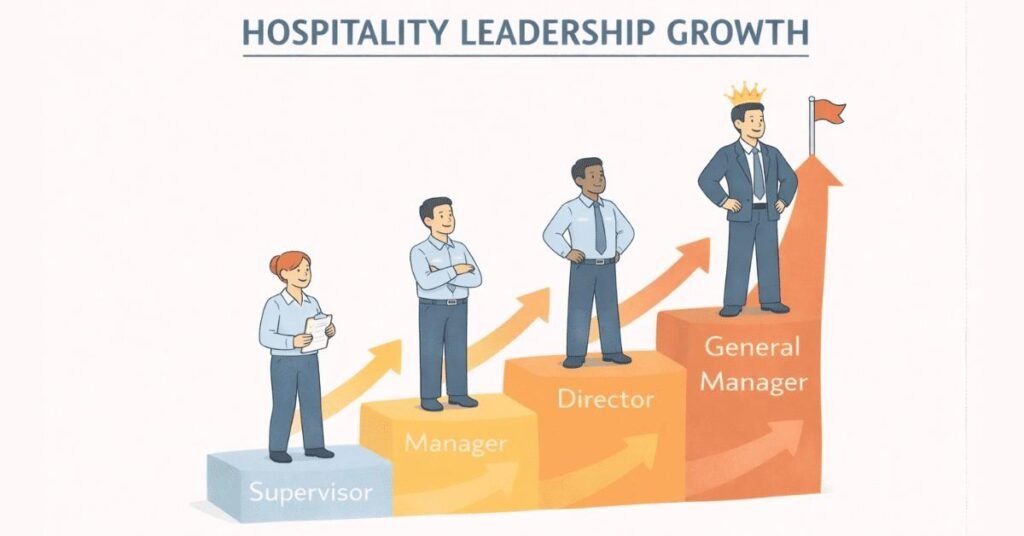
Early Career (Entry to Supervisor Level)
- Volunteer for team lead roles
- Mentor newer staff
- Seek feedback on your approach
- Read leadership books
- Take formal leadership training
Mid-Career (Manager Level)
- Take management training programs
- Seek a mentor in senior role
- Lead projects with cross-functional teams
- Develop direct reports into future leaders
- Study business strategy and financials
Senior Career (Director/General Manager Track)
- Executive coaching
- Strategic planning responsibilities
- Board or committee participation
- Industry association involvement
- Continuing executive education
Why Leadership Development Accelerates Your Career
- Promotability – Managers are promoted based on team performance
- Retention – Great leaders inspire staff to stay
- Reputation – Known as a developer of talentOpportunity – Senior roles require proven leadership capability
Earning Potential – Leadership skills directly correlate with salary growth