
Hospitality Industry Career Guide
Table of Contents
PART 1: Introduction & Industry Overview
Why This Guide Matters for Your Career
The hospitality industry isn’t just about serving food or checking guests into rooms—it’s one of the fastest-growing sectors offering dynamic, people-focused careers with incredible growth opportunities. If you’re interested in building a career that combines interpersonal skills, travel, and real career progression, this guide is your starting point.
What Is the Hospitality Industry?
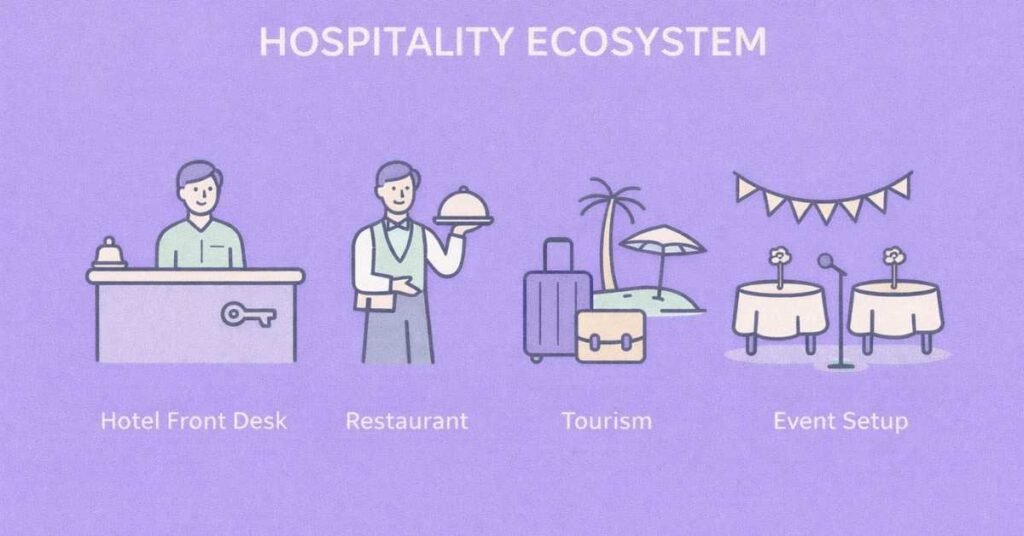
Think of hospitality as the art of making people feel welcomed and valued. The industry encompasses hotels, restaurants, resorts, casinos, event venues, cruise ships, and tourism-related businesses. Essentially, anywhere that serves guests and creates memorable experiences falls under hospitality. It’s not a single career—it’s an entire ecosystem of interconnected roles, each crucial to the overall experience.
Industry Growth: Why Now Is the Time
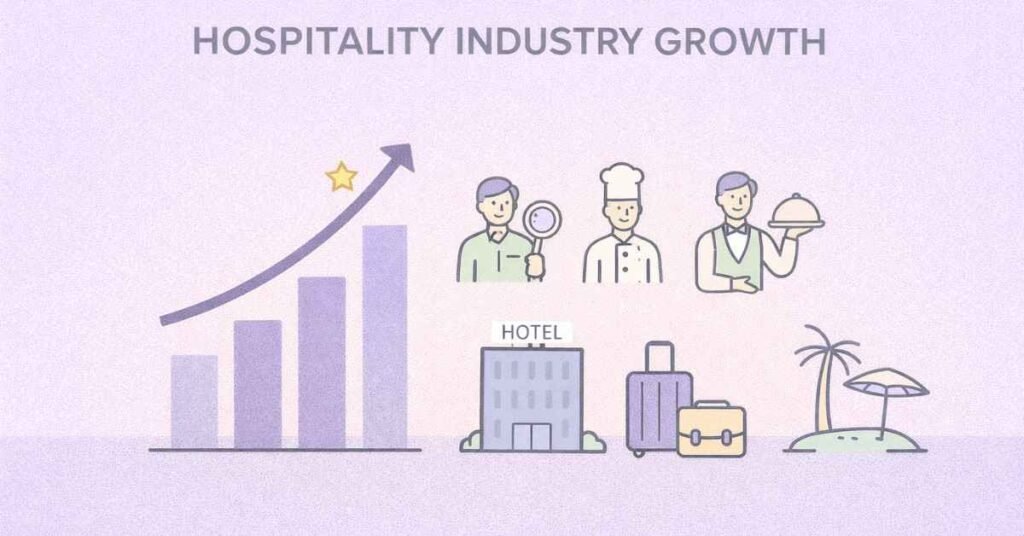
Here’s something exciting: tourism supported 46.5 million jobs across India in 2024, representing 9.1% of the country’s total employment, and this number is projected to reach nearly 64 million jobs by 2035. This explosive growth means job security, varied opportunities, and clear career advancement paths.
The hospitality sector is evolving rapidly with emerging trends shaping how professionals work. In 2025, the industry is driven by three major forces:
- Innovation and Technology – AI-powered guest services, digital booking systems, and data analytics are transforming operations
- Personalization – Guests expect tailored experiences, creating specialized roles for professionals who understand customer preferences
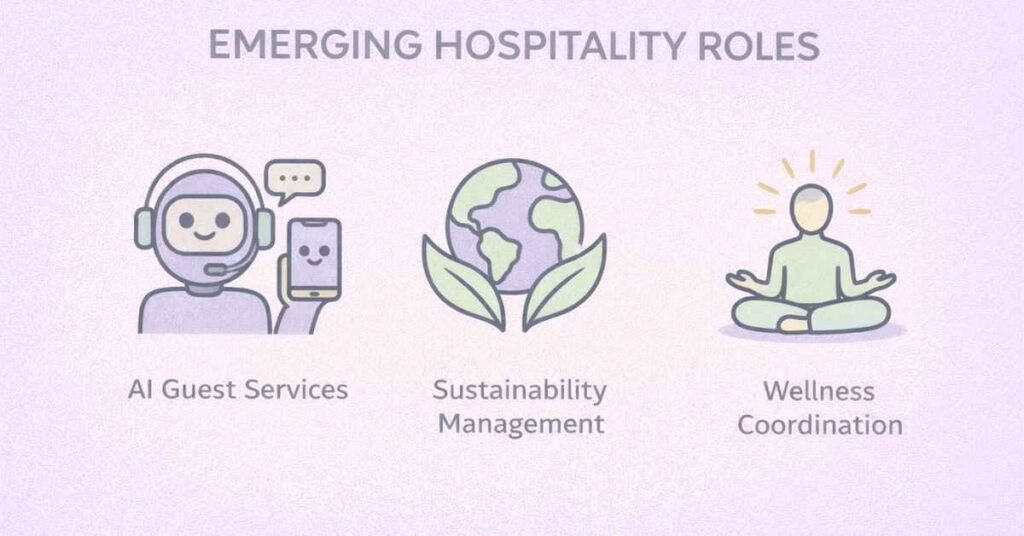
- Sustainability – Hotels are adopting eco-friendly practices, opening new career paths in sustainability management and wellness coordination
What Makes Hospitality Different From Other Industries?
Unlike traditional office jobs, hospitality offers:
- Dynamic Work Environment – Every day is different; you’re solving real-time problems
- Global Opportunities – International hotel chains, cruise lines, and tour operators provide exposure beyond your home country
- Career Flexibility – You can start as an entry-level staff member and grow into senior management roles
- Continuous Learning – The industry constantly evolves, keeping your work engaging and your skills relevant
Current State of Indian Hospitality
India’s hospitality sector is witnessing significant transformation. Luxury tourism is booming, domestic travel is increasing, and new hospitality formats—like wellness resorts and adventure tourism hubs—are emerging. This diversity means opportunities aren’t limited to traditional 5-star hotels; boutique properties, eco-lodges, and specialized venues are equally valuable employers.ibef
Key Insight: The sector is shifting from a service-based industry to an experience economy, where creating memorable moments is the primary goal. This shift benefits professionals who genuinely enjoy engaging with people and solving problems creatively.
PART 2: Career Roles, Pathways & Skills Required
Main Career Paths in Hospitality
The hospitality industry is organized into several interconnected departments. Understanding these pathways helps you identify which area aligns with your interests and strengths.
1. Hotel Operations & Management
This is the backbone of any hotel. Professionals in this area ensure daily operations run smoothly.
Key Roles:
Hotel Operations Manager – Oversees all hotel departments (front desk, housekeeping, food & beverage, maintenance). Responsibilities include managing staff, maintaining service standards, and ensuring guest satisfaction. This role requires strong organizational and leadership abilities.
Front Office Executive – The first point of contact for guests. They handle check-ins, check-outs, room assignments, and guest inquiries. Starting salary: INR 15,000-30,000 per month.
Director of Facilities – Manages the hotel’s physical infrastructure (electrical systems, plumbing, HVAC, safety compliance). This technical role ensures the property remains comfortable and safe for guests.
Executive Housekeeper – Leads housekeeping teams, ensuring all rooms and public areas meet quality standards. Manages schedules, staff training, and quality control. This role is critical for maintaining the hotel’s reputation.
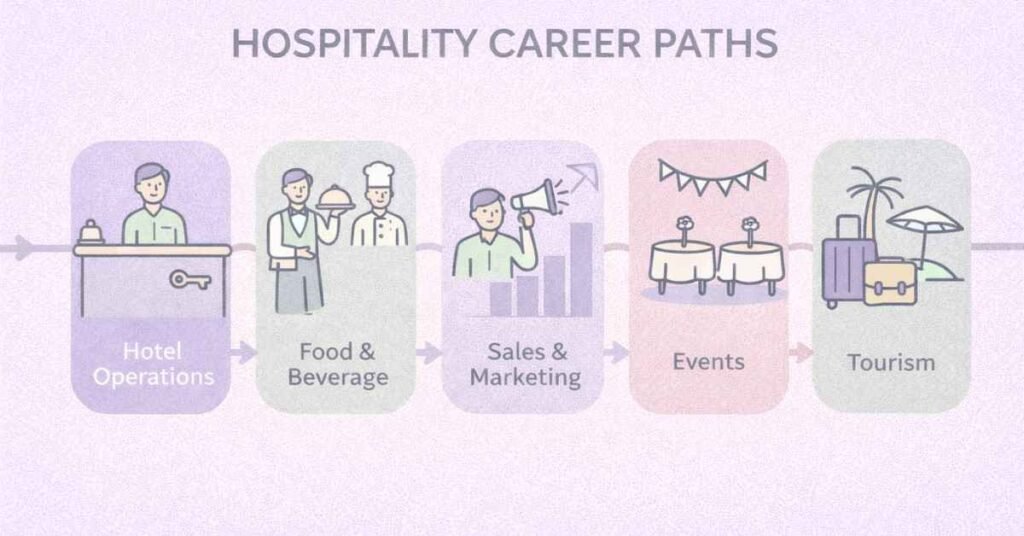
2. Food & Beverage (F&B) Operations
Food and beverage is where culinary skills meet business management. This sector is witnessing rapid growth as dining experiences become central to hospitality.
Key Roles:
Food & Beverage Manager – Manages restaurant operations, catering services, and event menus. Salary range: INR 40,000-1,00,000 per month, depending on experience.
Chef/Kitchen Staff – Creates menus and oversees food preparation. Salary: INR 20,000-50,000 per month for mid-level positions.
Sommelier or Beverage Specialist – Specializes in wine, cocktails, and beverage pairing. This is a niche role with excellent earning potential in premium establishments.
Restaurant Manager – Oversees daily restaurant operations, staff coordination, and guest satisfaction.
3. Sales, Marketing & Revenue Management
Hotels need professionals who can fill rooms and create buzz. This department bridges hospitality with marketing expertise.
Key Roles:
Sales & Marketing Manager – Develops strategies to attract guests, manages promotional campaigns, and handles corporate partnerships. Salary: INR 50,000-1,50,000 per month.shiksha
Digital Marketing Specialist for Hotels – Manages social media presence, content marketing, and online booking strategies. This is an emerging role perfectly suited for tech-savvy hospitality professionals.
Revenue Management Specialist – Analyzes booking patterns and adjusts pricing strategies to maximize profitability. This role combines data analysis with hospitality knowledge.
4. Event Management & Coordination
Events are a major revenue generator for hotels. Event professionals coordinate weddings, conferences, corporate retreats, and celebrations.
Key Roles:
Event Manager – Plans and executes conferences, weddings, and special events. Manages vendor coordination, guest logistics, and day-of execution.
Event Coordinator – Assists event managers with detailed planning, timeline management, and on-site coordination.
Banquet Manager – Oversees banquet operations, food setup, and guest services during large events.
5. Tourism & Travel-Related Roles
This branch includes tour operators, travel planners, and destination managers.
Key Roles:
Tour Operator – Plans and executes group tours, manages itineraries, and ensures guest satisfaction throughout trips.
Travel Coordinator – Books flights, accommodations, and activities; creates customized travel packages.
Tour Guide – Provides guided experiences at tourist destinations with cultural insights and engaging narratives.
Cruise Director – Manages entertainment, activities, and guest services on cruise ships.
6. Specialized Emerging Roles (2025 Onwards)
As mentioned, the industry is evolving. New roles are emerging in areas like:
Wellness Coordinator – Manages yoga programs, spa services, and wellness-focused amenities. Hotels are increasingly investing in wellness offerings to attract health-conscious travelers.
Sustainability Manager – Oversees eco-friendly initiatives, waste management, and sustainable practices. Salary: INR 50,000-80,000 per month for entry to mid-level positions.
AI/Guest Experience Specialist – Manages technology that personalizes guest experiences, from AI chatbots to smart room systems.
Essential Skills Every Hospitality Professional Needs
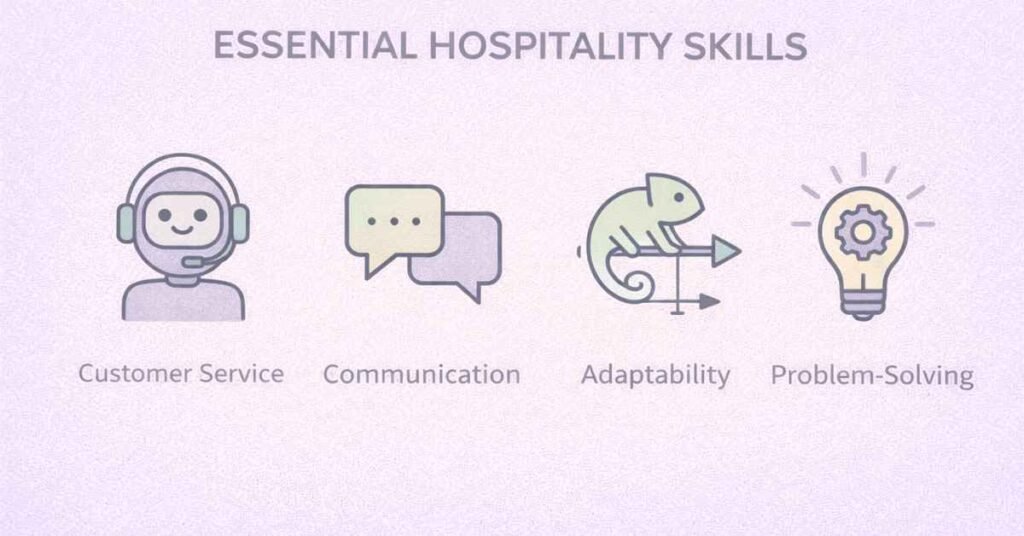
Beyond job-specific technical skills, employers prioritize these competencies:
Mid-Career Professional Self-Introduction Examples
Beyond job-specific technical skills, employers prioritize these competencies:
1. Exceptional Customer Service Skills
This is the #1 skill hospitality employers look for. You need to:
- Anticipate guest needs before they ask
- Resolve complaints with empathy and efficiency
- Create memorable experiences that encourage repeat visits
- Handle difficult situations calmly and professionally
Practical Tip: Watch how high-end service professionals operate. Notice their body language, tone, and problem-solving approach. Practice these daily in your interactions.
2. Communication & Interpersonal Skills
Clear communication prevents misunderstandings that damage guest experiences. You’ll need to:
- Communicate effectively with diverse guests from different cultural backgrounds
- Coordinate with colleagues across departments
- Deliver messages clearly and professionally
- Listen actively to understand guest needs
Why It Matters: A miscommunication about room preferences or dietary restrictions can ruin a guest’s stay. Clarity and precision are non-negotiable.
3. Adaptability & Flexibility
Hospitality is unpredictable. You might need to:
- Adjust plans when last-minute changes occur
- Learn new systems quickly
- Handle multiple situations simultaneously
- Pivot strategies based on guest feedback
Real Example: During high occupancy periods, staff might need to shift between roles to manage peak demand. Flexibility makes you invaluable.
4. Problem-Solving & Decision-Making
Situations happen fast in hospitality. You need to:drishtiinstitute
- Think on your feet and find creative solutions
- Make decisions under pressure without compromising quality
- Anticipate potential issues and prevent them
- Learn from mistakes quickly
Example Scenario: Overbooking happens. How do you handle it? Experienced professionals find alternative accommodations, offer compensation, and turn a potential disaster into a loyalty-building moment.
5. Multitasking & Time Management
Hospitality roles are rarely one-task-focused. You’ll juggle:
- Managing multiple guest requests simultaneously
- Meeting service deadlines during peak hours
- Coordinating across teams
- Handling unexpected emergencies
Skill Development: Use tools like priority matrices and time-blocking. In hospitality, efficiency directly impacts guest satisfaction.
6. Cultural Awareness & Sensitivity
The hospitality industry thrives on diversity.
You’ll work with guests and colleagues from different backgrounds. Essential skills include:
- Understanding cultural customs and preferences
- Avoiding stereotypes and biases
- Adapting service styles for different cultural expectations
- Speaking respectfully across diverse groups
Language Proficiency – While English is common in international hotels, knowing regional languages gives you a competitive advantage. In India, Hindi, Telugu, Tamil, or Marathi fluency enhances your marketability.
7. Digital Literacy & Technical Skills
Technology is transforming hospitality. Employers expect familiarity with:
- Property Management Systems (PMS) for hotel operations
- Booking platforms and reservation software
- POS (Point of Sale) systems for F&B
- Data analytics and reporting tools
- Social media management platforms
- CRM systems for guest relationship management
Why Important: Digitally literate professionals are faster, more efficient, and can identify data-driven opportunities for improvement.
8. Leadership & Teamwork
Even entry-level roles require collaboration. Mid-level positions demand:
- Motivating and training teams
- Delegating effectively
- Giving and receiving feedback
- Creating inclusive work environments
- Making decisions that benefit both guests and staff
PART 3: Salary Expectations, Career Progression & Getting Started
Salary Structure in Hospitality: Entry to Senior Levels
Understanding earning potential helps you set career goals. Here’s the realistic breakdown for India:
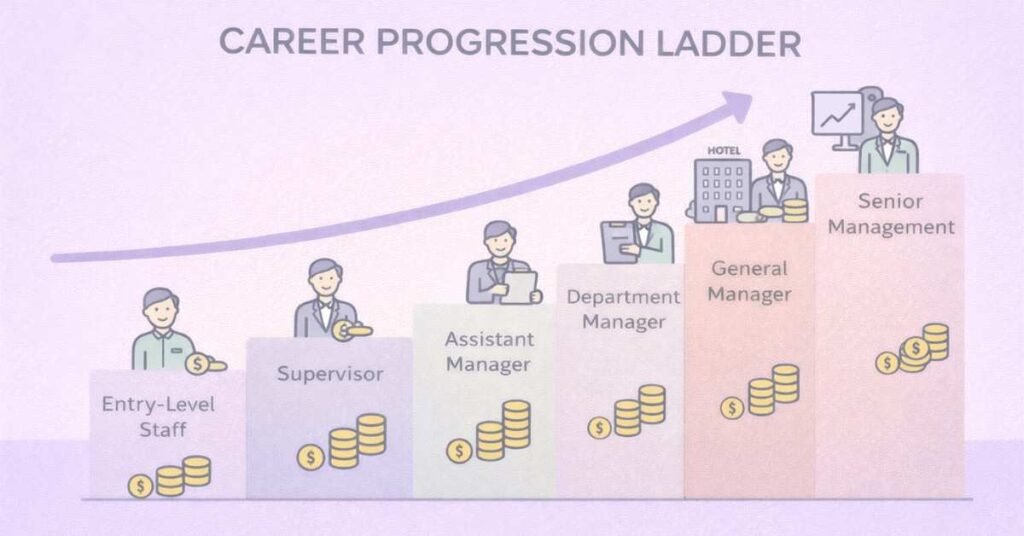
Entry-Level Positions (0-2 Years)
Monthly Salary: INR 15,000 to 16,000 (~INR 1-2 LPA annually)
Typical Roles: Front Office Associate, Kitchen Trainee, Housekeeping Staff, Guest Service Executive
What You’re Learning: Operational basics, customer interaction, hotel procedures, teamwork
Growth Potential: Rapid if you demonstrate reliability and initiative. Many hotels promote from within based on performance.
Mid-Level Positions (3-6 Years)
Lead with what makes you distinctively qualified for this specific role.
Example:
“I’m the only cloud architect you’ll interview today who has both enterprise-level experience and startup agility. I spent five years at IBM implementing cloud infrastructure for Fortune 500 clients, then the past three years as the founding cloud architect for a fintech startup that scaled from zero to 2 million users. This combination means I can design robust, secure systems that also move fast and adapt to changing requirements. I’m excited about your company’s position—established enough to require enterprise-grade reliability, but innovative enough to need startup-style agility.”
This approach is bold and immediately differentiates you from other candidates with more conventional backgrounds.
Senior-Level Positions (7+ Years)
Monthly Salary: INR 70,000 to 1,50,000+ (~INR 8-18 LPA annually)
Typical Roles: General Manager, Regional Manager, Executive Chef, Director of Sales
What’s Expected: Leadership vision, mentoring junior staff, driving profitability, representing the hotel/organization
Top Executive Positions
Monthly Salary: INR 1,00,000 to 5,00,000+ (~INR 20-60+ LPA annually)
Typical Roles: General Manager (Premium Hotels), Hotel Director, Regional Manager
In Luxury Chains: Professionals at Taj Hotels, Marriott, Hyatt, or The Oberoi Group can earn annual packages of INR 50 lakhs to 1 crore or more, especially in metropolitan areas.
What Impacts Salary: Hotel luxury level, location (metros vs. tier-2 cities), your qualifications (diploma vs. degree vs. management certification), international experience, and specialized expertise.
Real Salary Examples Across Roles
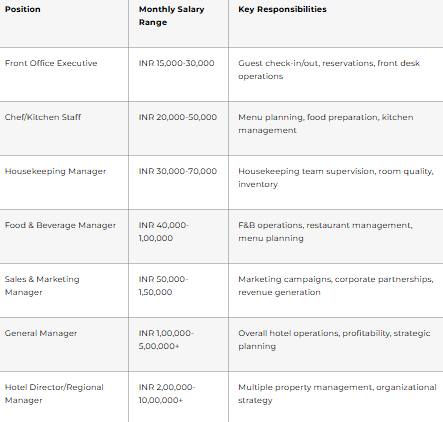
Key Takeaway: You’re not locked into entry-level salaries. Career progression is tangible and achievable with dedication and skill development.
Career Progression Pathways
Understanding typical career trajectories helps you plan strategically.
Traditional Operations Track:
Front Office Executive → Assistant Manager → Shift Manager → Operations Manager → General Manager
F&B Specialty Track:
Trainee Chef → Chef → Sous Chef → Head Chef → F&B Director
Sales & Marketing Track:
Executive → Executive Officer → Manager → Senior Manager → Director of Sales & Marketing
Event Management Track:
Coordinator → Manager → Senior Manager → Event Director
Tourism/Travel Track:
Tour Coordinator → Tour Guide → Senior Coordinator → Tour Manager → Operations Manager
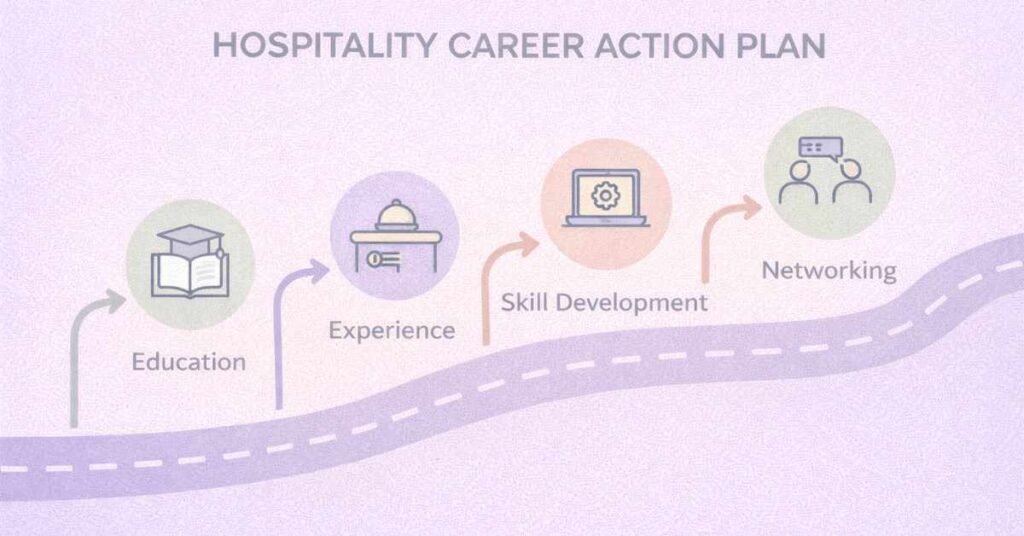
Getting Started: Your Action Plan
Step 1: Assess Your Strengths
- Are you people-oriented or detail-focused?
- Do you prefer operational roles, creative roles, or analytical roles?
- Are you interested in international exposure?
- Do you have strong culinary interests?
Step 2: Educational Qualification
Options:
- Bachelor’s Degree in Hotel Management – Comprehensive curriculum covering all aspects of hospitality. Duration: 3 years. Eligibility: 12th pass.
- Diploma in Hotel Management – Practical, hands-on training. Duration: 2 years. Faster entry to the industry.
- Certification Programs – Specialized short courses (3-6 months) in areas like Event Management, Food Safety, Revenue Management.
- On-the-Job Training – Start as entry-level staff and learn through experience (longer but possible).
Best for You: A formal qualification (degree or diploma) combined with internships accelerates your career growth. You’ll learn faster and start at higher positions than purely on-the-job training.
Step 3: Gain Practical Experience
Education is only half the equation. Hospitality employers prioritize hands-on experience:
- Internships – Work during college in hotels, restaurants, or event venues
- Part-Time Work – Take up part-time roles even while studying
- Volunteer Roles – Coordinate events, manage community hospitality projects
- Cross-Departmental Exposure – Understand different functions to identify your true interest
Step 4: Develop Soft Skills Continuously
Beyond technical training:
- Communication Workshops – Enroll in courses improving your presentation and interpersonal skills
- Leadership Training – As you progress, develop leadership competencies
- Language Learning – Regional language fluency in India increases your marketability
- Customer Service Certification – Recognized certifications validate your expertise
Step 5: Build Professional Networks
Hospitality thrives on connections:
- Join Industry Associations – Groups like FHRAI (Federation of Hotel & Restaurant Associations of India)
- Attend Hospitality Conferences – Network with industry leaders and discover trends
- LinkedIn Optimization – Showcase your hospitality journey and connect with professionals in your desired roles
- Mentorship – Find mentors within the industry who can guide your career
Red Flags to Avoid
Don’t Chase Quick Money: Entry-level roles have specific salary bands. Realistic expectations help you build a strong foundation. Fast growth comes from competence, not salary demands.
Don’t Ignore Soft Skills: Technical knowledge matters, but hospitality is fundamentally about people. Invest in interpersonal skills.
Don’t Limit Yourself Geographically: International opportunities in hospitality are abundant. Consider working abroad to gain diverse experience and global perspective.
Don’t Neglect Education: While experience is valuable, certifications and degrees create credibility and accelerate promotions.
Quick Reference: Why Choose Hospitality
- Job Security – Industry projected to add 17.5 million jobs by 2035 in Indiaibef
- Global Opportunities – International hotel chains operate across continents
- Diverse Roles – Choose from operations, marketing, events, culinary, tourism, or specialized positions
- Clear Career Growth – Advancement is merit-based; strong performers are promoted quickly
- Competitive Salaries – Mid to senior-level positions offer excellent compensation
- Continuous Learning – Industry evolution keeps your work engaging
- Entrepreneurial Path – Experience can lead to starting your own hospitality business
- People-Centric Work – If you enjoy human connection, this industry is fulfilling
- Emerging Opportunities – Wellness tourism, sustainable hospitality, and experience economy create new roles
- International Exposure – Working with diverse guests and colleagues broadens your perspective