
Manufacturing IT Specialist—The Digital Factory Expert
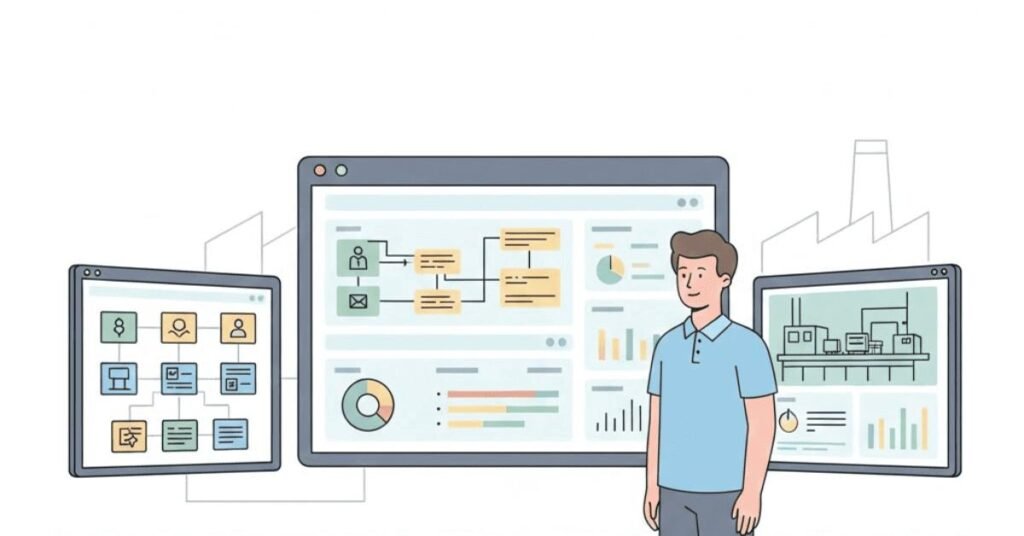
The Person Who Manages Manufacturing Technology: Manufacturing IT Specialist
Table of Contents
Modern factories are digital ecosystems. Production systems, quality systems, ERP (Enterprise Resource Planning), MES (Manufacturing Execution Systems), IoT sensors, robots—all connected, all generating data, all needing management and security.
Manufacturing IT specialists manage this complex digital infrastructure. They earn ₹35,000-55,000/month as entry-level specialists, advancing to ₹75,000-1,25,000+/month within 6-8 years in senior roles.
What Manufacturing IT Specialists Actually Do:
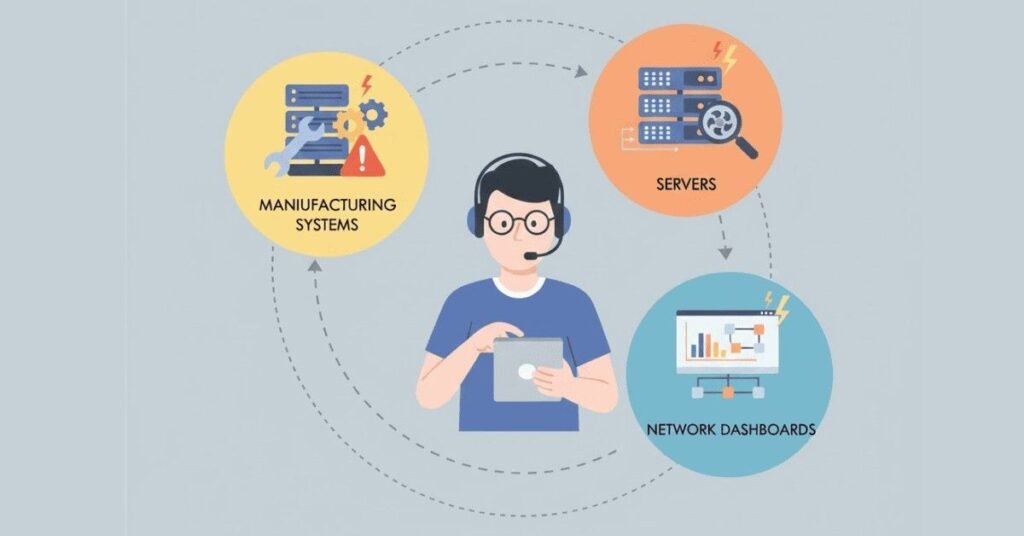
Arun, Manufacturing IT Specialist at an automotive facility, has multiple responsibilities:
Monday: System Support
An operator reports: “The production system is slow today—data entry takes 30 seconds per entry instead of 5 seconds.”
Arun investigates:
- Checks server health: CPU at 95%, memory full
- Identifies culprit: Backup routine running during business hours (should run at night)
- Reschedules backup for 9 PM
- Clears cache to free memory
- Tests system: Normal speed restored
- Problem solved, production impact prevented
Wednesday: Security Update
Manufacturing systems must comply with cybersecurity standards. Arun:
- Develops cybersecurity patch schedule
- Tests patches on test system first (ensures no production disruption)
- Rolls out patches to all systems during scheduled maintenance window
- Verifies all systems secure
- Documents changes
Thursday: ERP System Troubleshooting
Finance department reports: “We can’t generate last month’s production cost report.”
Arun investigates:
- Checks ERP system database
- Identifies: Data import error from production system caused corrupted records
- Restores from backup before corruption
- Reruns data sync from production system
- Verifies report now generates correctly
- Implements check to prevent similar issues
Friday: Planning & Infrastructure Updates
Facility is implementing new automated packaging system. Arun:
- Plans network infrastructure for new equipment (bandwidth needed, connections)
- Configures network for new systems (IP addresses, security protocols)
- Tests connectivity (all systems communicate properly)
- Plans backup systems (what happens if network fails?)
- Coordinates with automation team on integration
- Prepares IT support for new systems
Ongoing: Data Management
- Monitors production data flow (3,000 data points/minute generating continuously)
- Ensures data security (encrypted, backed up)
- Manages data storage (terabytes of production history)
- Maintains data accessible to analytics team for analysis
Key Responsibilities of Manufacturing IT Specialist
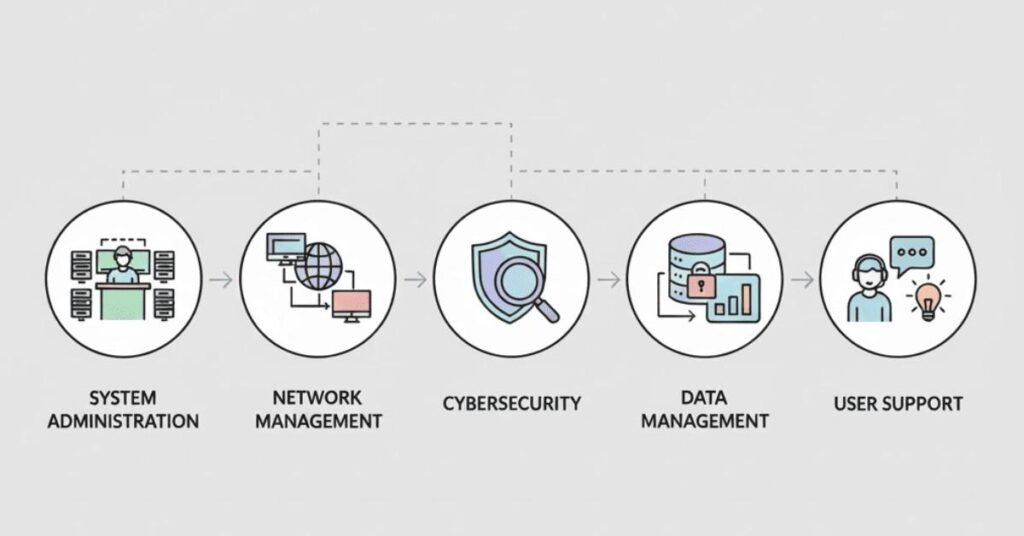
System Administration (30%):
- Manage manufacturing systems (ERP, MES, quality systems)
- Ensure system uptime and performance
- Perform backups and disaster recovery
- Monitor system health continuously
- Troubleshoot system issues
Network & Infrastructure (25%):
- Manage manufacturing network
- Plan network capacity
- Configure connections for new equipment
- Ensure network security
- Monitor bandwidth and performance
Cybersecurity (20%):
- Implement security protocols
- Apply security patches
- Manage access controls (who can access what)
- Ensure compliance with regulations
- Prevent unauthorized access
Data Management (15%):
- Ensure data integrity
- Manage data backups
- Maintain data accessibility
- Implement data retention policies
- Support analytics team with data
User Support (10%):
- Support system users (operators, supervisors)
- Troubleshoot technical issues
- Provide training on systems
Manage IT helpdesk
Technical Skills You Need
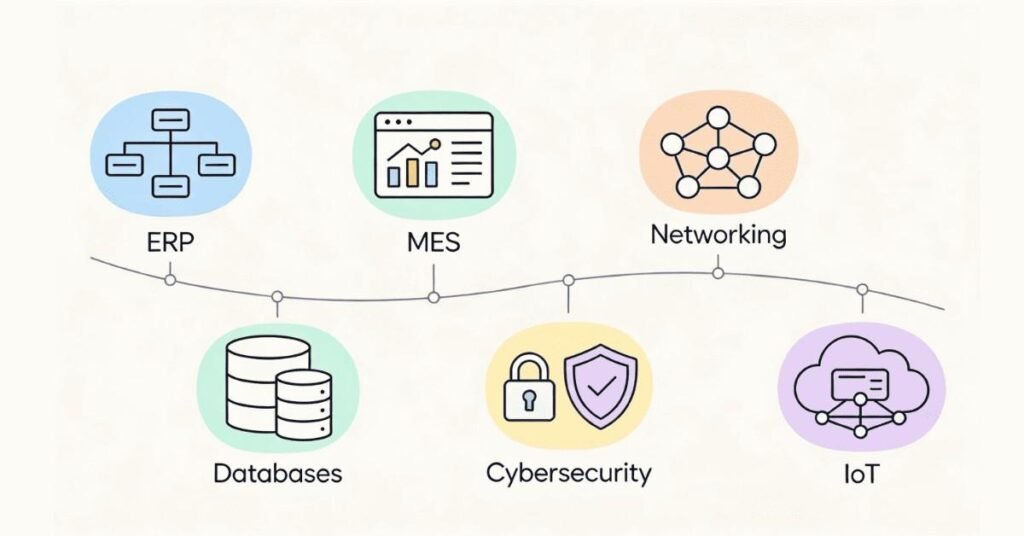
Core IT Skills:
- Manufacturing Systems (Critical)
- ERP systems (SAP, Oracle, Microsoft Dynamics)
- MES systems (Wonderware, Parsec, etc.)
- QMS (Quality Management Systems)
- Product Lifecycle Management (PLM)
- Why: These are the systems manufacturing depends on
- Learning: System-specific training from vendors (40-60 hours per system)
- Network Administration (Critical)
- Network design and architecture
- Network security (firewalls, VPNs)
- IP addressing and routing
- Network monitoring tools
- Why: Manufacturing networks must be reliable and secure
- Learning: CompTIA Network+ certification (60-80 hours)
- Database Administration (Important)
- SQL database management
- Data backup and recovery
- Performance optimization
- Data security
- Why: Manufacturing data lives in databases
- Learning: 60-100 hours
- Cybersecurity (Critical – Increasingly Important)
- Network security basics
- Data security protocols
- Access control systems
- Threat detection and response
- Why: Factories are increasingly targeted by cyberattacks; security is critical
- Learning: Security certifications (60-100+ hours)
- IoT & Sensors Integration (Important – Emerging)
- Understanding IoT devices
- Data collection from sensors
- Edge computing
- Cloud integration
- Why: Industry 4.0 requires IoT infrastructure
- Learning: 40-60 hours
Additional Technical Skills:
- Cloud services (AWS, Azure—manufacturing moving to cloud)
- Data analytics tools (supporting analytics team)
- Automation & scripting (Python, PowerShell for automation)
Vendor management (coordinating with equipment and software vendors)
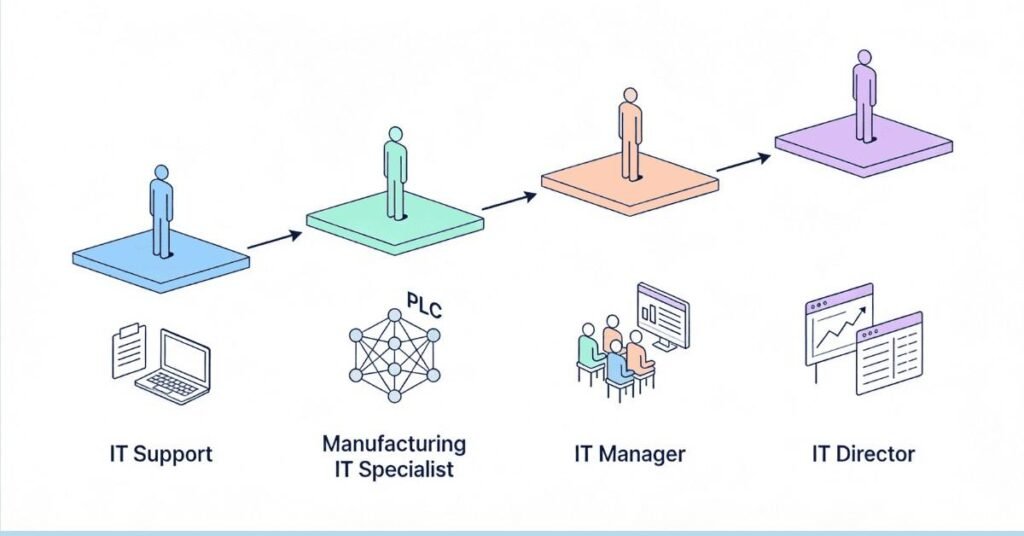
Salary Expectations for Manufacturing IT Specialist
IT Support Technician / Help Desk:
₹24,000 – ₹35,000/month
(Entry-level IT support)
Manufacturing IT Specialist:
₹35,000 – ₹55,000/month
(Managing manufacturing systems)
Senior IT Specialist / Systems Administrator:
₹55,000 – ₹80,000/month
(Complex system management, security focus)
Manufacturing IT Manager / Infrastructure Manager:
₹80,000 – ₹1,15,000/month
(Team leadership, strategic planning)
IT Director / Chief Information Officer (Manufacturing):
₹1,15,000 – ₹2,00,000+/month
(Executive leadership)
Why Salaries Grow Fast:
- Strategic importance: Manufacturing depends on IT; reliability is critical
- Security expertise: Cybersecurity specialists command premium (manufacturing increasingly targeted)
- System complexity: Managing complex manufacturing systems requires deep expertise
- Business impact: System downtime costs thousands per minute; reliability is valued
Scarcity: Fewer people understand both IT and manufacturing deeply
How to Enter Manufacturing IT
Path 1: IT Background + Manufacturing Learning (Recommended)
- Complete IT degree or certification (CompTIA A+, Network+)
- Work in general IT (1-2 years): Support roles, help desk, network support
- Learn manufacturing systems: Vendor training, online courses
- Enter manufacturing IT role (₹35,000-50,000/month)
Path 2: Manufacturing Background + IT Learning
- Start in manufacturing (production, maintenance, engineering role)
- Develop IT interest: Learn IT basics (network, databases, systems)
- Pursue IT certifications (CompTIA Network+, Security+)
- Transition to manufacturing IT (leverage manufacturing knowledge + IT skills)
- Salary: Often higher (manufacturing knowledge valuable): ₹40,000-55,000/month
Path 3: IT Degree + Manufacturing Certification
- Complete IT degree or diploma
- Pursue ERP/MES certification (vendor-specific training)
Enter manufacturing IT directly (₹35,000-48,000/month)
Certifications That Boost Manufacturing IT Career
Networking Certifications (Foundation):
- CompTIA Network+: Entry-level, establishes networking knowledge, +₹3,000-5,000/month
- Cisco CCNA: Advanced networking, +₹8,000-12,000/month
- Cost: ₹20,000-50,000, Duration: 2-4 months
Security Certifications (High Value):
- CompTIA Security+: Cybersecurity fundamentals, +₹5,000-8,000/month
- Certified Information Systems Security Professional (CISSP): Advanced, +₹15,000-25,000/month
- Cost: ₹25,000-80,000, Duration: 2-6 months
Manufacturing Systems Certifications (Highest Value):
- SAP Certified: ERP expertise, +₹10,000-18,000/month
- Oracle Certified: ERP expertise, +₹10,000-18,000/month
- MES-Specific Certifications: +₹8,000-15,000/month
- Cost: ₹40,000-1,00,000, Duration: 1-3 months
Database Certifications:
- Microsoft SQL Server Certified: +₹6,000-10,000/month
Cost: ₹20,000-40,000
The Bottom Line: Manufacturing IT is Digital Future Career
Manufacturing IT specialists are increasingly critical as factories become digital ecosystems. Entry salary ₹35,000-55,000 → 6-year salary ₹75,000-1,15,000+. The work is problem-solving focused, strategically important, and growing rapidly.
If you love IT and want to apply it to manufacturing, manufacturing IT specialist is your path.