
Social Media Career Paths : Content Creator, Manager & Influencer Roles Explained
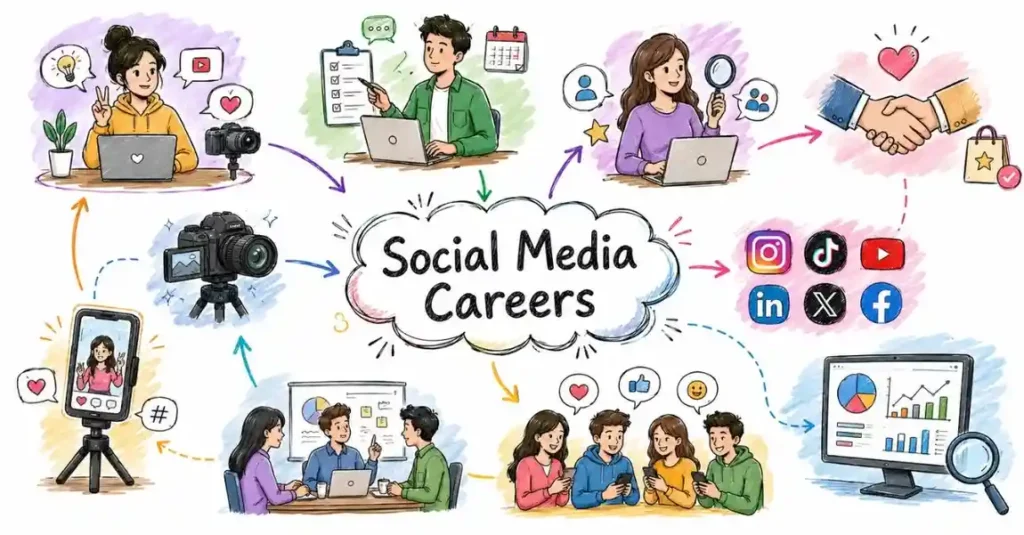
Table of Contents
Introduction: Decoding Social Media Career Options
Five years ago, telling your parents you wanted a career in social media would have been met with confused looks and concerns about “real jobs.” Today, social media professionals are among the most sought-after talents in India’s job market, with companies across industries competing to hire skilled individuals who can navigate the digital landscape. But here’s the challenge the term “social media career paths” is incredibly broad, encompassing dozens of different roles with varying skill requirements, responsibilities, and earning potentials.
If you’re considering entering this field, understanding the different career paths available is your crucial first step. Are you better suited to be in front of the camera as a content creator, or behind the scenes crafting strategies as a social media manager? Do you enjoy the business side of negotiations and partnerships, or does creating viral content excite you more? This comprehensive guide breaks down the major social media career paths available in India in 2026, helping you identify which direction aligns best with your strengths, interests, and career goals.
Understanding the Social Media Career Landscape
The social media industry in India has matured significantly over the past few years. What started as brands randomly posting on Facebook has evolved into a sophisticated, data-driven field requiring specialized expertise. According to recent industry data, job postings related to content creators and influencers have surged by 117% in India, with Bengaluru leading at 16% of total postings, followed by Delhi-NCR at 9% and Mumbai at 7.5%.
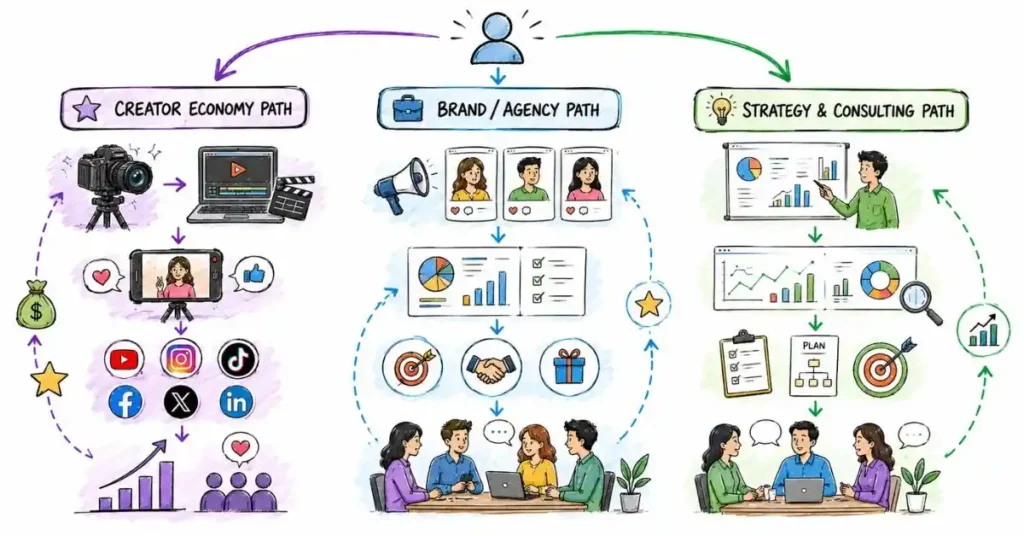
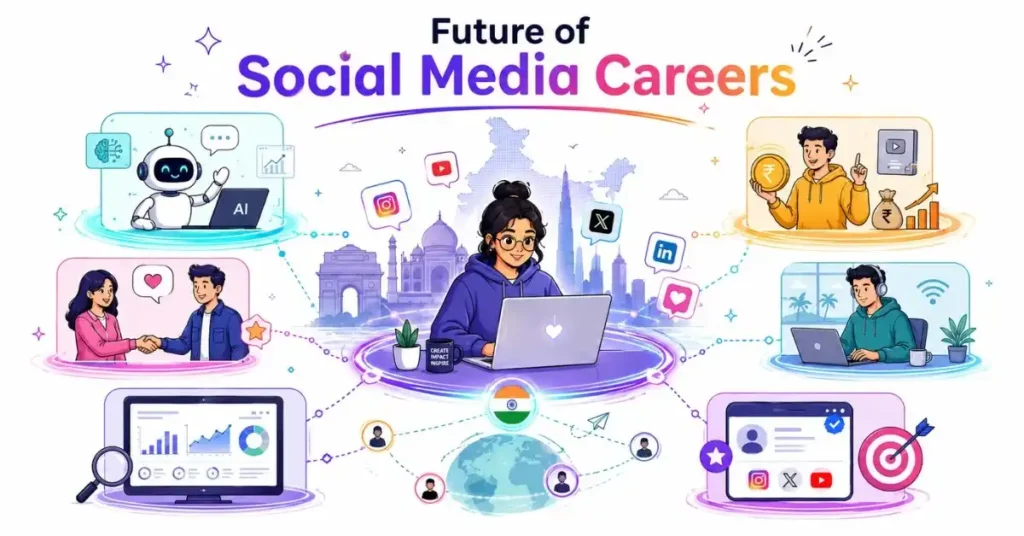
The career landscape can be understood through three primary pathways, each with distinct roles, skill requirements, and growth trajectories. Think of these as different branches on the same tree they share common roots (understanding audiences, creating engaging content, leveraging platform features) but grow in different directions based on your strengths and aspirations.
The Creator Economy Path focuses on building your own personal brand and audience. You’re the talent, the strategist, and often the entire production team. Success here depends on your ability to consistently create content that resonates with a specific audience and monetize that attention through various revenue streams.
The Brand/Agency Path involves working for companies or marketing agencies to manage their social media presence. You’re applying your skills to achieve business objectives for others increasing brand awareness, driving website traffic, generating leads, or building community engagement. This path offers the security of regular employment or client retainers.
The Strategy & Consulting Path is where social media becomes more business-focused. Roles here involve influencer marketing, partnership management, social media strategy consulting, and analytics. You need both creative understanding and strong business acumen to succeed in these positions.
Let’s explore each path and the specific roles within them in detail.
Path 1: The Content Creator Journey
Content creators are individuals who produce original content on platforms like YouTube, Instagram, LinkedIn, or emerging platforms, building their own audience and personal brand. This path offers the most creative freedom and unlimited income potential, but also comes with the highest risk and uncertainty, especially in the early stages.
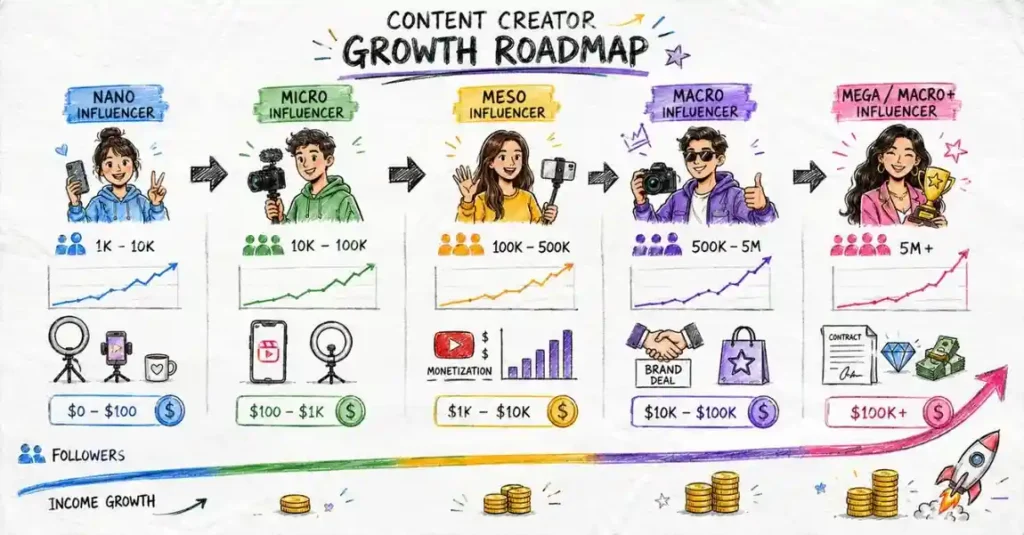
Starting as a Nano-Influencer (1,000-10,000 followers):
Every major creator started here. At this stage, you’re experimenting with content formats, finding your unique voice, and learning what resonates with your audience. Monetization is limited you might earn ₹1,000-5,000 per sponsored post from small local brands or participate in affiliate marketing programs. Your primary focus shouldn’t be money yet; it should be consistency, quality improvement, and audience growth. Most successful Indian creators spent 6-18 months at this stage before seeing significant traction.
Growing as a Micro-Influencer (10,000-50,000 followers):
This is where content creation can become a viable side income. Brands start approaching you for collaborations, and you can charge ₹5,000-25,000 per sponsored post depending on your niche and engagement rates. You might also be earning from platform monetization YouTube creators at this level typically earn ₹80-200 per 1,000 views through AdSense. Many Indian creators at this stage earn ₹30,000-80,000 monthly combining sponsorships, affiliate income, and ad revenue. The challenge is maintaining content quality while managing increasing business inquiries and brand partnerships.
Establishing as a Mid-Tier Creator (50,000-100,000 followers):
At this stage, content creation becomes a full-time career possibility. You’re earning ₹25,000-75,000 per sponsored post, receiving regular brand collaboration requests, and potentially launching your own digital products or services. Monthly income can range from ₹1-3 lakh through diversified revenue streams. You’re also likely hiring help editors, thumbnail designers, or a manager to handle business inquiries. The focus shifts from just creating content to building a sustainable business around your personal brand.
Thriving as a Macro-Influencer (100,000+ followers):
Top-tier Indian creators with substantial followings command ₹50,000-2 lakh or more per brand collaboration. Many earn ₹3-10 lakh monthly or even more through multiple income streams including brand partnerships, ad revenue, affiliate marketing, digital product sales, speaking engagements, and their own businesses. However, reaching and sustaining this level requires exceptional consistency, business savvy, and often a small team supporting content creation and business operations.
Skills Required for Content Creators:
Success as a creator demands multidimensional skills. Obviously, content creation skills are fundamental whether that’s video production, photography, graphic design, or writing. But equally important are storytelling ability (keeping audiences engaged), consistency and discipline (creating content even when unmotivated), personal branding (differentiating yourself in crowded niches), basic business skills (negotiating contracts, managing finances), and resilience (handling criticism and algorithm changes).
Pros of the Creator Path:
You have complete creative control, unlimited income potential, flexibility to work anywhere and anytime, opportunity to build a personal brand that opens doors to diverse opportunities, and the satisfaction of building something entirely your own.
Cons of the Creator Path:
Income is highly unstable, especially initially. There’s no guarantee of success despite hard work. You face constant pressure to create fresh content. Platform algorithm changes can dramatically impact your reach overnight. And there’s minimal job security or benefits like health insurance or paid leave.
Path 2: Social Media Management & Marketing
Social media managers and marketers work for companies, agencies, or as freelancers managing brands’ social media presence. This path offers more stability than content creation while still providing creative outlets and growth opportunities.
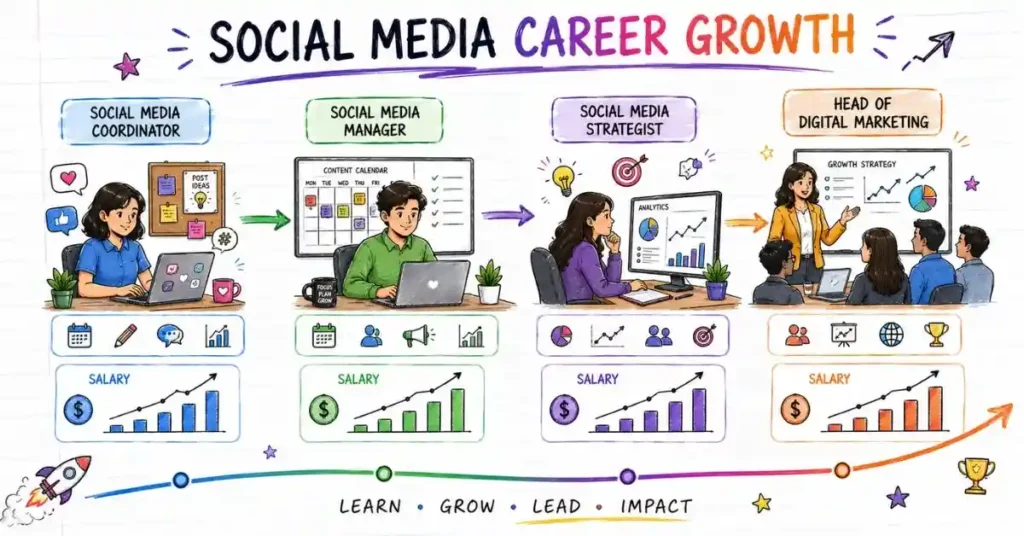
Social Media Coordinator/Executive (Entry Level):
This is where most people enter the field. As a coordinator, you’re supporting senior team members with day-to-day execution scheduling posts using tools like Buffer or Hootsuite, monitoring comments and messages, conducting competitor research, and preparing basic performance reports. Entry-level positions in India typically pay ₹1.8-4 lakh annually (approximately ₹15,000-35,000 monthly). While the tasks might seem mundane, you’re gaining foundational knowledge about social platforms, content calendars, analytics, and brand voice. Most successful social media managers spent 12-24 months in coordinator roles before advancing.
Social Media Manager (Mid-Level):
After 2-4 years of experience, you can transition into management roles with significantly more responsibility and autonomy. Social media managers develop comprehensive social strategies aligned with business goals, create and manage content calendars across multiple platforms, collaborate with designers and copywriters, engage with communities, run paid social campaigns, and present performance reports to stakeholders. Mid-level social media managers in Indian metros earn ₹5-10 lakh annually (₹40,000-85,000 monthly). Specialized managers focusing on specific platforms like LinkedIn or Instagram often command higher salaries due to their expertise.
Senior Social Media Manager/Strategist:
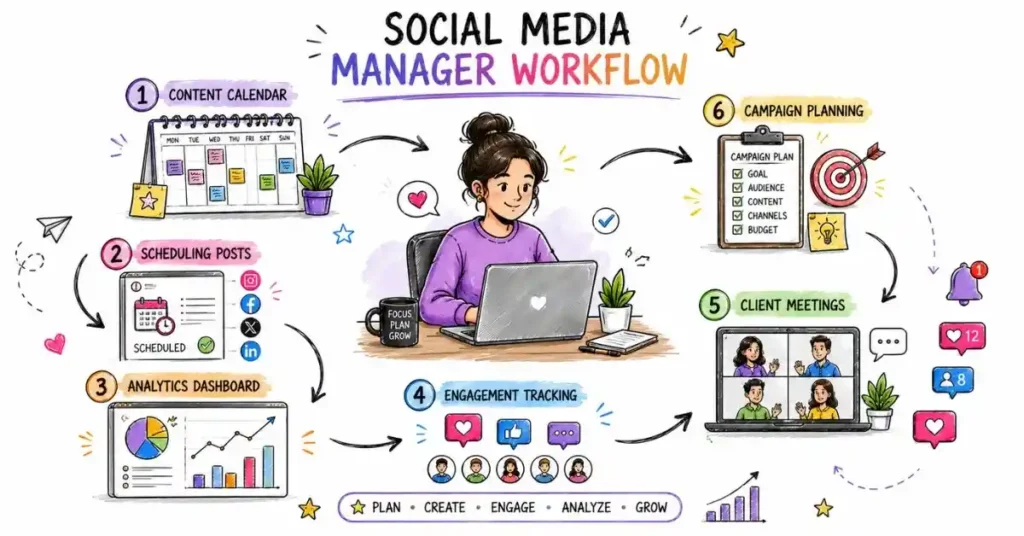
With 5-7 years of proven experience, you can reach senior positions earning ₹10-15 lakh annually in top companies or agencies. At this level, you’re not just executing tactics but developing overarching strategies, managing teams of coordinators and managers, allocating budgets across campaigns and platforms, presenting strategies to C-suite executives, and directly impacting business metrics like revenue and customer acquisition. Some senior managers transition into broader digital marketing leadership roles overseeing not just social media but also email marketing, content marketing, and paid advertising.
Freelance Social Media Consultant:
Many experienced professionals eventually transition to freelancing or consulting, managing multiple client accounts simultaneously. Successful freelancers in India charge ₹25,000-1 lakh per client monthly for comprehensive social media management. While this path offers excellent income potential and flexibility, it requires strong business development skills, self-discipline, and the ability to manage multiple projects simultaneously.
Skills Required for Social Media Management:
Strategic thinking is crucial understanding how social media contributes to broader business objectives. Platform expertise across multiple channels (Instagram, Facebook, LinkedIn, Twitter, YouTube) is expected. Copywriting skills for creating compelling captions and posts are essential. Project management abilities help you juggle multiple campaigns and deadlines. Client/stakeholder communication ensures alignment between social strategies and business goals. Analytics and reporting skills demonstrate ROI and inform future strategies. Basic design skills or the ability to brief designers effectively improve content quality.
Pros of the Management Path:
You receive regular income with benefits like health insurance and paid leave. There’s a clear career progression from coordinator to manager to strategist. You build diverse skills working across industries and brands. You have opportunities to work remotely for international clients. And you face less personal exposure compared to being a content creator you’re managing brands, not your personal reputation.
Cons of the Management Path:
Creative freedom is limited by brand guidelines and client approval processes. Salary growth eventually plateaus unless you move into leadership or start freelancing. You’re often working on multiple projects simultaneously, leading to stress. Client demands can be unreasonable, expecting 24/7 availability. And there’s constant pressure to prove ROI and justify social media budgets.
Path 3: Influencer Marketing & Partnerships
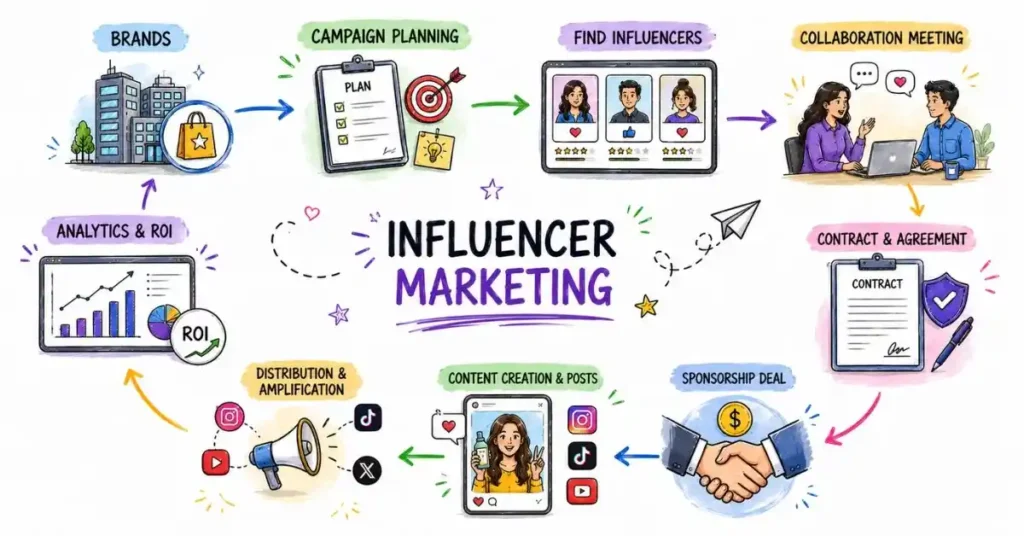
This specialized path sits at the intersection of social media, business development, and marketing strategy. Professionals here facilitate connections between brands and creators, design campaigns, negotiate partnerships, and measure effectiveness.
Influencer Marketing Executive (Entry Level):
Starting roles involve identifying and researching potential influencer partners, reaching out to creators and negotiating collaborations, coordinating content creation timelines, tracking campaign performance, and maintaining influencer databases. Entry-level positions typically pay ₹2.5-4.5 lakh annually. You’re essentially learning the influencer ecosystem understanding different creator tiers, fair pricing, content rights, and what makes partnerships successful. This role requires strong communication skills and attention to detail more than creative abilities.
Influencer Marketing Manager (Mid-Level):
With 3-5 years of experience, you’re managing entire influencer campaigns from strategy to execution. This includes developing influencer strategies aligned with brand objectives, managing campaign budgets (often lakhs to crores for major brands), negotiating contracts and deliverables with larger creators, analyzing campaign performance and ROI, and presenting results to clients or senior management. Salaries range from ₹5-10 lakh annually depending on company size and location. You need both creative judgment (selecting the right creators for campaigns) and business acumen (ensuring campaigns deliver measurable results).
Head of Influencer Marketing/Partnerships (Senior Level):
Senior roles involve building entire influencer programs for brands or agencies, establishing long-term creator partnerships and ambassador programs, managing teams of influencer marketing specialists, allocating multi-crore budgets across campaigns, and contributing to overall marketing strategy. These positions pay ₹12-20 lakh annually or more in large brands and premier agencies. At this level, you’re a true business strategist who happens to specialize in influencer marketing.
Agency Owner/Independent Consultant:
Some experienced professionals launch their own influencer marketing agencies or work as independent consultants. Indian influencer marketing agencies typically charge clients 20-30% commission on campaign budgets or flat monthly retainers of ₹50,000-3 lakh depending on scope. This path offers the highest income potential but requires entrepreneurial skills and an extensive network of both brand and creator contacts.
Skills Required for Influencer Marketing:
Relationship building is fundamental cultivating genuine connections with both brands and creators. Negotiation skills help secure favorable terms for your client or employer. Campaign strategy development ensures influencer initiatives align with broader marketing goals. Data analysis skills measure campaign effectiveness and optimize future partnerships. Contract and legal knowledge protects all parties and ensures clear expectations. Market awareness of trending creators, platforms, and content formats keeps campaigns relevant.
Pros of the Influencer Marketing Path:
This field offers high growth potential as influencer marketing budgets increase. You get diverse exposure working with various brands and creators. Roles often come with travel opportunities for campaign shoots and events. There’s less direct content creation pressure compared to being a creator yourself. And you’re at the forefront of an exciting, evolving industry.
Cons of the Influencer Marketing Path:
The role requires managing sometimes difficult personalities on both brand and creator sides. Campaign success often depends on factors outside your control (creator performance, audience response). There’s significant pressure to demonstrate ROI as companies scrutinize influencer marketing effectiveness. The industry still lacks standardization in pricing and metrics. And competition is increasing as more professionals enter this space.
Comparing Social Media Career Paths: Which Suits You?
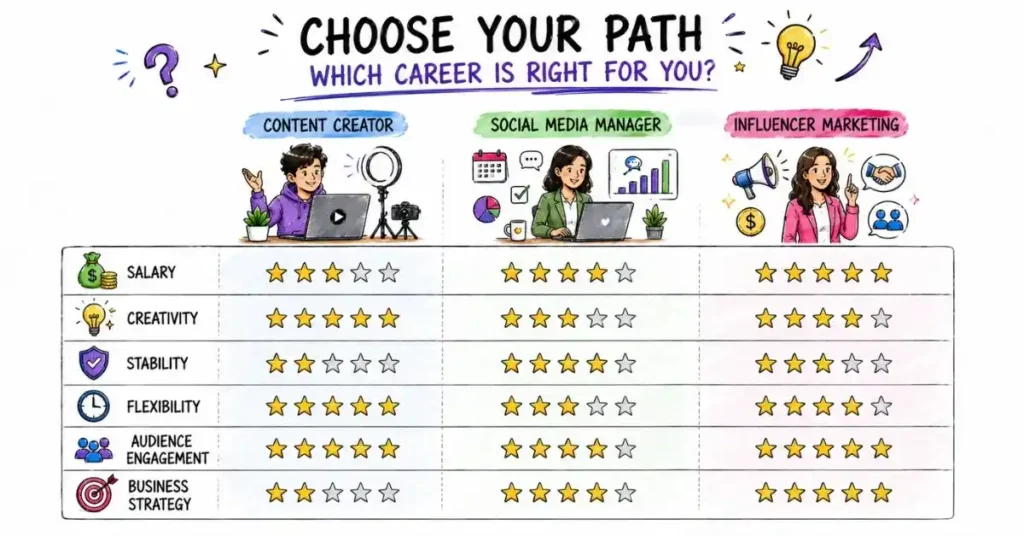
Choosing your path depends on honest self-assessment of your strengths, preferences, and circumstances. Here’s a practical framework to guide your decision:
Choose the Content Creator Path if:
You have a unique perspective, talent, or knowledge to share. You’re comfortable being on camera or publicly sharing your thoughts. You can handle income instability for 12-24 months while building. You’re self-motivated and disciplined without external structure. You’re willing to work evenings and weekends initially. You enjoy wearing multiple hats (creator, strategist, business manager). You have financial backup or can maintain part-time work initially.
Choose the Social Media Management Path if:
You prefer working behind the scenes rather than being in the spotlight. You want stable income and traditional employment benefits. You enjoy working with teams and collaborating with others. You’re interested in diverse brands and industries rather than one niche. You appreciate structured work environments with clear responsibilities. You want to learn business aspects of digital marketing. You value work-life boundaries (though social media managers often work irregular hours during campaign launches).
Choose the Influencer Marketing Path if:
You’re fascinated by the business side of content creation. You have strong networking and relationship-building skills. You enjoy negotiation and deal-making. You’re analytical and results-oriented. You want exposure to both creative and business worlds. You prefer project-based work with clear deliverables. You’re interested in staying current with digital trends without creating content yourself.
Remember, these paths aren’t mutually exclusive or permanent. Many successful professionals combine elements working as social media managers during the day while building their creator brand in evenings, or starting as coordinators before transitioning to full-time content creation once their audience grows. Your career will evolve as you gain experience, discover your strengths, and identify new opportunities.
Getting Started: First Steps for Each Social Media Career Path
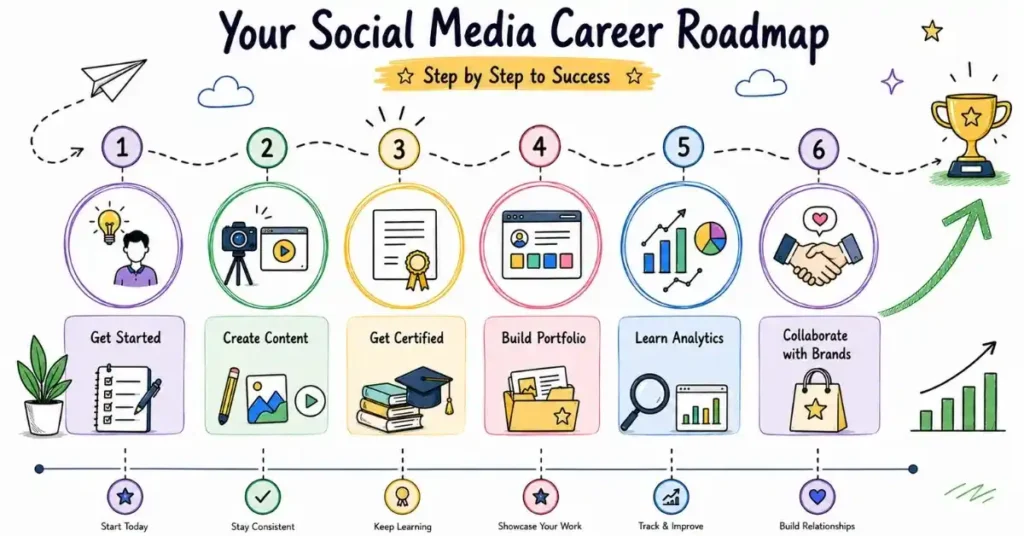
Regardless of which path excites you, here are concrete first steps to begin your journey:
For Aspiring Content Creators:
Choose one platform where your target audience spends time. Create and publish your first 10 pieces of content over the next month don’t overthink perfection, focus on consistency. Study successful Indian creators in your niche analyze their content formats, posting frequency, and engagement tactics. Join creator communities on Facebook, Discord, or Telegram to learn from peers. Take a free content creation course from YouTube Creator Academy or Meta Blueprint to understand platform best practices. Set a specific audience growth goal for the next three months and track your progress weekly.
For Aspiring Social Media Managers:
Optimize your own social media profiles if you can’t market yourself effectively, why would employers trust you with their brands? Take free certifications from Google Digital Garage, HubSpot Academy, or Meta Blueprint to build foundational knowledge. Create a portfolio by managing social media for a friend’s business, local restaurant, or nonprofit organization for free initially document your results. Learn one scheduling tool deeply (Buffer or Hootsuite) and one analytics platform (Google Analytics). Apply for internships at digital marketing agencies even if unpaid the experience and mentorship are invaluable. Start a blog or LinkedIn newsletter sharing social media tips to demonstrate expertise.
For Aspiring Influencer Marketing Professionals:
Develop a deep understanding of India’s creator ecosystem follow diverse creators across platforms and niches. Create a spreadsheet tracking 50-100 Indian creators with their follower counts, engagement rates, typical content, and contact information. Study influencer marketing case studies how did successful campaigns achieve their objectives? Practice rate calculations learn how to determine fair pricing for sponsored content based on follower count and engagement. Network with both creators and marketing professionals on LinkedIn. Consider joining a digital marketing agency in any role initially to gain industry exposure before specializing in influencer marketing.
Salary Expectations Across Social Media Career Stages
Understanding realistic salary expectations helps you plan financially as you build your career. Here’s a comprehensive breakdown for India in 2026:
Entry Level (0-2 years experience): Social media coordinators earn ₹1.8-4 lakh annually. Influencer marketing executives earn ₹2.5-4.5 lakh annually. Content creators at nano-influencer stage earn ₹5,000-30,000 monthly from various sources.
Mid Level (3-5 years experience): Social media managers earn ₹5-10 lakh annually. Influencer marketing managers earn ₹5-10 lakh annually. Content creators at micro-influencer stage earn ₹30,000-80,000 monthly
Senior Level (6+ years experience): Senior social media managers earn ₹10-15 lakh annually. Heads of influencer marketing earn ₹12-20 lakh annually. Established content creators earn ₹1-10 lakh monthly depending on scale.
These figures vary based on location (metros pay more), company type (MNCs and tech companies pay premium salaries), industry (fashion, tech, and finance pay better than nonprofits), and your specific skills (video production, paid advertising, and data analysis command premium).
Conclusion: Your Path Forward To Social Media Career
India’s social media industry offers genuine career opportunities with respectable incomes, creative fulfillment, and growth potential. Unlike five years ago when “social media professional” sounded like a made-up job, it’s now a legitimate career path that parents understand and respect.
The key is making an informed choice about which path aligns with your strengths and circumstances. Are you a natural performer who loves the spotlight? Content creation might be your calling. Do you prefer strategy and managing teams? Social media management offers that structure. Are you fascinated by the business side and enjoy connecting people? Influencer marketing could be perfect.
Start where you are with what you have. You don’t need expensive equipment, fancy certifications, or industry connections to begin. You need clarity about which path suits you, commitment to consistently show up and improve, and patience to build your skills and reputation over time. The opportunities are real, the demand is growing, and your social media career can start today.