
Manufacturing Logistics Coordinator—The Supply Chain Backbone

Table of Contents
The Person Who Ensures Materials Flow: Logistics Coordinator
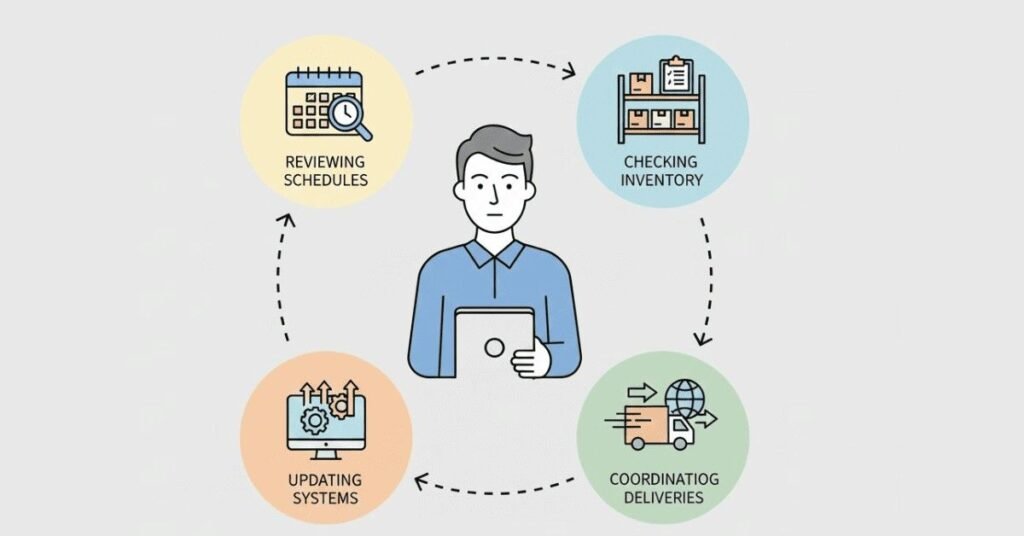
Manufacturing can’t happen without materials. The right components, at the right time, in the right quantity, at the right location. Logistics coordinators make this happen.
They earn ₹22,000-35,000/month as entry-level coordinators, advancing to ₹55,000-90,000+/month within 6-8 years in management roles.
What Logistics Coordinators Actually Do:
Priya, Manufacturing Logistics Coordinator at an automotive component facility:
Monday: Material Planning
Production needs 500 units of Component X this week. Priya:
- Reviews production schedule (when are parts needed?)
- Checks current inventory (how many do we have in stock?)
- Finds: Have 200 in stock, need 500, so need 300 more
- Checks supplier lead time (how long does supplier take to deliver?)
- Finds: Supplier takes 3 days
- Places order today (Tuesday delivery ensures Tuesday evening stock update)
- Sets delivery expectation with production (parts arrive Tuesday, ready for Wednesday production)
- Documents: Records order in system
Wednesday: Receiving & Inspection
Components arrive from supplier. Priya:
- Receives delivery (verifies quantity received matches order quantity)
- Checks quality (inspects for damage, defects)
- Counts units: 300 received, correct
- Checks quality: All items acceptable (no damage,
- all specifications met)
- Records in inventory system (now shows 500 in stock)
- Directs delivery to storage location
- Updates production: “Components are ready”
Thursday: Inventory Optimization
Weekly review of inventory levels across facility:
- Component A: 50 in stock (sufficient, using 10/day)
- Component B: 200 in stock (excess, using 5/day—could cause capital to be tied up)
- Component C: 5 in stock (risky, need 8/day—could run out)
Actions:
- Component B: Delay next order (currently over-stocked)
- Component C: Place emergency order (need to increase safety stock)
- Orders raw materials: Supplier takes 5 days; order today for delivery next week
Friday: Cost Optimization
Part of logistics is controlling costs. Priya:
- Reviews supplier quotes: Current supplier charges ₹100/unit; new supplier quotes ₹94/unit
- Quality equivalent? Yes, new supplier meets all specs
- Lead time equivalent? Yes, both 3 days
- Risk? New supplier is unproven, but has capacity
- Recommendation: Switch 50% of orders to new supplier (reduce cost, maintain safety by using two suppliers)
- Management approves
- Updates procurement records
Ongoing: Order Tracking
- Tracks all outstanding orders (status, expected delivery)
- Resolves delivery issues (order late? Communicates with supplier, adjusts plans)
- Handles emergency orders (production runs short on material, Priya sources quickly)
- Maintains supplier relationships
Result: Facility maintains just-in-time inventory (minimal storage needed), zero stock-outs (production never delayed by material), 5% cost reduction through supplier optimization.
Key Responsibilities of Logistics Coordinator
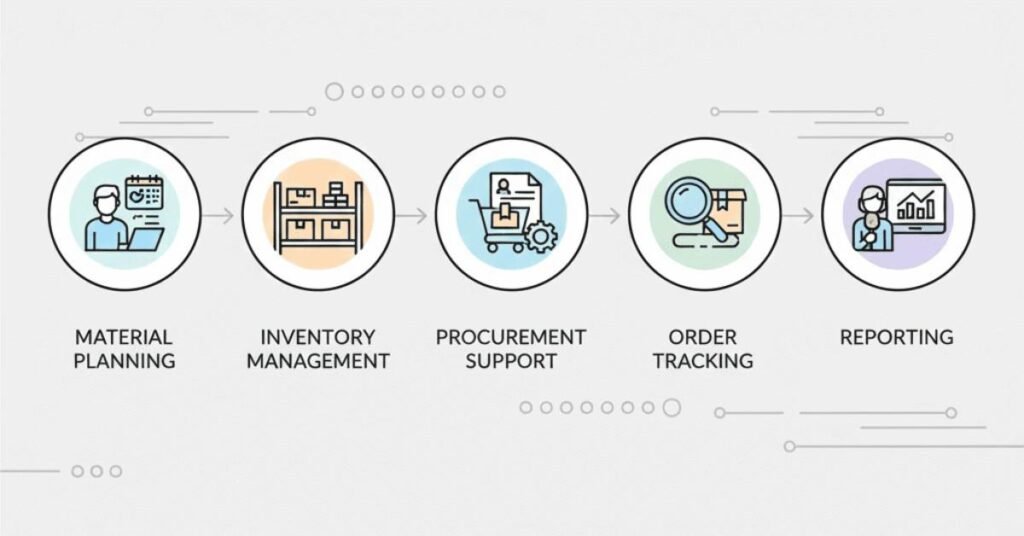
Material Planning (25%):
- Forecast material needs based on production schedule
- Plan orders (quantities, timing)
- Coordinate with suppliers
- Manage lead times
- Ensure material availability
Inventory Management (25%):
- Track inventory levels
- Receive and inspect materials
- Organize storage
- Minimize excess inventory
- Prevent stockouts
Procurement Support (20%):
- Obtain supplier quotes
- Compare costs and quality
- Manage supplier relationships
- Handle purchase orders
- Track payment and invoicing
Order Tracking & Problem-Solving (20%):
- Track outstanding orders
- Resolve delivery issues
- Handle emergency orders
- Communicate with suppliers
- Adjust plans when needed
Documentation & Reporting (10%):
- Maintain inventory records
- Generate reports (inventory levels, supplier performance, costs)
- Document orders and deliveries
Ensure data accuracy
Skills You Need
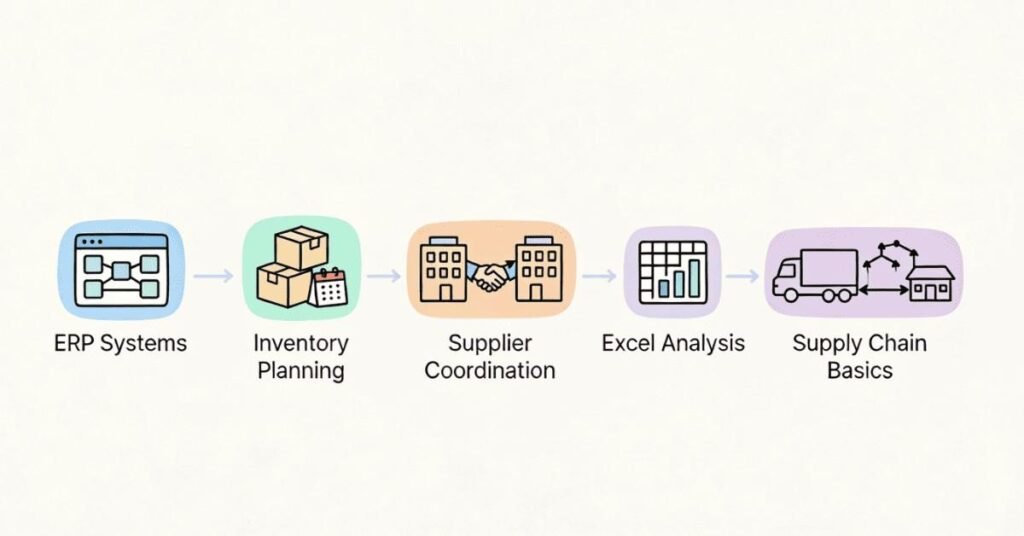
Technical Skills:
- Inventory Management Systems (Critical)
- ERP systems (SAP, Oracle, Microsoft Dynamics)
- Inventory tracking software
- Barcode and RFID systems
- Warehouse management systems
- Why: Inventory management is computerized; must use systems proficiently
- Learning: System-specific training (30-50 hours)
- Supply Chain Basics (Important)
- Material planning concepts (MRP, forecasting)
- Just-in-time (JIT) principles
- Safety stock calculation
- Lead time management
- Why: Understanding these improves planning
- Learning: Supply chain management courses (30-50 hours)
- Procurement Knowledge (Important)
- Supplier evaluation
- Cost analysis
- Quality standards
- Contract understanding
- Why: Procurement decisions impact costs and quality
- Learning: Procurement courses (20-30 hours)
- Logistics & Transportation (Important)
- Shipping and delivery methods
- Route optimization
- Packaging for protection
- Cost analysis of transportation
- Why: Moving materials efficiently is part of logistics
- Learning: Logistics courses (20-30 hours)
- Excel & Data Analysis (Important)
- Spreadsheet proficiency
- Pivot tables and analysis
- Cost calculations
- Trend analysis
- Why: Much logistics work involves data
- Learning: Excel training (20-40 hours)
Soft Skills:
- Communication: Interact with production team, suppliers, management
- Problem-solving: Resolve supply issues, optimize plans
- Attention to detail: Accurate inventory crucial
- Negotiation: Negotiate with suppliers for best cost/quality
Organization: Manage multiple orders, deadlines simultaneously
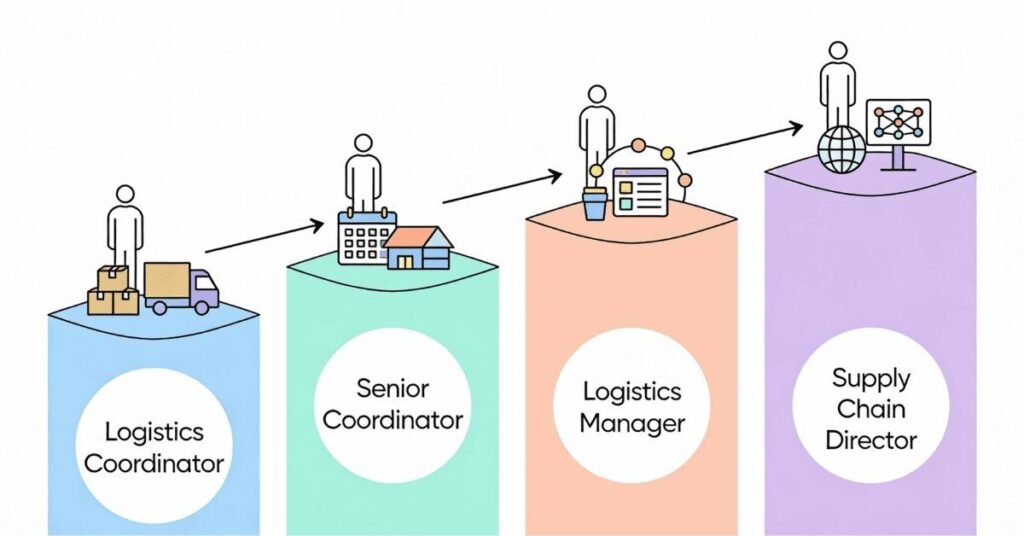
Salary Expectations for Manufacturing Logistics
Logistics Coordinator / Material Handler:
₹22,000 – ₹35,000/month
(Entry-level, coordinating role)
Senior Logistics Coordinator:
₹35,000 – ₹50,000/month
(More responsibility, possibly supervising coordinators)
Logistics Supervisor / Team Lead:
₹48,000 – ₹70,000/month
(Leading small team, planning multiple areas)
Logistics Manager:
₹70,000 – ₹1,00,000/month
(Department leadership, multiple facilities possible)
Supply Chain Manager / Director:
₹1,00,000 – ₹1,50,000+/month
(Executive leadership, company-wide supply chain strategy)
Why Salaries Grow:
- Impact on costs: Logistics decisions directly affect company profitability (material costs are major expense)
- Business criticality: Supply chain failures halt production (very expensive)
- Complexity increases: Senior roles manage more complex supply chains
Specialization: Deep supply chain expertise commands premium
How to Enter Logistics
Path 1: Any Degree + Logistics Training
- Complete any bachelor’s degree (economics, commerce, engineering, IT)
- Pursue logistics or supply chain certification (see below)
- Enter logistics coordinator role (₹24,000-35,000/month)
Path 2: Diploma + Specialization
- Complete logistics or commerce diploma (2 years)
- Enter logistics coordinator role (₹22,000-32,000/month)
Path 3: Manufacturing Background + Logistics Training
- Work in manufacturing (production, maintenance, quality)
- Show interest in supply chain
- Pursue logistics training (online courses, certifications)
- Transition to logistics coordinator (your manufacturing knowledge is valuable)
Salary: Often higher: ₹28,000-38,000/month
Certifications That Boost Logistics Career
Entry-Level Certifications:
- APICS CSCP (Certified Supply Chain Professional): Comprehensive supply chain knowledge
- Cost: ₹50,000-80,000, Duration: 3-6 months
- ROI: High; APICS certification globally recognized
- Benefit: +₹6,000-10,000/month salary
- Six Sigma Green Belt (applied to logistics): Process optimization
- Cost: ₹20,000-35,000, Duration: 4-6 weeks
- Benefit: +₹4,000-8,000/month salary
Advanced Certifications:
- APICS CPIM (Certified in Production and Inventory Management): Advanced
- Cost: ₹70,000-1,00,000, Duration: 6-12 months
- ROI: Very high; path to manager roles
- Benefit: +₹12,000-18,000/month salary
- APICS APICS+CSCP (Advanced Planning & Scheduling): Specialized
- Cost: ₹80,000-1,20,000
- Benefit: +₹15,000-20,000/month salary
MBA in Logistics/Supply Chain:
- Duration: 2 years (full-time) or 3 years (part-time)
- Cost: ₹5,00,000-15,00,000
- ROI: Excellent if pursuing management roles
- Benefit: +₹25,000-40,000/month salary
Career Progression: Coordinator to Director
Year 1: Logistics Coordinator
- Support material planning, supplier coordination
- Salary: ₹24,000-35,000/month
Year 2-3: Senior Coordinator
- Lead specific areas of supply chain
- Mentor junior coordinators
- Salary: ₹35,000-48,000/month
Year 4-5: Supervisor / Team Lead
- Oversee team of coordinators
- Manage section of supply chain
- Salary: ₹48,000-70,000/month
Year 6-8: Logistics Manager
- Department leadership
- Company-wide supply chain oversight
- Strategic planning
- Salary: ₹70,000-1,00,000/month
Year 8+: Supply Chain Director / VP
- Executive leadership
- Board-level responsibility
- Strategic vision
- Salary: ₹1,00,000-1,50,000+/month
Why Logistics is Underrated Career
Logistics coordinators are often overlooked—their work is behind-the-scenes. But manufacturing literally stops without materials. Logistics professionals are essential, valued, and compensated accordingly.
Entry salary ₹24,000-35,000 → 5-year salary ₹50,000-70,000+. Clear advancement path. Meaningful work (enabling production). Good job security.
If you like planning, problem-solving, and ensuring smooth operations, logistics is your career.