
Food & Beverage Management Careers
Table of Contents

Food & Beverage Careers: From Chef to Director
What Makes F&B Careers Unique
Food and beverage is the hospitality industry’s most dynamic sector. Unlike hotel operations (which focus on rooms and facilities), F&B is about creating culinary experiences. If you’re passionate about food, cooking, or creating exceptional dining moments, F&B careers offer creative expression combined with business management.
What’s exciting about F&B in 2025? The sector is experiencing explosive growth. Restaurants, cloud kitchens, food delivery services, catering companies, and hotel F&B departments are all expanding rapidly. This diversity means endless career opportunities whether you want to work in fine dining, casual restaurants, corporate catering, or hotel banquets.
The F&B Department Structure
Understanding the hierarchy helps you see where you fit and where you can grow.
The Typical F&B Structure:
At the top sits the F&B Director or Food & Beverage Manager who oversees all dining operations. Below them are specialized positions: Executive Chef (kitchen operations), Restaurant Manager (dining room operations), Banquet Manager (events), and Bar Manager (beverage operations). Each position has supervisors and staff reporting to them.
In smaller restaurants or hotels, one manager might handle all F&B operations. In large properties, multiple managers coordinate different areas.

Key F&B Roles and Career Paths
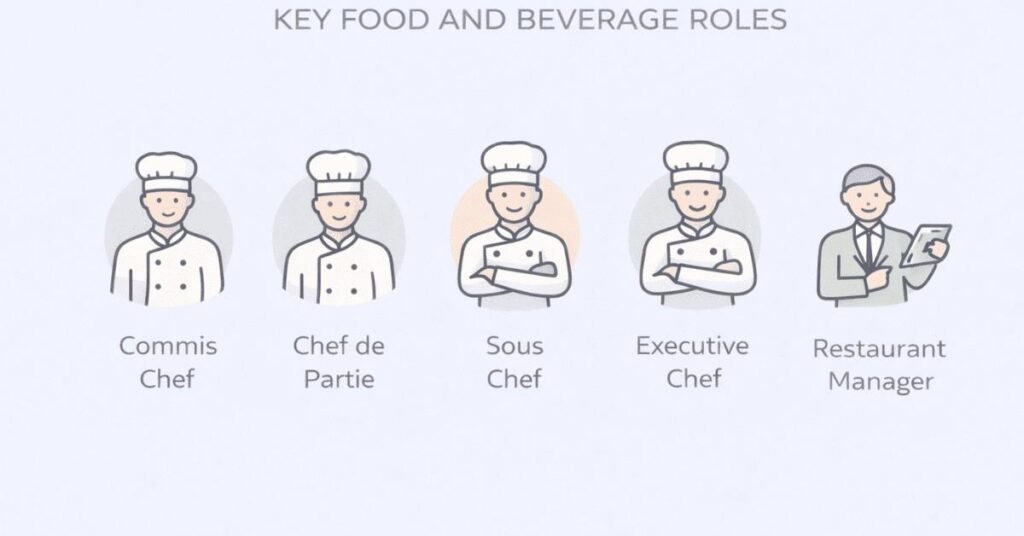
1. Commis Chef/Kitchen Trainee
Who They Are:
This is the entry point to culinary careers. A Commis Chef is a trainee or junior chef learning cooking fundamentals while assisting senior chefs. You’re essentially a kitchen apprentice—learning techniques, food safety, kitchen operations, and professional standards.shiksha
Daily Responsibilities:
- Prep Work – Washing vegetables, chopping ingredients, organizing mise en place (pre-prepared ingredients)
- Basic Cooking – Preparing simple dishes under supervision, following recipes precisely
- Food Safety – Maintaining kitchen cleanliness, following hygiene protocols
- Assistance – Helping senior chefs with their tasks, observing their techniques
- Inventory Management – Stock management, reporting shortages
- Cleaning & Maintenance – Maintaining workstations and equipment
Salary Range: INR 12,000 to 20,000 per month. Many hotels provide accommodation and meals as additional benefits, which effectively increases take-home value.shiksha
Learning Outcome: After 1-2 years, you’ll understand kitchen operations, gain basic cooking skills, and be ready for a Chef de Partie position.
Why Start Here: Professional kitchens are intense, fast-paced environments. Starting as a trainee helps you develop speed, accuracy, and the ability to work under pressure.
2. Chef de Partie (Section Chef)
Who They Are:
A Chef de Partie specializes in a specific kitchen section. The kitchen is divided into stations (Pantry, Sauce, Grill, Pastry, etc.), and each section chef is an expert in their area. This is where specialization begins.
Common Sections:
- Saucier – Sauce and meat preparations
- Poissonnier – Fish and seafood preparations
- Pâtissier – Pastries and desserts
- Rôtisseur – Roasted and fried dishes
- Pantry Chef – Cold dishes, salads, appetizers
Responsibilities:
- Station Management – Overseeing all preparations for your assigned section
- Quality Control – Ensuring dishes meet restaurant standards
- Inventory – Managing ingredients for your station
- Staff Training – Assisting junior chefs and trainees
- Menu Execution – Preparing assigned dishes correctly and on time during service
Salary Range: INR 25,000 to 45,000 per month depending on specialization and experience. Pastry chefs and chefs specializing in high-end cuisine earn premium salaries.
Career Insight: This role determines your culinary identity. Some chefs spend their entire careers mastering pastry, while others cross sections to become well-rounded.
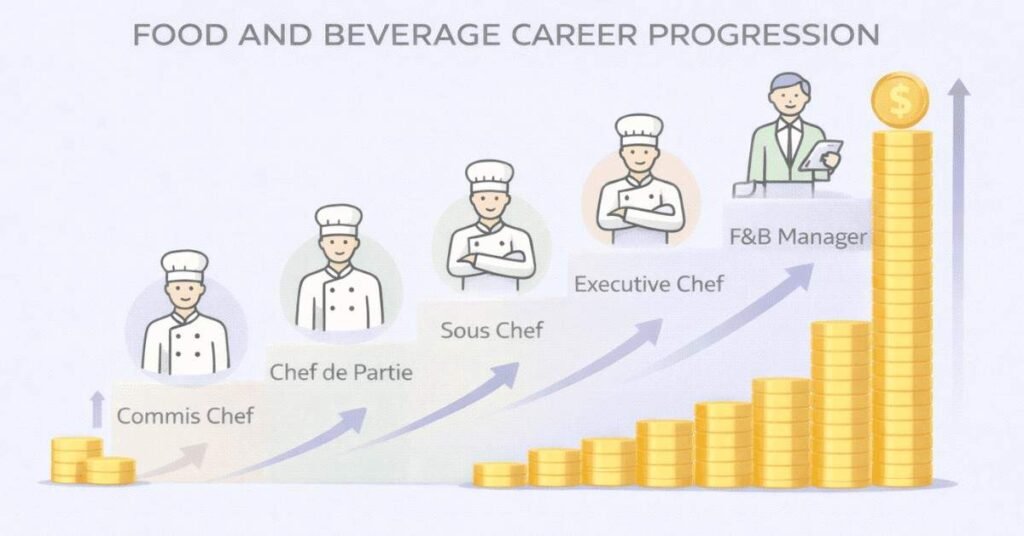
Growth Path: Chef de Partie → Demi Chef de Partie → Sous Chef → Head Chef
3. Sous Chef
Who They Are:
The Sous Chef is the Executive Chef’s second-in-command and is responsible for day-to-day kitchen management. “Sous” means “under” in French—they work under the Head Chef, executing their vision while managing kitchen staff and quality.shiksha
Key Responsibilities:
- Kitchen Management – Overseeing all kitchen operations during their shift
- Staff Supervision – Managing cooks, chefs, and kitchen assistants
- Quality Assurance – Ensuring all dishes meet standards and consistency
- Menu Execution – Ensuring the menu is executed correctly during service
- Inventory Management – Monitoring food costs, reducing waste
- Staff Training – Training and developing junior chefs
- Problem-Solving – Handling rush periods, shortages, or equipment issues
- Reporting – Providing performance reports to the Head Chef
Salary Range: INR 40,000 to 80,000 per month depending on restaurant category and location. Premium properties offer higher compensation.shiksha
Why It’s Crucial: A skilled Sous Chef is the difference between smooth operations and chaotic service. They handle pressure, maintain quality, and ensure customer satisfaction during peak hours.
Career Significance: This is where you transition from chef to leader. Many restaurant owners and executive chefs started as Sous Chefs.
4. Executive Chef/Head Chef
Who They Are:
The Executive Chef is the kitchen’s leader—responsible for menu creation, culinary direction, food quality, cost control, and entire kitchen staff. They report to the F&B Manager and represent the culinary standards of the establishment.
Responsibilities:
- Menu Development – Creating menus based on culinary trends, seasonal ingredients, and customer preferences
- Kitchen Leadership – Managing all kitchen staff, from chefs to trainees
- Food Cost Management – Controlling food expenses while maintaining quality
- Culinary Standards – Ensuring consistency and excellence in all dishes
- Staff Training & Development – Training chefs, conducting skill development sessions
- Supplier Relations – Working with food suppliers for quality ingredients
- Food Safety Compliance – Ensuring all food safety regulations are followed
- Innovation – Creating new dishes, updating menus seasonally
- Guest Interaction – Meeting guests, understanding feedback, adjusting offerings
Salary Range: INR 60,000 to 2,00,000+ per month depending on restaurant prestige and location. Celebrity chefs or chefs in Michelin-recognized establishments earn significantly more.
Why This Role Matters: An Executive Chef’s reputation directly impacts the restaurant’s brand. Great chefs attract customers and create loyalty.
Career Progression: Many chefs reach this level after 15-20 years of culinary experience.
5. Restaurant Manager
Who They Are:
While chefs manage the kitchen, Restaurant Managers oversee dining room operations—guest service, ambiance, staff coordination, and the overall dining experience.
Key Responsibilities:
- Guest Services – Seating guests, taking reservations, addressing concerns
- Staff Management – Managing servers, hosts, bussers, and support staff
- Ambiance Control – Ensuring the restaurant atmosphere is welcoming
- Service Quality – Overseeing service standards and consistency
- Sales & Upselling – Promoting specials, encouraging beverage orders
- Complaint Resolution – Handling guest dissatisfaction professionally
- Reporting – Tracking sales, guest feedback, operational issues
- Inventory – Managing dining supplies, glassware, linens
Salary Range: INR 35,000 to 1,00,000+ per month depending on restaurant tier and location.
Why It’s Important: Restaurant managers create the dining experience. Their service philosophy directly impacts how guests perceive the restaurant.
6. Food & Beverage Manager
Who They Are:
The F&B Manager oversees all food and beverage operations for a hotel or large restaurant group. They coordinate with Executive Chefs, Restaurant Managers, Bar Managers, and Banquet Managers. This is a strategic leadership position.
Responsibilities:
- Budget Management – F&B is typically 28-35% of hotel revenue. Managers control this significant budget
- Revenue Optimization – Pricing strategies, menu engineering, special promotions
- Department Coordination – Ensuring restaurants, bars, and room service work harmoniously
- Profitability – Managing food costs, labor costs, and margins
- Staff Development – Training managers, career development programs
- Menu Planning – Strategic menu development for all outlets
- Guest Satisfaction – Ensuring consistent quality across all F&B venues
- Compliance – Food safety, health regulations, licensing
Salary Range: INR 60,000 to 2,00,000+ per month depending on hotel category. Luxury 5-star hotels pay premium salaries for experienced F&B managers.
Career Significance: This role combines culinary knowledge with business acumen. Many aspire to become General Managers from here.
The Culinary Skills You Need
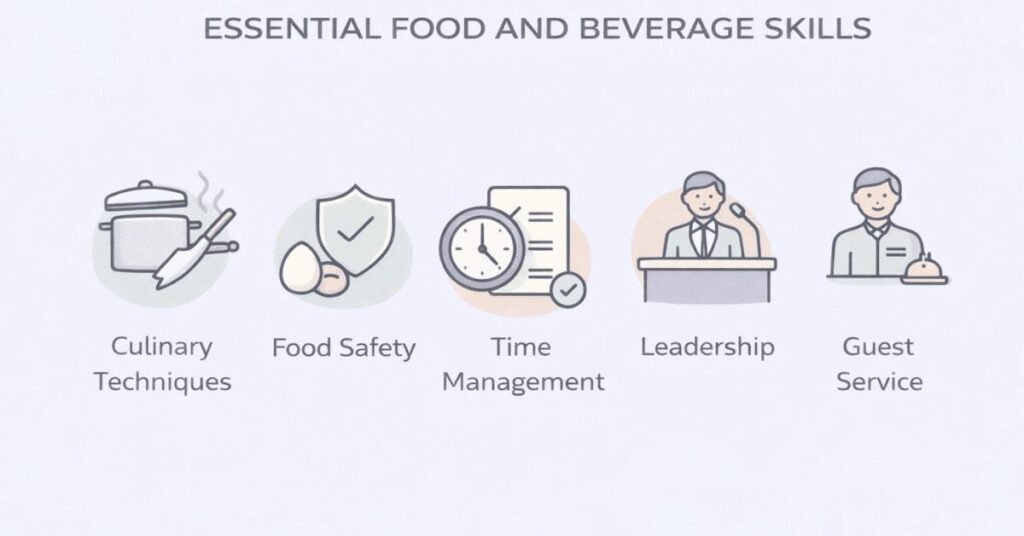
Technical Cooking Skills
- Knife Skills – Proper cutting, slicing, and food preparation techniques
- Cooking Methods – Sautéing, grilling, roasting, braising, steaming, frying
- Flavor Development – Understanding seasoning, balance, and taste
- Plating & Presentation – Making food visually appealing
- Time Management – Working quickly without compromising quality
How to Develop: Formal culinary training (diploma/degree), working in restaurants, practice, and seeking mentorship from experienced chefs.
Recipe Development & Menu Planning
- Understanding ingredient combinations
- Creating signature dishes
- Menu engineering (which dishes to feature based on profitability)
- Seasonal menu changes
- Catering to dietary restrictions
Food Safety & Hygiene
Critical in hospitality. You must know:
- Proper food storage temperatures
- Cross-contamination prevention
- Cleaning and sanitation standards
- FSSAI compliance (Food Safety and Standards Authority of India)
- Pest control and hygiene protocols
Certification: FSSAI Food Safety Supervisor certification is increasingly required and boosts career prospects.
F&B Salary Progression
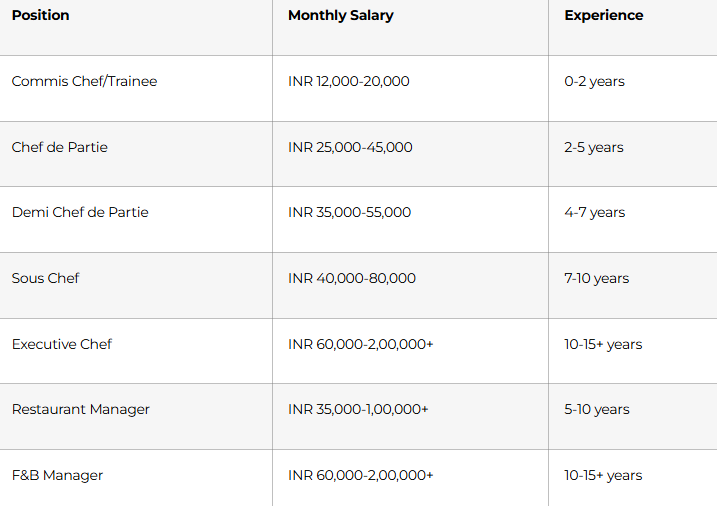
Key Insight: Specialty skills (pastry chef, executive chef) often command higher salaries than generalist positions.
Your Path into F&B Careers
Option 1: Formal Culinary Education
Best For: Serious culinary professionals wanting formal training
- Diploma in Hotel Management (F&B Specialization) – 2-3 years, includes culinary training
- Advanced Culinary Courses – 6-12 months specialized training (pastry, baking, etc.)
- FSSAI Certification – Mandatory for food safety compliance
Advantage: Faster entry to supervisory positions (starting around INR 30,000/month instead of INR 12,000)
Option 2: On-the-Job Training
Best For: Those passionate about cooking but flexible on timing
- Start as Commis Chef
- Learn kitchen operations, techniques, and industry standards
- Earn while learning
- Progress based on performance and competence
Advantage: Practical, real-world experience; understand restaurant dynamics firsthand
Timeline: Reaching Sous Chef (40K-80K salary) ty
Step 3: Specialization
After gaining foundational experience, choose a specialization:
- Pastry & Baking – Often command premium salaries
- Specialty Cuisine – Chinese, Continental, Indian, etc.
- Fine Dining – Haute cuisine, specialized techniques
- Health & Wellness – Therapeutic cooking, dietary meal prep
Step 4: Leadership Development
As you advance toward Restaurant Manager or F&B Manager roles, develop:
- Business acumen (understanding profit/loss, budgets)
- Staff management skills
- Customer service excellence
- Strategic menu planning