
DIGITAL SKILLS & TECHNOLOGY IN HOSPITALITY
Table of Contents
Digital Skills for Hospitality: PMS, Analytics & Social Media Tools
Why Digital Skills Are Non-Negotiable
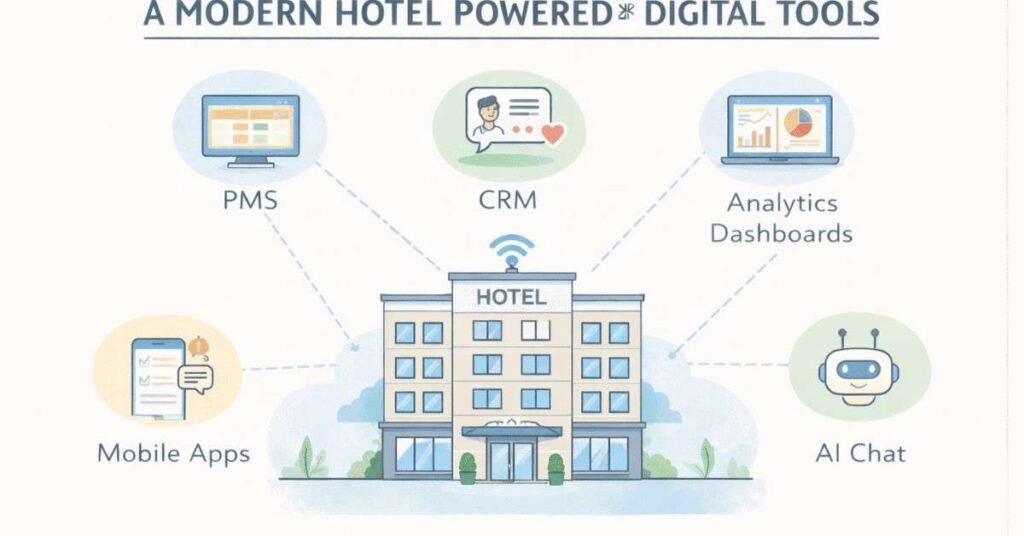
Hospitality has undergone a dramatic digital transformation. A decade ago, property management systems (PMS) were optional extras. Today, they’re essential. Five years ago, social media was marketing nice-to-have. Today, it determines bookings. In 2025, digital skills aren’t supplementary—they’re fundamental. Hospitality professionals without digital competency are limiting their career prospects significantly.
The good news? Digital skills are learnable, regardless of your age or background. Whether you’re 20 or 50, investing time in digital literacy pays dividends immediately in job performance and long-term in career advancement.
Understanding Hospitality Technology Landscape
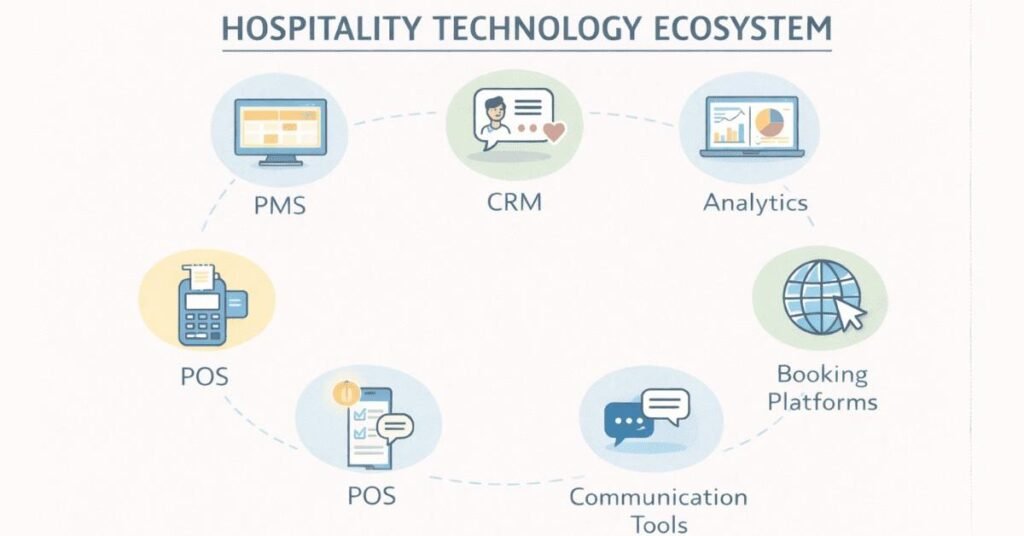
Hospitality uses various technology categories:
Property Management Systems (PMS) – Core systems managing reservations, guest information, billing, housekeeping coordination
Customer Relationship Management (CRM) – Systems tracking guest preferences, contact history, loyalty programs
Point of Sale (POS) Systems – Payment processing for restaurants, bars, room service
Distribution Systems – Managing bookings across multiple channels (OTAs, GDS, direct)
Analytics & Business Intelligence – Reporting, data analysis, decision-making tools
Communication Tools – Email, messaging, phone systems, chatbots
Marketing Platforms – Social media management, email marketing, website management
Mobile Applications – Guest-facing apps, staff-facing apps
Each category requires specific skills. You don’t need mastery of all—focus on your role’s requirements.
Key Hospitality Technology Systems
1. Property Management Systems (PMS)
What It Is:
PMS is the central nervous system of hotels. It manages reservations, guest profiles, room assignments, billing, housekeeping coordination, and reporting.
Common PMS Platforms:
- Opera (Oracle) – Widely used, especially by major chains
- Fidelio (also Oracle) – Popular in European properties
- Micros (Oracle) – For F&B and POS integration
- Cloudbeds – Growing cloud-based solution
- Hotelier Pro – Indian market option
- MarginEdge – Emerging platform
Skills Required:
- Navigating reservation module (making, modifying, cancelling bookings)
- Managing guest profiles and special requests
- Understanding room status codes (occupied, dirty, clean, maintenance)
- Basic reporting (occupancy, revenue, guest statistics)
- Using housekeeping module to coordinate cleaning
- Managing rates and rate codes
- Processing payments and billing
Career Impact:
PMS proficiency is expected for front office staff, managers, and leadership. Strong PMS skills make you valuable and efficient, directly impacting guest satisfaction.
Learning Approach:
- On-the-job training is standard when you join a hotel
- Vendor certifications available (Oracle offers PMS certifications)
- YouTube tutorials for specific systems
Practice in test environments when available
2. Customer Relationship Management (CRM) Systems
What It Is:
CRM systems track guest information, interactions, preferences, and loyalty. They help hotels deliver personalized service and targeted marketing.
Key Functions:
- Guest preference tracking (room type, pillow firmness, beverage preferences)
- Contact history (previous stays, complaints, compliments)
- Loyalty program management
- Personalized communication
- Marketing campaign tracking
Systems Used:
- Salesforce – Comprehensive, industry standard
- HubSpot – Growing popularity, particularly in marketing
- Zoho CRM – Cost-effective alternative
- Microsoft Dynamics – For larger organizations
- Hotel-specific CRM systems – Integrated with PMS
Skills Required:
- Entering and updating guest information
- Tracking preferences and special requests
- Using CRM for personalized service (remembering preferences on repeat visits)
- Analyzing guest data for patterns
- Creating targeted campaigns
- Measuring campaign effectiveness
Career Impact:
CRM skills are increasingly valuable for guest-facing staff, marketing, and management roles. Understanding guest data drives better service and revenue.
3. Point of Sale (POS) Systems
What It Is:
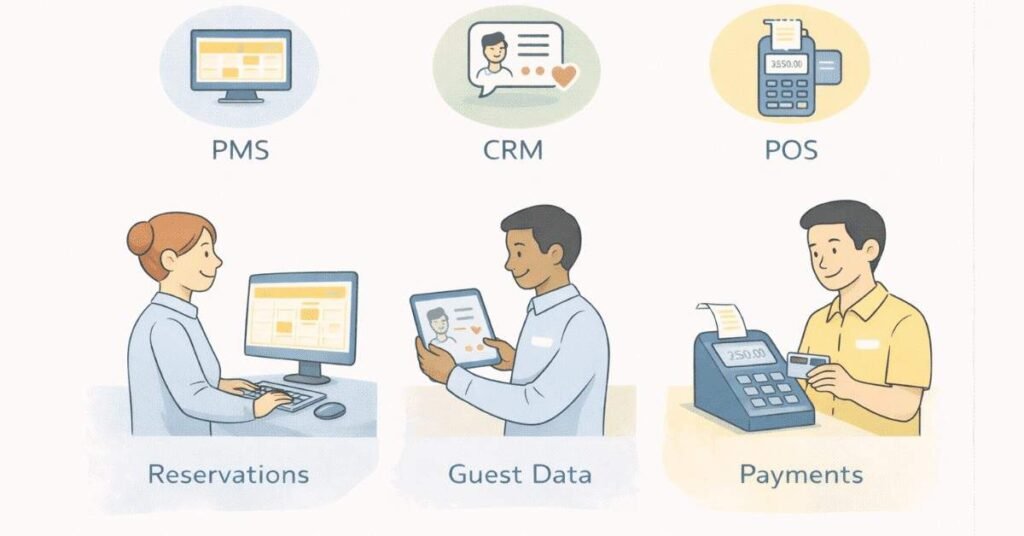
POS systems process payments and track sales in F&B outlets, spas, room service, and other revenue centers.
Common Systems:
- Oracle Micros – Industry standard
- TouchBistro – iPad-based system
- Square – Simpler, smaller operations
- Toast POS – Cloud-based, growing popularity
Skills Required:
- Processing guest orders
- Payment processing (cash, card, digital wallets)
- Managing bills and splitting checks
- Inventory tracking
- Understanding sales reports
- Basic troubleshooting
Career Impact:
Essential for F&B staff, restaurant managers, and operations management. POS efficiency directly impacts service speed and accuracy.
4. Google Analytics & Data Analytics
What It Is:
Analytics tools measure website traffic, booking sources, guest behavior, marketing effectiveness, and operational metrics.
Skills Required:
- Understanding basic metrics (sessions, users, pageviews, bounce rate)
- Interpreting conversion data (bookings from traffic)
- Tracking campaigns (did that marketing campaign generate bookings?)
- Setting up goal tracking
- Creating basic reports
- Understanding visitor behavior (which pages convert best?)
Common Tools:
- Google Analytics 4 (GA4) – Website traffic analysis
- Google Search Console – Search visibility and keywords
- Hotjar – User behavior recording
- Tableau – Data visualization
- Excel – Data analysis and pivottables
Career Impact:
Data literacy is increasingly valuable for marketing, revenue management, and leadership. Being able to interpret data and make recommendations positions you for advancement.
5. Social Media Management
What It Is:
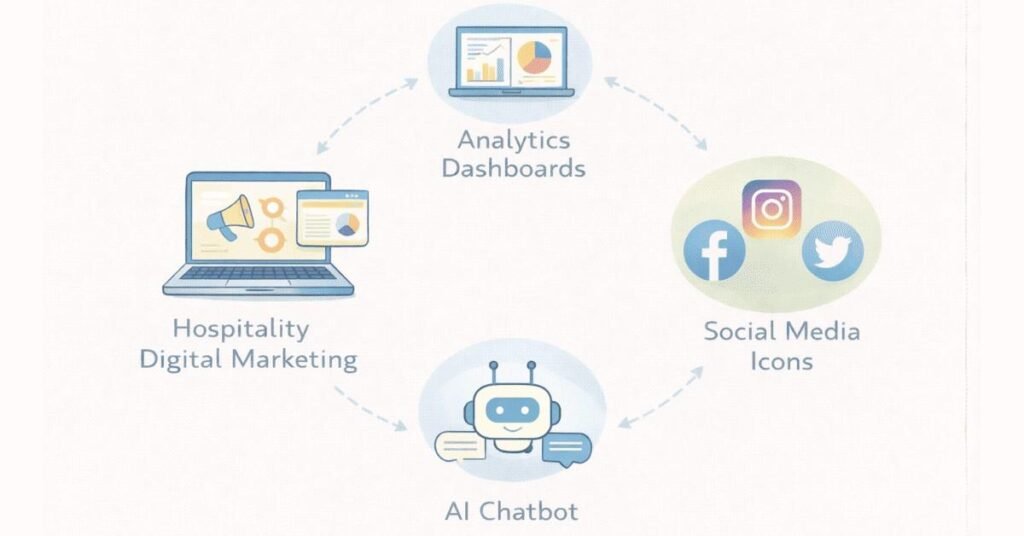
Platforms for creating, posting, and measuring social media content across Instagram, Facebook, LinkedIn, YouTube, TikTok.
Skills Required:
- Creating engaging content (photos, captions, videos)
- Posting schedules and consistency
- Community management (responding to comments)
- Hashtag strategy
- Analytics interpretation (reach, engagement)
- Scheduling tools (Buffer, Later, Meta Business Suite)
Tools:
- Meta Business Suite (Facebook/Instagram) – Free integrated platform
- Buffer – Scheduling and analytics
- Adobe Creative Suite – Advanced design (optional for most roles)
Career Impact:
Social media management skills are valuable for marketing roles and increasingly important for all hospitality professionals. Even operational staff should understand social presence.
6. Email Marketing
What It Is:
Systems for creating, sending, and tracking email campaigns to guests and prospects.
Common Platforms:
- Mailchimp – Beginner-friendly, free tier available
- Constant Contact – User-friendly interface
- HubSpot Email – Integrated with CRM
- Klaviyo – E-commerce focused
- AWeber – Automation capabilities
Skills Required:
- Email list management
- Creating professional emails
- Segmentation (different messages for different guest types)
- A/B testing (comparing subject lines, content)
- Analytics interpretation (open rates, click rates, conversions)
- Automation workflows
Career Impact:
Email marketing generates measurable ROI and is expected knowledge for marketing and sales roles.
7. Chatbots & AI Tools
What It Is:
AI-powered chat systems handling guest inquiries 24/7, reducing response times and improving service.
Examples:
- ChatGPT-powered hotel chatbots – Answering guest questions
- WhatsApp Business API – Guest communication via WhatsApp
- AI Concierge – Personalized recommendations
Skills Needed:
- Understanding chatbot capabilities and limitations
- Prompt engineering (formulating good questions for AI)
- Human-bot integration (knowing when humans should take over)
- Data privacy considerations
Career Impact:
Understanding AI tools and how to work alongside them is increasingly important as hospitality adopts these technologies.
Digital Literacy Levels by Role
Entry-Level Hospitality Staff:
- PMS basics (searching reservations, room status)
- Email communication
- Basic phone/communication tools
- Understanding data privacy
Supervisory/Manager Level:
- PMS advanced features (rate management, reporting)
- CRM for guest relationship management
- POS system management
- Basic analytics interpretation
- Social media awareness
Marketing/Revenue Roles:
- Advanced analytics (Google Analytics, dashboards)
- CRM advanced features (segmentation, campaigns)
- Social media management and analytics
- Email marketing platforms
- Basic data analysis
Leadership/Director Level:
- Strategic understanding of all systems
- Business intelligence and reporting
- Budget analysis and ROI calculation
- Digital transformation understanding
Cybersecurity awareness
Building Digital Skills: Your Action Plan
Priority 1: Master Your Role's Core System
If you’re front office: become PMS expert
If you’re marketing: become analytics and social media expert
If you’re F&B: become POS expert
Invest time, take courses, practice deliberately.
Priority 2: Understand Your Hotel's Full Tech Stack
What systems does your property use? Get trained on each.
Priority 3: Develop Supporting Skills
Email, spreadsheets, basic data interpretation support almost all roles.
Priority 4: Stay Current
Technology evolves constantly. Dedicate time to learning new tools and trends.
Learning Resources
Free/Low-Cost Options:
- YouTube tutorials for specific systems
- Vendor training materials
- LinkedIn Learning (many libraries offer free access)
- Coursera, Udemy ($10-50 courses)
- Google Analytics Academy (free certification)
Paid Programs:
- Vendor certifications ($200-500)
- Comprehensive online courses ($500-2,000)
- In-person hospitality programs ($5,000+)
On-the-Job:
- Ask your manager for training
- Shadow experienced staff
- Practice in test environments
Volunteer for tech implementation projects
Why Digital Skills Impact Your Salary
Data-literate professionals earn more because:
- Efficiency – Digital skills let you work faster, handle more
- Revenue Impact – Analytics and marketing skills directly impact revenue
- Strategic Value – Digital understanding supports decision-making
- Rare Skills – Not all hospitality professionals have these skills
- Industry Demand – Hotels actively recruiting digitally literate staff
Salary Impact: Hospitality professionals with strong digital skills earn 15-30% more than peers without these skills, depending on role.
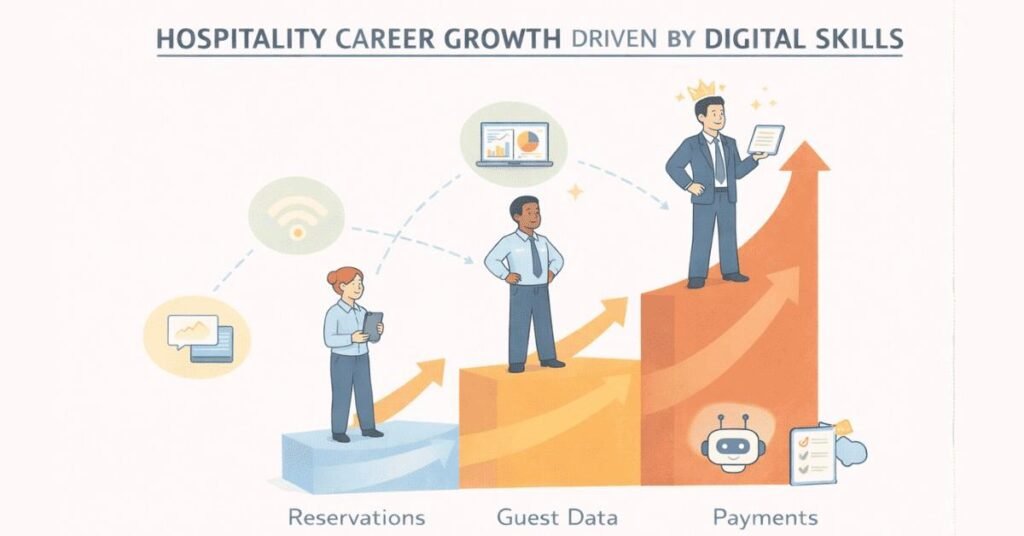
Key Insight: Digital Skills Aren't Optional
In 2025, digital literacy isn’t a differentiator—it’s a requirement. The question isn’t whether you should develop digital skills; it’s which ones to prioritize first. Starting early in your career gives you years to develop deep expertise, positioning you for leadership roles where digital understanding is expected.