
Customer Experience Metrics: 25+ KPIs Every CX Professional Must Track
Table of Contents
Introduction

“Our customers seem happy, but we’re still losing them. I don’t understand why.”
Rahul, a Customer Success Manager at a Mumbai SaaS company, told me this during a LinkedIn conversation last month. When I asked what metrics he was tracking, he said: “We send NPS surveys quarterly. Our score is 45, which seems okay?”
Here’s the problem: NPS of 45 isn’t okay it’s concerning. And more importantly, relying on a single metric without understanding the complete picture of customer health is like driving with only a speedometer and no fuel gauge, temperature warning, or GPS.
Modern Customer Success is fundamentally data-driven. The days of managing customers “by feel” are over. In 2026, successful CS professionals track dozens of metrics, understand their interrelationships, and use data to predict problems before customers even complain.
But here’s the challenge: there are literally hundreds of potential metrics you could track. Which ones actually matter? How do you calculate them? What are healthy benchmarks? How do you turn metrics into actions?
This comprehensive guide breaks down 25+ essential Customer Experience and Customer Success metrics every CS professional must understand. I’ll explain what each metric means, how to calculate it, why it matters, what good looks like, and how to use it strategically.
Understanding Metric Categories
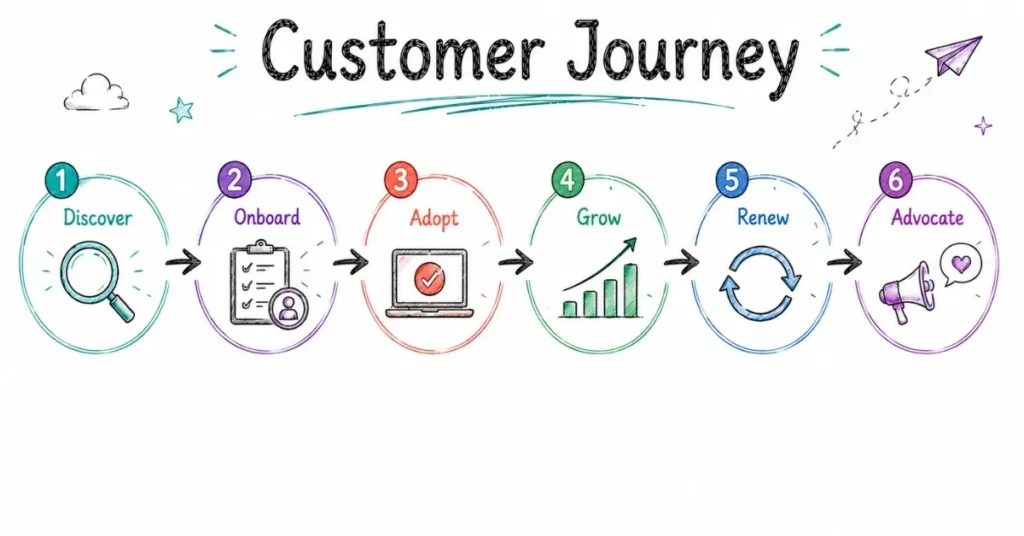
CS metrics fall into distinct categories, each measuring different aspects of customer success:
Retention Metrics: Are customers staying?
Engagement Metrics: Are customers using the product?
Satisfaction Metrics: Are customers happy?
Financial Metrics: Are customers valuable?
Operational Metrics: Are we serving customers efficiently?
Great CS teams track metrics across all categories, not just one or two.
Category 1: Retention Metrics (The Foundation)
These metrics measure whether customers stay or leave the most critical CS outcomes.
1. Customer Churn Rate
What It Measures: Percentage of customers who cancel within a given period
Formula:
Churn Rate = (Customers Lost in Period / Customers at Start of Period) × 100
Example:
- Started January with 100 customers
- Lost 5 customers in January
- Churn Rate = (5/100) × 100 = 5% monthly churn
Why It Matters:
Churn is the opposite of retention. High churn means something is fundamentally wrong with product, onboarding, support, or customer fit.
Good Benchmarks:
- B2B SaaS Monthly Churn: 2-5% (anything above 5% is concerning)
- Annual Churn: 10-20% (lower is better)
- Enterprise SaaS: <5% annual churn is excellent
Indian Context:
Indian SaaS companies typically have slightly higher churn (3-7% monthly) due to market maturity and price sensitivity, but this is improving.
How to Use It:
- Calculate monthly and annually
- Segment by customer type (SMB vs enterprise, industry, acquisition channel)
- Identify patterns: Do customers churn at specific lifecycle stages?
- Create early warning system: What do customers who eventually churn have in common?
Limitations:
Churn rate doesn’t account for revenue impact. Losing 100 small customers is different from losing 1 enterprise customer.
2. Revenue Churn Rate (More Important Than Customer Churn)
What It Measures: Percentage of revenue lost due to cancellations and downgrades
Formula:
Revenue Churn = (MRR Lost in Period / MRR at Start of Period) × 100
Example:
- Started month with ₹10 lakhs MRR
- Lost ₹50,000 MRR from cancellations
- Revenue Churn = (50,000/10,00,000) × 100 = 5%
Why It Matters:
This is what actually impacts business. You could have 2% customer churn but 10% revenue churn if your largest customers are leaving.
Good Benchmarks:
- B2B SaaS: <5% monthly revenue churn
- Best-in-class: <2%
- Early-stage companies: 5-10% is common but needs improvement
How to Use It:
- Track alongside customer churn to understand: Are small or large customers leaving?
- If revenue churn > customer churn: Your highest-value customers are leaving (crisis!)
- If revenue churn < customer churn: Smaller customers leaving (still concerning but less urgent)
3. Net Revenue Retention (NRR) - The Golden Metric
What It Measures: Revenue retained from existing customers including expansions and downgrades, excluding new sales
Formula:
NRR = [(Starting MRR + Expansion – Downgrades – Churn) / Starting MRR] × 100
Example:
- Started year with ₹1 crore MRR
- Expansion revenue: ₹30 lakhs (customers upgrading)
- Downgrades: ₹5 lakhs
- Churned: ₹15 lakhs
- Ending MRR from original cohort: ₹1.1 crores
- NRR = (1.1 / 1) × 100 = 110%
Why It Matters:
NRR above 100% means you’re growing revenue from existing customers even without acquiring new ones. This is the holy grail of SaaS.
Good Benchmarks:
- World-class SaaS: >120% NRR
- Good: 110-120%
- Acceptable: 100-110%
- Concerning: <100%
Indian Context:
Top Indian SaaS companies (Freshworks, Postman, Chargebee) achieve 110-130% NRR. This is key metric for Series B+ funding.
How to Use It:
- Your primary north-star metric as CS team
- If NRR > 100%, you’re successfully expanding accounts
- If NRR < 100%, focus on reducing churn before pursuing expansion
- Calculate by customer segment to understand where to focus
Real Impact:
Company with 120% NRR can double revenue in 3 years without acquiring a single new customer. That’s power of retention + expansion.
4. Gross Revenue Retention (GRR)
What It Measures: Revenue retained from existing customers excluding expansion
Formula:
GRR = [(Starting MRR – Downgrades – Churn) / Starting MRR] × 100
Why It Matters:
Shows pure retention without masking churn with expansion. You can have great NRR but poor GRR if you’re expanding some accounts while losing many others.
Good Benchmarks:
- Excellent: >95%
- Good: 90-95%
- Concerning: <85%
How to Use It:
Track alongside NRR. If NRR is 110% but GRR is 85%, you’re expanding remaining customers but losing too many. Fix retention first.

Category 2: Customer Satisfaction Metrics
These measure how customers feel about your product and service.
5. Net Promoter Score (NPS)
What It Measures: Customer loyalty and likelihood to recommend
How It Works:
Survey asks: “On a scale of 0-10, how likely are you to recommend us?”
- 9-10: Promoters
- 7-8: Passives
- 0-6: Detractors
Formula:
NPS = % Promoters – % Detractors
Example:
- 100 responses: 50 promoters (50%), 30 passives (30%), 20 detractors (20%)
- NPS = 50% – 20% = 30
Why It Matters:
Correlates with business growth. High NPS means customers will renew and refer others.
Good Benchmarks:
- World-class: 50+
- Good: 30-50
- Acceptable: 10-30
- Concerning: <10 or negative
Indian Context:
Average NPS for Indian B2B SaaS companies is 25-35. Cultural factors affect response patterns (Indians tend to be more middle-ground in ratings).
How to Use It:
- Survey quarterly or semi-annually (not too frequently)
- Always include open-ended follow-up: “Why did you give this score?”
- Segment by customer type, product, CSM, tenure
- Contact detractors immediately to understand and address issues
- Ask promoters for referrals and case studies
Limitations:
- Doesn’t tell you why score is what it is
- Cultural differences affect scoring
- Can’t be your only metric
6. Customer Satisfaction Score (CSAT)
What It Measures: Satisfaction with specific interaction or experience
How It Works:
Survey after specific interaction: “How satisfied were you with [interaction]?” (1-5 scale)
Formula:
CSAT = (Number of Satisfied Customers / Total Responses) × 100
(Usually 4 and 5 ratings count as “satisfied”)
Example:
- 100 post-support-ticket surveys
- 80 rated 4 or 5
- CSAT = 80%
Why It Matters:
Provides immediate feedback on specific interactions, allowing quick improvement.
Good Benchmarks:
- Excellent: >90%
- Good: 80-90%
- Needs improvement: <80%
How to Use It:
- Survey after onboarding, support interactions, QBRs, training sessions
- Identify: Which interactions have low CSAT? Why?
- Track individual CSM CSAT scores (coaching opportunity)
- Immediate: If someone rates 1-2, reach out same day
7. Customer Effort Score (CES)
What It Measures: How easy it is to get things done with your product/service
How It Works:
“How easy was it to [accomplish task]?” (1-7 scale, where 7 is very easy)
Formula:
CES = Average score across all responses
Why It Matters:
Research shows reducing customer effort is more important for loyalty than delighting customers. Make things easy.
Good Benchmarks:
- Excellent: 6-7 average
- Needs improvement: <5
How to Use It:
- Survey after tasks: account setup, feature implementation, support resolution
- Low CES indicates friction points prioritize removing these
Category 3: Engagement Metrics
These measure how customers actually use your product.
8. Product Adoption Rate
What It Measures: Percentage of customers actively using your product
Formula:
Adoption Rate = (Active Users / Total Users) × 100
(Define “active” based on your product logged in past 30 days, performed key action, etc.)
Why It Matters:
Non-adopters will churn. High adoption correlates strongly with retention.
Good Benchmarks:
Varies by product, but generally:
- Excellent: >80%
- Concerning: <50%
How to Use It:
- Calculate overall and by customer account
- Identify customers with <30% adoption high churn risk
- Determine: What prevents adoption? Onboarding issues? Feature confusion?
9. Feature Adoption Rate
What It Measures: Usage of specific product features
Formula:
Feature Adoption = (Users Using Feature / Total Users) × 100
Why It Matters:
Core feature adoption drives value realization. Different features correlate with retention.
How to Use It:
- Identify your “sticky features” which features correlate most with retention?
- Drive adoption of these features specifically
- Low adoption of key feature might indicate usability issues
10. Daily/Monthly Active Users (DAU/MAU)
What It Measures: How frequently customers use your product
Formula:
DAU/MAU Ratio = (Daily Active Users / Monthly Active Users)
Example:
- 1,000 monthly active users
- 300 daily active users
- DAU/MAU = 30%
Why It Matters:
Higher ratio means stickier product. Social media apps target 60%+, B2B SaaS typically 20-40%.
How to Use It:
- Track trend over time increasing is positive
- Segment by customer cohort
- Identify “power users” vs “at-risk users”
11. Time to First Value (TTFV)
What It Measures: How quickly new customers achieve meaningful outcome
Example:
For project management software: Time from signup until first project created and team invited
Why It Matters:
Faster TTFV leads to higher retention. Customers who don’t achieve value quickly churn.
Good Benchmarks:
Varies dramatically by product:
- Simple tools: Within hours
- Complex enterprise software: 30-60 days
How to Use It:
- Calculate for successful vs churned customers (churned customers likely took much longer)
- Optimize onboarding to reduce TTFV
- Set expectations: Tell customers what “first value” looks like
12. Login Frequency
What It Measures: How often users log into your product
Why It Matters:
Declining login frequency is early churn warning.
How to Use It:
- Set alert: Customer who previously logged in daily hasn’t logged in for 7 days → trigger outreach
- Track as health score component

Category 4: Financial Metrics
These connect customer success to revenue and business value.
13. Customer Lifetime Value (CLV or LTV)
What It Measures: Total revenue you’ll earn from a customer over entire relationship
Simple Formula:
CLV = (Average Revenue Per Customer × Customer Lifespan in Months)
Advanced Formula:
CLV = (Average Revenue Per Customer × Gross Margin %) / Churn Rate
Example:
- Average monthly revenue per customer: ₹10,000
- Average customer stays 24 months
- CLV = ₹10,000 × 24 = ₹2.4 lakhs
Why It Matters:
Determines how much you can spend acquiring customers. If CLV is ₹2.4 lakhs, you can spend up to ₹80,000 acquiring them profitably (assuming 3:1 LTV:CAC ratio).
How to Use It:
- Calculate by customer segment (enterprise vs SMB, industry, etc.)
- Focus CS efforts on high-LTV customers
- Increase CLV through retention + expansion strategies
14. Monthly Recurring Revenue (MRR) and Annual Recurring Revenue (ARR)
What It Measures: Predictable subscription revenue
Formula:
MRR = Sum of all monthly subscription revenue
ARR = MRR × 12 (or sum of annual contracts)
Why It Matters:
Core business metric. CS team directly impacts MRR through retention and expansion.
How to Track:
- New MRR (from new customers Sales owns)
- Expansion MRR (from upsells CS often owns)
- Contraction MRR (from downgrades CS works to prevent)
- Churned MRR (from cancellations CS works to prevent)
15. Customer Acquisition Cost (CAC) and LTV:CAC Ratio
What CAC Measures: Cost to acquire one customer (sales + marketing expenses / new customers)
Example:
- Spent ₹10 lakhs on sales and marketing in quarter
- Acquired 100 customers
- CAC = ₹10,000
LTV:CAC Ratio = Customer Lifetime Value / Customer Acquisition Cost
Good Benchmark:
- Healthy SaaS: 3:1 ratio (LTV is 3× CAC)
- Excellent: 4:1 or higher
- Concerning: <2:1
Why CS Should Care:
If you reduce churn by 20%, you increase LTV by ~25%, making customer acquisition much more profitable. CS directly impacts unit economics.
16. Expansion Revenue / Expansion MRR
What It Measures: Additional revenue from existing customers through upsells, cross-sells, add-ons
Why It Matters:
Expansion is cheaper than acquisition. Best CS teams generate 20-40% of revenue from expansion.
How to Track:
- Expansion MRR as percentage of total MRR
- Which CSMs drive most expansion?
- Which customer segments expand most?
- What triggers expansion? (usage milestones, feature requests, growth in their business)

Category 5: Operational Metrics
These measure CS team efficiency and effectiveness.
17. Customer Health Score
What It Measures: Composite score predicting customer retention likelihood
Components (weighted):
- Product usage (30-40%)
- Support ticket volume and sentiment (15-20%)
- Payment history (10-15%)
- Engagement (meetings attended, emails opened) (10-15%)
- NPS/CSAT scores (10-15%)
- Contract value and renewal date (10%)
Scoring:
Typically 0-100 or color-coded (Red/Yellow/Green)
Why It Matters:
Predicts churn before it happens, allowing proactive intervention.
How to Use It:
- Review daily: Which accounts turned red/yellow?
- Create playbooks: Red accounts get immediate CSM outreach, yellow accounts get specific interventions
- Track accuracy: Do low-health-score customers actually churn? Adjust scoring if not
18. CSM Productivity Metrics
Accounts per CSM:
How many accounts each CSM manages
Typical Ranges:
- Enterprise CSM: 5-15 accounts
- Mid-market CSM: 15-30 accounts
- SMB CSM: 30-100+ accounts
Revenue per CSM:
Annual recurring revenue managed per CSM
Benchmark:
Good SaaS companies target ₹1-3 crores ARR per CSM
19. First Contact Resolution Rate
What It Measures: Percentage of customer issues resolved in first interaction
Why It Matters:
Higher FCR means more efficient CS operation and better customer experience
How to Use:
Track by CSM, identify training needs
20. Average Response Time
What It Measures: Time between customer inquiry and first response
Benchmarks:
- Email: <4 hours
- Chat: <2 minutes
- Critical issues: <30 minutes
21. Customer Onboarding Completion Rate
What It Measures: Percentage of customers who complete onboarding process
Why It Matters:
Customers who complete onboarding have 80%+ retention rates vs 30-40% for those who don’t
How to Use:
- Identify where customers drop off in onboarding
- Optimize those specific steps
22. Time to Onboard
What It Measures: Average time from purchase to full implementation/first value
Why It Matters:
Faster onboarding = faster value = better retention
How to Track:
Compare successful vs churned customers churned likely had much longer onboarding
Category 6: Relationship Metrics
These measure strength of customer relationships.
23. Executive Sponsor Engagement
What It Measures: Do you have relationships with decision-makers?
How to Track:
- Percentage of accounts with documented executive sponsor
- Frequency of executive-level interactions
- Executive attendance at QBRs/EBRs
Why It Matters:
Accounts with strong executive relationships churn less and expand more
24. Customer Reference Rate
What It Measures: Percentage of customers willing to serve as references, provide case studies, write reviews
Why It Matters:
True loyalty indicator customers who advocate publicly rarely churn
25. Support Ticket Volume and Sentiment
What It Measures:
- Number of support tickets per customer
- Sentiment of tickets (positive, neutral, negative)
Why It Matters:
Sudden spike in tickets or increasing negative sentiment predicts churn
Creating Your CS Metrics Dashboard
Don’t track everything choose your core metrics:
Minimal Dashboard (Track These Minimum):
- Churn Rate (customer and revenue)
- Net Revenue Retention
- Customer Health Score
- NPS or CSAT
- Product Adoption Rate
Comprehensive Dashboard (Mature CS Teams):
- All retention metrics (churn, NRR, GRR)
- All satisfaction metrics (NPS, CSAT, CES)
- Key engagement metrics (adoption, DAU/MAU)
- Financial metrics (CLV, expansion revenue)
- Leading indicators (health score, onboarding completion)
Turning Metrics into Action
Metrics without action are useless. Create action triggers:
Example Action Framework:
If customer health score drops below 60 (yellow)
Then CSM schedules check-in call within 48 hours
If customer hasn’t logged in for 14 days
Then automated email + CSM outreach
If NPS score is 0-6 (detractor)
Then Senior CSM or manager reaches out within 24 hours
If account is 90 days from renewal with <50% adoption
Then Intensive training program + executive engagement
Conclusion: Metrics Drive Customer Success
In 2026, Customer Success is a data-driven profession. You cannot manage what you don’t measure. The difference between average CS teams and exceptional ones is often how well they track, analyze, and act on metrics.
Start with the core five metrics if you’re new. Add complexity as you mature. But always remember: metrics are tools to help customers succeed, not just numbers to report to management.
Track the right metrics. Understand what they mean. Act on the insights. That’s how data-driven Customer Success creates business impact.