
Community Manager Career: Build Engaged Online Communities & Brand Loyalty
Introduction: What Community Managers Actually Do
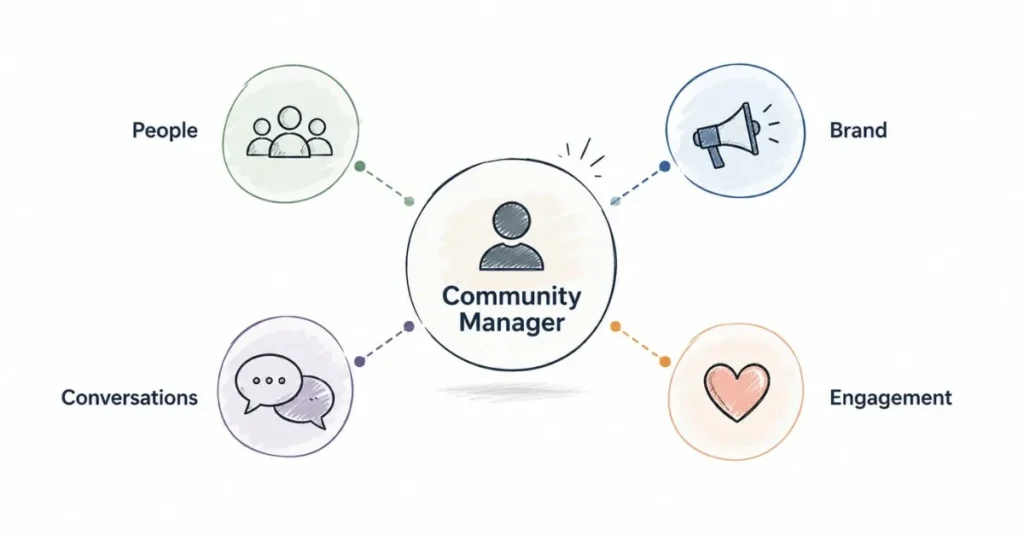
While social media managers focus on content, campaigns, and metrics, community managers concentrate on something equally valuable but often less visible building genuine relationships between brands and their audiences. If social media managers are the voice of a brand, community managers are the listeners, conversation facilitators, and culture builders who transform followers into loyal advocates.
Community management is one of the most misunderstood roles in digital marketing. Many people assume it’s simply responding to comments or managing customer complaints on social media. While those tasks are part of the job, professional community management goes much deeper it’s about fostering belonging, creating spaces where customers genuinely connect with your brand and each other, turning satisfied customers into vocal advocates, gathering insights that inform product development and business strategy, and building emotional bonds that transcend transactional relationships.
In India’s increasingly competitive digital marketplace, brands are realizing that sustainable growth comes not just from acquiring new customers but from retaining existing ones and transforming them into community members who actively promote your brand. This shift has created growing demand for skilled community managers, with salaries ranging from ₹3-8 lakh annually for mid-level professionals and opportunities spanning startups, established brands, gaming companies, SaaS platforms, and creator economy businesses.
This comprehensive guide explores the community manager career path what the role entails, skills required, how it differs from social media management, salary expectations, and practical strategies for breaking into this rewarding field.
Understanding Community Management
Community management focuses on nurturing relationships within a group of people connected by shared interests, values, or affinity for a brand. Unlike social media management, which often prioritizes reach and awareness metrics, community management emphasizes depth of engagement, quality of relationships, and long-term loyalty.
Think about the difference this way: A social media manager might create an Instagram post announcing a new product feature that reaches 50,000 people. A community manager facilitates conversations in a dedicated community space where 500 highly engaged members discuss how they’re using that feature, share creative applications, help each other troubleshoot, and provide feedback that shapes future development.
Where Community Managers Work:
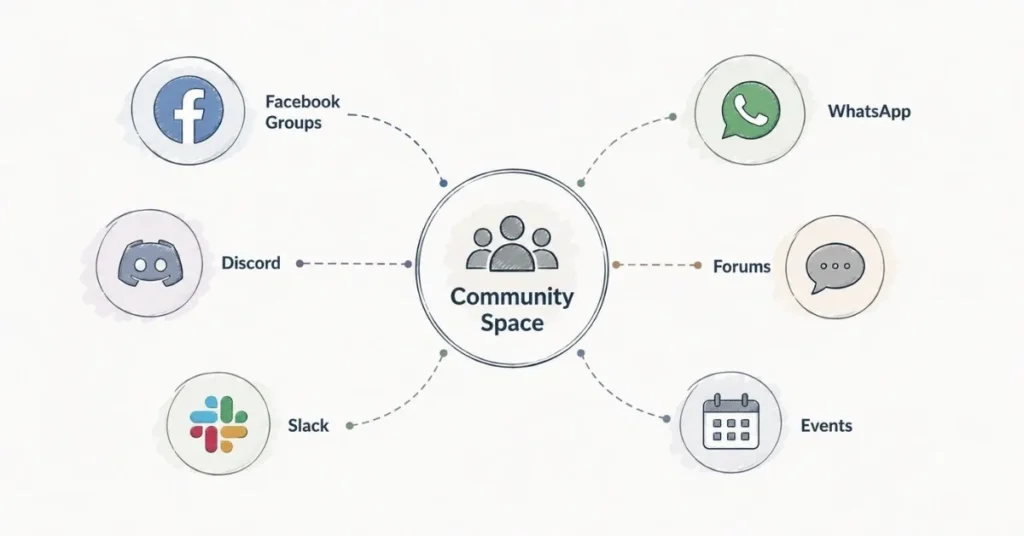
Community management happens across various platforms and formats. Brand communities on platforms like Facebook Groups, Discord servers, or dedicated community platforms (Circle, Mighty Networks, Tribe) where members interact with each other, not just the brand. Support forums and knowledge bases where customers help each other solve problems. Social media engagement focused on conversations rather than broadcasts the comments section, direct messages, Twitter replies. In-person and virtual events including meetups, webinars, AMAs (Ask Me Anything sessions), and conferences. Loyalty and ambassador programs cultivating your most engaged customers into active brand promoters.
Many brands now invest in building proprietary communities spaces they own and control rather than relying solely on social media platforms where algorithm changes can suddenly limit reach.
Types of Communities:
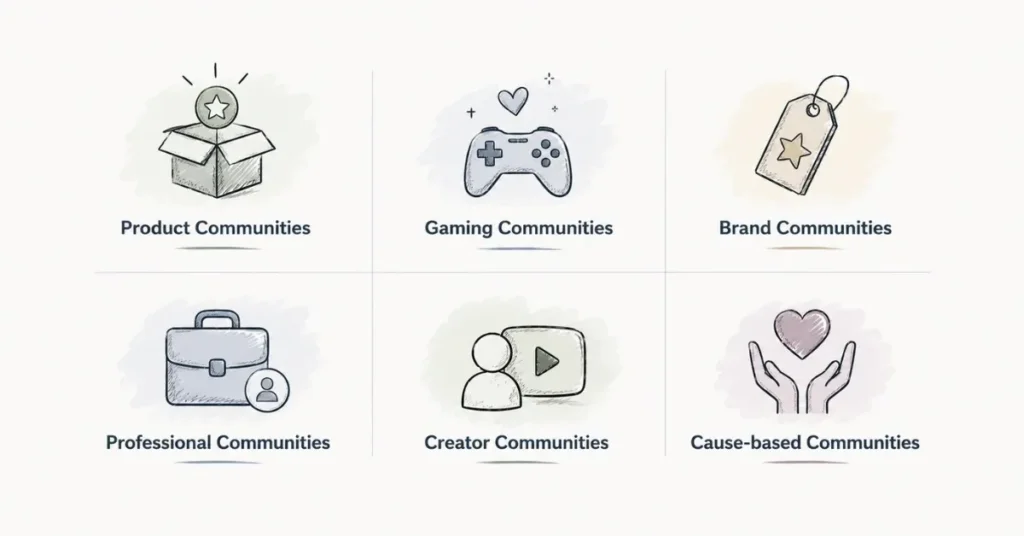
Understanding different community types helps you identify where your interests and skills fit best. Product communities form around specific software, apps, or services where users share tips, report bugs, and request features. Gaming communities connect players of specific games or gaming in general, often highly engaged and passionate. Brand lifestyle communities unite people around shared values or lifestyles that align with brand identity (fitness brands, sustainable fashion, entrepreneurship). Professional communities bring together people in specific industries or professions for networking, knowledge sharing, and career development. Creator and fan communities organize around influencers, YouTubers, or content creators. Cause-based communities rally around social causes, nonprofits, or movements.
Each community type requires slightly different approaches, but core community management principles apply across all.
Core Responsibilities of Community Managers
While specific duties vary by company and community type, professional community managers typically handle these key responsibilities:
Engagement and Conversation Facilitation:
The heart of community management is fostering meaningful interactions. This involves responding thoughtfully to member posts, questions, and comments (not just “Thanks for sharing!” but substantive responses that advance conversations), asking questions that spark discussions and encourage member participation, highlighting valuable member contributions to increase their visibility and recognize contributions, connecting members with similar interests or complementary skills, moderating discussions to keep them constructive and on-topic, and creating regular engagement opportunities like weekly discussion threads, challenges, or AMAs.
Effective community managers don’t dominate conversations they facilitate them, making members feel heard and valued while encouraging peer-to-peer interactions.
Member Support and Success:
Community managers ensure members get maximum value from the community and the brand. This includes welcoming new members and helping them navigate the community space, answering questions or connecting members with resources that solve their problems, gathering feedback about member needs, challenges, and experiences, identifying opportunities to help members achieve their goals using your product or service, creating educational content like tutorials, guides, or best practice articles, and celebrating member milestones and achievements publicly.
In many organizations, community managers work closely with customer success and support teams, often serving as the first point of contact for customer issues.
Community Strategy and Growth:
Beyond day-to-day engagement, community managers develop strategic plans for building and scaling communities. This involves defining community purpose, values, and guidelines that attract the right members, developing content calendars for community-specific content, planning events, webinars, or activations that bring members together, implementing systems and processes for community onboarding, moderation, and management, identifying and nurturing community champions and advocates, analyzing engagement patterns and member feedback to inform strategy adjustments, and developing programs that incentivize participation and retention.
Strategic thinking separates community managers who build thriving, self-sustaining communities from those who constantly struggle to maintain engagement.
Advocacy and Voice of Customer:
Community managers occupy a unique position they’re brand representatives within communities but also community advocates within companies. This dual role includes gathering product feedback, feature requests, and pain points directly from engaged users, advocating for community needs in internal discussions about product development and business decisions, identifying potential brand advocates and supporting their efforts, managing ambassador or loyalty programs that reward active community members, surfacing insights and trends from community conversations to inform marketing, product, and support strategies, and measuring and reporting on community health metrics and business impact.
The best community managers become invaluable because they deeply understand customers in ways that survey data and analytics cannot capture.
Moderation and Community Health:
Maintaining healthy community culture requires active moderation and conflict resolution. This involves enforcing community guidelines consistently and fairly, addressing conflicts between members diplomatically, identifying and removing spam, harmful content, or bad actors, recognizing when community dynamics are shifting and proactively addressing issues, balancing enforcement with empathy (understanding why guidelines violations occur), and evolving guidelines as community grows and needs change.
Effective moderation feels invisible to most community members they simply experience a positive, safe environment where constructive conversations happen naturally.
Cross-Functional Collaboration:
Community managers work with teams across the organization. You’ll collaborate with product teams sharing feature requests and user feedback, marketing teams aligning community initiatives with broader campaigns, customer support teams coordinating responses and escalations, content teams creating resources that serve community needs, and sales teams identifying community members who might be good customers or case study subjects.
Your ability to translate community insights into language and recommendations relevant to each department amplifies your impact.
Essential Skills for Community Managers
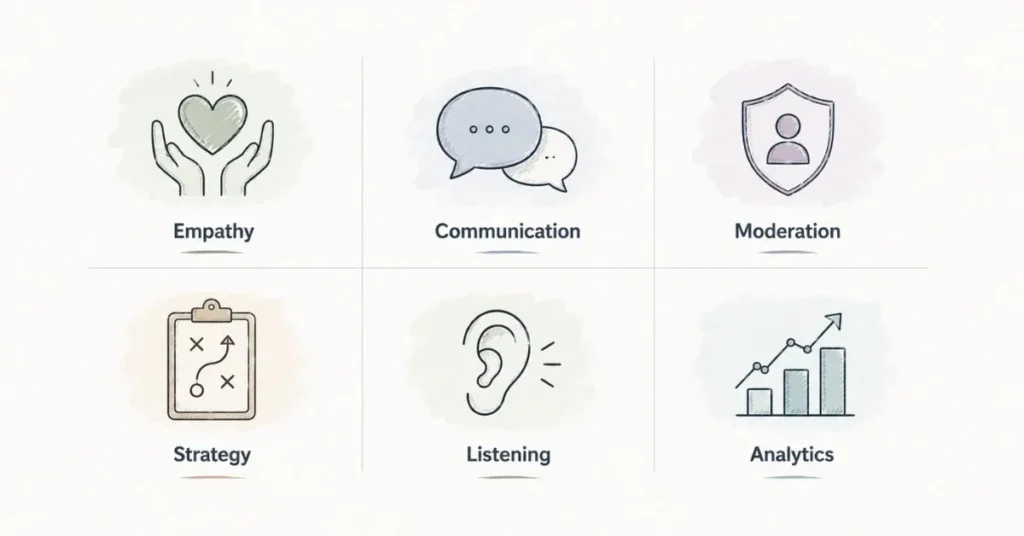
Success as a community manager requires a distinct skill set that overlaps with but differs from social media management:
Empathy and Emotional Intelligence:
More than any technical skill, empathy defines exceptional community managers. You must genuinely care about community members’ experiences, perspectives, and challenges. This means reading between the lines to understand unstated concerns or needs, recognizing when someone needs extra support or encouragement, responding with authentic humanity rather than corporate scripts, managing your own emotional responses when dealing with difficult situations, and creating environments where diverse perspectives feel welcome.
If you don’t genuinely enjoy helping people and facilitating connections, community management will feel exhausting rather than energizing.
Communication and Active Listening:
Community managers are professional communicators who must write clearly, warmly, and authentically in a way that feels personal rather than corporate. You’ll adapt your communication style for different members and situations. You’ll listen more than you speak, processing what members are really saying beneath surface-level comments. You’ll ask thoughtful questions that deepen understanding and encourage reflection. And you’ll summarize and synthesize community discussions into actionable insights.
Your communication sets the tone for the entire community if you’re warm and inclusive, members will be too.
Conflict Resolution and Diplomacy:
Where humans gather, conflicts emerge. Skilled community managers navigate disagreements while preserving relationships. This requires staying neutral and fair, avoiding favoritism toward specific members, addressing issues promptly before they escalate, finding common ground between opposing viewpoints, knowing when to intervene publicly versus privately, and making difficult decisions (like removing members) when necessary for community health.
The goal isn’t eliminating all conflict healthy communities have productive disagreements but ensuring conflicts remain constructive rather than destructive.
Strategic Thinking:
Beyond executing tactics, professional community managers think strategically about community purpose, growth, and impact. You must understand how community contributes to broader business objectives, identify opportunities to create value for both members and the company, make data-informed decisions while balancing qualitative insights, prioritize initiatives based on potential impact and resource requirements, and design systems and programs that scale beyond your individual capacity.
Tactical execution matters, but strategic thinking determines whether your community merely exists or truly thrives.
Platform and Tool Proficiency:
Community managers work across various platforms and tools. Familiarity with community platforms like Facebook Groups, Discord, Slack communities, Reddit, and dedicated community software (Circle, Mighty Networks, Group) is valuable. You’ll use moderation tools and bots that automate routine tasks and flag policy violations. Analytics tools help track engagement metrics and community health indicators. CRM and customer success platforms connect community data with broader customer information.
While you don’t need to master every tool, comfort learning new platforms quickly is essential as community spaces evolve.
Content Creation:
Community managers often create content specifically for community spaces educational resources, discussion prompts, event announcements, and member spotlights. Basic skills in copywriting, simple graphic design (Canva), and potentially video creation enhance your effectiveness.
Data Analysis:
Understanding metrics helps demonstrate community value and optimize strategies. Important metrics include active member percentage (what portion of total members regularly engage), engagement rate (interactions per member or per post), member retention and churn rates, response time to member questions or issues, sentiment trends (are conversations becoming more positive or negative), and member-generated content volume.
Tracking these metrics over time reveals whether your community is healthy and growing or requires intervention.
Community Manager vs. Social Media Manager
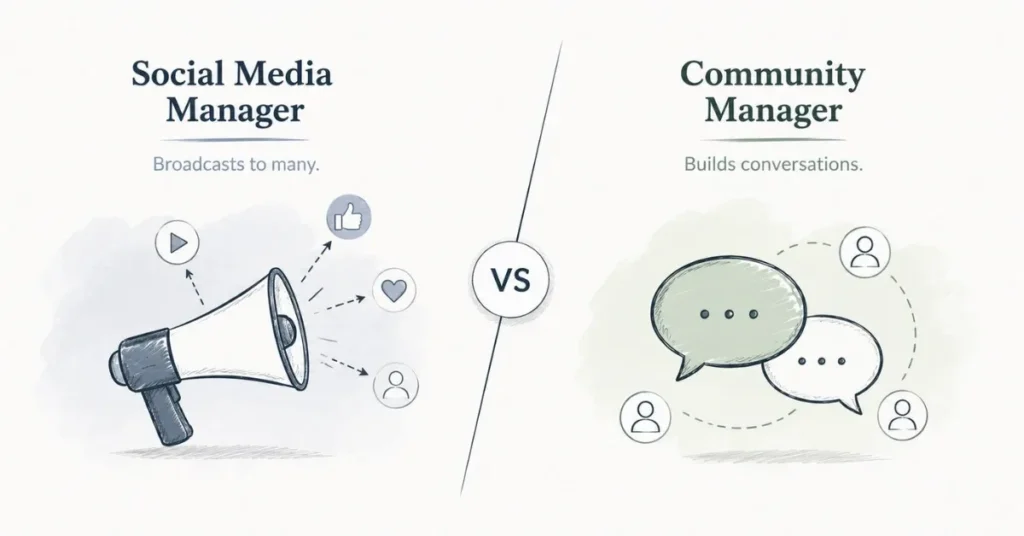
These roles often get conflated, but they have distinct focuses and skill requirements:
Primary Focus:
Social media managers focus on content creation, distribution, and brand messaging to large audiences. Community managers focus on conversation facilitation, relationship building, and member success within defined communities.
Metrics That Matter:
Social media managers track reach, impressions, follower growth, and engagement rates across broad audiences. Community managers measure active participation rates, member retention, sentiment, and depth of relationships within smaller groups.
Communication Style:
Social media managers broadcast messages to many, often maintaining professional brand voice. Community managers engage in two-way conversations, often with more personal, authentic tone.
Success Indicators:
For social media managers, success looks like viral content, campaign ROI, and audience growth. For community managers, success is members helping each other, loyal advocates promoting your brand, and valuable insights flowing from community to company.
Typical Day:
Social media managers spend time creating and scheduling content, monitoring multiple platforms, and analyzing campaign performance. Community managers spend time facilitating discussions, welcoming new members, resolving conflicts, and deepening relationships with active participants.
Many professionals combine both roles, especially in smaller companies. However, as organizations mature, they increasingly separate these functions, recognizing they require different skills and mindsets.
Breaking Into Community Management
If you’re interested in pursuing community management, here’s a practical pathway:
Step 1: Join and Study Thriving Communities (Month 1-2):
Before managing communities, understand what makes them work. Join 3-5 communities in areas you’re interested in Facebook Groups, Discord servers, Reddit communities, or brand communities. Observe actively for several weeks. What makes certain communities engaging while others feel dead? How do successful community managers facilitate conversations? What types of content and prompts generate the most valuable discussions? How are conflicts handled? Take notes on effective strategies you can adapt.
Step 2: Build Your Own Micro-Community (Month 2-4):
Start a small community around a topic you’re passionate about a Facebook Group, WhatsApp community, or Discord server. It doesn’t need hundreds of members; even 20-30 engaged people provide valuable experience. Practice welcoming members, facilitating discussions, creating valuable content, enforcing guidelines fairly, and tracking what’s working and what isn’t. This hands-on experience is more valuable than any course and provides concrete examples for your portfolio.
Step 3: Volunteer to Moderate Existing Communities (Month 3-6):
Reach out to moderators of communities you’re active in and offer to help. Many community managers appreciate volunteer moderators who can help with onboarding, answering questions, or moderating discussions. This provides practical experience, expands your network, and often leads to recommendations or job opportunities. Discord communities, Reddit subreddits, and Facebook Groups frequently need moderator support.
Step 4: Develop Supporting Skills (Ongoing):
Take courses in customer success, communication, or community building. Coursera offers relevant courses in community management and engagement. Practice your writing skills by starting a blog or LinkedIn newsletter about community building. Learn basic analytics to track and report on community metrics. Develop empathy and active listening through conscious practice in your daily interactions.
Step 5: Create Your Community Management Portfolio (Month 6):
Document your community building experience in a simple portfolio website or Notion page. Include before/after metrics from communities you’ve grown, testimonials from community members, case studies explaining challenges you’ve solved, examples of valuable discussions you’ve facilitated, and your philosophy on community building. This portfolio becomes your primary credential when applying for community manager roles.
Step 6: Apply Strategically (Month 6-9):
Look for community manager roles at SaaS companies with engaged user bases, gaming companies building player communities, creator economy platforms, education technology companies, or brands with strong lifestyle components. Tailor applications showing knowledge of the company’s existing community and specific ideas for improvement. Consider starting in customer success or social media roles with community components, then transitioning fully into community management. Network with other community professionals through LinkedIn, Twitter, or community management communities (yes, those exist!).
Salary Expectations in India
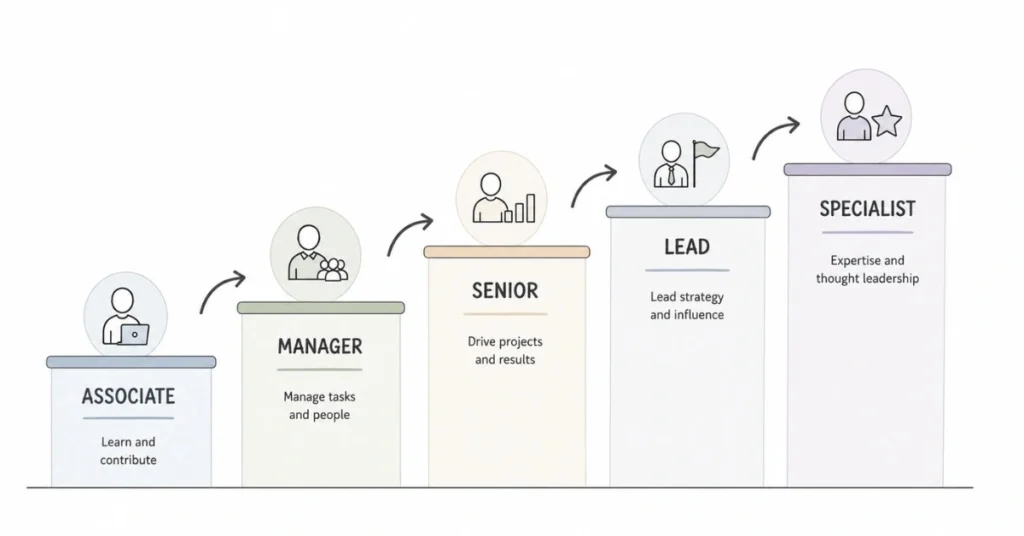
Community management is a relatively newer specialization, so salary ranges are still establishing but generally competitive with social media management roles:
Entry Level (0-2 years): Community Coordinator/Associate:
Supporting senior community managers with day-to-day engagement, member support, and content creation. Typical salaries range from ₹2.5-4 lakh annually (approximately ₹20,000-35,000 monthly). These roles are excellent for gaining foundational experience while building your understanding of community dynamics.
Mid Level (2-5 years): Community Manager:
Managing community strategy, engagement, and growth with increasing autonomy. Mid-level community managers in India earn ₹4-8 lakh annually (approximately ₹35,000-70,000 monthly) depending on company size, industry, and location. Tech companies and gaming firms typically pay at the higher end of this range.
Senior Level (5+ years): Senior Community Manager/Lead:
Leading community teams, developing overarching community strategies, and demonstrating clear business impact. Senior roles command ₹8-12 lakh annually with some positions at premier companies reaching ₹15 lakh or more. At this level, you’re likely managing multiple communities or community managers and contributing to product and business strategy.
Specialized Roles:
Some community managers specialize in specific areas commanding premium compensation. Developer community managers at tech companies (₹10-18 lakh annually) build communities for developers using their platforms or APIs. Gaming community managers (₹6-12 lakh annually) work with highly engaged gaming audiences. Creator community managers (₹5-10 lakh annually) support influencers, YouTubers, and content creators.
Freelance community managers can also build sustainable businesses, typically charging ₹30,000-80,000 monthly per community depending on size and engagement requirements.
Essential Tools for Community Managers
Professional community managers leverage these platforms and tools:
Community Platforms:
Facebook Groups remain the most accessible platform for building communities in India, with broad user familiarity and no additional cost. Discord has become standard for gaming communities and increasingly popular for professional communities due to robust features and customization. Slack works well for professional and B2B communities. WhatsApp groups and communities serve Indian audiences particularly well due to platform dominance. Dedicated platforms like Circle, Mighty Networks, or Group offer more control and customization but require investment.
Moderation Tools:
Community managers use bots and automation tools to handle routine tasks. Discord bots like MEE6, Dyno, or Carl-bot automate moderation, welcome messages, and role assignment. Facebook Group moderation features filter content and manage member requests. Reddit’s AutoModerator handles routine moderation tasks based on custom rules.
Analytics and Measurement:
Community platforms provide native analytics tracking member activity, engagement trends, and growth. Orbit or Common Room are specialized community analytics platforms tracking member engagement across multiple channels. Google Sheets or Airtable organize community data, track initiatives, and create custom dashboards.
Communication Tools:
Loom creates quick video messages for member support or community updates. Calendly schedules one-on-one calls with community members. Zoom or Google Meet facilitate community events, webinars, or member gatherings.
Building a Thriving Community: Core Principles
Regardless of platform or community type, these principles separate thriving communities from struggling ones:
Engagement Metrics:
Active member percentage (what portion of total members engaged in the past week/month), average posts/comments per active member, response time to member questions, and discussion thread longevity (how long conversations remain active) all indicate community health.
Growth and Retention Metrics:
New member acquisition rate, member retention (percentage of members who remain active after 30/60/90 days), and churn rate (members who leave or become inactive) reveal whether your community is sustainable.
Business Impact Metrics:
The ultimate question is how community contributes to business objectives. Track customer retention rates (do community members churn less than non-members?), customer lifetime value (do engaged community members spend more over time?), support deflection (how many questions are answered by community members versus support staff?), product feedback and feature requests surfaced through community, and advocacy (community members who provide testimonials, referrals, or case studies).
Demonstrating clear business impact transforms community management from “nice to have” to strategic priority.
Common Challenges in Community Management
Every community manager faces these challenges. Here’s how professionals navigate them:
Low Engagement:
Many communities struggle with participation members join but don’t engage. Combat this by personalizing outreach to new members, making participation easy with low-barrier activities (polls, simple questions), recognizing and rewarding early participants, creating recurring events that build habits, and accepting that not all members will be active (the 90-9-1 rule suggests 90% lurk, 9% contribute occasionally, 1% create most content).
Scaling Personal Touch:
As communities grow, maintaining the personal connection that made them special becomes challenging. Scale through training and empowering community ambassadors who can help with onboarding and support, creating systems and documentation that maintain consistency, leveraging automation for routine tasks while preserving human touch for meaningful interactions, and segmenting large communities into smaller subgroups organized by interests or experience levels.
Toxicity and Conflict:
Negative behavior can quickly poison community culture. Address this by establishing clear guidelines early and enforcing consistently, moderating proactively rather than reactively, addressing issues quickly before they escalate, being willing to remove members who repeatedly violate guidelines despite warnings, and modeling the behavior you want to see empathy, respect, constructive disagreement.
Demonstrating ROI:
Community impact can be difficult to quantify, especially early on. Build your case by tracking metrics from day one, even if imperfect, connecting community initiatives to specific business outcomes when possible, gathering qualitative testimonials and stories showing community value, benchmarking against industry standards for community metrics, and educating stakeholders on long-term community value versus short-term campaign ROI.
Burnout:
Community management can be emotionally draining you’re constantly supporting others, navigating conflicts, and maintaining positivity. Protect yourself by setting clear boundaries around availability, building systems that reduce dependence on you personally, taking regular breaks from community spaces, connecting with other community professionals for support and perspective, and celebrating small wins to maintain motivation.
Conclusion: Building Your Community Management Career
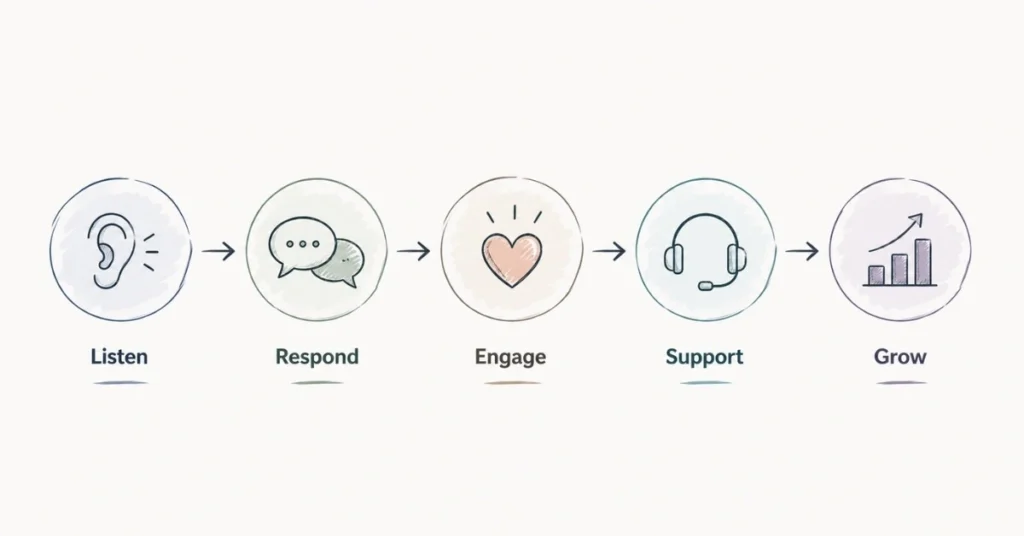
Community management offers a rewarding career path for people who genuinely enjoy connecting with others, facilitating meaningful conversations, and building spaces where people feel they belong. While it requires different skills than traditional marketing roles more empathy and less analytics, more listening and less broadcasting it’s increasingly recognized as critical to customer retention, product development, and sustainable business growth.
The field is still relatively new, which means opportunities to shape best practices and establish yourself as an expert. Whether you join an established company with existing communities or help a startup build their community from scratch, the fundamental work remains the same creating environments where people feel valued, connected, and eager to participate.
Start by joining and studying thriving communities, build your own small community for hands-on experience, develop your portfolio showcasing your community building approach and results, and network with other community professionals who can provide guidance and opportunities. Your community management career can begin today and India’s digital brands need skilled community builders more than ever.