
How to Become a Professional Content Creator: Skills, Tools & Income Streams
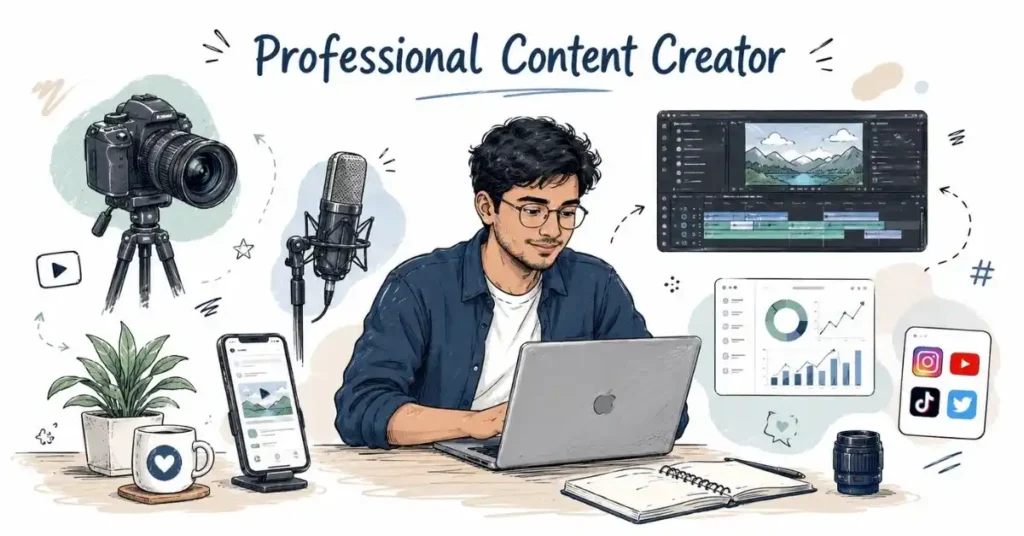
Table of Contents
Introduction: The Reality of Content Creation as a Career
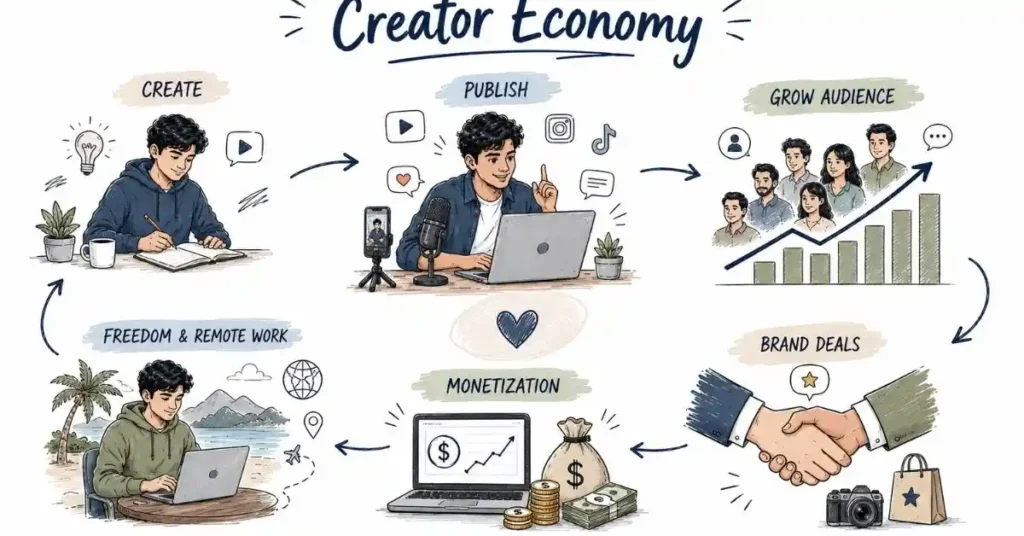
“I want to be a YouTuber” or “I want to become an Instagram influencer” are statements that still make many Indian parents nervous. But here’s what’s changed content creation is no longer just a hobby or a lucky break for a few viral sensations. It’s evolved into a legitimate profession with multiple income streams, professional development paths, and the potential to earn significantly more than traditional careers.
However, becoming a professional content creator is very different from casually posting on social media. It requires specific skills, strategic planning, consistent effort, and business acumen. The difference between hobbyists who post occasionally and professional creators who earn sustainable incomes lies not in luck or expensive equipment, but in treating content creation as a serious business.
This comprehensive guide walks you through exactly what it takes to become a professional content creator in India in 2026 the skills you need, tools you’ll use, platforms worth focusing on, monetization strategies available, and realistic timelines for building a sustainable creator business.
Understanding Professional Content Creation
Let’s first clarify what we mean by “professional content creator.” A professional creator is someone who consistently produces original content, has built an engaged audience, generates meaningful income from their content (whether full-time or substantial side income), treats content creation as a business with strategy and systems, and continuously improves their craft and business skills.
Professional content creators in India are working across multiple platforms and niches. YouTube remains the most lucrative platform for long-form content creators, with Indian YouTubers earning ₹80-200 per 1,000 views through AdSense alone. Instagram dominates in fashion, lifestyle, and visual content, with even micro-influencers (10,000-50,000 followers) earning ₹5,000-25,000 per sponsored post. LinkedIn has emerged as a powerful platform for professional and business content creators building authority in their fields.
The creator economy in India is booming. Job postings related to content creators and influencers surged by 117%, with the highest demand in Bengaluru (16%), Delhi-NCR (9%), and Mumbai (7.5%). But beyond employment opportunities, independent creators are building six-figure monthly incomes through diversified revenue streams combining ad revenue, sponsorships, affiliate marketing, and digital products.
Phase 1: Laying Your Foundation (Months 1-3)
Before creating a single piece of content, professional creators invest time in strategic planning. This foundation determines your success far more than camera quality or editing skills.
Finding Your Niche:
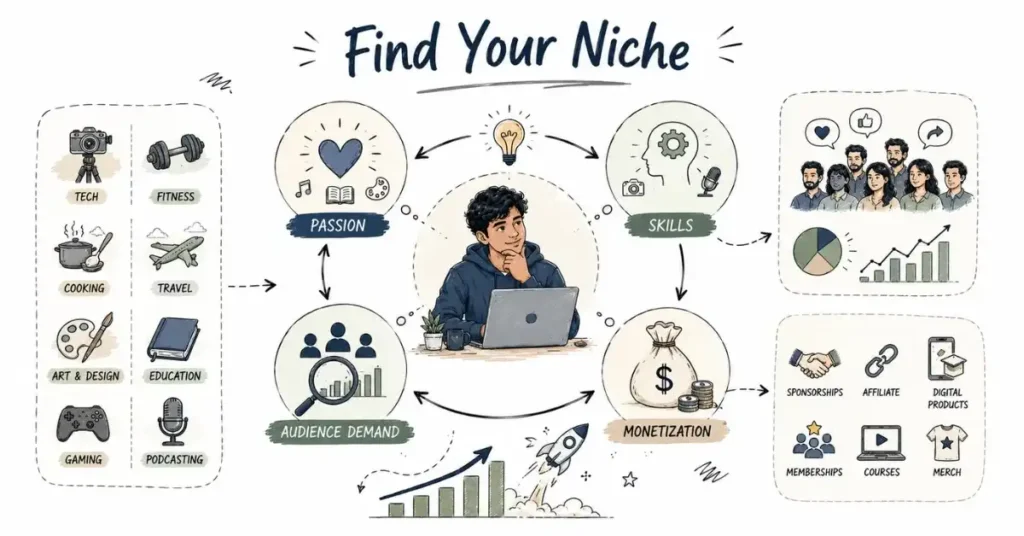
The biggest mistake new creators make is trying to appeal to everyone. Professional creators identify a specific niche a focused topic, audience, or perspective that makes them unique. Your niche should sit at the intersection of three factors: what you’re knowledgeable or skilled in, what you genuinely enjoy talking about (you’ll need to create hundreds of pieces of content on this topic), and what has audience demand and monetization potential.
Popular profitable niches for Indian creators in 2026 include personal finance and investing (high monetization potential through affiliate marketing), tech reviews and tutorials (strong advertiser demand), fitness and nutrition (evergreen content with product promotion opportunities), career guidance and skill development (increasingly valuable as more Indians seek alternative career paths), cooking and regional cuisine (massive audience, especially in regional languages), fashion and beauty (high brand sponsorship opportunities), and business and entrepreneurship (attracts premium audiences and sponsors).
Avoid overly saturated niches unless you have a truly unique angle. Instead of “fitness,” consider “fitness for working professionals with only 30 minutes daily” or “traditional Indian diet for muscle building.” Specificity helps you stand out and build a loyal audience faster.
Choosing Your Platform:
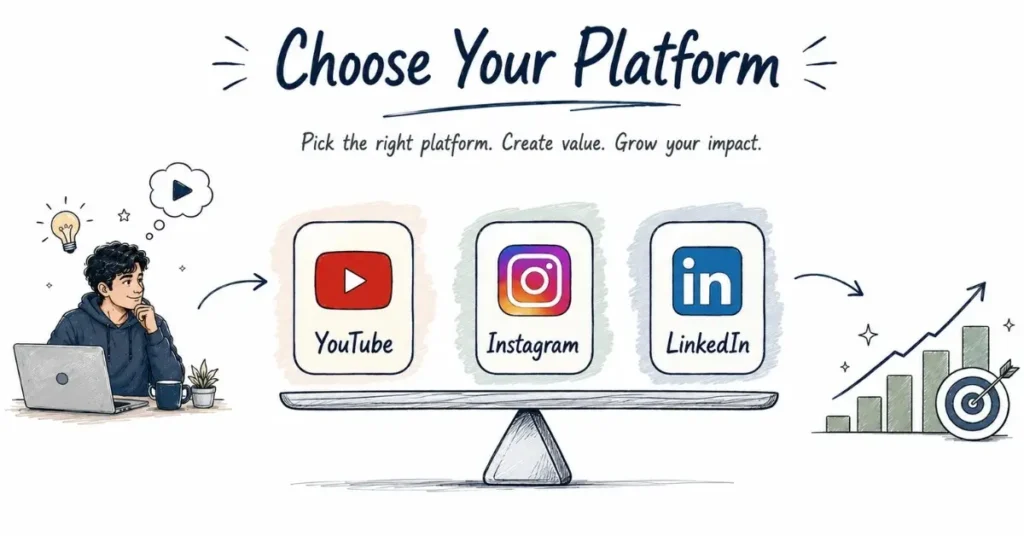
Rather than spreading yourself thin across every platform, professional creators master 1-2 platforms initially. Your platform choice should align with your content format preferences and where your target audience spends time.
YouTube is ideal if you enjoy video content, in-depth tutorials, or storytelling. Videos ranging from 8-15 minutes perform well, though YouTube Shorts (under 60 seconds) are gaining traction. The platform offers the best monetization through AdSense once you reach 1,000 subscribers and 4,000 watch hours. Indian creators appreciate YouTube’s strong monetization even with smaller audiences.
Instagram works best for visual content, lifestyle, fashion, food, and short motivational or educational content. Instagram Reels (15-90 second videos) receive maximum algorithmic push. The platform excels for brand partnerships and sponsored content, though direct platform monetization is still developing in India.
LinkedIn is perfect for professional content career advice, industry insights, business tips, and thought leadership. Text posts with images perform exceptionally well. While direct monetization is limited, LinkedIn creators build authority leading to consulting opportunities, speaking engagements, and high-value client acquisition.
Setting Up Your Foundation:
Once you’ve identified your niche and platform, create professional profiles. Use high-quality profile pictures and banners (you can create these free on Canva). Write clear, benefit-focused bios that immediately communicate what value you provide. Include relevant keywords for discoverability. Study top creators in your niche analyze their profile setup, content structure, and engagement tactics. Create a simple content calendar for your first month outlining topics you’ll cover.
Phase 2: Developing Core Content Creation Skills (Months 3-6)
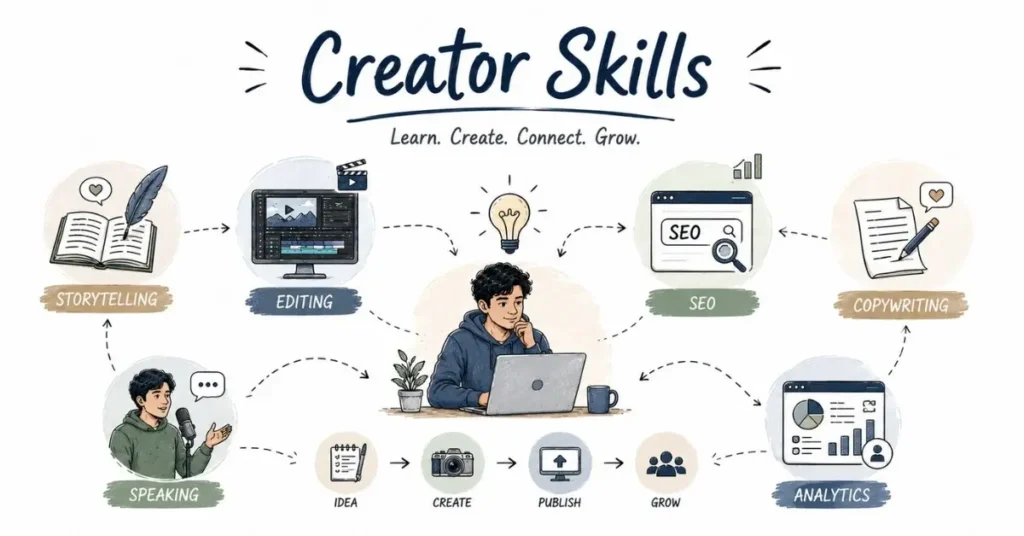
Professional content creation requires a diverse skill set. You don’t need to master everything immediately, but continuous improvement in these areas separates professionals from hobbyists.
Content Creation Fundamentals:
Start with what you have your smartphone is more than capable of producing professional-quality content. Modern smartphones shoot in 4K resolution and have excellent built-in microphones for well-lit, quiet environments. Focus on lighting first natural light from windows creates flattering illumination for photos and videos. Audio quality is crucial for video content viewers will tolerate average video quality but not poor audio. Consider investing in a basic lapel microphone (₹500-2,000) that dramatically improves sound quality.
Learn basic composition principles the rule of thirds, leading lines, and proper framing make content visually appealing. For video creators, practice speaking naturally to the camera this feels awkward initially but improves rapidly with repetition. Record yourself and watch the footage to identify filler words, awkward pauses, or distracting mannerisms you can eliminate.
Editing Skills:
Raw footage rarely captivates audiences editing transforms it into engaging content. For mobile editing, apps like InShot, CapCut, and Adobe Premiere Rush offer professional features with user-friendly interfaces. Learn basic cuts and transitions, color correction and grading (making your content visually consistent), audio balancing and background music selection, text overlays and graphics for emphasis, and pacing adjustments to maintain viewer attention.
You don’t need complex editing initially even simply cutting out pauses and mistakes improves content quality significantly. As you grow, you might invest in desktop software like Adobe Premiere Pro or Final Cut Pro, though many successful creators continue using mobile apps exclusively.
Copywriting and Storytelling:
The best content combines visual appeal with compelling storytelling. Learn to hook viewers in the first 3 seconds state a problem, ask an intriguing question, or make a bold statement that makes people want to continue watching. Structure content with clear beginnings, middles, and ends. Use specific examples and stories rather than abstract concepts. Write captions and titles that are benefit-focused (“Learn how to…” rather than “I tried…”) and create curiosity without being clickbait.
SEO and Discoverability:
Understanding how your platform’s search and recommendation algorithms work dramatically increases your content’s reach. On YouTube, optimize video titles with relevant keywords, write detailed descriptions including keywords naturally, use tags strategically (both broad and specific), and create custom thumbnails that stand out and communicate your video’s value. On Instagram, research hashtags in your niche using a mix of popular (100K-500K posts), medium (10K-100K posts), and niche-specific (under 10K posts) hashtags. The Instagram algorithm prioritizes content that generates quick engagement, so post when your audience is most active.
Phase 3: Building Your Audience (Months 6-12)
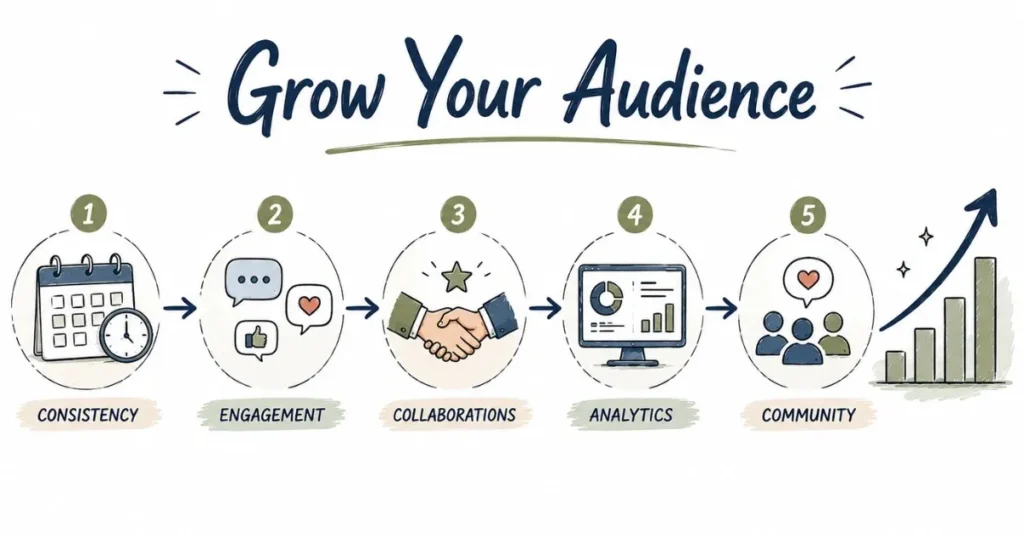
With skills developing and consistent content creation, focus shifts to systematic audience growth. Professional creators understand that growth is a result of strategy, not luck.
Consistency Above All: The single most important factor in audience growth is consistency. Your audience needs to know when to expect content from you. Whether that’s daily, three times weekly, or every Saturday, maintain that schedule religiously. Consistency builds habit among viewers, signals quality to platform algorithms (which reward consistent creators), establishes you as serious rather than sporadic, and creates compound growth as each piece of content brings new viewers who then watch your previous work.
Start with a manageable frequency you can sustain long-term. It’s better to commit to one high-quality video weekly that you consistently deliver than promise daily content and burn out within weeks.
Engagement and Community Building: Professional creators understand their audience isn’t just numbers they’re real people seeking connection. Respond to every comment in your first 100 videos or posts. Ask questions in your content encouraging audience responses. Create content based on audience questions and feedback. Use Instagram Stories, YouTube Community posts, or LinkedIn posts to share behind-the-scenes content and maintain connection between main posts. Consider creating a WhatsApp community or Telegram group for your most engaged followers.
The more invested your audience feels in your journey, the more they’ll support your growth through shares, recommendations, and eventually purchasing your products or services.
Collaboration and Cross-Promotion: One of the fastest growth strategies is collaborating with creators slightly ahead of you in subscriber count (who have audiences that would appreciate your content too). Reach out proposing genuine collaboration ideas that provide value to both audiences. Guest appearances on each other’s channels or Instagram takeovers work well. Create round-up content featuring multiple creators and tag them all. Participate actively in creator communities Facebook groups, Discord servers, or local creator meetups in your city.
Analytics and Iteration: Professional creators are data-informed. Regularly review your analytics to understand what’s working. Which content pieces performed best in terms of views, engagement, and audience retention? What topics resonate most? When is your audience most active? What traffic sources bring viewers (search, suggested videos, external sources)? Use these insights to refine your content strategy, double down on what works, and phase out what doesn’t.
Phase 4: Monetization Strategies (Months 12+)
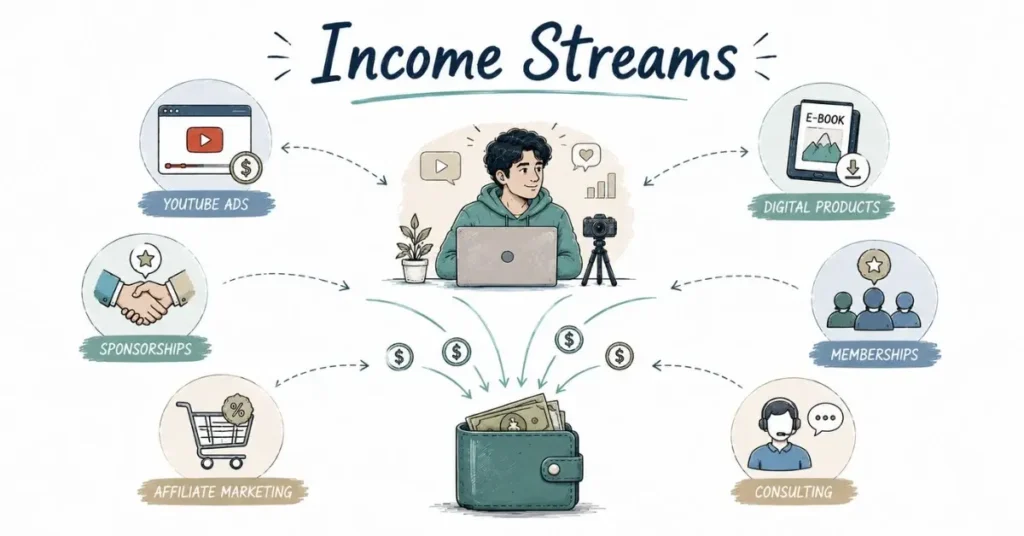
Once you’ve built an engaged audience, multiple monetization options become available. Professional creators diversify income streams rather than relying on a single source.
Platform Monetization: YouTube Partner Program allows creators to earn from ads once they reach 1,000 subscribers and 4,000 watch hours in the past 12 months. Indian creators typically earn ₹80-200 per 1,000 views depending on their niche finance, tech, and business content typically earns more than entertainment or vlog content due to higher advertiser demand. A channel generating 100,000 monthly views can earn ₹8,000-20,000 from AdSense alone.
Instagram is developing monetization features including Reels Play Bonus (payments for viral Reels), badges in Live videos (viewers can purchase badges to support creators), and subscriptions (exclusive content for paying subscribers). These features are gradually rolling out in India, though earnings are currently lower than YouTube.
Sponsored Content and Brand Partnerships: Brand collaborations remain the most lucrative monetization method for Indian creators. As your audience grows, brands will approach you, or you can proactively pitch collaborations. Nano-influencers (1,000-10,000 followers) can earn ₹1,000-5,000 per post from small local brands. Micro-influencers (10,000-50,000 followers) charge ₹5,000-25,000 per sponsored post. Mid-tier creators (50,000-100,000 followers) earn ₹25,000-75,000 per collaboration. Macro-influencers (100,000+ followers) command ₹50,000-2 lakh or more depending on engagement and niche.
Always disclose sponsored content clearly using #ad or #sponsored to maintain transparency and comply with advertising regulations. Maintain editorial integrity by only promoting products you genuinely believe add value to your audience losing trust destroys your creator business.
Affiliate Marketing: Affiliate marketing lets you earn commissions by promoting products through unique tracking links. When your audience purchases using your link, you receive a percentage (typically 5-20%). Popular affiliate programs for Indian creators include Amazon Associates (extensive product range but lower commissions of 1-10%), Flipkart Affiliate (similar to Amazon), Myntra (fashion and lifestyle products with 5-15% commissions), and niche-specific programs related to your content (software, courses, services).
Successful affiliate marketing requires genuine product recommendations, clear disclosure of affiliate relationships, strategic placement of links (video descriptions, Instagram bio, blog posts), and tracking which products your audience actually purchases to refine recommendations.
Digital Products and Services: Creating your own products offers the highest profit margins. Consider online courses or workshops teaching skills related to your niche (₹500-10,000 per student), eBooks or digital guides (₹200-2,000), templates or resources (₹100-500), one-on-one consulting or coaching (₹1,000-10,000 per session), or membership communities with exclusive content (₹200-1,000 monthly).
Start simple an eBook or template requires less effort than a full course. As you validate demand, invest time in more comprehensive products.
Essential Tools for Professional Content Creators
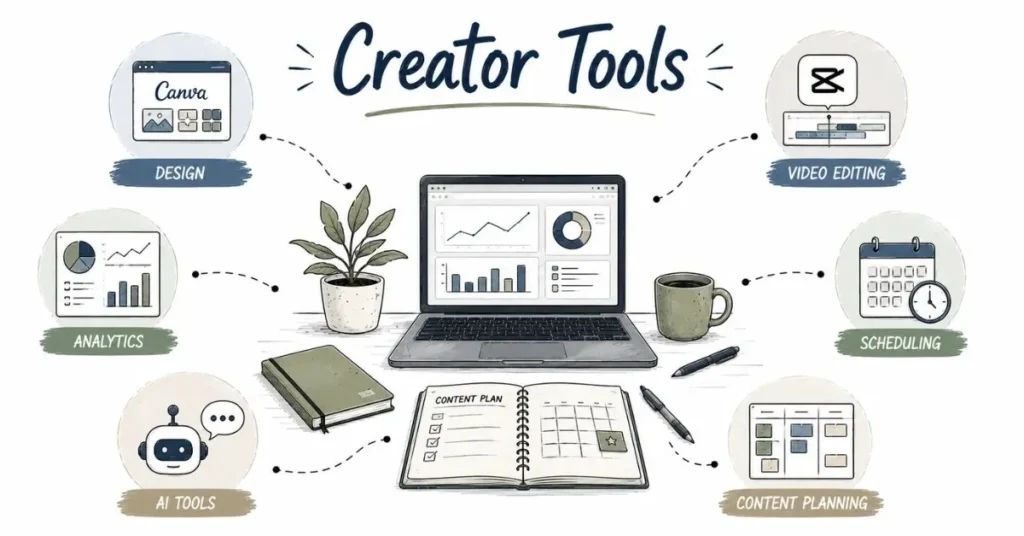
Professional creators leverage tools to improve quality and efficiency. Here are essential tools across different functions:
Content Creation Tools: Canva (free plan available) for thumbnails, social graphics, and simple video editing. Adobe Creative Suite (₹1,600/month) for professional photo editing (Photoshop) and video editing (Premiere Pro). Mobile apps like InShot or CapCut for quick video editing on smartphones. DaVinci Resolve (free) as a professional desktop video editor without subscription costs.
Recording Equipment: Start with your smartphone and upgrade gradually. First upgrade: external microphone (₹500-2,000 for basic lapel mic). Second upgrade: ring light or softbox lighting (₹1,000-5,000). Third upgrade: dedicated camera only if your smartphone truly limits you (₹30,000-1 lakh).
Scheduling and Management: Buffer (free for 3 social accounts, 10 scheduled posts per channel) for scheduling content across platforms. Hootsuite offers more features but no free tier. Notion or Trello (both free) for content planning and project management.
Analytics Tools: Native platform analytics (YouTube Analytics, Instagram Insights) provide extensive free data. Google Analytics (free) tracks website traffic if you have a blog. VidIQ or TubeBuddy (free plans available) help with YouTube SEO and competitor research.
Creating a Sustainable Creator Business
Professional creators think long-term, building sustainable businesses rather than chasing quick success.
Batching and Systems: Create systems to maintain consistency efficiently. Batch your content creation shoot multiple videos in one session, write several posts at once, design a month’s graphics in one sitting. This approach maintains quality while reducing daily pressure and decision fatigue. Maintain a content bank with ideas, hooks, and outlines for future content. Use scheduling tools to publish consistently even when you’re unavailable.
Managing Finances: Treat your creator business as a real business. Maintain separate accounts for creator income and expenses. Track all earnings and expenses using simple spreadsheets or apps like Money Manager. Set aside 30% of income for taxes (professional creators must file income tax returns and might need to register for GST if earning over ₹20 lakh annually). Build an emergency fund covering 3-6 months of expenses before considering full-time content creation.
Continuous Learning: The digital landscape evolves constantly. Dedicate time weekly to learning watching tutorials, taking courses, studying successful creators, and experimenting with new formats. Free resources like YouTube Creator Academy, Meta Blueprint certifications, and Google Digital Garage offer excellent training. Consider paid courses from platforms like Coursera or Udemy for specialized skills.
Common Challenges and How to Overcome Them
Every professional creator faces obstacles. Here’s how to navigate the most common ones:
Slow Initial Growth: Most creators see minimal growth in their first 3-6 months. This is normal you’re finding your voice, learning platform algorithms, and building momentum. Overcome this by committing to consistency for at least 100 pieces of content before evaluating whether to continue. Focus on improvement rather than numbers. Even 100 engaged followers are more valuable than 10,000 disengaged ones.
Content Burnout: The pressure to constantly create fresh content is exhausting. Prevent burnout by maintaining a content bank, repurposing content across platforms (turn YouTube videos into Instagram Reels, blog posts into LinkedIn carousels), taking planned breaks without guilt, and remembering why you started reconnecting with your purpose restores motivation.
Imposter Syndrome: Feeling you’re not qualified or good enough affects most creators. Remember that you don’t need to be the world’s top expert you just need to be a few steps ahead of your target audience. Share your learning journey authentically. Your unique perspective and personality are what make you irreplaceable, not perfect expertise.
Algorithm Changes: Platforms regularly update algorithms, sometimes dramatically affecting reach. Mitigate this by building your presence on multiple platforms, maintaining an email list or WhatsApp community where you own the audience relationship, and focusing on creating genuinely valuable content quality content survives algorithm changes because engaged audiences seek it out.
Conclusion: Your Creator Journey Starts Now
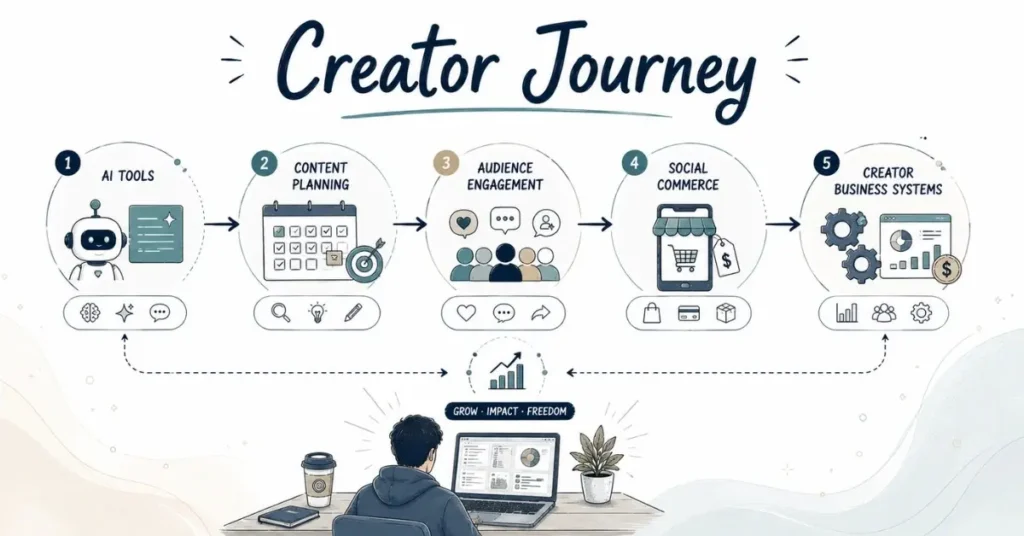
Becoming a professional content creator in India is more achievable than ever before. You don’t need expensive equipment, industry connections, or lucky viral moments. You need clarity about your niche and value proposition, commitment to consistent content creation and continuous improvement, patience to build your skills and audience over 12-24 months, basic business skills to manage finances and opportunities, and authenticity to build genuine connections with your audience.
The creator economy in India is booming with opportunities across platforms, niches, and languages. Whether you aspire to earn ₹30,000 monthly as supplementary income or build a ₹10 lakh monthly creator business, the path forward is clear. Start with what you have, create value for a specific audience, stay consistent through the challenging early months, and continuously improve your craft and business skills.
Your content creation journey doesn’t begin when you have the perfect setup or complete expertise. It begins today with creating and publishing your first piece of content. The difference between aspiring creators and professional creators is simply that professionals started, stayed consistent, and never stopped improving. Your turn.