
Build Your Social Media Personal Brand: Portfolio, Resume & Job Search Strategy
Table of Contents
Introduction: Your Personal Brand is Your Career Currency
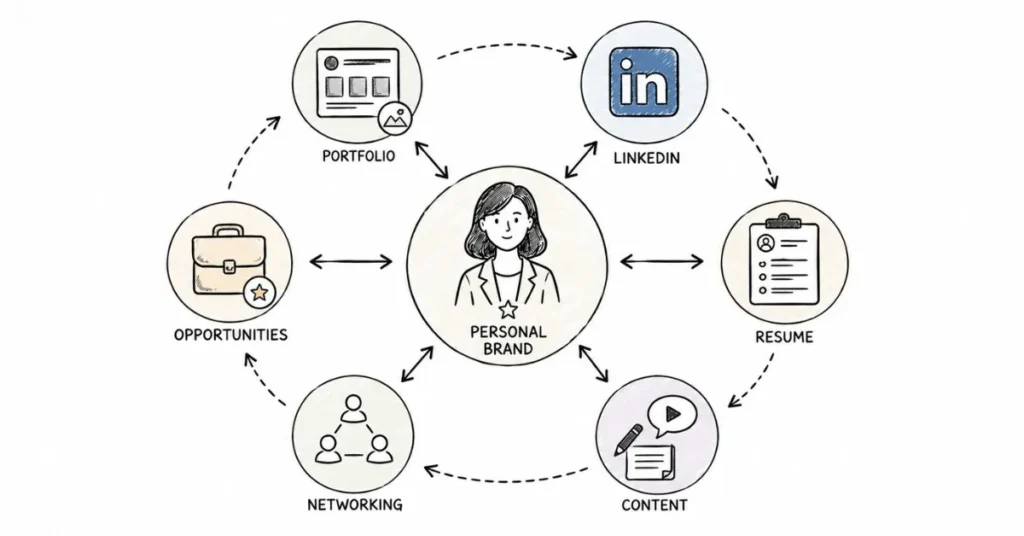
In the social media and digital marketing industry, your personal brand is often more valuable than your resume. While traditional industries might prioritize degrees and credentials, social media employers and clients care most about one thing: can you actually do the work? Your personal brand the online presence showcasing your skills, knowledge, and results answers that question more convincingly than any resume ever could.
Think about it: if you’re interviewing for a social media manager position, would an employer be more impressed by your resume claiming you understand Instagram, or by your actual Instagram account demonstrating 5,000 engaged followers, consistent high-quality content, and proven growth over six months? If you’re pitching freelance services, would potential clients trust your credentials or your portfolio showcasing real campaigns you’ve executed with measurable results?
Your personal brand serves multiple purposes simultaneously. It demonstrates competency proving you can practice what you preach. It builds authority positioning you as knowledgeable in your field. It creates visibility making you discoverable to opportunities. It establishes credibility differentiating you from competitors making similar claims. And it generates opportunities attracting job offers, client inquiries, collaboration proposals, and speaking invitations often before you even apply.
This comprehensive guide walks you through building a powerful social media personal brand specifically optimized for the Indian job market and creator economy. You’ll learn how to develop your unique positioning and brand identity, create a compelling portfolio showcasing your best work, optimize your resume for social media roles, leverage LinkedIn strategically for career opportunities, implement an effective job search strategy, and position yourself as an authority in your niche. Whether you’re a student entering the field, a professional transitioning careers, or an established practitioner looking to level up, these strategies will transform how opportunities come to you.
Defining Your Personal Brand: The Foundation
Before creating any content or profiles, clarity about your personal brand positioning is essential.
Your Unique Value Proposition
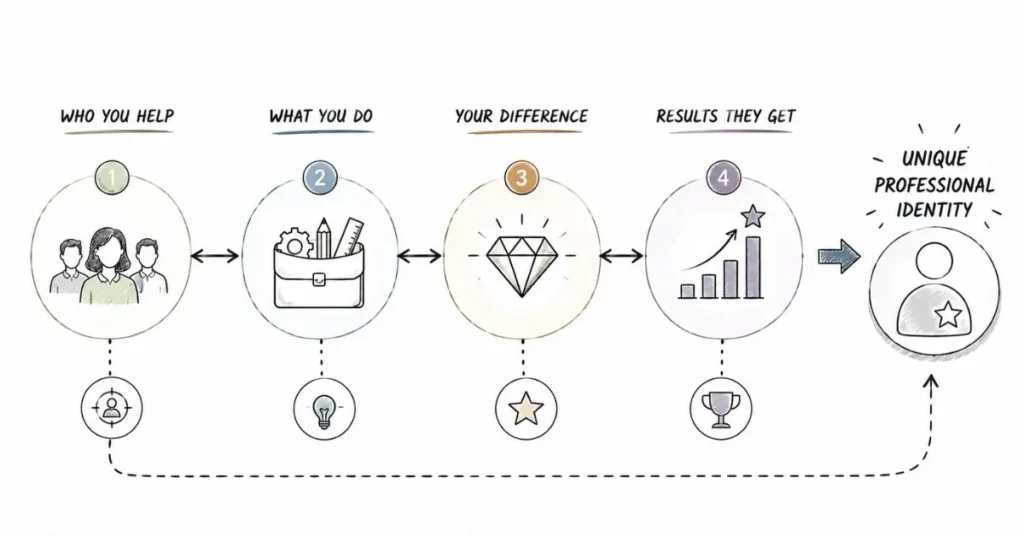
What makes you different from the thousands of other people pursuing social media careers? Your unique value proposition (UVP) articulates this clearly. It’s not “I’m a social media manager” that describes the job, not your unique value. Instead, it might be “I help Indian D2C fashion brands build engaged Instagram communities that drive consistent sales” or “I specialize in LinkedIn strategies for B2B tech companies targeting enterprise customers” or “I create viral YouTube content helping Indian creators grow from 0 to 10,000 subscribers”.
Components of Your UVP:
Who you serve: Be specific about your target audience or ideal client/employer. “Small businesses” is vague. “Health and wellness brands targeting millennials in Indian metros” is specific.
What you do: The specific services, skills, or content you provide. “Social media marketing” is generic. “Instagram Reels strategy and content creation” is specific.
How you’re different: Your unique approach, perspective, or specialization. “I focus on organic growth strategies requiring zero ad spend” or “I blend traditional Indian storytelling with modern digital formats”.
What results you deliver: The outcomes people can expect. “Increased engagement” is vague. “Average 300% engagement rate increase within 90 days” is compelling.
Discovering Your UVP: Reflect on what skills or knowledge you have that others don’t, what topics or industries you’re genuinely passionate about, what problems you’ve successfully solved for yourself or others, what unique perspective your background or experiences provide, and what people consistently compliment you about or ask your advice on.
Your UVP will evolve as you gain experience that’s normal. Start with your best current understanding and refine over time.
Your Brand Story
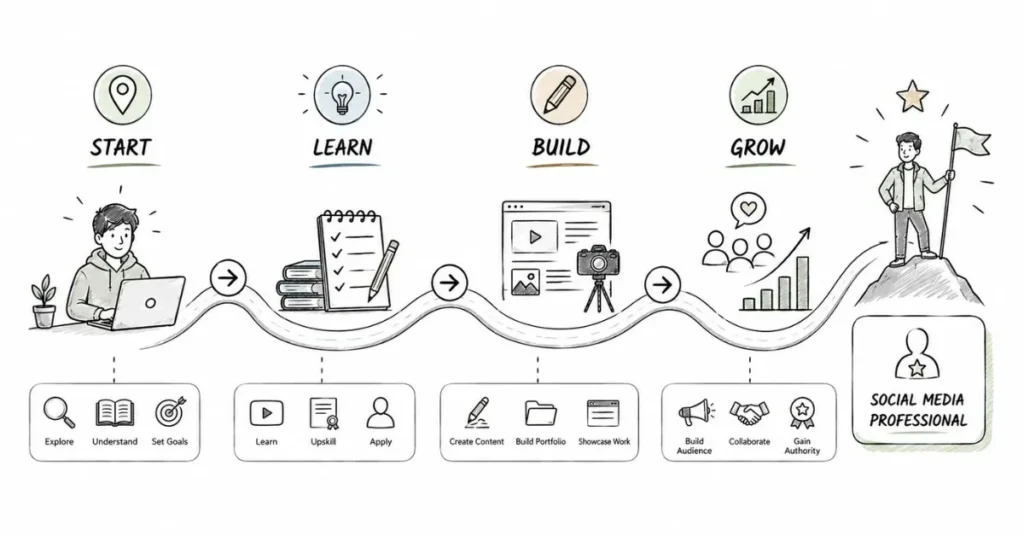
Beyond your UVP, your personal brand needs a compelling narrative the story of why you do what you do and how you got here.
Story Elements: Where you started (your background, previous career, initial struggles), what changed (the moment you discovered your passion for social media), how you developed skills (courses, self-teaching, real projects), what you’ve achieved (results, milestones, proud moments), and where you’re headed (your vision and goals).
Example Story: “I started as a mechanical engineering student who spent more time on Instagram than studying. After graduation, I landed a traditional corporate job that felt soul-crushing. During evenings, I started creating content about personal finance to force myself to learn about money management. Within six months, I’d grown to 15,000 followers and brands started paying me ₹10,000+ per post. I quit my job to pursue content creation full-time, and now I help other working professionals build side income through strategic Instagram growth.”
Notice how this story is specific, relatable, includes transformation, and naturally leads to the person’s current positioning. Your story doesn’t need to be dramatic it just needs to be authentically yours.
Visual Brand Identity
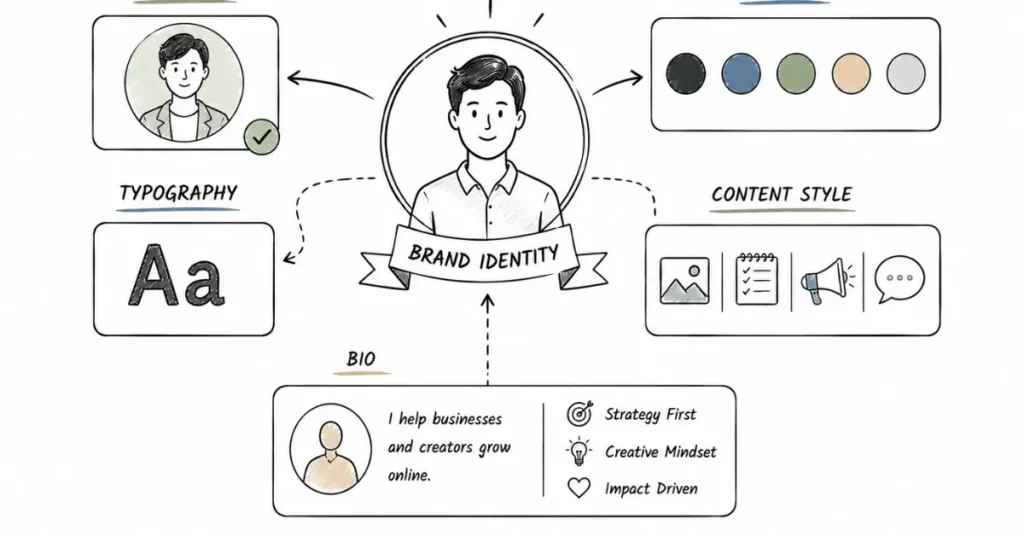
Consistency in visual presentation makes you memorable and professional.
Profile Photos: Use the same professional photo across all platforms. It should be high-quality (well-lit, clear), professional yet approachable (smiling, appropriate attire), have a clean background (not distracting), and be recent (actually looks like you).
Avoid selfies, party photos, or overly filtered images for professional profiles. Invest ₹1,000-3,000 in professional headshots if necessary they’re used for years.
Color Palette: Choose 2-3 colors used consistently across your branded content, website, portfolio, and graphics. This creates visual cohesion making your content instantly recognizable.
Fonts and Design Style: Select 1-2 fonts for all branded materials. Develop a consistent design styleminimal and clean, bold and vibrant, or vintage and warm. Consistency matters more than the specific style chosen.
Bio/Tagline: Craft a concise personal tagline appearing across all platforms clearly communicating your value. Examples: “Helping Indian creators monetize Instagram | 50K followers | Featured in [Publication]” or “LinkedIn Growth Strategist | 1M+ Profile Views Generated for Clients | Ex-Tech Corporate”
Building Your Portfolio: Showcasing Your Best Work
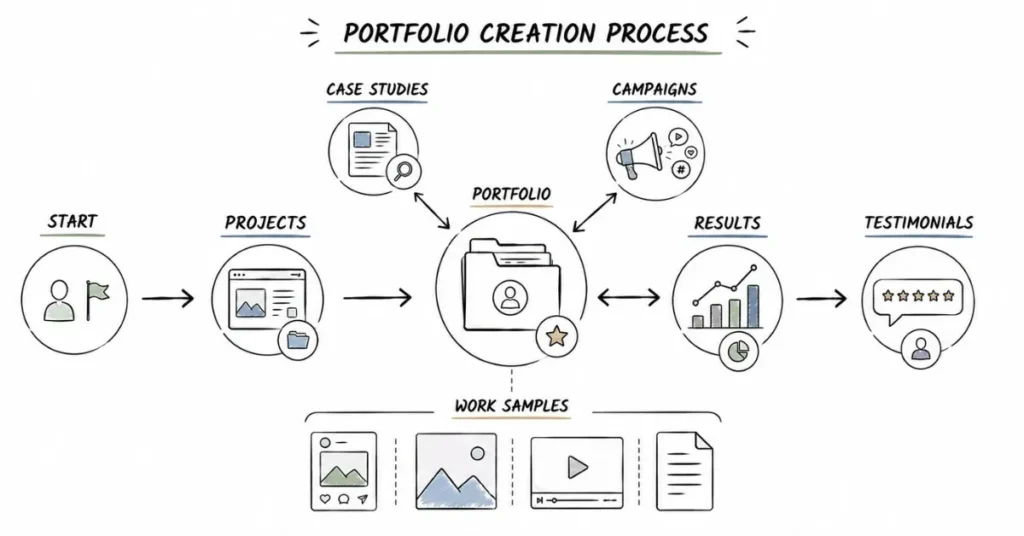
Your portfolio is the centerpiece of your personal brand, providing tangible proof of your capabilities.
Portfolio Platforms
Personal Website: Most professional option. Use Wix, WordPress.com, Squarespace, or Notion (free options available). Provides complete control over presentation and branding. Essential for freelancers and established professionals.
Behance or Dribbble: Ideal for designers and visual creators showcasing design work.
Notion or Google Sites: Free, simple options for beginners. Less professional than dedicated websites but better than no portfolio.
LinkedIn Featured Section: Showcase work samples directly on your LinkedIn profile.
PDF Portfolio: Downloadable portfolio sent via email during applications. Should be visually appealing with case studies and examples.
Portfolio Contents
About Page: Brief professional bio, your story, your unique value proposition, and what you’re currently focused on.
Work Samples/Case Studies: 3-10 examples of your best work. For each include project context (what was the challenge/goal?), your role and approach (what did you do?), results achieved (metrics and outcomes), and visuals (screenshots, graphics, videos).
Example Case Study Structure:
Project: “Instagram Growth Strategy for Local Café”
Challenge: Small café had 800 followers with minimal engagement, struggling to attract younger customers.
My Approach: Conducted audience research identifying target demographic (college students and young professionals), developed content strategy around “aesthetic café moments” and “study spot vibes,” created consistent Reels showcasing ambiance and menu items, implemented strategic hashtag research and geotargeting, and engaged actively with local community accounts.
Results: Grew from 800 to 5,200 followers in 4 months (550% growth), increased average engagement rate from 2% to 8%, café reported 30% increase in customers mentioning Instagram, and successfully ran user-generated content campaign generating 200+ customer posts.
Visuals: Before/after metrics screenshots, sample Reels and posts created, engagement analytics.
This format demonstrates strategic thinking, practical skills, and measurable results exactly what employers and clients want to see.
Building Portfolio Without Experience
If you’re just starting, create work samples through personal projects (manage your own social accounts documenting growth), volunteer work (offer free services to nonprofits or local businesses), spec projects (create hypothetical campaigns for real brands as if they hired you), student/college organizations (manage social media for campus groups), or friends’/family businesses (help their social presence in exchange for testimonials).
Even without “official” clients, these projects provide real portfolio pieces demonstrating your capabilities.
Testimonials and Social Proof
Include testimonials from anyone you’ve worked with, even if unpaid. Request specific testimonials addressing results achieved, your professionalism, or unique strengths. Feature these prominently in your portfolio and LinkedIn recommendations.
Resume Optimization for Social Media Roles
While your portfolio and online presence matter most, resumes remain important for formal applications.
Resume Structure for Social Media Roles
Header: Name, location (city), phone, email, LinkedIn URL, portfolio website link.
Professional Summary: 2-3 sentences highlighting your focus, experience level, and key strengths. Example: “Creative social media manager with 3 years experience growing Instagram communities for D2C fashion brands. Specialized in organic growth strategies and influencer partnerships. Achieved average 400% follower growth and 6% engagement rates across client accounts.”
Skills Section: List relevant skills in categories. “Platforms: Instagram, YouTube, LinkedIn, Facebook” “Tools: Canva, Adobe Premiere, Buffer, Meta Business Suite” “Specializations: Content Strategy, Community Management, Influencer Marketing, Analytics”.
Experience: List roles (paid employment, freelance, volunteer) with company name, your title, dates, and 3-5 bullet points highlighting achievements. Use action verbs (Developed, Implemented, Increased, Managed, Created). Include metrics whenever possible.
Example Experience Bullets:
- “Grew Instagram following from 5,000 to 35,000 in 8 months through strategic Reels content and engagement tactics”
- “Managed ₹2 lakh monthly ad budget across Meta platforms achieving 3.2x ROAS”
- “Developed and executed influencer partnership program working with 15 micro-influencers generating 2M impressions”
- “Created content calendar and produced 20+ pieces of weekly content across Instagram, LinkedIn, and Facebook”
Education: Degree, institution, graduation year. List relevant coursework if you’re a recent graduate. Include certifications here or in separate section.
Certifications: List relevant social media and digital marketing certifications (covered in Subtopic 12).
Projects: If limited work experience, include a projects section highlighting spec work or personal projects with results.
Resume Best Practices
Keep it 1 page for 0-3 years experience, 2 pages maximum for more experience. Use clean, professional formatting not overly creative unless applying for design roles. Tailor each resume to the specific job highlighting most relevant experience. Include keywords from job descriptions (many companies use ATS Applicant Tracking Systems that scan for keywords). Proofread meticulously typos in social media manager applications are especially damaging.
LinkedIn Strategy: Your Professional Home Base
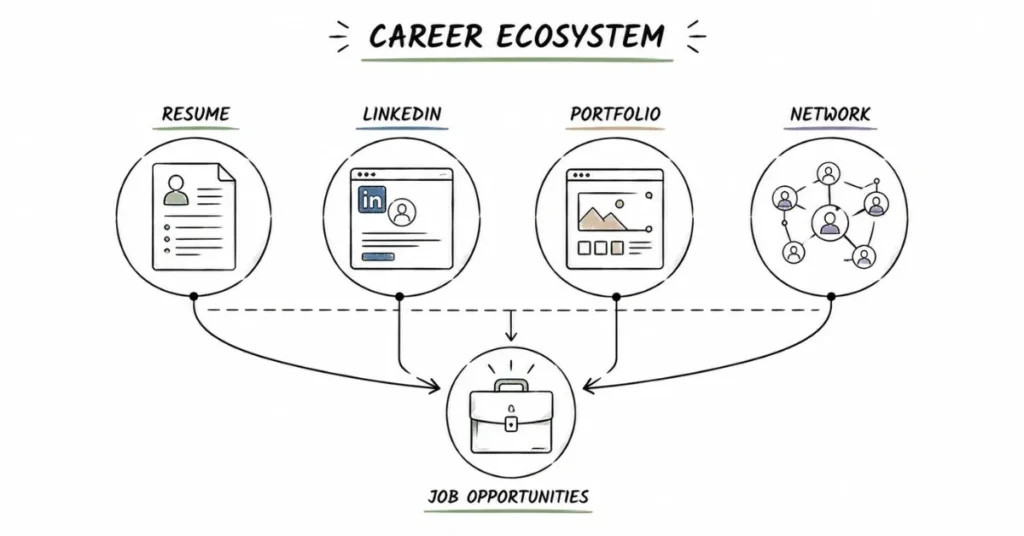
LinkedIn is the most important platform for social media professionals seeking employment or B2B opportunities.
Profile Optimization
Professional Headline: Don’t just list your job title. Use the 220 characters to communicate your value and specialization. Example: “Social Media Manager | Instagram Growth Specialist | Helping D2C Brands Build Communities That Drive Sales | Ex-Nykaa”
About Section: Tell your professional story in first person. Include who you help, what you do, what makes you different, notable achievements, and a call-to-action (how people can work with you). Use line breaks making it scannable.
Experience Sections: Write detailed descriptions of each role emphasizing results and achievements, not just responsibilities. Include media (links to campaigns, video samples, PDFs of work).
Featured Section: Showcase your best work articles you’ve written, presentations, case studies, or media appearances.
Skills: Add 10-15 relevant skills. Ask colleagues and clients to endorse them (and reciprocate). Skills with more endorsements appear more credible.
Recommendations: Request recommendations from managers, clients, colleagues, or professors. Specific recommendations describing your skills and work are more valuable than generic praise. Aim for 3-5 strong recommendations.
Content Strategy on LinkedIn
Don’t just optimize your profile then remain inactive. Regular content positions you as knowledgeable and keeps you visible to your network.
Content Topics: Industry insights and trends, career advice and lessons learned, project case studies and results, tips and how-to in your area of expertise, personal stories with professional relevance, and commentary on social media news and updates.
Posting Frequency: 3-5 times weekly maintains visibility without overwhelming. Quality matters more than quantity one strong post weekly beats five mediocre posts.
Engagement Strategy: Comment thoughtfully on others’ posts (especially hiring managers and industry leaders), connect with 5-10 relevant people daily with personalized requests, engage with comments on your posts building conversations, and share others’ valuable content with your perspective added.
LinkedIn Job Search Strategy
Turn on “Open to Work” (visible only to recruiters or public based on preference). Set up job alerts for relevant positions. Research companies you want to work for and follow their pages. Connect with hiring managers and recruiters at target companies. Apply through LinkedIn but also message hiring managers directly referencing your application.
Job Search Strategy: Beyond Just Applying
Landing social media roles requires strategic approaches beyond mass applications.
Target Company Research
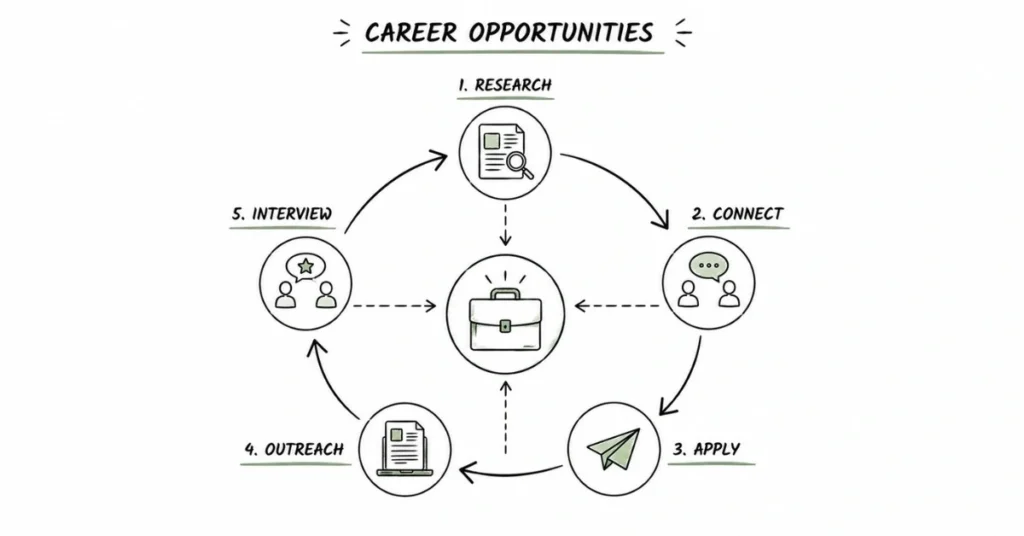
Identify 20-30 companies or agencies you’d genuinely want to work for based on industry, culture, growth stage, location flexibility, and brand values alignment.
Research each thoroughly studying their social media presence (what could you improve?), recent campaigns and initiatives, company news and growth, and employee reviews on Glassdoor or AmbitionBox.
Warm Outreach
Rather than cold applications, find connections to target companies. Check if LinkedIn connections work at or know people at target companies. Attend industry events and webinars where company representatives appear. Engage with company content and hiring managers’ posts on LinkedIn establishing visibility. Send thoughtful messages expressing genuine interest with specific observations about their work.
Example Outreach Message:
“Hi [Name], I’ve been following [Company]’s Instagram strategy and was particularly impressed by your recent Reels campaign for [Product]. The way you combined trending audio with educational content perfectly balanced entertainment and value. I’m a social media manager specializing in Instagram growth for D2C brands, and I’d love to learn more about [Company]’s approach and whether there might be opportunities to contribute. Would you be open to a brief conversation?”
This demonstrates genuine interest, specific knowledge, and value you could provide far more effective than “I saw you’re hiring. Here’s my resume.”
Application Best Practices
Customize every application generic applications are obvious and ignored. Write compelling cover letters telling your story and explaining why you’re perfect for the specific role (not generic “I’m passionate about social media”). Follow application instructions precisely if they request work samples in specific format, provide exactly that. Follow up 7-10 days after applying with polite inquiry about status. Apply quickly most roles receive applications within first 48 hours; later applicants often aren’t reviewed.
Freelance Client Acquisition
If pursuing freelancing, client acquisition requires different strategies. Create profiles on Upwork, Fiverr, or Freelancer.in with compelling descriptions and competitive initial rates. Leverage your network asking connections for referrals to businesses needing social media help. Offer free audits or consultations providing value before asking for payment. Join Facebook groups or communities where your target clients congregate. Partner with complementary service providers (web designers, copywriters) for referrals. Speak at local business events or chambers of commerce establishing authority.
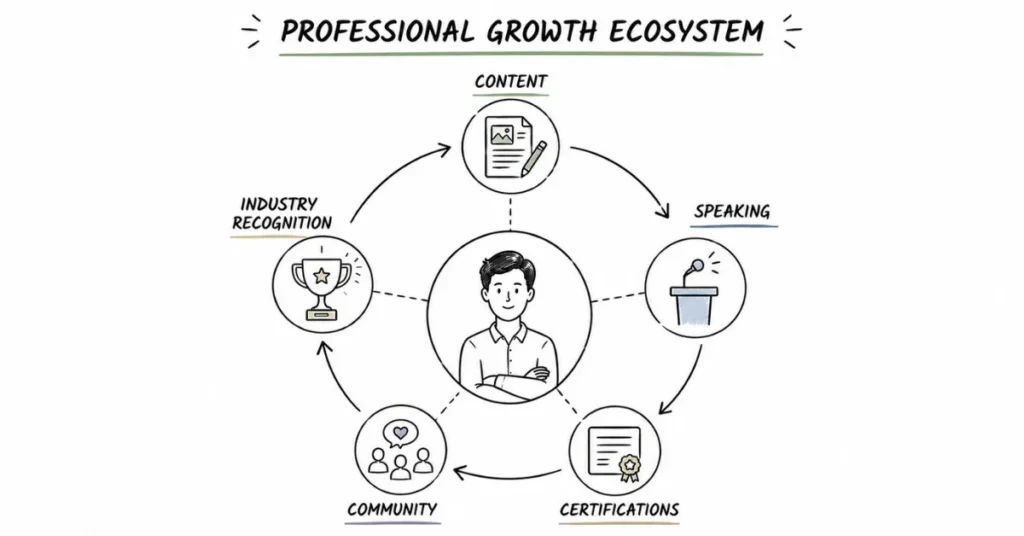
Positioning as an Authority: Long-Term Brand Building
Beyond immediate job search, building long-term authority creates compounding opportunities.
Content Creation
Consistently create content demonstrating your expertise. Start a blog or LinkedIn newsletter, launch a YouTube channel sharing tutorials and tips, create Instagram or LinkedIn posts with actionable advice, or start a podcast interviewing industry professionals.
Consistency matters more than perfection. Weekly content builds authority gradually but powerfully.
Speaking and Teaching
Apply to speak at conferences, webinars, or workshops (start with college events or local business groups, building to larger stages). Create free workshops or webinars teaching specific skills. Participate in Twitter Spaces or LinkedIn Audio Events discussing industry topics. Guest lecture at colleges or bootcamp programs.
Certifications and Continuous Learning
Earn and prominently display relevant certifications (detailed in Subtopic 12). Share your learning journey courses you’re taking, books you’re reading, skills you’re developing. This positions you as committed to growth.
Community Building
Build your own community around your expertise through Facebook group for aspiring social media professionals, Discord server for peer learning and support, or WhatsApp community sharing resources and opportunities. Leading a community positions you as a natural authority figure others look to for guidance.
Media and PR
Pitch yourself as an expert source to publications covering digital marketing or social media. Start with smaller blogs and local publications, building to larger media. Write guest articles for established publications in your industry. Comment on trending topics in your area of expertise making yourself quotable.
Avoiding Personal Brand Mistakes
Inconsistency: Your LinkedIn says “social media strategist” but Instagram bio says “digital nomad lifestyle.” Confusion weakens your brand. Maintain consistency across platforms.
Inauthenticity: Copying others’ personalities or claiming expertise you lack destroys credibility when discovered. Be genuinely yourself.
Negativity: Complaining about jobs, clients, or the industry publicly damages your brand. Keep criticism constructive and professional.
Neglect: Building a personal brand then abandoning it sends wrong signals. Maintain regular presence even if not posting daily.
Overpromotion: Constantly selling your services without providing value alienates audiences. Follow the 80/20 rule 80% value, 20% promotion.
Conclusion: Your Brand is Your Career Asset
In the social media industry, your personal brand is not vanity it’s your most valuable career asset. It’s working for you 24/7, attracting opportunities even while you sleep, building credibility that opens doors, and differentiating you in competitive markets. While building a strong personal brand requires consistent effort over months and years, the compounding returns are extraordinary.
Start today by clarifying your unique value proposition, creating or updating your LinkedIn profile, beginning your portfolio with whatever work samples you have, and committing to regular content demonstrating your expertise. Don’t wait until you’re an expert to start building your brand document your journey from the beginning, sharing your learning process authentically. That journey itself becomes compelling content that resonates with others slightly behind you on the path.
Your personal brand is the bridge between where you are and where you want to be. Build it intentionally, nurture it consistently, and watch as opportunities begin flowing to you rather than you constantly chasing them. The Indian social media industry needs talented professionals make sure they can find you.