
Social Media Career Options: Freelance vs Full-Time vs Agency Work
Table of Contents
Introduction: Three Paths, One Destination
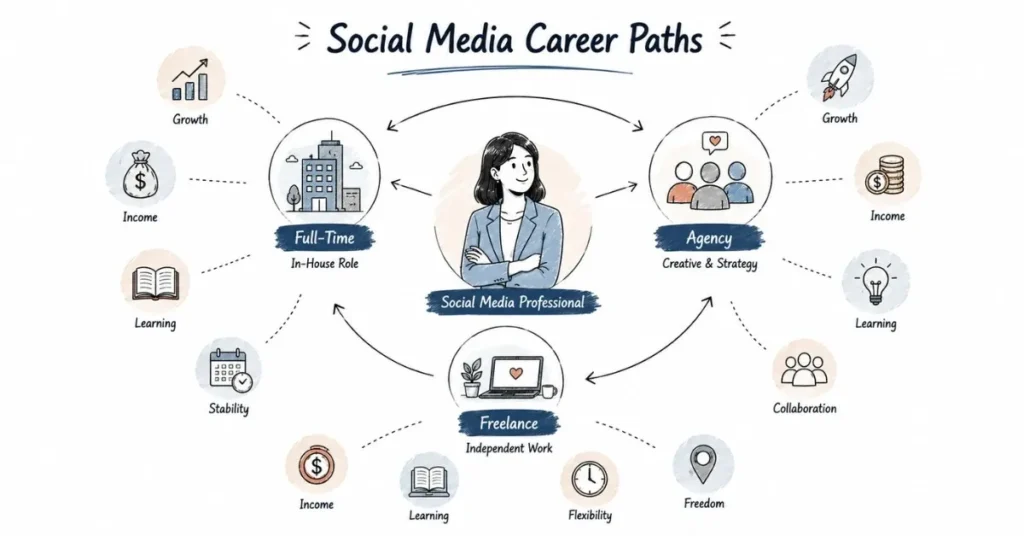
One of the most consequential decisions you’ll make in your social media career is choosing your employment model. Should you pursue full-time employment with a company, join a digital marketing agency managing multiple clients, or build a freelance business working independently? Each path leads to the same destination a successful social media career but the journeys look dramatically different in terms of income predictability, work-life balance, learning opportunities, creative freedom, and stress levels.
The good news is that your choice isn’t permanent. Many successful professionals start in agencies gaining diverse experience, transition to in-house roles for stability and depth, then eventually build freelance practices leveraging established expertise and networks. Others follow different sequences based on circumstances and preferences. Understanding each path’s realities not romanticized versions helps you make informed decisions aligned with your current life stage, financial needs, personality, and career goals.
This comprehensive guide compares the three primary social media career paths in India, examining full-time in-house positions working for brands directly, agency roles managing multiple client accounts, and freelance/consulting building independent businesses. For each, you’ll understand day-to-day realities, income expectations, growth trajectories, pros and cons, and who each path suits best. You’ll also learn how to transition between paths and build hybrid models combining advantages of multiple approaches.
Path 1: Full-Time In-House Positions
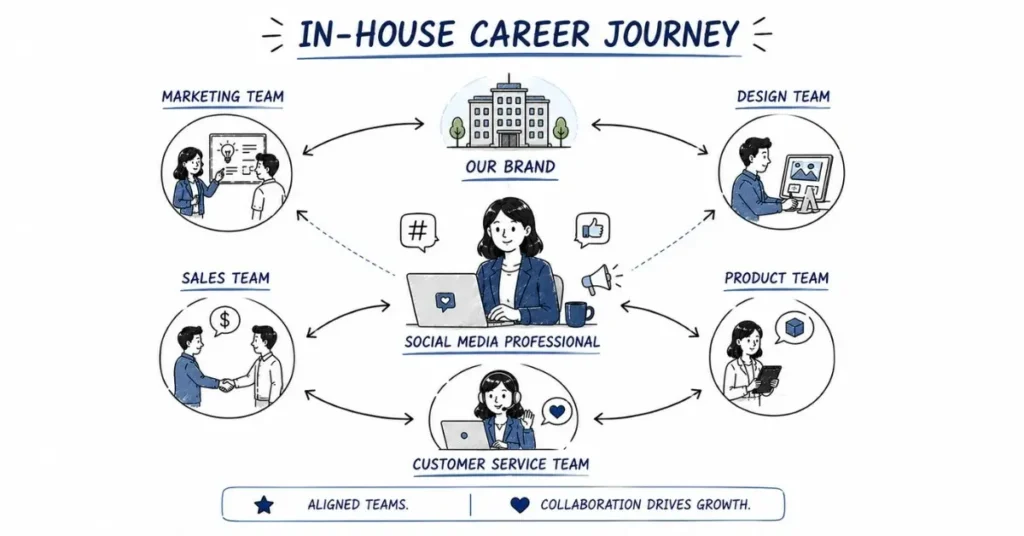
In-house social media professionals work directly for companies, brands, or organizations managing their social media presence.
Day-to-Day Reality
Your typical day involves managing social media for one brand exclusively, collaborating with internal teams (marketing, product, sales, design, customer service), developing and executing long-term strategies aligned with business objectives, coordinating with external agencies or freelancers you manage, attending meetings presenting performance and planning future initiatives, and building deep expertise in your specific industry.
In-house roles allow you to deeply understand one business, build relationships with cross-functional colleagues, see how social media connects to broader business operations, and contribute to long-term brand building rather than just short-term campaigns.
Typical Titles and Progression
Entry Level (0-2 years): Social Media Coordinator/Executive. Supporting senior team members with content creation, scheduling, community management, and reporting. Salary: ₹2-4 lakh annually (₹15,000-35,000 monthly).
Mid Level (2-5 years): Social Media Manager. Managing day-to-day operations, developing strategies, coordinating with stakeholders, overseeing campaigns. Salary: ₹5-10 lakh annually (₹40,000-85,000 monthly).
Senior Level (5-8 years): Senior Social Media Manager/Lead. Leading social media function, managing teams, working directly with executives, contributing to marketing strategy. Salary: ₹10-18 lakh annually (₹85,000-1.5 lakh monthly).
Leadership (8+ years): Head of Social Media/Digital Marketing Manager. Overseeing entire digital presence beyond just social, managing large teams, significant budget authority. Salary: ₹18-30 lakh annually (₹1.5-2.5 lakh monthly).
Income Predictability
Full-time employment offers maximum stability with fixed monthly salary, paid time off and holidays, benefits (health insurance, provident fund), bonus structures (typically 10-20% of salary annually), and salary increases (8-15% annually with promotions bringing larger jumps).
Pros of Full-Time In-House Roles
Income Stability: Predictable monthly income allows better financial planning. Regular paychecks reduce financial stress compared to variable freelance income.
Benefits and Security: Health insurance, paid leave, retirement contributions. Job security (though never guaranteed) provides peace of mind, particularly for those with families or financial obligations.
Deep Brand Immersion: Opportunity to deeply understand one business, industry, and customer base. You see long-term results of your strategies rather than moving to new clients every few months. Satisfaction of building something lasting.
Professional Development: Many companies invest in employee training and development. Exposure to how businesses operate beyond just marketing. Mentorship opportunities from experienced colleagues in various functions.
Work-Life Boundaries: Generally clearer boundaries between work and personal time compared to freelancing. Weekends and evenings typically off (though social media sometimes requires flexibility). Structured schedules providing routine.
Career Progression: Clear advancement paths with defined roles and expectations. Resume credibility from recognized company names.
Cons of Full-Time In-House Roles
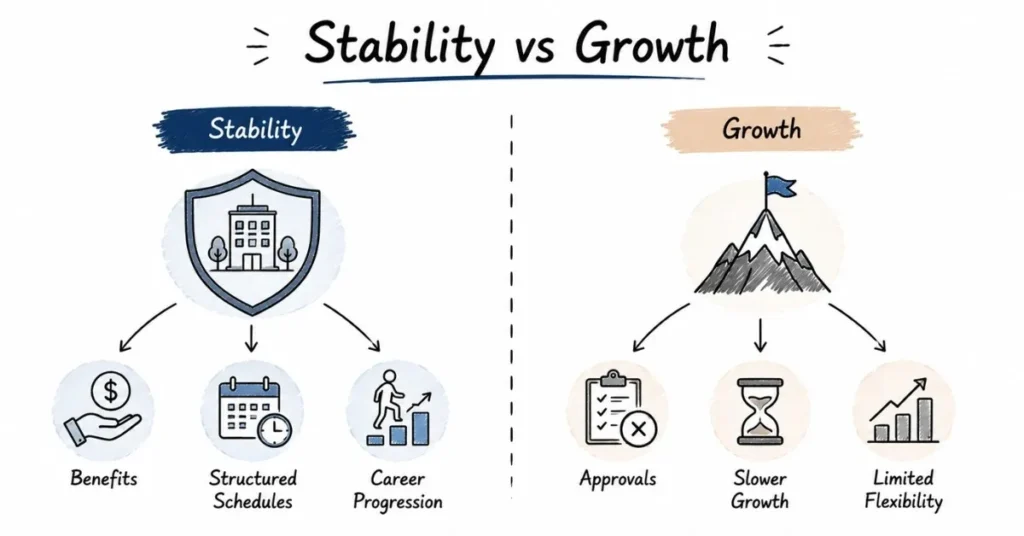
Limited Creative Variety: Working on one brand can feel repetitive compared to agency diversity. Some find this monotonous after a few years.
Income Ceiling: Salary increases are predictable but capped unless you move into management. Unlike freelancing, you can’t simply raise rates or take on more clients to dramatically increase income.
Bureaucracy and Approval Processes: Ideas go through multiple approval layers. Creative freedom limited by brand guidelines and stakeholder opinions. Slower decision-making compared to agile freelance or agency environments.
Office Politics: Navigate internal dynamics, politics, and personalities. Performance depends partly on factors beyond your control (manager relationships, company politics, organizational changes).
Geographic Limitations: Historically required living near office. While remote work has increased, many companies still prefer or require office presence limiting geographic flexibility.
Who In-House Roles Suit Best
Full-time positions work well for those seeking financial stability and predictable income, wanting comprehensive benefits (especially important for those with families), preferring to specialize deeply in one industry or brand, valuing work-life boundaries and structured schedules, building early career experience and learning business operations, or uncomfortable with uncertainty and variable income of freelancing.
Path 2: Digital Marketing Agency Work
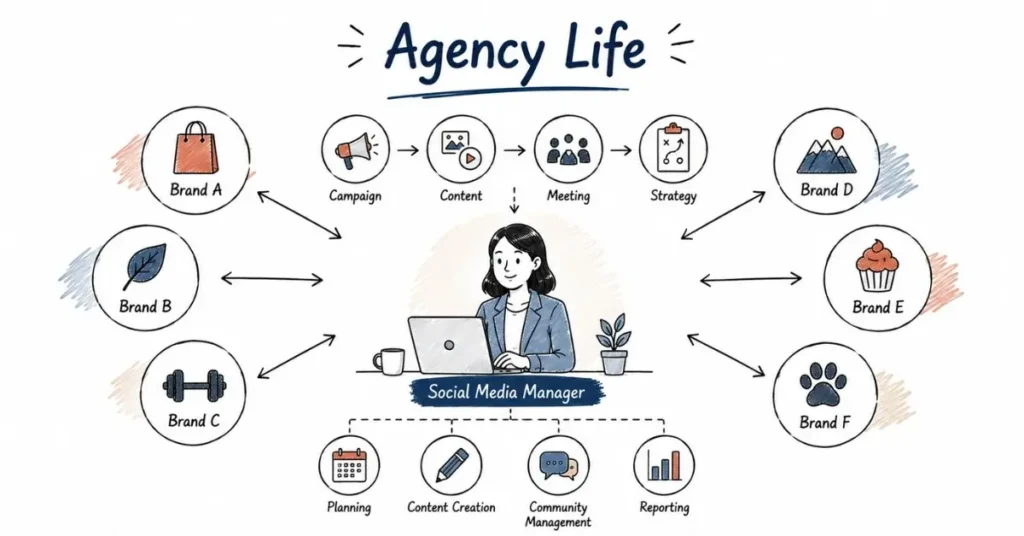
Agency professionals manage social media for multiple clients simultaneously, either at large established agencies or smaller boutique firms.
Day-to-Day Reality
Your day involves juggling 3-8 client accounts (or more depending on account size and your seniority), switching contexts rapidly between different brands, industries, and strategies, managing tight deadlines and competing priorities, collaborating with agency colleagues (other account managers, designers, copywriters, strategists), presenting work to clients regularly (weekly or monthly), and constantly pitching new ideas and campaigns to clients.
Agency life is fast-paced, diverse, and demanding. You’re exposed to varied industries, campaign types, and challenges compressed into rapid timelines.
Agency Types
Large Full-Service Agencies: Multinational or national firms (WPP, Dentsu, Ogilvy, etc.) offering comprehensive marketing services including social media. Structured with specialized teams, significant resources, prestigious clients, and established processes. More corporate environment with formal hierarchies.
Mid-Size Digital Agencies: Specialized digital marketing firms focusing specifically on digital channels including social media. More agile than large agencies but with established infrastructure. Balance between structure and flexibility.
Boutique Social Media Agencies: Small specialized firms (5-20 employees) focusing exclusively on social media. Scrappy, entrepreneurial culture. You’ll wear many hats. Close client relationships. Less formal processes.
Typical Salaries
Agency compensation varies widely based on agency size, reputation, and your role:
Entry Level (0-2 years): Social Media Executive. Managing junior accounts or supporting senior account managers. Salary: ₹2.5-5 lakh annually. Agencies sometimes pay slightly more than in-house entry roles but expect longer hours.
Mid Level (2-5 years): Social Media Manager/Account Manager. Managing 3-5 accounts independently, leading campaigns, presenting to clients. Salary: ₹5-12 lakh annually. Top agencies in metros pay at higher end.
Senior Level (5-8 years): Senior Account Manager/Account Director. Managing high-value accounts, leading teams, contributing to new business pitches. Salary: ₹12-20 lakh annually. Some agencies offer profit sharing or performance bonuses.
Leadership (8+ years): Vice President/Partner. Leading practice areas, managing large teams, driving business development. Salary: ₹20-40 lakh annually plus potential equity in smaller agencies.Most influencer marketing specialists manage campaign budgets ranging from lakhs to crores depending on company size. This requires allocating budgets across creator tiers optimizing for reach and engagement, tracking spending against budgets throughout campaigns, negotiating cost-effectively without undervaluing creators, forecasting budget needs for future campaigns based on performance data, and demonstrating ROI justifying continued investment in influencer marketing.
Pros of Agency Work
Diverse Experience: Exposure to multiple brands, industries, and challenges simultaneously. You learn faster working on varied accounts than managing one brand. Portfolio diversity makes you more marketable.
Accelerated Learning: Agency pace forces rapid skill development. Exposure to senior strategists and creative directors. Learning from observing different client situations and solutions.
Creative Challenges: Constantly pitching fresh ideas and campaigns. Variety prevents boredom and stagnation. Opportunity to work on exciting campaigns and launches.
Networking: Build extensive network across industries through client relationships. Colleagues at agencies often move to client-side roles, creating future opportunities.
Career Flexibility: Agency experience makes you attractive to both other agencies and in-house roles. Easier to transition from agency to in-house than vice versa.
Performance Recognition: Strong performers can advance quickly in agencies. Meritocratic culture (though not without politics).
Cons of Agency Work
Long Hours and High Pressure: Agency deadlines are non-negotiable. Client emergencies become your emergencies. Evenings and weekends work is common during campaign launches. Burnout rates are higher than in-house roles.
Client Dependency: Your ideas and work require client approval. Clients sometimes reject great work or demand changes for political reasons. Frustrating to produce work you’re proud of only to have clients water it down.
Constant Context Switching: Managing multiple accounts simultaneously is mentally exhausting. Difficult to achieve deep focus when constantly shifting between different brands and priorities.
Less Strategic Depth: Agencies often focus on execution rather than strategy (though senior roles involve more strategy). You might not see long-term results since clients sometimes leave agencies before campaigns mature.
Account Instability: Client relationships can end abruptly for reasons beyond your control (budget cuts, organizational changes, personality conflicts). Losing major accounts can mean layoffs or restructuring.
Billing Pressure: Agencies make money billing client hours. Pressure to track time meticulously and maximize billable hours. Non-billable activities (training, internal projects) are discouraged.
Who Agency Work Suits Best
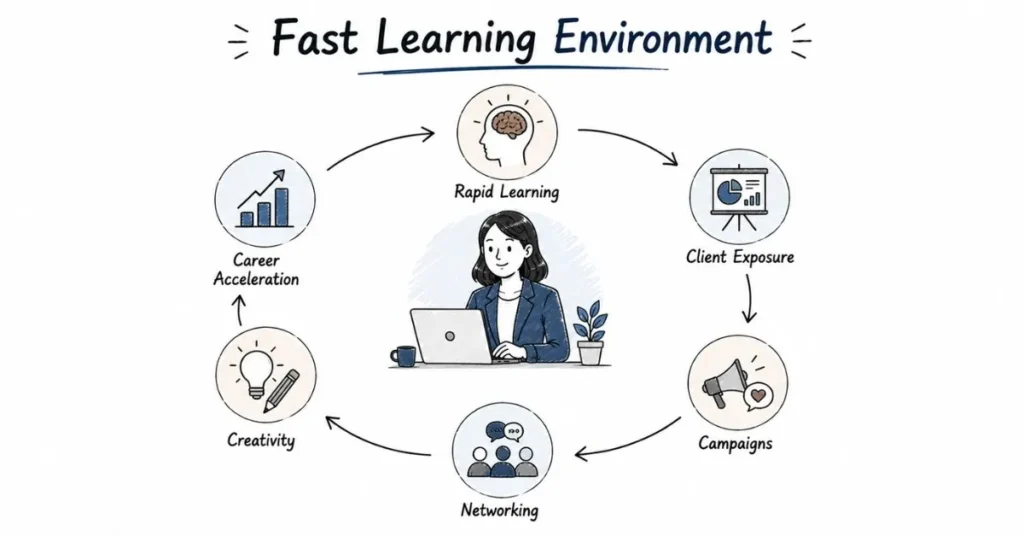
Agencies work well for early-career professionals wanting rapid learning and diverse experience, those thriving in fast-paced, high-pressure environments, people energized by variety rather than drained by context-switching, ambitious professionals willing to sacrifice work-life balance for accelerated advancement, extroverts who enjoy client interaction and presentations, or those building diverse portfolios positioning them for future opportunities.
Path 3: Freelance and Consulting
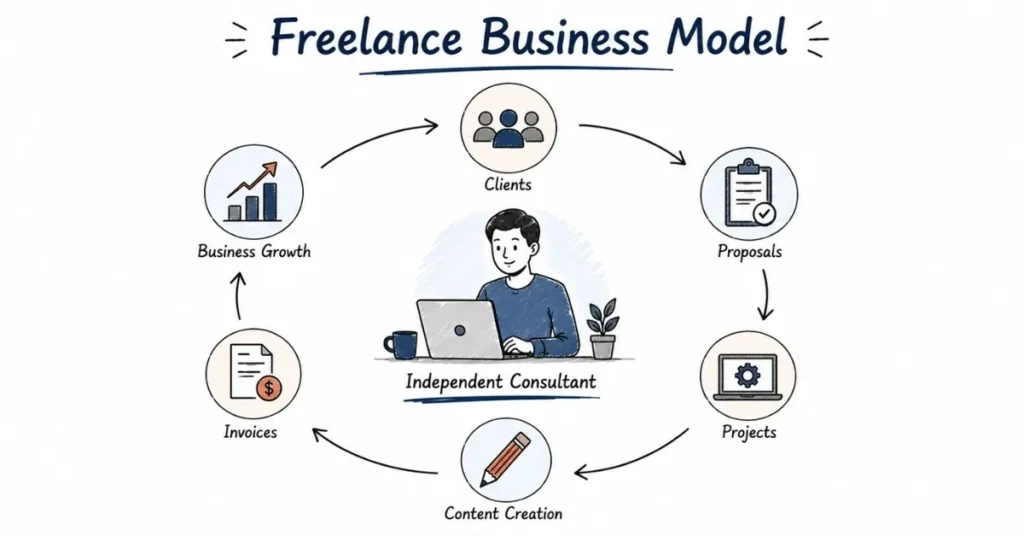
Freelancers and consultants run independent businesses offering social media services to multiple clients.
Day-to-Day Reality
Your day involves managing current client work (strategy, content creation, community management, reporting), business development (networking, proposals, sales calls with prospective clients), administration (invoicing, contracts, taxes, project management), learning and skill development (staying current without employer training), and making all business decisions independently.
Freelancing provides maximum autonomy but also maximum responsibility. You’re CEO, account manager, creative director, and accountant of your business.
Income Models
Project-Based: Charge fixed fees for defined projects. Example: “Instagram audit and 3-month content strategy: ₹35,000”.
Retainer: Monthly recurring fees for ongoing services. Example: “Monthly social media management (content creation, posting, engagement, reporting): ₹30,000/month”.
Hourly: Charge by the hour for consulting or execution. Typical rates ₹1,000-5,000/hour depending on expertise.
Value-Based: Charge based on results delivered rather than time invested. Example: “Instagram growth campaign with guarantee of 5,000 new followers: ₹75,000”.
Most successful freelancers use retainer models for stable income supplemented by project work for additional revenue.
Income Expectations
Freelance income varies dramatically based on experience, specialization, client quality, and hustle:
Beginner Freelancers (0-1 year): ₹15,000-40,000 monthly managing 1-3 small clients. Building portfolio and testimonials often means lower rates initially.
Established Freelancers (1-3 years): ₹40,000-1.5 lakh monthly managing 3-6 clients. Rates increase as reputation builds.
Experienced Consultants (3-5 years): ₹1-3 lakh monthly with 4-8 premium clients. Specialized expertise commands higher rates.
Elite Consultants (5+ years): ₹3-8 lakh monthly working with select high-value clients. Some exceed this significantly.
Reality Check: These figures represent successful freelancers with consistent clients. Many struggle with income instability, particularly early on. Expect 3-6 months building momentum before sustainable income.
Pros of Freelancing
Unlimited Income Potential: No salary caps raise rates or add clients to increase income. Top freelancers earn more than most employees.
Flexibility and Autonomy: Work when, where, and how you want. Choose clients and projects aligned with your interests. No commutes, office politics, or required meetings.
Creative Freedom: Full control over strategies and approaches (within client constraints). Choose the clients you want to work with.
Diverse Work: Manage multiple clients providing variety. Select your ideal client mix balancing interesting work with profitable accounts.
Tax Benefits: Business expense deductions reduce taxable income (equipment, software, home office, travel).
Skill Diversification: Running a business develops skills beyond social media (sales, negotiation, accounting, project management).
Cons of Freelancing
Income Instability: Monthly income fluctuates based on client retention and new business. No guaranteed paychecks. Dry spells can be financially stressful.
No Benefits: No employer-provided health insurance, retirement contributions, or paid time off. You cover all costs personally.
Isolation: Working alone can be lonely. No built-in social interaction with colleagues. Easy to feel disconnected from professional community.
Constant Business Development: You’re always selling. Comfortable months of client work suddenly end, requiring new client acquisition.
Feast or Famine Cycles: Periods of overwhelming workload alternating with periods of little work. Difficult to maintain balance.
Administrative Burden: Handling contracts, invoicing, taxes, collections yourself. Time spent on admin is time not spent on billable work.
Client Management Challenges: Problem clients can’t be escaped as easily as in employment. You handle all conflicts and challenging situations directly.
Who Freelancing Suits Best
Freelancing works well for self-motivated individuals who don’t need external structure, those comfortable with financial uncertainty (or with financial buffer for dry periods), people valuing autonomy over security, specialists with in-demand skills and established reputations, those with existing networks providing initial clients, entrepreneurial personalities energized by running businesses, or experienced professionals with proven track records attracting clients.
Hybrid Models: Combining Approaches
Many professionals combine employment models:
Part-Time Employment + Freelancing: Work 3-4 days weekly for one employer, freelance 1-2 days building independent income. Provides stability while growing freelance business.
Agency + Personal Projects: Work full-time at agency while building personal brand through content creation. Leverages agency learning while building independent platform for future opportunities.
Portfolio Career: Multiple part-time clients rather than full-time employment or traditional freelancing. Provides income diversification and variety.
Consulting + Products: Freelance consulting supplemented by digital product income (courses, templates). Combines active income with passive revenue streams.
Transitioning Between Paths
In-House to Agency: Emphasize desire for diverse experience and accelerated learning. Portfolio from in-house role demonstrates you can manage social media independently. Highlight any campaign variety in current role.
Agency to In-House: Common transition. Emphasize depth over breadth, desire for strategic long-term work, and work-life balance. Agency experience is highly valued by employers.
Employment to Freelancing: Challenging but doable. Build freelance clients while employed (ethically avoid conflicts). Save 6-12 months expenses before full transition. Start part-time testing demand before leaving employment.
Freelancing to Employment: Less common but sometimes desired for stability. Be prepared to explain why you’re seeking employment after independence. Frame as wanting different challenges or specific opportunities.
Decision Framework: Choosing Your Path
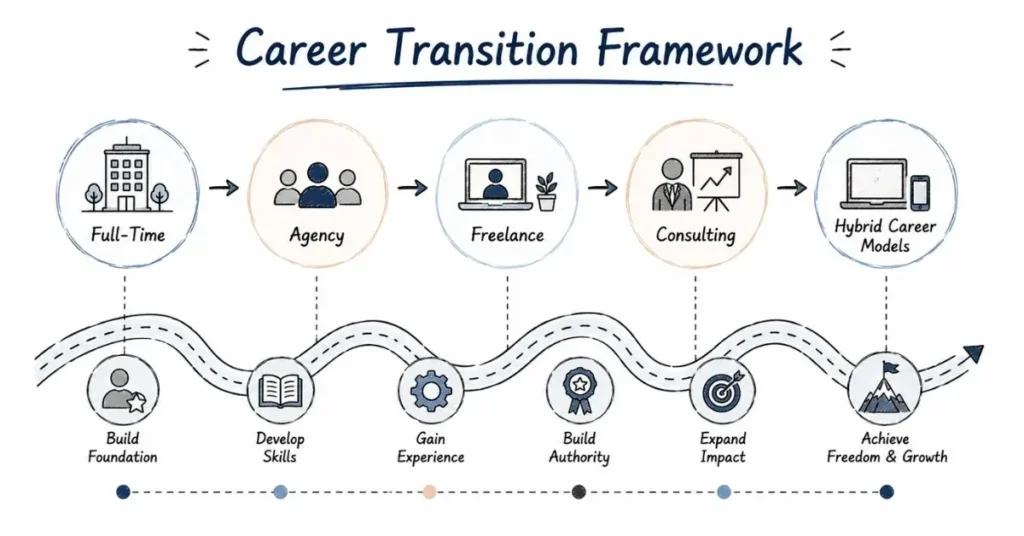
Ask yourself these questions:
Financial: Can I afford income variability (freelancing) or do I need predictable income (employment)? Do I have emergency savings supporting me during transitions? Do I need employer benefits or can I provide my own?
Personality: Do I thrive with autonomy or perform better with structure? Am I self-motivated or do I need external accountability? Do I prefer variety or depth?
Life Stage: Do I have financial dependents requiring stable income? Am I early career prioritizing learning or established prioritizing income? Do personal circumstances allow risk-taking or require stability?
Career Goals: Am I building toward leadership in organizations (in-house), diverse expertise (agency), or independent business (freelancing)? What does success look like for me in 5-10 years?
Risk Tolerance: Am I comfortable with uncertainty or does it cause debilitating stress? Can I handle rejection and setbacks (common in freelancing)?
There’s no universally right answer only what’s right for you at this specific time. Your choice can and likely will evolve throughout your career.
Conclusion: Your Path, Your Choice
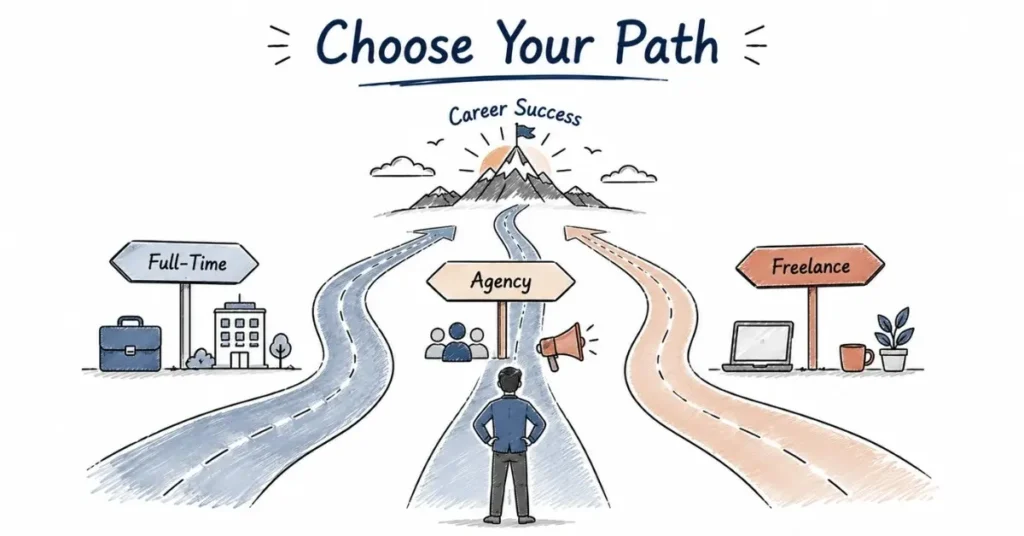
The beautiful reality of social media careers is that multiple paths lead to success, and you can change direction as circumstances and preferences evolve. Start where it makes sense based on your current situation perhaps agency work for rapid learning in your twenties, in-house roles for stability in your thirties, and independent consulting in your forties. Or follow completely different sequence based on your unique journey.
The most important thing is making informed decisions understanding each path’s realities rather than romanticized versions. Agency life isn’t all creative glamour it’s also long hours and client pressures. In-house stability comes with bureaucracy and potential monotony. Freelance freedom includes financial uncertainty and isolation.
Evaluate honestly what you value most, what circumstances allow, and what serves your specific goals right now. Then commit to your chosen path while remaining open to future pivots. Your social media career path starts with one decision which environment will help you learn, grow, and thrive today? Make that choice and begin walking your path. The destination is success; the journey is yours to define.