
Module 2: Verbal Communication Skills
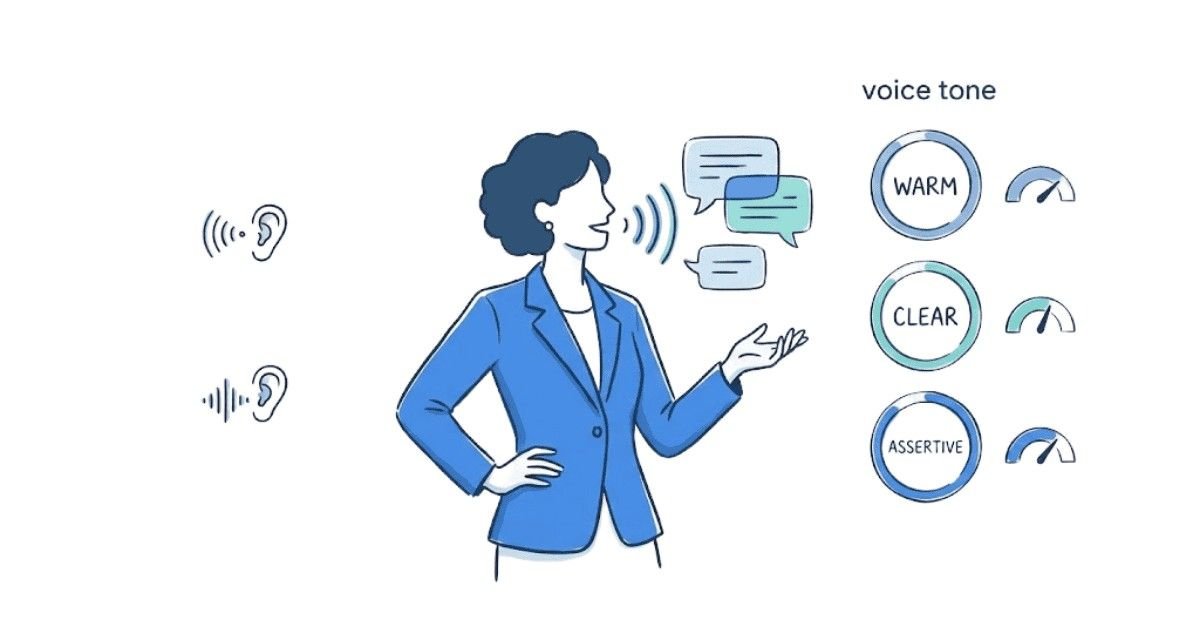
Table of Contents
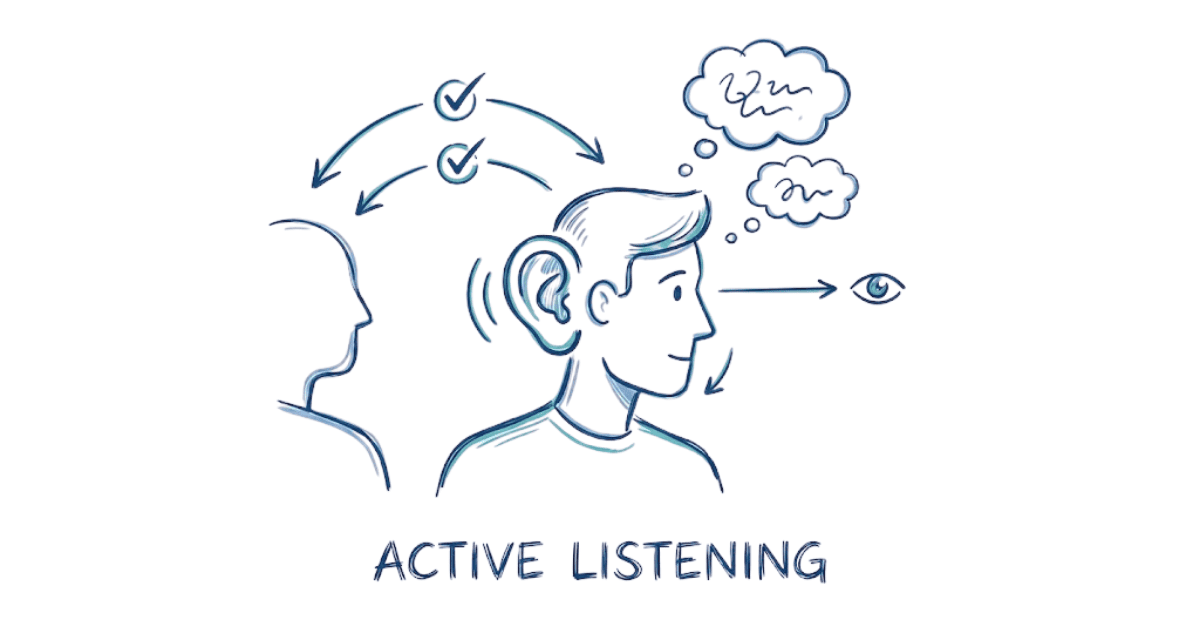
Active Listening Techniques
Introduction
Most people think communication is about talking. They practice what they’ll say, rehearse their points, and prepare their responses. But here’s what separates average communicators from exceptional ones: they focus on listening, not speaking.
When someone feels truly heard—not just heard, but genuinely understood—they become more open, more trusting, and more willing to work with you. This is the power of active listening.
Active listening isn’t just nodding while someone talks. It’s a specific set of skills that shows you’re fully engaged with what someone is saying. And it’s one of the most underrated communication skills in the workplace.
What is Active Listening?
Active listening is the practice of fully focusing on what someone is saying, understanding their perspective completely, and showing them that you genuinely care about their message. It’s about listening to understand, not listening to respond.
Think about the difference:
Passive Listening: Someone talks, and you hear words. But you’re already planning what you’ll say next, or you’re half-thinking about something else.
Active Listening: Someone talks, and you’re fully present. You’re trying to understand their perspective, their concerns, and what they really mean beneath their words.
Real-world example:
Employee: “I’m struggling with the project timeline.”
❌ Passive listener’s response: “Yeah, tight deadlines are tough. Anyway, here’s what I think you should do…”
✅ Active listener’s response: “Tell me more about what’s making it difficult. Is it the scope, the resources, or something else?”
The active listener is genuinely curious about understanding, not just waiting for their turn to speak.
Core Active Listening Techniques
Technique 1: Full Presence and Attention
This is the foundation. You can’t listen actively if you’re distracted.
What it looks like:
- Putting your phone away (not just face-down, but actually away)
- Closing irrelevant browser tabs
- Making eye contact (or in remote settings, looking at the camera occasionally)
- Not multitasking—no checking emails while someone talks
- Facing the person and showing your body is oriented toward them
Why it matters: When someone sees that you’ve put everything aside to listen to them, they feel respected. They know their words matter to you.
Practical tip: In meetings or one-on-ones, treat the conversation like it’s the most important thing on your schedule at that moment. Because in that moment, it is.
❌ Poor: Someone’s explaining a problem while you’re looking at your computer screen and responding with one-word answers.
✅ Better: You close your laptop, put your phone away, and give them your full attention.
Technique 2: Asking Clarifying Questions
The moment someone finishes speaking, most people immediately offer advice or share their own experience. Active listeners instead ask questions to understand better.
Good clarifying questions:
- “Can you give me an example of what you mean?”
- “Help me understand—why is this important to you?”
- “What have you already tried?”
- “What’s the biggest challenge in that?”
- “How is this affecting your work?”
- “What do you need from me?”
Bad follow-ups:
- “Yeah, I get it” (you probably don’t fully)
- Immediately jumping to advice without understanding
- Asking yes-or-no questions that shut down conversation
- Questions that feel like interrogation rather than genuine curiosity
Real-world example:
Team member: “I’m overwhelmed with my workload.”
❌ Active listener who does it wrong: “Well, you just need to prioritize better. Try blocking your calendar. That’s what I do.”
✅ True active listener: “That sounds frustrating. Can you walk me through your current projects? What’s taking up most of your time? And is it the number of projects, or is something particularly complex right now?”
The second approach gives you actual information to help with, not just generic advice.
Technique 3: Reflective Listening (Paraphrasing)
This is where you summarize what you heard in your own words and check if you got it right.
Formula: “So what I’m hearing is… Is that correct?” or “It sounds like you’re saying… Is that right?”
Why it works: This prevents misunderstandings. You’re showing you were listening, and you’re giving the other person a chance to correct you if you misunderstood.
Example:
Person A: “The new software is making our workflow slower. We spend twice as long on each task because we have to log in and out multiple times.”
Person B (active listener): “So you’re saying the main issue isn’t that the software is hard to use—it’s that the current process has too many manual steps? Is that the key problem?”
Person A: “Exactly. If we could streamline those steps, it would be fine.”
Now Person B understands the real issue, not just the surface complaint.
Technique 4: Non-Verbal Active Listening
What you do with your body matters as much as what you say.
Positive non-verbal signals:
- Nodding to show you’re following
- Leaning slightly forward to show interest
- Maintaining open body posture (not crossed arms)
- Facial expressions that show you’re engaged
- Appropriate eye contact
Non-verbal signals that shut down conversation:
- Looking at your watch or phone
- Crossed arms or turned-away body
- Blank facial expression
- Tapping fingers impatiently
- Slouching back like you’re bored
Real-world scenario:
A team member is sharing a concern about project direction. They notice you’re checking the clock every 30 seconds. What do they do? They rush through their explanation, leave out important details, or stop talking altogether. Your non-verbal communication just silenced them.
Technique 5: Validating What You Hear
This doesn’t mean you have to agree. It means you acknowledge the person’s feelings and perspective as valid.
Formula: “I hear you. That makes sense given that…” or “Your frustration is understandable because…”
The difference:
❌ No validation: “That’s not really a big problem. I don’t see why you’re upset.”
✅ With validation: “I understand why you’re frustrated. It’s annoying to deal with that repeatedly.”
Notice that validation doesn’t require agreement. You can validate someone’s feelings while disagreeing with their proposed solution.
Example:
Employee: “I feel like nobody listens to my ideas in meetings.”
❌ Dismissive: “That’s not true. We listen to ideas from everyone.”
✅ Validating: “That sounds frustrating. I’ve noticed you haven’t spoken up as much recently. Can you tell me what’s happening?”
Technique 6: Avoiding Interruptions
This seems obvious, but most people interrupt far more than they realize.
Types of interruptions:
- Physical interruptions (cutting someone off mid-sentence)
- Finishing their sentences for them
- Starting to formulate your response while they’re still talking
- Bringing the conversation back to your experience: “That’s like when I…”
- Changing the subject before they’ve fully expressed their thought
Why it matters: Every time you interrupt, you send a signal: “Your words aren’t as important as what I want to say.” Over time, people stop sharing with interrupters.
Practice this: When someone is talking, consciously keep your mouth slightly open and pause for a full 2-3 seconds after they finish speaking. This gives them space to add more and breaks the habit of interrupting.
Why Active Listening Changes Everything
- People feel respected and valued
When someone feels truly heard, they’re more likely to:
- Open up more honestly
- Trust you with sensitive information
- Support your ideas in return
- Be more engaged in projects you lead
- You get better information
Instead of making assumptions, you actually understand the situation. This leads to better decisions.
- You identify real problems, not surface complaints
Someone says “This process is broken.” An active listener digs deeper and discovers the real issue: it’s not the process, it’s the timing. Completely different solution.
- Conflicts get resolved faster
When both people feel heard, they’re more open to finding solutions. When someone feels unheard, they become defensive.
- It builds your credibility
People notice who actually listens versus who just waits to talk. Active listeners earn respect.
Common Mistakes People Make with Active Listening
Mistake 1: Listening just to respond
You’re listening for the moment you can jump in with your opinion or advice. This isn’t active listening—this is just waiting for your turn.
Fix: Remind yourself that your job right now is to understand, not to solve or advise.
Mistake 2: Assuming you understand
You hear part of someone’s statement and immediately think you know what they mean. You’re probably wrong.
Fix: Ask clarifying questions. “Tell me more about that” is your friend.
Mistake 3: Fixing instead of understanding
Someone shares a problem and you immediately jump to solutions. Sometimes people just need to be heard first.
Fix: Ask “Do you want advice, or do you just need to talk through this?” Respect the answer.
Mistake 4: Listening with judgment
You’re internally criticizing what someone says instead of genuinely trying to understand their perspective.
Fix: Remind yourself that understanding someone’s perspective doesn’t mean you agree with it.
Mistake 5: Mental filtering
You’re listening for information relevant to you and ignoring everything else.
Fix: Practice listening for what matters to them, not just what matters to you.
Practical Exercise: Build Your Active Listening Skills
This week, try this:
- In your next conversation, commit to not interrupting once. Let the person finish completely before you respond.
- Use one clarifying question. Instead of assuming you understand, ask “Can you tell me more about that?”
- Paraphrase once. “So what I hear you saying is… Is that right?” Notice how this changes the conversation.
- Check your body language. Are you facing the person? Making eye contact? Or are you turned away?
- After the conversation, reflect. Did they seem more or less engaged when you really listened? What changed?
Real-World Impact: The Manager Who Listened
Here’s a true story about how active listening changed things:
A manager noticed a high-performing team member becoming withdrawn. In a one-on-one, instead of asking “Is everything okay?” and accepting a quick “yes,” the manager used active listening:
Manager: “I’ve noticed you’ve been quieter in meetings lately. I want to understand what’s going on.”
Employee: “It’s fine.”
Manager: “I hear you, but I want to make sure. Is there anything about the role that’s changed for you? Or something I should know about?”
Employee: “Well… I’ve been thinking about transferring to another team.”
Manager: “Tell me more. What’s making you consider that?”
Through active listening, the manager discovered the real issue: the employee felt underutilized in their current role. The manager adjusted responsibilities, gave them a high-impact project, and the employee stayed. A simple conversation prevented the loss of a valuable team member.
Conclusion
Active listening is perhaps the most underestimated communication skill, yet it’s one of the most powerful. In a world of constant distractions and everyone eager to share their opinion, the ability to genuinely listen—to make someone feel heard and understood—is rare and valuable.
The professionals who excel in their careers aren’t always the ones with the best ideas. They’re often the ones who listen so well that others trust them, share openly with them, and want to work with them.
Start practicing active listening today. Notice how people respond when they feel truly heard. That’s when real communication begins.
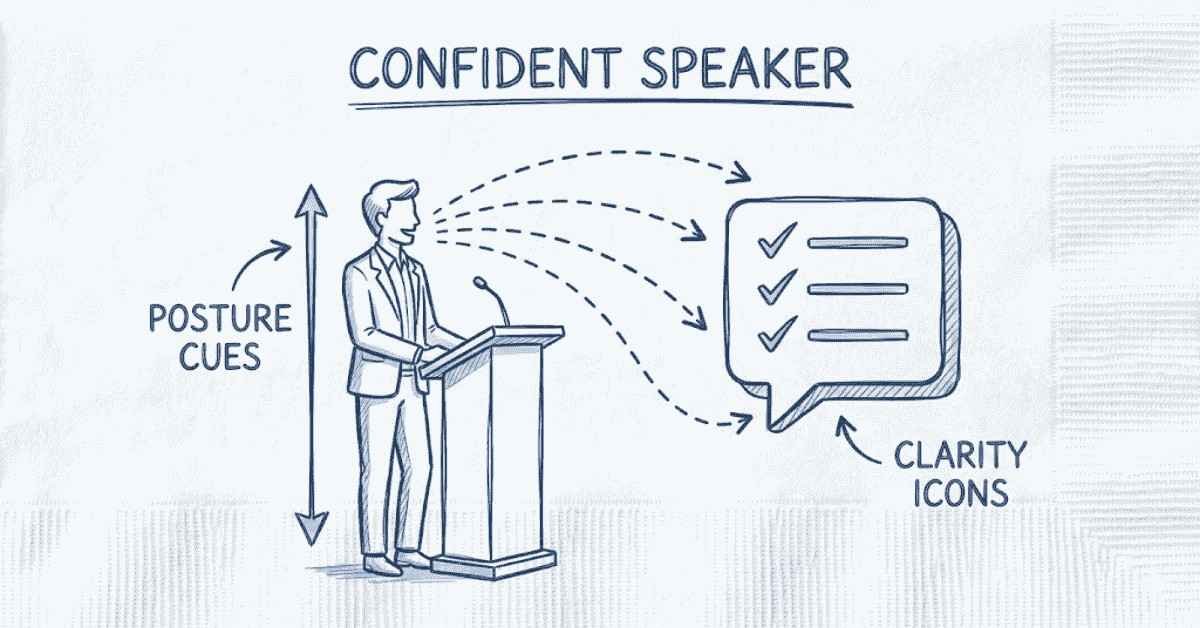
Speaking with Confidence and Clarity
Introduction
You have an excellent idea. You know it could solve a real problem. But when it’s your turn to speak in the meeting, something happens. Your voice gets quieter. Your words come out rushed. You stumble over explanations. Your brilliant idea gets lost because you didn’t speak with confidence.
This happens to most professionals at some point. The gap between what you’re thinking and what comes out of your mouth can be huge. The good news? Speaking with confidence and clarity isn’t something you’re born with. It’s a skill you develop through understanding and practice.
What Does Speaking with Confidence Look Like?
Confidence in speaking doesn’t mean you never feel nervous. Even experienced speakers feel butterflies before important presentations. Confidence means you feel nervous but speak anyway. It means you trust that your message is valuable and worth hearing.
Speaking with confidence involves:
- Steady pace: You don’t rush through words to get them out faster
- Clear articulation: People understand what you’re saying without asking you to repeat
- Appropriate volume: People can hear you without straining
- Conviction: You speak like you believe what you’re saying
- Presence: You take up space in the conversation—physically and mentally
Real-world comparison:
❌ Without confidence: “Um, I think maybe we could, like, try this approach? I’m not sure if it’s a good idea, but, uh, maybe it could work?”
✅ With confidence: “I recommend we try this approach because it addresses the three main issues we’ve identified. Here’s why I think it will work…”
Same person, same idea. The difference is confidence in delivery.
The Root Causes of Speaking Anxiety
Before we solve the problem, let’s understand why speaking without confidence happens:
Fear of judgment: You worry people will think you’re not smart enough or that your idea is bad. This fear makes you speak hesitantly, as if asking permission to have an opinion.
Lack of preparation: You’re not fully clear on what you want to say, so it comes out confused. This creates a vicious cycle—confused delivery makes you more nervous.
Self-doubt: You don’t actually believe your message is valuable. This leaks into your tone and makes others doubt it too.
Previous negative experiences: Someone criticized you once, and now you’re afraid it will happen again.
Speaking to authority figures: Talking to your boss or senior executives feels riskier than talking to peers.
Perfectionism: You think every word must be perfect, every point profound. When you inevitably make small mistakes, you lose confidence.
Understanding your specific fear helps you address it directly. Are you afraid of being judged? Then you need to practice so much that you trust your preparation. Afraid of seeming uninformed? Then do your research first.
The Foundation: Preparation
Here’s something that surprises people: confidence comes from preparation, not from personality. Introverts can be confident speakers. Extroverts can be terrible speakers. The difference is usually preparation.
What preparation looks like:
- Know your material inside out
You can’t speak confidently about something you don’t understand. Spend time learning your topic deeply. Write down key points. Understand not just the “what” but the “why”—why this matters, why this approach works.
- Know your key message
Before you speak, write down the single most important thing you want people to understand. Everything else supports this main point. This clarity helps you speak with direction.
- Practice out loud
This is crucial. Reading your points silently isn’t the same as speaking them. Speaking requires different muscles. Practice multiple times until the words feel natural, not scripted.
- Anticipate questions
What questions might someone ask? How would you answer? This preparation prevents you from getting flustered if someone challenges your idea.
- Create a structure
Don’t just ramble. Have a beginning (what you’re discussing), middle (your key points), and end (what you want them to do). Structure creates clarity.
Example of unprepared vs. prepared:
❌ Unprepared approach: “I’ll just wing it. I know the topic. It’ll be fine.” Then in the meeting, you get nervous and forget important points.
✅ Prepared approach: You write down your three main points. You practice saying them out loud twice. You write down two possible questions and your answers. Now when you speak, you feel grounded.
Technique 1: Control Your Pace
One of the biggest signs of nervousness is speaking too fast. When you rush, people can’t follow you and your message becomes unclear.
How to speak at the right pace:
Slow down intentionally. Most people need to slow down more than they think. Try speaking 25% slower than feels natural to you. Record yourself and listen back. You’re probably close to right.
Pause deliberately. After making an important point, pause for 2-3 seconds. This gives people time to absorb what you said. It also gives you time to breathe and collect your thoughts.
Breathe between sentences, not in the middle of them. Nervous speakers rush to get everything out before they run out of air. Instead, finish your thought, pause, and breathe.
Use pauses for emphasis. Pause right before important information to signal “pay attention to this.” Then say it. Then pause again. Example: “The most important finding is…” (pause) “…we can reduce costs by 40%.” (pause)
Real example:
A team member is explaining why they need more budget for tools. Without pace control: “We need more budget because the current tools are slow and our team’s spending hours on manual work that automation could handle so we’re losing productivity and time is money so we should invest now.”
With pace control: “We need more budget for tools.” (Pause. People are listening.) “The current tools are slow. Our team spends 10 hours per week on manual work.” (Pause.) “Automation could handle this in 2 hours.” (Pause.) “This saves us time and money.” (Pause.)
Same information, but one is digestible.
Technique 2: Articulate Clearly
Mumbling kills clarity. When people have to strain to understand what you’re saying, they stop listening.
How to improve articulation:
Speak from your diaphragm, not your throat. This gives you more power and clarity. Practice by putting your hand on your stomach while speaking. You should feel movement there, not just in your throat.
Over-articulate initially. Exaggerate your mouth movements when practicing. This might feel weird, but it helps you find muscles you’re not normally using. Once you get the muscle memory, you can dial it back to normal.
Slow down. Fast speech always sounds less clear. Sometimes the solution is simply speaking slower.
Pronounce endings of words. Don’t say “gonna” when you mean “going to.” Don’t drop the ‘g’ sound in -ing words. These small choices affect how professional you sound.
Avoid filler words: Um, uh, like, you know, basically, actually. These words make you sound uncertain. When you’re tempted to use a filler word, pause instead. A pause is always better than “um.”
Example:
Unclear: “We’re gonna look at the data and uh basically see if there’s any like patterns that could help us improve.”
Clear: “We’re going to analyze the data to identify patterns for improvement.”
Technique 3: Manage Your Volume and Tone
How you say something matters as much as what you say.
Volume:
If people constantly ask you to speak up, you’re speaking too quietly. This signals uncertainty. Speak loud enough that people in the back of the room can hear you comfortably without straining.
Tone:
Your tone should match your message. If you’re presenting good news, your voice should reflect that—warm, positive, energetic. If you’re discussing a serious concern, your voice should be calm and measured.
Avoid monotone. If your voice stays at exactly the same pitch and volume, you sound robotic and boring. Vary your pitch and volume to emphasize important points.
Lower your pitch slightly. Naturally, we raise our pitch when we’re nervous. This makes you sound uncertain. Consciously lower your pitch slightly to sound more authoritative.
Real example:
Uncertain tone: “So I think we should maybe consider trying a new approach?” (Pitch goes up at the end, making it sound like a question)
Confident tone: “I recommend we implement a new approach.” (Pitch stays level or drops slightly at the end, making it a statement)
Technique 4: Use Strategic Body Language
People believe your tone and body language more than your words. If you say “I’m confident” while slouching and avoiding eye contact, people don’t believe you.
Posture:
Stand with your weight balanced. Don’t sway back and forth or shift from one foot to the other nervously. This makes you look uncomfortable.
Eye contact:
Look at different people as you speak. Don’t stare at one person or avoid looking at anyone. This shows engagement and confidence.
Gestures:
Don’t keep your hands in your pockets or locked behind your back. Use natural hand gestures that emphasize your points. Practice this so it doesn’t feel awkward.
Facial expression:
Smile when appropriate. Show emotion that matches your message. If you’re excited about your idea, your face should show it.
Technique 5: Organize Your Thoughts Before Speaking
Random thoughts strung together isn’t communication—it’s rambling.
Simple structure that always works:
- Opening statement: “I’m here to discuss three ways we can improve efficiency.”
- Main points: “First… Second… Third…”
- Evidence: Back each point up with data or examples.
- Closing: “In summary, I recommend we implement all three changes because they’ll save us 20% of operational costs.”
This structure works for emails, meetings, presentations, everything.
Practical Exercise: Build Your Speaking Confidence
This week:
- Record yourself speaking about a topic you know well. Listen back. What do you notice? Did you rush? Use filler words? Speak too quietly?
- Practice one technique. Focus on just one improvement. If it’s pace, practice slowing down. If it’s articulation, exaggerate your mouth movements.
- Speak in a low-stakes situation. Share an idea in a team meeting. Volunteer an answer. Make one confident statement. Notice how it feels.
- Get feedback. Ask a trusted colleague: “Do I come across as confident when I speak?” Listen to their honest answer.
The Truth About Confidence
Here’s something important: confidence isn’t permanent. Even experienced speakers still get nervous before big presentations. The difference is they know that nervousness is normal, and they speak anyway.
Every time you speak despite being nervous, you build confidence. The more you do it, the less terrifying it becomes. You’re not trying to eliminate nervousness. You’re learning to speak effectively even while nervous.
Conclusion
Speaking with confidence and clarity is a skill that compounds. Each time you practice these techniques, they become more automatic. Within a month of intentional practice, you’ll notice people paying more attention when you speak. Within three months, you’ll stop worrying so much about how you sound and focus on what you’re saying. That’s when real confidence develops.
The professionals who get promoted aren’t always the ones with the best ideas. They’re often the ones who can communicate their ideas clearly and confidently. That can be you.

Tone, Pace, and Pronunciation Mastery
Introduction
Have you ever noticed that two people saying the exact same words can create completely different reactions? One leaves people inspired and convinced. The other leaves them confused or unconvinced. The difference isn’t the words—it’s how they’re delivered.
This comes down to three interconnected elements: tone, pace, and pronunciation. These three factors together determine whether people perceive you as confident, knowledgeable, and professional, or as nervous, uncertain, and inexperienced.
Here’s what most people get wrong: they focus entirely on what they say and ignore how they say it. Research shows that up to 38% of how your message is received depends on tone of voice alone. Getting these three elements right can transform your professional presence dramatically.
Understanding Tone: More Than Just Happiness
Tone is the emotional quality of your voice—it’s what conveys attitude, emotion, and intention beneath the words.
The Problem with Neutral Tone
Many professionals, especially those who are nervous, adopt a flat, emotionless tone thinking it sounds professional. It doesn’t. A completely neutral tone actually sounds:
- Robotic and mechanical
- Disinterested, like you don’t care about what you’re saying
- Untrustworthy, like you’re hiding something
- Boring, which makes people stop listening
Real-world example:
A project manager announcing good news: “The project came in 15% under budget and two weeks early.” (Flat tone)
Same news: “The project came in 15% under budget AND two weeks early!” (Excited tone)
Same information, but the second version makes people actually care.
The Five Core Tones for Professional Settings
Authoritative Tone: Used when you’re confident in your expertise and want people to follow your lead. This tone is calm, steady, and direct. It doesn’t sound aggressive—it sounds assured.
Example: “Based on our analysis, I recommend we implement this solution immediately.”
Collaborative Tone: Used when you’re working together with someone to solve a problem. This tone is warm, respectful, and inclusive.
Example: “I’ve noticed this challenge too. What if we approached it this way? I’d love to hear your thoughts.”
Empathetic Tone: Used when discussing challenges, concerns, or sensitive topics. Your voice becomes warmer and slower, showing you genuinely care.
Example: “I understand this change is difficult. I want to make sure you have the support you need.”
Urgent Tone: Used when something needs immediate attention. Your pace quickens slightly, and your volume increases a bit, but you remain controlled.
Example: “We need to address this immediately. Here’s what needs to happen in the next two hours.”
Reflective Tone: Used when presenting thoughtful analysis or inviting deeper consideration. Your pace slows, and your pitch lowers slightly.
Example: “These data suggest something interesting. Notice how the pattern changed after we made that adjustment…”
Matching Tone to Content
The critical skill is matching your tone to your message. If you’re delivering exciting news with a sad tone, people get confused. If you’re discussing a serious concern with an upbeat tone, people think you don’t take it seriously.
Tone-Message Matching Guide:
- Good news → Warm, positive tone with slight emphasis
- Bad news → Calm, steady tone with empathy
- Important decision → Confident, authoritative tone
- Problem-solving discussion → Collaborative, engaged tone
- Technical explanation → Clear, measured tone
Vocal Variety: The Secret Weapon
The most interesting speakers aren’t monotone. They modulate—they vary their pitch, volume, and speed to keep listeners engaged.
Think about how you speak to friends versus how you speak in professional settings. With friends, your voice naturally goes up and down. You emphasize different words. Your tone changes. That vocal variety is what keeps people interested.
Practice this: Read a sentence three times, each time emphasizing a different word:
- “I think we should hire an external consultant.” (I think it’s important)
- “I think we should hire an external consultant.” (I’m not sure about this myself)
- “I think we should hire an external consultant.” (Not internal—external)
Notice how each emphasis changes the meaning? That’s the power of vocal variety.
Pace: The Often-Overlooked Game Changer
Pace is how fast you speak. It’s one of the most powerful indicators of your emotional state.
Why Pace Matters So Much
When you speak too fast:
- People can’t understand you clearly
- You sound nervous and unprepared
- You don’t give people time to absorb information
- You seem like you want to escape the situation
When you speak too slowly:
- You sound uncertain or condescending
- People get bored waiting for you to finish
- You seem like you’re thinking of what to say next (unprepared)
When you speak at the right pace:
- People understand you clearly
- You sound confident and prepared
- You give people time to absorb important information
- You seem thoughtful and deliberate
Measuring Your Natural Pace
Most people speak between 120-150 words per minute. But here’s the key: that’s your thinking pace, not your communication pace. For professional communication, aim for 100-120 words per minute.
This might feel slow to you. It’s not. Record yourself and listen.
Practical Pace Techniques
The 3-Second Pause Rule
After finishing a complete thought, pause for 3 seconds before continuing. This isn’t dead air—it’s strategic. It gives people time to process. It makes you look thoughtful. It gives you time to breathe.
Sentence ending: “…which is why I recommend this approach.” (Pause 3 seconds) “Let me explain the first reason…”
Slow Down for Important Points
When you reach critical information, consciously slow your pace even more. This signals importance.
“There are three reasons this matters. Listen carefully because this is important.” (Deliberately slow down) “First…” (Even slower than normal, with careful articulation)
Speed Up for Examples
You can speed up slightly when giving routine examples or supporting details. Save your slower pace for key points.
“For example, in the Henderson project…” (Slightly faster, conveying this is supporting info) “But the critical finding is…” (Slow back down, back to normal emphasis)
The Breath Break
Don’t run out of breath mid-sentence. This makes you sound panicked. Instead, plan your breathing. Finish your thought, breathe, then start a new thought. This naturally creates pauses and prevents rushing.
Common Pacing Mistakes
Mistake 1: Rushing through numbers. “We grew from 5000 customers to 8000 customers in one quarter.” If you rush this, people hear “We grew something something something.” Slow down for numbers. Let them land.
Mistake 2: Speeding up when nervous. Most nervous speakers do exactly the opposite of what helps. They speed up, making them harder to understand. Catch yourself. Slow down intentionally.
Mistake 3: Inconsistent pacing. Some professionals speak fast in presentations and slow in one-on-ones, or vice versa. Consistency matters. Train yourself to speak at a measured pace regardless of setting.
Pronunciation: Clarity That Commands Respect
Pronunciation is how you articulate words. Poor pronunciation makes you sound:
- Careless
- Unprepared
- Less credible
- Less educated
This is unfair but true. Research shows people make judgments about your competence based on how clearly you speak. Even if you’re brilliant, if people can’t understand you clearly, you lose credibility.
Common Pronunciation Problems
Swallowing Word Endings
“Going” becomes “goin'”
“Running” becomes “runnin'”
“Thinking” becomes “thinkin'”
These shortcuts make you sound casual. In professional settings, pronounce word endings clearly.
Mumbling Mid-Sentence
You clearly pronounce the first word of a sentence, but by word three, you’re mumbling. This happens because you’re thinking ahead to what comes next. Focus on pronouncing every word clearly.
Mispronouncing Industry Terms
If you mispronounce key words in your field, people notice immediately. It signals you might not be as experienced as you claim. Learn the correct pronunciation of industry-specific terms and practice them. If you’re unsure, look it up beforehand.
Colloquialisms in Professional Settings
“Gonna” instead of “going to”
“Wanna” instead of “want to”
“Kinda” instead of “kind of”
“Lemme” instead of “let me”
These are fine with friends. They’re not fine in professional communication. They make you sound unprepared and unprofessional.
Techniques for Improving Pronunciation
The Mirror Technique
Speak in front of a mirror and watch your mouth movements. Are you opening your mouth fully? Are your lips moving? Sometimes we don’t articulate clearly simply because we’re not moving our mouth enough.
Record and Listen
Record yourself speaking for 2 minutes. Listen back. You’ll immediately notice:
- Words you slur together
- Sounds you don’t pronounce clearly
- Word endings you swallow
- Places where you mumble
Exaggerate, Then Dial Back
When practicing pronunciation, exaggerate your mouth movements and articulation. Make it feel weird. This retrains your muscles. Once it becomes automatic, dial back to normal levels.
The Slowdown Method
For difficult words, speak extremely slowly the first time: “An-ti-ci-pa-ted.” Then at normal pace: “anticipated.” Then in a sentence at normal pace. This helps your brain lock in the correct pronunciation.
Tongue Twisters for Clarity
Practice phrases that are challenging:
- “The methodology for this analysis…”
- “Regulatory compliance requirements…”
- “Sophisticated infrastructure development…”
Speaking these clearly trains your articulation for complex professional terms.
Putting It All Together: Tone + Pace + Pronunciation
These three elements work together. If your tone is confident but you speak too fast, people don’t understand you. If your pronunciation is perfect but your tone is monotone, people lose interest. If your pace is right but your tone is wrong, your message gets misunderstood.
Real Scenario: The Presentation
A team member is presenting to the executive team.
❌ Poor delivery: Fast, nervous pace (130+ wpm), flat monotone tone, slurred pronunciation, word endings swallowed. Result? Executives check their phones. The message doesn’t land.
✅ Strong delivery: Measured pace (100-110 wpm), varied tone that emphasizes key points, clear pronunciation, deliberate pace with strategic pauses. Result? Executives lean forward, engaged. The message sticks.
Same content. Different delivery. Completely different outcome.
Weekly Practice Plan
Day 1: Record yourself for 2 minutes. Listen. Identify one pronunciation issue. Practice it 10 times.
Day 2: Practice one presentation section focusing only on pace. Do it slowly, deliberately.
Day 3: Practice varying your tone. Record the same sentence five times in five different tones.
Day 4: Combine all three. Record a 3-minute section focusing on all three elements.
Day 5: Practice in a low-stakes conversation. Be conscious of pace, tone, and pronunciation.
Days 6-7: Reflect. What’s improving? What still needs work?
The Compounding Effect
Here’s what most people don’t realize: improving these three areas compounds. When you speak at the right pace with clear pronunciation and varied tone, people perceive you as:
- More intelligent
- More confident
- More trustworthy
- More professional
This perception leads to more opportunities. You get asked to present more often. You’re considered for leadership roles. Your recommendations get taken more seriously.
It’s not fair that how you say something matters as much as what you say. But it’s true. And it’s absolutely learnable.
Conclusion
Tone, pace, and pronunciation aren’t about sounding fancy or changing who you are. They’re about ensuring your message lands the way you intend. They’re about being so clear and purposeful in your delivery that people actually hear what you have to say.
The professionals who stand out in competitive workplaces have mastered these three elements. They don’t sound robotic or fake—they sound professional, engaged, and credible. That’s completely within your reach with intentional practice.
Start this week. Record yourself. Notice what’s happening. Pick one element to improve. Within a month of consistent practice, the difference will be obvious to everyone around you.

Building Credibility Through Voice
Introduction
There’s a reason CEOs and senior leaders often have distinctive voices. They’ve learned that your voice is your professional brand. When someone hears your voice, they make instant judgments about your competence, confidence, and credibility—often within the first few seconds.
This isn’t about having a deep voice or being naturally charismatic. It’s about understanding how specific vocal qualities build credibility and applying those techniques consistently. Your voice either opens doors for you or closes them. It either makes people lean in to listen or tune you out.
The Credibility Gap Most Professionals Don’t Realize They Have
Many professionals have a credibility problem they’re completely unaware of. They might be brilliant at their job, but something about how they communicate undermines their expertise.
Common credibility-killers in voice:
- Ending statements as questions (upspeak)
- Using too many filler words (um, uh, like, you know)
- Speaking too quietly to be heard clearly
- Rushing through information
- Sounding unsure or tentative
- Vocal fry or other vocal tension signs
Each of these sends a subtle message to listeners: “Don’t take me seriously. I’m not sure about what I’m saying.”
What Does a Credible Voice Sound Like?
A credible voice has specific characteristics:
- Steady pitch
Your pitch doesn’t waver up and down nervously. It stays relatively stable, which signals confidence. You might vary pitch for emphasis, but not from anxiety.
Compare:
❌ Lacking credibility: “I think we should maybe consider this approach?” (Pitch goes up at the end, making it sound like a question)
✅ Credible: “I recommend this approach.” (Pitch stays level or drops slightly, making it a confident statement)
- Appropriate volume
You speak loud enough to be heard comfortably without people straining. Too quiet signals weakness. Too loud signals aggression or insecurity. Credible speakers find the middle—projecting from your diaphragm so you’re heard clearly without shouting.
- Deliberate pacing
You don’t rush. Rushing signals nervousness. Credible speakers slow down, giving their words weight and allowing listeners to absorb information.
- Minimal fillers
“Um,” “uh,” “like,” “you know,” “basically,” “actually”—these filler words destroy credibility because they signal uncertainty. You’re literally saying “I’m not sure what I’m about to say.”
- Authority without aggression
Your voice conveys strength and knowledge without sounding aggressive or angry. This is the sweet spot—commanding without dominating.
The Neuroscience Behind Voice Credibility
Research on vocal credibility reveals why this matters so much:
When people hear your voice, their brains process it in multiple ways simultaneously. They’re listening to the content (your words), but they’re also subconsciously analyzing vocal patterns. These vocal patterns trigger emotional responses that influence trust and perceived competence.
A study by researchers at the University of California found that people make judgments about a speaker’s credibility within 200 milliseconds of hearing their voice—before they’ve even heard complete sentences. This means your vocal patterns matter more than you probably realize.
What signals credibility vocally?
- Steady, calm tone
- Moderate speaking speed
- Clear articulation
- Minimal hesitation
- Vocal confidence
What signals lack of credibility?
- Shaky or wavering voice
- Rushed speech
- Mumbled articulation
- Excessive hesitation and filler words
- Vocal uncertainty (upspeak, questioning)
Technique 1: Eliminate Upspeak (The Question Mark Problem)
Upspeak is when you end statements like they’re questions. Your pitch rises at the end of sentences, making confident statements sound like uncertain questions.
Why it destroys credibility:
When you say “We should implement this strategy?” with a rising pitch, you’re unconsciously asking permission. You’re not stating an opinion—you’re requesting approval. People respond by questioning you instead of trusting you.
How to fix it:
Record yourself. Speak a normal sentence and listen. Does your pitch go up at the end? If yes, you have upspeak.
Practice with intention. When you finish a statement, consciously lower your pitch slightly. Let your voice land firmly.
Exercise: Read this sentence three times:
- First time: Let pitch rise at the end (questioning)
- Second time: Let pitch fall at the end (confident)
- Third time: Keep pitch level (neutral authority)
Notice the dramatic difference in how it feels.
Reframe your thinking. You’re not asking permission—you’re sharing expertise. Your voice should reflect that. You know your material. Act like it.
Technique 2: Replace Filler Words with Strategic Silence
Every “um” or “like” is a credibility leak. Each one signals uncertainty and makes you sound unprepared.
Why silence is better than fillers:
A two-second pause while you think is perceived as thoughtfulness. An “um” while you think is perceived as incompetence. Same thinking time, completely different perception.
How to eliminate fillers:
Become aware of them first. Record yourself in a meeting or presentation. Count the fillers. You’ll probably be shocked.
Pause instead. When you feel the urge to say “um,” pause instead. Breathe. Think. Then speak. The pause feels longer to you than it does to listeners, and it sounds infinitely more professional.
Slow down. Fillers often happen because you’re speaking too fast and your brain needs processing time. Slow your pace and you’ll naturally use fewer fillers.
Practice in conversation. In low-stakes conversations, consciously eliminate fillers. The more you practice, the more automatic it becomes.
Real scenario:
❌ With fillers: “Um, I think, like, we should, uh, consider this approach because, um, it will help us, you know, achieve better results.”
✅ With strategic silence: “I think we should consider this approach.” (Pause) “It will help us achieve better results.” (Pause)
The second version is shorter, clearer, and more credible.
Technique 3: Find Your Authentic Power Voice
Your power voice isn’t a fake accent or artificial deepening. It’s the voice you use when you’re absolutely confident about something. It’s in there already—you just need to access it intentionally.
Exercise to find it:
Think of something you’re an absolute expert in. Something you could talk about for hours because you know it so well. Maybe it’s a hobby, a technology you use daily, or a skill you’ve mastered. Now talk about that topic for 30 seconds. Record it.
Listen to how you sound. That’s closer to your power voice—confident, steady, clear. That’s what credibility sounds like coming from you.
Now practice bringing that same vocal quality to other topics, even ones where you’re less comfortable.
What makes this work:
When you’re genuinely confident about something, your voice automatically reflects it. You speak slower. Your pitch is steady. You don’t use fillers. Your volume is appropriate. Your body language opens up. All of this happens naturally when you feel confident.
The trick is learning to activate that vocal confidence even when you’re discussing topics where you’re still building expertise.
Technique 4: Match Your Voice to Your Message
Credibility requires consistency between your message and your vocal delivery. If you’re discussing something urgent with a calm, slow voice, people won’t believe it’s actually urgent. If you’re discussing good news with a sad tone, people get confused.
Message-Voice Alignment:
- Exciting news → Warm, energetic tone with appropriate volume increase
- Serious concern → Calm, measured tone with slight volume decrease and slower pace
- Expert recommendation → Confident, steady tone with authority
- Collaborative solution → Engaged, warm tone with collaborative pace
- Important deadline → Purposeful, clear tone with appropriate urgency
The key: Your voice should reinforce your message, not contradict it.
Technique 5: Use Vocal Emphasis for Credibility
Where you emphasize in your sentences determines what people remember and believe.
Example: Same sentence, three different emphases:
- “We should IMPLEMENT this strategy immediately.” (Emphasizes action)
- “We should implement THIS strategy immediately.” (Emphasizes which strategy—differentiating from others)
- “We should implement this strategy IMMEDIATELY.” (Emphasizes urgency)
Notice how the meaning shifts? This is strategic vocal credibility. You’re controlling what listeners focus on and what they believe is most important.
Practice this: Take important points you regularly communicate. Record yourself saying them with emphasis on different words. Notice how the meaning changes. Then choose the emphasis that best conveys your intended message.
The Competence-Warmth Balance
Research shows that credibility requires both competence and warmth. A voice that sounds competent but cold seems untrustworthy. A voice that sounds warm but uncertain seems incompetent.
The magic is balancing both:
Competence signals in voice:
- Steady pace
- Clear articulation
- Confident tone
- Authority
- No vocal hesitation
Warmth signals in voice:
- Slight variation in tone
- Genuine interest in the topic
- Empathy when appropriate
- Collaborative rather than dismissive
- Personal connection
When you combine both, people trust you AND want to work with you.
Building Credibility Over Time
Voice credibility isn’t built in one presentation. It’s built through consistency. Every time you speak, you’re either reinforcing or undermining your credibility.
The 30-Day Credibility Challenge:
Week 1: Focus on eliminating upspeak. Record yourself and listen for rising pitch at sentence ends.
Week 2: Add deliberate pacing. Consciously slow down by 15-20% from your natural pace.
Week 3: Replace fillers with silence. Every time you’re tempted to say “um,” pause instead.
Week 4: Combine all three. Speak with steady pitch, deliberate pace, and no fillers.
By week 4, people will start noticing. They’ll take you more seriously. They’ll ask for your input more often. Your ideas will get implemented faster.
Common Credibility Mistakes to Avoid
Mistake 1: Trying to sound like someone else. A forced deep voice or artificial accent sounds fake and actually hurts credibility. Use your authentic voice with improved technique.
Mistake 2: Being too formal. Over-formality sounds robotic and distances you from listeners. Stay professional but genuine.
Mistake 3: Never showing vulnerability. Complete confidence 100% of the time sounds fake. Occasional vulnerability (admitting when you don’t know something) actually builds credibility.
Mistake 4: Using overly technical language. Credible experts can explain complex topics simply. Simple language is always more credible than jargon.
Conclusion
Your voice is one of your most powerful career assets. It signals whether people should trust you, believe you, and follow your recommendations. The good news is that vocal credibility is completely learnable. You don’t need to be naturally charismatic or have a deep voice. You just need to be intentional.
Start this week. Pick one technique—maybe eliminating upspeak or replacing fillers with silence. Practice it for a week. Notice how people respond differently. Then add another technique. Within a month, your credibility will noticeably increase, and opportunities will follow.