
Telecommunications & Signal Processing Careers
Table of Contents
Telecommunications Engineering Careers: 5G, Wireless Networks & Signal Processing
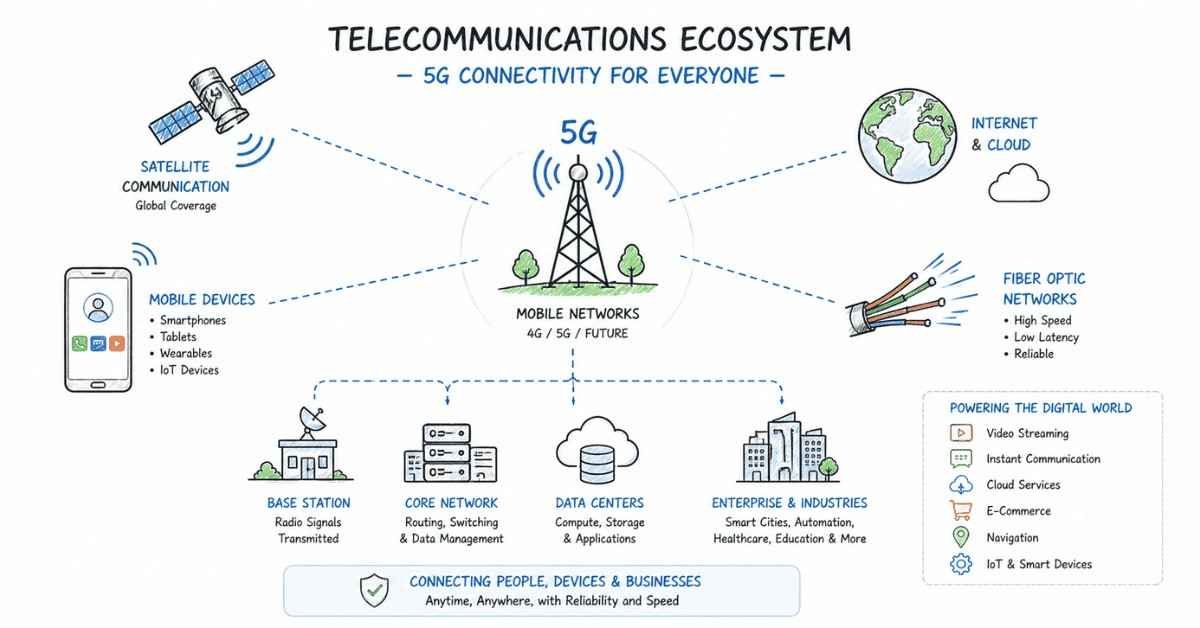
Every WhatsApp video call you make, every YouTube video you stream, every email you send from your phone all depend on the invisible telecommunications infrastructure connecting billions of devices worldwide. When Reliance Jio launched affordable 4G and transformed India into a data-consuming nation overnight, when you seamlessly hand off calls while traveling between cell towers, when your video conference happens in real-time despite participants across continents telecommunications engineers made it possible.
India is now rolling out 5G networks aggressively, having auctioned spectrum worth over ₹1.5 lakh crores. Airtel, Jio, and Vi are deploying thousands of 5G base stations. Beyond consumer connectivity, telecom infrastructure powers the digital economy: fintech transactions, IoT devices, smart cities, industrial automation, telemedicine, remote education all require robust telecommunications networks.
For electrical engineers with interest in wireless technology, signal processing, communication systems, or RF engineering, telecommunications offers diverse, well-paying careers. This comprehensive guide explores what telecom engineers actually do, where they work, skills that matter, salary expectations, and how 5G and future technologies are creating new opportunities.

Understanding Telecommunications Engineering
What Telecommunications Engineers Do
Simple Definition: Telecommunications engineers design, deploy, optimize, and maintain systems that transmit information wirelessly or through cables from mobile networks to fiber optics, from satellite communication to data centers.
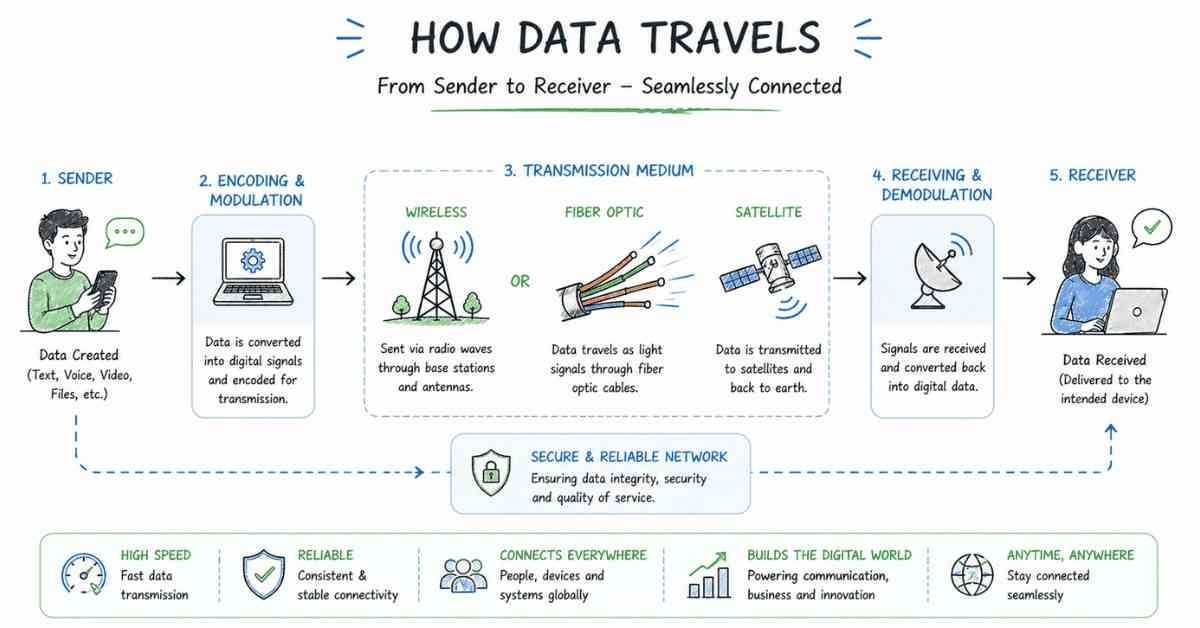
The Scope:
- Mobile Networks: 4G, 5G, and future cellular technologies
- Wireless Communication: WiFi, Bluetooth, IoT connectivity
- Fiber Optic Networks: Backbone of internet and mobile networks
- Satellite Communication: Broadcasting, remote connectivity, navigation
- Data Centers: Network infrastructure for cloud computing
- Signal Processing: Algorithms for communication, audio, image processing
Key Domains Within Telecom
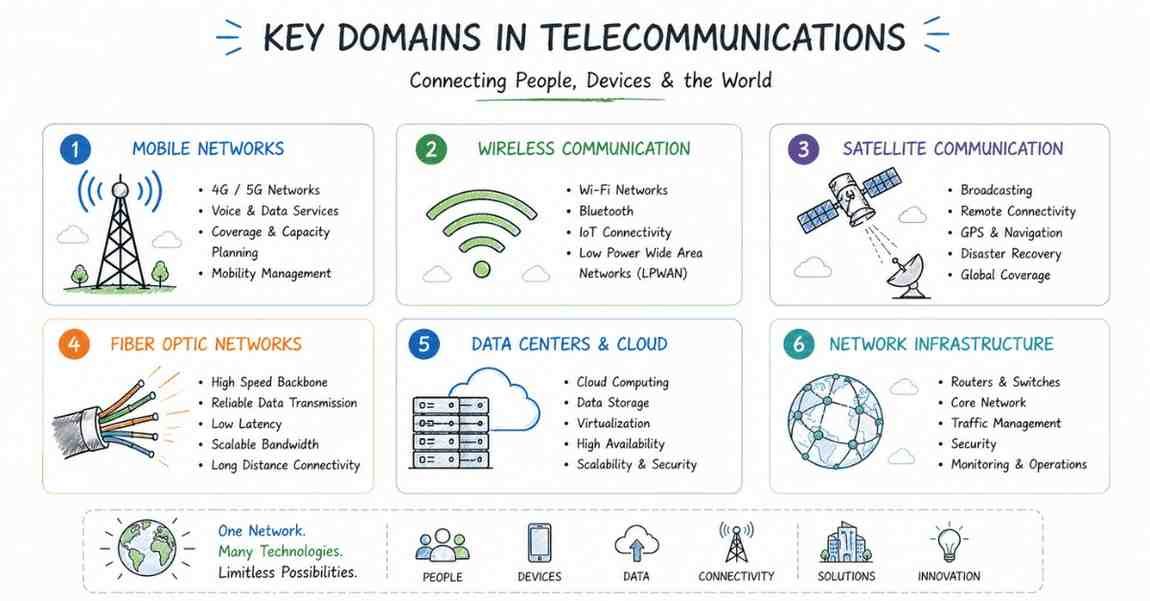
Radio Frequency (RF) Engineering:
- Antenna design and propagation
- RF circuit design
- Spectrum management
- Coverage planning
- Interference mitigation
Network Planning and Optimization:
- Cell site planning and design
- Network capacity planning
- Drive testing and optimization
- Quality of service management
- Frequency planning
Core Network Engineering:
- Switching systems
- Routing and protocols
- Network security
- Interconnection with other networks
- Cloud-native core networks (5G)
Signal Processing:
- Digital signal processing algorithms
- Modulation and coding
- Channel estimation and equalization
- Audio/video/image processing
- Machine learning for signal processing
Transmission Engineering:
- Fiber optic networks
- Microwave links
- Optical transmission systems
- Network synchronization
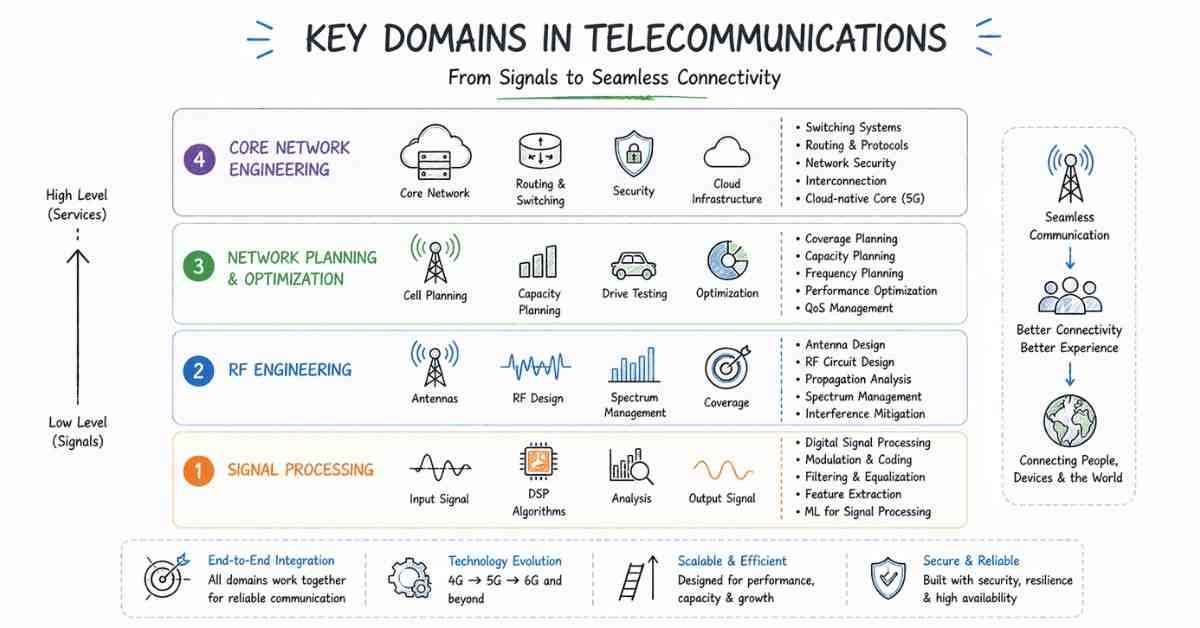
Career Paths in Telecommunications
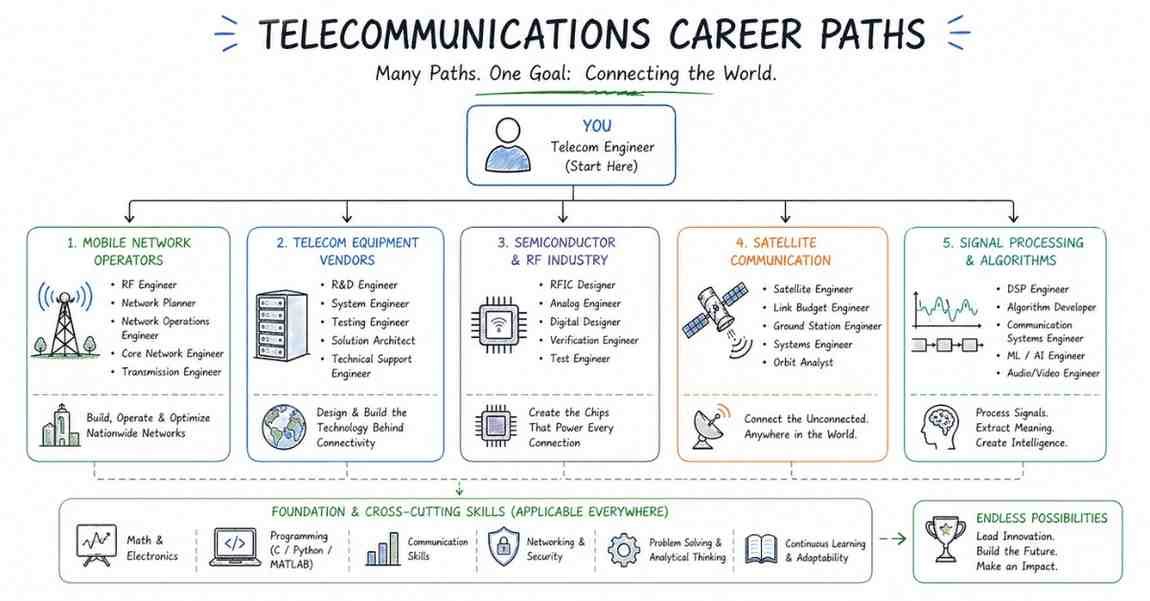
Path 1: Mobile Network Operators
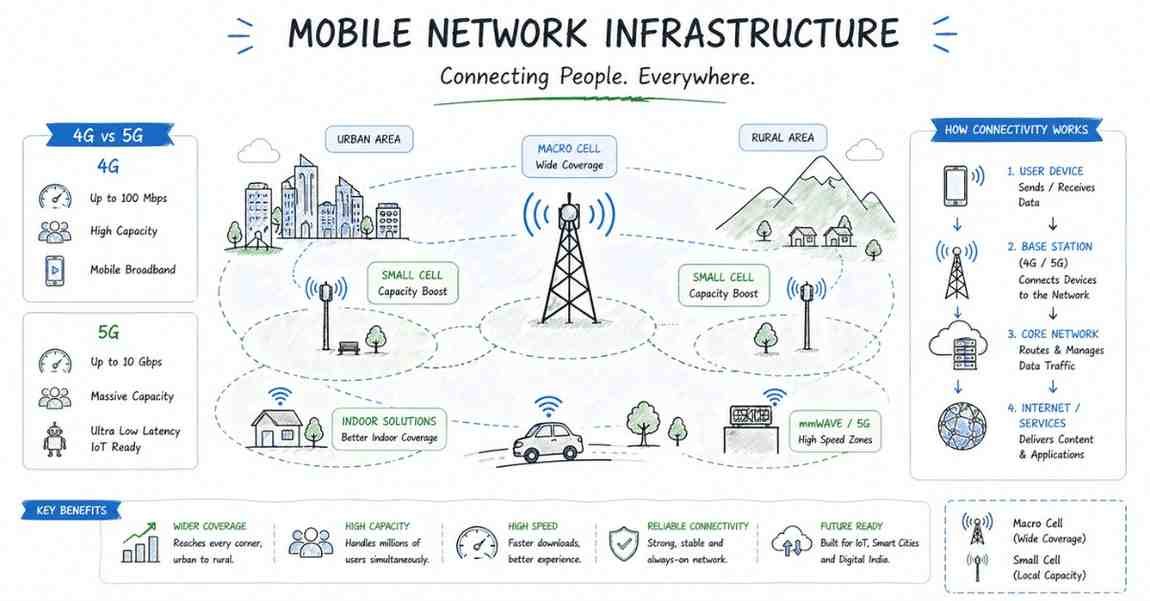
The Big Players in India:
- Reliance Jio: Largest data network, aggressive 5G deployment
- Bharti Airtel: Leading private operator, strong network quality
- Vodafone Idea (Vi): Third major player
- BSNL/MTNL: Government operators
Job Roles:
RF Engineer:
- Cell site planning and optimization
- Coverage analysis and improvement
- Drive testing and measurement
- Antenna system design
- Spectrum efficiency optimization
Network Planning Engineer:
- Capacity planning for growing subscribers
- Technology migration planning (4G to 5G)
- Network expansion strategies
- Traffic analysis and forecasting
Network Operations Engineer:
- 24×7 network monitoring
- Fault management and troubleshooting
- Incident response and resolution
- Performance monitoring
- Service restoration
Core Network Engineer:
- Switching systems management
- Routing and interconnection
- Network security implementation
- Cloud-based core network (5G SA)
Transmission Engineer:
- Fiber optic network planning
- Microwave link planning
- Transmission equipment management
- Backhaul network optimization
Salary Range:
- Fresher: ₹5-10 LPA
- 3-5 years: ₹10-18 LPA
- 7-10 years: ₹18-30 LPA
- Senior/Manager: ₹30-50 LPA
Work Environment:
- Mix of office work and field work
- Network operations center (NOC) monitoring
- Site visits for troubleshooting and optimization
- Shift work possible for operations roles
- Metros and major cities primarily
Career Appeal:
- Stable industry always needed
- Good work-life balance generally
- Continuous technology evolution (4G→5G→6G)
- Respectable salaries
- Large organizations with structured career paths
Path 2: Telecom Equipment Manufacturers
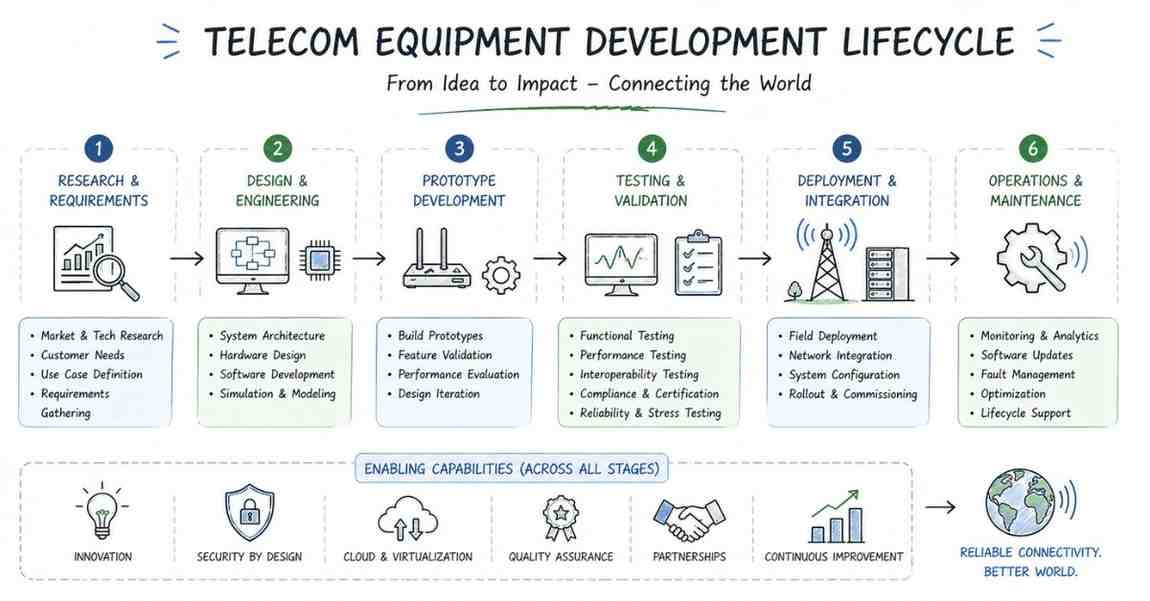
Major Companies in India:
- Nokia India: Network equipment, R&D center in Bangalore
- Ericsson India: Infrastructure provider, R&D and deployment
- Samsung Networks: Growing presence in 5G
- Huawei India: Equipment provider (limited due to security concerns)
- Ciena: Optical networking
- NEC: Network solutions
- Sterlite Technologies (STL): Optical fiber and networking
Job Roles:
R&D Engineer:
- Developing new communication technologies
- Algorithm development
- Protocol implementation
- Hardware/software integration
- Testing and validation
Application Engineer:
- Customer support for equipment
- Solution design for operator needs
- Pre-sales technical consultation
- Performance optimization
- Training customer engineers
Product Manager (after experience):
- Product roadmap definition
- Market requirements analysis
- Cross-functional coordination
- Product launches
Field Engineer:
- Equipment installation and commissioning
- On-site troubleshooting
- Integration with customer networks
- Customer training
Salary Range:
- Fresher: ₹6-12 LPA
- Mid-level: ₹12-25 LPA
- Senior: ₹25-45 LPA
- Architect/Principal Engineer: ₹45-70 LPA
Career Appeal:
- Cutting-edge technology exposure
- Global companies with international opportunities
- R&D roles intellectually stimulating
- Higher salaries compared to operators
- Innovation-focused culture
Path 3: Semiconductor & RF Companies
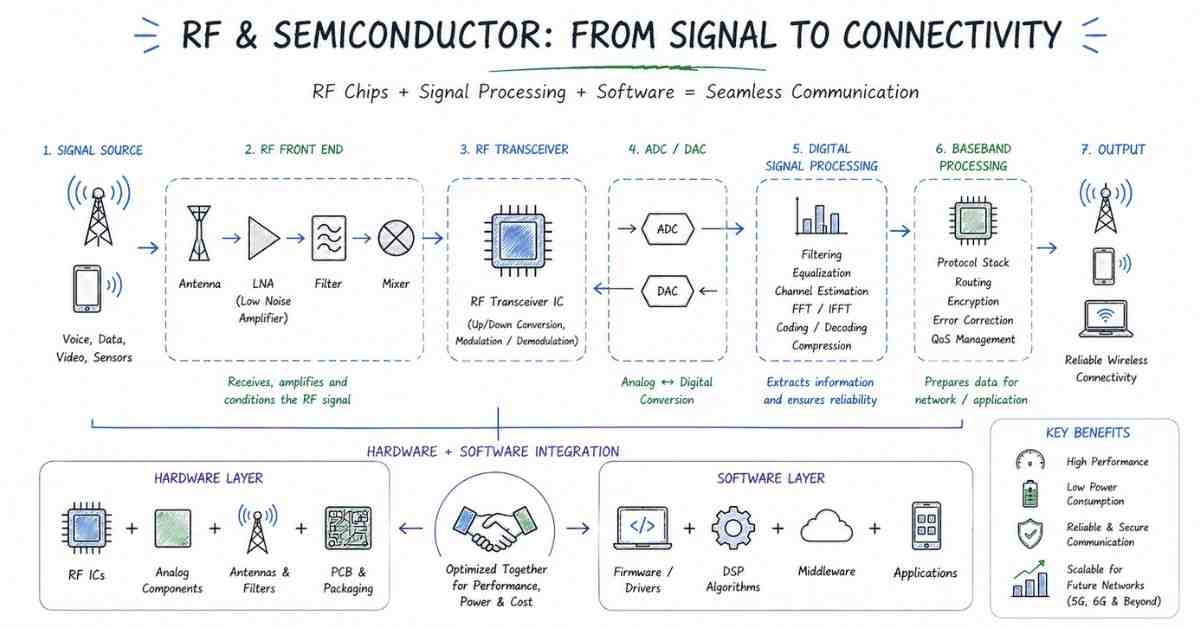
Companies:
- Qualcomm India: Chipsets for mobile devices, large R&D presence
- Intel India: 5G and wireless technology
- Broadcom: Networking chips
- MediaTek: Mobile chipsets
- Analog Devices: RF components
- Skyworks, Qorvo: RF front-end components
Job Roles:
RF IC Design Engineer:
- Designing radio frequency integrated circuits
- Amplifiers, mixers, filters, synthesizers
- Layout and simulation
- Characterization and testing
Signal Processing Engineer:
- DSP algorithm development
- Baseband processing
- Modem design and optimization
- Software-hardware co-design
Wireless System Engineer:
- Link budget analysis
- System simulations
- Standards compliance (3GPP)
- Performance analysis
Salary Range:
- Fresher: ₹10-18 LPA (semiconductor pays premium)
- Mid-level: ₹18-35 LPA
- Senior: ₹35-60+ LPA
Skills Required:
- Deep understanding of RF and analog circuits
- Signal processing algorithms
- Communication theory
- Chip design tools (Cadence, Keysight ADS)
- Programming (MATLAB, Python, C/C++)
- Often requires M.Tech for better roles
Path 4: Satellite Communication
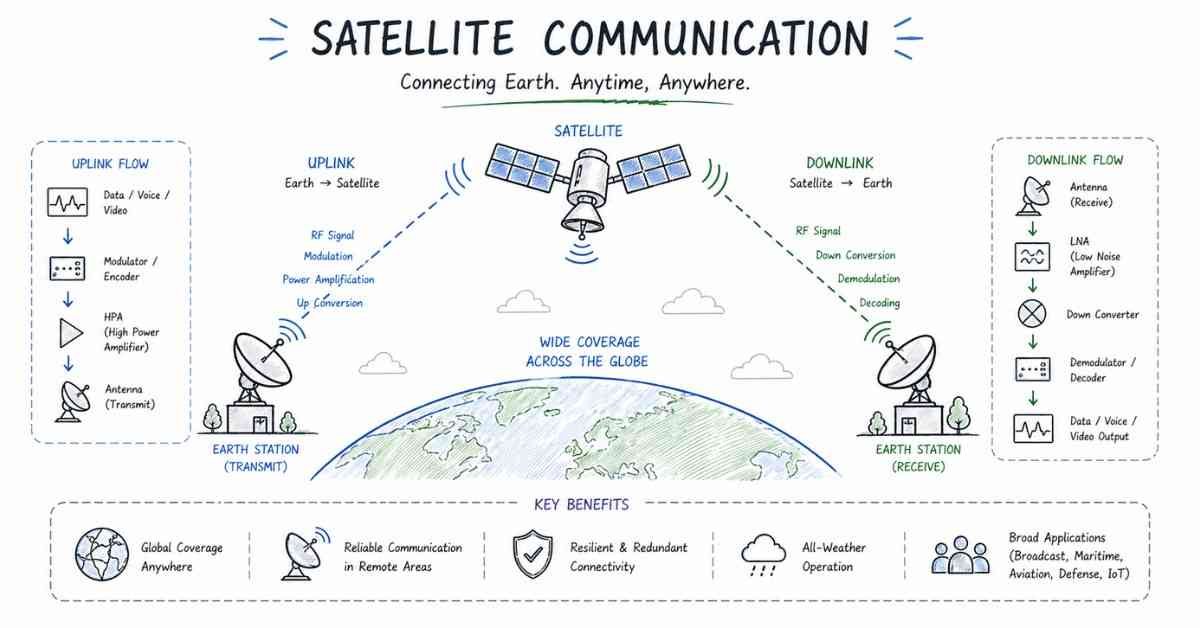
Organizations:
- ISRO: Satellite development and launches
- Antrix Corporation: Commercial arm of ISRO
- NewSpace India Limited: ISRO commercial entity
- Private satellite companies: Emerging startups
- DTH operators: Tata Sky, Dish TV, Airtel Digital TV
Job Roles:
Satellite Communication Engineer:
- Satellite link design
- Ground station engineering
- Transponder management
- Uplink/downlink optimization
- Interference analysis
Antenna Engineer:
- Satellite antenna design
- Ground antenna systems
- Beamforming and tracking
- Pattern analysis
Satellite Network Engineer:
- VSAT network design
- Network management
- Bandwidth allocation
- Service provisioning
Salary Range:
- ISRO/PSU: ₹7-12 LPA (fresher); job security excellent
- Private satellite: ₹8-16 LPA (fresher)
- Senior roles: ₹20-40 LPA
Career Appeal:
- Prestigious work (space technology)
- National importance
- Technically challenging
- ISRO offers excellent job security
Path 5: Signal Processing & DSP
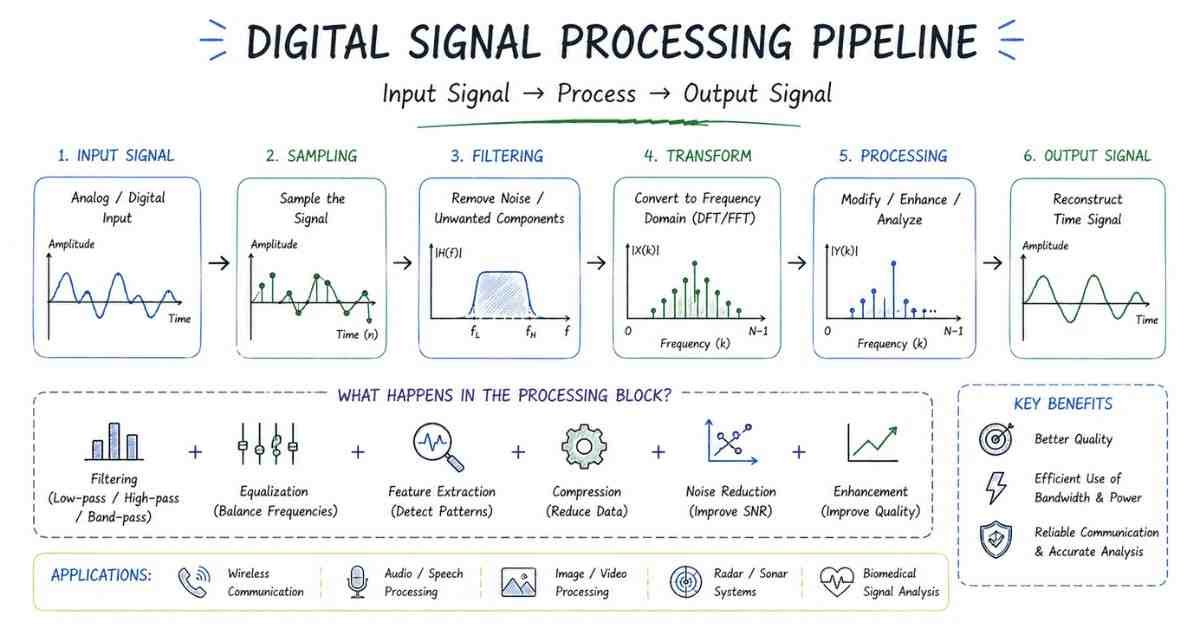
What It Involves:
Developing algorithms for processing signals audio, video, sensor data, communication signals
Applications:
- Speech processing for voice assistants
- Audio processing in headphones, hearing aids
- Image processing for cameras
- Video compression and streaming
- Radar signal processing
- Biomedical signal processing (ECG, EEG)
- Communication signal processing
Companies:
- Consumer electronics (Samsung, Sony, Boat, others)
- Semiconductor (Qualcomm, Intel, Analog Devices)
- Audio companies (Harman, Bose, Sennheiser)
- Medical device companies
- Defense organizations (DRDO)
Job Roles:
DSP Algorithm Engineer:
- Developing signal processing algorithms
- MATLAB/Simulink simulation
- Real-time implementation optimization
- Performance analysis
Audio DSP Engineer:
- Audio enhancement algorithms
- Noise cancellation
- Acoustic echo cancellation
- Spatial audio processing
Image/Video Processing Engineer:
- Image enhancement
- Video compression
- Computer vision algorithms
- Real-time video processing
Salary Range:
- Fresher with strong DSP skills: ₹7-14 LPA
- Mid-level: ₹14-28 LPA
- Senior/Expert: ₹28-50+ LPA
Skills Required:
- Strong signal processing fundamentals
- MATLAB proficiency (critical)
- Programming (C/C++, Python)
- Real-time DSP programming (TI DSPs, ARM)
- Machine learning (increasingly important)
- Mathematics (linear algebra, probability, statistics)
5G and Future Technologies
5G Creating New Opportunities
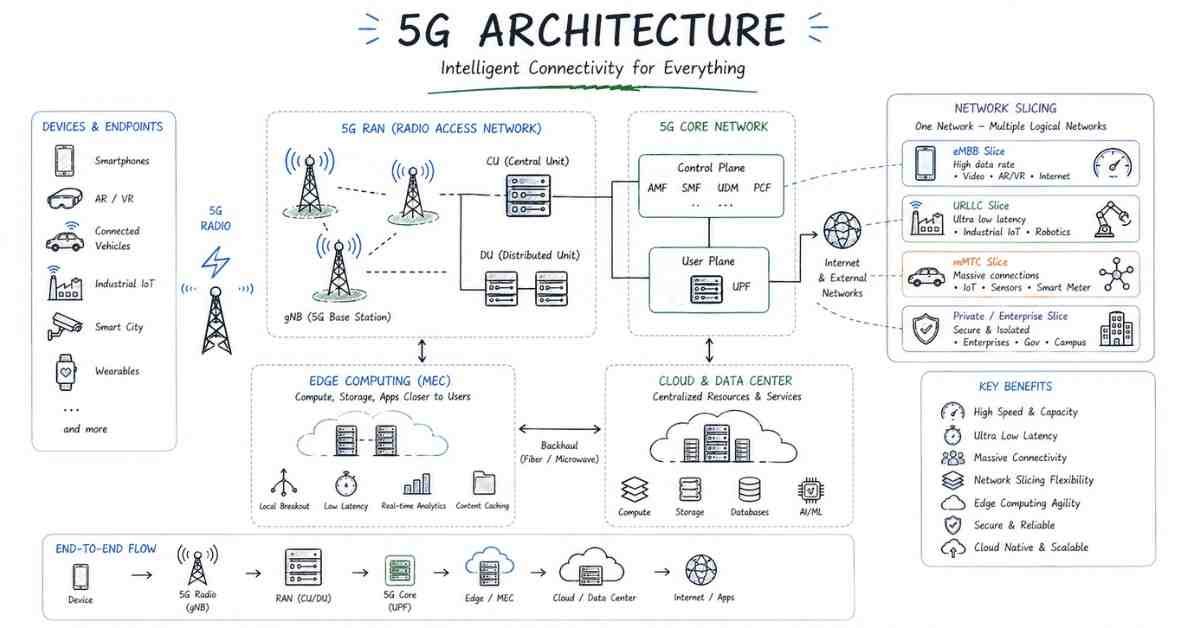
What’s Different in 5G:
- Massive bandwidth (10+ Gbps possible)
- Ultra-low latency (<1 ms)
- Massive device connectivity (1 million devices/sq km)
- Network slicing (customized networks for different applications)
- Edge computing integration
New Job Roles:
5G Network Architect:
- Designing end-to-end 5G networks
- Cloud-native architecture
- Network slicing implementation
- Multi-access edge computing (MEC)
5G RAN Engineer:
- Radio access network design
- Massive MIMO optimization
- Beamforming and beam management
- Open RAN implementation
Edge Computing Engineer:
- Deploying compute at network edge
- Low-latency applications
- Integration with 5G core
- Container orchestration (Kubernetes)
Network Automation Engineer:
- AI/ML for network optimization
- Self-organizing networks (SON)
- Automated network operations
- Intent-based networking
Salary Premium: 5G skills command 15-25% premium over 4G roles
Emerging Areas
Private 5G Networks:
- Enterprises deploying dedicated 5G networks
- Industrial IoT applications
- Critical communication systems
- Engineering services opportunity
Satellite Internet (LEO Constellations):
- Starlink-type systems
- Global connectivity
- India developing own constellations
- New engineering challenges
6G Research:
- Next-generation beyond 5G
- Terahertz communication
- AI-native networks
- Early-stage research opportunities
Quantum Communication:
- Unhackable communication
- Long-distance secure links
- Research stage but high potential
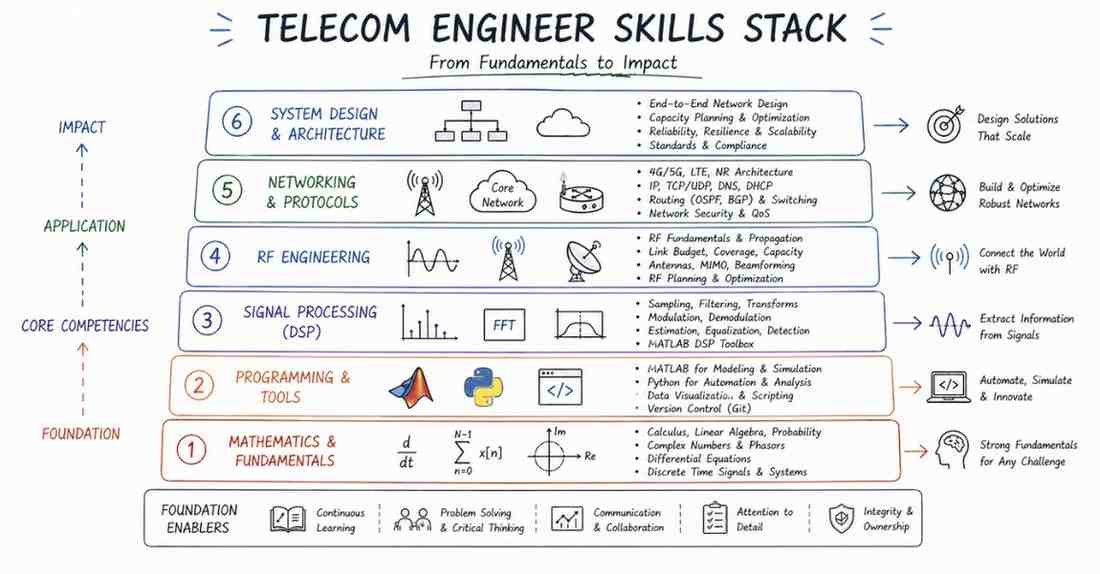
Essential Skills for Telecom Careers
Technical Fundamentals
Communication Theory:
- Modulation techniques (QAM, OFDM, etc.)
- Channel coding (Turbo, LDPC, Polar codes)
- Multiple access schemes (TDMA, FDMA, CDMA, OFDMA)
- MIMO and diversity techniques
RF Engineering:
- Antenna fundamentals and propagation
- RF circuit design
- Spectrum analysis
- Link budget calculations
- Interference analysis
Signal Processing:
- Digital signal processing
- Fourier analysis
- Filter design
- Estimation and detection theory
Networking:
- TCP/IP protocol suite
- Routing and switching
- Network architecture
- Quality of Service (QoS)
Tools and Software
Network Planning:
- Atoll: Industry-standard RF planning tool
- Planet: Optimization tool
- Google Earth: Coverage visualization
- Various drive test tools
RF Design:
- ADS (Advanced Design System): RF circuit design
- HFSS: Electromagnetic simulation
- CST Studio: Antenna design
Signal Processing:
- MATLAB: Essential for algorithm development
- Simulink: System-level modeling
- LabVIEW: Instrumentation and test
Network Simulation:
- NS-3: Network simulator
- OPNET: Commercial network simulator
- Various 3GPP simulators
Programming:
- Python: Increasingly important for automation, analysis
- C/C++: For real-time implementations
- Java: For some network applications
Standards and Protocols
3GPP Standards: Understanding LTE and 5G standards
IEEE Standards: 802.11 (WiFi), 802.15 (Bluetooth, Zigbee)
ITU Regulations: International spectrum and satellite regulations
ETSI Standards: European telecommunications standards
Certifications Worth Considering
Vendor Certifications:
- Cisco (CCNA, CCNP for networking fundamentals)
- Huawei (HCIA, HCIP for telecom)
- Nokia/Ericsson (vendor-specific training)
General Certifications:
- Certified Wireless Network Administrator (CWNA)
- Certified Network Associate programs
- 5G-specific certifications emerging
Cost: ₹15,000-60,000 depending on level and vendor
Value: Particularly valuable for network operations roles
Education Pathways
Academic Background
B.Tech/B.E. Electronics & Communication Engineering (ECE): Most direct path to telecom
B.Tech Electrical Engineering: Also suitable, especially with focus on:
- Communication systems
- Signal processing electives
- Wireless communication
- RF engineering
Key Courses:
- Analog and digital communication
- Wireless communication
- Signal processing
- Information theory and coding
- Antenna and wave propagation
- Microwave engineering
- Mobile communication
Specialization Options
M.Tech in Communication Systems:
- Deep specialization
- Research opportunities
- Better for R&D roles
- Particularly valuable for semiconductor companies
M.Tech in Signal Processing:
- Algorithm-focused
- Audio/video/image processing
- Machine learning integration
MBA (after few years):
- For product management roles
- Business development in telecom
- Transition to management
Online Learning
Coursera/edX:
- Wireless communication courses
- Digital signal processing specializations
- 5G technology courses
NPTEL:
- Free courses from IIT professors
- Communication systems
- Signal processing
Udemy:
- Practical courses on specific tools
- RF engineering, antenna design
Day in the Life: Real Scenarios
RF Engineer at Mobile Operator
Morning:
- Review overnight alarms and network performance
- Analyze coverage complaints from customer care
- Plan drive test route for problem areas
Mid-Day:
- Drive testing with measurement equipment
- Recording signal strength, quality metrics
- Visiting cell sites, checking antenna configurations
Afternoon:
- Back to office, analyzing drive test data
- Using Atoll to simulate coverage improvements
- Proposing new site locations or antenna changes
Late Afternoon:
- Meeting with network planning team
- Discussing capacity issues in congested areas
- Preparing reports for management
Tools Used: Drive test equipment, Atoll, Google Earth, Excel, specialized analysis software
Challenges: Coverage vs cost trade-offs, interference management, meeting KPI targets
Rewards: Seeing network quality improve, problem-solving, field+office balance
DSP Algorithm Engineer at Audio Company
Typical Day:
- Morning standup with algorithm team
- Working on noise cancellation algorithm improvement
- MATLAB simulation and testing
- Reviewing performance metrics
- Afternoon: Porting algorithm to embedded DSP
- Optimizing for real-time performance
- Debugging issues with test audio
- Listening tests with prototype headphones
- Documentation and code review
- Planning next sprint’s features
Tools Used: MATLAB, Code Composer Studio (TI DSP), C programming, Audio analyzers
Challenges: Real-time constraints, computational efficiency, subjective audio quality
Rewards: Hearing your algorithm in actual products, technical depth, innovation
5G Core Network Engineer at Equipment Vendor
Typical Week:
- Lab testing of new 5G core features
- Integration with radio access network
- Troubleshooting interoperability issues
- Customer site visit for deployment support
- Pre-sales technical consultation
- Preparing technical documentation
- Training customer engineers
- Coordinating with R&D on bugs
Tools Used: Network management systems, Protocol analyzers, Linux systems, Docker/Kubernetes
Challenges: Complex protocols, multi-vendor interoperability, customer expectations
Rewards: Cutting-edge technology, problem-solving, customer interaction, good compensation
Salary Deep Dive
By Company Type and Experience
Mobile Operators (Jio, Airtel, Vi):
- Fresher: ₹5-10 LPA
- 3-5 years: ₹10-18 LPA
- 7-10 years: ₹18-30 LPA
- Manager level: ₹30-50 LPA
Equipment Vendors (Nokia, Ericsson, Samsung):
- Fresher: ₹6-12 LPA
- Mid-level: ₹12-25 LPA
- Senior: ₹25-45 LPA
- Architect: ₹45-70 LPA
Semiconductor (Qualcomm, Intel, Broadcom):
- Fresher: ₹10-18 LPA (highest in telecom sector)
- Mid-level: ₹18-35 LPA
- Senior: ₹35-60+ LPA
Signal Processing (Audio/Video companies):
- Fresher: ₹7-13 LPA
- Mid-level: ₹14-26 LPA
- Senior: ₹26-45 LPA
Satellite/Defense (ISRO, DRDO):
- PSU scale: ₹7-12 LPA (fresher)
- Benefits and job security excellent
- Senior: ₹20-35 LPA
Skills Premium
5G Expertise: +15-25% over 4G
RF IC Design: +30-40% (specialized skill)
DSP Algorithm Development: +20-30%
Machine Learning for Telecom: +15-25%
MATLAB/Python Proficiency: +10-15%
Location Factor
Bangalore: +15-20% (telecom hub, most companies present)
Hyderabad: +10-15%
Gurgaon/Noida: +10-15%
Pune: +5-10%
Chennai: Average benchmark
Other cities: -10-20% typically
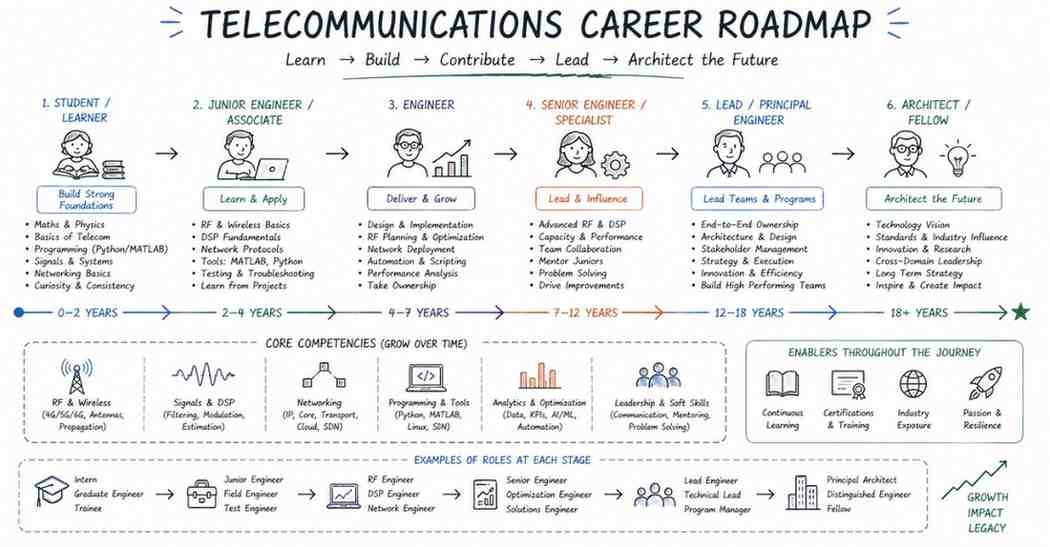
Career Progression
Technical Specialist Track
0-3 years: Engineer
- Specific technical work
- Learning systems and tools
- Project contribution
3-7 years: Senior Engineer/Specialist
- Independent project ownership
- Technical mentoring
- Complex problem-solving
7-12 years: Principal Engineer/Architect
- System design and architecture
- Technology roadmap
- Technical leadership
12+ years: Distinguished Engineer/Fellow
- Company-wide technical authority
- Innovation and patents
- Industry representation
Management Track
3-5 years: Team Lead
- Small team management (3-6 people)
- Project delivery
5-8 years: Manager
- Multiple teams or projects
- Budget responsibility
8-15 years: Senior Manager/Director
- Department leadership
- Strategic planning
15+ years: VP/Head of Engineering
- Business unit
- P&L responsibility
Future Outlook
Growing Areas
Private 5G Networks: Enterprises deploying dedicated networks consulting opportunity
Open RAN: Open standards disrupting traditional vendor lock-in new players entering
AI/ML in Networks: Self-optimizing networks, predictive maintenance, automated troubleshooting
Edge Computing: Processing at network edge for low-latency applications
IoT Connectivity: Massive IoT deployments (smart cities, industrial IoT, agriculture)
Satellite Internet: Low-earth orbit constellations providing global coverage
Skills for Future
Cloud-Native Networking: Containerization, microservices, Kubernetes
AI/ML: Python, TensorFlow, network data analytics
Security: Network security, zero-trust architecture
Programming: Automation, SDN (Software Defined Networking)
Business Acumen: Understanding telecom business models, not just technology
Is Telecommunications Right for You?
Add Your Heading Text Here
- Fascinated by wireless technology and how communication works
- Enjoy both theoretical and practical aspects
- Like seeing real-world impact of your work
- Comfortable with continuous technology evolution
- Appreciate stable industry with good work-life balance
- Want diverse career options (operators, vendors, semiconductor)
Consider Other Fields If You:
- Want absolute highest starting salaries (IT/semiconductor pays more initially)
- Dislike any field work (some telecom roles require site visits)
- Prefer pure software without hardware considerations
- Want extremely fast-paced startup environment always
Getting Started: Action Plan
For Students
During B.Tech:
- Strong foundation in communication theory
- Learn MATLAB proficiently
- RF engineering and antenna courses
- Signal processing depth
- Projects: SDR (Software Defined Radio), antenna design, communication system simulation
- Internship at telecom operator or equipment vendor
- Stay updated on 5G technology
Final Year:
- Meaningful project in wireless/signal processing
- Consider specialization courses (5G, RF design)
- Target telecom companies in placements
- Network on LinkedIn with telecom professionals
- Meaningful project in wireless/signal processing
For Working Professionals
From Other Electrical Domains:
- Take structured telecom/communication course
- Learn MATLAB and communication simulation
- Understand basics of cellular networks
- Network with telecom professionals
- Apply to operator companies (easier entry than equipment vendors initially)
Skill Priority:
- RF fundamentals for network roles
- Signal processing + programming for algorithm roles
- Networking basics for core network roles
- MATLAB is common thread across most roles.
Conclusion: Connecting the World
Telecommunications engineering put a smartphone in every Indian’s hand, connected remote villages to the internet, enabled the fintech revolution, and made India a digital-first nation. Every video call with loved ones, every online transaction, every smart device connection telecommunications infrastructure makes it possible.
As 5G rolls out across India, as satellite internet constellations deploy, as IoT connects billions of devices, as 6G research begins, telecommunications engineers will be at the center of all this connectivity.
The work is technically challenging combining electrical engineering, signal processing, and increasingly software skills. The industry is stable people always need connectivity. The compensation is solid especially at equipment vendors and semiconductor companies.
But perhaps most importantly, telecommunications offers the satisfaction of working on systems that genuinely connect people, enable digital access, and power the information age.
The conversations happening across India voice, video, data don’t happen by magic. Engineers like you make connections possible. And in our hyperconnected world, that’s as meaningful as it gets.
Welcome to telecommunications engineering. Let’s keep the world connected.