
Supply Chain Salary Guide India: Logistics & Operations Pay
Table of Contents
Introduction: The Real Numbers Behind Supply Chain Careers

Let’s talk money. Not the vague “competitive salary” you see in job postings, but actual numbers what supply chain professionals in India really earn in 2026, from entry-level coordinators to senior executives.
I’ve analyzed current salary data from multiple sources to give you the most accurate picture of supply chain compensation in India right now. Whether you’re negotiating your first job offer, planning a career switch, or preparing for your next promotion, understanding market rates is crucial. Knowing these numbers prevents you from underselling yourself or having unrealistic expectations.
Here’s what we’ll cover: salary ranges by role and experience, city-wise variations, industry differences, and most importantly—what factors actually increase your compensation beyond just years of experience.
Understanding Salary Structures in India
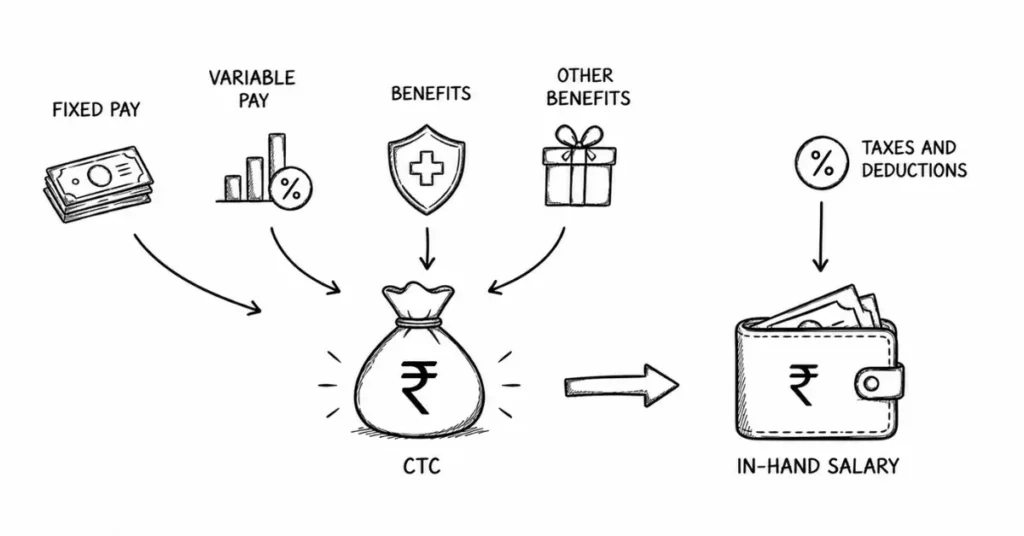
Before diving into specific numbers, let’s understand how supply chain compensation typically works:
Base Salary Components:
Fixed Pay:
- Base salary (monthly × 12)
- Fixed allowances (HRA, transport, etc.)
- This is your guaranteed annual income
Variable Pay:
- Performance bonuses (10-30% of base for mid-senior roles)
- Incentives tied to KPIs
- Annual bonuses based on company/individual performance
Benefits:
- Provident Fund (PF) contribution
- Health insurance
- Gratuity
- Stock options (in startups and listed companies)
- Other perks (vehicle, phone, fuel allowance at senior levels)
Important: When job offers mention “CTC” (Cost to Company), this includes everything—base, variable, benefits, employer PF contribution. Your actual “in-hand” salary will be 20-30% lower than CTC.
Example:
- CTC: ₹10 lakhs
- Base salary: ₹7.5 lakhs
- Variable/bonus: ₹1 lakh
- Employer PF + benefits: ₹1.5 lakhs
- Actual monthly in-hand: ~₹50,000-55,000
Understanding this prevents disappointment when you receive your first paycheck!
Entry-Level Supply Chain Salaries (0-3 Years Experience)

1. Supply Chain Analyst
Average Salary: ₹4.7 lakhs/year
Range: ₹3.5-7 lakhs depending on company and location
Breakdown by Company Type:
- Large MNCs (HUL, P&G, Marico): ₹6-8 lakhs
- E-commerce giants (Amazon, Flipkart): ₹5-7 lakhs
- Indian corporates (ITC, Godrej): ₹4.5-6 lakhs
- Mid-sized companies: ₹3.5-5 lakhs
- Startups: ₹3-5 lakhs (sometimes with ESOPs)
City Variations:
- Mumbai/Bangalore: ₹5-7 lakhs
- Delhi NCR/Pune/Hyderabad: ₹4.5-6 lakhs
- Chennai/Ahmedabad: ₹4-5.5 lakhs
- Tier-2 cities: ₹3.5-4.5 lakhs
Factors Affecting Salary:
- MBA from top B-schools: Premium of ₹2-3 lakhs
- Engineering degree: Slight premium over B.Com/BBA
- Advanced Excel/analytics skills: ₹50,000-1 lakh additional
- Prior internship experience: Better negotiating position
2. Logistics Coordinator
Average Salary: ₹3.2 lakhs/year
Range: ₹2.5-4.5 lakhs
Breakdown by Company Type:
- E-commerce/Quick commerce: ₹3.5-4.5 lakhs
- 3PL companies (Delhivery, Blue Dart): ₹3-4 lakhs
- Manufacturing companies: ₹2.5-3.5 lakhs
- Logistics service providers: ₹2.5-3.5 lakhs
Reality Check:
This is often the most accessible entry point into supply chain—companies hire fresh graduates with minimal requirements. Salary is modest but growth potential is strong (can reach ₹6-8 lakhs in 3-4 years with performance).
3. Procurement Executive
Average Salary: ₹2.1 lakhs/year
Range: ₹2-3.5 lakhs
Why Lower?
Procurement executive roles are often highly operational (raising POs, tracking deliveries) rather than strategic. However, progression to procurement manager roles (₹8-12 lakhs) happens within 4-5 years for good performers.
Breakdown:
- Large manufacturing: ₹2.5-3.5 lakhs
- IT/services companies: ₹2.5-3 lakhs
- Small-medium enterprises: ₹2-2.5 lakhs
4. Operations Assistant
Average Salary: ₹2.4 lakhs/year
Range: ₹2-3.5 lakhs
- Inventory Analyst
Average Salary: ₹2 lakhs/year
Range: ₹2-3.5 lakhs
Entry-Level Summary:
Fresh graduates can expect ₹2-5 lakhs depending on role, company, location, and qualifications. Top performers at premium companies might start at ₹6-8 lakhs, but that’s the exception, not the norm.
Mid-Level Supply Chain Salaries (3-7 Years Experience)
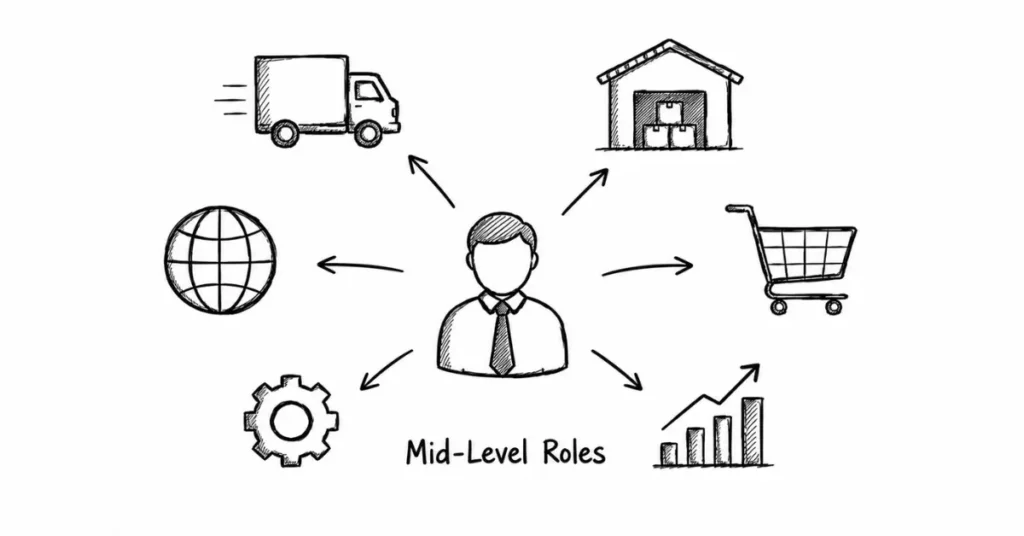
Supply Chain Manager
Average Salary: ₹14.5 lakhs/year
Range: ₹8-20 lakhs
Detailed Breakdown:
By Experience:
- 3-4 years: ₹8-12 lakhs
- 5-6 years: ₹12-16 lakhs
- 7-8 years: ₹15-20 lakhs
By Industry:
- Consumer Goods/FMCG: ₹15-20 lakhs (highest paying)
- Manufacturing: ₹12-17 lakhs
- E-commerce: ₹10-16 lakhs
- Pharmaceuticals: ₹12-17 lakhs
- Logistics/3PL: ₹9-14 lakhs
- Retail: ₹10-15 lakhs
By Company Size:
- Fortune 500 MNCs: ₹16-22 lakhs
- Large Indian corporations: ₹13-18 lakhs
- Mid-sized companies: ₹10-14 lakhs
- Startups: ₹8-14 lakhs (+ potential equity)
By City:
- Mumbai: ₹15-20 lakhs (highest, reflects cost of living)
- Bangalore/Pune: ₹14-18 lakhs
- Delhi NCR: ₹13-17 lakhs
- Hyderabad: ₹12-16 lakhs
- Chennai: ₹11-15 lakhs
- Tier-2 cities: ₹9-13 lakhs
Skills Premium:
- APICS CSCP certification: +₹1.5-2 lakhs
- SAP expertise: +₹1-2 lakhs]
- Advanced analytics skills: +₹2-3 lakhs
- Six Sigma Black Belt: +₹1-1.5 lakhs
Logistics Manager
Average Salary: ₹10 lakhs/year
Range: ₹7-14 lakhs
By Experience:
- 3-4 years: ₹7-9 lakhs
- 5-6 years: ₹9-12 lakhs
- 7-8 years: ₹11-14 lakhs
Industry Variations:
- E-commerce companies pay premiums (₹12-15 lakhs) due to high demand
- Traditional logistics companies pay lower (₹8-11 lakhs) but offer stability
- Manufacturing companies fall in between (₹9-12 lakhs)
Operations Manager
Average Salary: ₹10.9 lakhs/year
Range: ₹8-15 lakhs
Variations by Industry:
- Manufacturing plants: ₹10-14 lakhs
- E-commerce warehouses: ₹9-13 lakhs
- Service operations: ₹8-12 lakhs
Location Impact:
Operations managers in manufacturing hubs (Pune, Ahmedabad, Chennai) earn on par with metro cities since facilities are often in these locations.
Procurement Manager
Average Salary: ₹12 lakhs/year
Range: ₹9-16 lakhs
Why Higher?
Procurement directly impacts profitability. Managers who negotiate significant savings are highly valued. Top performers can reach ₹15-18 lakhs with 7-8 years experience.
Specialization Premium:
- Strategic sourcing specialists: +₹2-3 lakhs
- Category managers (IT, Marketing): +₹1-2 lakhs
- Global sourcing experience: +₹2-4 lakhs
Demand Planner / S&OP Manager
Average Salary: ₹11 lakhs/year
Range: ₹8-15 lakhs
Growing Role:
Demand planning is among top 5 sought-after supply chain profiles in India. Professionals with proven forecast accuracy improvements command premium salaries.
Skills Impact:
- Advanced statistical forecasting: +₹2-3 lakhs
- SAP IBP expertise: +₹2 lakhs
- S&OP facilitation experience: +₹1-2 lakhs
Warehouse Manager
Average Salary: ₹6.4 lakhs/year
Range: ₹5-12 lakhs
Wide Range Explained:
- Small warehouses (10,000 sq ft): ₹5-7 lakhs
- Medium facilities (50,000 sq ft): ₹7-9 lakhs
- Large fulfillment centers (200,000+ sq ft): ₹10-14 lakhs
Company Impact:
- Amazon/Flipkart fulfillment centers: ₹9-14 lakhs
- 3PL warehouses: ₹6-9 lakhs
- Manufacturing warehouses: ₹5-8 lakhs
Senior-Level Supply Chain Salaries (7-15 Years Experience)
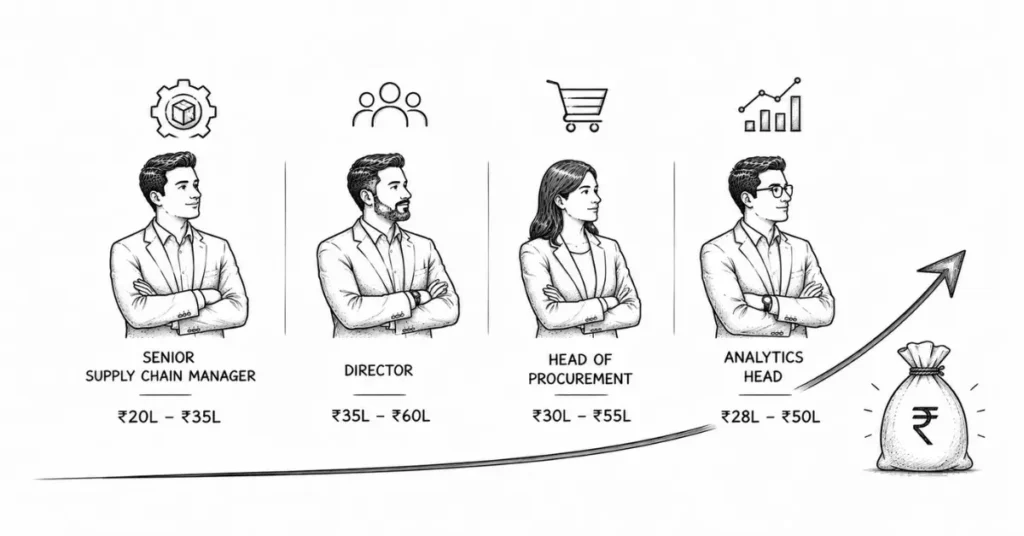
Senior Supply Chain Manager
Average Salary: ₹16.8 lakhs/year
Range: ₹14-25 lakhs
By Experience:
- 7-9 years: ₹14-18 lakhs
- 10-12 years: ₹17-22 lakhs
- 13-15 years: ₹20-25 lakhs
Industry Leaders:
- Consumer Goods: ₹20-25 lakhs
- Automotive: ₹18-23 lakhs
- Pharmaceuticals: ₹17-22 lakhs
- E-commerce: ₹16-20 lakhs
Supply Chain Director / Head of Supply Chain
Average Salary: ₹22 lakhs/year
Range: ₹18-32 lakhs
Typical Profile:
- 12-18 years experience
- Managing 50-150 people
- Budget responsibility: ₹50-200 crores
- Multiple functional areas oversight
Top End (Large MNCs):
Directors at companies like HUL, P&G, ITC can earn ₹28-35 lakhs with performance bonuses pushing total compensation to ₹35-40 lakhs.
Head of Procurement / Chief Procurement Officer
Average Salary: ₹25 lakhs/year
Range: ₹20-35 lakhs
Why Higher?
Procurement heads managing ₹500+ crore spend demonstrate direct P&L impact. Those achieving 3-5% year-over-year cost reductions (saving tens of crores) are highly compensated.
Supply Chain Analytics Manager / Head
Average Salary: ₹18 lakhs/year
Range: ₹15-28 lakhs
Emerging High-Value Role:
As companies become data-driven, analytics leadership commands premiums. Professionals combining supply chain expertise with advanced analytics skills (Python, machine learning) earn top end of range.
Executive-Level Supply Chain Salaries (15+ Years Experience)
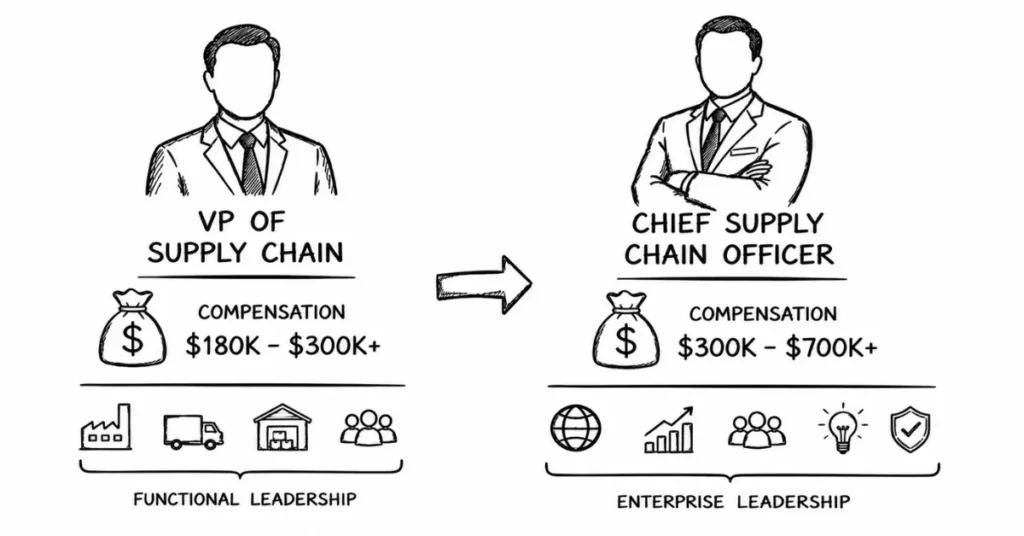
Vice President - Supply Chain
Average Salary: ₹35 lakhs/year
Range: ₹28-50 lakhs
Compensation Structure:
- Base: ₹25-35 lakhs
- Performance bonus: 30-50% of base
- Stock options (if applicable)
- Total: ₹35-50 lakhs
By Company Revenue:
- ₹5,000+ crore companies: ₹40-60 lakhs
- ₹1,000-5,000 crore companies: ₹30-45 lakhs
- ₹500-1,000 crore companies: ₹25-35 lakhs
Chief Supply Chain Officer (CSCO)
Average Salary: ₹45 lakhs/year
Range: ₹35-65+ lakhs
Top End:
CSCOs at India’s largest corporations (Reliance, Tata Group, Aditya Birla, HUL) can earn ₹60-100+ lakhs total compensation including bonuses and long-term incentives.
Reality Check:
CSCO positions exist primarily in companies with ₹5,000+ crore revenue. Smaller companies typically cap at VP or Director level.
Salary Comparison: Indian Cities (2026)
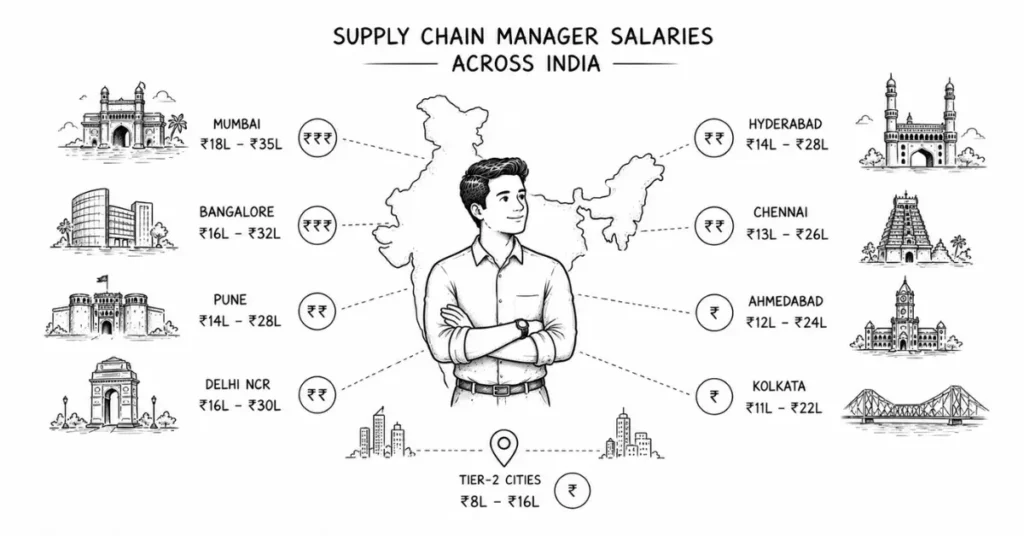
Supply Chain Manager (6 years experience) – City Comparison:
City | Average Salary | Cost of Living Index |
Mumbai | ₹15.5 lakhs | Highest |
Bangalore | ₹14.8 lakhs | High |
Pune | ₹14.2 lakhs | High |
Delhi NCR | ₹14 lakhs | High |
Hyderabad | ₹13.2 lakhs | Medium |
Chennai | ₹12.8 lakhs | Medium |
Ahmedabad | ₹12.5 lakhs | Medium |
Kolkata | ₹11.8 lakhs | Medium |
Jaipur/Chandigarh | ₹11 lakhs | Lower |
Tier-2 cities | ₹9-10 lakhs | Lower |
Key Insight:
Higher salaries in metros are often offset by higher living costs. Real purchasing power may be similar across cities. Consider total lifestyle, not just salary number.
Industry-Wise Salary Comparison (Manager Level)
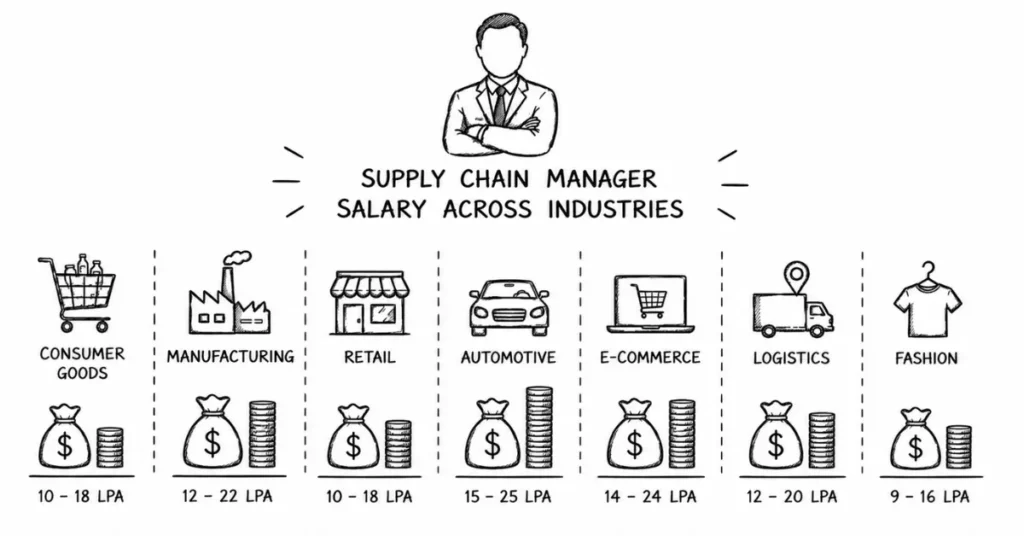
Industry | Average Manager Salary | Premium vs Average |
Consumer Goods | ₹20 lakhs | +38% |
Manufacturing | ₹17.5 lakhs | +21% |
Engineering & Construction | ₹17 lakhs | +17% |
Retail | ₹15.6 lakhs | +8% |
Automobile | ₹14.2 lakhs | -2% |
Internet/E-commerce | ₹13.4 lakhs | -8% |
Logistics/3PL | ₹13 lakhs | -10% |
Fashion & Textile | ₹11.2 lakhs | -23% |
Surprising Findings:
Consumer goods pays highest because supply chain excellence directly impacts market competitiveness. Companies like HUL, P&G invest heavily in supply chain talent.
E-commerce pays less than expected at manager level (though entry-level is competitive). However, e-commerce offers faster growth and better work-life balance in some cases.
Logistics companies pay least despite being pure supply chain businesses. Reason: Lower margins, highly competitive industry. However, excellent learning opportunities.
Factors That Significantly Impact Your Salary
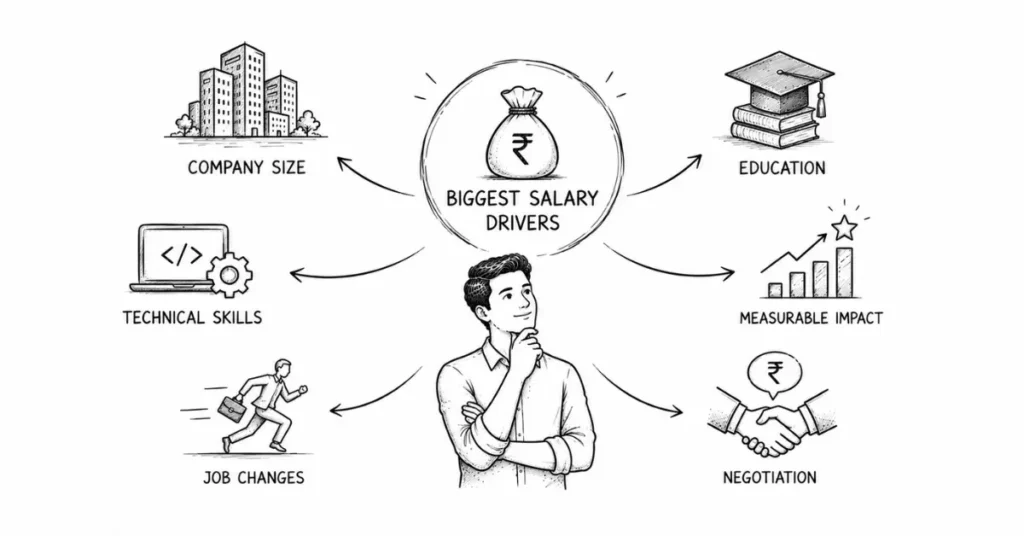
1. Company Size and Type
Large MNCs: Pay 20-40% premium over market average
Indian Conglomerates: Pay 10-25% premium
Mid-sized companies: Pay market rates
Startups: Variable—often lower base but equity upside
2. Educational Qualifications
MBA from top B-schools (IIMs, ISB, XLRI, FMS): +₹3-5 lakhs premium
MBA from tier-2 B-schools: +₹1-2 lakhs
Engineering degree: +₹50,000-1 lakh vs non-engineering
APICS certifications: +₹1.5-2 lakhs
3. Technical Skills
SAP expertise: +₹1-2 lakhs
Advanced analytics (Python, ML): +₹2-4 lakhs
Supply chain software proficiency: +₹1-1.5 lakhs
Advanced Excel/modeling: +₹50,000-1 lakh
4. Demonstrated Impact
Quantifiable achievements matter enormously:
- “Reduced logistics costs by ₹8 crores annually”
- “Improved forecast accuracy from 70% to 87%”
- “Led SAP implementation for ₹50 crore business unit”
- “Managed ₹200 crore procurement spend”
Professionals who quantify impact negotiate 15-25% higher salaries.
5. Job Changes vs Internal Promotions
Strategic job change: 20-35% salary increase typical
Internal promotion: 10-15% increase typical
Counter-offers: Often 15-20% to retain talent
Strategy: Every 3-4 years, assess market. Strategic moves accelerate compensation growth significantly faster than staying at one company.
6. Negotiation Skills
Same role at same company can have 10-15% salary variation based purely on negotiation. Yet many candidates accept first offers without negotiation—leaving lakhs on the table over career.
Salary Growth Trajectory: Real Examples
Path 1: Fast-Track Growth (Aggressive Career Management)
- Year 0 (Fresh Graduate): Supply Chain Analyst at FMCG company – ₹6 lakhs
- Year 3: Senior Analyst (internal promotion) – ₹8.5 lakhs
- Year 5: Manager role at e-commerce company (job change) – ₹13 lakhs (+53%)
- Year 8: Senior Manager at MNC (job change + CSCP) – ₹19 lakhs (+46%)
- Year 12: Director at large corporate – ₹28 lakhs (+47%)
- Year 17: VP Supply Chain – ₹42 lakhs (+50%)
Total growth: 6 lakhs → 42 lakhs (7x increase in 17 years)
Path 2: Steady Growth (Conservative Career Path)
- Year 0: Logistics Coordinator at mid-sized company – ₹3.5 lakhs
- Year 4: Logistics Manager (internal promotion) – ₹6 lakhs
- Year 8: Senior Manager (internal promotion) – ₹9 lakhs
- Year 12: Associate Director (internal promotion) – ₹13 lakhs
- Year 17: Director Operations – ₹18 lakhs
Total growth: 3.5 lakhs → 18 lakhs (5x increase in 17 years)
Key Difference:
Strategic job changes every 3-5 years accelerate compensation significantly. Internal promotions provide stability but slower growth.
Salary Negotiation: Maximize Your Compensation
When You Have Leverage:
Job Offers (New Company):
- Always negotiate—companies expect it
- Research market rates thoroughly
- Ask for 15-20% above your current CTC
- If they can’t increase base, negotiate variable, joining bonus, or benefits
- Get offer in writing before resigning current job
Performance Review Time:
- Document achievements with quantifiable impact
- Research market rates for your role
- Present case for increase based on performance and market
- Be prepared to discuss external opportunities if needed
- Timing matters—ask during strong performance periods
Retention Discussions:
- If you have external offer, current company may counter-offer
- Typical counter-offers: 15-25% increase
- Consider carefully—why were you leaving? Money alone may not fix underlying issues
- If accepting counter-offer, ensure promotion/scope increase, not just salary
Negotiation Mistakes to Avoid:
❌ Accepting first offer without negotiation
❌ Revealing current salary too early (let them make first offer)
❌ Focusing only on base salary (total compensation matters)
❌ Making ultimatums unless prepared to walk away
❌ Negotiating via email only (phone/in-person is better)
❌ Comparing yourself to colleagues openly
Effective Negotiation Approach:
✅ Express enthusiasm for role
✅ Present market research and your value proposition
✅ Discuss total compensation, not just base
✅ Be specific about target number
✅ Give them time to consider
✅ Be professional and collaborative
Example Script:
“I’m very excited about this opportunity and confident I can deliver strong results. Based on my research of market rates for this role and my experience with [specific achievements], I was hoping we could discuss a compensation package in the range of ₹X-Y lakhs. Is there flexibility in the current offer?”
Benefits Beyond Salary
Consider total value, not just CTC:
Financial Benefits:
- Performance bonuses (can be 10-40% of base)
- Stock options (significant upside in growing companies)
- Retention bonuses
- Relocation assistance
Work-Life Benefits:
- Flexible working hours
- Remote work options
- Learning and development budget
- Conference attendance
Career Development:
- Certification sponsorship (₹1-2 lakhs value)
- International exposure opportunities
- Mentorship programs
- Clear promotion paths
Other Perks:
- Company car/vehicle allowance (senior levels)
- Phone and internet reimbursement
- Health insurance for family
- Club memberships (senior levels)
Sometimes a slightly lower salary with better benefits, learning opportunities, or work-life balance is better long-term decision.
Salary Expectations: Setting Realistic Goals
Fresh Graduate (0 experience):
- Realistic: ₹3-5 lakhs
- Optimistic (top companies/skills): ₹6-8 lakhs
- Unrealistic: ₹10+ lakhs (exceptions: IIM/ISB grads at consulting firms)
3-5 Years Experience:
- Realistic: ₹7-12 lakhs
- Optimistic (strong performance): ₹13-16 lakhs
- Unrealistic: ₹20+ lakhs (exceptions: senior roles at MNCs)
7-10 Years Experience:
- Realistic: ₹14-20 lakhs
- Optimistic (manager/director level): ₹22-28 lakhs
- Top performers: ₹30-35 lakhs
15+ Years Experience:
- Realistic: ₹25-35 lakhs
- Senior leadership: ₹35-50 lakhs
- CSCO/VP at large corporations: ₹50-70+ lakhs
COVID-19 Impact and 2026 Market Reality
Market Recovery:
Supply chain roles saw significant demand increase post-pandemic. Companies realized supply chain resilience matters. Employment grew 4.4% in logistics/retail sector just in Q2 FY26.
Current Trends:
- E-commerce continues driving demand and salaries
- Analytics specialists command premiums
- Sustainability roles emerging with competitive compensation
- Remote work normalized, reducing location constraints
- Technology skills (SAP, analytics, AI) increasing in importance
Final Thoughts: Money Isn't Everything (But It Matters)
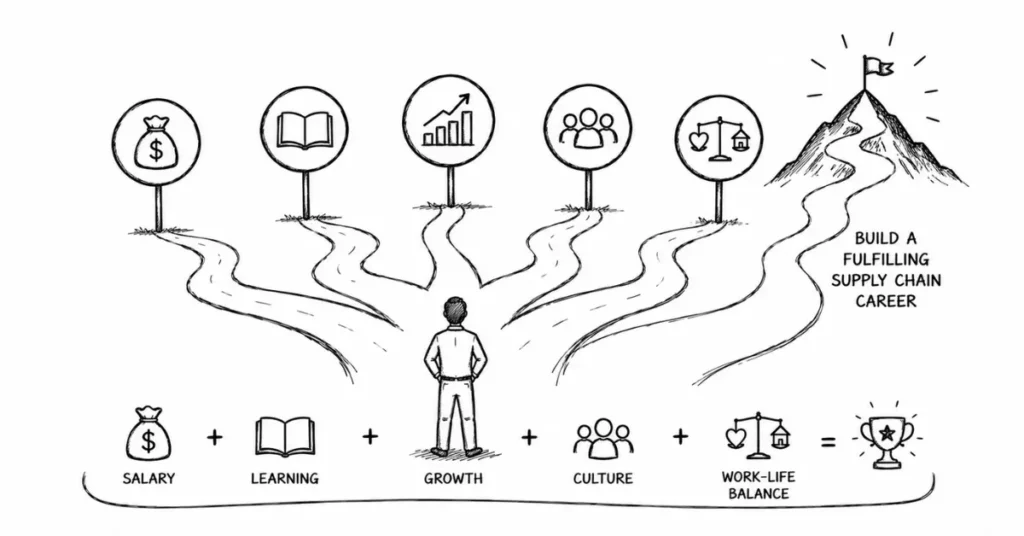
Salary is important—it affects your lifestyle, savings, and family security. But it’s not the only career consideration:
Also Consider:
- Learning and growth opportunities
- Company culture and values
- Work-life balance
- Manager quality and mentorship
- Career progression potential
- Industry and role fit with your interests
The Balanced Approach:
Early career (0-5 years): Prioritize learning over maximum salary
Mid-career (5-12 years): Balance compensation with growth
Senior career (12+ years): Maximize compensation while finding meaningful work
Long-term Perspective:
A ₹2 lakh difference at age 25 matters less than choosing a company where you’ll develop faster. But by age 35, maximizing compensation while maintaining satisfaction makes sense.
The supply chain sector in India is growing robustly, creating excellent opportunities for skilled professionals. Focus on building valuable skills, delivering measurable results, and strategically managing your career. The compensation will follow.
Know your worth, negotiate confidently, but never lose sight of what truly matters in your career and life.