
Supply Chain Risk Management : Emerging Career Paths
Table of Contents
Introduction: When COVID-19 Rewrote Career Priorities
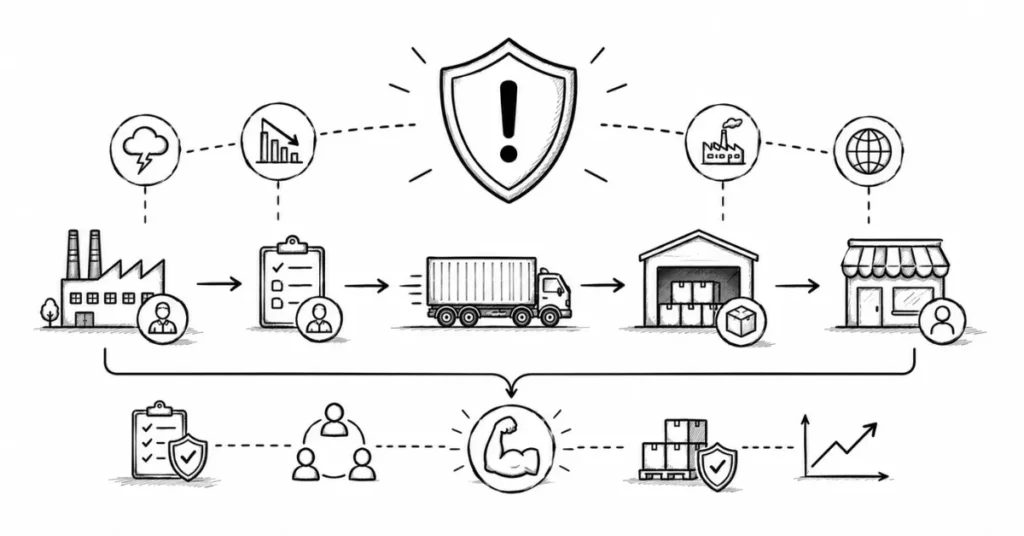
March 2020. Supply chains worldwide collapsed overnight. Factories shut down. Borders closed. Ships sat idle. Warehouses ran empty. Companies lost millions—some went bankrupt. But amidst the chaos, one group of professionals suddenly became invaluable: supply chain risk managers.
The companies that survived and thrived weren’t the ones with the most efficient supply chains—they were the ones with the most resilient supply chains. The ones who had mapped their supplier networks. Who had backup plans. Who could pivot quickly when Plan A failed.
COVID-19 was a wake-up call. Boards of directors asked questions they’d never asked before: “What happens if our primary supplier fails?” “How dependent are we on a single country?” “Do we have visibility beyond tier-1 suppliers?” “Who’s managing our supply chain risks?”
This created an entirely new career opportunity: Supply Chain Risk Management. What was once a small part of traditional supply chain roles is now becoming a specialized, high-value career path. Companies are hiring dedicated risk managers, resilience planners, and business continuity specialists—paying premium salaries for professionals who can protect their supply chains from disruption.
If you’re building a supply chain career in 2026, understanding risk management isn’t optional—it’s essential. And for some of you, it might become your specialization and competitive advantage.
This guide explores supply chain risk management careers: what they involve, skills required, typical roles, how to enter this field, and why now is the perfect time to position yourself in this emerging discipline.
PART 1: UNDERSTANDING SUPPLY CHAIN RISK MANAGEMENT
What is Supply Chain Risk Management?
Simple Definition:
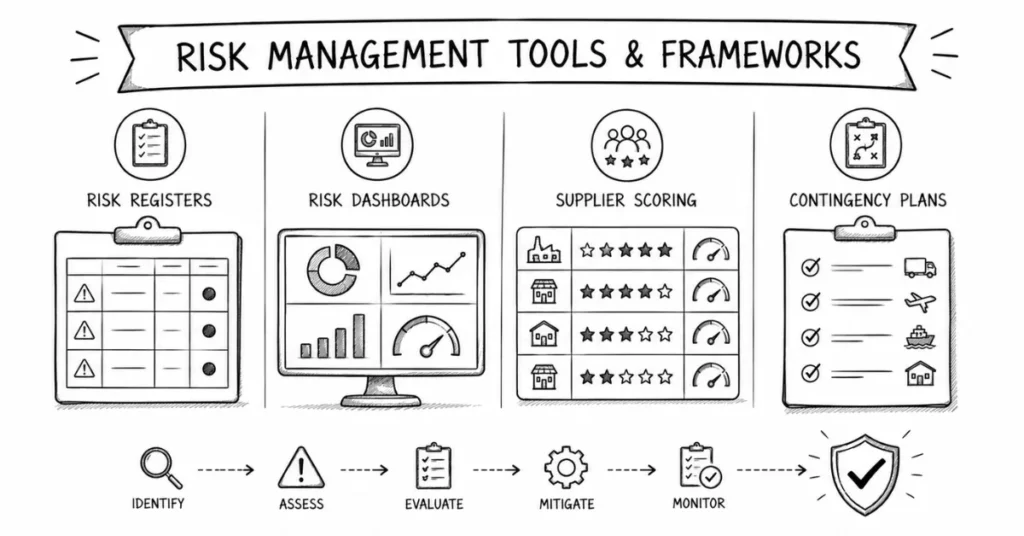
Supply chain risk management (SCRM) is the systematic identification, assessment, and mitigation of potential disruptions to supply chain operations—ensuring business continuity and resilience.
Core Objective:
Protect the organization from supply chain disruptions that could impact revenue, reputation, or operations while balancing risk mitigation costs against potential impacts.
Key Activities:
- Risk Identification: Finding potential vulnerabilities (supplier failures, natural disasters, geopolitical events, cyber threats)
- Risk Assessment: Evaluating likelihood and potential impact of identified risks
- Risk Mitigation: Developing strategies to reduce risks (backup suppliers, safety stock, contracts)
- Monitoring: Continuous tracking of risk indicators and early warning signals
- Response Planning: Creating contingency plans for various disruption scenarios
- Crisis Management: Leading response when disruptions actually occur
Why Supply Chain Risk Management Matters Now
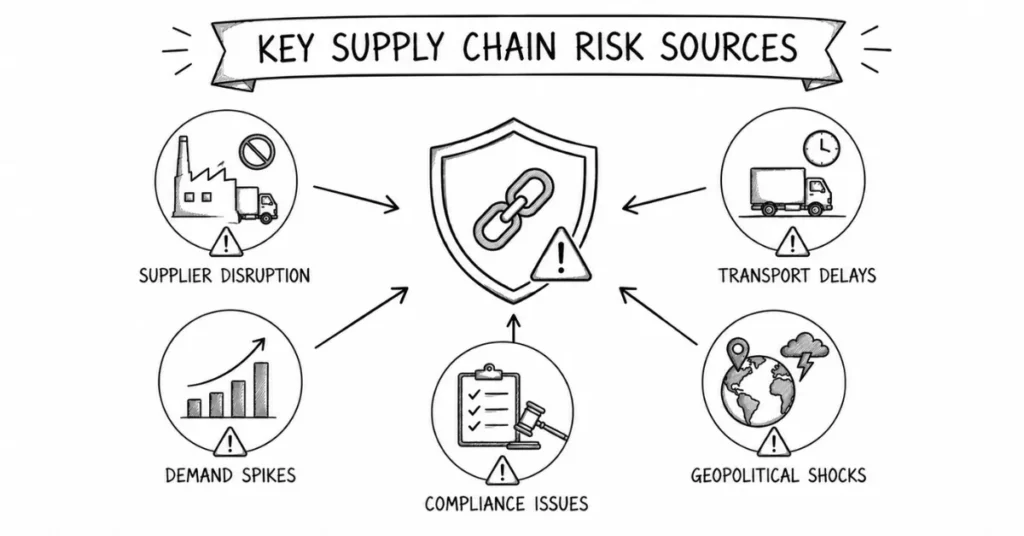
The Perfect Storm of Risk Drivers:
Globalization Complexity:
- Supply chains span multiple countries and continents
- Dependencies on distant suppliers with limited visibility
- Geopolitical tensions disrupting trade flows
- Currency fluctuations and trade policy changes
Just-in-Time Vulnerability:
- Lean inventories leave no buffer for disruptions
- Single-sourcing for cost efficiency creates single points of failure
- Efficiency optimization has reduced resilience
Increasing Disruption Frequency:
- Natural disasters (floods, earthquakes, cyclones)
- Pandemics (COVID-19 showed no one was prepared)
- Cyber attacks and ransomware targeting supply chains
- Labor strikes and social unrest
- Raw material shortages and supply squeezes
Stakeholder Pressure:
- Boards demanding risk visibility
- Customers expecting supply reliability
- Investors scrutinizing supply chain resilience
- Regulators requiring risk disclosures
- ESG requirements adding compliance complexity
Technology Dependence:
- ERP system failures can paralyze operations
- Cyber attacks increasing in sophistication
- Technology vendor dependencies
- Data security vulnerabilities
Statistical Reality:
Studies show that 75% of companies experienced supply chain disruptions in the past 2 years. Yet only 35% have dedicated supply chain risk management professionals. This gap creates tremendous career opportunity.
PART 2: KEY SUPPLY CHAIN RISKS
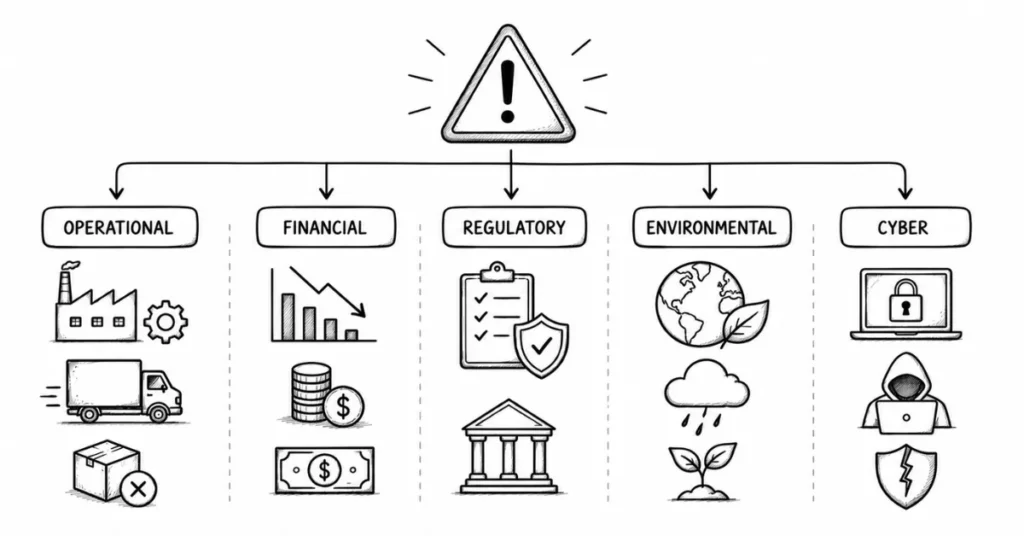
Categories of Supply Chain Risks
Supplier Risks:
- Financial instability: Supplier bankruptcy or cash flow problems
- Quality failures: Defective materials or products
- Capacity constraints: Supplier unable to meet demand
- Single-source dependency: No alternatives if supplier fails
- Supplier’s supplier risks: Tier-2 and tier-3 vulnerabilities
Real Example: When a fire destroyed a Japanese factory producing specialized automotive chips in 2021, multiple car manufacturers worldwide faced production shutdowns because this was their only source.
Operational Risks:
- Manufacturing disruptions: Equipment failures, fires, accidents
- Quality control failures: Product recalls
- Inventory shortages: Stockouts impacting sales
- Warehouse damage: Fire, flood, theft
- Transportation delays: Port congestion, truck driver shortages
Real Example: The Suez Canal blockage in 2021 (Ever Given ship incident) delayed billions of dollars worth of goods and exposed global shipping vulnerabilities.
Demand Risks:
- Forecast errors: Over or under-estimating demand
- Demand volatility: Unpredictable spikes or drops
- Product obsolescence: Inventory becomes worthless
- Customer bankruptcy: Unpaid receivables
Real Example: During COVID-19, demand for certain products (PPE, laptops, home fitness equipment) exploded unpredictably while demand for others (business attire, luggage) collapsed.
Environmental & Natural Disaster Risks:
- Climate events: Floods, droughts, hurricanes, earthquakes
- Pandemic diseases: COVID-19, future pandemics
- Environmental regulations: Sudden policy changes
- Resource scarcity: Water, raw materials, energy
Real Example: Thailand floods in 2011 disrupted global hard drive supply (Thailand produced 25% of world’s hard drives), causing shortages and price increases worldwide.
Geopolitical & Regulatory Risks:
- Trade wars and tariffs: US-China tensions, Brexit impacts
- Political instability: Regime changes, civil unrest
- Sanctions and embargoes: Restricting trade with certain countries
- Regulatory changes: Import/export rules, safety standards, environmental requirements
- Nationalization: Government seizure of assets
Real Example: Russia-Ukraine conflict disrupted wheat, fertilizer, and energy supplies globally, causing price spikes and shortages.
Cybersecurity & Technology Risks:
- Ransomware attacks: Systems held hostage
- Data breaches: Theft of sensitive information
- System failures: ERP or WMS crashes
- Vendor cyber vulnerabilities: Third-party breaches affecting you
- IoT device vulnerabilities: Connected sensors compromised
Real Example: Colonial Pipeline ransomware attack in 2021 shut down major US fuel pipeline, causing widespread gas shortages and panic buying.
Reputational Risks:
- Child labor or forced labor: In supply chain
- Environmental violations: Supplier pollution
- Ethics violations: Corruption, bribery
- Social media crises: Negative viral content
Real Example: Major fashion brands faced boycotts when investigative reports revealed unsafe working conditions and child labor in their supply chains.
PART 3: SUPPLY CHAIN RISK MANAGEMENT ROLES
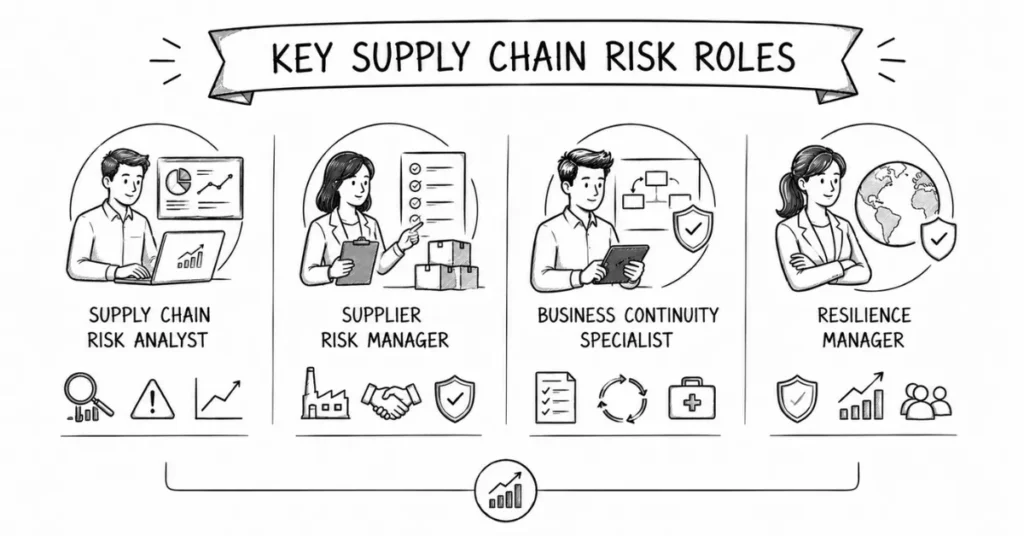
1. Supply Chain Risk Manager
Typical Responsibilities:
- Conduct comprehensive supply chain risk assessments
- Develop risk mitigation strategies and contingency plans
- Create risk dashboards and monitoring systems
- Facilitate risk workshops with cross-functional teams
- Coordinate business continuity planning
- Report supply chain risks to senior management and board
- Manage supplier risk evaluation programs
- Lead crisis response during disruptions
Required Skills:
- Risk assessment methodologies (FMEA, scenario analysis)
- Supply chain operations understanding (deep domain knowledge)
- Data analytics for risk modeling
- Project management
- Stakeholder management
- Business acumen (understanding financial impacts)
- Communication (explaining complex risks to executives)
- Crisis management and decision-making under pressure
Typical Background:
- 5-10 years supply chain experience
- MBA or supply chain management degree preferred
- APICS CSCP or similar certifications
- Risk management training (insurance, ERM background helpful)
Salary Range: ₹15-28 lakhs (experienced risk managers at large companies: ₹25-35 lakhs)
Career Path:
Supply Chain Analyst → Supply Chain Manager → Supply Chain Risk Manager → Head of Supply Chain Risk & Resilience → VP Supply Chain (with broader responsibilities)
2. Business Continuity Manager (Supply Chain Focus)
Typical Responsibilities:
- Develop business continuity plans (BCP) for supply chain operations
- Conduct Business Impact Analyses (BIA)
- Design disaster recovery procedures
- Coordinate crisis response exercises and drills
- Maintain emergency response protocols
- Manage incident response during actual disruptions
- Ensure regulatory compliance (ISO 22301, etc.)
- Test and update continuity plans regularly
Required Skills:
- Business continuity planning frameworks
- Incident management and crisis coordination
- Supply chain operations knowledge
- Regulatory compliance understanding
- Communication and training skills
- Calm under pressure
Typical Background:
- 5-8 years operations or supply chain experience
- Business continuity certifications (CBCP, MBCP)
- May come from security or risk management backgrounds
Salary Range: ₹12-22 lakhs (senior levels: ₹22-32 lakhs)
Industries with Strong Demand:
- Banking and financial services
- Healthcare and pharmaceuticals
- Critical infrastructure
- Manufacturing
- E-commerce
3. Supplier Risk Analyst
Typical Responsibilities:
- Assess financial health of suppliers (credit analysis, bankruptcy risk)
- Conduct supplier risk audits and site visits
- Monitor supplier performance and compliance
- Identify single-source dependencies
- Develop supplier risk scorecards
- Recommend backup supplier strategies
- Track geopolitical and country risks
- Manage supplier qualification processes
Required Skills:
- Financial analysis (reading balance sheets, cash flow statements)
- Procurement and sourcing knowledge
- Audit and assessment techniques
- Geographic and political risk awareness
- Supplier relationship management
- Data analysis and scoring methodologies
Typical Background:
- 3-6 years procurement or supply chain experience
- Finance or accounting background helpful
- May have audit experience
Salary Range: ₹8-16 lakhs (senior analysts: ₹16-24 lakhs)
4. Supply Chain Resilience Planner
Typical Responsibilities:
- Design resilient supply chain networks (multi-sourcing, regional diversity)
- Model supply chain disruption scenarios
- Develop redundancy and buffer strategies
- Optimize safety stock and inventory positioning
- Evaluate nearshoring vs offshoring trade-offs
- Lead supplier diversification initiatives
- Create supply chain mapping and visibility systems
- Collaborate with strategic planning teams
Required Skills:
- Supply chain network design
- Optimization modeling (advanced analytics)
- Scenario planning and simulation
- Strategic thinking
- Cost-benefit analysis
- Supply chain planning software
- Change management
Typical Background:
- 6-10 years supply chain strategy or planning experience
- Strong analytical background (engineering, operations research)
- MBA or advanced degree in supply chain
Salary Range: ₹16-28 lakhs (can reach ₹30-40 lakhs in senior strategy roles)
5. Cybersecurity Risk Manager (Supply Chain)
Typical Responsibilities:
- Assess cyber vulnerabilities in supply chain systems
- Evaluate vendor cybersecurity posture
- Develop cyber incident response plans
- Monitor supply chain for cyber threats
- Ensure compliance with data security regulations
- Coordinate with IT security teams
- Manage cyber insurance for supply chain
- Third-party risk assessment (vendor security)
Required Skills:
- Cybersecurity fundamentals
- Supply chain technology systems (ERP, WMS, TMS)
- Risk assessment frameworks (NIST, ISO 27001)
- Vendor management
- Regulatory compliance knowledge
- Technical and business communication
Typical Background:
- IT security background transitioning to supply chain
- OR supply chain background with cybersecurity training
- Certifications: CISSP, CISM, or supply chain + cyber training
Salary Range: ₹18-32 lakhs (high demand, limited supply of qualified professionals)
Growth Outlook: Explosive. Cyber risks in supply chains are escalating, and expertise is scarce.
6. Geopolitical Risk Analyst (Supply Chain)
Typical Responsibilities:
- Monitor global political and economic developments
- Assess country and regional risks for sourcing
- Provide early warning of potential disruptions
- Advise on supply chain diversification strategies
- Coordinate with government relations teams
- Track trade policy changes and impacts
- Scenario planning for geopolitical events
Required Skills:
- International relations and political science knowledge
- Economic analysis
- Regional expertise (Asia, Europe, Americas, etc.)
- Supply chain operations understanding
- Trend analysis and forecasting
- Strategic communication
Typical Background:
- International relations, political science, or economics degree
- Supply chain experience or consulting background
- Language skills (beneficial)
- May come from think tanks, government, or consulting
Salary Range: ₹14-26 lakhs (senior roles at MNCs: ₹28-40 lakhs)
Best Opportunities: Multinational companies with complex global supply chains, consulting firms
PART 4: SKILLS FOR SUPPLY CHAIN RISK MANAGEMENT CAREERS
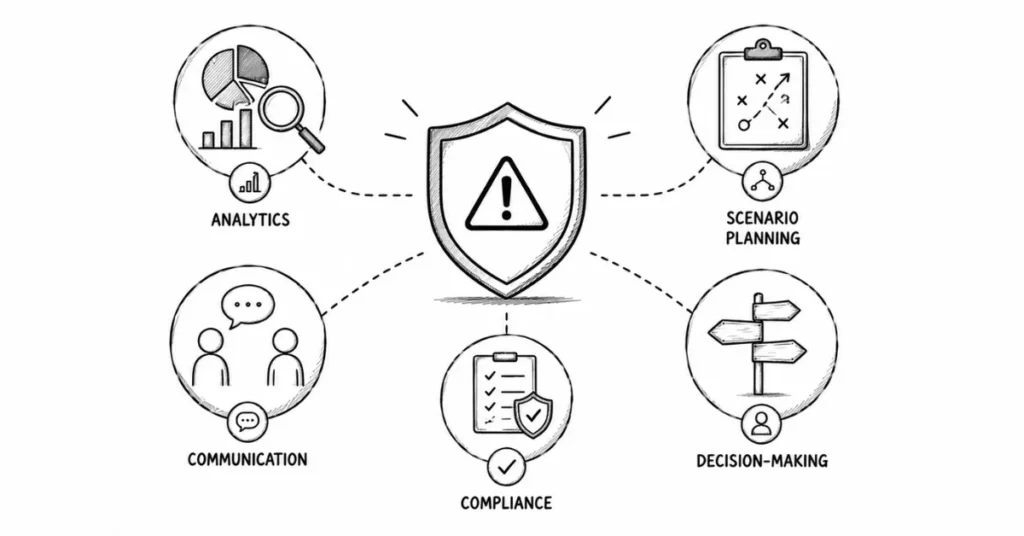
Technical Skills
Risk Assessment Methodologies:
- FMEA (Failure Mode and Effects Analysis)
- Probability and impact matrices
- Monte Carlo simulation
- Scenario planning techniques
- Business Impact Analysis (BIA)
Data Analytics:
- Statistical analysis
- Risk modeling and quantification
- Predictive analytics
- Visualization (Tableau, Power BI)
- Advanced Excel
Supply Chain Knowledge:
- Deep understanding of end-to-end supply chain operations
- Industry-specific supply chain dynamics
- Procurement and supplier management
- Logistics and distribution
- Manufacturing processes
Technology Systems:
- Supply chain planning software
- Risk management platforms (Resilinc, Riskmethods)
- ERP systems (SAP GRC modules)
- Mapping and visibility tools
Financial Analysis:
- Understanding P&L impacts of disruptions
- Cost-benefit analysis for risk mitigation
- Insurance and hedging concepts
- Working capital implications
Soft Skills
Strategic Thinking:
- Seeing patterns and anticipating future risks
- Balancing short-term costs vs long-term resilience
- Connecting supply chain risks to business strategy
Communication:
- Explaining complex risks to non-technical audiences
- Executive presentations and board reporting
- Writing clear risk assessment reports
- Influencing without authority
Crisis Management:
- Clear thinking under pressure
- Rapid decision-making with incomplete information
- Coordinating cross-functional response teams
- Managing stakeholder anxiety
Collaboration:
- Working across functions (procurement, operations, finance, legal)
- Building relationships with external partners
- Facilitating workshops and planning sessions
Resilience Mindset:
- Thinking about “what could go wrong”
- Balancing paranoia with pragmatism
- Learning from failures and near-misses
PART 5: HOW TO ENTER SUPPLY CHAIN RISK MANAGEMENT
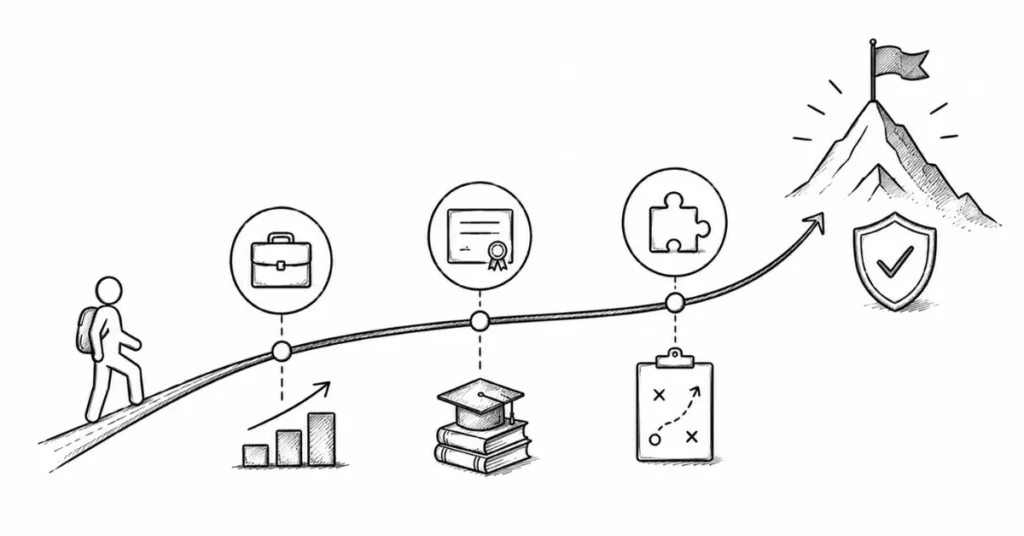
Path 1: From Traditional Supply Chain Roles
Most Common Transition:
Starting Point: Supply Chain Analyst, Planner, Procurement Manager (3-7 years experience)
Transition Steps:
- Volunteer for risk-related projects at current company
- Develop risk assessment skills through online courses
- Pursue relevant certification (APICS CSCP with risk focus, or risk management courses)
- Document risk-related achievements (identifying supplier risk, managing disruption)
- Internal transfer to risk-focused role, OR
- External move to dedicated risk management position
Timeline: 1-2 years to position yourself for transition
Path 2: From Risk Management/Audit Backgrounds
Alternative Entry:
Starting Point: Internal audit, enterprise risk management, insurance, or consulting
Transition Steps:
- Gain supply chain knowledge through courses, rotations, or projects
- Understand supply chain operations deeply (not just theoretical)
- Combine risk expertise with supply chain learning
- Target supply chain risk roles leveraging risk management credibility
Advantage: Strong risk methodology background; need to build supply chain credibility
Path 3: Fresh Graduate/Early Career
Emerging Entry Points:
Some companies now offer:
- Supply chain analyst roles with risk focus
- Rotational programs including risk management
- Sustainability and risk combined roles
Strategy:
- Target companies with mature risk management programs
- Express interest in risk during interviews
- Build analytics and risk assessment skills
- Pursue supply chain education with risk emphasis
Educational Pathways
Certifications:
- APICS CSCP (includes risk management module)
- CSCMP certification (Council of Supply Chain Management Professionals)
- ISO 31000 (Risk Management training)
- Business Continuity certifications (CBCP, MBCP)
- Supply Chain Risk Management Certificate (online programs from Coursera, MIT, etc.)
Degrees:
- MBA with supply chain + risk management focus
- Master’s in Supply Chain Management (with risk specialization)
- Graduate certificates in risk management
Online Learning:
- MIT SCM program includes supply chain risk modules
- Coursera: Supply Chain Risk Management courses
- LinkedIn Learning: Risk management in supply chains
- Industry webinars and conferences
PART 6: COMPENSATION AND GROWTH OUTLOOK
Salary Ranges by Experience
Experience | Role | Salary Range |
3-5 years | Supply Chain Risk Analyst | ₹8-14 lakhs |
5-8 years | Risk Manager / Business Continuity Manager | ₹14-22 lakhs |
8-12 years | Senior Risk Manager / Resilience Planner | ₹20-32 lakhs |
12+ years | Head of Supply Chain Risk / Director | ₹28-45 lakhs |
15+ years | VP Risk & Resilience | ₹40-65 lakhs |
Premium Factors:
- MNC vs domestic company: +20-30%
- Industry (pharma, financial services pay more)
- Cybersecurity focus: +15-25%
- Proven crisis management success: Significant premium
Market Demand Outlook
Current Reality (2026):
- High demand, limited supply of qualified professionals
- Companies investing in risk management post-COVID
- Board-level focus on supply chain resilience
- Emerging regulations requiring risk disclosures
5-Year Outlook:
- Risk management becoming standard requirement in supply chain leadership
- Dedicated teams (not just single roles) forming
- Consulting demand growing rapidly
- Cross-industry mobility (skills transfer well)
Job Growth Projection: 15-20% annual growth in dedicated supply chain risk roles through 2030
PART 7: INDUSTRY OPPORTUNITIES
Industries with Strongest Demand:
Pharmaceuticals & Healthcare:
- Patient safety depends on supply reliability
- Regulatory requirements for risk management
- Complex global supply chains
- Salary Premium: 15-20% above average
Automotive:
- JIT manufacturing vulnerable to disruptions
- Thousands of components with deep supplier tiers
- High cost of production stoppages
- Strong opportunity for resilience planners
Technology & Electronics:
- Global semiconductor dependencies
- Rapid obsolescence risks
- Cyber vulnerability concerns
- Growing investment in risk management
Financial Services:
- Regulatory requirements (Basel III, operational resilience)
- Technology dependency and cyber risks
- Critical business operations focus
FMCG & Retail:
- Brand reputation risks from supply failures
- Complex distribution networks
- Seasonal demand sensitivity
E-commerce:
- Rapid scaling creating vulnerabilities
- Customer experience directly tied to supply reliability
- Growing complexity as operations expand
Final Thoughts: The Future Belongs to Risk-Aware Professionals
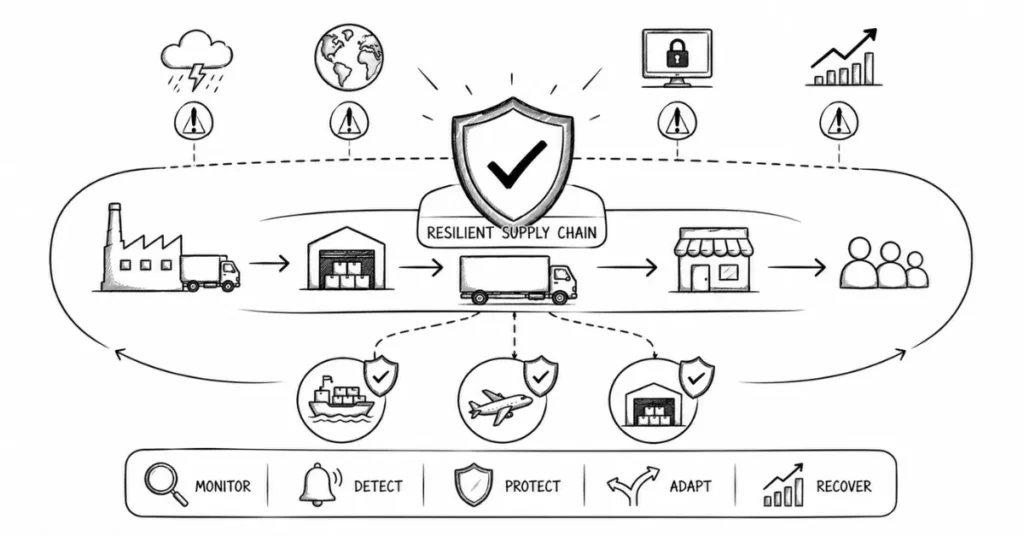
The days of ignoring risk until disaster strikes are over. Every supply chain professional needs risk awareness, but increasingly, companies need specialists who make risk management their primary focus.
Why This is Your Opportunity:
✅ Emerging field with limited competition
✅ High demand from all industries
✅ Premium compensation for scarce expertise
✅ Career security (risk never goes away)
✅ Intellectual challenge (complex, strategic work)
✅ Executive visibility (board-level importance)
✅ Transfer skills (consulting opportunities)
Who Should Consider This Path:
- Analytical thinkers who see problems before others
- Strategic minds who enjoy scenario planning
- Professionals comfortable with ambiguity
- Those energized by protecting organizations
- Career-switchers from risk, audit, or insurance backgrounds
- Supply chain professionals seeking differentiation
Your Next Steps:
- Assess interest: Does risk management excite you?
- Build foundation: Strengthen supply chain and analytical skills
- Gain exposure: Volunteer for risk projects at work
- Invest in learning: Pursue relevant courses and certifications
- Position yourself: Update resume highlighting risk-related achievements
- Network: Connect with risk management professionals
- Target opportunities: Apply for roles blending supply chain and risk
Supply chain risk management isn’t just a career path—it’s becoming an essential capability for supply chain leadership. Position yourself now in this emerging field, and you’ll be ahead of the curve as demand explodes.
The question isn’t whether supply chain risk management careers will grow. They will—dramatically. The question is: Will you position yourself to capitalize on this opportunity?