
Supply Chain Analytics Careers : Data Science & AI Guide
Table of Contents
Introduction: The $2-3 Lakh Salary Premium
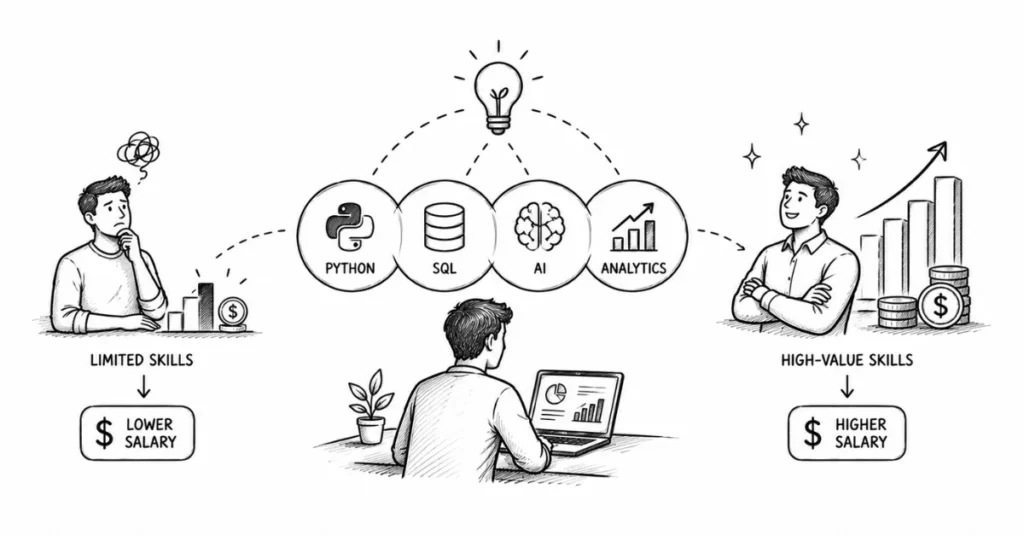
Two supply chain managers. Same years of experience. Same company. Same role title. But one earns ₹18 lakhs while the other earns ₹21 lakhs. What’s the difference?
Python skills. SQL proficiency. Machine learning understanding. Data visualization mastery.
The second manager doesn’t just manage supply chains—they use data analytics and AI to optimize them. They build predictive models that improve forecast accuracy by 15%. They create dashboards that give executives real-time visibility. They identify cost-saving opportunities hidden in millions of data rows. They speak the language of data science while understanding supply chain operations.
This combination—supply chain domain expertise + advanced analytics capabilities—is the single most valuable skill set in supply chain management today. It’s also one of the rarest, which is why companies pay significant premiums for professionals who possess it.
According to recent data, supply chain analytics is among the top 5 most sought-after supply chain profiles in India. Demand is exploding while supply of qualified professionals remains limited. Companies like Amazon, Flipkart, HUL, and consulting firms are aggressively hiring supply chain data scientists, analytics managers, and AI specialists.
This guide explores supply chain analytics careers: what they involve, required skills, typical roles, how to break in, and why this might be your highest-ROI career investment.
PART 1: UNDERSTANDING SUPPLY CHAIN ANALYTICS
What is Supply Chain Analytics?
Simple Definition:
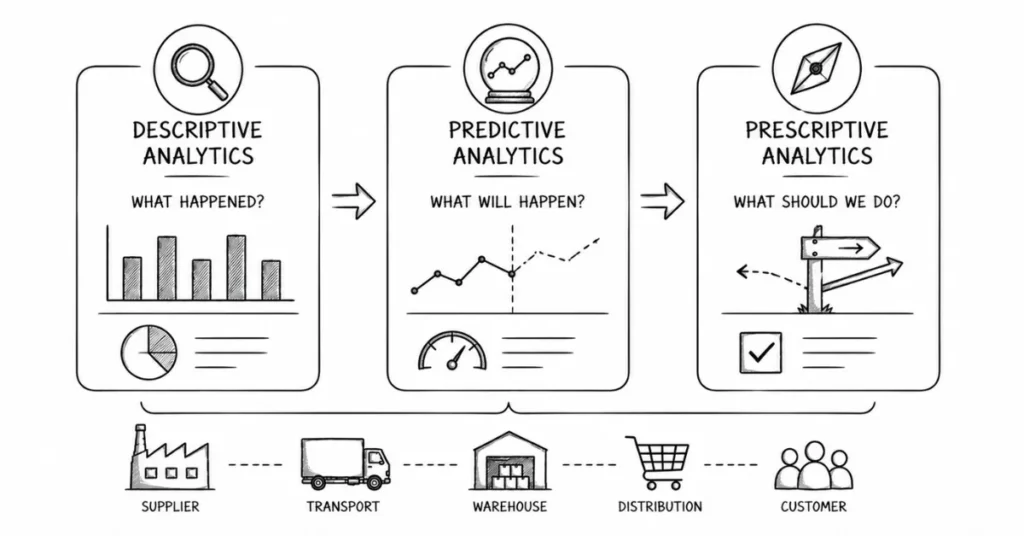
Using data analysis, statistical methods, and increasingly artificial intelligence/machine learning to gain insights, make predictions, and optimize supply chain decisions.
Three Levels of Analytics:
Descriptive Analytics (What Happened?):
- Historical reporting and dashboards
- KPI tracking (on-time delivery, inventory turnover, forecast accuracy)
- Trend analysis and pattern identification
- Root cause analysis of past events
Example: Creating monthly dashboard showing that forecast accuracy was 78% last quarter, down from 82% previous quarter.
Predictive Analytics (What Will Happen?):
- Demand forecasting using statistical models and machine learning
- Predictive maintenance (equipment failure prediction)
- Risk prediction (supplier failure risk, delivery delay probability)
- Customer behavior prediction
Example: Building machine learning model predicting demand for next quarter with 85% accuracy, improving from traditional statistical method’s 78%.
Prescriptive Analytics (What Should We Do?):
- Optimization algorithms (inventory levels, routes, network design)
- Simulation modeling (what-if scenarios)
- Automated decision-making
- AI-driven recommendations
Example: Optimization model recommending optimal inventory levels across 10 warehouses, minimizing cost while maintaining 95% service level—saving ₹5 crores annually.
Why Supply Chain Analytics is Exploding
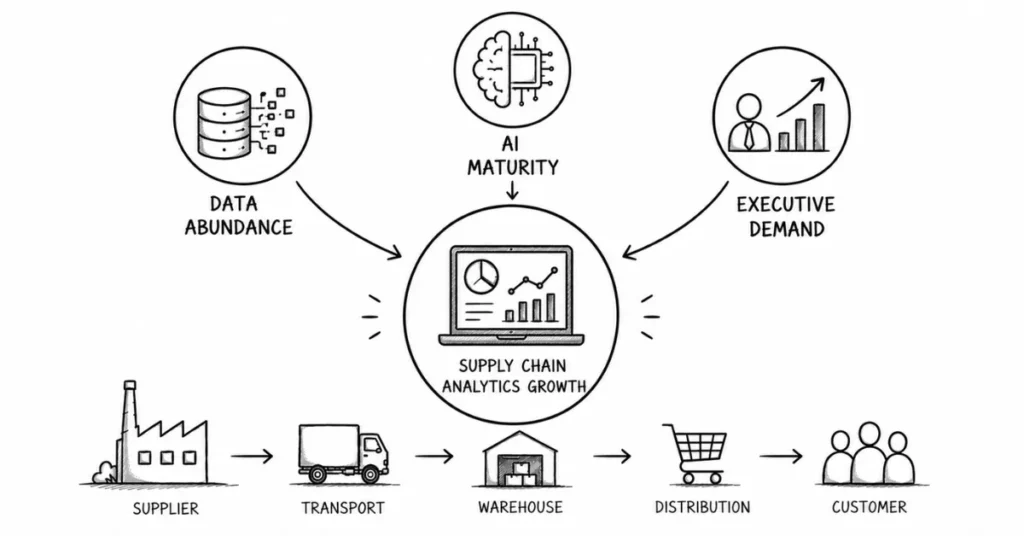
Perfect Storm of Drivers:
Data Abundance:
Modern supply chains generate massive data:
- ERP systems tracking every transaction
- IoT sensors monitoring shipments, warehouses, vehicles
- Customer behavior data (e-commerce clicks, purchases)
- External data (weather, economic indicators, social media trends)
Problem: Companies drowning in data but starving for insights.
Technology Maturity:
- Cloud computing enables processing large datasets affordably
- Machine learning algorithms becoming accessible (not just for PhDs)
- Visualization tools making insights consumable
- AI platforms democratizing advanced analytics
Competitive Necessity:
- Amazon’s algorithms set customer expectations
- Data-driven competitors outperforming traditional players
- Efficiency gains of 15-30% from analytics documented
- Companies realizing analytics is competitive advantage, not luxury
Executive Recognition:
Post-COVID, CEOs and boards understand supply chain criticality. Analytics providing visibility and control they demand.
Result: Budgets allocated, teams formed, hiring accelerating.
PART 2: SUPPLY CHAIN ANALYTICS ROLES
1. Supply Chain Data Analyst
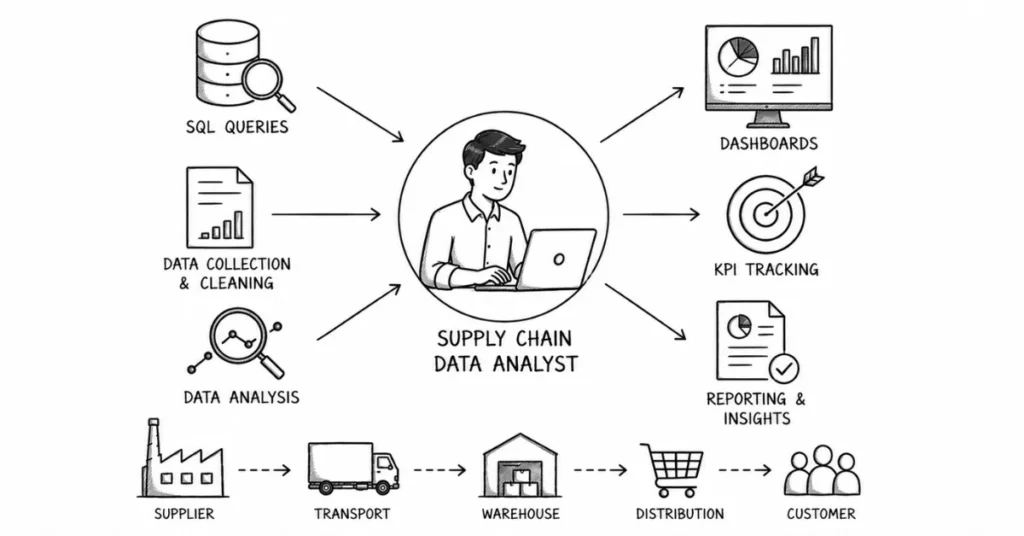
Typical Responsibilities:
- Extract and analyze supply chain data from ERP systems
- Create reports and dashboards for operations teams
- Perform ad-hoc analysis for business questions
- Track KPIs and identify trends
- Support forecasting and planning processes
- Data quality management and validation
- Visualize insights using Tableau/Power BI
Required Skills:
- SQL: Extracting data from databases (essential)
- Excel: Advanced analysis, pivot tables, VBA
- Visualization: Tableau or Power BI
- Statistics: Basic understanding (mean, median, standard deviation, correlation)
- Supply chain knowledge: Understanding metrics and processes
- Communication: Translating data into business insights
Typical Background:
- Bachelor’s in engineering, statistics, mathematics, or business
- 0-3 years experience
- Entry-level analytics role in supply chain
- May transition from supply chain coordinator with analytics interest
Salary Range: ₹4-9 lakhs (strong performers: ₹8-12 lakhs after 2-3 years)
Career Path:
Data Analyst → Senior Data Analyst → Analytics Manager → Head of Analytics
Growth: Excellent entry point. Learn supply chain while developing technical skills.
2. Demand Planning Analyst / Data Scientist
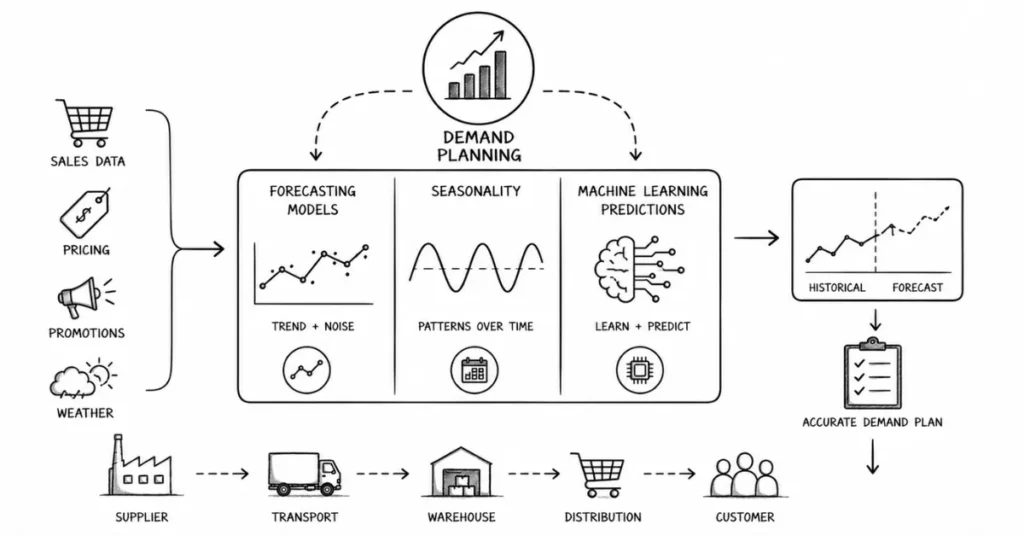
Typical Responsibilities:
- Build statistical forecasting models
- Improve forecast accuracy using machine learning
- Analyze demand patterns and seasonality
- Collaborate with sales and marketing on promotional forecasts
- Develop automated forecasting systems
- Conduct forecast post-mortems and continuous improvement
- Support S&OP process with data insights
Required Skills:
- Statistical forecasting: Time series analysis, exponential smoothing, ARIMA models
- Machine learning: Random forests, gradient boosting, neural networks for forecasting
- Programming: Python (pandas, scikit-learn, statsmodels) or R
- Tools: Demand planning software (SAP IBP, Blue Yonder, o9)
- Domain knowledge: Understanding demand drivers, promotional impacts
- Business judgment: Balancing algorithms with business intuition
Typical Background:
- Engineering, statistics, mathematics, or operations research degree
- 3-7 years experience (or 0-3 with strong technical background)
- May come from traditional demand planning roles adding technical skills
- Data science bootcamp graduates with supply chain interest
Salary Range: ₹8-18 lakhs (experienced ML-focused: ₹16-26 lakhs)
Why High Value:
Demand forecasting directly impacts inventory (₹crores tied up) and service levels (revenue at stake). Even 5% accuracy improvement can save ₹5-10 crores for mid-sized companies.
3. Supply Chain Analytics Manager
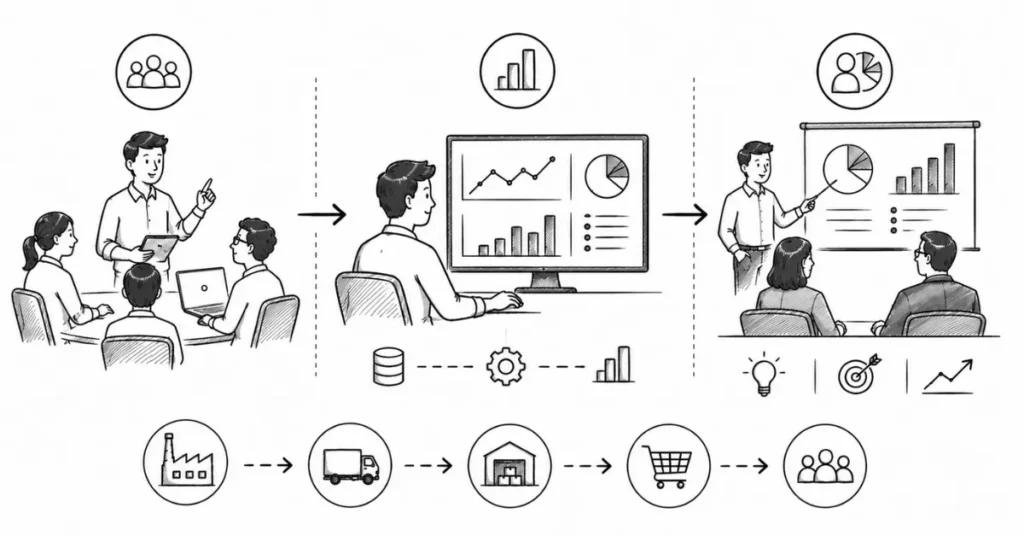
Typical Responsibilities:
- Lead analytics team (3-10 analysts/data scientists)
- Define analytics roadmap and priorities
- Build predictive models for supply chain optimization
- Develop KPI dashboards for executive visibility
- Drive data-driven decision making culture
- Partner with supply chain leadership on strategic initiatives
- Translate business problems into analytical projects
- Present insights to senior management
Required Skills:
- Advanced analytics: Predictive modeling, optimization, simulation
- Technical expertise: Python/R, SQL, machine learning
- Leadership: Managing and developing analytics talent
- Business acumen: Understanding P&L impact of analytics projects
- Communication: Executive presentations, storytelling with data
- Supply chain depth: Years of domain expertise
- Project management: Prioritizing and delivering projects
Typical Background:
- 6-12 years experience (combination of analytics and supply chain)
- Engineering + MBA common path
- Data science background transitioning to supply chain
- Traditional supply chain manager who upskilled in analytics
Salary Range: ₹15-28 lakhs (top tier companies: ₹25-38 lakhs)
Career Path:
Analytics Manager → Senior Manager / Associate Director Analytics → Head of Supply Chain Analytics → VP Supply Chain / CSCO (analytics expertise increasingly required for top roles)
4. Supply Chain Data Scientist
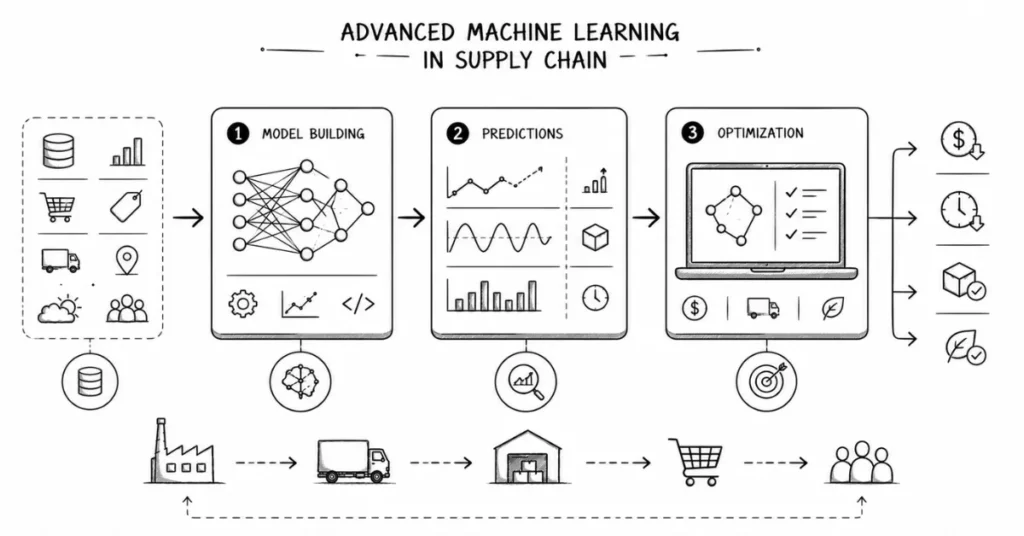
Typical Responsibilities:
- Build advanced machine learning models (demand forecasting, route optimization, predictive maintenance)
- Develop AI-powered supply chain solutions
- Conduct experiments and A/B tests
- Research and implement cutting-edge algorithms
- Deploy models into production systems
- Collaborate with engineering on model integration
- Stay current with latest ML/AI techniques
Required Skills:
- Machine learning: Deep learning, reinforcement learning, ensemble methods
- Programming: Python (numpy, pandas, scikit-learn, TensorFlow/PyTorch) essential
- Mathematics: Linear algebra, calculus, probability, statistics
- Big data: Spark, Hadoop for large-scale data processing
- Cloud platforms: AWS, Azure, GCP
- Supply chain knowledge: Understanding business context
- Software engineering: Version control (Git), code quality, testing
Typical Background:
- Master’s or PhD in Computer Science, Data Science, Statistics, Operations Research
- 2-8 years experience (varies with degree level)
- May come from pure tech roles transitioning to supply chain domain
- Strong programming background essential
Salary Range: ₹12-25 lakhs (experienced/PhD: ₹22-40 lakhs)
Premium Factors:
- Deep learning expertise: +₹3-5 lakhs
- PhD: +₹4-8 lakhs
- Published research: +₹2-4 lakhs
- E-commerce/tech companies pay highest
Growth Outlook: Exploding demand. Supply chain data scientists among highest-paid supply chain professionals relative to experience.
5. Supply Chain Network Optimization Specialist
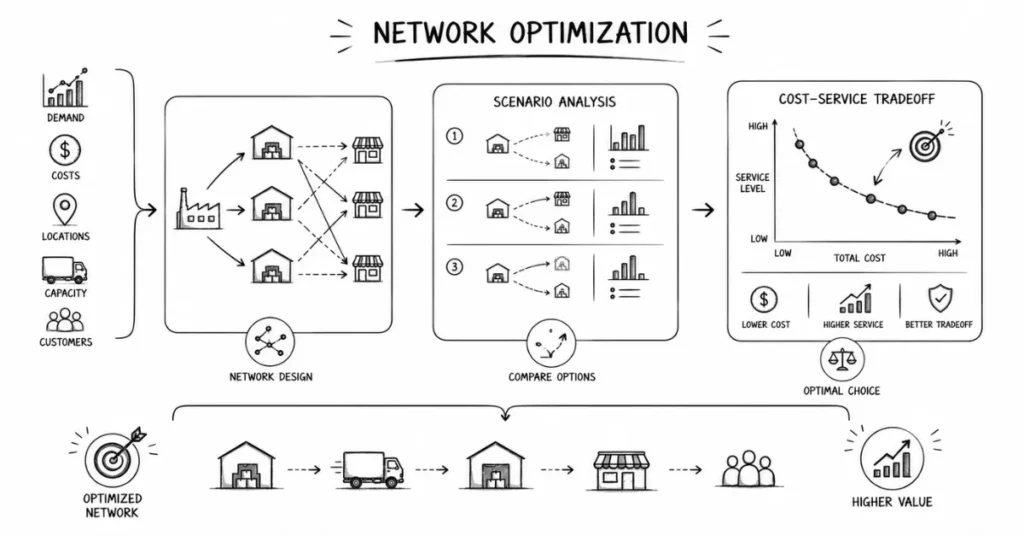
Typical Responsibilities:
- Design optimal supply chain networks (warehouse locations, facility assignments)
- Model trade-offs between cost and service
- Conduct scenario analysis for network changes
- Optimize inventory positioning across network
- Evaluate make-vs-buy and insource-vs-outsource decisions
- Support strategic decisions with quantitative analysis
- Use optimization software and custom models
Required Skills:
- Operations research: Linear programming, mixed-integer programming, network optimization
- Optimization software: CPLEX, Gurobi, or custom Python/R models
- Modeling: Mathematical modeling of complex systems
- Supply chain strategy: Understanding network design principles
- Simulation: Discrete event simulation for dynamic analysis
- Business case development: Translating optimization results into recommendations
Typical Background:
- Industrial engineering, operations research, or mathematics
- 4-10 years experience
- Strong quantitative background essential
- May come from consulting (McKinsey, BCG operations practices)
Salary Range: ₹12-24 lakhs (senior specialists: ₹24-38 lakhs)
Best Opportunities:
- Consulting firms (highest pay)
- Large manufacturers with complex networks
- FMCG companies with distribution complexity
- E-commerce network planning teams
6. Supply Chain AI / ML Engineer
Typical Responsibilities:
- Build production AI/ML systems for supply chain
- Deploy models into operational systems
- Develop APIs for model serving
- Monitor model performance and retrain as needed
- Scale models for real-time decision making
- Integrate ML with existing systems (ERP, WMS, TMS)
- Collaborate with data scientists and supply chain teams
Required Skills:
- Software engineering: Production-quality code, APIs, microservices
- ML engineering: Model deployment, monitoring, MLOps
- Programming: Python, Java, Scala
- Cloud infrastructure: AWS/Azure/GCP, containerization (Docker, Kubernetes)
- Real-time systems: Streaming data processing
- Supply chain systems: Understanding ERP, planning systems integration
Typical Background:
- Computer Science or Engineering degree
- 3-8 years software/ML engineering experience
- Transitioning from tech roles into supply chain applications
- Strong technical depth but need supply chain domain learning
Salary Range: ₹14-28 lakhs (senior engineers: ₹26-42 lakhs)
Growth: Strong. Gap between building models (data scientists) and deploying them (ML engineers) creates demand.
7. Head of Supply Chain Analytics / Chief Analytics Officer
Typical Responsibilities:
- Define enterprise analytics strategy
- Build analytics organization and capabilities
- Drive adoption of data-driven decision making
- Partner with CSCO and executive leadership
- Oversee analytics investments and ROI
- Recruit and develop analytics talent
- Represent analytics in strategic planning
Required Background:
- 12-20 years experience (combination analytics + supply chain leadership)
- Proven track record building analytics teams
- Executive presence and communication
- Both technical depth and business acumen
Salary Range: ₹35-65 lakhs (large corporations: ₹50-100 lakhs)
Career Pinnacle: Analytics leaders increasingly reaching C-suite. Some companies creating Chief Analytics Officer (CAO) reporting to CEO.
PART 3: ESSENTIAL SKILLS FOR SUPPLY CHAIN ANALYTICS
Technical Skills Roadmap
Foundation (Everyone Needs):
Advanced Excel:
- Pivot tables, advanced formulas
- Data analysis add-ins
- VBA for automation
- Statistical functions
Time to Learn: 2-3 months practice
SQL:
- Querying databases
- Joins, aggregations, subqueries
- Window functions
- Query optimization
Why Essential: 80% of data analysis is getting data from databases. SQL is non-negotiable.
Time to Learn: 2-3 months for proficiency
Data Visualization:
- Tableau or Power BI (choose one initially)
- Dashboard design principles
- Visual best practices
- Storytelling with data
Time to Learn: 1-2 months for basics, 6 months for mastery
Intermediate (Analyst to Manager Level):
Python or R:
- Python more common in industry; R strong in statistics
Python Libraries:
- Pandas: Data manipulation
- NumPy: Numerical computing
- Matplotlib/Seaborn: Visualization
- Scikit-learn: Machine learning
Time to Learn: 6-12 months for working proficiency
Statistics:
- Descriptive statistics
- Hypothesis testing
- Regression analysis
- Time series analysis
- Experimental design
Time to Learn: 3-6 months (online courses or formal degree)
Advanced (Data Scientist / Senior Roles):
Machine Learning:
- Supervised learning (regression, classification)
- Unsupervised learning (clustering, dimensionality reduction)
- Ensemble methods (random forests, gradient boosting)
- Neural networks and deep learning
- Model evaluation and validation
Time to Learn: 12-18 months for solid understanding (ongoing learning required)
Operations Research:
- Linear programming
- Mixed-integer programming
- Network optimization
- Simulation modeling
Time to Learn: Formal education (OR degree/courses) or 6-12 months intensive self-study
Big Data Tools:
- Spark for distributed computing
- Cloud platforms (AWS, Azure, GCP)
- NoSQL databases
Time to Learn: 3-6 months (after Python/SQL foundation)
Domain Knowledge (Equally Important)
Supply Chain Expertise:
Analytics skills without supply chain understanding has limited value. You need both.
Critical Knowledge:
- Demand forecasting and planning processes
- Inventory management principles
- Procurement and sourcing
- Logistics and distribution
- Manufacturing operations
- Supply chain KPIs and metrics
- ERP systems (SAP, Oracle)
- Industry-specific dynamics
How to Develop:
- Work experience in supply chain roles
- APICS CSCP certification
- Supply chain management courses
- On-the-job learning and mentorship
PART 4: BREAKING INTO SUPPLY CHAIN ANALYTICS
Path 1: Supply Chain Professional Adding Analytics
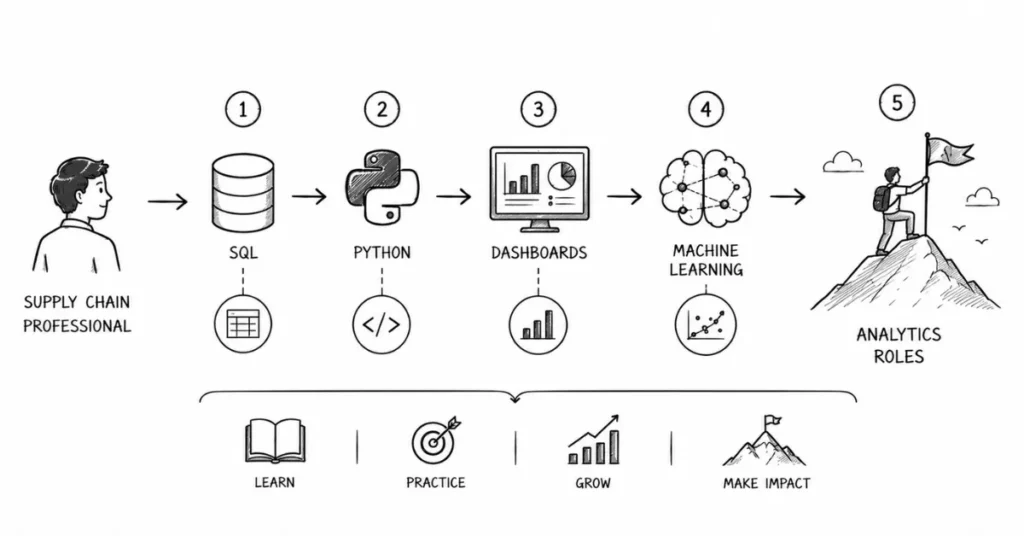
Starting Point: Supply chain analyst, planner, manager (3-7 years experience)
Advantages:
- Deep supply chain knowledge (huge asset)
- Understand business problems and context
- Established industry network
- Credibility with supply chain stakeholders
Gap to Fill: Technical skills (SQL, Python, machine learning)
Transition Strategy:
Month 1-3: Foundation
- Master SQL (essential first step)
- Take online course: “SQL for Data Analysis” (Udacity, Mode Analytics)
- Practice querying your company’s databases
- Investment: ₹5,000-10,000
Month 4-6: Visualization
- Learn Tableau or Power BI
- Create dashboards for current role
- Build portfolio of visualizations
- Investment: ₹3,000-8,000
Month 7-12: Python & Statistics
- Python for Data Analysis course (Coursera, DataCamp)
- Applied statistics course
- Practice with supply chain datasets
- Investment: ₹10,000-20,000
Month 13-18: Machine Learning
- Machine learning course (Andrew Ng’s Coursera course)
- Apply ML to demand forecasting or inventory optimization
- Build projects showcasing skills
- Investment: ₹15,000-25,000
Month 19-24: Transition
- Apply technical skills to current role projects
- Document analytics achievements on resume
- Target analytics-focused roles internally or externally
- Update LinkedIn highlighting new capabilities
Total Investment: ₹35,000-65,000 + 500-800 hours learning
ROI: Potential salary increase of ₹3-8 lakhs when transitioning to analytics role
Path 2: Data Scientist Moving to Supply Chain
Starting Point: Data scientist, analyst, or engineer in tech/other domain
Advantages:
- Strong technical skills
- Programming proficiency
- Machine learning expertise
- Analytical mindset
Gap to Fill: Supply chain domain knowledge
Transition Strategy:
Phase 1: Learn Supply Chain (3-6 months)
- APICS CSCP online learning system or courses
- “Supply Chain Management” specialization (Coursera – Rutgers)
- Read supply chain books and case studies
- Follow supply chain thought leaders
- Investment: ₹20,000-50,000
Phase 2: Apply Skills to Supply Chain Problems (3-6 months)
- Kaggle supply chain competitions
- Personal projects (demand forecasting with public data)
- Blog about supply chain analytics
- Build portfolio demonstrating supply chain applications
Phase 3: Target Roles
- Apply to “Supply Chain Data Scientist” positions
- Emphasize technical strength + demonstrated supply chain interest
- Consider supply chain consulting as entry point
- Network with supply chain analytics professionals
Timeline: 6-12 months to position for transition
Path 3: Fresh Graduate Direct Entry
Ideal Background:
- Engineering (Industrial, Computer Science, Data Science)
- Statistics / Mathematics / Operations Research
- Supply Chain Management degree with analytics focus
Entry Strategies:
Analytics Internships:
- Amazon, Flipkart supply chain analytics teams
- FMCG companies (HUL, ITC) analytics rotations
- Consulting firms (McKinsey, Bain operations analytics)
Graduate Programs:
- Some companies offer “Supply Chain Analyst” graduate programs
- Combination of rotation through supply chain + analytics projects
Master’s Degrees:
- MS in Supply Chain Analytics (emerging programs)
- MS in Data Science with supply chain focus
- Operations Research master’s programs
Entry Salary: ₹6-12 lakhs (top programs: ₹12-18 lakhs)
PART 5: EDUCATION & CERTIFICATIONS
Degree Options
Master’s in Supply Chain Analytics:
- MIT (SCM program with analytics focus) – Most prestigious
- University of Tennessee
- Emerging programs in India (IITs, IIMs starting to offer)
- Investment: ₹20-50 lakhs (international), ₹5-15 lakhs (India)
- ROI: Excellent for career acceleration
MS in Data Science / Analytics:
- Many universities globally
- Add supply chain focus through electives or thesis
- Investment: ₹15-40 lakhs
Operations Research Degrees:
- Strong foundation for optimization roles
- Available at IITs, international universities
Online Certifications
Supply Chain Focused:
- APICS CSCP with analytics emphasis
- MIT MicroMasters in Supply Chain Management
- Coursera: Supply Chain Analytics specialization
Analytics Focused:
- Google Data Analytics Certificate
- IBM Data Science Professional Certificate
- Microsoft Certified: Data Analyst Associate
Combined Investment: ₹30,000-1,50,000 for multiple certifications
PART 6: COMPENSATION & OUTLOOK
Salary Premium Analysis
Comparing Traditional vs Analytics Roles (Same Experience):
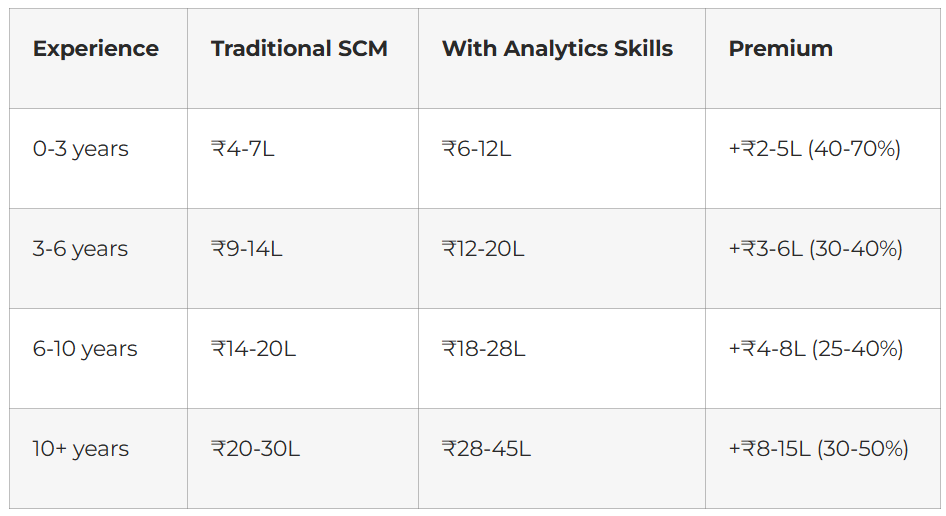
Key Insight: Analytics skills provide 25-70% salary premium depending on experience level. Premium highest early career but absolute rupee difference largest at senior levels.
Market Outlook (2026-2030)
Demand Growth: 25-30% annual increase in supply chain analytics roles
Supply Constraint: Qualified professionals can’t keep up with demand
Result: Seller’s market for talent. Multiple offers, aggressive recruitment, retention bonuses common.
Future-Proofing:
AI/automation replacing routine tasks but increasing demand for professionals who can:
- Build and deploy AI systems
- Interpret AI outputs
- Combine AI with human judgment
- Manage AI-augmented supply chains
Analytics skills = career insurance
Final Thoughts: The Highest ROI Career Investment
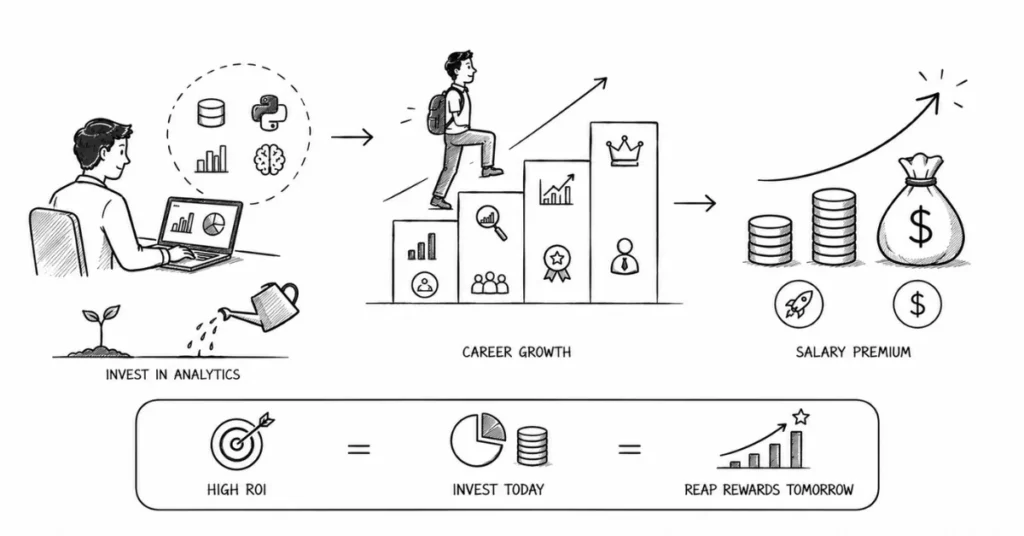
Learning supply chain analytics might be the single best career investment you can make:
Time Investment: 500-1,000 hours over 12-24 months
Financial Investment: ₹30,000-1,50,000 (courses, certifications)
Potential Return: ₹3-8 lakhs immediate salary increase + ₹10-30 lakhs cumulative over 5-10 years
ROI: 500-2000%
Few investments deliver such returns.
Your Next Steps:
- Assess starting point: Supply chain background or technical background?
- Choose learning path: Based on your gaps
- Start immediately: Take first SQL or Python course this week
- Practice consistently: 10 hours/week minimum
- Apply skills: Use learnings in current role
- Build portfolio: Document projects and achievements
- Network: Connect with supply chain analytics professionals
- Target transition: 12-24 months from today
Supply chain analytics isn’t future—it’s present. Companies already hiring aggressively. Question isn’t whether to develop these skills. It’s how fast you’ll start.
The supply chain professionals earning ₹40-50 lakhs in their mid-30s? Most have strong analytics capabilities.
Will you be one of them?