
STREAMING PLATFORM & OTT CAREERS
Table of Contents
Introduction
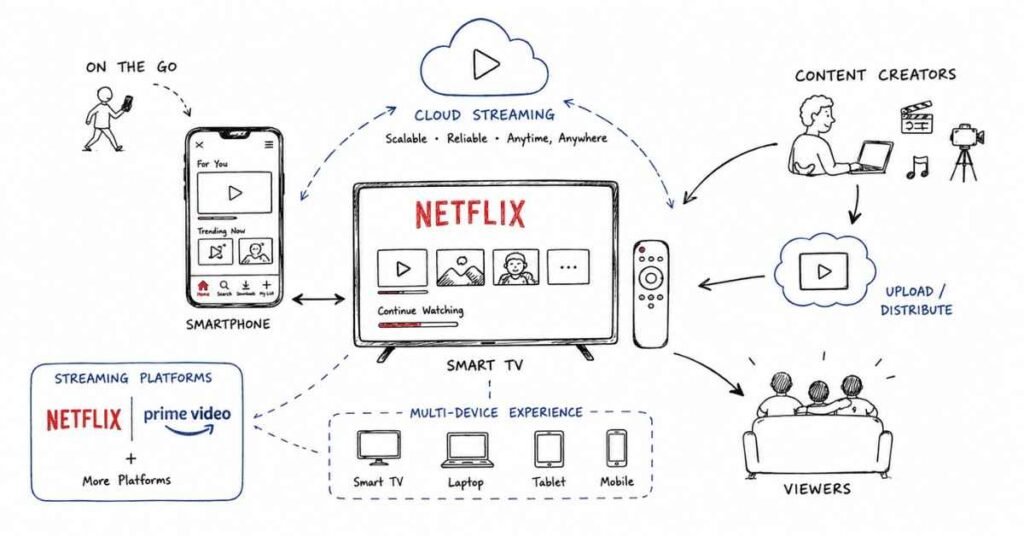
Remember when watching movies meant going to theaters or waiting for television premieres? Today, millions of Indians stream content instantly on Netflix, Amazon Prime Video, Disney+ Hotstar, SonyLIV, Zee5, and numerous other platforms. This transformation happened remarkably quickly—within a decade, Over-The-Top (OTT) streaming platforms evolved from novelty to necessity, fundamentally reshaping how Indians consume entertainment.
This revolution created an entirely new category of media careers. OTT platforms employ diverse professionals across content acquisition, original programming, technology development, marketing, analytics, and operations. These aren’t traditional media jobs—they blend entertainment industry knowledge with tech sector thinking, data analytics capabilities, and global business perspectives. The compensation reflects this hybrid nature, typically offering salaries competitive with tech companies rather than traditional media organizations.
India represents a critical market for global streaming platforms and hosts thriving domestic platforms. Disney+ Hotstar controls 33% of India’s OTT market share with over 50 million subscribers, while Amazon Prime Video commands 12% with over 20 million subscribers, and Netflix has around 6.5 million Indian subscribers. Netflix alone spent ₹125 crores on human resources in India during FY 2023-24, demonstrating serious investment in building local teams. Regional platforms like SonyLIV, Zee5, Voot, and others add thousands more opportunities.
This comprehensive guide explores careers across OTT platforms—from content-focused roles like acquisition managers and programming executives to technical positions in engineering and product development, from marketing and analytics roles to operations and customer support. You’ll learn what these positions entail, required skills and qualifications, salary expectations, and strategies for breaking into this competitive but growing sector.
Understanding the OTT Platform Ecosystem
What Makes OTT Different from Traditional Media
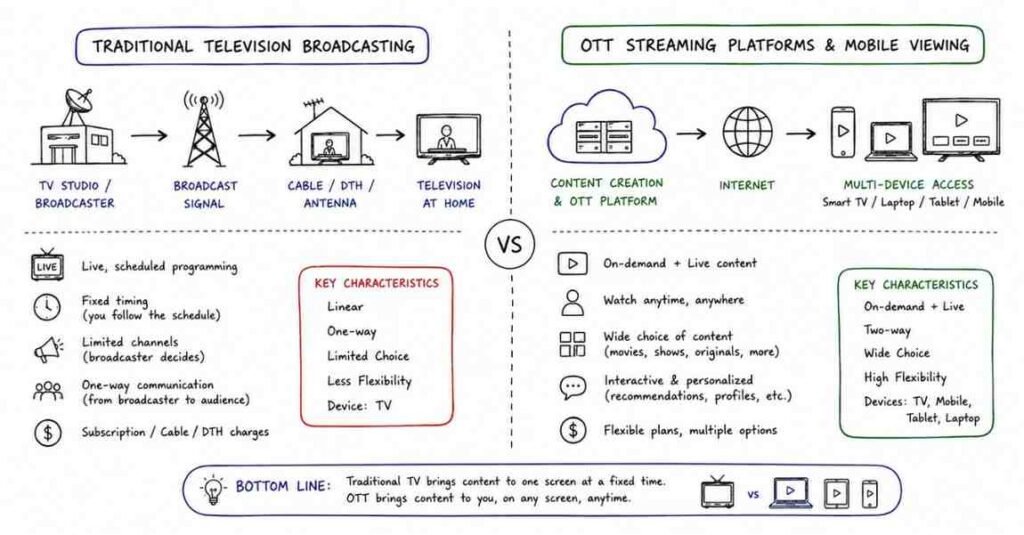
OTT platforms fundamentally differ from traditional television or film studios in their business models, technology infrastructure, and operational approaches.
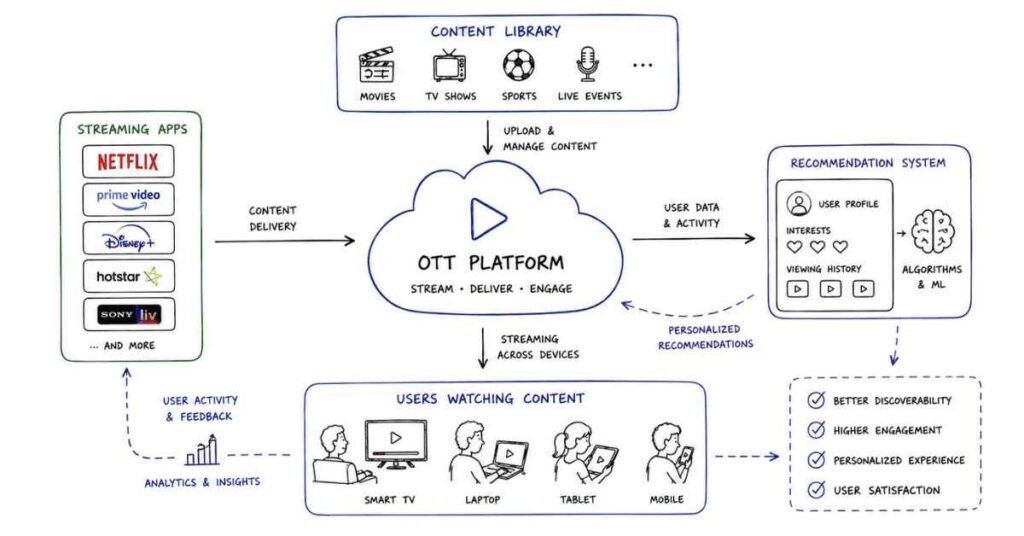
Technology-first operations: OTT platforms are fundamentally technology companies that happen to deliver entertainment. Their core infrastructure involves streaming technology, content delivery networks, recommendation algorithms, user interface design, and data analytics systems. This means significant employment for engineers, product managers, data scientists, and technical roles beyond traditional media’s focus.
Data-driven decision making: Unlike traditional media that relies heavily on intuition, relationships, and small sample ratings data, OTT platforms make decisions based on comprehensive user data. They know exactly what audiences watch, when they pause, what they skip, and what they binge. This data informs content acquisition, production decisions, marketing strategies, and product features. Careers in OTT require comfort with data and analytics regardless of specific roles.
Global and local balance: Major platforms operate globally but succeed through local relevance. Netflix produces Korean dramas, Spanish series, and Indian originals alongside Hollywood content. This creates opportunities for professionals who understand specific regional markets, languages, and cultural contexts while thinking globally about content strategies.
Direct audience relationships: OTT platforms own relationships with subscribers, unlike traditional studios that sell through distributors. This creates roles in customer support, retention analytics, subscription management, and user experience design absent in traditional media.
Agile and iterative approach: Technology sector influence means OTT platforms iterate rapidly, test features, and pivot based on data. The pace differs from traditional media’s slower, relationship-driven approaches. This appeals to those who thrive in fast-moving environments but may frustrate those preferring deliberate, consensus-driven processes.
Major Players in the Indian OTT Market
Understanding the landscape helps you identify potential employers and their specific focuses.
International platforms with Indian operations: Netflix, Amazon Prime Video, and Disney+ Hotstar maintain significant Indian teams handling content acquisition, original production, marketing, technology, and operations specifically for Indian markets. These platforms offer opportunities to work for global brands while focusing on Indian audiences.
Indian platforms: SonyLIV, Zee5, Voot, MX Player, Alt Balaji, Eros Now, and others are India-headquartered platforms serving domestic audiences. They often focus heavily on regional language content and understand local market nuances deeply.
Telecom-backed platforms: Platforms like JioCinema (Reliance) leverage parent company resources and distribution advantages, creating unique operational contexts and growth trajectories.
Sports-focused platforms: Platforms emphasizing live sports (Disney+ Hotstar for cricket, Voot for certain leagues) have specialized needs in live streaming technology, sports content acquisition, and real-time operations.
Niche platforms: Specialized platforms focusing on specific genres—documentaries, kids’ content, spiritual content, or regional cinema—serve underserved audiences with targeted strategies.
Content Acquisition & Programming Roles
Content Acquisition Manager: Building the Library
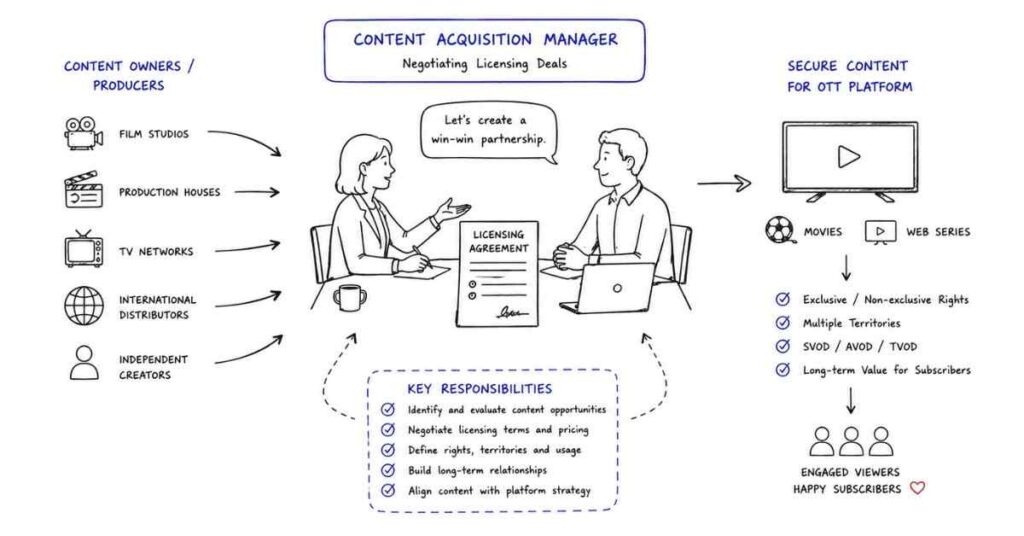
Content acquisition managers negotiate deals with studios, production houses, and distributors to license existing content—films, series, documentaries—for platform libraries.
What they do: They identify content that would appeal to platform audiences and fit content strategies, negotiate licensing terms including rights territories, windows (exclusive vs. non-exclusive), and pricing, analyze content performance data predicting which titles will succeed, manage relationships with content providers including studios, distributors, and aggregators, coordinate with legal teams drafting and finalizing contracts, and manage content budgets ensuring efficient spending.
The role requires balancing creative judgment about content quality with business analysis about cost-effectiveness. You’re essentially a buyer for a massive library, deciding which content deserves investment and how much.
Skills required: Understanding entertainment content across genres, languages, and quality levels helps you evaluate what to acquire. Negotiation skills help you secure favorable terms while maintaining positive relationships with content providers. Analytical abilities help you assess content value using performance data, audience research, and market trends. Business acumen helps you work within budgets and justify spending through projected returns. Strong communication helps you articulate why specific content deserves acquisition investment.
Background and qualifications: Most content acquisition managers have 6+ years of experience in content licensing, business development, or entertainment industry roles. Backgrounds might include working at film studios in distribution, at television networks in programming, at media agencies, or in content aggregation businesses. Understanding contracts and deal structures comes from experience rather than specific degrees, though law, business, or media backgrounds help.
Career progression: Entry into content acquisition often starts through associate or coordinator roles supporting senior managers—maintaining databases, coordinating meetings, handling administrative aspects of deals. Progression leads to managing specific content categories (regional films, international series, documentaries), then broader responsibility for entire content verticals or territories.
Salary expectations: Content acquisition managers require significant experience and earn accordingly. With 6+ years of experience, salaries typically range from ₹15-35 lakhs annually, depending on platform size, scope of responsibility, and individual negotiation. Senior managers overseeing large content budgets or critical territories earn ₹40-60 lakhs or more.
Content Programming Manager: Curating the Experience
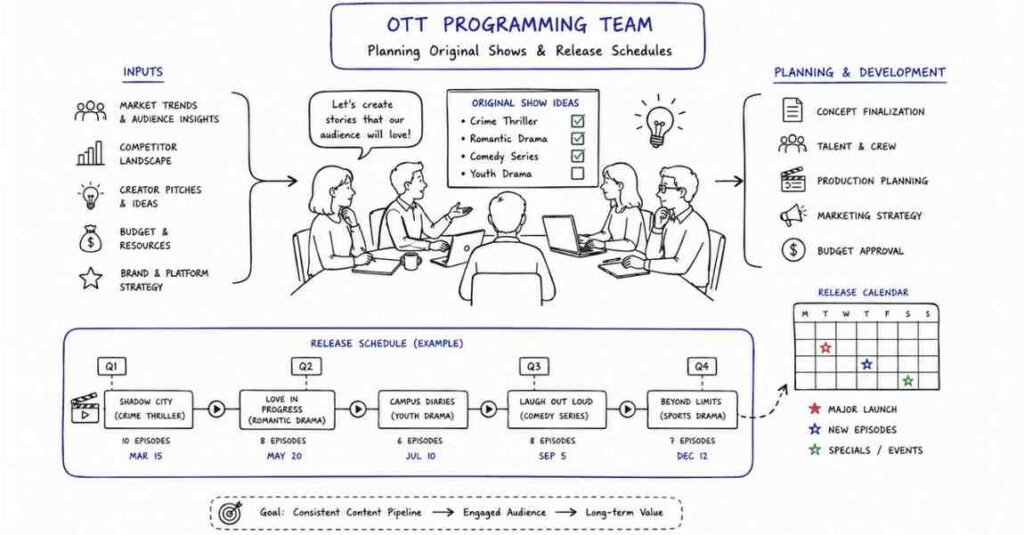
Programming managers decide what content appears on platforms, when it launches, how it’s positioned, and how content is organized to maximize audience engagement and satisfaction.
Responsibilities: They develop content slates planning what launches when across the year, strategize positioning—which titles get promotional emphasis versus quiet launches, create collections and playlists organizing content thematically or by mood, analyze performance data understanding what works and adjusting strategies, coordinate with marketing teams on content launches, manage relationships with content providers regarding launch timing and promotional support, and balance content mix ensuring variety across genres, languages, and types.
Programming is part curation (like a museum curator deciding what to display) and part strategy (like a retail buyer deciding what to stock and promote).
Skills required: Deep content knowledge across genres, languages, and international markets helps you program diverse audiences. Data literacy helps you analyze viewing patterns, completion rates, and engagement metrics informing programming decisions. Strategic thinking helps you plan content calendars balancing immediate needs with long-term goals. Creative instinct helps you identify breakout potential in unexpected content. Project management helps you coordinate complex launch timelines involving multiple departments.
Background: Programming managers typically have 4-8 years experience in media—television programming, film distribution, or digital content strategy. Understanding audience behavior and content performance comes from years of observation and analysis.
Compensation: Programming managers earn ₹12-30 lakhs annually depending on experience level and platform size, with senior programming executives earning ₹35-50 lakhs.
Original Content Development: Creating Exclusives
Original content teams develop exclusive productions—series, films, documentaries, or comedy specials—giving platforms competitive differentiation and subscriber-driving marquee content.
Roles in original content: Development executives identify projects worth developing—reviewing scripts, meeting writers and directors, evaluating production companies. Creative executives shepherd projects through production—working with showrunners, directors, and producers, ensuring creative vision and execution quality. Production executives manage production logistics, budgets, and schedules. Post-production supervisors oversee editing, sound, color grading, and final delivery.
What makes Originals strategy unique: Originals require larger upfront investments than licensing but offer exclusive content competitors can’t access, build platform brand identity (Netflix is known for certain types of content, Hotstar for Indian originals), create awards and publicity opportunities, and eventually build owned content libraries. However, originals involve greater risk—productions can fail creatively or financially—requiring careful project evaluation.
Skills required: Creative judgment about scripts, talent, and projects is fundamental. Understanding production processes helps you evaluate feasibility and budgets. Relationship management helps you work with creative talent who may resist business constraints. Data literacy helps you balance creative instincts with audience research and performance analytics.
Background: Original content professionals typically come from film or television production backgrounds—working at studios, production companies, or talent agencies. Understanding the creative process from inside production experience helps you work effectively with filmmakers.
Compensation: Original content roles vary enormously by level. Coordinators and assistants start at ₹4-8 lakhs annually. Mid-level executives earn ₹12-25 lakhs. Senior executives managing large slates or critical markets earn ₹30-60 lakhs or more.
Technology & Product Roles
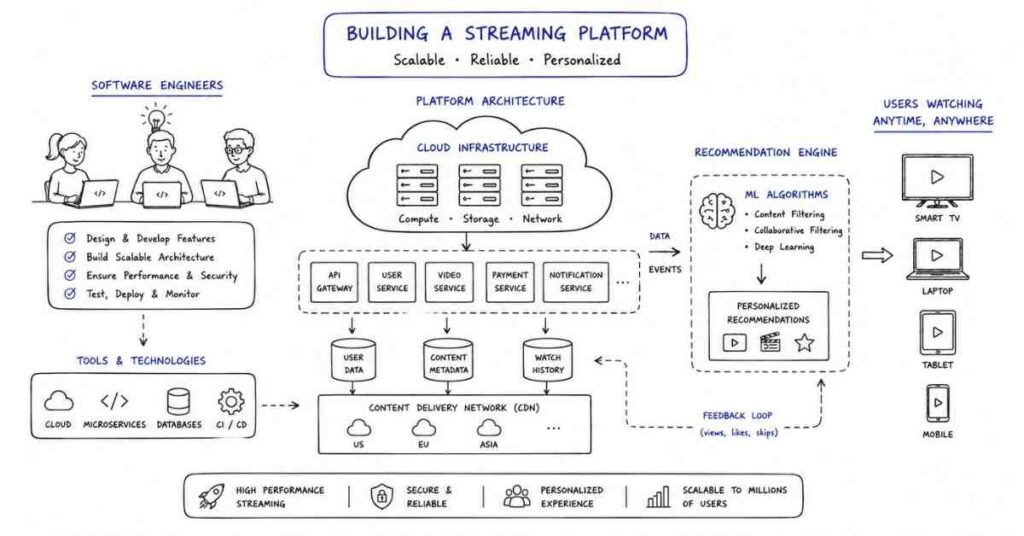
Software Engineers: Building the Platform
Software engineers design, develop, and maintain the technology infrastructure streaming platforms run on—everything from video encoding and delivery to user interfaces and recommendation systems.
Types of engineering roles: Backend engineers build server infrastructure, databases, and APIs powering platforms. Frontend engineers create user interfaces audiences interact with on websites, apps, and connected devices. Mobile engineers specialize in iOS and Android applications. Video engineers focus on streaming technology—encoding, adaptive bitrate streaming, and delivery optimization. Data engineers build infrastructure collecting, processing, and analyzing massive amounts of user data. DevOps engineers maintain infrastructure reliability, scalability, and deployment systems. Machine learning engineers develop recommendation algorithms, personalization systems, and content analysis tools.
What they do: Engineers solve technical challenges scaling platforms to millions of concurrent users, optimizing video streaming quality across varying internet speeds, building intuitive interfaces helping users discover content, developing algorithms predicting what users want to watch, ensuring platform security and payment processing, and continuously improving performance and reliability.
Skills required: Strong programming skills in languages like Java, Python, JavaScript, or others depending on specialization. Understanding distributed systems, databases, and cloud infrastructure (AWS, Google Cloud, Azure). For video engineers, knowledge of video codecs, streaming protocols (HLS, DASH), and content delivery networks. For ML engineers, expertise in machine learning frameworks and algorithms. Problem-solving abilities tackling complex technical challenges. Collaboration skills working within large engineering organizations.
Educational background: Most engineering roles require bachelor’s or master’s degrees in computer science, engineering, or related technical fields. Platforms like Amazon and Netflix typically hire from top engineering schools or candidates with strong industry experience at tech companies.
Salary expectations: Software engineers at OTT platforms earn competitive tech industry salaries. Entry-level engineers (0-3 years experience) earn ₹8-15 lakhs annually. Mid-level engineers (3-7 years) earn ₹15-30 lakhs. Senior engineers and specialists earn ₹30-60 lakhs or more. Total compensation often includes stock options or equity, particularly at publicly-traded companies, significantly increasing overall packages.
Product Managers: Defining What Gets Built
Product managers define product strategy, prioritize features, coordinate engineering teams, and ensure products meet user needs and business goals.
Responsibilities: They conduct user research understanding audience needs, pain points, and behaviors, define product roadmaps planning feature development across quarters, write product requirements specifying what engineering teams should build, coordinate across teams—engineering, design, marketing, content—ensuring alignment, analyze metrics measuring product success and identifying improvement opportunities, and make trade-off decisions balancing user needs, business goals, and technical constraints.
Product managers are essentially “CEOs of their products,” responsible for success without direct authority over the teams building products. Success requires influencing through data, logic, and relationship management.
Skills required: Understanding technology capabilities helps you define feasible products. User empathy helps you identify real problems worth solving. Data analysis helps you validate hypotheses and measure results. Strategic thinking helps you balance short-term needs with long-term vision. Communication skills help you align diverse stakeholders around product directions. Project management helps you shepherd complex initiatives to completion.
Background: Product managers typically have technical backgrounds (engineering, computer science) providing credibility with engineering teams, though some come from business, design, or domain expertise backgrounds. Many have 3-5 years of experience in related roles before moving into product management.
Compensation: Product managers earn ₹12-25 lakhs annually at mid-levels, ₹25-45 lakhs for senior PMs, and ₹50+ lakhs for principal PMs or directors of product.
UX/UI Designers: Crafting User Experiences
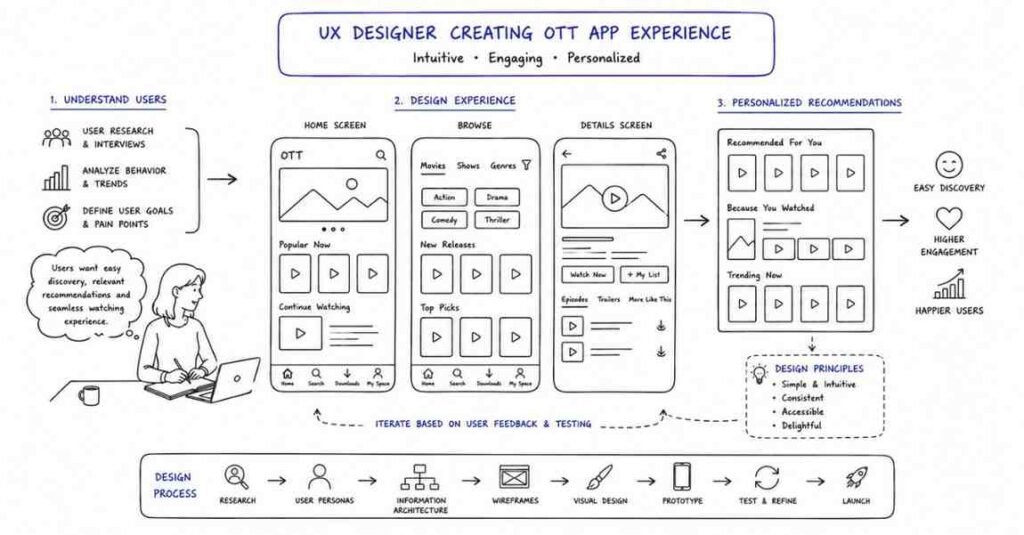
Designers create visual interfaces and user experiences, making platforms intuitive, enjoyable, and effective at helping users discover and consume content.
What they do: They conduct user research, understanding how audiences interact with platforms, design interface flows—how users navigate from homepage to content to playback, create visual designs including layouts, typography, colors, and branding elements, prototype features testing concepts before engineering investment, conduct usability testing gathering feedback on designs, and maintain design systems ensuring consistency across platforms and devices.
Skills required: Visual design skills creating appealing, on-brand interfaces. Understanding user psychology and behavior patterns. Proficiency with design tools like Figma, Sketch, or Adobe XD. Ability to prototype interactive mockups. Communication skills presenting designs and rationale. Empathy understanding diverse user needs including accessibility considerations.
Compensation: UI/UX designers earn ₹5-12 lakhs annually at entry levels, ₹12-25 lakhs for mid-career designers, and ₹25-45 lakhs for senior or lead designers.
Marketing & Growth Roles
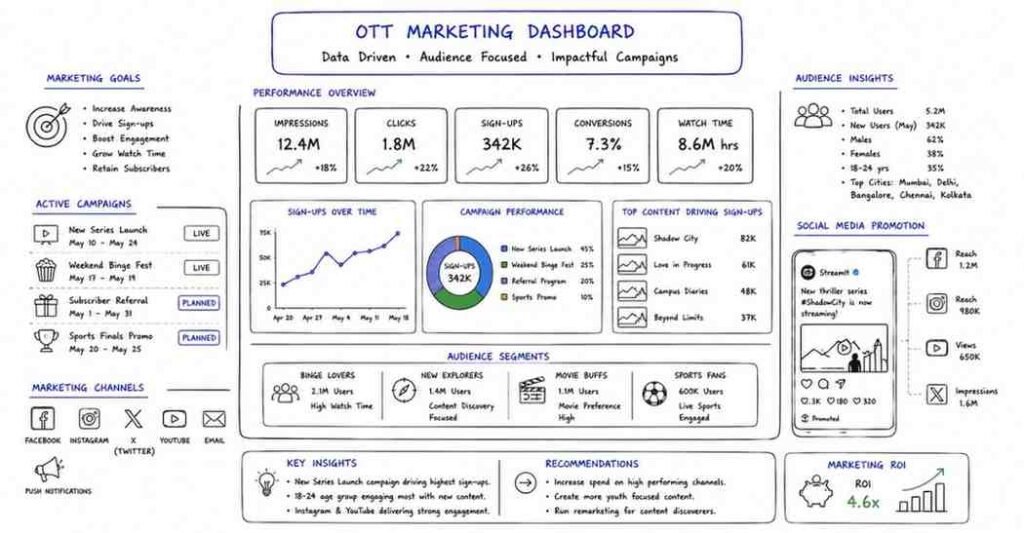
Marketing Managers: Building Awareness
Marketing teams drive platform awareness, subscriber acquisition, and content promotion ensuring audiences discover platforms and content.
Responsibilities: They develop marketing campaigns for platform subscriptions and specific content launches, manage paid advertising across digital channels (Google, Facebook, Instagram, YouTube), create content marketing strategies including social media presence, coordinate with PR teams managing media relations and publicity, analyze campaign performance optimizing marketing spend, segment audiences tailoring messages to different demographics, and manage marketing budgets ensuring efficient customer acquisition costs.
Types of marketing roles: Performance marketing focuses on digital advertising optimization and metrics-driven customer acquisition. Brand marketing builds overall platform identity and awareness. Content marketing promotes specific titles through social media, influencer partnerships, and creative campaigns. Lifecycle marketing focuses on subscriber retention and engagement after initial acquisition.
Skills required: Understanding digital marketing channels and tactics. Data analysis interpreting campaign metrics and ROI. Creative sense developing compelling campaigns. Understanding target audiences. Budget management allocating spend efficiently. Collaboration coordinating with content, product, and external agencies.
Compensation: Marketing managers earn ₹8-18 lakhs annually, senior marketing managers ₹18-30 lakhs, and marketing directors ₹35-60 lakhs depending on scope and platform size.
Data Analysts: Finding Insights
Content operations teams handle the logistics of ingesting, processing, organizing, and maintaining vast content libraries.
Responsibilities: They ingest content from studios processing video files, subtitle files, metadata, and artwork, ensure quality control checking video quality, audio sync, subtitle accuracy, and metadata correctness, manage content metadata organizing titles with proper categorization, descriptions, and tags, coordinate content publishing scheduling launches and removals, troubleshoot issues when content displays incorrectly or playback fails, and maintain content databases ensuring accuracy across systems.indeed+1
Skills required: Attention to detail catching errors before they reach audiences. Technical understanding of video files, metadata schemas, and content management systems. Process orientation following workflows correctly and consistently. Problem-solving diagnosing and fixing issues. Time management meeting launch deadlines. Communication coordinating with content providers and internal teams.
Background: Content operations roles often don’t require specific degrees but value media experience, technical aptitude, and reliability. Many successful operations professionals start as coordinators or associates, learning platforms and processes before advancing.
Compensation: Content operations coordinators earn ₹3-6 lakhs annually, managers ₹8-15 lakhs, and senior operations leaders ₹18-30 lakhs.
Customer Support: Serving Subscribers
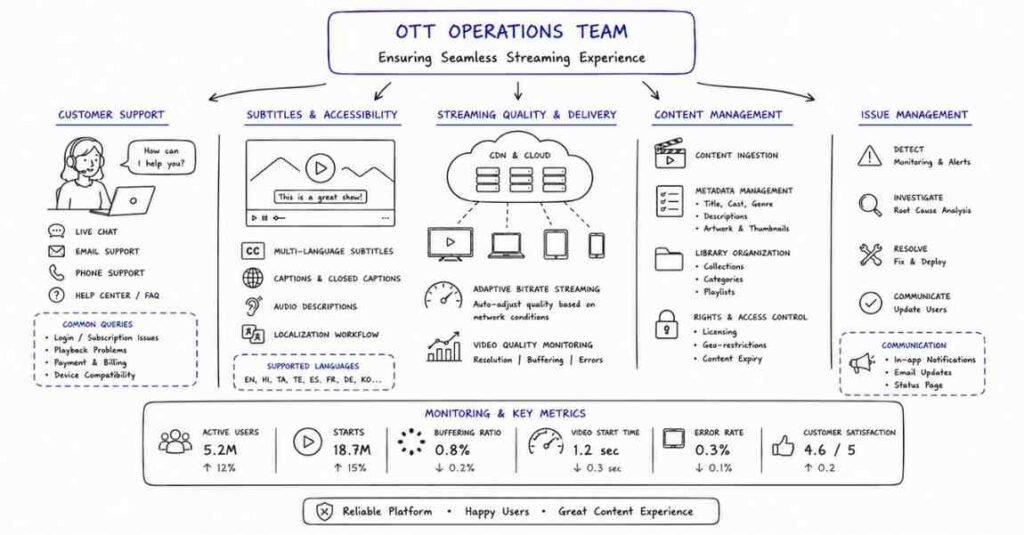
Customer support teams assist subscribers with technical issues, billing questions, account management, and general inquiries, ensuring positive user experiences.
What they do: They respond to customer inquiries via email, chat, or phone, troubleshoot technical problems, helping users resolve playback issues, device connectivity, or app problems, handle billing inquiries about subscriptions, payments, or cancellations, process account changes, including password resets or profile management, escalate complex issues to specialised teams, and provide feedback to product teams about common user pain points.
Skills required: Communication skills, explaining solutions clearly to diverse audiences. Patience when dealing with frustrated customers. Technical troubleshooting, diagnosing issues remotely. Product knowledge understanding platform features and common problems. Empathy, maintaining a positive tone even with difficult interactions. Multilingual abilities serving diverse Indian audiences in various languages.
Work environment: Many customer support roles involve shift work, including evenings, nights, and weekends, since platforms operate 24/7. Some positions are office-based while others allow remote work.
Compensation: Customer support representatives earn ₹2.5-5 lakhs annually, team leads ₹5-9 lakhs, and support managers ₹10-18 lakhs.
Specialized Roles in OTT Platforms
Localization Specialists: Making Content Accessible
Localization teams ensure content works across languages through subtitling, dubbing, and adaptation.
Responsibilities: They manage subtitle creation, coordinating with vendors or in-house teams, oversee dubbing projects including voice talent selection and recording, ensure translation quality maintaining accuracy and cultural appropriateness, adapt marketing materials translating promotional content, and maintain linguistic consistency across platforms.
India’s linguistic diversity makes localization critical. Content might require subtitles or dubbing in Hindi, Tamil, Telugu, Malayalam, Kannada, Bengali, Marathi, and other languages to reach mass audiences.
Skills required: Fluency in multiple Indian languages. Understanding translation and cultural adaptation. Project management coordinating multiple language versions. Quality control ensuring linguistic accuracy. Cultural sensitivity recognizing when literal translations miss cultural meaning.
Compensation: Localization coordinators earn ₹4-8 lakhs annually, managers ₹10-18 lakhs, and directors ₹20-35 lakhs.
Partnership Managers: Building Relationships
Partnership teams develop strategic relationships with telcos, device manufacturers, content providers, or payment platforms, expanding platform reach and capabilities.
What they do: They identify partnership opportunities that benefit the platform, negotiate partnership terms defining commercial arrangements, manage ongoing relationships ensuring partner satisfaction and performance, coordinate technical integrations connecting platforms with partner systems, and measure partnership value assessing whether relationships deliver expected benefits.
Skills required: Business development identifying and pursuing opportunities. Negotiation securing favorable terms while maintaining positive relationships. Strategic thinking evaluating which partnerships advance platform goals. Cross-functional coordination connecting internal teams with external partners. Analytical abilities measuring partnership performance.
Compensation: Partnership managers earn ₹12-25 lakhs annually, senior partnership managers ₹25-40 lakhs, and directors of partnerships ₹45-70 lakhs.
Breaking Into OTT Platform Careers
Educational Backgrounds That Fit
OTT platforms hire diverse educational backgrounds depending on role requirements.
For technology roles: Computer science, engineering, or related technical degrees are typically required. Top platforms recruit from IITs, NITs, BITS, and other premier engineering schools, though graduates from other institutions with strong technical skills also succeed.
For content roles: Media studies, journalism, film studies, or business degrees provide relevant foundations, but industry experience often matters more than specific degrees. Working at film studios, television networks, production companies, or digital content organizations builds relevant context.
For marketing roles: Marketing, business administration, communications, or related degrees are common, though digital marketing skills developed through practice and certifications matter equally.
For data roles: Statistics, mathematics, economics, computer science, or data science degrees (often master’s or PhD level for data scientist positions) provide quantitative foundations necessary for analytical roles.
For operations and support roles: Specific degrees are often less critical than demonstrated skills—organization, communication, technical aptitude, and reliability.
Building Relevant Experience
Internships: Major platforms offer internship programs, often recruiting from campus at top universities or through application portals. Internships provide exposure to platform operations, build networks with employees, and sometimes convert to full-time offers. Even unpaid or low-paid internships can be worthwhile for learning and connections.
Related industry experience: Working at traditional media companies (studios, networks, production houses), digital agencies, tech companies, or startups builds transferable skills. Content roles value media experience. Tech roles value software development experience regardless of industry. Marketing roles value digital marketing experience.
Building portfolios: For content or marketing roles, demonstrating understanding through side projects helps. Analyze content strategies of existing platforms in blog posts or case studies. Create marketing campaigns for hypothetical content launches. Show you think strategically about the business even before employed in it.
Networking: Attend industry events like OTT conferences, media summits, or digital marketing meetups. Connect with platform employees on LinkedIn engaging thoughtfully with their posts. Informational interviews with employees at target platforms provide insights and potentially referrals.
Application Strategies
Company career portals: Netflix, Amazon, Disney, and major platforms maintain careers pages listing open positions. Check these regularly applying for relevant roles.
LinkedIn and job boards: Platforms post openings on LinkedIn, Indeed, and other job sites. Setting alerts for “OTT,” “streaming,” “Netflix,” “Amazon Prime,” or similar keywords notifies you of new postings.
Recruitment agencies: Some platforms work with specialized recruitment firms for certain roles. Connecting with recruiters who focus on media or technology placements can surface opportunities.
Referrals: Internal referrals significantly improve application success rates. Building relationships with platform employees who can refer you provides advantages. Demonstrating genuine interest and relevant skills makes people willing to refer you.
Tailoring applications: Generic resumes and cover letters rarely succeed. Research specific platforms—their content strategies, values, recent news—and tailor applications demonstrating understanding of and fit with each organization. Show you’ve thought about how you’d contribute specifically to that platform.
Interview Preparation
Content role interviews: Expect questions about content you consume, why certain shows succeed, how you’d program a content slate, or how you’d evaluate potential acquisitions. Demonstrate broad content knowledge and analytical thinking about entertainment.
Technical interviews: Engineering roles typically involve technical assessments testing coding skills, system design abilities, or algorithm knowledge. Practice on platforms like LeetCode or HackerRank. Review computer science fundamentals.
Case interviews: Product, marketing, or strategy roles might include case studies—”How would you increase subscriber engagement?” or “Should we acquire this content?”—testing analytical thinking and business judgment. Practice structuring responses logically.
Behavioral interviews: All roles assess cultural fit through behavioral questions about past experiences, challenges overcome, teamwork, or conflict resolution. Prepare examples demonstrating relevant competencies using STAR method (Situation, Task, Action, Result).
Platform knowledge: Research the platform thoroughly—their content, positioning, recent launches, competitors, and market position. Interviewers expect candidates to understand what the platform does and where it fits in the market.
Challenges and Rewards of OTT Careers
Challenges
High competition: OTT platforms receive thousands of applications for limited positions, making entry competitive. Standing out requires a combination of relevant experience, strong skills, and effective networking.
Fast-paced environment: The pace can be intense—rapid decision-making, changing priorities, and high expectations. This excites some people but overwhelms others who prefer more deliberate environments.
Data-driven culture: Decisions rely heavily on data and analytics. Those uncomfortable with numbers or preferring purely creative instinct-based approaches may find the culture challenging.
Hybrid skill requirements: Many roles require combining skills—content knowledge plus business analytics, engineering skills plus product sense, marketing creativity plus performance metrics. Developing these hybrid capabilities takes time and intention.
Geographic concentration: Major platform offices concentrate in Mumbai, Bangalore, and to lesser extent Delhi. While remote work increased during COVID, many roles still prefer or require office presence in these cities.
Rewards
Competitive compensation: OTT platforms generally pay above traditional media industry standards, offering salaries more aligned with technology sector compensation including stock options at some platforms.
Cutting-edge work: You work at the intersection of entertainment and technology on challenges traditional media never faced—recommendation algorithms, global-local content balance, streaming optimization. The problems are novel and intellectually engaging.
Impact and scale: Work reaches millions of users. Content you acquire or features you build affect how millions of people experience entertainment. The scale provides meaningful impact.
Learning and growth: The fast pace and hybrid requirements mean continuous learning. You develop diverse skills—analytics, technology, business strategy, content evaluation—valuable across industries.
Industry prestige: Working at recognized platforms like Netflix, Amazon, or Disney carries prestige within media and technology industries, opening doors for future opportunities.
Creative and analytical balance: Unlike purely technical or purely creative roles, OTT careers often blend both. You can analyze data AND think about storytelling, work with technology AND engage with content.
Future Trends in OTT Careers
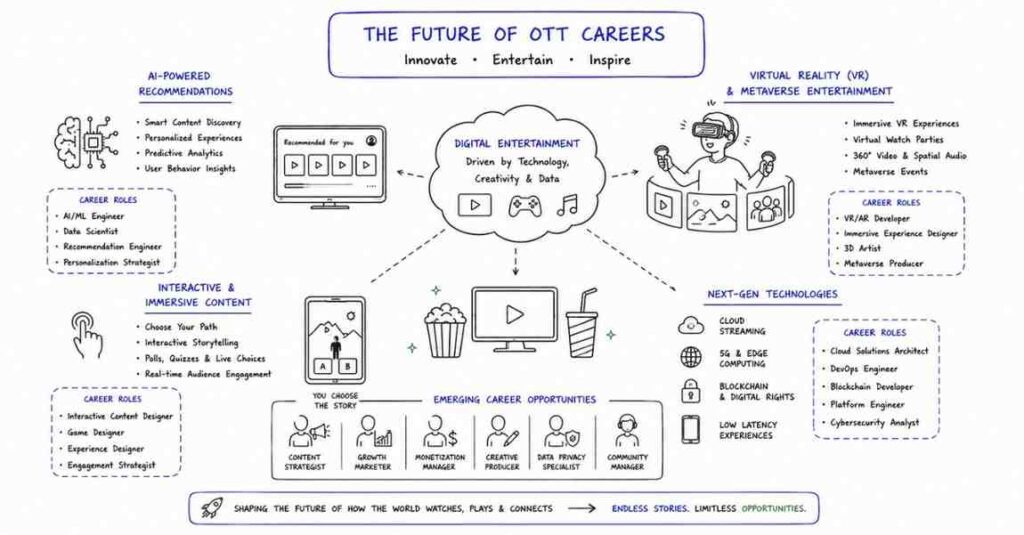
Challenges
AI and Personalization
Artificial intelligence increasingly powers recommendation systems, content analysis, subtitle generation, and marketing optimization. Careers in machine learning, AI engineering, and data science will grow. Understanding AI’s applications in media becomes valuable across roles—content professionals understanding recommendation algorithms, marketers understanding AI-optimized campaigns.
Interactive and Immersive Content
Experiments with interactive content (choose-your-own-adventure narratives), VR/AR experiences, and gaming integration create new roles blending entertainment with technology. Professionals understanding both media storytelling and interactive design will be valued.
Advertising-Supported Models
As platforms introduce ad-supported tiers, careers in advertising technology, ad sales, programmatic advertising, and advertising operations grow. Understanding both streaming technology and advertising industry becomes valuable.
Regional and Hyperlocal Content
Continued regional content growth creates opportunities across languages and states. Professionals deeply understanding specific regional markets, languages, and cultural nuances will be increasingly valuable for platforms seeking local relevance.
Sustainability in Streaming
As the environmental impact of data centers and streaming comes under scrutiny, roles in sustainable technology operations may emerge. Engineers optimizing energy efficiency and sustainability specialists might become part of platform teams.
Conclusion
OTT streaming platforms offer exciting, well-compensated, and growing career opportunities across content, technology, marketing, analytics, and operations. Major players like Netflix, Amazon Prime Video, Disney+ Hotstar, and domestic platforms like SonyLIV and Zee5 maintain substantial Indian operations employing thousands across diverse roles. With Netflix alone spending ₹125 crores on human resources in India and the market continuing to expand, opportunities will grow.
Success requires combining relevant educational backgrounds with practical experience, developing hybrid skills blending domain expertise with analytical capabilities, building networks within the industry, and demonstrating understanding of how streaming platforms operate strategically and operationally. Whether you’re drawn to content roles evaluating entertainment, technical positions building platforms, marketing positions driving growth, or analytical roles finding insights in data, OTT platforms offer fulfilling career paths.
The streaming industry sits at the exciting intersection of entertainment, technology, and business strategy—combining creative thinking with analytical rigor, traditional media knowledge with digital innovation. For those who thrive in fast-paced, data-informed, globally-minded environments working on products millions use daily, OTT platform careers provide meaningful, well-compensated, and intellectually stimulating opportunities.
Start building relevant experience wherever you are—internships, related industry roles, side projects demonstrating strategic thinking. Network actively with platform employees and industry professionals. Develop the hybrid skills—content knowledge plus business thinking, technical abilities plus user empathy—that OTT roles demand. The Indian streaming market is still maturing, meaning opportunities will continue emerging for talented, motivated professionals ready to contribute to this transformative industry.