
Renewable Energy & Sustainability Careers
Table of Contents
Renewable Energy Engineering Careers: Solar, Wind & Green Technology Jobs
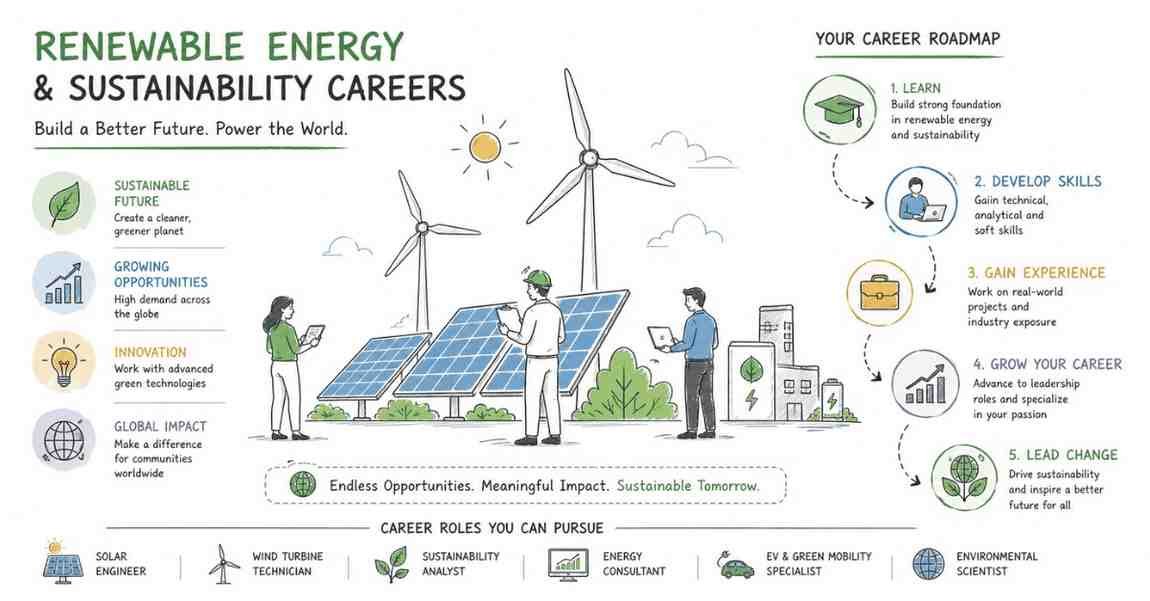
India’s energy landscape is transforming dramatically. Drive through Gujarat or Rajasthan, and you’ll see massive solar parks stretching to the horizon acres of photovoltaic panels silently converting sunlight to electricity. Visit Tamil Nadu or Karnataka coast, and wind turbines tower over fields, their blades sweeping through the air, generating clean power. This isn’t distant future it’s today’s reality, and it’s growing exponentially.
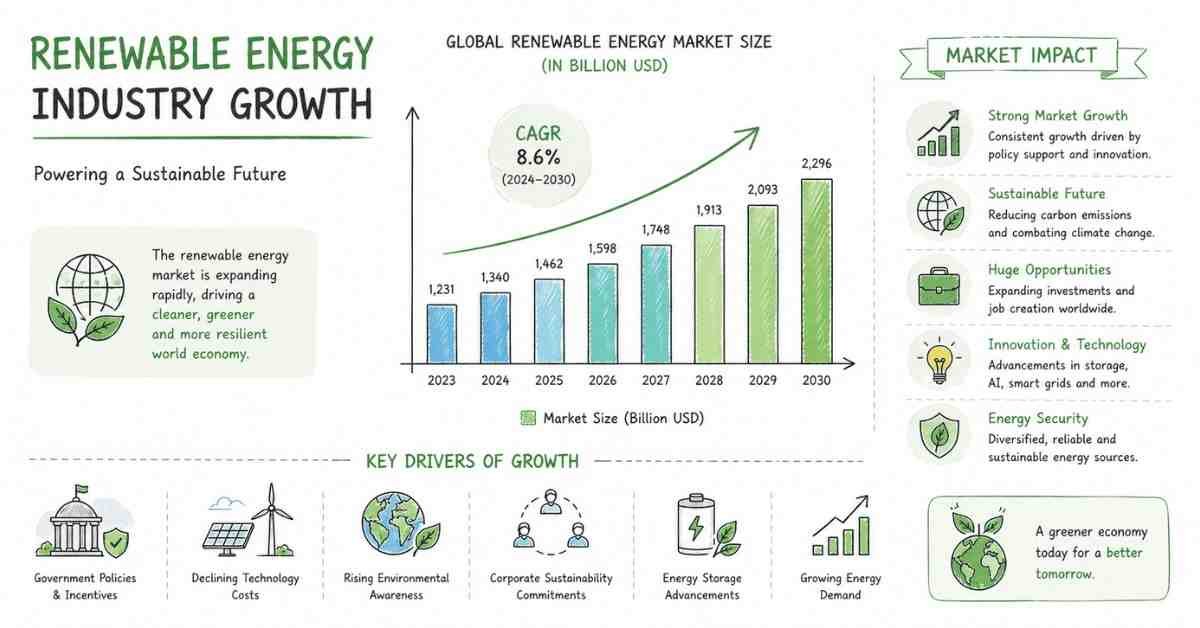
India has committed to 500 GW of renewable energy capacity by 2030, part of our climate change commitments. We’re already the world’s third-largest renewable energy producer. Solar installations are growing 25-30% annually. Wind energy continues expanding. And this massive buildout needs thousands of electrical engineers to design systems, integrate renewables into grids, manage energy storage, optimize performance, and ensure reliability.
For electrical engineers who want meaningful careers tackling climate change while working on cutting-edge technology, renewable energy offers exceptional opportunities. This guide explores solar, wind, energy storage, and grid integration careers: what you’ll actually do, where you’ll work, what skills matter, salary expectations, and how to enter this booming sector.
Why Renewable Energy Careers Make Sense Now
The Numbers Are Compelling
India’s Renewable Targets:
- 500 GW renewable capacity by 2030 (currently ~180 GW)
- Solar: 280 GW targeted
- Wind: 140 GW targeted
- Other renewables: 80 GW
Investment Scale:
- ₹30-35 lakh crores investment needed
- Major domestic conglomerates (Adani, Tata, ReNew, Greenko) investing heavily
- International capital flowing in
Job Creation:
- Estimated 3-4 lakh direct jobs in renewable energy by 2030
- Electrical engineers among most-needed professionals
- Skills shortage driving premium salaries
Government Support:
- Production-linked incentive (PLI) schemes for solar manufacturing
- Must-run status for renewable energy (grid priority)
- Favorable policies at central and state levels
- International commitments ensuring policy continuity
Career Advantages
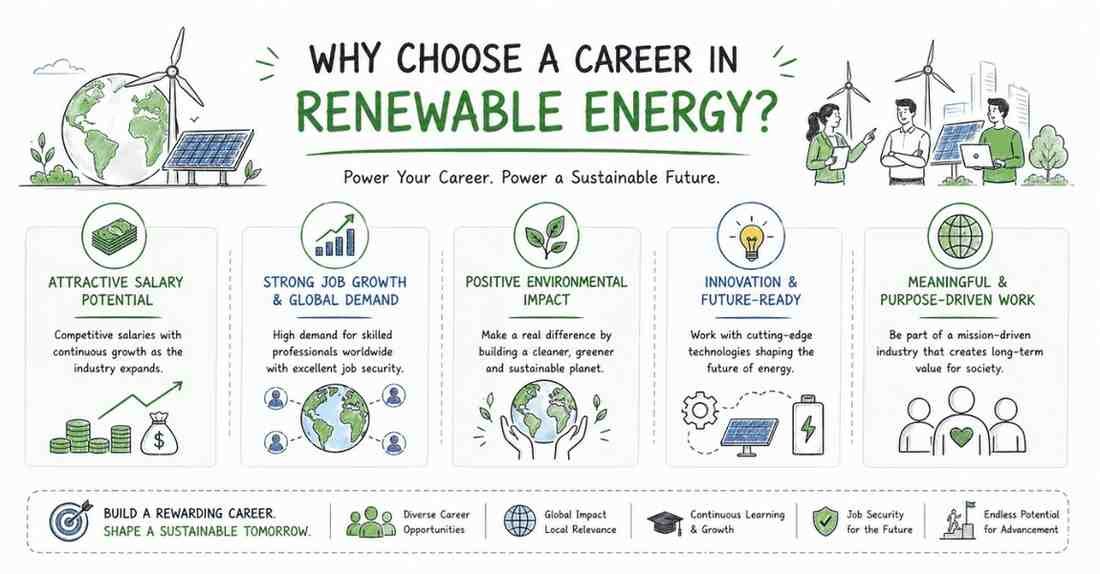
Future-Proof: Unlike thermal power (being phased down), renewables are the future
Meaningful Work: Contributing to climate solution, not just earning salary
Growing Sector: Expanding opportunities as capacity grows exponentially
Diverse Roles: Design, installation, operation, maintenance, consulting, research
Global Relevance: Skills transferable internationally renewable energy global priority
Solar Energy Engineering Careers
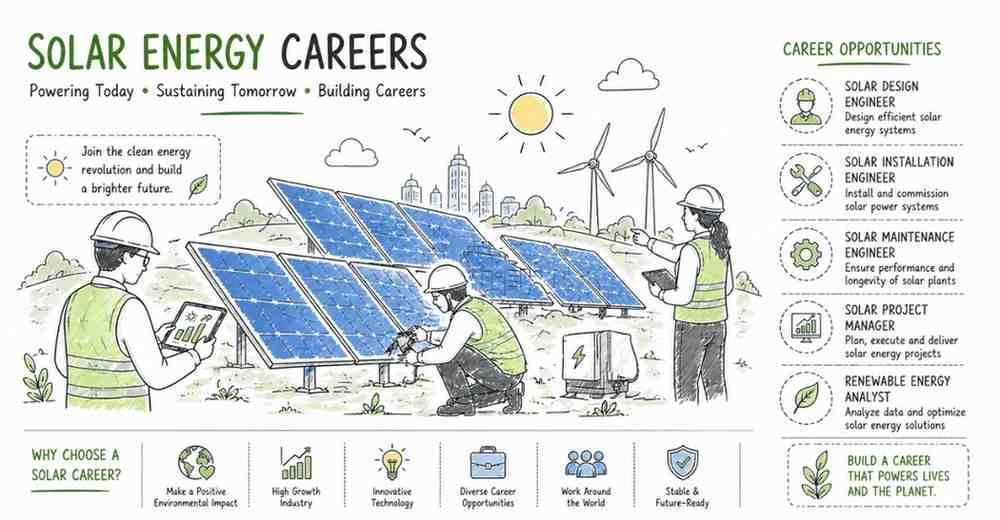
Solar PV System Design Engineer
What You’ll Do:
- Designing solar photovoltaic systems for rooftops, ground-mounted plants, floating solar
- Site assessment and feasibility studies
- Module selection and layout optimization
- Inverter and BOS (Balance of System) design
- Energy yield estimation
- Grid interconnection design
- Techno-economic analysis
Tools and Software:
- PVsyst: Industry standard for solar design and simulation
- Helioscope: Cloud-based solar design platform
- AutoCAD: Layout drawings
- Google Earth/SketchUp: Site modeling
- Excel: Financial modeling
Where You’ll Work:
- Large solar companies: Adani Green, Tata Power Solar, ReNew Power, Azure Power
- EPC contractors: Sterling & Wilson, Vikram Solar, Waaree Energies
- Consultancies: Specialized solar consultants
- Engineering services: Design support firms
Salary Range:
- Fresher: ₹4-8 LPA
- 3-5 years: ₹8-15 LPA
- Senior: ₹15-28 LPA
Skills Required:
- Solar PV fundamentals (module technology, inverters, mounting systems)
- PVsyst proficiency (critical learn this!)
- Electrical design (DC/AC sizing, cable sizing, protection)
- Indian grid codes and regulations
- Financial modeling basics
- Understanding of land, shadow analysis, weather data
Solar Plant Operations & Maintenance Engineer
What You’ll Do:
- Monitoring plant performance remotely via SCADA
- Troubleshooting underperformance issues
- Preventive maintenance planning and execution
- Cleaning schedules management
- Inverter and module fault diagnosis
- Performance ratio optimization
- Generation forecasting
- Coordinating with O&M contractors
Work Environment:
- Mix of remote monitoring (office) and site visits
- Sites often in remote areas (Rajasthan, Gujarat deserts, etc.)
- Exposure to outdoor conditions
Companies:
- All solar asset owners (Adani, Tata, ReNew, etc.)
- Independent O&M service providers
- Asset management companies
Salary Range:
- Fresher: ₹3.5-7 LPA
- Mid-level: ₹7-14 LPA
- Senior/Plant Manager: ₹14-25 LPA
Skills Required:
- Solar plant equipment knowledge
- SCADA systems
- Electrical troubleshooting
- Data analysis (performance metrics)
- Vendor management
- Willingness to travel and work at remote sites
Solar Project Engineer/Manager
What You’ll Do:
- Managing solar project execution from design to commissioning
- Coordinating with contractors, consultants, utilities
- Procurement management
- Quality control and safety oversight
- Timeline and budget management
- Stakeholder communication
- Regulatory approvals and compliances
Career Path: Usually requires 5-8 years experience before managing projects independently
Salary Range:
- Project Engineer (3-6 years): ₹10-18 LPA
- Project Manager (7+ years): ₹18-35 LPA
- Senior PM (10+ years): ₹35-55 LPA
Wind Energy Engineering Careers
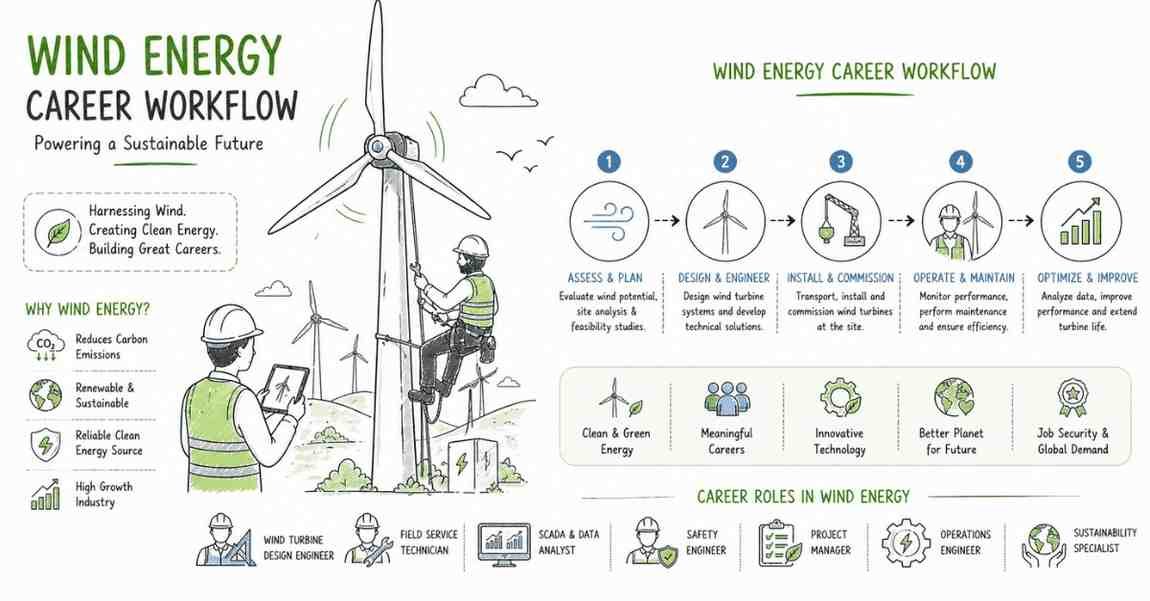
Wind Resource Assessment Engineer
What You’ll Do:
- Analyzing wind data to assess site suitability
- Installing and managing met masts
- Wind data analysis and modeling
- Energy yield assessment
- Micro-siting (optimal turbine placement)
- Wake loss modeling
Tools:
- WindPRO (wind modeling software)
- WAsP (Wind Atlas Application and Analysis Program)
- Statistical analysis tools (Python, R)
- GIS software
Companies:
- Wind developers (Suzlon, Inox Wind, ReNew, Greenko)
- Consultancies (independent wind assessment firms)
Salary Range:
- Fresher: ₹5-9 LPA
- Mid-level: ₹10-18 LPA
- Senior: ₹18-30 LPA
Special Skills:
- Meteorology basics
- Statistical analysis
- GIS and remote sensing
- Wind modeling software
Wind Turbine Engineer (Electrical)
What You’ll Do:
- Electrical system design for wind turbines
- Power conversion systems (generator, converter, transformer)
- Control systems
- Grid interconnection
- Lightning protection and grounding
- Condition monitoring systems
Career Scope:
- Turbine manufacturers (limited in India—Suzlon, Inox Wind)
- Wind farm
developers
- O&M service providers
- Engineering consultancies
Salary Range:
- Fresher: ₹6-10 LPA
- Mid-level: ₹11-20 LPA
- Senior: ₹20-35 LPA
Skills Required:
- Power electronics and drives
- Control systems
- Electrical machines (generators)
- SCADA systems
- Wind turbinetechnology
Wind Farm Operations Engineer
What You’ll Do:
- Monitoring wind farm performance
- Troubleshooting turbine faults
- Coordinating maintenance activities
- Performance optimization
- Generation forecasting
- Compliance with grid codes
- Safety management
Work Environment:
- Control room monitoring + field visits to turbines
- Often remote locations (coastal areas, hilly terrain)
- Shift work possible in large installations
Salary Range:
- Fresher: ₹4-8 LPA
- Mid-level: ₹8-16 LPA
- Senior/Site Mager: ₹16-28 LPA
Energy Storage Systems
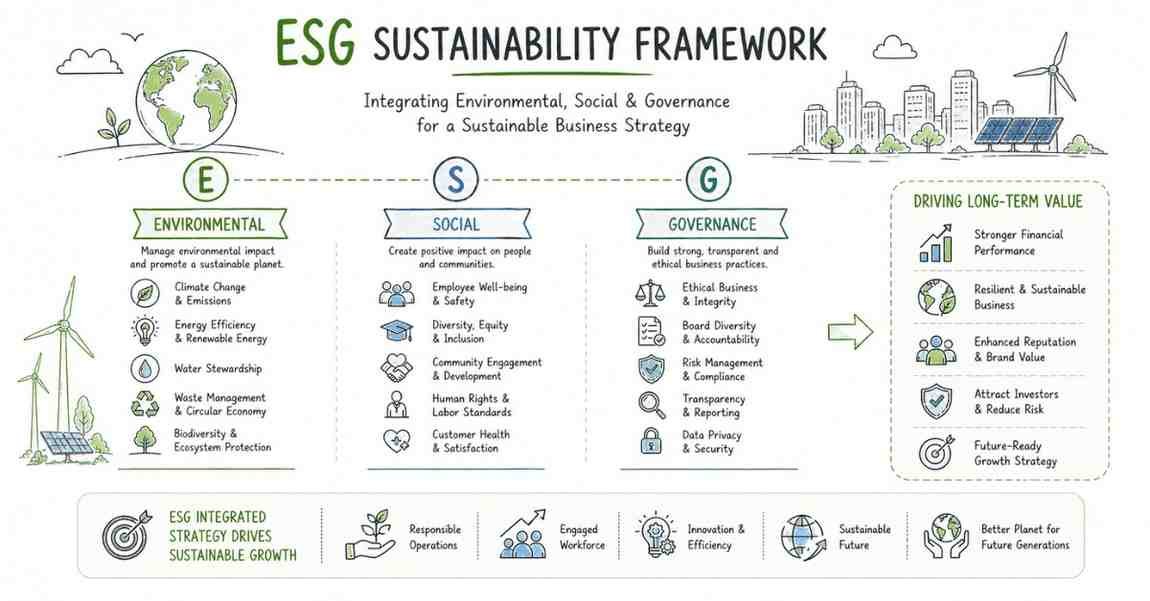
Battery Energy Storage Systems (BESS) Engineer
What It Involves:
Energy storage is critical for renewable integration storing excess solar/wind generation and dispatching when needed.
What You’ll Do:
- Designing grid-scale battery storage systems
- Battery management system integration
- Power conversion system design
- Grid interconnection and controls
- Performance optimization
- Safety system design
Technical Areas:
- Battery technology (lithium-ion, flow batteries, emerging chemistries)
- BMS architecture for grid-scale systems
- Power electronics (bidirectional converters)
- Grid codes and ancillary services
- Fire safety and thermal management
Companies:
- Renewable energy developers adding storage
- Dedicated storage companies (Greenko, AES India, ReNew)
- Battery manufacturers entering BESS
- Utilities piloting storage projects
Salary Range:
- Fresher with relevant skills: ₹8-13 LPA
- Mid-level: ₹14-25 LPA
- Senior: ₹25-45 LPA (high demand, limited supply)
Skills Required:
- Battery technology and BMS
- Power electronics
- Grid integration
- Control systems
- Safety standards
- Growing field early expertise valuable
Pumped Hydro Storage Engineer
What It Involves:
Pumped storage hydropower pumping water uphill when excess power available, generating when needed
Roles:
- Electrical system design for pumped storage plants
- Reversible turbine-generator systems
- Power electronics and drives
- Grid synchronization
- Control systems
Companies:
- NTPC, NHPC (developing pumped storage)
- State utilities
- Private renewable developers
Salary Range: Similar to hydropower engineering (₹7-25 LPA depending on experience)
Grid Integration and Renewable Energy Management
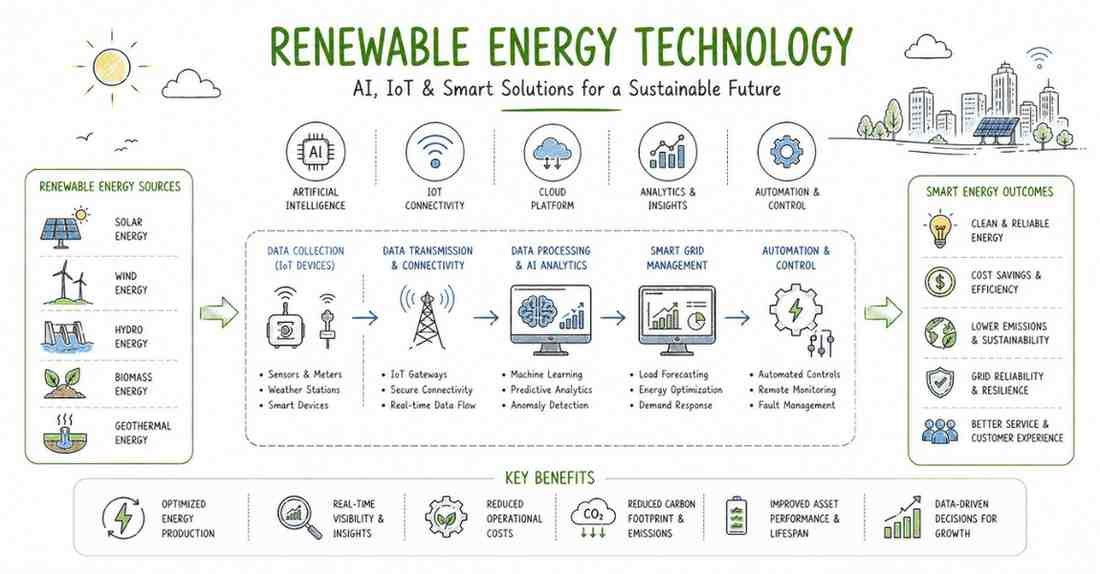
Renewable Energy Integration Engineer
What You’ll Do:
- Integrating variable renewable energy into power grids
- Grid impact studies (voltage, frequency, stability)
- Forecasting solar and wind generation
- Managing curtailment and dispatch
- Ensuring grid code compliance
- Coordinating with system operators
Technical Skills:
- Power system analysis (load flow, stability)
- ETAP, PSS/E, DIgSILENT software
- Understanding of grid operations
- Renewable energy forecasting
- Power system dynamics
Where You’ll Work:
- Regional Load Dispatch Centers
- State Load Dispatch Centers
- POSOCO (Power System Operation Corporation)
- Renewable energy companies (grid integration teams)
- Transmission companies (PGCIL, state transcos)
- Consultancies
Salary Range:
- Fresher: ₹6-10 LPA
- Mid-level: ₹11-20 LPA
- Senior: ₹20-35 LPA
Career Appeal:
- Critical role as renewable penetration increases
- Combination of power systems and renewable energy expertise
- Stable career with system operators and utilities
Forecasting and Scheduling Engineer
What You’ll Do:
- Forecasting day-ahead and intra-day renewable generation
- Scheduling generation with power exchanges
- Deviation settlement management
- Optimizing forecast accuracy
- Financial risk management
Tools:
- Machine learning for forecasting (Python, R)
- Weather data analysis
- Power market platforms
- Data analytics tools
Companies:
- All renewable energy generators
- Forecasting service providers
- Power trading companies
Salary Range:
- Fresher with analytics skills: ₹7-12 LPA
- Mid-level: ₹13-22 LPA
- Senior: ₹22-38 LPA
Unique Aspect: Blend of electrical engineering, data science, and power markets
Emerging Areas in Renewable Energy
Green Hydrogen
What It Is: Hydrogen produced using renewable electricity through electrolysis
India’s Push: National Green Hydrogen Mission targeting 5 MMT production by 2030
Engineering Roles:
- Electrolyzer system design and operation
- Power electronics for electrolysis
- Hydrogen safety systems
- Grid integration of hydrogen facilities
- Energy management and optimization
Career Stage: Emerging field early entrants gain significant advantage
Companies:
- Reliance (major green hydrogen plans)
- NTPC, Indian Oil (pilot projects)
- Adani Green Energy
- Startups in hydrogen space
Salary Expectations: Premium over traditional roles (20-30% higher) due to specialized skills
Offshore Wind
What It Is: Wind farms in ocean waters
India’s Potential: 7,600 km coastline, government planning offshore wind zones
Engineering Challenges:
- Harsh marine environment
- HVDC transmission from offshore platforms
- Specialized electrical systems
- Grid integration
Career Outlook: Limited currently but significant potential as India develops offshore wind
Agrivoltaics
What It Is: Combining agriculture with solar panels (solar panels raised allowing crops underneath)
Engineering Aspects:
- Specialized mounting structures
- Electrical design considerations
- Micro-grid integration
- Irrigation integration
Growing Field: Addresses land constraints, dual land use
Floating Solar
What It Is: Solar panels on water bodies (reservoirs, lakes)
Advantages: No land use, water cooling improves efficiency, reduces evaporation
Engineering Challenges:
- Marine-grade electrical equipment
- Floating platform design
- Anchoring systems
- Underwater cabling
India Progress: Several large floating solar projects operational and planned
Skills That Matter in Renewable Energy
Technical Skills
Solar Design Software:
- PVsyst: Absolutely essential for solar careers industry standard
- Helioscope, PV*SOL
- Learning PVsyst can immediately add ₹1-2 LPA to entry salary
Power System Analysis:
- ETAP, PSS/E, DIgSILENT for grid integration roles
- Load flow, fault analysis, stability studies
Electrical Design:
- AutoCAD Electrical
- Cable sizing, protection schemes
- Earthing and lightning protection
Data Analysis:
- Excel (surprisingly important for performance analysis)
- Python or R for data analysis
- SQL for database management
- Statistical analysis
Simulation Tools:
- MATLAB/Simulink for modeling
- HOMER (microgrid design)
- SAM (System Advisor Model by NREL)
Monitoring Systems:
- SCADA platforms
- Data acquisition systems
- Performance monitoring tools
Domain Knowledge
Solar Technology:
- Module technologies (mono/poly crystalline, thin-film, bifacial)
- Inverter types (string, central, micro)
- Mounting systems
- Degradation and performance factors
Wind Energy:
- Turbine technology
- Wind resource assessment
- Wake effects
- O&M requirements
Energy Storage:
- Battery chemistries and characteristics
- BMS principles
- Applications (peak shaving, frequency regulation, black start)
Grid Integration:
- Indian Electricity Grid Code provisions for renewables
- Grid connection procedures
- Power quality requirements
- Forecasting and scheduling regulations
Standards and Regulations:
- IEC standards for renewable equipment
- BIS standards
- CEA (Central Electricity Authority) regulations
- State-level renewable energy policies
Soft Skills
Site Work Adaptability: Many renewable projects in remote locations adaptability important
Problem-Solving: Renewable systems face unique challenges creative problem-solving valued
Communication: Explaining technical aspects to non-technical stakeholders
Project Management: Understanding timelines, budgets, multi-stakeholder coordination
Continuous Learning: Technology evolving rapidly staying updated critical
Education and Certifications
Academic Background
B.Tech/B.E. Electrical Engineering: Most direct path
Relevant Electives:
- Renewable energy systems
- Solar photovoltaic systems
- Wind energy systems
- Power electronics
- Power systems
- Energy storage
Projects: Solar or wind-related final year projects show genuine interest
Specialized Courses
Solar PV Certification:
- NABCEP (North American Board of Certified Energy Practitioners) PV Associate
- Various Indian institutes offer solar PV certification programs
- Cost: ₹20,000-50,000
PVsyst Training:
- Dedicated PVsyst courses (online and offline)
- Critical for solar design roles
- Cost: ₹10,000-25,000
- ROI: Excellent—directly increases employability
Wind Energy Courses:
- Wind resource assessment training
- Wind turbine technology courses
- Cost: ₹15,000-40,000
Energy Storage:
- Battery technology and BMS courses
- Grid-scale storage system design
- Emerging area early certification valuable
Online Platforms:
- Coursera: Renewable energy specializations
- NPTEL: Free courses on solar, wind, smart grids
- Energy Institute: Various renewable energy courses
- Udemy: Practical software-focused courses (PVsyst, HOMER)
Professional Memberships
IEEE Power & Energy Society: Technical resources and networking
Solar Energy Society of India: Industry connections
Indian Wind Energy Association: For wind sector professionals
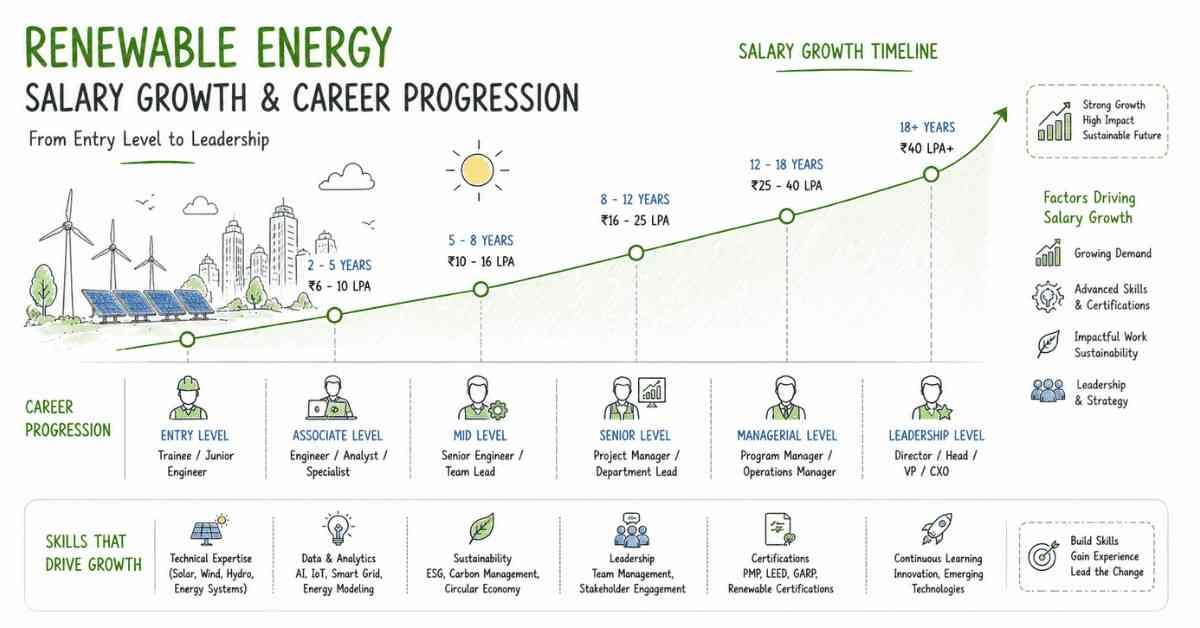
Career Paths and Progression
Technical Specialist Track
Years 0-3: Junior Engineer
- Learning systems and software
- Assisting in design/O&M
- Building foundational knowledge
Years 3-7: Engineer/Senior Engineer
- Independent project responsibility
- Specialization in solar/wind/storage
- Technical depth in chosen area
Years 7-12: Lead Engineer/Principal Engineer
- Subject matter expert
- Mentoring juniors
- Complex problem-solving
- Innovation and optimization
Years 12+: Chief Engineer/Technical Director
- Technology strategy
- New technology evaluation
- Thought leadership
Project Management Track
Years 3-5: Project Coordinator
- Supporting project managers
- Vendor coordination
- Documentation
Years 5-8: Project Manager
- Full project responsibility
- Multi-stakeholder management
- Delivery accountability
Years 8-15: Senior Project Manager/Program Manager
- Multiple projects
- Large-scale programs
- P&L responsibility
Years 15+: Head of Projects/VP Projects
- Portfolio management
- Strategic planning
Operations Track
Years 0-3: O&M Engineer
- Plant monitoring
- Troubleshooting
- Maintenance coordination
Years 3-7: Senior O&M Engineer/Site Manager
- Site-level responsibility
- Team management
- Performance optimization
Years 7-15: Regional O&M Manager
- Multiple sites
- Fleet optimization
- Contract management
Years 15+: Head of Asset Management
- Portfolio-level responsibility
- Strategic asset optimization
- Long-term planning
Salary Expectations
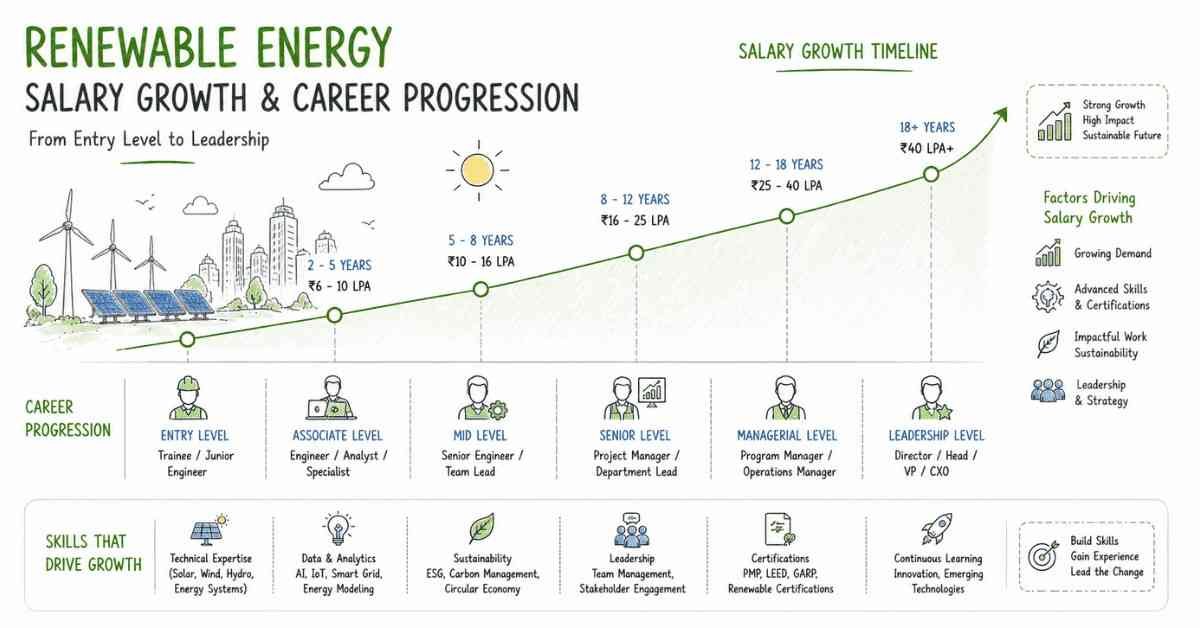
Entry Level (Freshers)
Solar Design Engineer: ₹4-8 LPA
Wind Resource Assessment: ₹5-9 LPA
O&M Engineer: ₹3.5-7 LPA
Grid Integration: ₹6-10 LPA
BESS Engineer: ₹8-13 LPA (premium due to demand)
Mid-Level (3-7 years)
Solar Design: ₹8-16 LPA
Project Manager: ₹12-22 LPA
O&M Manager: ₹10-18 LPA
Grid Integration Specialist: ₹12-20 LPA
BESS Specialist: ₹15-25 LPA
Senior (7-15 years)
Chief Engineer: ₹20-35 LPA
Program Manager: ₹25-40 LPA
Asset Management Head: ₹30-50 LPA
Technical Director: ₹35-55 LPA
Factors Affecting Salary
Company Type:
- Large corporates (Adani, Tata, ReNew): ₹5-9 LPA (fresher); better benefits
- Mid-sized companies: ₹4-7 LPA (fresher)
- Startups: ₹4-8 LPA (fresher) + sometimes equity
Skills Premium:
- PVsyst proficiency: +₹1-2 LPA
- BESS expertise: +₹2-4 LPA
- Grid integration: +₹1-3 LPA
- Data analytics: +₹1-2 LPA
Location:
- Metros (Bangalore, Pune, Gurgaon): +10-15%
- Renewable hubs (Gujarat, Rajasthan): Average
- Remote project sites: +allowances but lower base sometimes
Major Employers
Integrated Renewable Energy Companies
Adani Green Energy (Largest):
- Solar and wind portfolio
- Extensive hiring
- Locations: Gujarat, Rajasthan, Karnataka, multiple project sites
Tata Power Renewable:
- Solar and wind
- Established player
- Strong engineering culture
ReNew Power (Largest IPP):
- Solar, wind, hydro
- Rapid growth
- Multiple locations
Greenko Group:
- Renewable energy and storage
- Pumped storage projects
- Innovative technology focus
Solar-Focused Companies
Azure Power: Pure-play solar
Vikram Solar: Modules + EPC
Waaree Energies: Modules + EPC
Sterling & Wilson: Solar EPC (Shapoorji Pallonji Group)
Wind-Focused Companies
Suzlon Energy: Turbine manufacturer + project developer
Inox Wind: Turbine manufacturer
Renom Energy (acquired by Suzlon)
Public Sector
NTPC Renewable (NTPC’s green arm):
- Large-scale solar and wind projects
- Stability of PSU with renewable growth
SECI (Solar Energy Corporation of India):
- Tender management, project facilitation
- Smaller direct employment but important role
State Utilities: Many state power utilities have renewable energy arms
Consulting and Engineering Services
Tata Consulting Engineers: Renewable project consulting
DNV: Technical advisory and certification
TÜV: Testing and certification
Various boutique renewable consultancies
Challenges and Realities
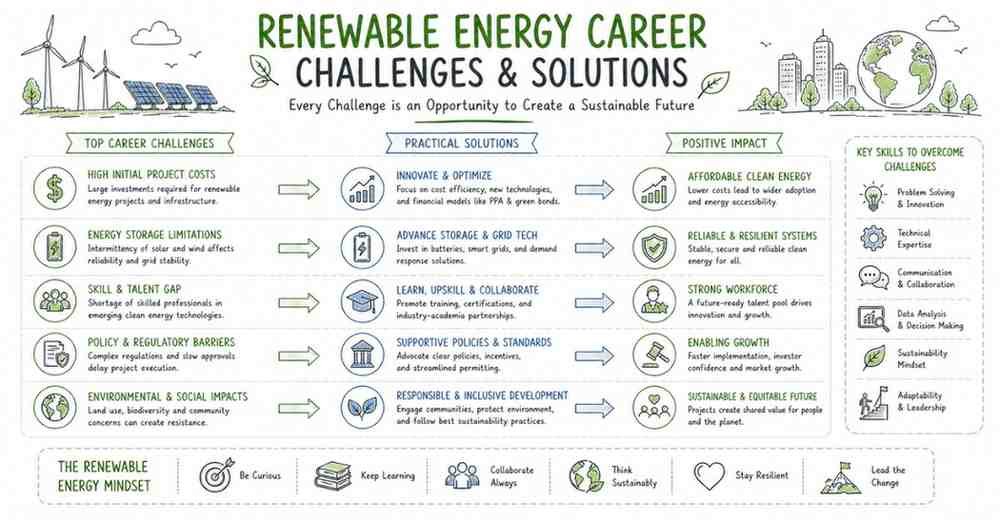
The Not-So-Glamorous Aspects
Remote Locations: Many solar and wind projects in remote areas limited social infrastructure
Site Work: Significant fieldwork in hot deserts (Rajasthan) or windy coasts physically demanding
Travel: Especially in project roles extensive travel to multiple sites
Early Career Salaries: Lower than IT or some other electrical domains initially (improves significantly with experience)
Project-Based Work: Cyclical hiring sometimes, project completion can mean relocation
Weather Dependency: Performance fluctuations due to weather sometimes frustrating
The Rewarding Aspects
Meaningful Work: Directly contributing to climate solution tangible environmental impact
Growing Sector: Job security in expanding industry
Technology Evolution: Working with cutting-edge technology solar efficiency improving, storage advancing
Diverse Opportunities: Design, O&M, consulting, project management various paths
Global Relevance: Skills transferable worldwide renewable energy is global priority
Visible Impact: See actual solar parks and wind farms you helped create
Getting Started: Your Roadmap
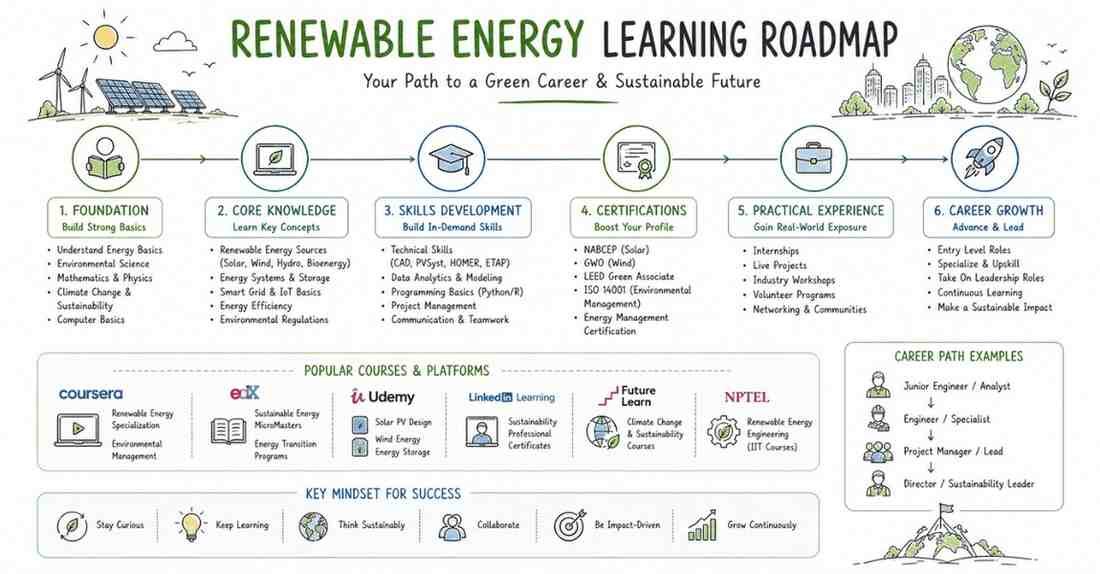
For Students (During B.Tech)
Academic Focus:
- Take renewable energy electives
- Strong foundation in power electronics and power systems
- Final year project in solar/wind
Skill Building:
- Learn PVsyst (critical take online course)
- AutoCAD Electrical basics
- MATLAB for renewable modeling
- Excel for energy calculations
Practical Experience:
- Internship at renewable company (even 6-8 weeks valuable)
- Visit solar/wind installations if possible
- Attend renewable energy conferences/seminars
Networking:
- Join IEEE PES student chapter
- Connect with renewable professionals on LinkedIn
- Follow renewable energy industry news
For Working Professionals Transitioning
From Power Systems:
- Easiest transition learn renewable-specific aspects
- Take PVsyst course
- Understand renewable grid codes
- Apply to renewable companies highlighting power systems expertise
From Automation:
- Leverage SCADA knowledge for renewable plant automation
- Learn renewable plant monitoring systems
- Understand O&M requirements
From Other Electrical Domains:
- Take structured renewable energy course
- Complete certification (NABCEP or equivalent)
- Build projects demonstrating knowledge
- Network aggressively in renewable sector
- Be flexible on initial role/salary for entry
First Job Strategy
Priority 1: Large established renewable companies (Adani Green, Tata Power Renewable, ReNew)
- Structured training
- Exposure to large projects
- Career stability
Priority 2: EPC companies (Sterling & Wilson, Waaree, Vikram Solar)
- Excellent learning see complete project lifecycle
- Hands-on experience
- Good for early career
Priority 3: Consultancies
- Analytical roles
- Multiple project exposure
- Good for technically inclined
Don’t Overlook: Mid-sized companies and startups sometimes faster growth and more responsibility
Future Outlook
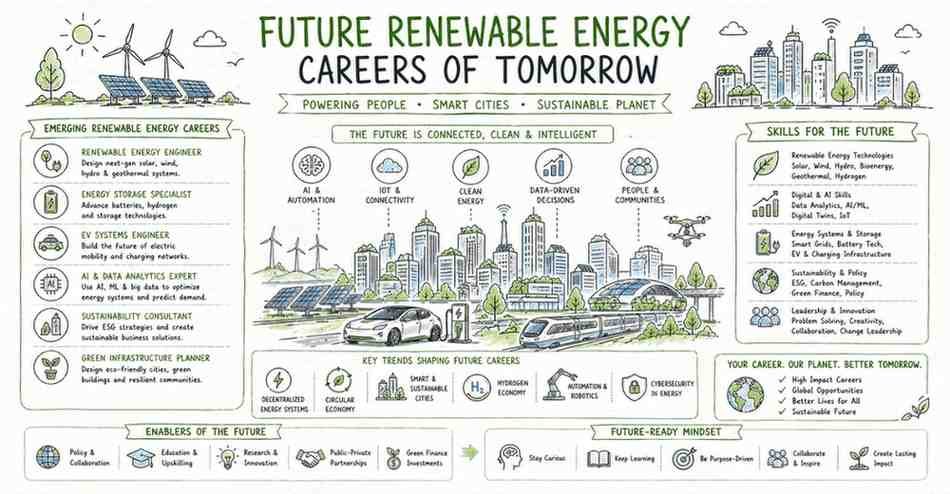
Technology Trends
Solar:
- Bifacial modules becoming standard
- Perovskite and tandem cells (next generation)
- Building-integrated PV (BIPV)
- Agrivoltaics expanding
Wind:
- Larger turbines (higher capacity factors)
- Offshore wind development
- Hybrid wind-solar plants
Storage:
- Grid-scale battery storage proliferating
- Pumped hydro expansion
- Emerging technologies (flow batteries, compressed air)
- Green hydrogen integration
Grid Integration:
- Smart grids and advanced forecasting
- Virtual power plants
- Demand response integration
- Blockchain for renewable trading (experimental)
Career Implications
Skills in Demand:
- Energy storage expertise (highest demand)
- Grid integration and forecasting
- Data analytics for performance optimization
- Hybrid power plant design
- Microgrid and off-grid solutions
Growth Areas:
- Green hydrogen (early stage, high potential)
- Offshore wind (when India develops)
- Rooftop solar with storage (residential/commercial)
- Industrial captive renewable power
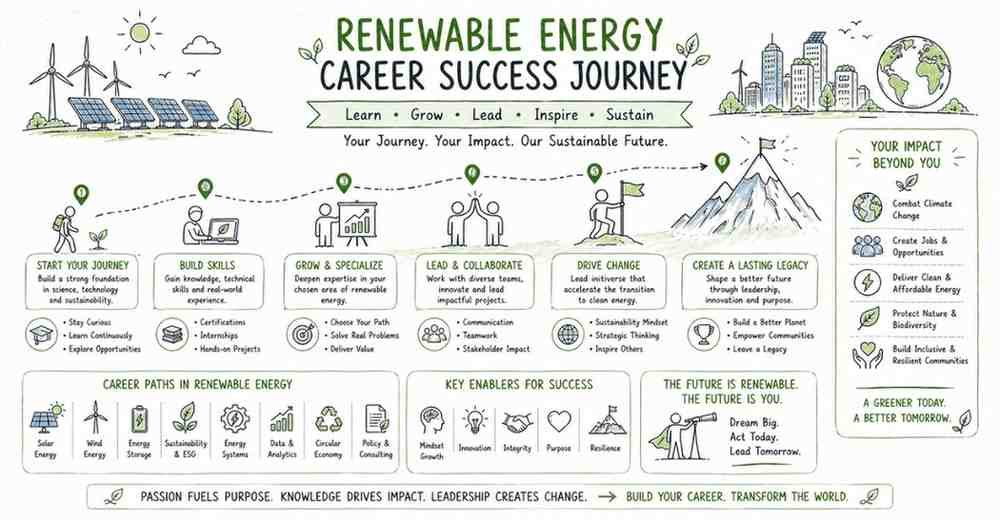
Conclusion: Powering Sustainable Future
Renewable energy isn’t just another career option it’s a chance to be part of solving humanity’s biggest challenge while building a rewarding engineering career.
India’s renewable energy sector will triple in the next 7 years. That means thousands of solar parks designed, wind farms commissioned, storage systems integrated, and grids transformed to handle variable renewables. Every bit of that work needs skilled electrical engineers.
The salaries might start slightly lower than some hot sectors, but they grow well with experience. The work might sometimes be in remote locations, but you see tangible results actual power plants you helped create. The technology is evolving rapidly, which means continuous learning, but that’s what keeps work interesting.
Most importantly, when you go home after work, you know your efforts matter. Every solar panel optimally placed, every wind turbine efficiently generating, every storage system smoothing renewable output, every grid successfully integrating clean energy it all adds up. It reduces carbon emissions, improves air quality, enhances energy security, and builds a sustainable future.
For electrical engineers who want careers with purpose, renewable energy offers exactly that. You’ll work with cutting-edge technology, solve complex engineering problems, contribute to national priorities, and help power India’s development sustainably.
The sun rises every day. The wind blows constantly. And engineers will harness that limitless clean energy to power our nation’s growth.
The future is renewable. And it’s being built by engineers like you.