
Real Estate Development Project Manager Career Guide
Table of Contents
Introduction
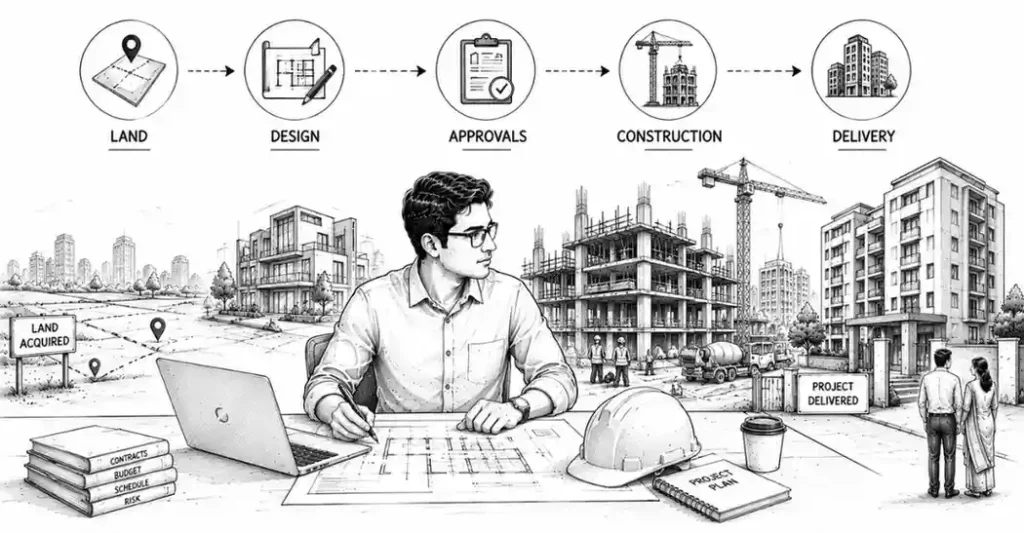
Real estate development project managers occupy a critical position at the nexus of vision and execution, coordinating the complex process of transforming raw land or existing properties into completed developments. Unlike property managers who oversee existing buildings or sales agents who facilitate transactions, development project managers shepherd projects from initial concept through design, permitting, construction, and final delivery, ensuring developments complete on time, within budget, and according to quality standards.
This multifaceted role demands technical construction knowledge, financial acumen, regulatory understanding, vendor management capabilities, problem-solving skills, and exceptional coordination abilities as you orchestrate architects, engineers, contractors, government authorities, lenders, and internal stakeholders toward common objectives. The complexity and responsibility create rewarding careers for professionals who thrive in dynamic, challenging environments where every project presents unique obstacles requiring creative solutions.
Compensation reflects the strategic importance and demanding nature of development project management. Real estate project managers in India earn an average of ₹79,013 per month (approximately ₹9.5 lakh annually) according to Indeed. Construction and real estate project managers typically earn between ₹8-15 lakh depending on the scale of projects and organizational context. Real estate managers more broadly average ₹19.9 lakh annually, with most ranging from ₹16 lakh to ₹38.6 lakh based on experience and portfolio responsibility.
Salary progression follows clear experience-based trajectories: entry-level managers (0-2 years) earn approximately ₹3.2 lakh, early career (2-5 years) earn ₹4.5 lakh, mid-career (5-10 years) command ₹5.95 lakh, experienced (10-15 years) earn ₹7.3 lakh, and senior professionals (15-20 years) reach ₹7.8-8.5 lakh or more. Educational qualifications significantly impact earnings, with bachelor’s degree holders earning ₹6.7 lakh versus master’s degree holders earning ₹8.3 lakh.
India’s infrastructure boom, urban development acceleration, corporate expansion, and government housing initiatives create exceptional demand for qualified development project managers. Major employers including real estate developers, construction companies, corporate real estate departments, infrastructure firms, and consulting companies urgently seek professionals who can deliver complex projects successfully.
This comprehensive guide explores everything needed to build a successful real estate development project management career in India, from understanding core responsibilities and essential technical knowledge through PMP certification pathways, realistic salary expectations, critical skills development, and proven strategies for establishing yourself in this challenging, impactful profession.
Understanding the Development Project Manager Role
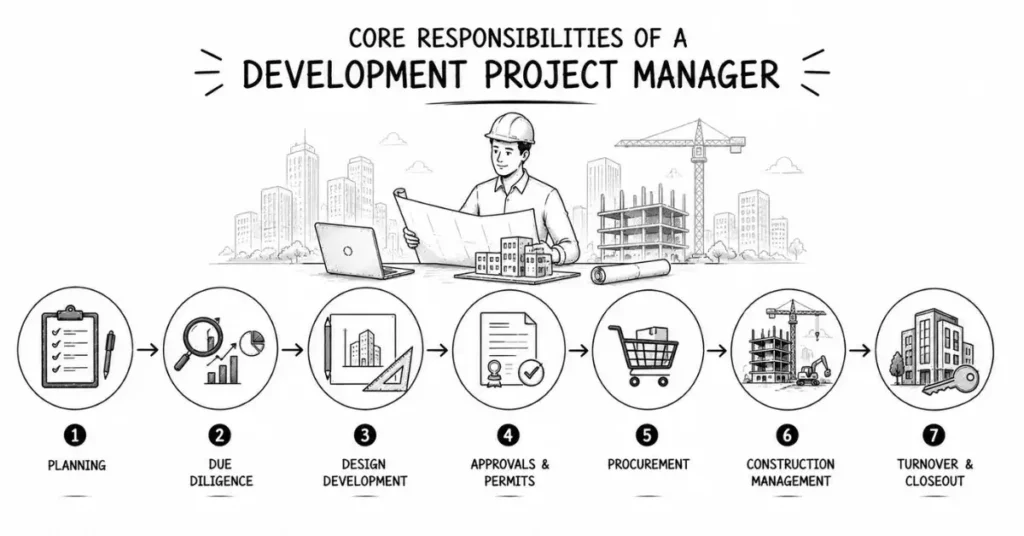
Core Responsibilities Across the Project Lifecycle
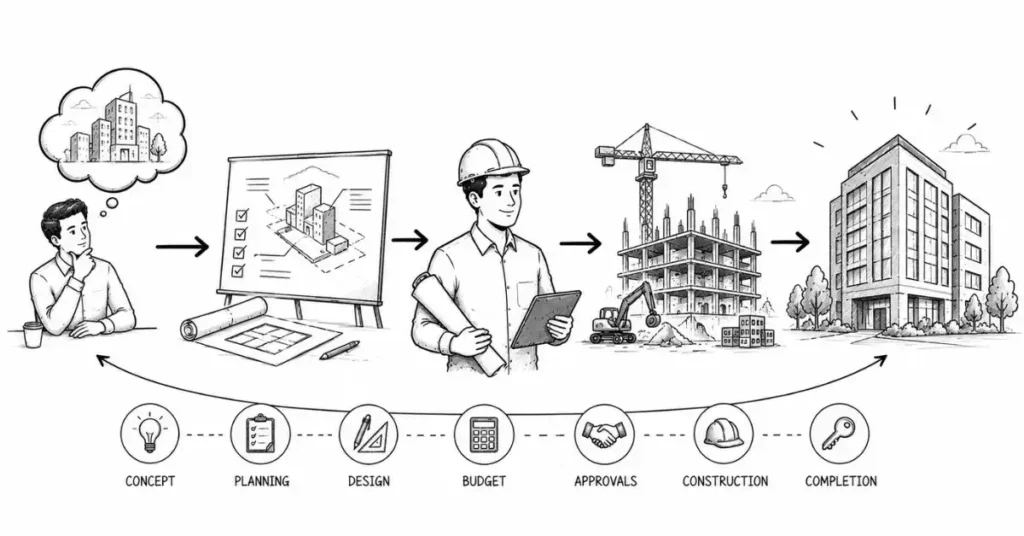
Real estate development project managers oversee projects from inception through completion, with responsibilities evolving across development phases.
Project planning and initiation establishes foundations for successful execution. You identify and define project scope, objectives, deliverables, and success criteria. You conduct feasibility studies evaluating site suitability, regulatory viability, financial feasibility, and market demand. You perform risk assessments identifying potential obstacles including regulatory hurdles, site conditions, market risks, and execution challenges. You prepare preliminary cost estimates projecting land costs, hard construction costs, soft costs (design, permits, financing), and contingencies. You develop high-level project timeline estimates identifying critical path activities and milestone dates.
This planning phase requires balancing ambition with realism—optimistic assumptions create project failures when reality differs from plans. Strong project managers ground plans in thorough analysis, market research, and conservative assumptions building credibility with investors and stakeholders.
Land acquisition and site due diligence validates site suitability before commitment. You identify suitable sites or spaces evaluating location, size, zoning, access, utilities, and market positioning. You explore lease versus purchase options analyzing financial implications of each approach. You review proposed lease contracts or purchase agreements ensuring favorable terms and conditions. You obtain title reports verifying clear ownership and identifying encumbrances or easements affecting development plans.
You conduct comprehensive due diligence evaluating all aspects of potential sites relative to defined project needs. This includes Phase I environmental assessments identifying potential contamination, geotechnical investigations understanding soil conditions and foundation requirements, topographic surveys mapping existing grades and drainage patterns, utility availability and capacity assessments, and zoning analysis confirming permitted uses and development parameters. Thorough due diligence prevents costly surprises during later project phases.
Design coordination and development translates concepts into buildable plans. You select and manage design teams including architects, engineers (structural, MEP, civil), landscape architects, and specialized consultants. You establish design objectives balancing aesthetic quality, functional performance, cost constraints, and schedule requirements. You review design deliverables at schematic design, design development, and construction document phases ensuring alignment with project objectives.
You coordinate value engineering efforts identifying cost reduction opportunities without compromising essential quality or functionality. You manage design budgets preventing scope creep or over-designed solutions exceeding financial parameters. You obtain stakeholder approvals at key design milestones ensuring alignment before advancing to subsequent phases.
Regulatory approvals and permitting navigates complex government requirements. You identify all required permits and approvals including zoning approvals or variances, building permits, environmental clearances, fire safety approvals, utility connection permissions, and occupancy certificates. You prepare or coordinate permit applications compiling required documentation, drawings, studies, and supporting materials.
You manage relationships with government officials building productive working relationships that facilitate efficient processing. You track approval timelines ensuring critical path activities don’t delay overall project schedules. You address review comments or objections promptly to keep approvals progressing. India’s recent regulatory streamlining including single-window clearance systems and digitized land records has reduced approval cycles, though challenges remain in many jurisdictions.
Contractor procurement and contract management secures execution teams. You prepare detailed scopes of work and specifications for construction contracts. You solicit competitive bids from qualified contractors evaluating not just price but experience, capability, quality track records, and financial stability. You negotiate contracts establishing clear scope, payment terms, schedule commitments, quality standards, and dispute resolution mechanisms.
You manage ongoing contractor performance monitoring progress, quality, safety, and schedule adherence. You conduct regular site meetings addressing issues, coordinating trades, and maintaining project momentum. You approve contractor payment applications after verifying completed work meets quality standards and contractual requirements. You resolve disputes or conflicts maintaining professional relationships while protecting project interests.
Construction management and oversight ensures quality execution. You establish procedures and manage testing and commissioning of all building systems. You monitor construction activities ensuring compliance with approved plans, building codes, and quality standards. You coordinate inspections by authorities having jurisdiction obtaining required sign-offs at critical construction milestones.
You manage project budgets throughout construction tracking expenditures against budgets, forecasting final costs, approving change orders, and controlling cost overruns. You maintain construction schedules monitoring critical path activities, identifying potential delays, implementing recovery plans when needed, and ensuring contractors meet milestone commitments. You manage project documentation including contracts, change orders, submittals, RFIs (requests for information), meeting minutes, and closeout documents.
Commissioning and turnover completes the development process. You coordinate testing and commissioning of mechanical, electrical, plumbing, and life safety systems ensuring everything operates as designed. You provide training programs for end-users or operations teams ensuring they understand building systems and maintenance requirements. You ensure end-users receive all required documentation including as-built drawings, operation manuals, warranties, and maintenance schedules.
You solicit contractors’ final invoices, check and certify them, and close out projects financially. You conduct lessons learned sessions capturing successes and improvement opportunities informing future projects. You facilitate final inspections obtaining occupancy certificates enabling building occupancy.
Work Environment and Daily Activities
Real estate development project managers split time between office work, construction sites, and meetings with diverse stakeholders.
Office time involves reviewing design documents and construction drawings, preparing project schedules and budget reports, coordinating with internal teams and external consultants, processing contractor invoices and change orders, preparing presentations and status reports for leadership, responding to emails and managing communications, and updating project management software and documentation systems.
Site visits require inspecting construction progress and quality, attending site meetings with contractors and subcontractors, identifying potential issues or risks, verifying work completion before payment approvals, coordinating punch list activities before substantial completion, and ensuring safety compliance and proper site management.
Stakeholder meetings include design review sessions with architects and engineers, progress meetings with owners or investors, coordination meetings with government authorities, problem-solving sessions addressing project challenges, and budget reviews with finance teams or lenders.
Work schedules vary by project phase. Pre-construction planning may allow relatively standard business hours. Active construction phases often require early morning site visits, extended hours addressing urgent issues, and occasional weekend work during critical activities. Deadline pressures before milestone dates or completion targets can intensify workload temporarily.
Essential Skills for Project Management Success
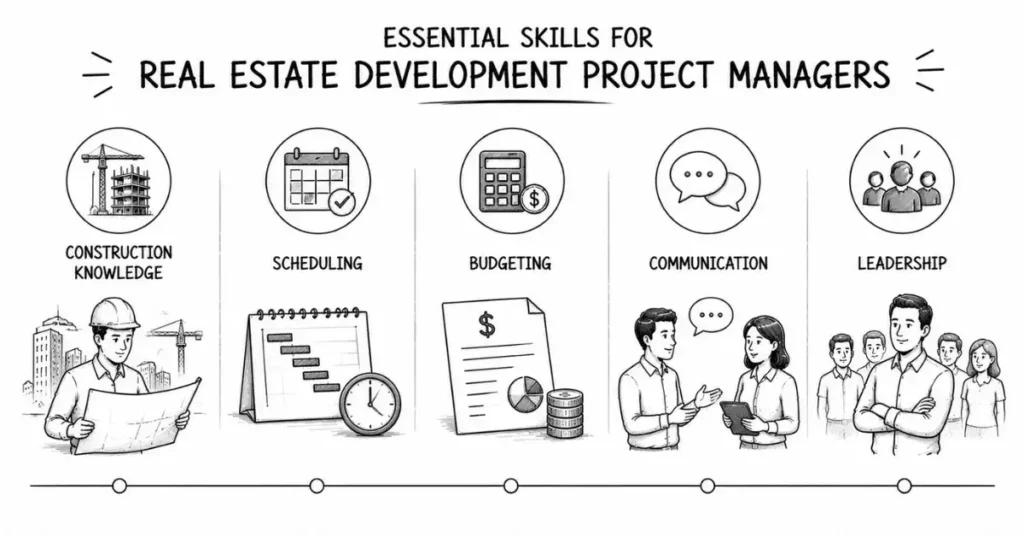
Technical Construction Knowledge
Development project managers need practical understanding of construction processes, building systems, and materials, even without formal engineering backgrounds.
Construction sequencing helps you understand foundation and site work, structural framing, building envelope (roofing, exterior walls), rough MEP installations, interior finishes, and final MEP connections and commissioning. Understanding proper sequencing enables realistic scheduling and identifies potential coordination challenges before they become problems.
Building systems fundamentals cover structural systems (concrete, steel framing, load-bearing walls), mechanical systems (HVAC, ventilation, controls), electrical systems (power distribution, lighting, emergency systems), plumbing systems (water supply, drainage, fire protection), and life safety systems (fire alarms, sprinklers, emergency lighting, exits). You need sufficient knowledge to understand design intent, evaluate contractor proposals, identify quality issues, and communicate effectively with technical specialists.
Materials and specifications knowledge enables you to understand concrete mix designs and curing requirements, structural steel grades and connection details, masonry types and construction methods, finishing materials (flooring, ceiling, wall treatments), and MEP equipment specifications and performance criteria. This knowledge helps evaluate value engineering proposals, assess substitution requests, and ensure specified quality levels are achieved.
Building codes and regulations including National Building Code of India, local municipal building regulations, fire safety codes and egress requirements, accessibility standards, and energy efficiency mandates guide design and construction ensuring legal compliance and occupant safety.
Project Management Methodologies
Systematic project management approaches distinguish successful professionals from disorganized managers hoping for good outcomes.
Project planning fundamentals include work breakdown structure (WBS) decomposing projects into manageable work packages, critical path method (CPM) scheduling identifying activities determining overall project duration, resource planning allocating personnel, equipment, and materials, and risk management identifying, assessing, and mitigating project risks.
Budget management requires developing detailed cost estimates at conceptual, schematic, and detailed design phases, tracking expenditures against budgets identifying variances early, managing contingencies appropriately releasing funds only for legitimate unforeseen conditions, forecasting final costs enabling proactive decision-making, and implementing cost controls preventing unnecessary overruns.
Schedule management involves developing baseline schedules with realistic activity durations and logical sequencing, monitoring progress through regular updates and look-ahead planning, identifying delays or potential delays early enabling corrective action, implementing recovery plans accelerating critical activities when needed, and maintaining float strategically protecting schedule buffers.
Quality management establishes clear quality standards and acceptance criteria, implements inspection and testing protocols, maintains quality documentation for regulatory compliance and warranty protection, addresses non-conforming work promptly through corrective actions, and cultivates quality-focused culture among contractors and subcontractors.
Financial and Business Acumen
Development projects are ultimately financial undertakings requiring strong business understanding.
Development pro forma comprehension helps you understand land acquisition costs, hard construction costs (buildings, site improvements, infrastructure), soft costs (design, permits, legal, financing, insurance, marketing), contingency budgets for unforeseen conditions, financing costs (interest, fees), and developer profit or investment returns. Understanding project financial structures enables better decision-making about scope changes, schedule impacts, and trade-offs between cost, quality, and time.
Value engineering facilitation systematically reviews designs identifying cost reduction opportunities, evaluating alternatives considering initial costs, life-cycle costs, schedule impacts, and functional implications, recommending changes optimizing value without compromising essential quality, and implementing approved changes through design modifications and updated budgets.
Change order management requires evaluating scope change requests assessing necessity, cost implications, schedule impacts, and contractual basis, negotiating fair pricing for changes with contractors, documenting changes thoroughly protecting against disputes, and maintaining change order logs tracking cumulative impacts on budget and schedule.
Leadership and Communication Abilities
Project managers lead diverse teams without direct authority over most participants, requiring strong interpersonal and leadership skills.
Team coordination brings together architects, engineers, contractors, consultants, internal staff, and government officials toward common objectives despite different priorities, incentives, and organizational cultures. You facilitate productive working relationships, resolve conflicts constructively, motivate teams during challenging phases, and celebrate successes building positive momentum.
Stakeholder management balances competing interests of owners seeking cost efficiency and quality, contractors seeking profitability and manageable risk, designers seeking design integrity and professional reputation, lenders requiring schedule and budget adherence, and government authorities requiring regulatory compliance. Successful project managers find solutions satisfying multiple stakeholders rather than optimizing for any single party.
Written communication produces clear project status reports, detailed meeting minutes capturing decisions and action items, formal correspondence with authorities and contractors, change order requests with supporting documentation, and comprehensive project closeout documents. Professional, well-organized documentation prevents misunderstandings, supports decision-making, and protects against disputes.
Verbal communication enables effective construction site meetings, persuasive presentations to leadership or investors, difficult conversations addressing performance issues, negotiation discussions seeking mutually acceptable solutions, and crisis management communications during project challenges.
Educational Background and PMP Certification
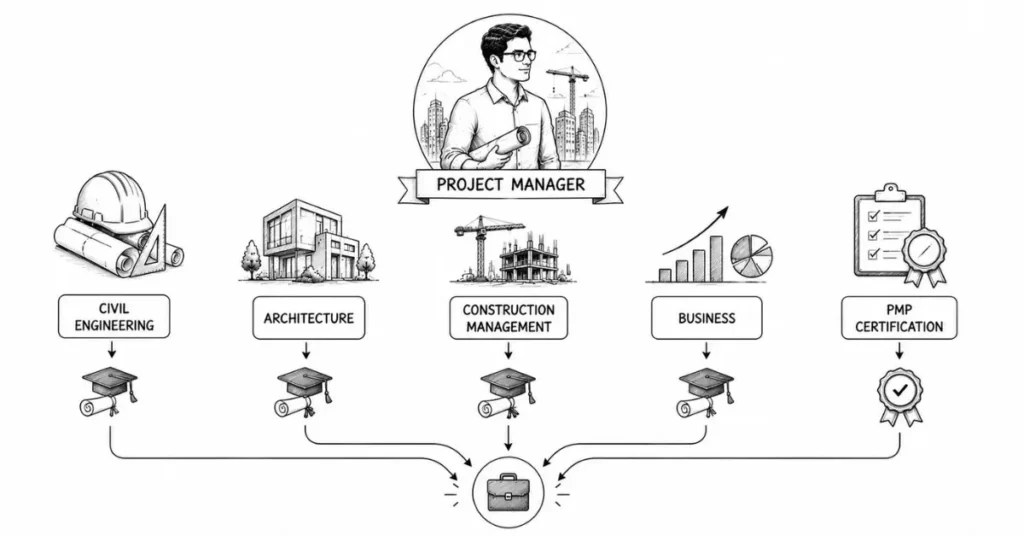
Relevant Degrees and Educational Paths
Civil engineering degrees provide comprehensive technical foundations including structural analysis and design, construction materials and methods, geotechnical engineering, construction management principles, and project planning and control. Civil engineers transition naturally into development project management leveraging technical knowledge.
Architecture degrees offer design understanding, building systems knowledge, construction documentation skills, and regulatory awareness valuable for project coordination, though architecture training emphasizes design over execution management.
Construction management degrees specifically target project management in building contexts, covering estimating, scheduling, contracting, construction methods, and project controls with practical, industry-focused curricula.
Business or management degrees provide organizational, financial, and leadership skills applicable to project management, though requiring additional technical knowledge gained through experience or specialized training.
However, successful development project management careers are built primarily through practical experience rather than specific degrees. Many successful project managers come from diverse backgrounds including trades, site supervision, or related construction roles, advancing through demonstrated competency, continuous learning, and professional certification.
PMP Certification: Professional Standard
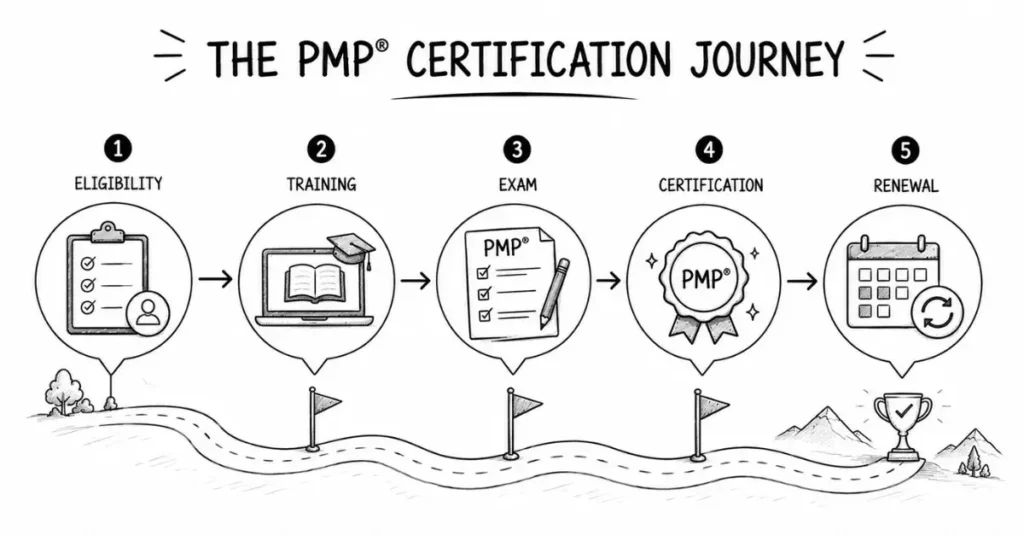
The Project Management Professional (PMP) credential from the Project Management Institute (PMI) represents the globally recognized standard for project management competency.
PMP eligibility requirements depend on educational qualifications:
For secondary degree holders (high school/diploma):
- 7,500 hours leading and directing projects (60 months/5 years of project management experience)
- 35 hours of project management education
For four-year bachelor’s degree holders:
- 4,500 hours leading and directing projects (36 months/3 years of project management experience)
- 35 hours of project management education
For post-graduate/master’s degree holders:
- 24 months of project management experience
- 35 hours of project management education
Importantly, you don’t need “Project Manager” as your formal job title to qualify. PMI recognizes experience leading and directing project tasks regardless of official designation, making PMP accessible to coordinators, supervisors, engineers, or other roles performing project management functions.
PMP certification process requires:
Step 1: Complete 35 hours of formal project management education through PMI-authorized training providers or CAPM (Certified Associate in Project Management) certification which waives this requirement. Training covers PMI’s project management framework including initiating, planning, executing, monitoring and controlling, and closing process groups across ten knowledge areas.
Step 2: Document your project management experience in PMI’s required format. For each project, describe project objectives, your specific role and responsibilities, team size and composition, project duration, and outcomes. Document training provider names, course titles, and total training hours for your 35-hour education requirement.
Step 3: Submit PMP application through PMI’s online system. PMI randomly audits a percentage of applications, potentially requiring you to submit supporting documentation including education transcripts, training certificates, and supervisor verification of project experience.
Step 4: Pass the PMP examination, a rigorous 180-question test covering predictive (traditional waterfall), agile, and hybrid project management approaches. The exam requires approximately 200-300 hours of study preparation including coursework, practice exams, and review.
PMP maintenance requires earning 60 Professional Development Units (PDUs) every three years through continuing education, ensuring certified professionals maintain current knowledge.
PMP career benefits include enhanced credibility with employers and clients valuing globally recognized credentials, comprehensive project management knowledge applicable across industries and project types, salary premiums with PMP holders typically earning 20-30% more than non-certified peers, competitive advantage in job markets where PMP is increasingly preferred or required, and global professional network through PMI membership and local chapters.
If you have hands-on project experience (even without a “Project Manager” title), PMP can strengthen your credibility and help you transition into senior leadership roles in 2026’s competitive job market.
Development Project Manager Salary and Career Progression
Compensation by Experience Level
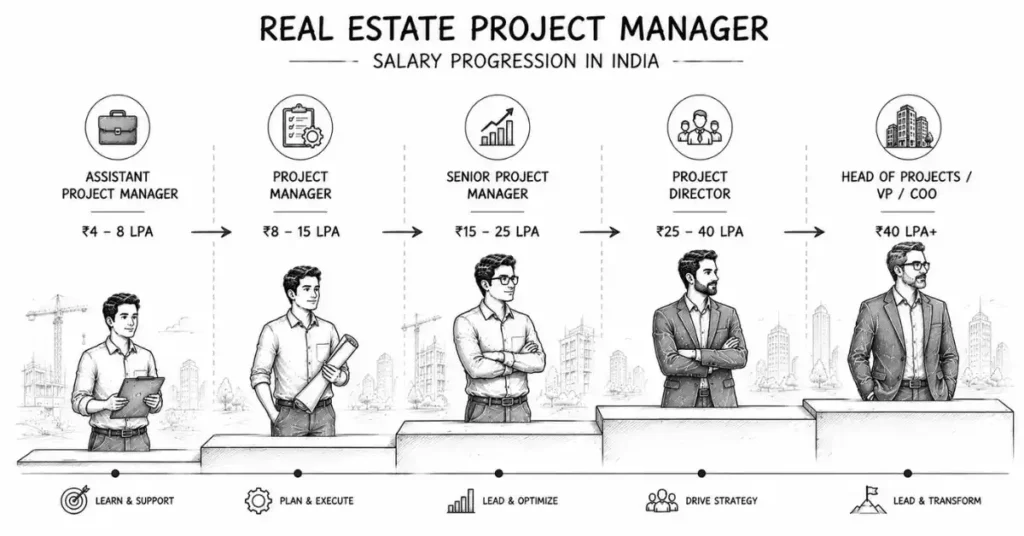
Real estate development project management compensation follows clear experience-based progression.
Entry-Level (0-2 years): Project coordinators or assistant project managers earn approximately ₹3.2 lakh annually, gaining foundational experience supporting senior managers with scheduling, documentation, contractor coordination, and site observation.
Early Career (2-5 years): Junior project managers managing smaller projects or significant components of larger projects earn approximately ₹4.5 lakh, demonstrating independent capabilities while still receiving guidance on complex decisions.
Mid-Career (5-10 years): Project managers independently leading significant development projects earn ₹5.95 lakh to ₹9.5 lakh. Construction and real estate project managers at this level typically earn ₹8-15 lakh depending on project scale and organizational context.
Experienced (10-15 years): Senior project managers overseeing multiple projects, complex high-value developments, or leading project teams earn ₹7.3 lakh to ₹12 lakh. These professionals often manage portfolios exceeding ₹50-100 crore in total value.
Senior Level (15-20 years): Project directors, heads of project management, or VP-level positions earn ₹7.8-8.5 lakh to ₹16-38.6 lakh for real estate managers broadly. At this level, you oversee entire project portfolios, set organizational standards and procedures, mentor teams, and participate in strategic decision-making
Educational Impact on Earnings
Educational qualifications significantly affect compensation:
- High school education: ₹3.98 lakh average
- Certificate or diploma: ₹4.59 lakh average
- Bachelor’s degree: ₹6.73 lakh average
- Master’s degree: ₹8.26 lakh average
This substantial degree premium (bachelor’s earning 69% more than high school, master’s earning 23% more than bachelor’s) demonstrates the value organizations place on formal education complementing practical experience.
Employer Type and Industry Variations
Real estate developers (residential, commercial, mixed-use) offer competitive compensation with project bonuses or profit participation potential, direct involvement in high-profile developments, and clear advancement paths.
Construction companies provide solid base salaries, exposure to diverse project types and clients, and technical depth in construction execution.
Corporate real estate departments at large organizations offer stability, benefits, exposure to strategic portfolio management, and lower stress than developer environments, though sometimes lower total compensation.
Infrastructure firms working on roads, utilities, public facilities provide mission-driven work, large-scale project exposure, and government project experience.
Consulting firms offering project management services deliver exposure to diverse clients and project types, accelerated learning, and consulting skill development, though sometimes with work-life balance challenges.
Location Impact
Metropolitan markets like Mumbai, Bangalore, Delhi-NCR, Pune, Hyderabad, and Chennai offer higher absolute salaries but also higher living costs. Tier-2 cities provide lower gross compensation but better cost-of-living ratios, less competition for positions, and potentially faster advancement in smaller markets with less established talent.
Building Your Project Management Career
Entry Pathways
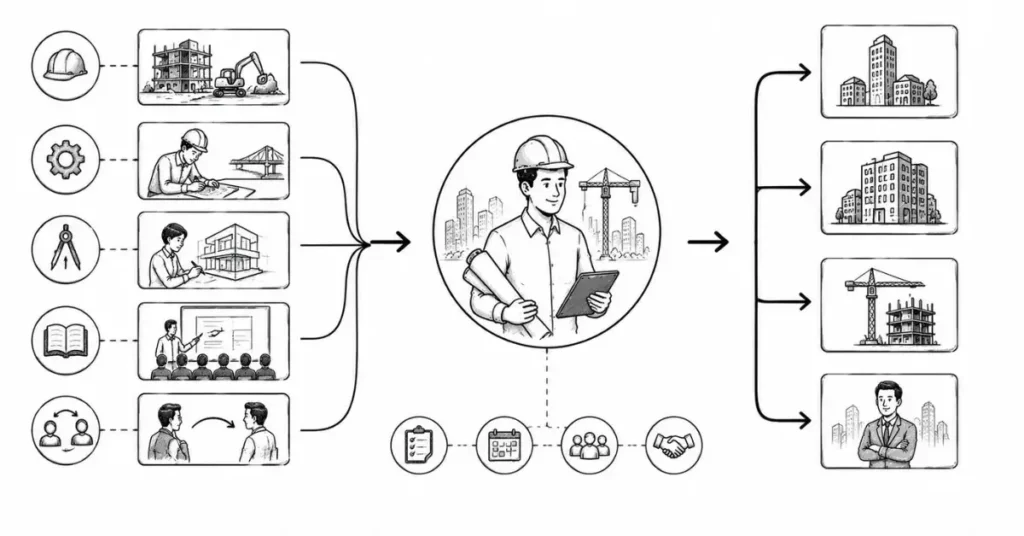
Construction site experience: Many successful project managers start as site engineers, supervisors, or coordinators gaining hands-on construction knowledge before transitioning into management roles. This field experience provides credibility and practical understanding no classroom can replicate.
Civil engineering or architecture graduates: Fresh graduates join developer or contractor organizations in assistant project manager roles, learning project management through structured training and mentorship while contributing to larger projects.
Specialized training programs: Project management diploma or certificate programs provide focused education for career changers from related fields like quantity surveying, MEP contracting, or real estate sales seeking project management transitions.
Internal company transitions: Professionals in related roles (sales, design coordination, procurement) leverage internal company knowledge and relationships transitioning into project management positions.
Skill Development Strategy
Gain construction site exposure early, even if starting in office roles. Understanding actual field conditions, construction sequencing, and contractor challenges provides essential context for effective project management. Request site assignments, volunteer for inspections, and spend time observing various trades.
Master project management software including Microsoft Project, Primavera P6, or other industry-standard scheduling tools, project management platforms like Procore, Buildertrend, or Construction management software, and collaboration tools including document management, RFI tracking, and communication platforms used in construction.
Pursue PMP certification after gaining 3-5 years of experience, demonstrating professional commitment and comprehensive project management competency that accelerates career advancement and earning potential.
Develop financial literacy understanding development pro formas, construction cost estimating, budget development and tracking, financial reporting, and value engineering principles enabling you to make business-minded decisions balancing technical, schedule, and financial considerations.
Build regulatory knowledge studying building codes, zoning regulations, environmental requirements, and permitting processes in your target markets. Develop relationships with government officials facilitating smoother approvals.
Career Advancement Strategies
Deliver successful projects consistently on time, within budget, and meeting quality standards. Project success is your best marketing creating reputation, referrals, and advancement opportunities.
Expand project complexity progressively managing larger projects, more complex developments, multiple concurrent projects, or specialized project types (high-rise, hospitality, data centers) requiring advanced capabilities.
Develop specialization in high-growth sectors like data centers, logistics warehouses, healthcare facilities, or affordable housing where specialized expertise commands premiums and strong demand creates opportunities.
Cultivate leadership skills mentoring junior staff, leading project teams, contributing to organizational improvement initiatives, and developing strategic thinking beyond pure project execution positioning you for senior roles.
Consider entrepreneurship after gaining extensive experience, as some successful project managers launch their own development consulting firms or even small development companies leveraging developed skills, industry knowledge, and networks.
Frequently Asked Questions
Is civil engineering degree necessary for real estate project management? Not absolutely necessary, though highly beneficial. Many successful project managers have construction management, architecture, business, or even unrelated degrees, succeeding through practical experience, continuous learning, and professional certification like PMP.
How long before managing projects independently? Typically 3-5 years of progressive experience prepares you for independent project management of moderate-complexity developments. Larger, more complex projects may require 7-10 years of experience building comprehensive capabilities.
Is PMP worth pursuing for real estate project management? Yes, PMP provides comprehensive project management frameworks applicable to construction, enhances credibility with employers and clients, typically increases earning potential 20-30%, and creates competitive advantage in increasingly professionalized markets.
What’s the most challenging aspect of development project management? Coordinating diverse stakeholders with different priorities, managing competing demands of cost-quality-schedule, navigating regulatory complexities, and maintaining schedule momentum despite inevitable obstacles create continuous challenges requiring diplomacy, problem-solving, and resilience.
Can I transition from construction field work into project management? Absolutely. Field experience provides exceptional foundations including practical construction knowledge, credibility with contractors and trades, understanding of site challenges, and realistic perspective on scheduling and execution. Combine field experience with formal project management training or PMP certification positioning yourself for management transitions.
Is work-life balance possible in development project management? Work-life balance varies by project phase, organizational culture, and personal boundaries. Active construction phases demand more time and availability than planning phases. Setting realistic expectations, choosing organizations respecting work-life balance, and developing efficient systems help manage demands while maintaining personal wellbeing.
Conclusion
Real estate development project management careers offer dynamic challenges, tangible impact, strong compensation, and satisfaction from transforming visions into physical reality. The profession rewards technical knowledge, systematic management approaches, problem-solving abilities, leadership capabilities, and commitment to delivering successful projects that serve communities for decades.
Your journey begins with gaining construction or technical foundations, continues through progressive project responsibilities building comprehensive capabilities, and advances through professional certification like PMP demonstrating commitment to excellence. Development project managers who build lasting success combine technical proficiency with business acumen, systematic planning with adaptive problem-solving, strong standards with pragmatic flexibility, and professional excellence with collaborative relationship building.
Take your first step today—pursue entry-level project coordinator positions, investigate PMP eligibility and preparation resources, volunteer for site assignments building field exposure, or apply your construction, engineering, or management experience toward project management transitions. Your development project management career awaits in India’s booming construction and infrastructure sector.