
Media & Entertainment Career Guide
Table of Contents
Introduction
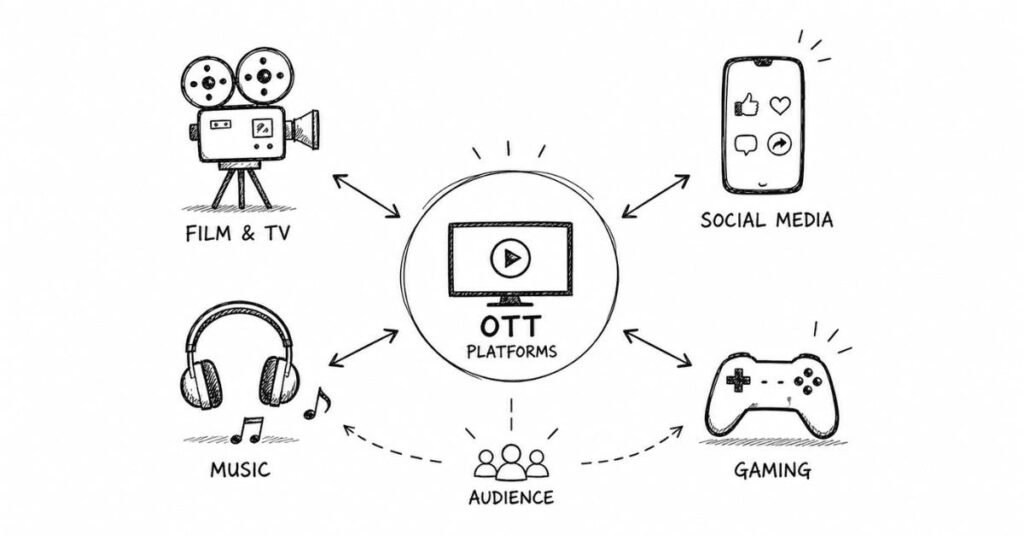
India’s media and entertainment industry is experiencing explosive growth, projected to cross ₹4.3 lakh crore by 2026 and reach $100 billion by 2030. This isn’t just another industry boom—it’s a complete transformation of how content is created, distributed, and consumed. If you’ve ever dreamed of working behind the camera, creating viral content, reporting breaking news, or managing celebrity talent, now is the perfect time to enter this field. The industry is expected to create 20 lakh direct jobs and 51 lakh indirect jobs by 2027, with digital and OTT platforms leading the charge.
What makes this industry truly exciting for young Indians today is the diversity of career paths available. You don’t need to be a famous actor or director to build a successful career here. From technical roles like VFX artists and sound engineers to creative positions like content strategists and scriptwriters, from business roles like talent managers to digital careers like social media creators—the opportunities are vast and growing every day. Whether you’re a college student exploring career options, a graduate looking to switch fields, or someone passionate about storytelling and creativity, this comprehensive guide will help you navigate the media and entertainment landscape in India.
Understanding India's Media & Entertainment Landscape
Industry Overview and Market Size
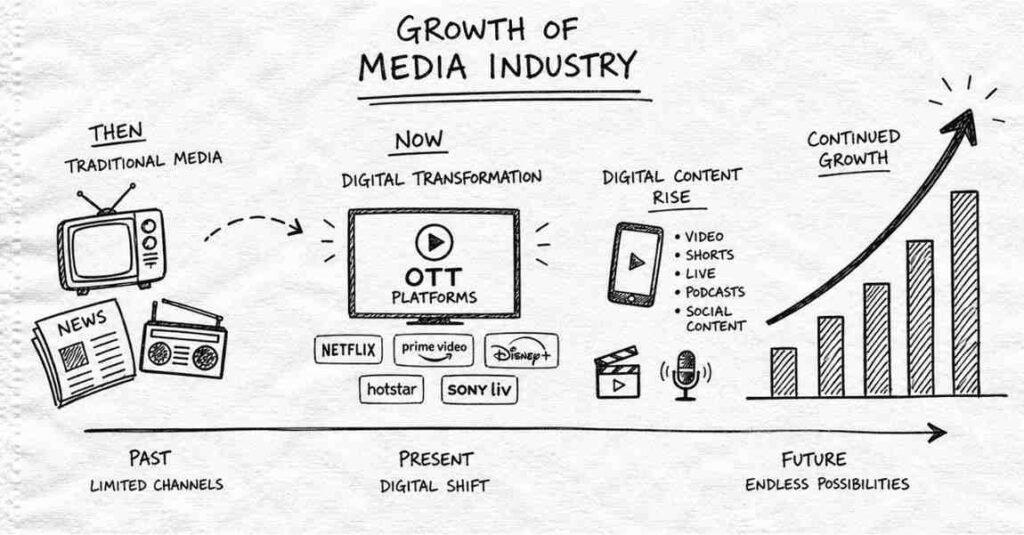
The Indian media and entertainment sector has become one of the country’s fastest-growing industries, contributing significantly to GDP through production, exports, and allied services. With an 8.8% compound annual growth rate (CAGR), the industry is experiencing remarkable expansion across all segments. What’s driving this growth? Several factors are at play.
First, digital transformation has revolutionized content consumption. Indians now watch movies on Netflix instead of just theaters, follow news on Instagram instead of just newspapers, and learn from YouTube instead of just textbooks. This shift has created entirely new job categories that didn’t exist a decade ago. Second, affordable internet and smartphone penetration—with over 800 million smartphone users—has created the world’s largest mobile-first audience. Third, regional content is booming. Tamil, Telugu, Malayalam, Marathi, and other regional language content is no longer “alternative”—it’s mainstream, creating opportunities across India, not just in Mumbai and Delhi.
The animation and VFX sector alone is projected to grow from $1.3 billion in 2023 to $2.2 billion by 2026, with India offering a 40-60% cost advantage in these services globally. This positions India as a potential global hub for digital content creation. The government’s National AVGC-XR Mission with a “Create in India” focus further strengthens this vision.
Traditional vs. Digital Media: Where Jobs Are Growing
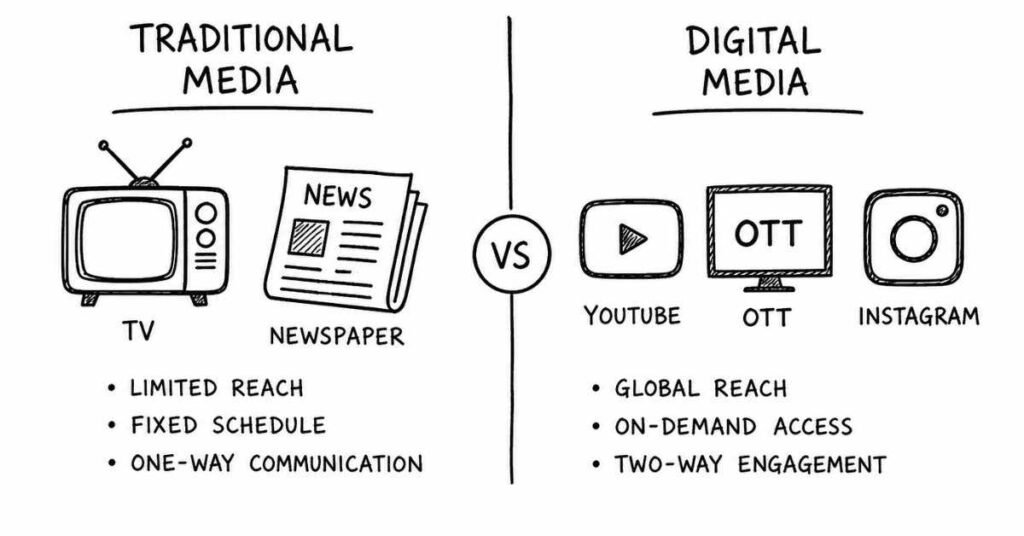
Traditional media—television, film, print, and radio—still employs the majority of media professionals. However, their share is declining. Television and film employment share is expected to drop from 62% in 2019 to 48% in 2027. This doesn’t mean these sectors are dying; they’re simply not growing as fast as digital alternatives.
Digital and OTT platforms, online gaming, and animation & VFX are the real growth engines. These sectors are experiencing direct job growth rates exceeding 15% annually, with some segments like gaming growing at over 30%. OTT platforms like Netflix, which spent ₹125 crore on human resources in FY 2023-24 alone, are actively hiring across content acquisition, marketing, technology, and production roles. Disney+ Hotstar leads with 33% market share and over 50 million subscribers, while Amazon Prime Video holds 12% with over 20 million subscribers.
The shift toward digital doesn’t just mean more jobs—it means more diverse jobs. You can now build careers as a podcast producer, Instagram content strategist, YouTube channel manager, OTT marketing specialist, or social media analyst—roles that barely existed five years ago.
Regional Content Boom: Opportunities Beyond Mumbai and Delhi
Here’s something exciting: you don’t need to move to Mumbai anymore to work in entertainment. The rise of regional content has decentralized opportunities across India. Tamil, Telugu, Malayalam, Bengali, Marathi, and other regional film and OTT content are thriving. Cities like Hyderabad, Chennai, Bangalore, Pune, and Kolkata now have vibrant production ecosystems.
OTT platforms actively seek regional content managers, language-specific editors, and local talent scouts. Animation studios operate successfully from tier-2 cities. Digital creators from small towns are building million-subscriber channels. This geographic democratization means you can start your career from wherever you are, build skills online, and access opportunities nationally without necessarily relocating.
Major Career Categories in Media & Entertainment
Content Creation & Production Careers
This is where stories come to life. Content creation and production form the creative heart of the industry, encompassing everything from filmmaking to YouTube videos.
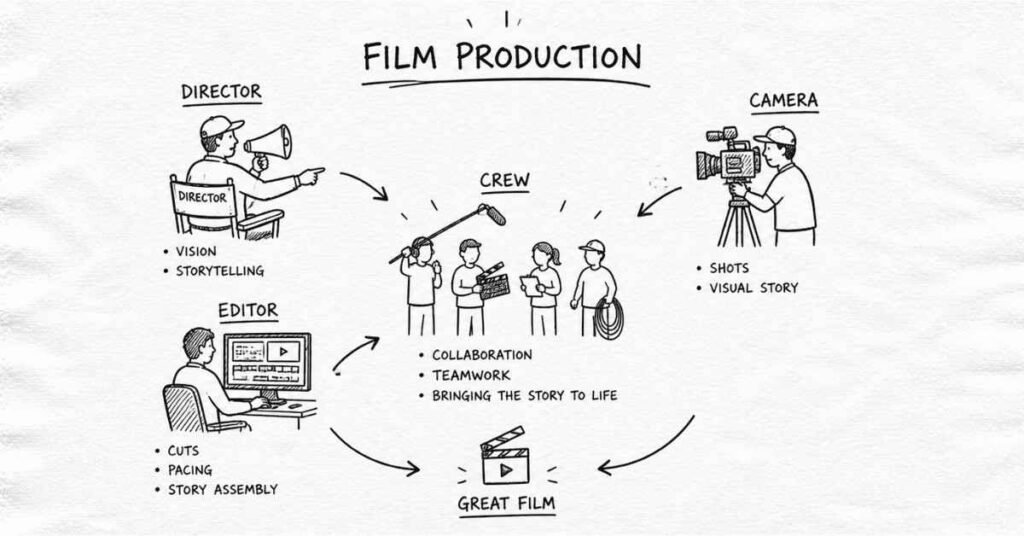
Film production remains one of the most sought-after career paths. Film production professionals earn an average of ₹20.1 lakhs annually, with the top 10% earning over ₹31.9 lakhs and experienced professionals reaching ₹45 lakhs. Roles include directors who orchestrate the entire creative vision, cinematographers who craft visual storytelling, producers who manage budgets and logistics, production designers who create the look and feel, and various crew members from gaffers to grips who make shoots possible.
Television production offers more stable employment compared to project-based film work. TV producers, directors, camera operators, lighting technicians, and floor managers work on news programs, reality shows, daily soaps, and entertainment programs. Video production professionals earn an average of ₹21.4 lakhs annually.
Digital content creation has become the most accessible entry point. Content creators work on YouTube, Instagram, and other platforms, with earnings varying dramatically based on audience size and engagement. Nano-influencers (1,000-10,000 followers) might earn ₹500-₹8,000 per post, while mega-influencers (1 million+ followers) can command ₹1-8 lakhs or more per post. YouTube creators earn approximately ₹50-200 per 1,000 views, meaning a channel with 500,000 monthly views could earn ₹50,000 from ads plus additional income from sponsorships. Employed content creators typically earn ₹3-10 lakhs annually depending on experience.
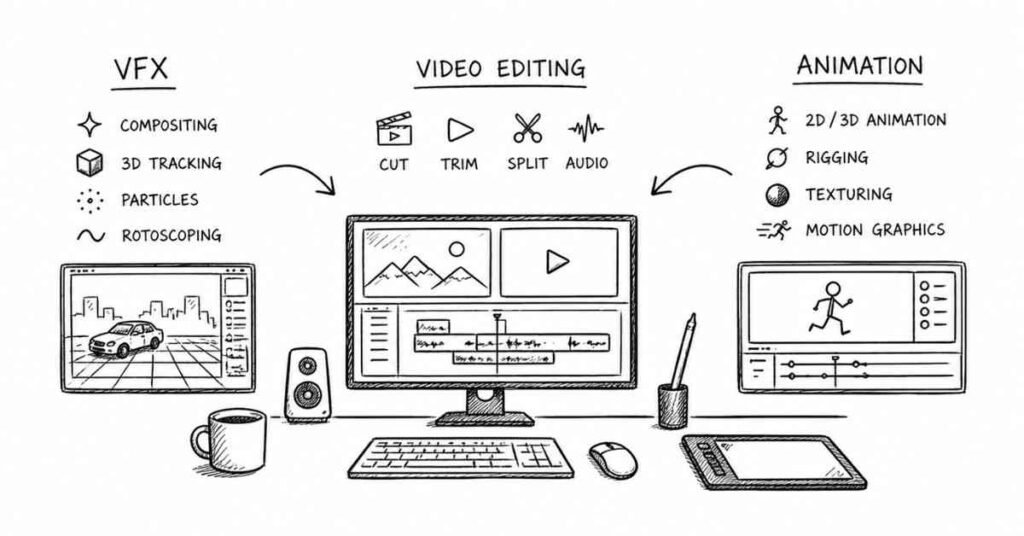
Technical & Creative Specializations
Behind every great piece of content are technical specialists who make magic happen.
Animation and VFX professionals are in high demand. Entry-level VFX artists start at ₹1.2 lakhs annually, mid-level professionals earn ₹5-10 lakhs, while senior specialists command ₹12-20 lakhs or more. With India’s cost advantage and growing global demand, VFX artists often work on international projects from Indian studios. Software skills in Maya, Blender, After Effects, Houdini, and Nuke are essential. Cities like Bangalore, Mumbai, Hyderabad, and Chennai have thriving animation and VFX studios.
Audio production and music careers span multiple specializations. Music producers, sound engineers, mixing and mastering engineers, and composers work across film, television, advertising, and independent music. Live sound engineers manage concerts and events. Foley artists create sound effects for films. Proficiency in digital audio workstations (DAWs) like Pro Tools, Logic Pro, and Ableton is crucial.
Video editing and post-production specialists are the unsung heroes who shape raw footage into compelling stories. Editors work with software like Adobe Premiere Pro, Final Cut Pro, and DaVinci Resolve. Colorists enhance visual mood through color grading. Post-production coordinators manage workflows and deliverables.
Broadcasting & Journalism
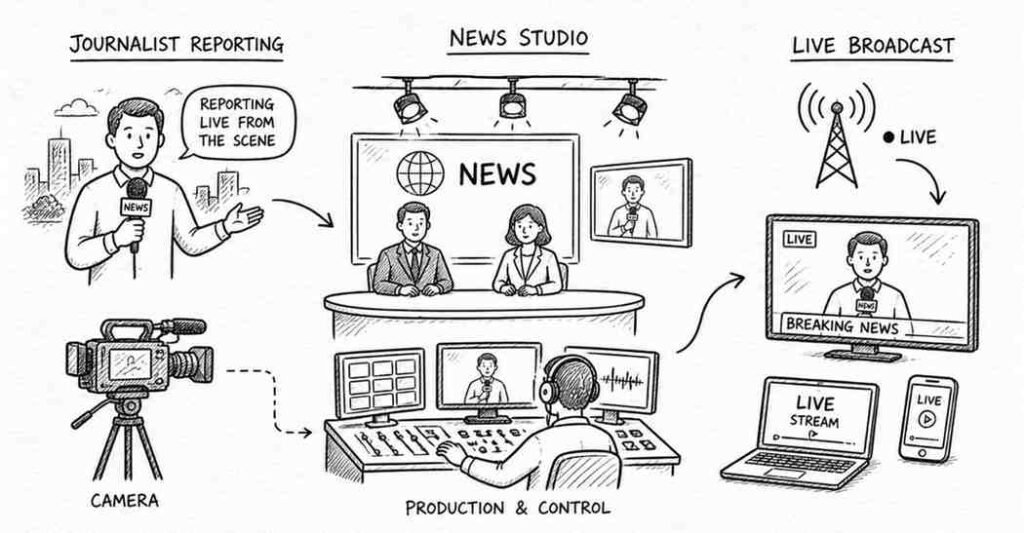
Despite digital disruption, journalism and broadcasting remain vital career paths for those passionate about truth-telling and public service.
Journalism careers span print, broadcast, and digital formats. Reporters earn between ₹2-10 lakhs annually, editors earn ₹3-17.3 lakhs, while news anchors command ₹10-11 lakhs. Starting salaries typically range from ₹20,000-25,000 monthly for fresh graduates. Specializations include investigative journalism (₹5-6 lakhs annually), crime reporting (₹6-7 lakhs), sports journalism (₹6-7 lakhs), and political journalism (₹6-7 lakhs).
Television broadcasting includes on-screen roles like anchors, reporters, and hosts, plus behind-the-scenes positions such as producers, directors, camera operators, and broadcast engineers. The sector offers stable employment with major news networks and entertainment channels, with salaries ranging from ₹6-12 lakhs annually depending on the organization.
Digital journalism represents the future of news. Online news editors, multimedia journalists, data journalists, and social media managers work for digital-first publications and traditional media outlets’ online divisions. These roles require both journalistic integrity and digital fluency understanding SEO, social media algorithms, analytics, and multimedia storytelling.
Business & Management Roles
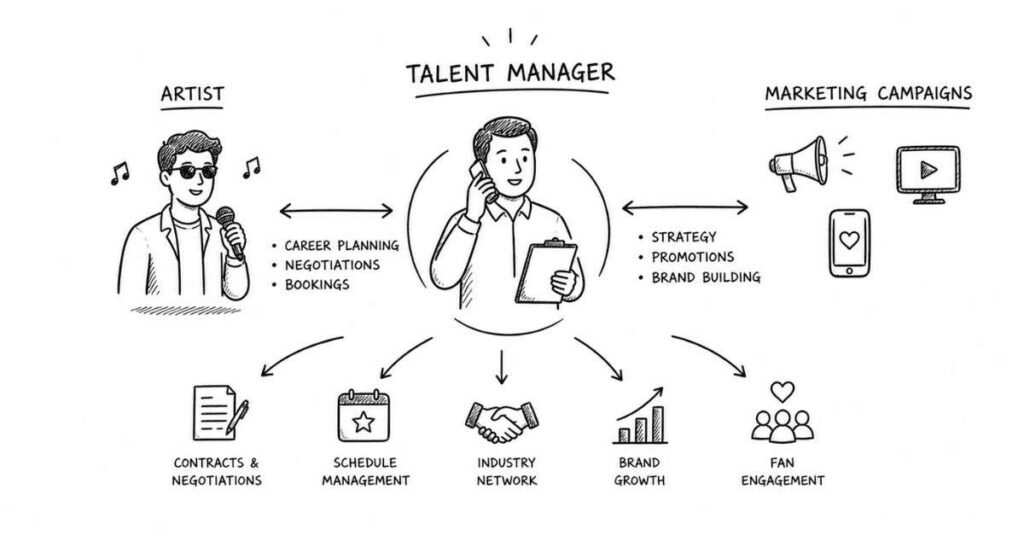
Not all entertainment careers require creative skills. Business-minded individuals find fulfilling careers managing the commercial side of entertainment.
Talent management involves representing artists, negotiating contracts, securing brand endorsements, and managing careers. Major talent agencies like YRF Talent Management, TM Talent Management, and emerging agencies actively seek talent managers. While specific salary data for talent managers in India is limited, the role typically offers percentage-based commissions on deals negotiated, making earnings potential high for successful managers.
Entertainment marketing and brand partnerships connect content with audiences and brands with creators. Marketing managers at OTT platforms, production houses, and digital agencies strategize launches, manage campaigns, and analyze performance. Salaries range from ₹4-30 lakhs annually depending on experience.
Event management in entertainment involves organizing concerts, festivals, award shows, and promotional events. Event managers coordinate logistics, manage vendors, ensure smooth execution, and handle crisis management. The role requires excellent organizational skills and the ability to work under pressure.
Emerging Careers: Gaming & Esports
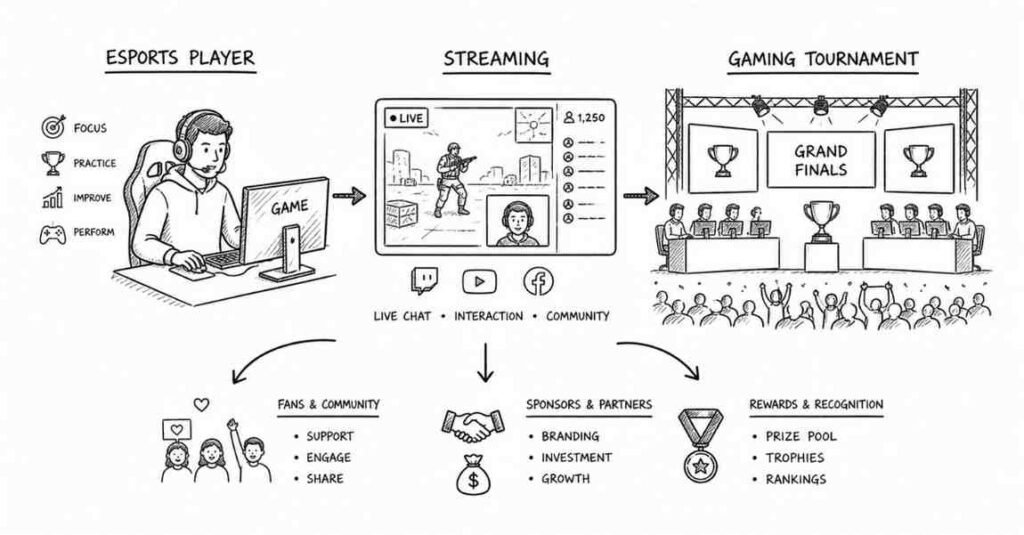
India’s gaming and esports industry represents one of the most exciting emerging career landscapes. With ₹15+ crore in prize pools across tournaments and a projected market of ₹750+ crore in 2026, the sector is booming.
Professional gaming careers include competitive players (earning ₹3-50 lakhs annually plus streaming income), esports coaches (₹40,000-2.5 lakhs monthly), content creators and streamers (₹25,000-12 lakhs monthly), tournament organizers, esports analysts (₹6-35 lakhs annually), and marketing managers (₹4-30 lakhs annually). The entry barrier is lower than many assume, with opportunities starting from tier-2 and tier-3 cities.
Game development offers technical roles for programmers, designers, artists, and testers. With more gaming companies establishing Indian operations, demand for game developers is rising steadily.
Essential Skills for Media & Entertainment Careers
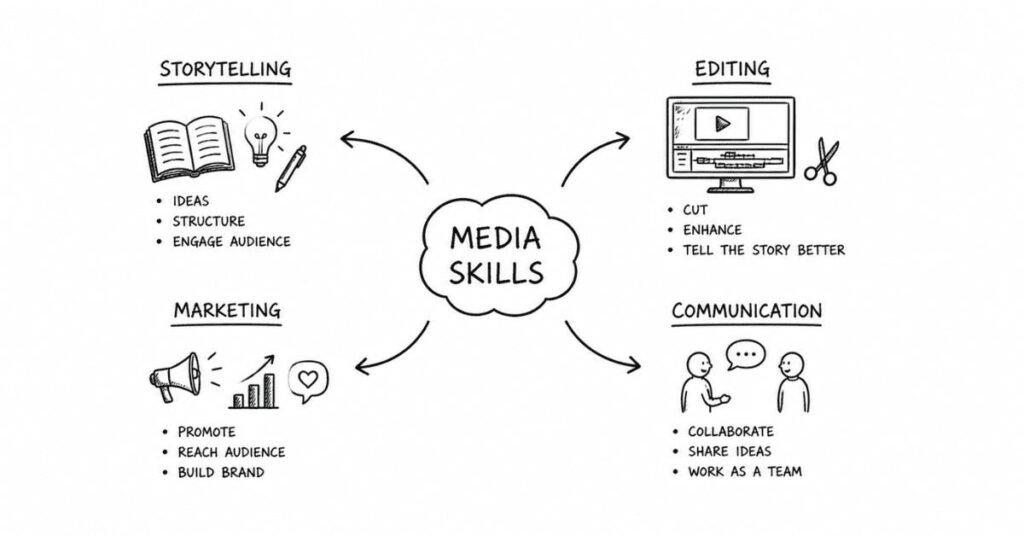
Creative Skills: The Foundation
films, editing videos, writing scripts, or managing social media, the ability to craft compelling narratives distinguishes good professionals from great ones. This means understanding story structure, character development, emotional arcs, and audience engagement.
Visual literacy is crucial for production roles. You need to understand composition, lighting, color theory, and visual metaphors. Even if you’re not a cinematographer, basic visual sense helps you communicate better with creative teams.
Writing skills matter across multiple roles—scriptwriters obviously, but also content creators drafting video descriptions, journalists crafting stories, marketing professionals creating campaigns, and social media managers engaging audiences. Clear, engaging, grammatically correct writing opens doors.
Technical Skills: Tools of the Trade
The specific technical skills you need depend on your chosen path, but some are universally valuable:
Video editing software like Adobe Premiere Pro, Final Cut Pro, or DaVinci Resolve is useful for content creators, editors, and production assistants. Even basic editing skills help you create demo reels and portfolios.
Camera operation and photography fundamentals benefit anyone in visual media. Understanding exposure, focus, framing, and basic camera settings makes you more versatile.
Audio tools including digital audio workstations (Pro Tools, Logic Pro, Audition) are essential for sound engineers, music producers, and podcast creators. Basic audio editing helps video creators improve production quality.
Design and animation software such as Adobe Photoshop, Illustrator, After Effects, and Blender serve graphic designers, motion graphics artists, and VFX specialists.
Content management systems like WordPress with page builders (Elementor) help digital content professionals publish and optimize web content.
Digital & Marketing Skills
Modern media professionals need digital literacy. Understanding SEO helps content rank on search engines. Social media marketing knowledge lets you grow audiences organically and through paid promotion. Analytics skills—using Google Analytics, YouTube Analytics, and social media insights—help you measure performance and optimize strategies.
Email marketing, WhatsApp Business API platforms, and marketing automation tools extend your reach. Basic understanding of Google Ads and Meta Ads helps you appreciate the business model behind platforms and content monetization.
Soft Skills: The Often Overlooked Game-Changers
Technical skills get you interviews; soft skills get you hired and promoted.
Communication skills are non-negotiable. You’ll pitch ideas to clients, brief teams, interview subjects, collaborate with colleagues, and present work. Clear verbal and written communication separates successful professionals from struggling ones.
Collaboration and teamwork define production environments. Film and television shoots involve dozens of people working toward one vision. Your ability to contribute positively to team dynamics matters enormously.
Adaptability and problem-solving help you handle the inevitable challenges—equipment failures, scheduling conflicts, creative differences, technical issues. The best professionals stay calm and find solutions.
Time management becomes critical when juggling multiple projects, meeting tight deadlines, and balancing creative perfectionism with practical constraints.
Educational Pathways & Learning Resources
Formal Education Options
Bachelor’s degrees in Mass Communication, Journalism, Film Production, Animation, or related fields provide comprehensive foundations. Top institutions include Film and Television Institute of India (FTII) Pune, Satyajit Ray Film & Television Institute (SRFTI) Kolkata, Xavier Institute of Communications Mumbai, Asian College of Journalism Chennai, and Symbiosis Institute of Media & Communication Pune. Three-year BA or four-year professional degree programs cover theory, technical skills, and practical experience through projects and internships.
Diploma and certificate programs offer faster, focused training. Organizations like FTII, National Institute of Design (NID), and various film schools offer six-month to one-year diploma courses in specific areas like cinematography, editing, sound design, or screenwriting. These suit working professionals or those wanting specialized skills without committing to full degrees.
MBA in Media Management or Entertainment Business Management programs prepare you for business roles in media companies, production houses, and talent agencies. These typically require a bachelor’s degree and offer specializations in media marketing, entertainment law, and production management.
Online Learning & Self-Education
The internet has democratized education. Platforms like Udemy, Coursera, Skillshare, and Domestika offer affordable courses in video editing, photography, animation, sound design, and content creation. YouTube provides free tutorials for virtually any software or skill. LinkedIn Learning offers professional development courses.
For digital creators, learning by doing works well. Start a YouTube channel, Instagram account, or blog. Experiment, fail, learn from analytics, and improve. The portfolio you build while learning becomes your resume.
Industry blogs, podcasts, and communities keep you updated. Follow No Film School, IndieWire, and similar resources. Join Facebook groups, Reddit communities, and Discord servers related to your interest area. Networking and knowledge-sharing accelerate growth.
Certifications That Matter
While degrees open doors at established organizations, certifications demonstrate specific competencies. Adobe Certified Professional certifications in Premiere Pro, After Effects, or Photoshop validate software expertise. Google Analytics and Google Ads certifications benefit digital marketers. HubSpot offers free inbound marketing certifications valuable for content strategists.
For journalism, specialized certifications in data journalism, investigative reporting, or multimedia storytelling enhance credentials. These are often offered by journalism schools and organizations like Reuters.
Breaking Into the Industry: Practical Steps
Building Your Portfolio
Your portfolio matters more than your resume in creative fields. It demonstrates capability, style, and professionalism.
For filmmakers and video creators, create short films, music videos, commercials, or documentary pieces. Quality beats quantity—three excellent pieces outweigh ten mediocre ones. Upload work to YouTube or Vimeo. Create a simple website showcasing your work with clear descriptions of your role in each project.
For writers and journalists, maintain a blog or contribute to online publications. Pitch articles to websites accepting submissions. Create writing samples demonstrating different formats—news articles, feature stories, opinion pieces, or scripts. A clean, easy-to-navigate portfolio website helps.
For technical specialists like VFX artists or animators, create demo reels highlighting your best work. Break down your process—before/after comparisons, wireframes, and work-in-progress shots demonstrate technical understanding. ArtStation and Behance serve as excellent portfolio platforms for visual artists.
For content creators, your social media channels ARE your portfolio. Consistent, quality content demonstrating audience engagement proves your capability better than any resume.
Internships and Entry-Level Opportunities
Most successful media professionals start as interns or production assistants. These positions offer hands-on learning, industry connections, and resume-building experiences.
Where to find internships: Check production company websites directly. Sites like Internshala and LinkedIn regularly list media internships. Film schools often have job boards accessible to non-students. Follow production houses, studios, and agencies on social media—they often announce opportunities there. Networking at industry events and workshops leads to unpublished opportunities.
What to expect: Many internships are unpaid or offer minimal stipends. This is unfortunate but common in creative industries. Treat internships as intensive learning periods. Be proactive—volunteer for tasks, ask questions, stay late if needed, and absorb everything. The connections you make and skills you develop often matter more than the stipend.
Standing out as an intern: Show up early, meet deadlines, take initiative, accept feedback gracefully, and maintain positive energy even during tedious tasks. Industry veterans remember eager, reliable interns and often hire them or recommend them for other opportunities.
Networking in the Media Industry
“It’s not what you know, it’s who you know” is cliché but partially true in media and entertainment. Networking opens doors that applications never will.
Industry events and festivals: Attend film festivals, media conferences, animation conventions, and advertising awards. Events like MAMI (Mumbai Academy of Moving Image), IFFI (International Film Festival of India), and Goafest for advertising offer networking opportunities. Even as a student or newcomer, you can attend, learn, and connect.
Online networking: LinkedIn is powerful when used actively. Connect with professionals in your field, engage with their content thoughtfully, share your work, and join relevant groups. Twitter and Instagram help you follow and interact with industry leaders. Meaningful engagement—thoughtful comments, not spam—builds visibility.
Informational interviews: Reach out to professionals whose careers inspire you. Request 15-20 minute conversations to learn about their journey and seek advice. Most people appreciate genuine interest and help when they can. These conversations build relationships and often lead to opportunities.
Collaborative projects: Work on projects with peers. Contribute to short films, web series, or content projects. These collaborations expand your network horizontally—with other emerging professionals who will grow in the industry alongside you.
Freelancing vs. Full-Time Employment
Both paths have merits depending on your personality, financial situation, and career stage.
Full-time employment offers stability—regular salary, benefits, structured growth, and learning from experienced colleagues. It suits those wanting security, building foundational skills, or working on larger productions requiring teams. Early career professionals often benefit from full-time roles that provide mentorship and comprehensive experience.
Freelancing offers flexibility, variety, and potentially higher earnings. Freelancers choose projects, set rates, and work independently. However, income fluctuates, clients require constant effort to secure, and you handle your own taxes, health insurance, and retirement planning. Freelancing suits experienced professionals with established reputations, networks, and financial cushions.
Hybrid approach: Many media professionals freelance while maintaining part-time employment or retainer arrangements. This balances security with flexibility. Start full-time to build skills and connections, then gradually transition to freelancing as opportunities grow.
Salary Expectations & Career Growth
Entry-Level Salaries by Role
Starting salaries vary significantly by role, location, and organization size:
- Junior Journalist/Reporter: ₹20,000-25,000 monthly (₹2.4-3 lakhs annually)
- Content Creator (employed): ₹3-4 lakhs annually
- Production Assistant/Junior Editor: ₹2-3.5 lakhs annually
- VFX Artist/Animator (entry-level): ₹1.2-2 lakhs annually
- Social Media Manager (entry-level): ₹1-2 lakhs annually
- Camera Assistant/Lighting Technician: ₹2-3 lakhs annually
These figures represent organized sector employment. Freelancers and content creators have more variable earnings depending on projects and audience size.
Mid-Career Progression
With 3-7 years of experience, salaries typically increase substantially:
- Reporter/Editor: ₹4.5-6 lakhs annually
- Content Creator: ₹6-10 lakhs annually
- Film/Video Production Professional: ₹15-20 lakhs annually
- VFX Artist (mid-level): ₹5-10 lakhs annually
- Journalism Specialists (crime, sports, political): ₹6-7 lakhs annually
- Content Strategist: ₹2.8-6 lakhs annually
Mid-career professionals typically specialize, develop distinct styles or expertise, and build industry reputations that command higher rates.
Senior & Leadership Roles
Experienced professionals with 10+ years and strong portfolios reach senior positions:
- Creative Director: ₹12-30+ lakhs annually
- Senior Film Producer: ₹31-45 lakhs annually
- News Editor/Senior Anchor: ₹10-17 lakhs annually
- VFX Supervisor: ₹12-20+ lakhs annually
- Esports Manager/Analyst: ₹6-35 lakhs annually
Senior professionals often supplement salaries with consulting, speaking engagements, teaching, or owning production companies.
Freelance Earnings
Freelance income varies dramatically based on reputation, network, and hustle:
- Instagram Influencers: ₹30,000-10+ lakhs monthly depending on follower count
- YouTube Creators: ₹4,000-15,000 monthly per 100,000 views from ads, plus sponsorships
- Freelance Esports Coaches: ₹400-2,000 per hour
- Freelance Journalists: Variable project rates, often supplementing other income
- Freelance Video Editors/Creators: ₹15,000-1+ lakh per project depending on scope
Successful freelancers build diverse income streams—retainer clients, project work, passive income from courses or stock content, and brand partnerships.
Top Employers & Where to Apply
Film Production Houses
Major Bollywood production houses like Yash Raj Films, Dharma Productions, Excel Entertainment, Red Chillies Entertainment, and Phantom Films hire across production, post-production, and marketing roles. Regional production houses in Chennai, Hyderabad, Kolkata, and Kochi offer opportunities in Tamil, Telugu, Bengali, and Malayalam cinema.
Apply directly through company websites, LinkedIn, or through referrals. Productions frequently hire project-based crews, so networking at shoots and industry events helps.
OTT Platforms
Netflix, Amazon Prime Video, Disney+ Hotstar, SonyLIV, Zee5, and Voot actively hire for content acquisition, original programming, marketing, analytics, and technology roles. These positions typically require bachelor’s degrees and relevant experience but offer competitive salaries and work culture.
Check careers pages on platform websites. Roles include Content Acquisition Managers (requiring 6+ years experience in licensing or business development), Marketing Managers, Software Engineers for streaming technology, and Sports Content Associates.
News Organizations & Media Houses
National news channels (NDTV, Times Now, Republic TV, India Today, News18, ABP News), newspapers (The Times of India, Hindustan Times, The Hindu, Indian Express), and digital publications (The Wire, Scroll.in, The Quint, News Laundry) hire journalists, editors, producers, and technical staff.
Traditional journalism recruitment often happens through campus placements at journalism schools, internship-to-hire pipelines, or direct applications. Building a strong portfolio and applying directly to editors with your work often succeeds.
Animation & VFX Studios
Studios like Red Chillies VFX, Tata Elxsi, DQ Entertainment, Assemblage Entertainment, Prime Focus, and Technicolor operate major facilities in Mumbai, Bangalore, Hyderabad, and Chennai. They work on Indian and international projects, requiring proficiency in industry-standard software.
Portfolio quality determines hiring in VFX. Many studios hire fresher graduates from reputed animation schools, but self-taught artists with strong demo reels also secure positions.
Digital Agencies & Content Studios
Advertising agencies like Ogilvy, Wunderman Thompson, Reprise Media, and boutique digital agencies hire creative directors, copywriters, art directors, content strategists, and social media specialists. Newer content studios focused on digital-first content also hire across production roles.
Agency work offers fast-paced environments, exposure to multiple brands, and skill development across campaigns. Salaries are competitive, and growth can be rapid for standout performers.
Future Trends: What's Next in Media & Entertainment
AI and Automation Impact
Artificial intelligence is transforming media production. AI tools assist in script writing, video editing (automatic cuts, color correction), content recommendations, voice synthesis, and even creating basic graphics. Rather than replacing jobs, AI is currently augmenting capabilities—letting professionals work faster and focus on creative decisions rather than technical drudgery.
Smart professionals are learning to use AI tools like ChatGPT for script ideation, Midjourney for visual concepts, Runway ML for video effects, and Descript for podcast editing. The future belongs to creatives who blend human creativity with AI efficiency.
Virtual Production & Immersive Content
Virtual production using LED walls (like in “The Mandalorian”) is coming to India. This technology reduces costs, allows real-time adjustments, and expands creative possibilities. Careers in virtual production, real-time rendering, and virtual camera operation are emerging.
Virtual Reality (VR) and Augmented Reality (AR) content creation remains niche but growing. The National AVGC-XR Mission specifically includes XR (extended reality), signaling government support for this sector. Forward-thinking creators are experimenting with 360-degree videos, AR filters, and immersive experiences.
Short-Form Video Dominance
Instagram Reels, YouTube Shorts, and similar platforms have transformed consumption patterns. Attention spans favor snackable content under 60 seconds. This creates opportunities for creators who master short-form storytelling—comedians, educators, brand promoters, and entertainers who can deliver value quickly.
Platforms actively promote short-form content through better algorithm visibility. Creators skilled in scripting, editing, and pacing for short videos will thrive as platforms compete for user time.
Regional Content & Localization
Hindi dominance in Indian entertainment is declining. Regional language content is ascending—not as niche alternative but as mainstream powerhouse. Tamil films gross hundreds of crores nationally. Telugu content attracts massive audiences. Malayalam films win critical acclaim and commercial success.
OTT platforms seek regional content managers, language editors, and local producers. This trend decentralizes opportunities—you can build media careers from regional hubs, creating content in your mother tongue for increasingly sophisticated audiences.
Sustainability in Production
Environmental consciousness is entering production. Green productions minimize waste, use sustainable materials, and reduce carbon footprints. Roles in sustainable production management and green production consulting are emerging. Forward-thinking production houses are adopting sustainable practices, creating demand for professionals who understand both production and environmental responsibility.
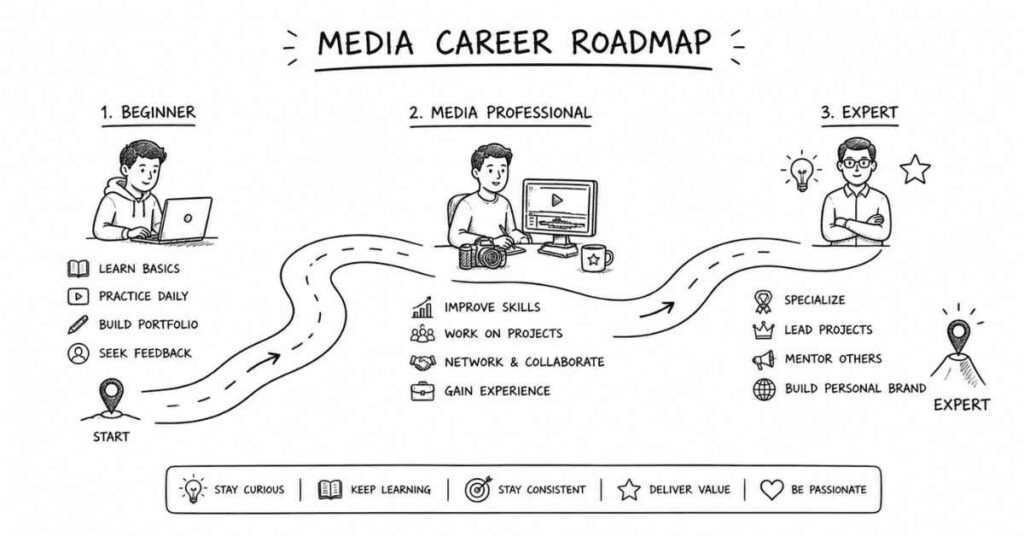
Taking the Next Step: Your Action Plan
You’ve absorbed a lot of information about India’s media and entertainment industry. Now what? Here’s how to move from interest to action.
Assess your interests and strengths: Which category excites you most—creative production, technical specialization, journalism, business management, or digital content? Your answer guides your learning path. Be honest about your skills. Love storytelling but camera-shy? Try writing, directing, or editing. Technically minded but not particularly artistic? Explore sound engineering, broadcast technology, or VFX.
Start learning immediately: Don’t wait for perfect conditions or formal education to begin. If you want to create content, create something today with your smartphone. Want to edit videos? Download free software like DaVinci Resolve and follow YouTube tutorials. Interested in journalism? Start a blog covering local news or niche topics you’re passionate about. Learning by doing beats passive consumption every time.
Build your first portfolio pieces: Create 2-3 solid pieces demonstrating your capabilities. These become conversation starters and proof of your commitment. Quality matters more than quantity. One excellent short film beats ten mediocre ones. One well-written, well-researched article showcases ability better than dozens of rushed posts.
Connect with others: Find communities—online or offline—of people pursuing similar interests. Join film clubs, attend local media events, participate in online forums, follow industry professionals on social media. Isolation limits growth; community accelerates it.
Seek mentorship or guidance: Identify someone a few steps ahead in the journey and request guidance. This could be a college senior, a professional you admire, or an online creator whose work resonates. Most people willingly help those showing genuine interest and initiative.
Apply for internships or entry opportunities: Once you have a few portfolio pieces and basic skills, start applying. Expect rejections—they’re universal in competitive fields. Keep improving, keep applying, and keep creating. Persistence distinguishes those who succeed from those who give up.
Stay curious and adaptable: Media and entertainment evolve constantly. Platforms change, technologies advance, audience preferences shift. Professionals who remain curious, experiment with new tools, and adapt to changes build sustainable careers. Those who resist change get left behind.
Conclusion
India’s media and entertainment industry offers unprecedented opportunities for creative, technical, and business-minded individuals. With 20 lakh jobs being created over the next decade, diverse pathways from film production to digital content creation, and geographic decentralization making careers accessible beyond traditional hubs, this is genuinely an exciting time to enter the field.
Success requires combination of skills—creative storytelling, technical proficiency, business awareness, and soft skills like communication and collaboration. It demands persistence through rejection, willingness to start small, and commitment to continuous learning. But for those passionate about storytelling, entertainment, and connecting with audiences, few industries offer such fulfilling, dynamic, and impactful careers.
The industry isn’t just growing—it’s transforming. New technologies, platforms, and content formats create opportunities that didn’t exist five years ago and might look completely different five years from now. This evolution means multiple entry points, second chances, and room for unconventional paths.
Whether you dream of directing blockbusters, creating viral content, reporting important stories, designing stunning visuals, or managing creative talent, there’s space for you. The question isn’t whether opportunities exist—they clearly do. The question is whether you’re ready to pursue them with dedication, creativity, and resilience.
Your journey begins with a single step—a first video, a written article, a course enrollment, a portfolio piece, or a networking conversation. The Indian media and entertainment industry awaits your unique voice, perspective, and contribution. It’s time to stop dreaming and start creating.