
JOURNALISM & NEWS MEDIA CAREERS
Table of Contents
Introduction

Imagine being the first to report a breaking story that changes public discourse. Picture yourself investigating corruption that leads to accountability. Envision explaining complex policies in ways that help citizens make informed decisions. Consider documenting human stories that need to be told—struggles, triumphs, injustices, and hopes. This is journalism—not just a career, but a calling that serves democracy, gives voice to the voiceless, and holds power accountable.
Journalism in India is experiencing simultaneous transformation and challenge. Traditional newspapers face declining print readership but expand digital reach. Television news channels multiply while fragmenting audiences. Digital-native news outlets emerge with innovative formats and business models. Social media disrupts information distribution while raising questions about verification and credibility. Through all this change, one constant remains: society needs professional journalists committed to truth, accuracy, fairness, and public service.
Journalism careers in India span diverse roles and platforms. Reporters earn ₹18.7 lakhs annually on average, with salaries ranging from ₹15-46.7 lakhs based on experience and organization. Entry-level reporters start at ₹20,000-25,000 monthly (₹2.4-3 lakhs annually) while experienced journalists earn ₹4.5-6 lakhs annually. Editors command ₹3-17.3 lakhs annually, news anchors earn ₹10-11 lakhs, and specialized journalists in fields like business, sports, or investigative work earn ₹6-7 lakhs annually.
This comprehensive guide explores journalism careers across print, broadcast, and digital media. You’ll learn about reporting roles covering different beats, editing positions shaping news coverage, photojournalism and videography capturing visual stories, investigative journalism uncovering hidden truths, and the skills, education, ethical principles, and practical strategies needed to build meaningful careers in news media.
Understanding Modern Journalism Landscape
The Changing Media Ecosystem

Indian journalism operates across multiple platforms, each with distinct characteristics and requirements.
Print journalism through newspapers and magazines has deep roots in Indian democracy. Major national newspapers like The Times of India, Hindustan Times, The Hindu, Indian Express, and regional language papers reach millions daily. While print circulation faces pressure from digital competition, newspapers remain influential in setting agendas and providing depth. Print journalists typically have more time for research and longer word counts allowing nuanced coverage compared to broadcast or digital formats.
Broadcast journalism via television and radio delivers news to audiences preferring audio-visual formats. National news channels (NDTV, Times Now, Republic TV, India Today, CNN-News18, ABP News) and regional channels employ thousands of journalists. Broadcast journalism emphasizes visual storytelling, live reporting, and immediate delivery. The 24/7 news cycle creates constant demand for fresh content but can prioritize speed over depth.
Digital journalism encompasses online-only news outlets, legacy media’s digital arms, independent news websites, and social media-native journalism. Digital journalism allows multimedia integration (text, photos, videos, interactive graphics), immediate publishing, audience engagement through comments and social media, and innovative storytelling formats. Digital-native outlets like The Wire, Scroll.in, The Quint, and NewsLaundry represent journalism’s future direction.
Convergence and multimedia journalism: Increasingly, journalists work across platforms. Print reporters shoot videos for digital editions. Broadcast journalists write articles for websites. This convergence requires multimedia skills—writing, photography, video production, audio recording, and social media management.
The Business Reality of News Media
Understanding journalism’s business context helps you navigate career decisions realistically.
Traditional revenue challenges: Newspapers face declining advertising revenue as advertisers shift to digital platforms. Television news channels compete for smaller advertising pools across multiplying channels. These financial pressures affect journalist salaries, resources for reporting, and job security. Understanding which organizations have sustainable business models helps you choose stable employers.
Digital monetization experiments: News outlets experiment with subscription models, membership programs, micro-donations, branded content, events, and courses diversifying revenue. Some succeed (The Ken, The Morning Context) while others struggle. Digital-first outlets that crack sustainable models often offer exciting opportunities for journalists.
Impact on journalism: Financial pressures sometimes compromise quality—understaffing leads to overwork, reduced reporting resources limit investigative work, and commercial pressures influence coverage. Choosing employers who prioritize journalism despite business challenges becomes important for job satisfaction and professional integrity.
Reporting Careers: Finding and Telling Stories
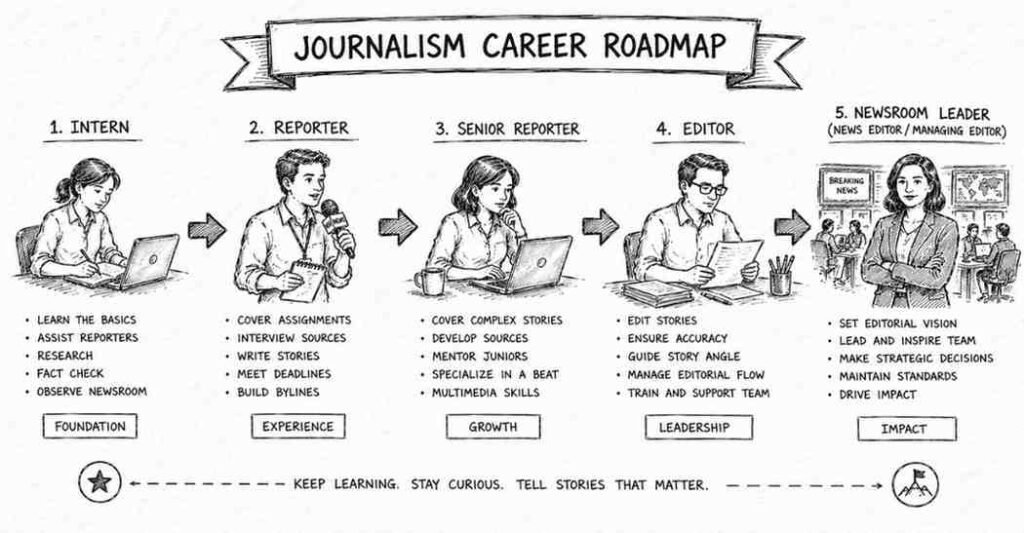
General Assignment Reporter: The Foundation

General assignment reporters cover various stories across beats, developing broad journalism skills before specializing.
What they do: They attend press conferences, government meetings, court hearings, or public events gathering information, conduct interviews with officials, experts, witnesses, or affected people, research background information providing context, write news articles under deadline pressure meeting publication schedules, shoot photos or videos supplementing text coverage, verify facts ensuring accuracy before publication, and respond to breaking news covering urgent developments.
General assignment work builds fundamental skills—news judgment deciding what’s newsworthy, interviewing techniques extracting information, writing clearly under time pressure, and ethical decision-making navigating complex situations.
Skills required: Strong writing ability crafting clear, accurate, engaging prose quickly. Interview skills putting subjects at ease while asking probing questions. Research abilities finding and verifying information. Time management meeting multiple competing deadlines. Physical stamina working irregular hours including nights, weekends, and during emergencies. Curiosity driving you to learn continuously about diverse topics. Ethical judgment making principled decisions about what to report and how.
Career progression: Most journalists start as general assignment reporters or stringers (freelance contributors paid per story) at smaller publications or regional outlets. After 1-3 years proving reliability and skill, opportunities arise at larger publications or to specialize in specific beats.
Salary expectations: Entry-level general assignment reporters earn ₹20,000-25,000 monthly (₹2.4-3 lakhs annually). At news channels, reporters earn approximately ₹20,898 monthly (₹2.5 lakhs annually) on average. With 2-4 years experience, salaries rise to ₹4.5-6 lakhs annually.
Beat Reporters: Specialized Coverage

Beat reporters specialize in specific subjects, developing deep expertise that enhances their reporting.
Political journalism covers government, legislatures, elections, and political parties. Political reporters cultivate relationships with politicians, party officials, and government insiders providing access to information. They analyze policy proposals, election campaigns, and political strategy. Political journalism requires understanding governance systems, political history, and policy details. Political journalists earn approximately ₹6-7 lakhs annually.
Crime journalism reports on criminal cases, police investigations, court proceedings, and law enforcement. Crime reporters develop sources within police departments, legal systems, and criminal defense, balancing access with independence. The work involves covering disturbing events—violence, accidents, tragedies—requiring emotional resilience. Crime journalists earn ₹6-7 lakhs annually.
Business and economics journalism covers companies, markets, economic policy, and financial news. Business journalists analyze corporate performance, interview executives, explain economic trends, and translate complex financial information for general audiences. This specialization requires understanding accounting, finance, and economics. Business journalism often pays better than general reporting, with business journalists at major outlets earning ₹8-15 lakhs annually.
Sports journalism covers athletic competitions, teams, players, and sports business. Sports journalists combine event reporting with feature writing, analysis, and investigative work about sports governance and corruption. Passion for sports helps but professional detachment remains necessary. Sports journalists earn ₹6-7 lakhs annually.
Science and health journalism explains research, medical developments, environmental issues, and technology. Science journalists translate technical information into accessible language helping audiences understand complex topics. This requires scientific literacy and ability to evaluate research quality. Science journalism remains underserved in India, creating opportunities for those developing this expertise.
Arts and culture journalism covers film, music, literature, theater, visual arts, and cultural trends. Culture journalists review performances, interview artists, and analyze cultural phenomena. This combines criticism with reporting, requiring both analytical and appreciative sensibilities.
Investigative Journalism: Uncovering Hidden Truths

Investigative journalists conduct in-depth investigations into wrongdoing, corruption, injustice, or issues public officials want hidden.
What investigative journalism involves: Months-long investigations require patience, persistence, and meticulous work. Investigative journalists cultivate sources risking careers to share information, request and analyze public documents through Right to Information Act or court records, follow money trails examining financial documents and transactions, interview numerous sources corroborating facts from multiple angles, anticipate legal challenges ensuring airtight documentation, and write comprehensive articles connecting dots into clear narratives.
Investigative journalism is journalism’s highest calling—exposing corruption, holding power accountable, and creating change. It’s also demanding, sometimes dangerous, and increasingly rare as newsrooms cut resources for time-intensive work.
Skills required beyond basic reporting: Document analysis interpreting financial records, corporate filings, or government documents. Data journalism using spreadsheets and basic coding to analyze datasets revealing patterns. Source cultivation building trust with whistleblowers or insiders. Legal knowledge understanding defamation law, contempt of court, and journalistic protections. Courage pursuing stories despite pressure, threats, or obstruction. Persistence continuing investigations despite dead ends or months without visible progress.
Organizations supporting investigative work: Dedicated investigative outlets like Cobrapost, The Caravan (for long-form investigations), and international collaborations like The Indian Express’s investigative team produce significant work. Freelance investigative journalists sometimes pitch stories to multiple outlets or crowd-fund investigations. Foundations and grants like Thakur Family Foundation awards, Ramnath Goenka Excellence in Journalism Awards, or Chameli Devi Jain Award recognize and support investigative journalism.
Compensation: Investigative journalists’ salaries vary by organization. At major newspapers, experienced investigative reporters earn ₹8-15 lakhs annually. Some combine salaried positions with freelance investigative projects. The financial rewards rarely match the work’s impact, making this path more vocation than lucrative career.
Freelance Journalism: Independence and Uncertainty
Freelance journalists work independently, pitching stories to multiple publications rather than holding staff positions.
Advantages: Freedom to choose stories that interest you, ability to work from anywhere, potential to earn more than staff positions by juggling multiple outlets, and opportunity to develop specialized expertise commanding higher rates.
Challenges: Inconsistent income requiring financial planning and emergency funds. Lack of benefits like health insurance, paid leave, or retirement contributions. Constant hustle pitching stories and cultivating editor relationships. Payment delays from cash-strapped publications. No institutional support facing legal threats or source protection issues.
Making freelancing work: Successful freelancers develop niches becoming go-to experts for specific subjects, cultivate relationships with multiple editors ensuring steady assignments, diversify income through journalism plus consulting, teaching, or other work, manage finances carefully maintaining reserves for lean periods, and join professional organizations offering health insurance, legal support, or community.
Rates: Freelance rates vary enormously. Newspapers might pay ₹2,000-8,000 per article depending on length and outlet. Magazines pay ₹5,000-25,000 per feature. International publications often pay significantly better—$100-500 per article. Freelancers piece together ₹3-10 lakhs annually through volume and diversification, with established freelancers sometimes exceeding staff journalist earnings
Editing Careers: Shaping Coverage

Copy Editor: Guardian of Language
Copy editors review articles for accuracy, grammar, style, and clarity before publication.
Responsibilities: They correct grammatical errors, spelling mistakes, and punctuation. They check factual accuracy catching errors or inconsistencies. They improve clarity rewriting confusing passages or restructuring sentences. They ensure consistency in style following publication guidelines. They write headlines and photo captions. They verify quotes and attributions ensuring proper sourcing.
Copy editing is detail-oriented work requiring exceptional language command and attention to minutiae. Good copy editors prevent embarrassing errors, potential libel, and reader confusion—they’re journalism’s quality control.
Skills required: Impeccable grammar and language skills. Knowledge of style guides (AP Stylebook is common in India). Broad general knowledge helping catch factual errors. Attention to detail finding errors others miss. Ability to improve writing without altering meaning or voice. Speed working efficiently under deadline pressure.
Career path: Many copy editors start as sub-editors or trainee copy editors learning style and process. With experience, progression leads to chief copy editor, desk head, or into editorial management. Some copy editors prefer staying in copyediting rather than moving to reporting or higher management.
Compensation: Entry-level copy editors earn ₹2.5-4 lakhs annually. Experienced copy editors earn ₹5-8 lakhs. Chief copy editors or desk heads earn ₹8-12 lakhs annually.
News Editor/Assignment Editor: Directing Coverage
News editors and assignment editors decide which stories get covered, assign reporters to stories, and coordinate daily news coverage.
What they do: They monitor news developments identifying stories worth covering, assign reporters to stories matching expertise with topics, coordinate coverage ensuring all important angles are addressed, edit submitted articles improving structure and focus, make publication decisions about what runs where, manage newsroom workflow ensuring deadlines are met, and mentor reporters improving their skills through feedback.
News editors need news judgment—instinctive sense of what’s important, interesting, or consequential. They balance competing priorities—breaking news versus enterprise stories, local versus national news, audience interest versus editorial importance.
Skills required: Excellent news judgment developed through years of reporting experience. Strong editing skills improving others’ work. Management abilities coordinating teams under pressure. Understanding audience without pandering to lowest common denominator. Ethics maintaining standards despite commercial or political pressure. Communication clearly conveying expectations and feedback to reporters.
Background: Most news editors have 5-10 years reporting experience before moving into editing. Understanding reporting from inside experience helps them work effectively with reporters.
Compensation: News editors earn ₹8-15 lakhs annually depending on publication size and responsibility level. Senior editors at major national publications earn ₹15-25 lakhs or more.
Section Editors and Department Heads
Section editors oversee specific sections—sports, business, features, or city coverage—developing coverage strategies for their domains.
Responsibilities: They plan coverage defining section priorities and story ideas, manage section staff including hiring and development, edit major stories ensuring section quality, coordinate with news desk integrating section into overall coverage, develop features and enterprise stories going beyond daily news, manage section budgets allocating resources, and represent section in editorial meetings.
Compensation: Section editors at major publications earn ₹10-18 lakhs annually. Heads of major departments (city editor, business editor) at premier outlets earn ₹18-30 lakhs.
Editor-in-Chief/Executive Editor: Leading the Newsroom
The editor-in-chief is the newsroom’s top editorial leader, responsible for overall journalism quality, editorial direction, and newsroom culture.
Responsibilities: They set editorial vision defining what the publication stands for, make final decisions on major or controversial stories, represent the publication publicly at events or in media, manage senior editorial team building effective leadership, interface with business side balancing editorial independence with institutional needs, handle crises including legal threats or ethical controversies, and shape newsroom culture around values like accuracy, fairness, and courage.
This role requires exceptional journalism credentials, leadership capabilities, and judgment earned through decades of experience.
Compensation: Editors-in-chief at major publications earn ₹30-60 lakhs annually or more depending on organization size and stature.
Visual Journalism: Photojournalism & Videography

Photojournalist: Visual Storytelling
Photojournalists capture images telling news stories, documenting events, and providing visual impact to journalism.
What they do: They photograph news events—protests, disasters, celebrations, or daily life—creating visual records, capture portraits making subjects human and relatable, document social issues creating photo essays revealing conditions or experiences, work alongside reporters illustrating written stories, edit their photos selecting and processing images for publication, and sometimes write captions or short articles accompanying images.
Great photojournalism does more than illustrate—it tells stories independently, evokes emotion, reveals truth, and creates lasting impact. Iconic photographs shape collective memory of historical moments.
Skills required: Technical photography proficiency with cameras, lenses, lighting, and editing software (Lightroom, Photoshop). Visual storytelling understanding composition, framing, and decisive moments. Courage working in dangerous situations—riots, disasters, or conflict zones. Ethical judgment navigating sensitive situations respectfully. Physical fitness carrying equipment and working in challenging conditions. Quick reflexes capturing fleeting moments. People skills making subjects comfortable.
Equipment: Professional photojournalists typically use DSLR or mirrorless cameras, multiple lenses (wide-angle, standard, telephoto), flash units, and editing workstations. While smartphones have impressive cameras, professional journalism usually requires dedicated camera equipment for quality, versatility, and reliability.
Career path: Many photojournalists start freelancing for local publications or blogs building portfolios. Landing staff positions at newspapers, magazines, or wire services (PTI, Reuters, AFP) provides stable employment. Some freelance photojournalists achieve success selling to multiple outlets.
Compensation: Entry-level photojournalists earn ₹2.5-4 lakhs annually. Experienced photojournalists at major publications earn ₹6-12 lakhs. Renowned photojournalists can earn significantly more through exhibitions, books, and international assignments.
Video Journalist/Multimedia Journalist
Video journalists shoot, edit, and sometimes report video stories for digital platforms or broadcast.
Responsibilities: They shoot video footage capturing events, interviews, or b-roll, record audio ensuring quality sound, interview subjects on camera, edit videos creating compelling visual narratives, add graphics, text, or music enhancing stories, and sometimes present stories on camera combining reporting with videography.
Digital platforms increasingly prioritize video content. Video journalists who can independently produce complete video stories—shooting, editing, and presenting—are valuable to resource-constrained newsrooms.
Skills required: Video camera operation and cinematography fundamentals. Audio recording capturing clean sound. Video editing using Adobe Premiere, Final Cut Pro, or other software. Storytelling structuring visual narratives. On-camera presence for pieces-to-camera or hosting. Technical problem-solving fixing equipment issues in the field.
Compensation: Video journalists earn similarly to photographers—₹3-5 lakhs at entry level, ₹6-12 lakhs with experience, more at major organizations or with specialized skills.
Digital and Data Journalism

Digital-First Journalism Skills
Modern journalists need digital capabilities beyond traditional reporting.
Social media proficiency: Using Twitter for breaking news and source cultivation, using Instagram for visual storytelling, using LinkedIn for professional networking and B2B journalism, and using Facebook and WhatsApp for audience engagement and story distribution. Understanding how to verify social media content distinguishing authentic from manipulated.
SEO and analytics: Understanding keyword research to help articles reach audiences through search, writing headlines and descriptions optimized for search and social sharing, using analytics (Google Analytics, social media insights) to understand audience behavior, and balancing SEO with journalistic integrity avoiding clickbait.
Multimedia storytelling: Combining text, photos, videos, audio, and interactive elements creating rich digital narratives. Creating timelines, maps, or data visualizations making complex information accessible. Understanding basic HTML, CSS, or content management systems to publish directly.
Data Journalism: Finding Stories in Numbers

Data journalists use datasets, spreadsheets, and sometimes programming to analyze data revealing patterns, trends, or stories.
What data journalists do: They obtain datasets through RTI requests, government portals, or scraping websites, clean and organize data making it analyzable, analyze data using Excel, SQL, or Python finding newsworthy patterns, visualize findings creating charts, maps, or interactive graphics, and write articles explaining findings and implications.
Data journalism reveals stories invisible otherwise—budget allocation patterns showing priorities, crime data revealing trends, election results showing demographic shifts, or corporate records exposing connections.
Skills required: Spreadsheet proficiency using Excel or Google Sheets. Statistical thinking understanding significance, correlation, and causation. Programming fundamentals (Python, R) for advanced analysis. Visualization tools (Datawrapper, Tableau, Flourish). Critical thinking questioning data quality and methodology. Writing translating technical analysis into accessible narratives.
Learning resources: Organizations like DataJournalism.com, courses from Knight Center for Journalism, and books like “The Data Journalism Handbook” teach fundamentals. Practice with public datasets builds skills.
Compensation: Data journalists are relatively scarce in India, making skilled practitioners valuable. Data journalists earn ₹5-8 lakhs at entry level, ₹10-18 lakhs with experience, particularly at outlets prioritizing data work.
Educational Pathways into Journalism
Formal Journalism Education
Bachelor’s degrees in journalism or mass communication: Three-year BA or four-year professional programs provide comprehensive foundations. Top institutions include:
- Asian College of Journalism (Chennai)
- Indian Institute of Journalism & New Media (Bangalore)
- Symbiosis Institute of Media & Communication (Pune)
- Xavier Institute of Communications (Mumbai)
- Delhi College of Arts & Commerce
- Lady Shri Ram College (Delhi University)
- Ferguson College (Pune)
- Various state university mass communication departments
These programs teach journalism fundamentals—reporting, writing, ethics, media law—while providing practical experience through college publications, internships, and projects.
Master’s degrees: For those with undergraduate degrees in other fields, one-year or two-year master’s programs provide journalism training. Asian College of Journalism’s postgraduate diploma is particularly respected.
Specialized courses: Short-term courses or workshops in specific areas—investigative journalism, data journalism, multimedia storytelling, or photojournalism—allow working journalists to upgrade skills.
Alternative Pathways
Many successful journalists don’t have journalism degrees. Subject expertise in politics, economics, science, or law combined with self-taught reporting skills creates valuable journalists. Reading widely, writing consistently (blogs, campus publications, freelance contributions), and learning by doing builds capabilities without formal education.
Essential Skills to Develop
Writing: Practice constantly. Write daily—journaling, blogging, or contributing to publications. Study great journalism analyzing what makes it effective. Seek feedback from editors or teachers.
Interviewing: Practice on anyone willing. Record and transcribe interviews analyzing your technique. Read books like “The Art of the Interview” improving skills.
News judgment: Read diverse news sources understanding what gets covered and why. Follow major stories observing how they develop. Think critically about what’s newsworthy versus merely interesting.
Ethics: Study journalism ethics codes. Think through ethical dilemmas before facing them in the field. Develop principled frameworks guiding decisions.
Current affairs: Stay broadly informed. Read multiple newspapers daily. Follow diverse perspectives. Develop deep knowledge of topics you want to cover.
Breaking Into Journalism
Building a Portfolio
Strong portfolios—published clips demonstrating writing ability and news judgment—matter more than resumes in hiring decisions.
Campus publications: Write for college newspapers, magazines, or websites. These provide low-stakes environments to make mistakes and improve.
Local publications: Contribute to neighborhood papers, community websites, or hyperlocal publications building published clips.
Freelance pitching: Pitch story ideas to editors at outlets you want to work for. Accepted freelance pieces demonstrate capability and create relationships.
Starting a blog: Document reporting on topics you care about. Well-executed blogs showcase writing, thinking, and initiative.
Showcasing work: Create simple websites (WordPress, Wix, or Google Sites) organizing your best work with clear descriptions of your role in each piece.
Internships: The Primary Entry Path
Most journalism careers begin through internships providing hands-on experience, mentorship, and often job offers.
Where to intern: Major newspapers (Times of India, Hindustan Times, Indian Express, The Hindu, regional papers), news agencies (PTI, ANI), news channels (NDTV, CNN-News18, India Today), magazines (Outlook, India Today, The Week), and digital outlets (The Wire, Scroll, The Quint).
When to apply: Many organizations have formal summer internship programs recruiting in early spring. Others accept interns year-round on rolling basis.
Making internships count: Pitch story ideas showing initiative. Meet deadlines reliably. Accept unglamorous tasks gracefully. Ask questions learning from experienced journalists. Network with staff members. Produce work good enough that editors remember you for openings.
Compensation: Many journalism internships are unpaid or offer modest stipends (₹5,000-15,000 monthly). While frustrating, the experience and connections often justify short-term financial sacrifice if affordable.
Networking in Journalism
Journalism remains relationship-driven. Knowing people at target organizations significantly improves hiring chances.
Professional events: Attend journalism conferences, panel discussions, book launches, or awards ceremonies networking with working journalists.
Alumni networks: Connect with graduates from your journalism school working in the industry. Most alumni help fellow graduates.
Social media engagement: Follow journalists and outlets you admire on Twitter and LinkedIn. Engage thoughtfully with their work. Many journalists are accessible through social media.
Informational interviews: Reach out to journalists whose work inspires you requesting brief conversations about their careers. Most appreciate genuine interest and provide advice or connections.
Journalism Ethics and Responsibilities
Core Ethical Principles
Accuracy: Get facts right. Verify information from multiple sources. Correct errors promptly and transparently. Accuracy is journalism’s foundation—losing credibility destroys careers and hurts public trust.
Fairness: Present all sides fairly. Don’t let personal biases distort coverage. Give subjects opportunity to respond to criticism or allegations. Fair journalism strengthens democracy; biased journalism divides it.
Independence: Maintain editorial independence from advertisers, political parties, or owners. Avoid conflicts of interest compromising objectivity. Resist pressure to kill or slant stories. Independence distinguishes journalism from propaganda or PR.
Transparency: Disclose potential conflicts. Explain how you got information. Be honest with sources about how you’ll use their information. Transparency builds trust.
Minimizing harm: Balance public interest against harm to individuals. Think carefully about identifying crime victims, publishing disturbing images, or exposing private information. Journalism can damage lives—use that power responsibly.
Accountability: Take responsibility for your work. Acknowledge mistakes. Engage with audience criticism thoughtfully. Accountable journalists build credibility.
Common Ethical Dilemmas
Using anonymous sources: Anonymous sources sometimes provide crucial information but reduce accountability. Use anonymous sources only when information is significant and unavailable on the record. Verify anonymous information independently when possible. Explain to audiences why anonymity was granted.
Accepting gifts or hospitality: Journalists should avoid gifts, free trips, or entertainment from sources that could create obligations or appearance of bias. Politely decline or pay your own way maintaining independence.
Reporting on friends, family, or community: Journalists sometimes cover people they know personally. Disclose relationships if relevant. Consider recusing yourself if relationships could bias coverage.
Balancing speed with accuracy: Breaking news creates pressure to publish quickly before verification. Prioritize accuracy over speed. Being second but right beats being first but wrong.
Challenges in Modern Journalism
Financial Pressures
Media organizations struggling financially sometimes cut staff, reduce salaries, or pressure journalists to produce more with fewer resources. This affects quality and journalist wellbeing.
Political and Corporate Pressure
Journalists face pressure from politicians, corporations, or powerful individuals displeased with coverage. This ranges from angry calls to threats to lawsuits to violence. Maintaining independence requires courage and institutional support.
Online Harassment and Abuse
Journalists, particularly women and minorities, face online harassment including threats, doxxing, and coordinated abuse campaigns. This takes psychological tolls and sometimes silences voices.
Physical Danger
Journalists covering conflict, crime, protests, or disasters face physical risks. Some journalists have been attacked or killed reporting in India. Safety training and institutional support matter.
Mental Health
Exposure to trauma, long hours, job insecurity, and harassment affect journalists’ mental health. Seeking support and maintaining work-life boundaries helps sustain careers.
The Rewards of Journalism
Despite challenges, journalism offers profound rewards.
Public service: Journalism serves democracy—informing citizens, holding power accountable, giving voice to marginalized communities. The work matters beyond personal success.
Continuous learning: Journalists learn constantly—about politics, science, business, culture, human nature. Every story teaches something new.
Access and adventure: Journalism provides access to people, places, and events most people never experience—political inner circles, disaster zones, artistic performances, scientific breakthroughs.
Making a difference: Good journalism creates change—exposing corruption, righting injustices, changing policies, or simply helping people understand their world better.
Meeting extraordinary people: Journalists interact with diverse humanity—leaders and ordinary citizens, heroes and villains, artists and scientists, survivors and thrivers.
Intellectual satisfaction: Journalism combines investigation, analysis, writing, and storytelling in intellectually engaging ways.
Conclusion
Journalism careers in India offer meaningful, intellectually stimulating paths for those committed to truth-telling, public service, and democratic values. Whether as reporters covering beats, editors shaping coverage, photojournalists capturing visual stories, or investigative journalists exposing wrongdoing, opportunities exist across print, broadcast, and digital media. With reporters earning ₹18.7 lakhs on average and editors commanding ₹3-17.3 lakhs annually, financial viability exists despite journalism’s well-documented economic challenges.
Success requires combining strong writing and reporting skills with subject expertise, ethical principles, digital capabilities, and resilience through inevitable challenges. Start building portfolios through campus publications, freelance work, or blogs. Seek internships providing hands-on experience and industry connections. Develop both broad knowledge and specialized expertise. Maintain commitment to accuracy, fairness, and independence despite pressures.
Indian journalism needs talented, principled professionals who understand journalism’s democratic role while adapting to digital transformation. The field faces serious challenges—business model disruption, political pressure, online harassment—but these challenges make committed journalists more valuable, not less. For those called to witness, investigate, explain, and hold power accountable, few careers offer such purpose and impact as journalism. The question isn’t whether journalism careers are viable—thousands of working journalists prove they are. The question is whether you’re ready to pursue truth, serve the public, and maintain integrity through the inevitable challenges this vital but demanding profession presents.