
How to Become a School Principal: Qualifications, Experience & Salary Guide
Table of Contents
For many dedicated and ambitious teachers, the ultimate career goal is to move beyond the classroom and lead an entire school. Becoming a School Principal is the pinnacle of a career in K-12 education. It’s a transition from being responsible for a class of 30 students to being responsible for the success, safety, and future of hundreds or even thousands of students and staff members.
The role of a principal has evolved dramatically. They are no longer just administrators who handle discipline and paperwork. Today’s principal is an instructional leader, a strategic planner, a financial manager, and the chief culture-builder of their school. It is one of the most challenging, yet profoundly impactful, leadership positions one can hold.
But what does it actually take to reach this esteemed position? This guide provides a clear, step-by-step roadmap, detailing the qualifications, experience, and leadership skills you need to build a successful career as a school principal in India.
Part 1: The Modern Principal – More Than Just a Headmaster
Before diving into the “how,” it’s essential to understand what the role entails in 2025.
- Instructional Leadership: The most important function of a modern principal is to be the “principal teacher.” They are responsible for ensuring high-quality teaching and learning in every classroom. This involves observing teachers, providing constructive feedback, promoting professional development, and staying abreast of the latest pedagogical research.
- Strategic Vision and Planning: A principal sets the vision and direction for the school. They work with stakeholders to create a strategic plan for academic improvement, infrastructure development, and community engagement.
- Human Resource Management: They are responsible for recruiting, hiring, training, evaluating, and retaining high-quality teachers and staff.
- Financial Management: Principals, especially in private schools, are often responsible for managing the school’s budget, allocating resources, and ensuring financial sustainability.
- Community and Parent Relations: They are the public face of the school, responsible for building strong, positive relationships with parents, community leaders, and educational authorities.
- Student Well-being and Safety: Ultimately, a principal is responsible for creating a safe, supportive, and inclusive environment where every student can thrive both academically and emotionally.
Part 2: The Career Ladder – Your Path to the Principal's Office
Becoming a principal is not an overnight journey. It is a gradual progression that typically takes 10 to 15 years of dedicated experience within the school system. While the path can vary, the typical ladder looks like this:
- Classroom Teacher (Years 1-5): This is where you build your foundation. You master your subject, develop effective teaching strategies, and learn the day-to-day realities of school life. The best principals are those who have been excellent teachers.
- Senior Teacher / Mentor (Years 5-8): As you gain experience, you’ll naturally start taking on informal leadership roles. You might mentor new teachers, lead a subject-specific club, or pilot a new teaching initiative.
- Department Head / Coordinator (Years 8-12): This is your first formal leadership role. As a Head of Department (HOD) for Science or a Coordinator for the Primary Section, you are responsible for managing a team of teachers, overseeing the curriculum for your department, and reporting to the school’s academic leadership.
- Vice-Principal / Academic Head (Years 12-15): The Vice-Principal is the principal’s second-in-command. In this role, you get hands-on experience in whole-school management, handling everything from student discipline and timetabling to teacher evaluations and parent communication. This is often the final training ground before becoming a principal.
- School Principal (Year 15+): Having proven your capabilities at every level, you are now ready to take the helm of a school.
Part 3: Essential Qualifications and Certifications
To be considered for a principal’s role, you need a strong combination of academic qualifications and professional experience.
Academic Qualifications:
- Bachelor’s Degree: A foundational degree in any subject.
- Master’s Degree: A Master’s degree (M.A., M.Sc., M.Com) is a mandatory requirement for senior positions in most schools, especially for teaching senior secondary classes (PGT).
- Bachelor of Education (B.Ed): This professional teaching degree is non-negotiable.
- Master of Education (M.Ed): While not always mandatory, an M.Ed is highly preferred and often a requirement for principal positions in top-tier schools. It provides advanced knowledge of educational theory, research, and administration.
Professional Experience:
- Minimum Teaching Experience: Most schools require at least 10 years of teaching experience, including a minimum of 3-5 years in a formal administrative or leadership capacity (like HOD or Vice-Principal).
- Board Affiliation Experience: For CBSE or ICSE schools, prior experience working in a school affiliated with the same board is often a prerequisite.
Leadership & Management Certifications (The X-Factor):
In today’s competitive environment, academic degrees alone are not enough. Schools are increasingly looking for principals with formal management training. Pursuing a certification in educational leadership can give you a significant edge.
- MBA in Education Management: This is becoming a highly sought-after qualification. It equips you with skills in finance, marketing, and strategic management tailored to the education sector.
- Post Graduate Diploma in School Leadership & Management (PGDSLM): Offered by various institutions, these programs focus specifically on the practical skills needed to run a school.
- Leadership Programs: Institutions like the IIMs and the National University of Educational Planning and Administration (NUEPA) offer short-term leadership development programs for educators.
Part 4: The Salary of a School Principal
The position of a principal comes with significant responsibility, and the compensation reflects that. The salary can vary widely based on the type of school, its location, and its size.
Salary Ranges in India :
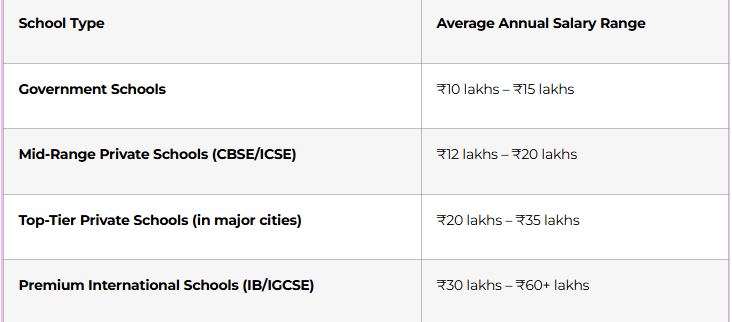
Source: Data compiled from educational recruitment agencies and salary data from major school chains.
In addition to the base salary, many private schools offer attractive perks such as free accommodation on campus, a school car, education allowances for children, and performance-based bonuses.
Part 5: Developing the Essential Leadership Skills
Beyond qualifications, what truly makes a great principal is their leadership ability. If you aspire to this role, you need to consciously cultivate these skills throughout your career.
- Vision and Strategic Thinking: The ability to look beyond the day-to-day and articulate a clear, compelling vision for the school’s future.
- Decision-Making and Problem-Solving: A principal makes hundreds of decisions a day, from small operational issues to major strategic choices. The ability to make sound, data-informed, and timely decisions under pressure is crucial.
- Inspirational Communication: You must be able to inspire and motivate your staff, students, and parents. This requires excellent public speaking and interpersonal communication skills.
- Emotional Intelligence: The ability to understand and manage your own emotions and those of others. A principal must be approachable, empathetic, and able to handle conflict constructively.
- Financial Acumen: You need to understand a budget, make smart financial decisions, and be able to justify your resource allocation.
- Resilience: The job is demanding and often stressful. The ability to handle criticism, manage crises, and maintain a positive attitude is essential for long-term success.
Your Action Plan: How to Start Today
If becoming a principal is your long-term goal, you can start laying the groundwork right now, even as a classroom teacher.
- Excel in Your Current Role: First and foremost, be an outstanding teacher. Earn the respect of your students, parents, and colleagues through your dedication and effectiveness.
- Seek Leadership Opportunities: Don’t wait to be asked. Volunteer to lead a committee, mentor a new teacher, organize a school event, or start a new club. Show initiative.
- Become a Lifelong Learner: Don’t stop at your B.Ed. Plan to pursue your M.Ed. or a leadership certification. Attend workshops and conferences to stay current with educational trends.
- Find a Mentor: Identify a leader in your school (like your HOD or Vice-Principal) whom you admire. Ask them for guidance and learn from their experience.
- Think Like a Leader: Start looking at issues from a whole-school perspective. When you see a problem, don’t just complain; think about potential solutions.
Becoming a school principal is a journey of a thousand steps, but it begins with the decision to be more than just a teacher—it begins with the decision to be a leader. It’s a challenging path, but for those who make it, it offers the unparalleled opportunity to shape the future, one school at a time.