
Graphic Design Career Levels: Junior to Creative Director
Table of Contents
Introduction: Your Growth Path as a Designer
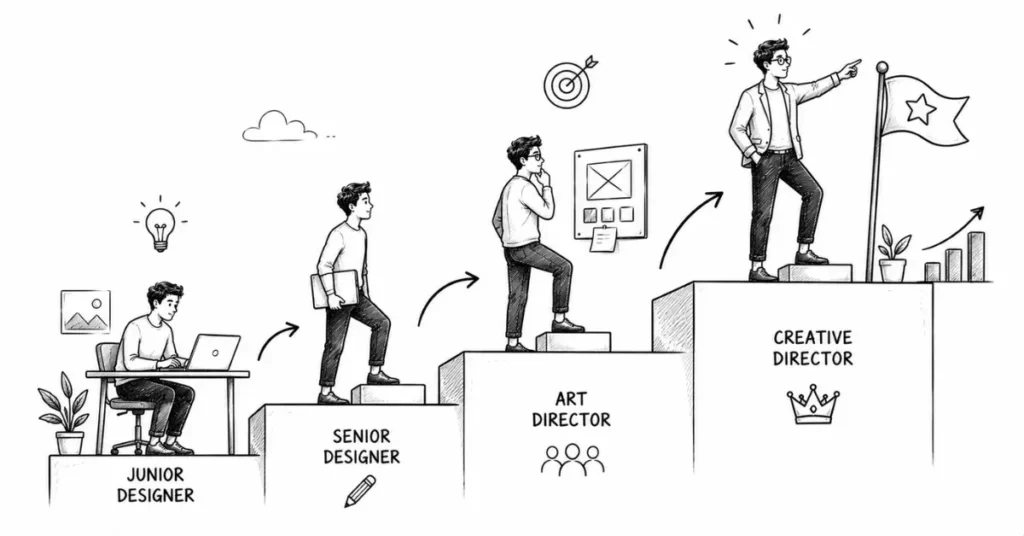
Graphic design is not a flat career where you stay “designer” forever. As your skills, responsibility, and impact grow, your role, title, and earning potential also evolve.
In most Indian companies and agencies, design careers follow a broad ladder:
Junior Designer → Designer → Senior Designer → Art Director / Lead Designer → Creative Director / Head of Design.
This guide explains what each level actually does, what skills you need to move up, and how to plan your progression in a focused, realistic way.
Level 1: Junior Graphic Designer (0–2 Years)
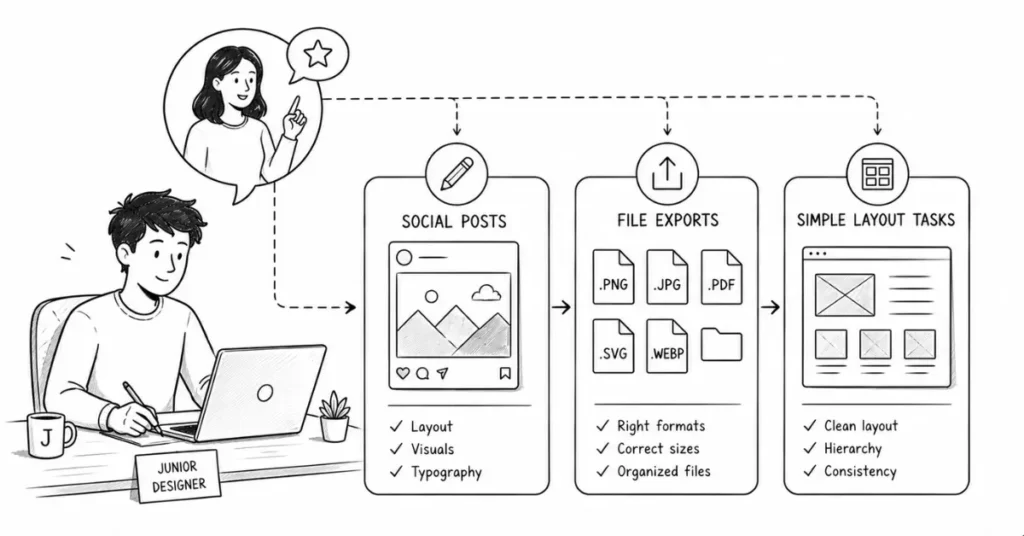
Who You Are
You’re just starting out maybe a fresher or someone who has 6–18 months of experience. You know the tools reasonably well, but you’re still learning how design works in real business contexts.
Typical Responsibilities
- Execute tasks based on clearly defined briefs and directions.
- Create social media posts, simple layouts, basic website sections, or collateral.
- Adapt existing designs into different sizes and formats.
- Assist senior designers on bigger projects (e.g., preparing assets, cleaning files).
- Learn and follow brand guidelines.
Skills Expected
- Basic proficiency in tools: Photoshop, Illustrator, Figma/Canva (depending on role).
- Understanding of design fundamentals: typography, color, layout, hierarchy.
- Ability to take feedback and iterate quickly.
- Awareness of file formats, exports, and basic technical specs (print vs digital).
How to Grow from Junior to Mid-Level
- Focus heavily on learning and practicing fundamentals.
- Volunteer for slightly more complex tasks (e.g., small campaigns, not just single posts).
- Ask seniors for feedback and actually apply it.
- Begin taking small side/freelance projects to grow faster and handle more responsibility.
Level 2: Graphic Designer / Visual Designer (2–4 Years)
Who You Are
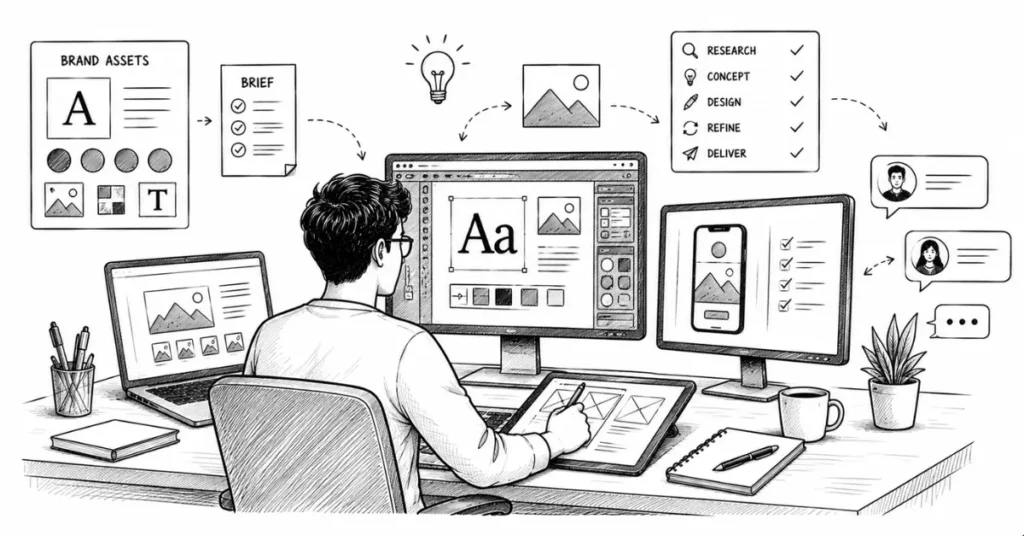
You’ve moved beyond just execution. You can now handle full pieces of work on your own, understand briefs more clearly, and contribute ideas.
Typical Responsibilities
- Take a brief and independently produce complete designs with minimal hand-holding.
- Work on campaigns, branding projects, basic UI/landing pages, or motion assets depending on your focus.
- Maintain quality and consistency within the brand’s visual identity.
- Collaborate closely with writers, marketers, product teams, or developers.
- Help juniors with simple questions or review, even informally.
Skills Expected
- Strong handle over at least 2–3 tools relevant to your niche.
- Ability to present 2–3 options/variations and explain your choices.
- Good sense of composition, typography pairing, and color usage.
- Reliable with timelines and basic project ownership.
- Beginning to understand metrics and goals (e.g., what “good” means beyond aesthetics).
How to Grow from Mid-Level to Senior
- Take on more end-to-end projects (from concept to final output).
- Start thinking beyond visuals: “What is the goal of this design?”
- Document some projects as proper case studies.
- Develop a recognizable style or clear strength (branding / social / UI / motion, etc.).
- Practice “soft skills”: communication, setting expectations, clarifying briefs.
Level 3: Senior Graphic Designer (4–7 Years)
Who You Are
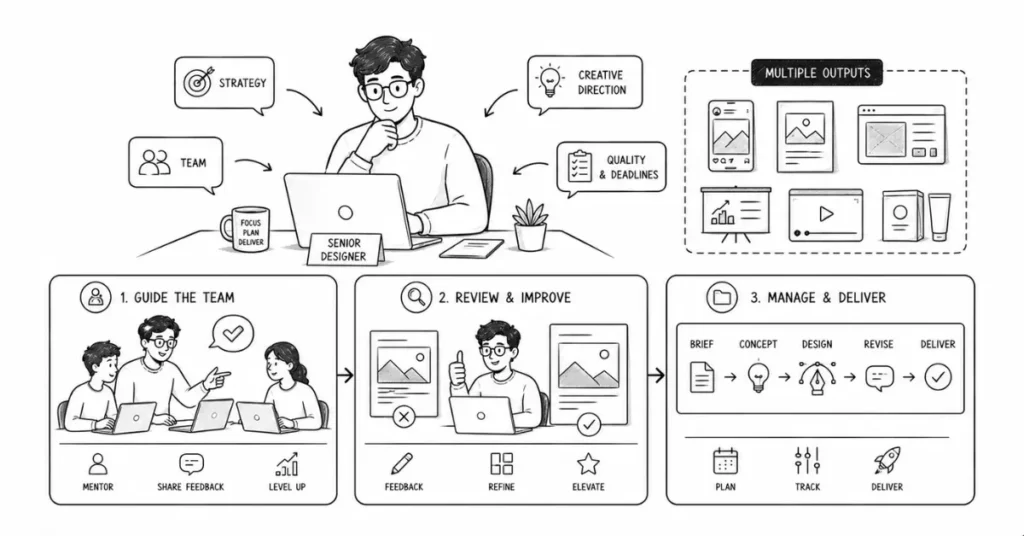
You’re trusted to handle complex projects and sometimes small campaigns. You are the “go-to” person for quality and problem-solving in your area.
Typical Responsibilities
- Lead projects: interpret the brief, propose ideas, and drive execution.
- Coordinate with other creatives (writers, illustrators, motion, UI/UX).
- Mentor juniors and interns: give structured feedback, help them grow.
- Maintain standards across multiple assets and mediums.
- Sometimes client-facing: join or lead presentations, clarify requirements directly.
Skills Expected
- High-quality craft: clean, polished work across multiple project types.
- Ability to manage multiple deadlines and priorities.
- Clear communication with both creative and non-creative stakeholders.
- Basic understanding of strategy: audience, positioning, and competitive context.
- Comfortable giving and receiving critical feedback professionally.
Signs You’re Ready for Senior
- You can confidently say “I can handle this entire project with minimal supervision.”
- Juniors and other team members often ask you for help.
- You’re able to spot issues (visual, strategic, or technical) that others miss.
- You are already doing bits of mentoring and informal leadership.
Level 4: Lead Designer / Art Director (7–10 Years)
(You’ve already had a dedicated subtopic on art direction, so here we’ll focus on this level as part of the ladder.)
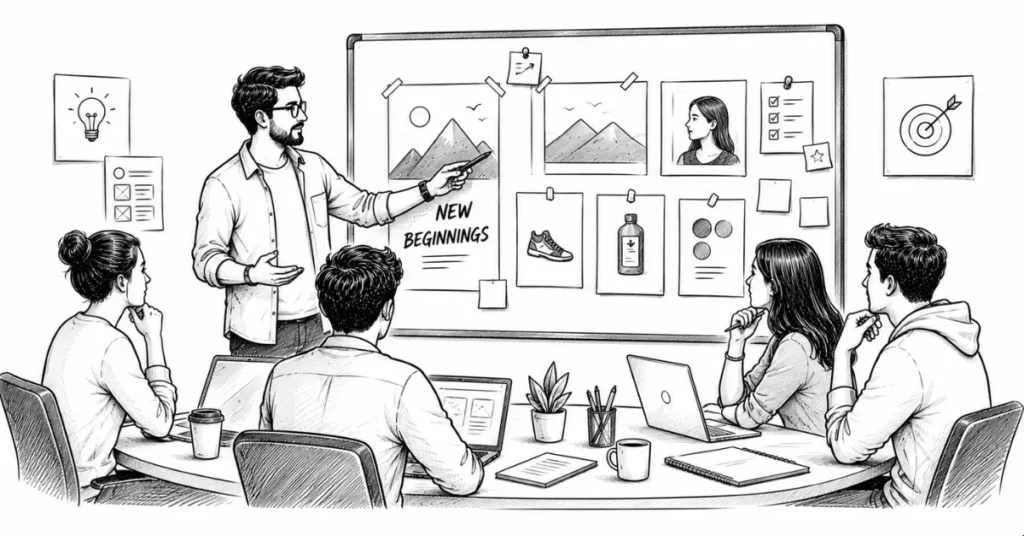
Who You Are
You’re now responsible not only for your own designs but also for the overall visual direction and the work of a small team.
Typical Responsibilities
- Define visual concepts for campaigns, products, or brands.
- Guide multiple designers, illustrators, motion designers, and sometimes external vendors.
- Ensure visual consistency across all touchpoints (print, digital, social, product).
- Present and defend creative ideas to clients, management, and cross-functional teams.
- Take responsibility for creative quality and deadlines.
Skills Expected
- Excellent design taste and judgement what to push, what to reject.
- Ability to articulate ideas clearly to both creative and business stakeholders.
- Leadership: mentoring, delegating, and motivating your team.
- Balancing constraints (time, budget, tech) with creativity.
- Strong understanding of brand, marketing, and business impact.
How to Grow from Senior Designer to Lead / Art Director
- Incrementally own more of the strategy and concept, not just visuals.
- Volunteer to lead smaller projects end-to-end, including internal reviews.
- Build a portfolio that highlights campaigns and systems, not only single pieces.
- Show that you can manage juniors and elevate their work, not just your own.
Level 5: Creative Director / Head of Design (10+ Years)
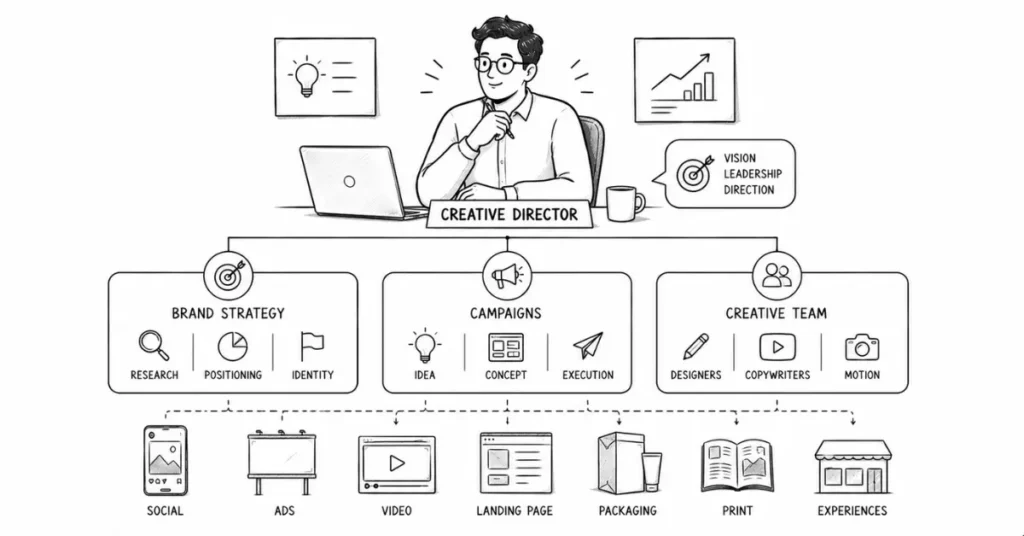
Who You Are
You’re at the top of the creative ladder or head of the design function. You shape the creative vision across brands, products, or the entire organization.
Typical Responsibilities
- Own the creative vision and ensure it aligns with business strategy.
- Lead teams of designers, art directors, writers, and other creatives.
- Work closely with senior leadership (founders, CXOs, marketing heads).
- Decide which ideas, campaigns, and visual directions move forward.
- Build and protect design culture, processes, and standards.
Skills Expected
- Strong track record of successful campaigns and brand work.
- Deep understanding of markets, consumer behavior, and business needs.
- Ability to build and scale creative teams (hiring, mentoring, retaining talent).
- Comfort in high-stakes environments: pitches, conflicts, big launches.
- Less hands-on design, more decision-making, direction, and leadership.
Progression Timeline (Indicative, Not Rigid)
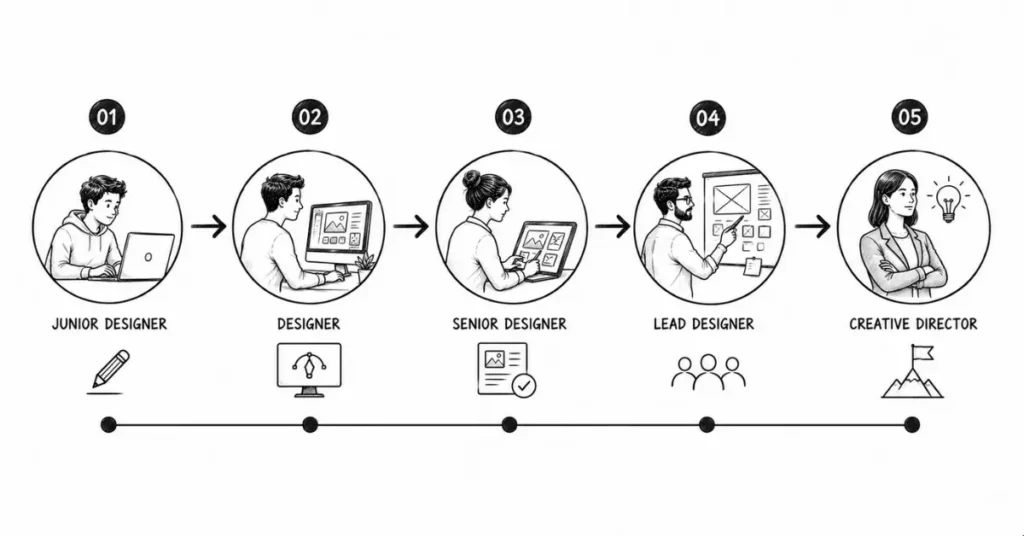
This is a rough timeline; actual progression depends on your growth, company type, and opportunities.
- 0–2 years: Junior Designer
- 2–4 years: Designer / Visual Designer
- 4–7 years: Senior Designer
- 7–10 years: Lead Designer / Art Director
- 10+ years: Creative Director / Head of Design
Some move faster, especially in startups and small agencies; others may take longer in large organizations with more hierarchy. Freelancers can mirror this path by evolving from solo executors to consultants and creative directors of their own micro-agencies.
How to Move Up Faster (Without Burning Out)
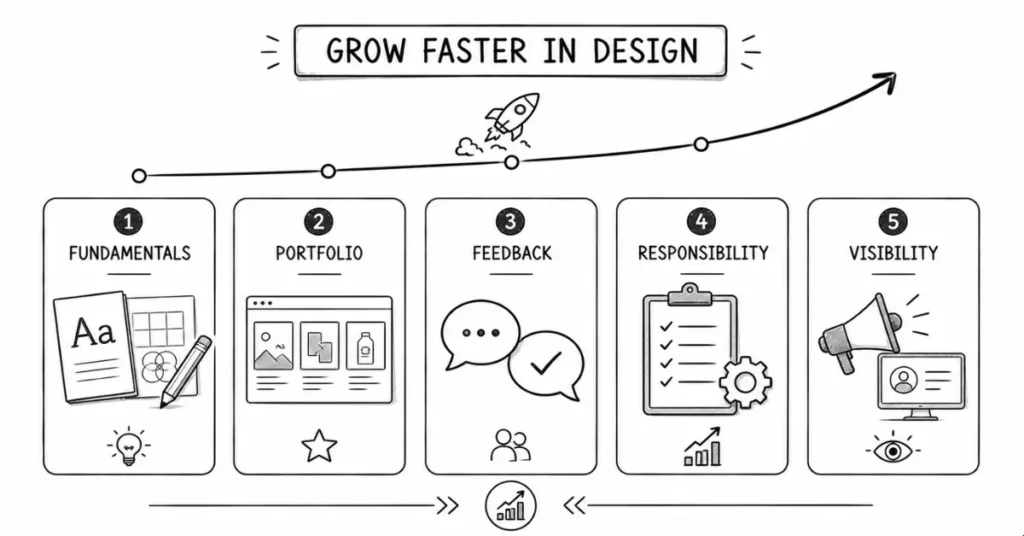
1. Master Fundamentals Early
The stronger your foundation in typography, color, layout, and systems, the easier every future role becomes. Weak fundamentals become a ceiling later.
2. Build a Portfolio That Matches the Next Level
- Want to move from junior → mid-level? Show projects you owned more independently.
- Mid-level → senior? Show complexity, problem-solving, and range.
- Senior → lead/art director? Show campaigns, systems, and leadership impact.
Your portfolio should “speak” the level you’re aiming for, not just where you are.
3. Ask for Feedback and Responsibility
- Tell your manager you want to grow and ask what you need to demonstrate.
- Volunteer for slightly bigger challenges: lead a small project, mentor an intern, present a deck.
- Show that you’re reliable under pressure—this builds trust.
4. Learn Beyond Design
As you go up:
- Understand marketing basics (funnels, metrics, brand positioning).
- Learn to read data or at least understand what’s being measured.
- Improve soft skills: communication, conflict resolution, negotiation.
These are often what actually get you promoted beyond a certain level.
5. Be Visible (Internally and Externally)
- Internally: share learnings, help others, showcase wins without bragging.
- Externally: maintain an updated LinkedIn and portfolio, occasionally share case studies or process.
This creates more opportunities both within your current company and elsewhere.
Agency vs In-House vs Freelance: Different Growth Flavors
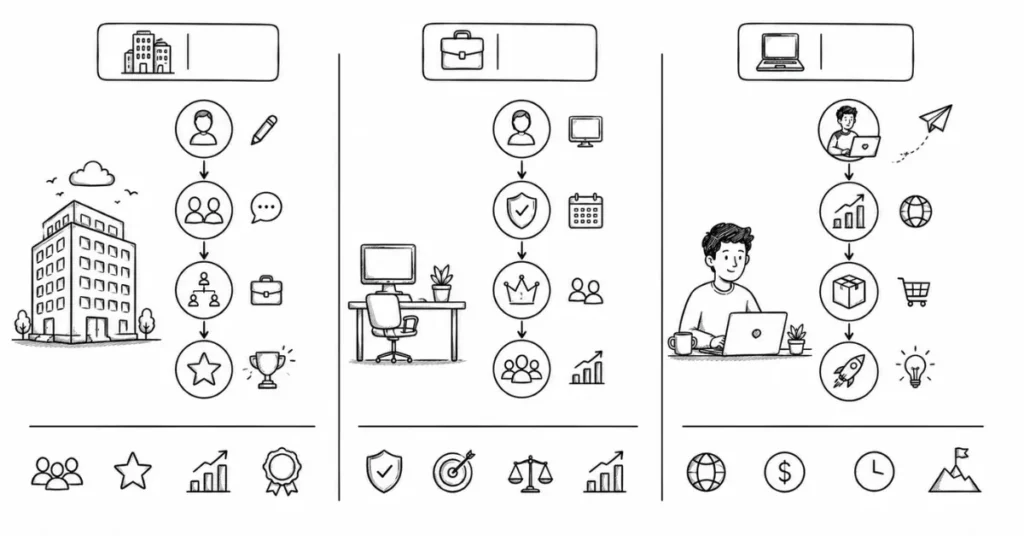
Agency Path
- Faster exposure to various industries and campaign types.
- Often more intense workload and deadlines.
- Clearer creative titles (Junior → Designer → Sr. Designer → Art Director → Creative Director).
- Great for building breadth and speed.
In-House Brand / Product Team
- Deeper focus on 1–2 brands or products.
- More product, UX, and business alignment.
- Titles might vary (Graphic Designer, Brand Designer, Product Designer, Head of Design).
- Great for depth and long-term brand thinking.
Freelance / Studio Owner
- You carve your own path: designer → premium specialist → creative consultant → studio owner.
- Titles are flexible, but your positioning and reputation become your “level.”
- You control your rates and growth, but must handle business and operations too.
Red Flags That You’re Stagnating
- You’re doing the same type of work for 2–3 years with no new challenges.
- Your portfolio hasn’t significantly improved or changed in 18–24 months.
- You’re not learning new tools, techniques, or thinking patterns.
- You feel like “just a pair of hands,” not a problem-solver.
If you see these signs:
- Seek more responsibility internally, or
- Take on diverse freelance projects, or
- Consider moving to a different company/industry that will stretch you.
90-Day Career Progression Plan (Any Level)
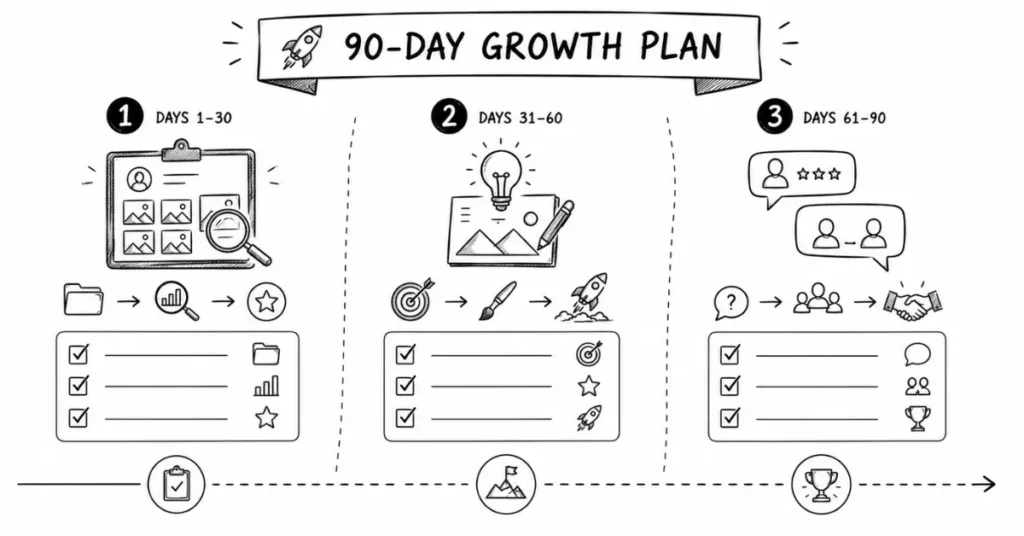
Month 1
- Audit your portfolio and recent work vs the level you want.
- Ask your manager or a trusted senior for honest feedback.
- Identify 3 specific skills or areas to improve (e.g., presentation skills, campaign thinking, motion, UI).
Month 2
- Take on 1–2 “stretch” projects targeting those skill gaps.
- Document at least one project as a full case study.
- Shadow or learn from someone already in the role you want.
Month 3
- Implement feedback and refine your portfolio.
- Have a clear conversation with your manager about your growth path.
- If the environment isn’t supportive, start exploring external opportunities.
Final Thoughts
Graphic design can be a long, rewarding career with clear levels of growth not just a junior designer job you move on from. Whether you see yourself as a senior craft expert, an art director leading visual teams, or a creative director shaping brand stories, the path is built step by step.
Focus on:
- Strong fundamentals.
- Thoughtful, case-study-quality work.
- Growing responsibility.
- Better communication and leadership over time.