
Graphic Design Career Guide : Creative & UX/UI Design Jobs
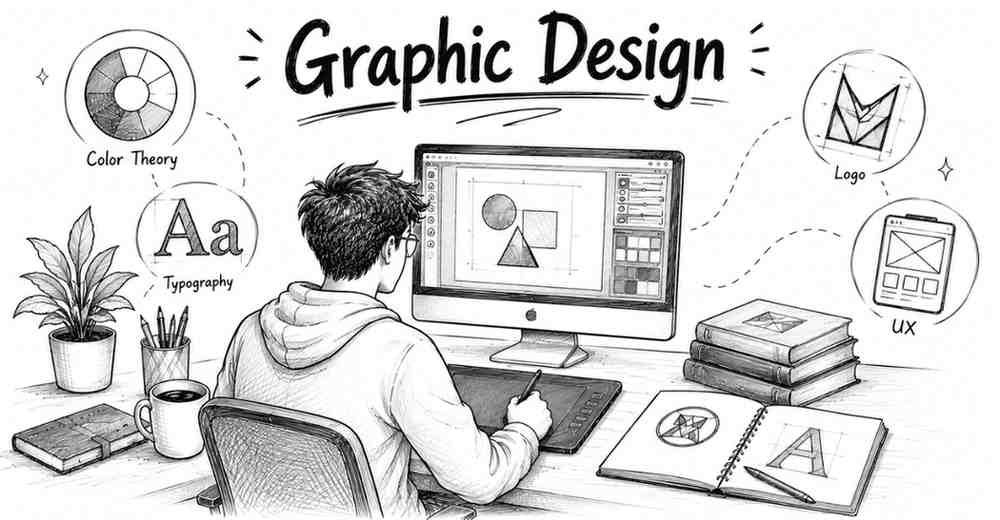
Table of Contents
Introduction : Your Journey into India's Thriving Graphic Design Industry
Graphic design has evolved from being just about making things look pretty to becoming one of the most sought-after career paths in India’s digital economy. Whether you’re scrolling through Instagram, shopping on e-commerce platforms, or watching YouTube videos, you’re experiencing the work of graphic designers who shape how brands communicate with millions of people every day.
If you’re someone who loves creativity, enjoys solving visual problems, and wants to build a career that combines art with technology, graphic design might be your calling. The best part? The industry is booming in India, with startups, agencies, and corporations constantly hunting for talented designers who can bring their ideas to life.
In 2026, the graphic design landscape in India offers exciting opportunities across multiple specializations from traditional brand design and logo creation to cutting-edge UX/UI design for apps and websites. Entry-level graphic designers in metros like Bengaluru, Mumbai, and Delhi can expect to earn between ₹3.5 to ₹4.5 lakhs per annum, with experienced professionals commanding salaries ranging from ₹6 to ₹15 lakhs or more annually.
This comprehensive guide will walk you through everything you need to know about building a successful graphic design career in India. We’ll cover the essential skills you need to master, the tools you must learn, different career paths you can explore, how to build a portfolio that gets you hired, and realistic salary expectations at every stage of your journey.
Understanding Graphic Design: More Than Just Making Things Pretty
Before diving into career paths and technical skills, let’s understand what graphic design actually means in today’s context.
What is Graphic Design?
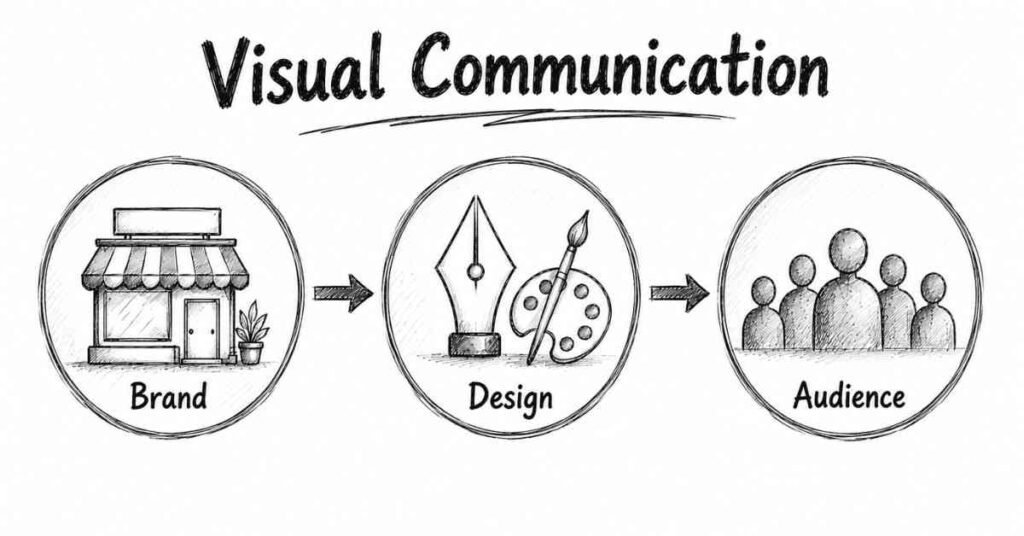
Graphic design is the art and practice of visual communication. It’s about solving problems through imagery, typography, color, and layout. When a graphic designer creates a poster for a movie, designs a logo for a startup, or builds the interface for a mobile app, they’re essentially communicating messages visually that words alone cannot convey.
Think about the last time you ordered food from Zomato or Swiggy. The app’s colors, button placements, menu designs, and even the fonts used—all of these were carefully crafted by graphic designers and UX/UI specialists. Their work ensures you can navigate the app easily, find what you’re looking for, and complete your order without confusion
The Evolution of Graphic Design in India
India’s graphic design industry has undergone massive transformation over the past decade. What started with print media newspapers, magazines, and billboards has now expanded into digital spaces, social media, mobile applications, and interactive experiences.
The rise of Indian startups, the growth of digital marketing, and the expansion of e-commerce platforms have created unprecedented demand for skilled graphic designers. Companies like Flipkart, BYJU’S, Paytm, and thousands of other businesses need designers who understand Indian audiences while maintaining global design standards.
Why Choose Graphic Design as a Career?
Creative Freedom: Unlike many traditional careers, graphic design allows you to express your creativity daily. You’re constantly working on new projects, experimenting with different styles, and bringing fresh ideas to life.
Diverse Opportunities: From working in corporate offices to freelancing from your home in Tier 2 cities, graphic design offers flexibility. You can work as an in-house designer for a company, join a creative agency, or build your own freelance business serving clients across India and internationally.
Strong Earning Potential: With the right skills and experience, graphic designers can earn competitive salaries. Senior designers and creative directors in metropolitan cities can earn upwards of ₹15-25 lakhs per annum. Freelancers with strong portfolios often charge between ₹1,500 to ₹3,000 per hour for specialized work.
Continuous Learning: The design field constantly evolves with new tools, techniques, and trends. If you enjoy learning and staying updated with the latest technologies, you’ll never find this career boring.
Global Opportunities: Indian graphic designers are increasingly working with international clients who value quality design at competitive rates. This opens doors to global projects while working from India.
Core Skills Every Graphic Designer Must Master
Success in graphic design requires a combination of technical proficiency, creative thinking, and soft skills. Let’s break down what you need to learn.
Technical Skills
1.Adobe Creative Suite Mastery
Adobe Creative Cloud remains the industry standard for graphic designers worldwide, and India is no exception. You must become proficient in:
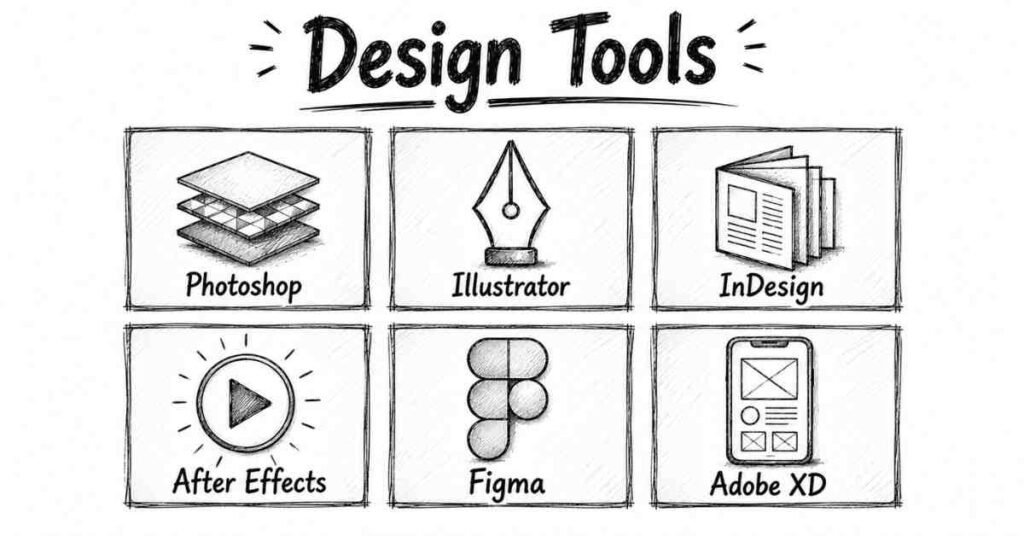
Adobe Photoshop: This is your go-to tool for photo editing, digital painting, and creating raster-based graphics. You’ll use Photoshop for everything from retouching product photos for e-commerce websites to creating social media graphics and manipulating images for advertising campaigns.
Adobe Illustrator: This vector graphics editor is essential for creating logos, icons, typography, and illustrations that need to scale to any size without losing quality. When a designer creates a logo for a brand, they use Illustrator because the logo needs to look crisp whether it’s printed on a business card or displayed on a massive billboard.
Adobe InDesign: This application specializes in layout design for multi-page documents like magazines, brochures, reports, and eBooks. If you’re interested in publication design or working with content-heavy projects, InDesign proficiency is crucial.
Adobe After Effects: For motion graphics and animation, After Effects is the industry leader. As video content dominates social media and marketing, designers who can create animated graphics, explainer videos, and motion graphics have a competitive advantage.
Adobe XD or Figma: These are essential tools for UX/UI designers working on digital products. They allow you to create wireframes, interactive prototypes, and design systems for websites and mobile applications.
2.Typography and Font Management
Typography is the backbone of good design. Understanding how to choose appropriate fonts, create hierarchy, manage spacing (kerning, tracking, leading), and combine typefaces effectively separates amateur designers from professionals.
In India, where designs often need to work in multiple languages Hindi, Tamil, Telugu, Bengali, and others understanding multilingual typography becomes even more important.
3.Color Theory and Application
Colors evoke emotions and carry cultural meanings. A graphic designer must understand color psychology, how to create harmonious color palettes, and how colors behave in different contexts (print vs. digital, different lighting conditions, accessibility considerations).
For Indian designers, understanding color preferences and cultural associations in the Indian market while maintaining international design standards is crucial.
4.Layout and Composition Principles
This includes understanding grid systems, visual hierarchy, balance, white space, alignment, and how the human eye moves across a design. These fundamental principles apply whether you’re designing a wedding invitation or a website homepage.
5.Digital Tools Beyond Adobe
While Adobe dominates, familiarity with alternative tools expands your opportunities:
- Canva: Popular for quick social media graphics and templates
- Figma: Increasingly preferred for collaborative UI/UX design work
- Sketch: Common in Mac-based design environments
CorelDRAW: Still used in many Indian print shops and signage businesses
Creative and Conceptual Skills
1.Visual Problem-Solving
Graphic design isn’t just about making things look beautiful it’s about solving communication problems visually. When a client approaches you with a challenge (e.g., “Our app’s signup process confuses users”), you need to analyze the problem, explore multiple solutions, and present designs that actually solve the issue.
2.Creativity and Originality
While inspiration is important, copying designs directly is both unethical and legally problematic. Developing your unique creative voice while understanding design trends helps you stand out.
3.Research and Trend Awareness
Successful designers stay updated on design trends, understand their target audiences, and research thoroughly before starting any project. This means following design blogs, studying competitor designs, understanding user behavior, and continuously learning.
Soft Skills That Set You Apart
1.Communication Skills
You’ll need to explain your design decisions to clients, collaborate with developers and marketers, and present your ideas convincingly. In India, where you might work with diverse teams across different regions, clear communication becomes even more critical.
2.Time Management and Meeting Deadlines
Design projects come with tight deadlines. Managing multiple projects simultaneously while maintaining quality requires excellent organizational skills.
3.Receiving and Implementing Feedback
Not every design you create will be loved immediately. Learning to accept constructive criticism, iterate on your designs based on feedback, and separate your ego from your work is essential for growth.
4.Business and Client Management (for freelancers)
If you plan to freelance, you’ll need to understand pricing, contracts, invoicing, client communication, and project management. These business skills are often overlooked in design education but are crucial for sustainable freelance careers.
Graphic Design Career Paths in India
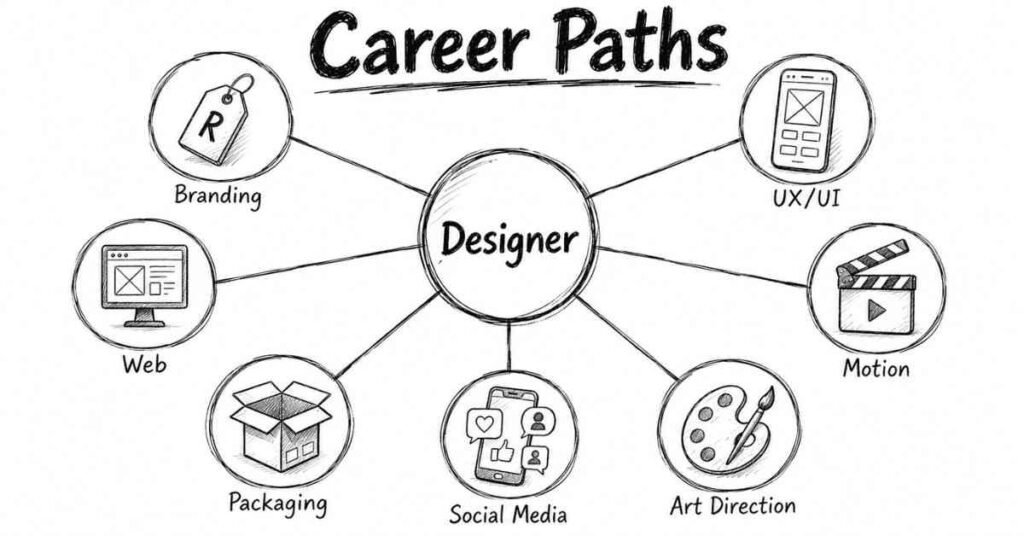
The graphic design field offers diverse specializations. Let’s explore the major career paths available.
1. Brand Identity and Logo Design
What You’ll Do: Create visual identities for businesses including logos, color palettes, typography systems, and brand guidelines. You’ll help companies establish their visual presence and ensure consistency across all touchpoints.
Skills Needed: Strong conceptual thinking, vector illustration (Illustrator), understanding of branding principles, ability to create versatile designs that work across media.
Career Outlook in India: Every new startup, every rebranding initiative, and every business expansion requires brand design work. This specialization offers steady demand and opportunities to work with diverse industries.
Salary Range: Entry-level brand designers earn ₹3-5 lakhs annually, while experienced brand strategists and creative directors can earn ₹10-20 lakhs or more.
2. UX/UI Design (User Experience and User Interface Design)
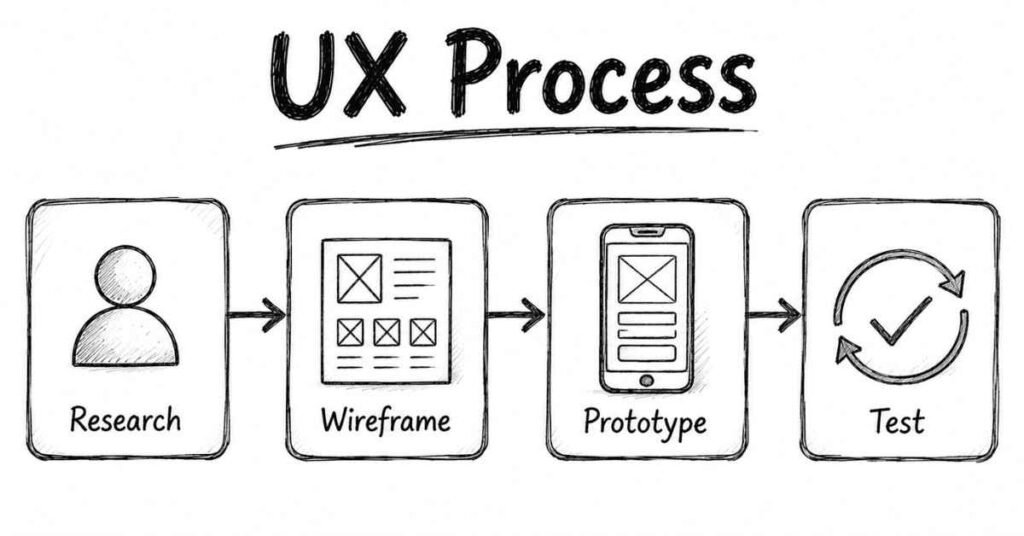
What You’ll Do: Design digital interfaces for websites, mobile apps, and software that are both visually appealing and user-friendly. You’ll conduct user research, create wireframes, design interfaces, build prototypes, and test usability.
Skills Needed: Wireframing, prototyping, user research, interaction design, knowledge of Figma/Adobe XD, understanding of front-end development basics (HTML/CSS helps), accessibility standards.
Career Outlook in India: This is one of the fastest-growing design specializations. Every company building digital products—from fintech apps to ed-tech platforms—needs UX/UI designers. The demand far exceeds the supply of skilled professionals.
Salary Range: UI designers earn between ₹2-13.6 lakhs per annum depending on experience. Senior UX designers and UX leads in tech companies can earn ₹15-25 lakhs annually.
3. Motion Graphics and Animation Design
What You’ll Do: Create animated graphics, video titles, explainer videos, animated logos, and visual effects for various media. This could range from social media videos to television commercials to YouTube content.
Skills Needed: After Effects proficiency, animation principles, storyboarding, video editing, sound design basics, understanding of cinematic storytelling.
Career Outlook in India: With the explosion of video content on social media, OTT platforms, and digital marketing, motion designers are in high demand. YouTube creators, marketing agencies, and production houses constantly need animation work.
Salary Range: Motion graphics designers earn ₹4-8 lakhs annually at mid-level, with senior positions and specialized roles commanding ₹10-15 lakhs or more.
4. Web Design
What You’ll Do: Design website layouts, landing pages, and web-based applications focusing on aesthetics, usability, and responsive design.
Skills Needed: UI design principles, responsive design understanding, basic HTML/CSS knowledge, CMS platforms (WordPress, Webflow), SEO-friendly design practices.
Career Outlook in India: Every business needs a web presence, making this a consistently in-demand specialization. The shift to mobile-first design has created additional opportunities for designers who understand responsive principles.
Salary Range: Web designers earn ₹3-8 lakhs annually, with senior roles and full-stack designers earning significantly more.
5. Publication and Editorial Design
What You’ll Do: Design magazines, newspapers, books, annual reports, catalogs, and other multi-page printed materials.
Skills Needed: InDesign mastery, typography expertise, grid systems, understanding print production, attention to detail.
Career Outlook in India: While print media has declined, premium publications, corporate reports, coffee table books, and specialized magazines still require skilled publication designers.
Salary Range: Publication designers earn ₹1.1-7 lakhs per annum, with experienced designers working for major publishing houses or running their own design studios earning more.
6. Packaging Design
What You’ll Do: Design product packaging for food items, cosmetics, electronics, and consumer goods. You’ll consider both aesthetics and practical factors like materials, manufacturing constraints, and shelf appeal.
Skills Needed: 3D visualization, understanding of packaging materials and printing processes, structural design, branding knowledge.
Career Outlook in India: India’s growing consumer goods market and emphasis on premium packaging create consistent demand for packaging designers.
Salary Range: Packaging designers earn ₹1.2-9.7 lakhs annually, with experienced designers working with major FMCG brands earning at the higher end.
7. Social Media and Digital Marketing Design
What You’ll Do: Create graphics for social media platforms, email marketing campaigns, digital advertisements, and online promotional materials.
Skills Needed: Quick turnaround ability, understanding of platform specifications, trends awareness, basic copywriting, sometimes basic video editing.
Career Outlook in India: Extremely high demand as every business now requires social media presence. This is an excellent entry point for beginners as many small businesses and startups need affordable social media designers.
Salary Range: Digital marketing designers earn ₹3-7 lakhs annually, with experienced designers managing entire campaigns earning ₹8-12 lakhs.
8. Art Direction and Creative Direction
What You’ll Do: Lead creative teams, conceptualize campaigns, maintain brand vision across projects, and guide other designers.
Skills Needed: Senior-level design expertise, leadership, strategic thinking, client presentation skills, project management.
Career Outlook in India: This is typically a senior role that designers grow into after 5-10 years of experience. Creative directors are needed in advertising agencies, design studios, and large corporations.
Salary Range: Art directors earn ₹6-12 lakhs, while creative directors and design managers earn ₹15-25 lakhs or more annually.
Education and Learning Paths
Unlike some professions, graphic design offers multiple pathways to enter the field. You don’t necessarily need a formal degree, though it can be helpful.
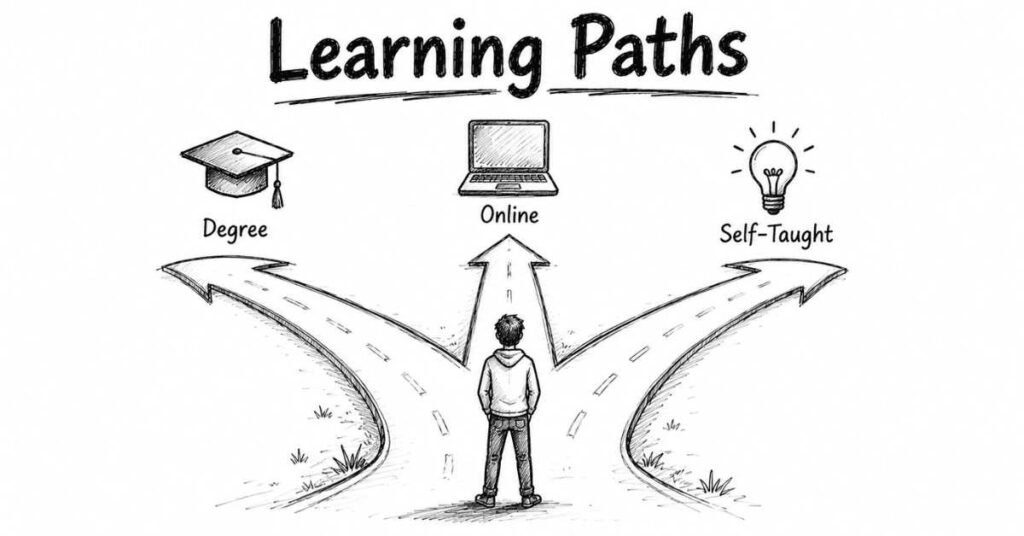
Formal Education Options in India
1.Bachelor’s Degrees (B.Des, BFA, BA in Design)
Top institutions offering graphic design programs include
- National Institute of Design (NID): Offers B.Des and M.Des in Graphic Design, considered among the best in India
- Industrial Design Centre (IIT Bombay): B.Des and M.Des in Communication Design
- Srishti Institute of Art, Design and Technology: BA in Creative and Applied Computation, MA in Graphic Arts
- Pearl Academy: BA and MA in Communication Design
- World University of Design (WUD): BDes in Visual Communication Design
- SRM Institute of Science and Technology: BSc in Visual Communication
These programs typically run 3-4 years and provide comprehensive design education covering theory, history, technical skills, and practical projects.
Annual Fees: Range from approximately ₹3 lakhs to ₹17 lakhs depending on the institution.
2.Diploma and Certificate Courses
Shorter diploma programs (6 months to 2 years) are offered by numerous institutes across India. These are suitable for those who want focused training without committing to a full degree program.
3.Online Courses and Certifications
Platforms offering quality graphic design education include:
- Coursera (Google UX Design Certificate, CalArts Graphic Design Specialization)
- Udemy (Various Adobe-specific courses)
- Skillshare (Project-based design classes)
- LinkedIn Learning (Professional design courses)
Adobe’s own tutorials and certification programs
Self-Taught Path
Many successful graphic designers in India are self-taught. This path requires:
- Disciplined self-study using online resources
- Building a strong portfolio through personal projects
- Active participation in design communities
- Consistent practice and skill development
- Learning from critiques and feedback
The advantage is flexibility and lower cost. The challenge is lack of structured guidance and networking opportunities that formal education provides.
Which Path is Right for You?
Choose formal education if:
- You want comprehensive design education covering theory and practice
- You value networking with peers and industry professionals
- You need structured learning and mentorship
- You’re interested in specialized design research
Choose self-learning if:
- You have budget constraints
- You prefer flexible learning schedules
- You’re already working and want to transition careers
- You’re highly self-motivated and disciplined
Choose hybrid approach:
Many designers combine formal education with online courses and self-study to fill specific skill gaps. This is often the most practical approach.
Building Your Portfolio: Your Most Important Asset
Your portfolio is your ticket to landing design jobs and clients. In India’s competitive design market, a strong portfolio matters more than your degree or certifications. Let me walk you through creating a portfolio that gets you noticed.
Why Your Portfolio Matters More Than Your Resume
When hiring managers or clients review designers, they spend about 30 seconds scanning your portfolio before deciding whether to continue. They want to see what you can actually create, not just read about your skills. A well-crafted portfolio demonstrates your abilities, creative thinking, and professional approach in ways that a resume simply cannot.
Think of your portfolio as your visual resume it tells your story through the work you’ve done.
What to Include in Your Portfolio
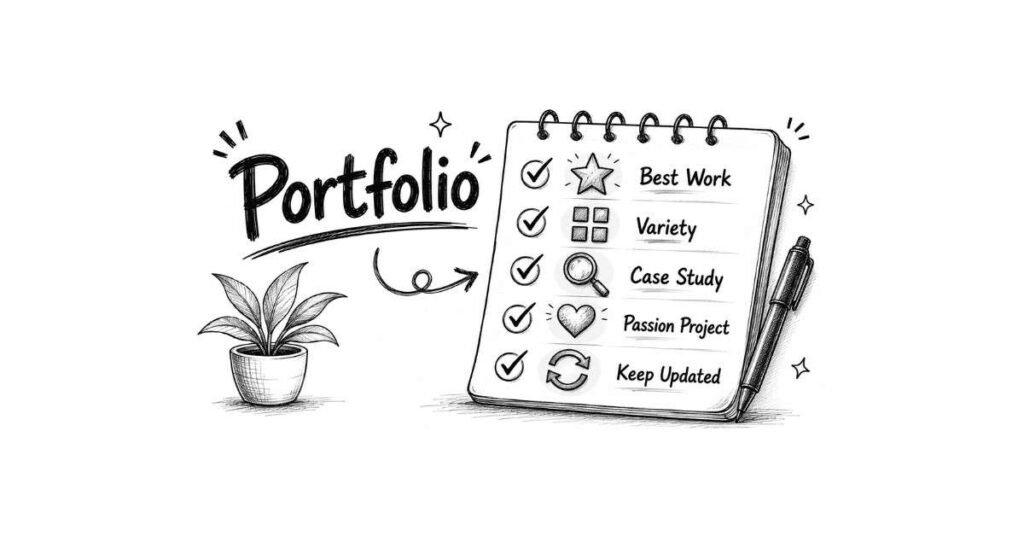
1.Quality Over Quantity
Many beginners make the mistake of stuffing their portfolio with every project they’ve ever touched. Instead, showcase 8-15 of your absolute best pieces. Each project should demonstrate different skills and solve different problems.
If you’re just starting and don’t have client work yet, that’s completely fine. Create mock projects for fictional brands, redesign existing products you think could be better, or volunteer your design services to local NGOs or small businesses in your area.
2.Diverse Project Types
Include variety to show your range:
- Brand identity projects: Logo designs, business cards, brand guidelines
- Digital design: Website mockups, app interfaces, social media campaigns
- Print design: Brochures, posters, packaging (if relevant to your goals)
- Illustration or motion graphics: If these are your strengths
For Indian designers, including projects that show cultural understanding designing for Indian festivals, regional brands, or local businesses can demonstrate valuable market knowledge.
- Case Studies, Not Just Pretty Pictures
Don’t just show the final design. For your best 3-5 projects, create detailed case studies that explain:
- The problem: What challenge was the client or project trying to solve?
- Your process: How did you approach the problem? What research did you conduct?
- Design exploration: Show your initial sketches, mood boards, or different concepts you explored
- The solution: Present your final design with explanations
- Results: If possible, share metrics (increased engagement, sales boost, user feedback)
This storytelling approach shows potential employers or clients that you don’t just make things look good you think strategically and solve problems.
- Personal Projects That Show Passion
Include 1-2 passion projects that showcase what genuinely excites you. Maybe you created a poster series about climate change, designed a mobile app concept for Indian railway passengers, or illustrated characters from regional folklore. These projects show personality and genuine creative drive beyond commercial work.
Portfolio Presentation Platforms
Behance (by Adobe)
The most popular platform for showcasing design work globally. It’s free, integrates with Adobe Creative Cloud, and has a strong design community. Many Indian recruiters browse Behance when looking for talent.
Pros: Professional presentation, strong SEO for your name, community feedback, free to use.
Cons: Your work sits among millions of other designers, so standing out requires exceptional work.
Dribbble
Popular for UI/UX designers, illustrators, and icon designers. Dribbble focuses on individual design “shots” rather than full case studies.
Pros: Great for showcasing specific design elements, strong community of quality designers.
Cons: Requires invitation to post work (though you can apply), better suited for certain specializations.
Personal Website
Building your own portfolio website gives you complete control over presentation and branding. You can use platforms like:
- WordPress + Elementor: Flexible, customizable, good for designers who want control (and you already use Elementor Pro in your work!)
- Webflow: Popular among web designers, allows custom animations without coding
- Wix or Squarespace: Easy to set up, good templates, but less customization
- Cargo or Format: Specifically designed for creative portfolios
Pros: Complete creative control, professional custom domain (yourname.com), showcases your web design skills.
Cons: Requires maintenance, costs for hosting/domain, takes time to build properly.
Best Approach: Create a personal website as your main portfolio, then maintain Behance and LinkedIn profiles that link back to your site. This gives you both the professional presence of a custom site and the discoverability of established platforms.
Portfolio Tips for Indian Designers
Address Local + Global Appeal: Include projects that work in the Indian market (understanding local preferences, multilingual designs) while maintaining international design standards. This positions you to work with both Indian companies and international clients.
Show Process Documentation: Many Indian design jobs value designers who can document and explain their thinking. Including process slides, research findings, and iteration examples demonstrates this capability.
Mobile-First Designs: Given India’s mobile-first internet usage, showcase responsive designs and mobile app projects prominently.
Update Regularly: Your portfolio should grow with you. Add new projects every few months and remove older, weaker work. An outdated portfolio signals you’re not actively working or improving.
Getting Your First Graphic Design Job in India
Landing that first design job can feel daunting, but with the right approach, you’ll find opportunities even as a beginner.
Entry-Level Opportunities
1.Internships
Many design studios, advertising agencies, and companies offer internships for 3-6 months. While some internships are unpaid or offer stipends (₹5,000-15,000 per month), they provide invaluable real-world experience, portfolio pieces, and professional connections.
Look for internships at:
- Advertising agencies (Ogilvy, Dentsu, McCann, local agencies)
- Design studios
- Startups (check AngelList, LinkedIn)
- In-house design teams at corporation
2.Junior Designer Positions
Entry-level roles typically require 0-2 years of experience and pay ₹3-5 lakhs annually in metro cities. These positions often involve:
- Creating social media graphics
- Assisting senior designers on larger projects
- Producing marketing materials
- Learning company brand guidelines and processes
3.Freelance Projects
Platforms where Indian designers find work:
- Fiverr: Good for beginners to build portfolio and reviews
- Upwork: More professional projects, higher rates possible
- Freelancer.com: Mix of small and large projects
- 99designs: Specifically for design work through contests
- Local Facebook groups and WhatsApp communities: Many Indian small businesses hire designers through local networks
Starting rates for freelance work in India range from ₹500-2,000 per project for simple social media graphics, to ₹5,000-25,000 for logo designs, depending on your experience and client budgets.
Where to Find Job Opportunities
Online Job Portals:
- Naukri.com (largest job portal in India)
- LinkedIn Jobs (strong for design roles)
- Indeed India
- Internshala (specifically for internships)
- AngelList (for startup jobs)
Design-Specific Platforms:
- Coroflot
- Behance job listings
- AIGA Design Jobs
Networking:
- Attend design meetups in your city (check Meetup.com)
- Join design communities on Slack, Discord, or Facebook
- Connect with design professionals on LinkedIn
- Participate in design conferences or workshops
Direct Applications:
Create a list of agencies and companies you admire, then check their careers pages regularly. Sometimes the best opportunities aren’t posted on job portals.
Crafting Your Application
Resume Essentials:
- Keep it to 1-2 pages maximum
- List your design skills prominently (Adobe Suite proficiency levels, specialized tools)
- Include links to your portfolio, Behance, and LinkedIn
- Mention relevant education and certifications
- Quantify achievements when possible (“Created 150+ social media graphics resulting in 40% engagement increase”)
Cover Letter Tips:
Many designers skip thoughtful cover letters, so a well-written one helps you stand out:
- Research the company and reference specific work they’ve done
- Explain why you’re interested in this particular role
- Mention 1-2 relevant portfolio pieces that align with their needs
- Keep it concise (3-4 short paragraphs)
- Show personality while remaining professional
Interview Preparation:
Design interviews often include:
- Portfolio presentation: Be ready to walk through 4-5 projects explaining your process
- Design test: Some companies assign a small design project to complete
- Cultural fit discussion: They want to know if you’ll work well with their team
- Software skills assessment: You might be asked to demonstrate tool proficiency
Practice explaining your design decisions clearly. Avoid just saying “I thought it looked good” explain the reasoning behind color choices, typography decisions, and layout approaches.
Graphic Designer Career as a Freelancer
Freelancing offers flexibility and the potential for higher earnings, but it comes with challenges that employed designers don’t face.
Advantages of Freelancing
Flexibility: Work from anywhere—whether you’re in Mumbai or a small town in Uttarakhand. Set your own schedule and choose projects that interest you.
Earning Potential: Established freelancers often earn more than salaried designers because they’re not capped by company pay scales. You can take on multiple clients and scale your income.
Diverse Experience: Working with various clients across industries builds broader skills faster than specializing in one company.
Location Independence: Freelancing breaks geographical barriers. You can serve clients across India and internationally without relocating to expensive metro cities.
Challenges of Freelancing
Inconsistent Income: Some months you’ll have plenty of work; others might be slow. Financial planning becomes crucial
Self-Discipline Required: No manager is tracking your work. You must motivate yourself, meet deadlines, and manage your time effectively.
Client Management: You’ll handle everything—finding clients, negotiating rates, managing revisions, chasing payments
No Employee Benefits: You won’t get paid leave, health insurance, or provident fund contributions that salaried employees receive.
Freelance Pricing in India
Hourly Rates:
- Beginner designers: ₹500-1,000 per hour
- Intermediate designers (2-5 years): ₹1,000-2,000 per hour
- Experienced designers (5+ years): ₹2,000-4,000 per hour
- Specialists/experts: ₹4,000+ per hour
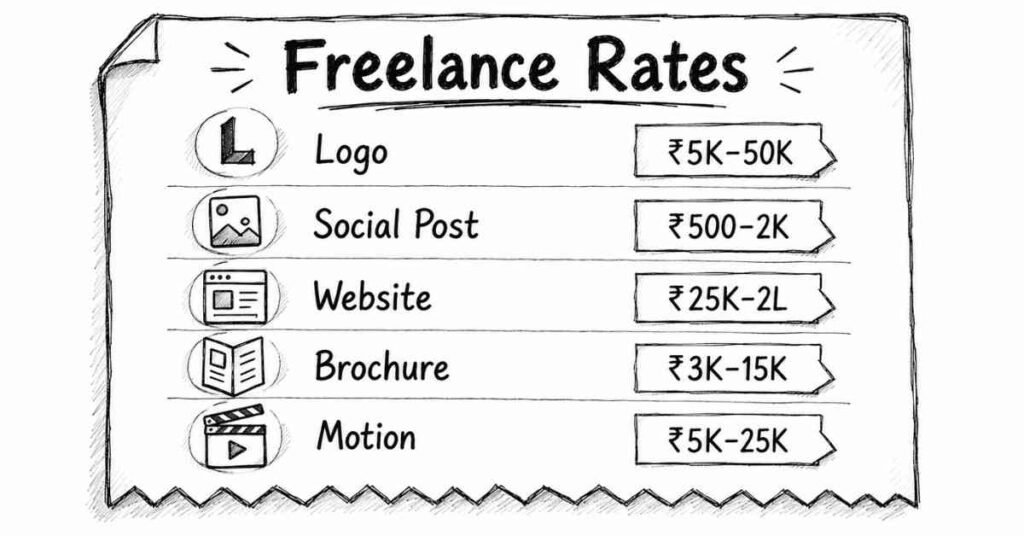
Project-Based Rates (Common Indian Market Rates):
- Logo design: ₹5,000-50,000 depending on complexity and brand size
- Social media graphics (single post): ₹500-2,000
- Website design: ₹25,000-2,00,000+ depending on pages and complexity
- Brochure design: ₹3,000-15,000
- Packaging design: ₹10,000-1,00,000+
- Motion graphics (per minute): ₹5,000-25,000
Factors Affecting Your Rates:
- Your experience level and portfolio quality
- Client’s budget and company size (startups vs. corporations)
- Project complexity and timeline
- Your location (metro vs. smaller cities)
- Specialized skills (3D design, advanced animation command premium rates)
Pricing Strategy: Start with competitive rates to build your portfolio and client reviews, then gradually increase as you gain experience and reputation. Don’t undersell yourself severely just to get work it devalues your skills and the entire industry
Building Your Freelance Business
- Create Systems and Processes:
As someone who creates SOPs and playbooks professionally, you understand this well! Apply that same thinking to your freelance business:
- Client onboarding process
- Design brief template
- Revision policy (e.g., “Two rounds of revisions included”)
- Payment terms (e.g., “50% upfront, 50% on completion”)
- Contract templates
- Finding Your First Clients:
Start close to home:
- Reach out to your network friends, family, former colleagues
- Offer discounted rates to small businesses in your area
- Join local business associations or chambers of commerce
- Leverage social media post your work regularly on Instagram and LinkedIn
- Managing Client Relationships:
Communication is Everything: Respond to messages promptly, set clear expectations, and provide regular updates on project progress.
Contracts Are Non-Negotiable: Always use written agreements outlining deliverables, timelines, payment terms, and revision policies. This protects both you and your client.
Handle Difficult Clients Professionally: You’ll encounter clients who request endless revisions or don’t pay on time. Have policies in place and enforce them respectfully but firmly.
- Time Management:
Track your time using tools like Toggl or Clockify to understand how long different projects actually take. This helps with future pricing and ensures you’re being profitable.
Graphic Design Career Growth Salary Expectations
Understanding realistic salary expectations helps you negotiate effectively and plan your career trajectory.
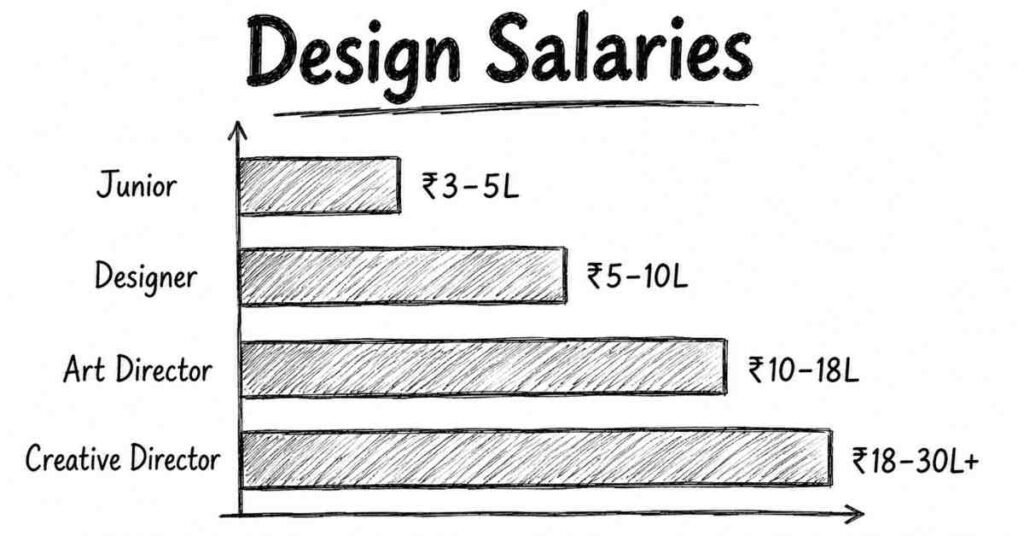
Entry-Level (0-2 Years Experience)
Salary Range: ₹2.5-5 lakhs per annum
Typical Roles:
- Junior Graphic Designer
- Graphic Design Intern
- Social Media Designer
- Design Assistant
What You’ll Do: Execute designs based on senior designer direction, create social media content, assist with larger projects, learn company processes and brand guidelines.
Cities: Salaries vary significantly by location. Metro cities (Bengaluru, Mumbai, Delhi, Hyderabad) offer higher salaries but also have higher living costs. Tier 2 cities offer ₹2-3.5 lakhs for similar roles.
Mid-Level (3-5 Years Experience)
Salary Range: ₹5-10 lakhs per annum
Typical Roles:
- Graphic Designer
- UI/UX Designer
- Motion Graphics Designer
- Brand Designer
What You’ll Do: Work independently on projects, interact with clients, mentor junior designers, contribute to creative strategy.
Skill Development: At this stage, consider specializing in areas like UX/UI design, motion graphics, or brand strategy to command higher salaries.
Senior Level (6-10 Years Experience)
Salary Range: ₹10-18 lakhs per annum
Typical Roles:
- Senior Designer
- Lead Designer
- Art Director
- UX Lead
What You’ll Do: Lead projects from concept to completion, manage small teams, present to clients, develop creative strategies, ensure quality standards.
Responsibilities Expand: You’re now responsible for not just executing designs but shaping overall creative direction and mentoring the next generation of designers.
Expert Level (10+ Years Experience)
Salary Range: ₹18-30+ lakhs per annum
Typical Roles:
- Creative Director
- Design Manager
- Head of Design
- Principal Designer
What You’ll Do: Set overall creative vision for organizations, manage design teams, work with C-level executives, handle major client relationships, oversee multiple simultaneous projects.
Path to Leadership: At this level, you might also transition to starting your own design agency or consultancy.
Factors That Increase Your Earning Potential
- Specialization: Specialists in high-demand areas like UX/UI design, motion graphics, or 3D design earn 30-50% more than generalists.
- Company Type:
- Startups: May offer lower salaries but often include equity/stock options
- Agencies: Competitive salaries, fast-paced environment
- Corporate in-house: Higher salaries, better benefits, more stability
- Freelancing: Highest earning potential but more risk
- Skills That Command Premium:
- Advanced After Effects and Cinema 4D for motion graphics
- Figma/Adobe XD expertise for UX/UI work
- Front-end development skills (HTML/CSS/JavaScript)
- 3D modeling and rendering
- Video editing and production
- Building a Personal Brand: Designers with strong online presence, published articles, or speaking engagements at conferences can charge premium rates due to their reputation.
5. International Clients: Freelancers working with US or European clients can charge international rates (often 3-5x higher than Indian market rates) while living in India
Tools and Resources Every Designer Should Know
Beyond the Adobe Creative Suite, numerous tools can enhance your workflow and capabilities.
Design Tools
Figma: Cloud-based interface design tool that’s become industry standard for UX/UI work. It allows real-time collaboration, which is especially valuable for remote teams.
Canva Pro: While often dismissed by professional designers, Canva’s template system is useful for quick social media content and client presentations.
Procreate: iPad app for digital illustration that’s become extremely popular among illustrators and concept artists.
Affinity Designer/Photo: More affordable alternatives to Adobe Illustrator and Photoshop with one-time purchase pricing.
Productivity and Organization
Notion or Trello: Project management tools to organize your design projects, client communications, and task lists.
Dropbox or Google Drive: Cloud storage for design files, client assets, and project backups.
Toggl: Time tracking for freelancers to understand project profitability.
Inspiration and Learning
Behance and Dribbble: Browse work by top designers worldwide for inspiration.
Pinterest: Create mood boards and collect visual inspiration organized by project.
Awwwards: Showcases award-winning web design for inspiration on digital projects.
Design Blogs and Channels:
- Smashing Magazine
- Creative Bloq
- Design Week India
- AIGA Eye on Design
- YouTube channels: The Futur, Skillthrive, Flux, Will Paterson
Indian Design Communities
Online Communities:
- Designboat (India-focused design job board and community)
- Kyoorius (creative community and awards platform)
- India Design Forum on Facebook
- UX India community
- Local city-specific design groups on Meetup
Networking Events:
- Kyoorius Designyatra (annual design conference)
- AIGA India events
- Adobe Creative Meetups in various cities
- Local design workshops and talks
Future Trends in Indian Graphic Design Industry
Understanding where the industry is heading helps you prepare for future opportunities.
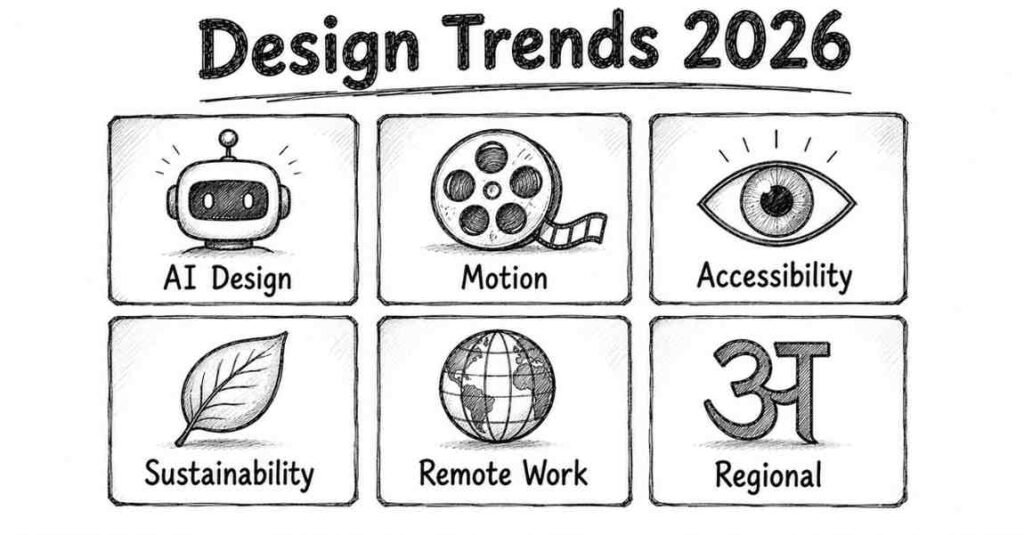
1. AI and Design Automation
Tools like Adobe Firefly, Midjourney, and DALL-E are transforming how designers work. Rather than replacing designers, AI is becoming a tool that enhances productivity generating initial concepts, creating variations quickly, or handling repetitive tasks.
What This Means for You: Learn to use AI tools as assistants while focusing on the strategic and conceptual thinking that AI can’t replicate. Designers who combine AI capabilities with human creativity will have a significant advantage.
2. Motion and Interactive Design Demand
Static designs are giving way to animated and interactive experiences. Social media platforms favor video content, websites use micro-animations for better UX, and brands want animated logos and motion identities.
What This Means for You: Adding After Effects and animation skills to your toolkit increases your value significantly.
3. Increased Focus on Accessibility
Designing for users with disabilities color contrast for visually impaired users, screen reader compatibility, inclusive design practices is becoming mandatory rather than optional.
What This Means for You: Learn accessibility standards (WCAG guidelines) and inclusive design principles. This knowledge positions you as a more thoughtful, professional designer.
4. Regional Language Design
As internet penetration increases in Tier 2 and Tier 3 Indian cities, demand for designs in Hindi, Telugu, Tamil, Bengali, and other regional languages is growing.
What This Means for You: Understanding multilingual typography and design for diverse Indian audiences creates niche opportunities that many designers overlo
5. Sustainability in Design
Brands increasingly want to communicate environmental responsibility. This includes minimalist design approaches, eco-friendly packaging, and sustainable print practices.
What This Means for You: Understanding sustainable design principles and materials adds value to your consulting.
6. Freelance and Remote Work Normalization
The pandemic permanently shifted attitudes toward remote work. Companies now hire designers from anywhere in India rather than requiring relocation.
What This Means for You: Geographic limitations matter less. You can access opportunities across India and internationally while living wherever you choose.
Final Thoughts: Your Graphic Design Journey Starts Now
Graphic design offers one of the most creatively fulfilling and financially viable career paths available in India today. Whether you’re a student deciding your career direction, a professional looking to switch fields, or someone who’s always loved visual creativity, graphic design welcomes diverse backgrounds and learning paths.
Key Takeaways
Start Learning Today: Don’t wait for the “perfect” course or the “right” time. Begin with free YouTube tutorials, practice daily, and build projects that interest you.
Portfolio Over Everything: Your work speaks louder than your resume. Focus on creating a diverse, high-quality portfolio that demonstrates problem-solving, not just aesthetics.
Specialize as You Grow: Start as a generalist to explore different areas, then specialize in what excites you most—whether that’s UX/UI, motion graphics, brand identity, or another niche.
Never Stop Learning: Design tools, trends, and best practices evolve constantly. Commit to continuous learning throughout your career.
Build Your Network: Connect with other designers, attend meetups, participate in online communities. Your network often leads to opportunities and collaborations.
Understand the Business Side: Whether employed or freelancing, understanding client needs, project management, and basic business principles makes you more valuable.
Be Patient With Growth: Building a successful design career takes time. Your first jobs might not be glamorous, your early portfolio pieces will improve over time, and salary growth happens gradually. Stay consistent and keep improving.
Your Next Steps
- This Week: Choose one online course or tutorial series and complete the first lesson. Create your first mock project.
- This Month: Complete 3-5 practice projects covering different design types (logo, social media graphics, website mockup). Set up a Behance account and upload your work.
- Within 3 Months: Build a basic portfolio website or comprehensive Behance profile with 8-10 quality projects. Start applying for internships or junior positions.
- Within 6 Months: Land your first paid project or internship. Continue adding to your portfolio and expanding your skills.
The Indian design industry needs talented designers who understand local markets while maintaining global standards. With dedication, continuous learning, and strategic positioning, you can build a thriving career that combines creativity, technology, and business impact.
Your design journey begins with a single project. What will you create today?