
Global Supply Chain Careers : International Logistics Guide
Table of Contents
Introduction: The World is Your Workplace
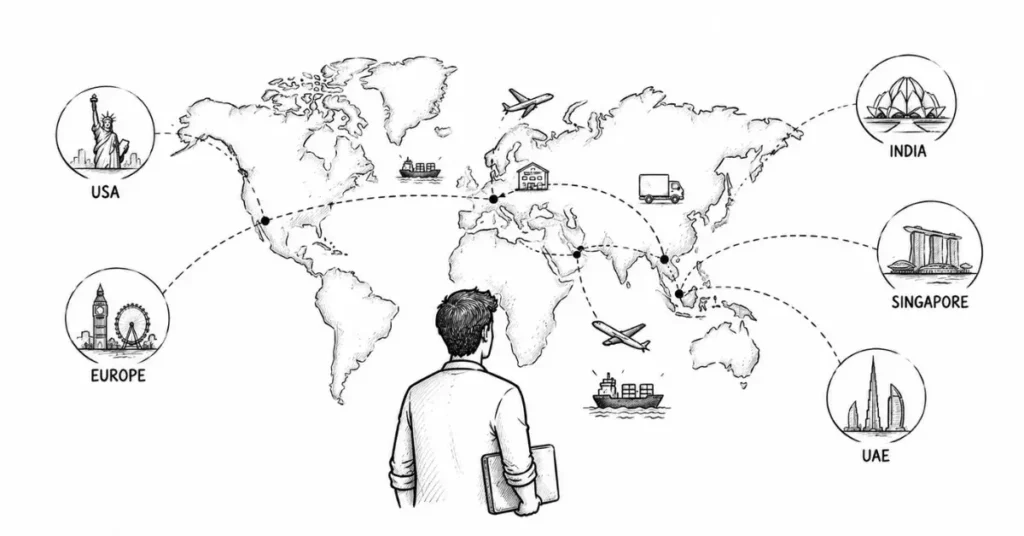
“I want to work abroad.”
This aspiration drives many Indian supply chain professionals—the dream of living in Singapore, working in Germany, managing operations in Dubai, or building a career in the United States. But here’s what most don’t realize: supply chain is one of the few professions where international opportunities are genuinely accessible, often more so than software engineering, finance, or marketing.
Why? Because supply chains are inherently global. A pharmaceutical company in Germany sources APIs from India. An American retailer manages manufacturing across Asia. A Dubai logistics hub connects three continents. These operations require professionals who understand both supply chain complexity AND cross-cultural, cross-border dynamics.
Indian supply chain professionals are particularly valued internationally for several reasons:
- Experience managing complexity (Indian market is among world’s most challenging)
- Cost-consciousness (developed markets appreciate efficiency mindset)
- Adaptability and problem-solving (essential in global roles)
- English proficiency (critical for multinational teams)
- Technical skills (SAP, analytics, process improvement)
- Work ethic and dedication (Indian professionals’ reputation globally)
Companies worldwide actively recruit Indian supply chain talent, offering visa sponsorship, relocation packages, and competitive international compensation. But transitioning to global supply chain careers requires strategic planning—understanding which roles offer international mobility, which qualifications matter, how immigration works, and whether international careers deliver the lifestyle and financial outcomes you imagine.
This guide provides your roadmap: types of global supply chain roles, target geographies, required qualifications, salary comparisons (India vs. abroad), visa pathways, and practical strategies for building an international supply chain career.
PART 1: UNDERSTANDING GLOBAL SUPPLY CHAIN ROLES
What Makes a Role "Global"?
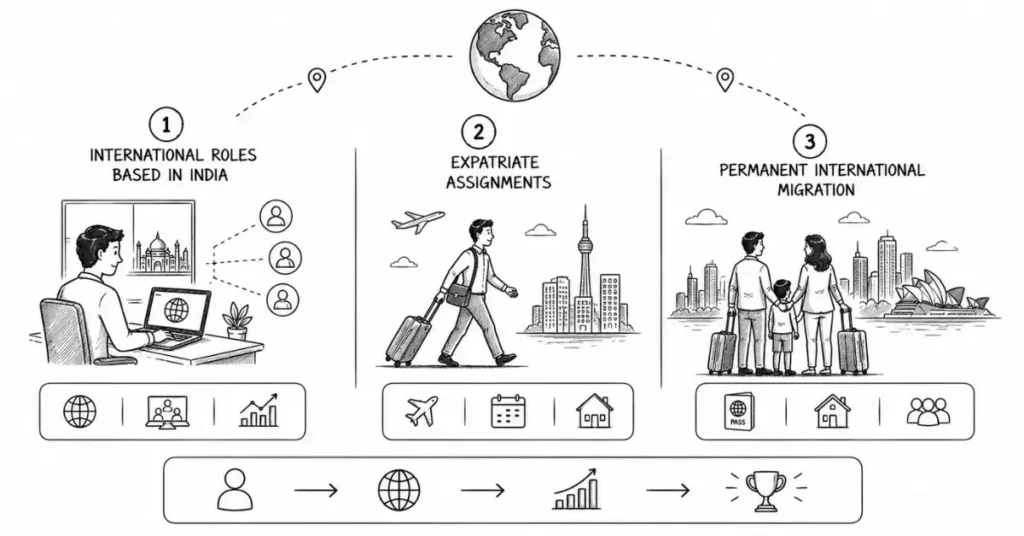
Three Categories:
International Roles Based in India:
- Managing global supply chains from India
- Coordinating with international suppliers/customers
- Working for MNCs with global exposure
- No relocation required
Examples:
- Global procurement manager for European company (based in Bangalore)
- Regional supply chain coordinator for Asia-Pacific (based in Mumbai)
- Vendor management for international suppliers (based in India)
Advantage: International exposure without leaving India
Typical: Common early-career path to build global credentials
Expatriate Assignments:
- Indian nationals working abroad temporarily (2-5 years)
- Company-sponsored relocation and visa
- Eventual return to India expected
- Premium compensation packages
Examples:
- Supply chain manager sent to US facility for 3 years
- Project manager supporting SAP implementation in Singapore
- Operations head opening new distribution center in Middle East
Advantage: International experience, significant financial benefits, return home eventually
Typical: Mid-career (7-15 years experience)
Permanent International Migration:
- Relocating abroad permanently for career
- Company-sponsored or independent immigration
- Building career in target country long-term
- Path to permanent residency/citizenship
Examples:
- Supply chain analyst accepting role at Amazon US with H-1B visa
- Procurement manager moving to Australia on skilled migration visa
- Logistics manager relocating to Germany for MNC role
Advantage: Higher long-term earnings, quality of life (depending on country), global career building
Typical: Varies (can be early career for some countries, mid-career for others)
PART 2: KEY GLOBAL SUPPLY CHAIN ROLES
1. Global Logistics Manager
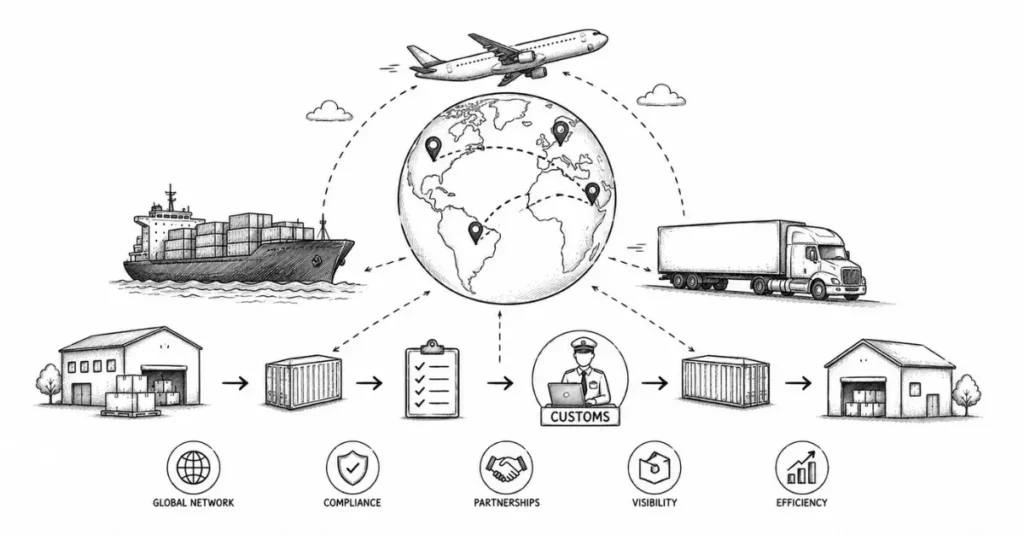
Core Responsibilities:
- Coordinate international shipments across multiple countries
- Manage cross-border transportation (ocean, air, rail)
- Ensure customs compliance and documentation
- Optimize global freight costs and routes
- Coordinate with freight forwarders and 3PLs globally
- Handle import/export regulations
- Manage time-zone challenges and multi-country coordination
Required Skills:
- International logistics and Incoterms (EXW, FOB, CIF, DDP, etc.)
- Customs regulations and trade compliance
- Multi-modal transportation understanding
- Freight management and carrier negotiation
- Cultural awareness and communication across countries
- Trade documentation (bills of lading, customs declarations)
International Opportunities:
✅ Singapore: Asia-Pacific logistics hub
✅ UAE (Dubai): Middle East & Africa gateway
✅ Hong Kong: Asia logistics center
✅ Germany/Netherlands: European logistics hubs
✅ United States: Massive logistics market
Salary Comparison:
- India: ₹10-18 lakhs
- Singapore: SGD 55,000-90,000 (~₹35-58 lakhs)
- UAE: AED 180,000-280,000 (~₹42-65 lakhs)
- USA: USD 70,000-110,000 (~₹58-92 lakhs)
- Germany: EUR 50,000-75,000 (~₹46-69 lakhs)
2. Global Procurement / Sourcing Manager
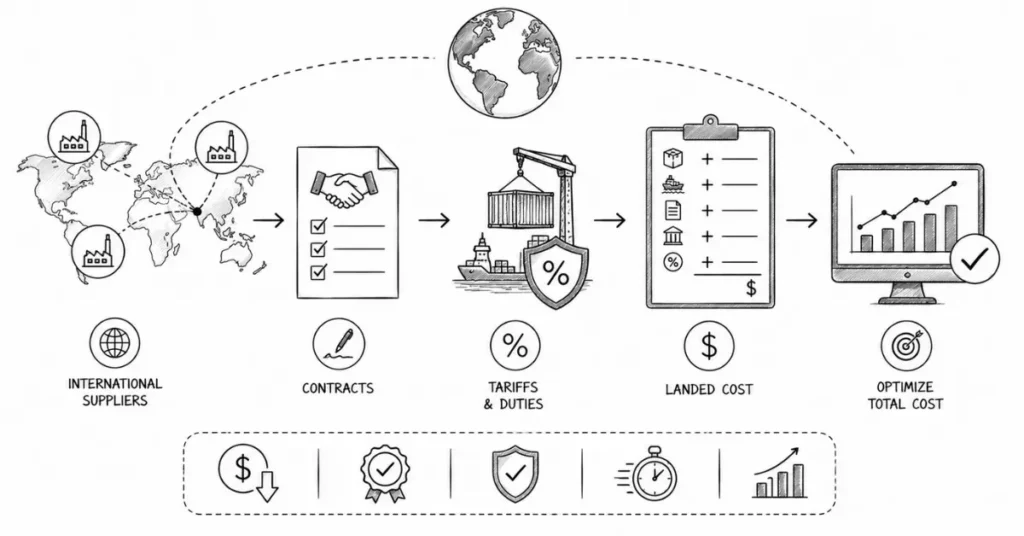
Core Responsibilities:
- Source materials/products from suppliers across multiple countries
- Manage global supplier relationships and contracts
- Conduct international negotiations
- Ensure quality and compliance across geographies
- Optimize total landed cost (considering tariffs, duties, freight)
- Manage supplier audits and development programs
- Navigate trade policies and geopolitical risks
Required Skills:
- Strategic sourcing and category management
- International contract negotiation
- Total cost of ownership analysis
- Supplier quality management
- Trade regulations and tariffs
- Cultural negotiation skills
- Foreign exchange and hedging understanding
International Opportunities:
✅ United States: Largest procurement market
✅ Germany: Manufacturing procurement hub
✅ United Kingdom: Service and manufacturing procurement
✅ Singapore: Asia-Pacific sourcing base
✅ China: Sourcing from world’s factory
Salary Comparison:
- India: ₹12-22 lakhs
- USA: USD 75,000-120,000 (~₹63-100 lakhs)
- Germany: EUR 55,000-85,000 (~₹51-78 lakhs)
- UK: GBP 45,000-70,000 (~₹48-75 lakhs)
- Singapore: SGD 65,000-100,000 (~₹42-65 lakhs)
3. Supply Chain Analyst (Global Operations)
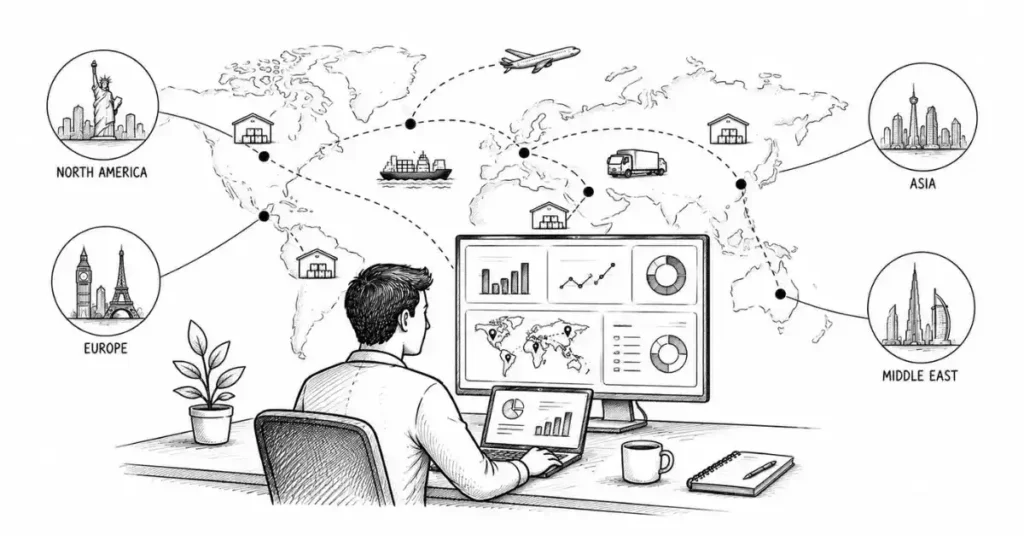
Core Responsibilities:
- Analyze global supply chain performance
- Create reports and dashboards for international teams
- Support global supply planning and forecasting
- Coordinate data across multiple regions/systems
- Identify optimization opportunities across global network
- Work with cross-functional international teams
Required Skills:
- Data analytics (Excel, SQL, Python, Power BI)
- Supply chain KPIs and metrics
- ERP systems (SAP, Oracle)
- Communication across cultures and time zones
- Business intelligence and reporting
International Opportunities:
✅ United States: Highest demand, tech companies especially
✅ Canada: Growing tech and analytics market
✅ Australia: Strong demand for analysts
✅ UK: Financial and retail analytics
✅ Ireland: European headquarters for many US tech companies
Salary Comparison (Entry to Mid-Level):
- India: ₹6-14 lakhs
- USA: USD 60,000-95,000 (~₹50-80 lakhs)
- Canada: CAD 55,000-80,000 (~₹35-54 lakhs)
- Australia: AUD 65,000-95,000 (~₹38-56 lakhs)
- Ireland: EUR 40,000-60,000 (~₹37-55 lakhs)
Visa Advantage: Analyst roles often easier to secure sponsorship (entry-level, tech-focused)
4. Trade Compliance Manager
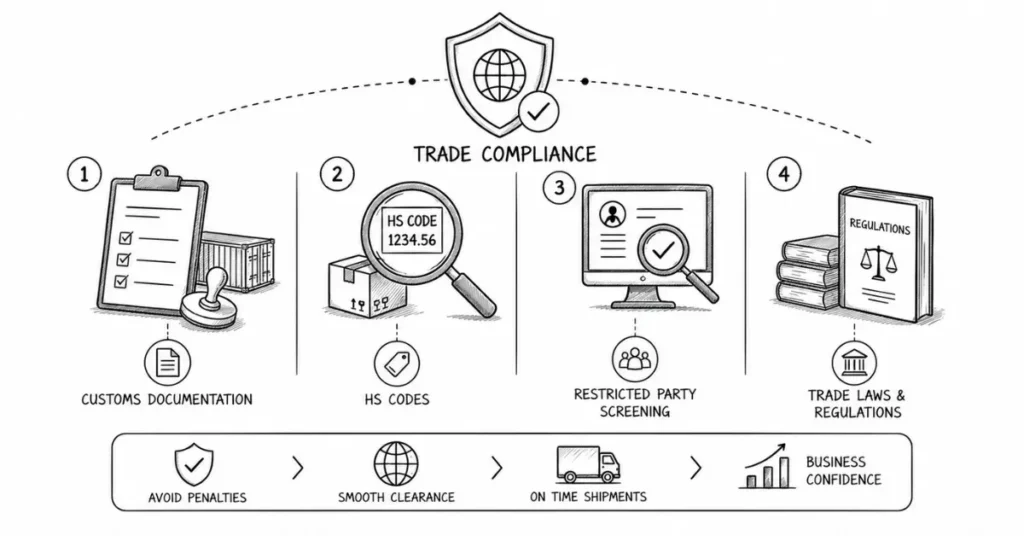
Core Responsibilities:
- Ensure compliance with international trade regulations
- Manage import/export licensing and documentation
- Handle customs audits and government liaisons
- Navigate sanctions, embargoes, and restricted party screening
- Classify products under HS codes
- Manage duty drawback and free trade agreement utilization
- Train organization on trade compliance requirements
Required Skills:
- Deep knowledge of customs regulations (multiple countries)
- Import/export procedures
- Trade agreements (FTAs) and tariff schedules
- Restricted party screening
- Classification and valuation
- Audit management
- Legal/regulatory interpretation
International Opportunities:
✅ USA: Strict compliance requirements, high demand
✅ Germany/EU: Complex EU regulations
✅ Singapore: Regional compliance hub
✅ UAE: Trade hub compliance roles
Salary Comparison:
- India: ₹10-18 lakhs
- USA: USD 70,000-115,000 (~₹58-96 lakhs)
- Germany: EUR 50,000-80,000 (~₹46-74 lakhs)
- Singapore: SGD 60,000-95,000 (~₹39-62 lakhs)
Specialization Premium: Trade compliance is niche expertise commanding premium compensation globally.
5. Regional Supply Chain Manager (Asia-Pacific / Middle East / Europe)
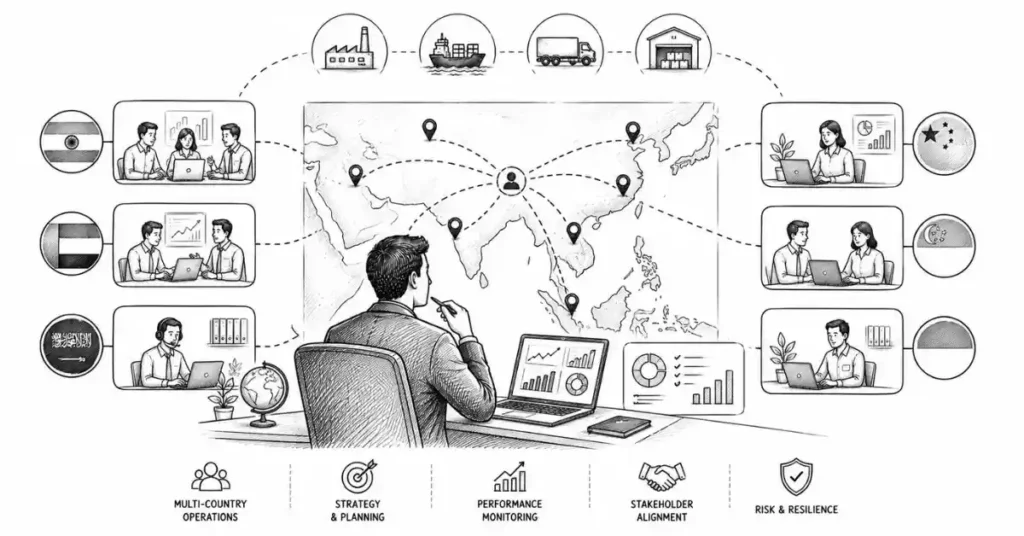
Core Responsibilities:
- Manage supply chain operations across multiple countries in region
- Coordinate regional distribution and logistics networks
- Standardize processes across countries
- Lead regional teams (often 20-100+ people)
- Optimize regional inventory and service levels
- Report to global/corporate headquarters
- Navigate cultural and regulatory differences
Required Skills:
- Supply chain leadership and strategy
- Multi-country operations management
- Cross-cultural team leadership
- Regional market understanding
- Change management across diverse teams
- Executive communication
International Opportunities:
✅ Singapore: Asia-Pacific regional headquarters
✅ UAE: Middle East & Africa regional hubs
✅ Hong Kong: China and Asia gateway
✅ Netherlands/Switzerland: European regional hubs
Salary Comparison (Senior Level):
- India: ₹20-35 lakhs
- Singapore: SGD 100,000-160,000 (~₹65-105 lakhs)
- UAE: AED 250,000-400,000 (~₹58-93 lakhs)
- Netherlands: EUR 80,000-120,000 (~₹74-110 lakhs
Career Stage: Typically 10-18 years experience required
6. Global Supply Chain Consultant
Core Responsibilities:
- Advise clients on global supply chain strategy
- Design international distribution networks
- Lead supply chain transformation projects across countries
- Conduct global benchmarking studies
- Implement best practices from global experience
- Travel extensively (40-60% of time)
Required Skills:
- Strategic thinking and problem-solving
- Project management
- Global supply chain best practices
- Change management
- Executive communication and presentations
- Analytical and modeling skills
International Opportunities:
✅ Major consulting firms: McKinsey, BCG, Bain, Deloitte, EY, PwC
✅ Boutique supply chain firms: Kearney, Oliver Wyman, specialized consultancies
✅ Based anywhere: Consultants travel globally regardless of home base
Salary Comparison:
- India (Consulting): ₹15-30 lakhs
- USA: USD 90,000-150,000 (~₹75-125 lakhs)
- UK: GBP 60,000-95,000 (~₹64-102 lakhs)
- Singapore: SGD 80,000-130,000 (~₹52-85 lakhs)
Travel Reality: Exciting initially but can be exhausting (living in hotels, away from family)
PART 3: TARGET GEOGRAPHIES FOR INDIAN PROFESSIONALS
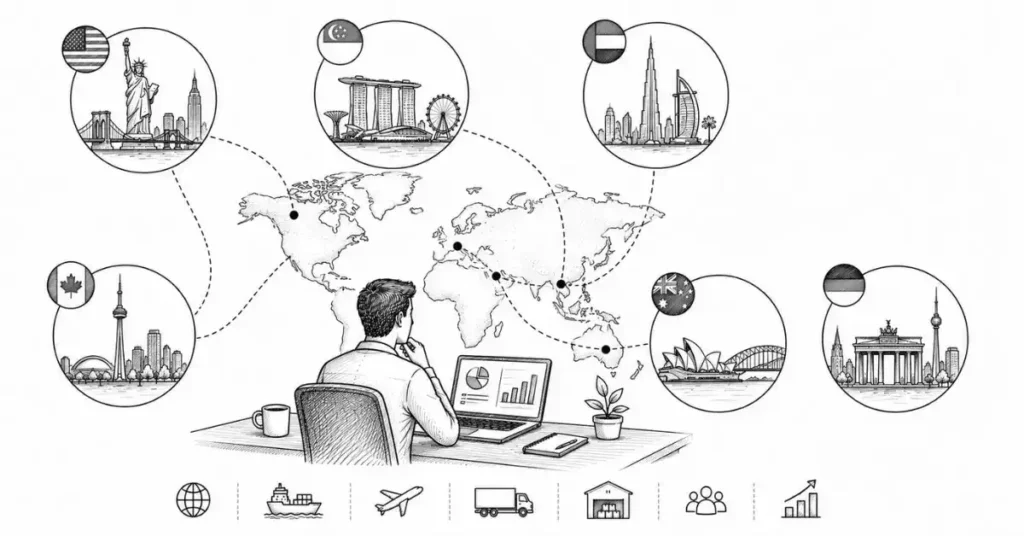
United States: Highest Compensation, Most Competitive
Advantages:
✅ Highest salaries globally (30-50% above other developed markets)
✅ Massive job market (largest economy)
✅ Strong Indian diaspora community (easier integration)
✅ Innovation and technology exposure
✅ Career growth opportunities
Challenges:
❌ H-1B visa lottery system (uncertain, limited slots)
❌ Long path to permanent residency (green card backlog 10-20 years for Indians)
❌ High cost of living (especially major cities)
❌ Healthcare expenses (insurance-dependent)
❌ Work-life balance often poor
❌ Gun violence and safety concerns
Best Roles for Sponsorship:
- Supply chain analysts at tech companies (Amazon, Google, Microsoft)
- Demand planners at Fortune 500 companies
- SAP consultants (high demand)
- Logistics analysts
Typical Pathway:
- MS in USA (supply chain or analytics) → OPT work authorization → H-1B sponsorship
- Internal transfer from Indian MNC office to US office (L-1 visa)
- Direct hire with H-1B sponsorship (increasingly difficult)
Financial Reality:
- Salary: USD 70,000-130,000 (₹58 lakhs-1.08 crores)
- Tax: ~25-35% federal + state
- Cost of living: High (rent USD 1,500-3,000/month in cities)
- Net savings potential: USD 20,000-50,000/year (₹17-42 lakhs)
Singapore: Asia Hub, Balanced Lifestyle
Advantages:
✅ Regional headquarters for Asia-Pacific operations
✅ Strong rule of law and safety
✅ Multicultural, English-speaking
✅ Excellent quality of life
✅ Relatively accessible immigration (Employment Pass)
✅ Path to permanent residency feasible (3-5 years)
✅ No capital gains or inheritance tax
Challenges:
❌ Very high cost of living (housing extremely expensive)
❌ Smaller job market (limited roles)
❌ Competitive (many qualified applicants)
❌ Hot, humid climate
❌ Small country (can feel limiting)
Best Roles:
- Regional supply chain managers
- Global logistics coordinators
- Demand planners for Asia operations
- Trade compliance managers
Typical Pathway:
Employment Pass (EP) with job offer → Permanent Residency application after 2-3 years → Citizenship possible after 5+ years
Financial Reality:
- Salary: SGD 60,000-120,000 (₹39-78 lakhs)
- Tax: Low (~5-15% effective)
- Cost of living: Very high (rent SGD 2,500-5,000/month)
- Net savings potential: SGD 25,000-50,000/year (₹16-33 lakhs)
UAE (Dubai/Abu Dhabi): Tax-Free Income
Advantages:
✅ Zero income tax (massive financial benefit)
✅ High salaries (especially tax-free)
✅ Large Indian expatriate community
✅ Regional hub for Middle East & Africa
✅ Relatively easy visa process with job offer
✅ Modern infrastructure and lifestyle
✅ Safe and stable
Challenges:
❌ No path to permanent residency/citizenship (employment visa only)
❌ Hot desert climate (summers brutal)
❌ Cultural restrictions (alcohol, dress codes, laws)
❌ High cost of living (Dubai especially)
❌ Job security tied to visa (lose job = leave country)
Best Roles:
- Logistics managers (major logistics hub)
- Procurement managers
- Supply chain managers for retail/hospitality
- Trade compliance roles
Typical Pathway:
Job offer → Employment visa (renewable) → Golden visa possible (5-10 years for certain professionals)
Financial Reality:
- Salary: AED 180,000-350,000 (₹42-81 lakhs)
- Tax: ZERO
- Cost of living: High (rent AED 5,000-12,000/month)
- Net savings potential: AED 80,000-180,000/year (₹19-42 lakhs) – highest savings rate globally
Canada: Easiest Immigration Path
Advantages:
✅ Clear path to permanent residency (Express Entry system)
✅ PR possible within 6-18 months of arrival
✅ Excellent quality of life
✅ Free healthcare (after PR)
✅ Safe, multicultural, welcoming
✅ Growing Indian community
✅ Work-life balance culture
Challenges:
❌ Lower salaries than US (20-30% less)
❌ High taxes (40-50% marginal rates)
❌ Harsh winters (especially Toronto, Calgary)
❌ Cost of living rising rapidly (housing crisis)
❌ Smaller job market than US
Best Roles:
- Supply chain analysts
- Operations managers
- Procurement specialists
- Logistics coordinators
Typical Pathway:
- Study in Canada → Post-Graduate Work Permit → Apply for Express Entry PR
- Direct PR through Express Entry (based on points: age, education, experience, language)
- Provincial Nominee Program (job offer in specific province)
Financial Reality:
- Salary: CAD 60,000-100,000 (₹40-67 lakhs)
- Tax: ~30-40%
- Cost of living: High (rent CAD 1,800-3,000/month)
- Net savings potential: CAD 15,000-35,000/year (₹10-23 lakhs)
Australia: Quality of Life Priority
Advantages:
✅ Excellent quality of life (work-life balance)
✅ Skilled migration pathways
✅ Beautiful environment and outdoor lifestyle
✅ Strong economy and job market
✅ Multicultural and welcoming
✅ Good salaries
Challenges:
❌ Expensive (high cost of living)
❌ Geographically isolated (far from India)
❌ Smaller supply chain market than US
❌ Competitive skilled migration
❌ PR pathway becoming stricter
Best Roles:
- Supply chain managers
- Logistics managers
- Procurement specialists
- Operations managers
Typical Pathway:
Skilled Independent visa (subclass 189) OR Employer-sponsored visa (subclass 482 → 186 PR)
Financial Reality:
- Salary: AUD 75,000-120,000 (₹44-70 lakhs)
- Tax: ~25-35%
- Cost of living: High (rent AUD 2,000-3,500/month)
- Net savings potential: AUD 20,000-40,000/year (₹12-23 lakhs)
Germany/Europe: Experience & Culture
Advantages:
✅ Strong manufacturing and logistics sectors
✅ Work-life balance (30+ vacation days)
✅ Excellent social benefits
✅ EU Blue Card enables working across Europe
✅ Rich culture and history
✅ Central location for travel
Challenges:
❌ Language barrier (German essential for many roles and integration)
❌ Moderate salaries compared to US/Singapore
❌ Bureaucratic systems
❌ Higher taxes
❌ Colder climate
❌ Integration can be challenging
Best Roles:
- Automotive supply chain (strong in Germany)
- Manufacturing operations
- SAP consultants (German SAP market large)
- Logistics for European operations
Typical Pathway:
Job offer → EU Blue Card (for highly skilled) → Permanent residency after 3-4 years → Citizenship after 8 years
Financial Reality:
- Salary: EUR 50,000-85,000 (₹46-78 lakhs)
- Tax: ~30-42%
- Cost of living: Moderate (rent EUR 800-1,800/month)
- Net savings potential: EUR 15,000-30,000/year (₹14-28 lakhs)
PART 4: QUALIFICATIONS FOR GLOBAL ROLES
Education Requirements
Bachelor’s Degree (Minimum):
Essential for visa eligibility in most countries. Engineering or business degrees preferred.
Master’s Degree (Highly Beneficial):
- MBA: Opens doors, especially from recognized B-schools (IIMs, ISB, or international programs)
- MS in Supply Chain: Growing demand, especially in US (MIT, Penn State, Michigan State programs highly regarded)
- Specialized master’s: Operations research, industrial engineering, logistics
Why Master’s Helps:
- Higher visa priority in points-based systems (Canada, Australia)
- Easier H-1B approval in US
- Higher starting salaries
- Better role assignments
Professional Certifications
APICS CSCP / CPIM:
- Globally recognized
- Demonstrates supply chain expertise
- Helpful for visa applications (credential evaluation)
- Expected in many international roles
Six Sigma / Lean:
- Manufacturing roles especially
- Shows process improvement capability
PMP (Project Management Professional):
- Valuable for consulting and implementation roles
- Global standard
Technical Skills
Essential:
- SAP or Oracle (global standard ERP systems)
- Advanced Excel and analytics
- English fluency (written and spoken)
Highly Valuable:
- Python/SQL (especially for analyst roles in US/tech companies)
- Power BI/Tableau
- Supply chain planning software (SAP IBP, Kinaxis, Blue Yonder)
Experience Profile
Minimum Viable Experience: 3-5 years for entry-level international roles
Optimal Experience for Senior Roles: 7-12 years
Executive Roles: 12-20 years
Type of Experience Valued:
- Multinational company experience (over local companies)
- Exposure to global supply chains
- Cross-functional project experience
- Leadership roles (even small teams)
- Quantifiable achievements (cost savings, efficiency improvements)
PART 5: VISA & IMMIGRATION STRATEGIES
Common Visa Pathways
Employment-Based Visa (Job Offer Required):
- USA: H-1B (lottery), L-1 (internal transfer)
- Singapore: Employment Pass
- UAE: Employment visa
- UK: Skilled Worker visa
Process: Secure job offer → Company sponsors visa → Work authorization
Skilled Migration (Points-Based):
- Canada: Express Entry
- Australia: Skilled Independent visa
- New Zealand: Skilled Migrant Category
Process: Meet points threshold (age, education, experience, language) → Apply independently → Job search after arrival OR secure job offer for additional points
Study-to-Work Pathway:
- Study master’s degree abroad → Post-study work permit → Job search → Employment visa/PR
Popular Countries:
- USA: OPT (1-3 years) after master’s → H-1B
- Canada: 3-year post-graduation work permit → Express Entry PR
- Australia: 2-4 year post-study work visa → PR pathways
- Germany: 18-month job search visa after graduation
Advantage: Easier path than direct employment visa in many cases
Realistic Timelines
Direct Employment Route:
- Job search: 3-12 months
- Visa processing: 1-6 months
- Total: 6-18 months from decision to relocation
Study-to-Work Route:
- Applications: 6-12 months
- Study duration: 1-2 years
- Job search: 3-9 months
- Total: 2-3.5 years from decision to stable employment abroad
Skilled Migration Route (Canada/Australia):
- PR application: 6-18 months
- Job search after landing: 3-9 months
- Total: 12-27 months
PART 6: FINANCIAL COMPARISON - IS IT WORTH IT?
10-Year Financial Projection
Scenario: Supply Chain Manager (10 years experience)
Staying in India:
- Current salary: ₹18 lakhs
- Growth: 8% annual average
- 10-year earnings: ₹2.6 crores
- Savings (35% rate): ₹91 lakhs
- Plus: Own home (₹50-80 lakhs)
- Total wealth: ₹1.4-1.7 crores
Moving to USA:
- Starting: USD 90,000 (₹75 lakhs)
- Growth: 5% annual
- 10-year earnings: USD 1.13 million (₹9.4 crores)
- Savings (25% rate): USD 282,000 (₹2.35 crores)
- Minus: Higher living costs, no home equity
- Total wealth: ₹2-2.5 crores (but green card uncertainty)
Moving to UAE:
- Starting: AED 250,000 (₹58 lakhs)
- Growth: 4% annual
- 10-year earnings: AED 2.96 million (₹6.8 crores)
- Savings (45% rate, tax-free): AED 1.33 million (₹3.1 crores)
- Total wealth: ₹3-3.5 crores (highest savings)
Moving to Canada:
- Starting: CAD 75,000 (₹50 lakhs)
- Growth: 5% annual
- 10-year earnings: CAD 943,000 (₹6.3 crores)
- Savings (25% rate): CAD 236,000 (₹1.57 crores)
- Plus: PR, healthcare, quality of life
- Total wealth: ₹1.6-2 crores + PR value
Final Decision Framework
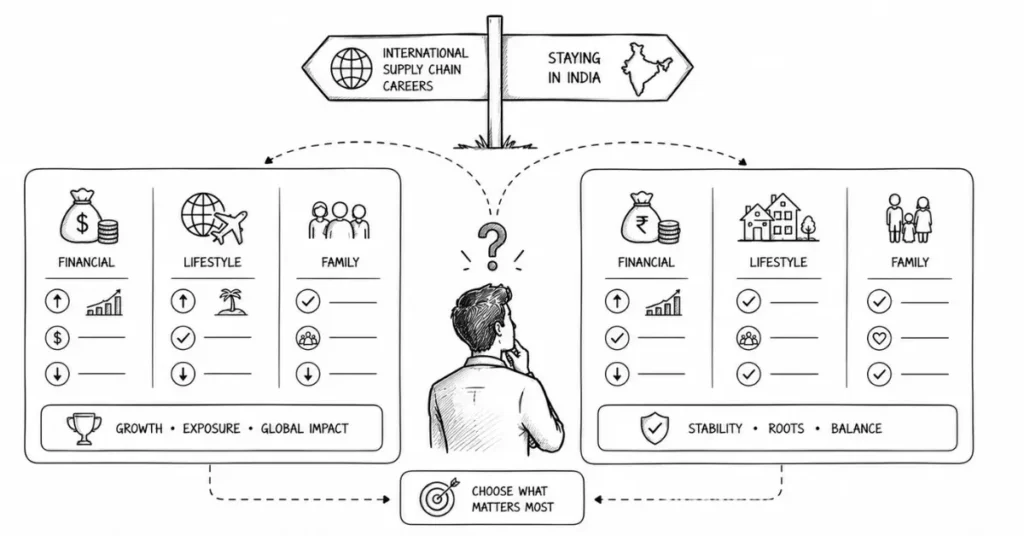
Choose International Career If:
✅ Financial goals require significantly higher savings (children’s foreign education, early retirement)
✅ Seeking specific experiences (living abroad, travel, exposure)
✅ Quality of life priorities (safety, environment, work-life balance)
✅ Career ceiling limited in India (already senior, limited growth)
✅ Willing to sacrifice proximity to family/culture
✅ Flexible and adaptable personality
✅ Long-term immigration intentions (not just earning and returning)
Stay in India If:
✅ Strong family ties and responsibilities (aging parents, joint family)
✅ Successful career trajectory already (₹20+ lakhs, clear growth path)
✅ Entrepreneurial aspirations (easier in India)
✅ Cultural connection deeply important
✅ Own property and established life
✅ Risk-averse (international moves inherently uncertain)
✅ Late career stage (45+, harder to transition)
Conclusion: Strategic Not Emotional Decision
Global supply chain careers offer genuine opportunities—higher compensation, diverse experiences, quality of life improvements, and career acceleration. But they also demand sacrifices: distance from family, cultural adjustment, visa uncertainty, and personal challenges.
Make this decision strategically, not emotionally. Consider:
- Career stage (early: easier; mid: optimal; late: challenging)
- Financial goals (absolute numbers needed)
- Family situation (flexibility and support)
- Target country (realistic pros/cons)
- Backup plans (if international doesn’t work)
The supply chain professionals I’ve seen succeed internationally share common traits: clear goals, thorough preparation, adaptability, patience, and realistic expectations.
If you decide to pursue international supply chain careers, start preparing now: build qualifications, develop global exposure, network internationally, save money for transition, and research thoroughly.
The world genuinely can be your workplace. But success requires more than aspiration—it demands strategic execution.