
GAMING & ESPORTS INDUSTRY CAREERS
Table of Contents
Introduction
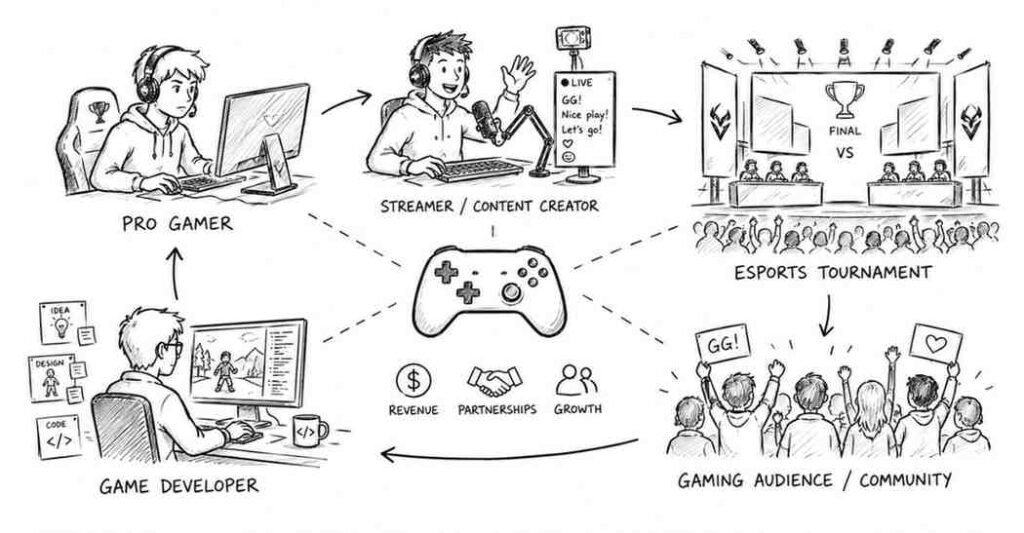
Picture earning ₹20 lakhs annually playing video games professionally. Imagine designing games played by millions worldwide. Consider coaching esports teams competing for crore-rupee prize pools. Envision streaming gameplay to thousands of fans supporting you monthly. This isn’t fantasy—it’s the rapidly expanding reality of India’s gaming and esports industry.
India’s gaming sector is experiencing explosive growth that’s creating unprecedented career opportunities. The industry offers ₹15+ crores in prize pools across BGIS, BMPS, Valorant, and other major tournaments. Gaming professionals earn an average of ₹23.7 lakhs annually, with 70% earning between ₹17-52 lakhs and top performers exceeding ₹35 lakhs per year. The industry has generated 12,500+ job opportunities with salaries ranging from ₹3 lakhs to ₹2 crores depending on roles and expertise.
Professional esports players see earnings from ₹3-6 lakhs annually for tier-3 aspiring players to ₹30+ lakhs for elite players, with top BGMI/Valorant players earning ₹2.5-4 lakhs monthly. Game developers earn ₹4-25+ lakhs annually depending on experience. Esports coaches command ₹40,000-2.5 lakhs monthly, content creators and streamers earn ₹25,000-12 lakhs monthly, and esports marketing managers earn ₹4-30 lakhs annually. Half of serious gamers in India now see gaming as a viable career profession due to the surge in esports tournaments and sponsorships.
This comprehensive guide explores gaming and esports careers including professional gaming and competitive play, game development and design, content creation and streaming, esports coaching and analysis, tournament organization and management, and the skills, training, challenges, and strategies needed to build sustainable careers in this dynamic, youth-driven industry.
Understanding India's Gaming & Esports Ecosystem
The Gaming Industry Boom
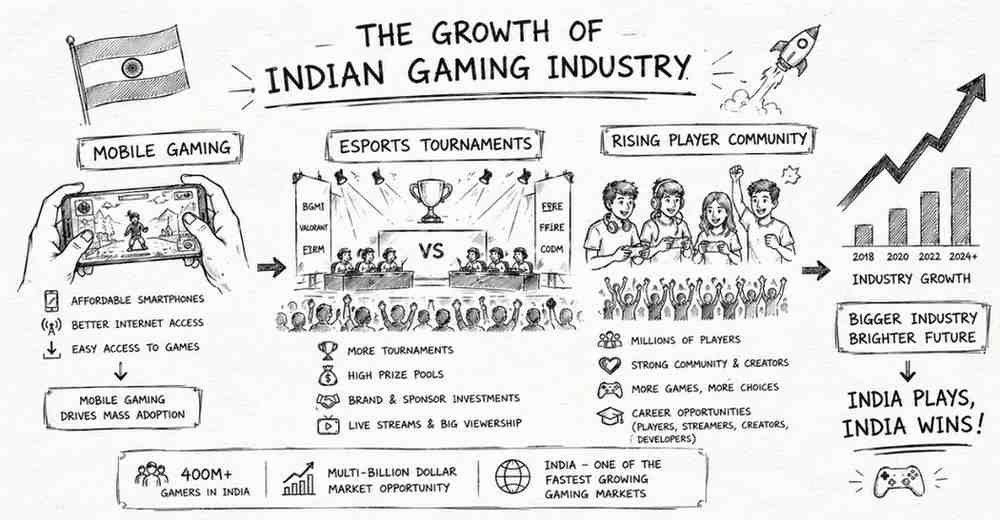
India’s gaming industry has transformed from casual mobile gaming to a serious economic sector spanning mobile gaming, PC gaming, console gaming, and esports competition. Several factors drive this growth.
Mobile gaming dominance: With over 800 million smartphone users, India is mobile-first. Games like Battlegrounds Mobile India (BGMI), Free Fire, Call of Duty Mobile, and Valorant Mobile attract massive player bases. Mobile esports has become particularly significant in India compared to PC/console-dominated Western markets.
Infrastructure improvements: Better internet connectivity, affordable data plans, and improving hardware accessibility have removed barriers that previously limited gaming adoption. Even tier-2 and tier-3 cities now have active gaming communities.
Cultural acceptance: Gaming is gradually shedding stigma as parental disapproval and social skepticism give way to recognition of legitimate career paths. Success stories of Indian gamers earning substantial income legitimize the field.
Investment and sponsorship: Corporate brands, endemic gaming companies, and investors recognize gaming’s marketing potential, flooding the ecosystem with sponsorship money supporting tournaments, teams, and content creators.
Asian Games inclusion: Esports’ addition to the Asian Games roster has elevated Indian esports players’ profiles, enhanced marketability, and triggered significant earnings boosts.
Career Paths in Gaming & Esports
Gaming careers span far beyond professional playing. The ecosystem includes:
Game development and design: Creating the games themselves—programming, art, design, audio, testing, and production management.
Professional esports competition: Competing in organized tournaments as contracted team players or independent competitors.
Content creation and streaming: Broadcasting gameplay, creating gaming videos, or building gaming-focused social media followings monetized through platforms and sponsorships.
Coaching and analysis: Training players or teams, analyzing strategies, and developing competitive approaches.
Team and tournament management: Operating esports organizations, managing teams, or producing tournaments.
Marketing and business development: Brand partnerships, sponsorship management, and commercial operations in gaming companies or esports organizations.
Broadcasting and journalism: Commentating matches, analyzing esports, or reporting on gaming industry news.
Many successful gaming professionals work across multiple areas—pro players who stream, developers who create content, or coaches who cast tournaments—diversifying income and building personal brands.
Professional Gaming & Esports Careers
Professional Esports Player: Competing at the Highest Level
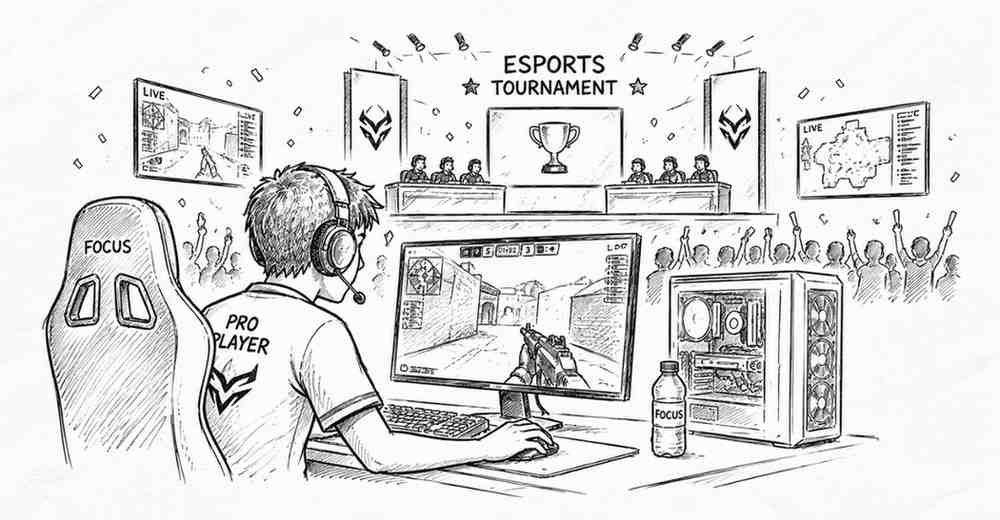
Professional esports players compete in organized tournaments for prize money, team salaries, and sponsorships, similar to traditional athletes.
What professional players do: They practice 6-10+ hours daily honing mechanical skills, game knowledge, and strategies, compete in tournaments ranging from online qualifiers to LAN finals, collaborate with teammates developing team coordination and communication, analyze opponents studying strategies to exploit weaknesses, maintain physical fitness and mental health managing the demands of professional competition, engage with fans through social media and streaming building personal brands, and represent sponsors fulfilling promotional obligations.
Professional gaming is intensely demanding. The highest levels require extraordinary dedication, natural talent, and mental fortitude handling pressure.
Income structure: Professional player earnings come from multiple sources creating complex income profiles:
- Team salaries: Tier-1 professional players earn ₹2.5-4 lakhs monthly (₹30-48 lakhs annually) from team salaries. Tier-2 semi-pro players earn ₹40,000-75,000 monthly (₹5-15 lakhs annually). Tier-3 aspiring players might earn ₹25,000-50,000 monthly (₹3-6 lakhs annually) or receive housing and bootcamp support rather than salaries.
- Tournament winnings: Prize pools vary dramatically. Major tournaments offer crores in prizes distributed across placements. Top BGMI players have earned over ₹1 crore in combined tournament winnings in successful years. However, tournament income is inconsistent—you only earn if you place well.
- Sponsorships and endorsements: Elite players secure personal sponsorships from peripherals brands, energy drinks, or gaming companies adding ₹5-20+ lakhs annually. Most tier-2/3 players lack significant personal sponsorships beyond team-negotiated deals.
- Streaming and content: Many pro players stream practice or casual gameplay generating additional income through platform subscriptions, donations, and ad revenue. Popular players earn ₹50,000-5+ lakhs monthly from streaming.
Total earnings: Tier-3 aspiring players earn ₹3-6 lakhs annually, tier-2 semi-pros earn ₹5-15 lakhs, tier-1 pros earn ₹15-30 lakhs, and elite international-level players exceed ₹30+ lakhs annually. However, income is highly unpredictable and career spans are short—peak performance typically lasts 10-15 years with most retiring by late 20s.
Reality check: Professional gaming is extremely competitive. Thousands pursue it; dozens succeed at tier-1 level. Income is unstable depending on tournament results. Physical and mental health challenges from prolonged play are real. Most professional gamers should develop backup skills or transition plans.
How to Become a Professional Player
Achieve high rank: Reach top percentiles in competitive ranked modes demonstrating elite skill. Most pro players sit in top 0.1-1% of ranked ladders.
Join amateur teams: Play in semi-professional teams competing in smaller tournaments building experience and reputation.
Network with scene: Engage with community through Discord servers, social media, and local gaming events. Many opportunities come through connections and reputation.
Create highlight reels: Compile your best plays demonstrating skill to scouts or team managers. Post to YouTube or Twitter gaining visibility.
Compete in open qualifiers: Most major tournaments have open qualifiers anyone can enter. Strong performances attract attention from teams and sponsors.
Maintain alternatives: Pursue education, stream regularly, or develop marketable skills outside gaming. Professional gaming rarely provides long-term financial security alone.
Esports Coach: Developing Competitive Excellence
Esports coaches analyze gameplay, develop strategies, train players, and manage team dynamics improving competitive performance.
What esports coaches do: They analyze team and opponent gameplay identifying strengths, weaknesses, and patterns, develop strategic approaches for specific maps, opponents, or metas, conduct practice sessions drilling skills and tactics, provide individual player feedback improving mechanical or decision-making skills, manage team psychology maintaining morale and resolving conflicts, coordinate with analysts and support staff, and prepare for tournaments researching opponents and planning approaches.
Great coaches combine deep game knowledge, teaching ability, and interpersonal skills. The best coaches often have professional playing experience but not always—some excellent coaches were never top players but possess exceptional analytical and communication abilities.
Salary expectations: Esports coaches earn ₹40,000-2.5 lakhs monthly depending on organization tier and coach experience. Mid-career coaches with 3-5 years experience earn ₹33,000-67,000 monthly (₹4-8 lakhs annually). Top coaches at premier organizations command ₹1.5-2.5+ lakhs monthly (₹18-30 lakhs annually). Many coaches supplement income through personal coaching services charging ₹400-2,000 per hour for one-on-one coaching.
Career path: Many coaches start as players who transition into coaching as reflexes slow or interest shifts. Others enter through analysis roles or community coaching. Building reputation through results—teams you coach performing well—drives career progression and compensation increases.
Esports Analyst: Decoding the Meta
Esports analysts study gameplay providing teams with strategic insights, statistical analysis, and opponent research.
Responsibilities: They review match recordings breaking down opponent strategies and tendencies, conduct statistical analysis identifying patterns in performance data, research meta developments tracking evolving strategies and patch changes, create reports presenting findings to coaches and players, and sometimes provide broadcast analysis explaining games for audiences.
Analysts require analytical minds, deep game knowledge, and ability to communicate insights effectively.
Compensation: Esports analysts earn ₹6-35 lakhs annually depending on organization and experience level. Many analysts work part-time or freelance for multiple teams.
Content Creation & Streaming
Gaming Content Creator/Streamer: Building Audiences
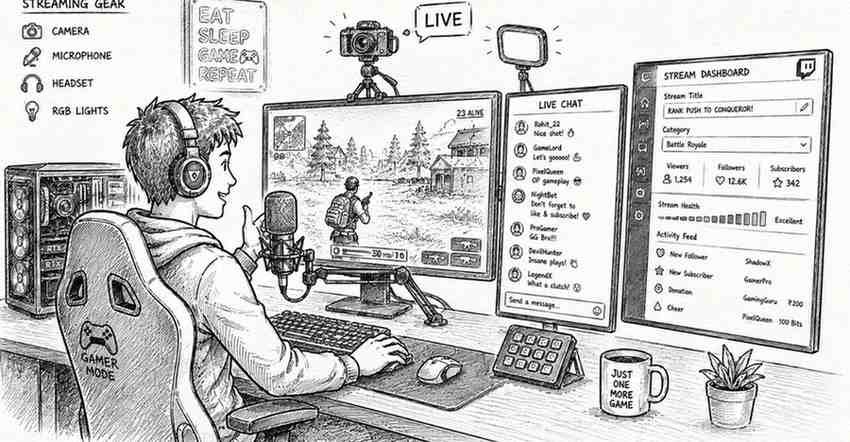
Gaming content creators and streamers build audiences watching them play games, providing entertainment through gameplay, personality, commentary, or skill demonstration.
What content creators do: They stream live gameplay on YouTube, Facebook Gaming, or regional platforms engaging audiences in real-time, create edited gaming videos for YouTube including highlights, tutorials, reviews, or comedy content, produce gaming content for Instagram Reels or TikTok capitalizing on short-form video trends, engage with communities through Discord, social media, or forums building loyal followings, and collaborate with other creators cross-promoting and creating variety content.
Successful content creation requires more than gaming skill—personality, entertainment value, consistency, and understanding platform algorithms matter equally or more.
Monetization streams:
- Platform monetization: YouTube Partner Program pays ₹50-200 per 1,000 views. A gaming channel with 500,000 monthly views earns ₹25,000-100,000 from ads.
- Subscriptions and memberships: YouTube channel memberships, Facebook Gaming subscriptions, or Patreon supporters provide recurring income. Creators with 1,000 paid subscribers at ₹100/month earn ₹1 lakh monthly.
- Donations and super chats: Viewers support streamers through donations during streams. Popular streamers earn ₹10,000-1+ lakh monthly from donations.
- Sponsorships: Gaming brands, peripherals companies, or game publishers pay creators for sponsored content. Mid-tier creators (50,000-200,000 subscribers) might earn ₹25,000-2 lakhs per sponsorship. Major creators command ₹5-20+ lakhs per integration.
- Affiliate marketing: Sharing links for gaming hardware, game purchases, or services earns commissions on sales.
Total earnings: Gaming content creators and streamers earn ₹25,000-12 lakhs monthly depending on audience size and monetization sophistication. However, most small creators earn little initially—building audiences takes months or years of consistent work.
Skills required: Gaming skill helps but isn’t sufficient. You need on-camera charisma, video editing abilities, understanding of platform algorithms and SEO, consistency producing content regularly, community management engaging with audiences, and business sense negotiating deals and managing finances.
Building streaming careers: Start streaming consistently on your chosen platform. Create highlight reels for YouTube. Engage genuinely with viewers building community. Network with other creators for collaborations. Invest gradually in better equipment as income allows. Treat it professionally even while working other jobs until income stabilizes. Most successful streamers took years building audiences before earning sustainable income.
Game Development Careers
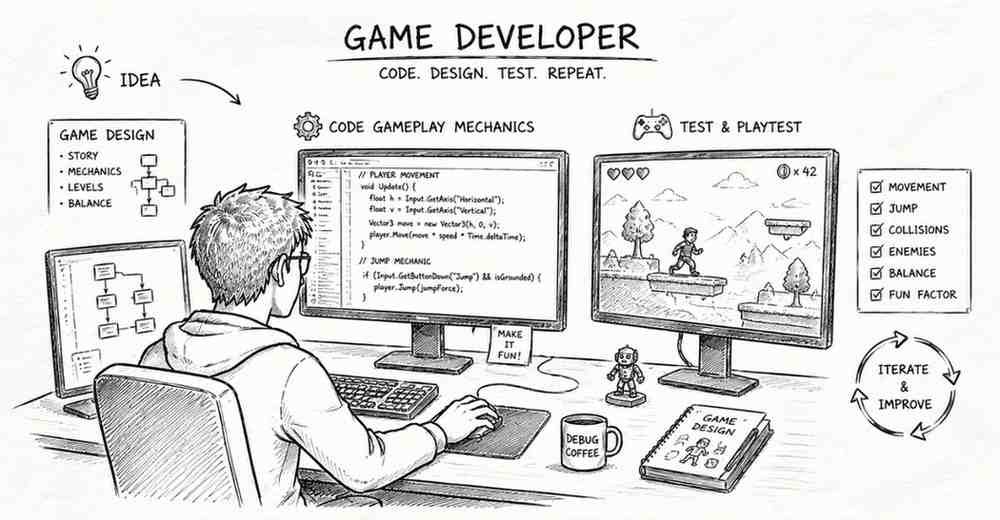
Game Developer/Programmer: Building Games
Game developers program the code making games function—gameplay mechanics, physics, AI, networking, UI, and all technical systems.
What game developers do: They implement gameplay features translating design documents into functional code, optimize performance ensuring games run smoothly across target hardware, fix bugs identifying and solving technical issues, integrate assets connecting art, audio, and other content into game code, develop tools creating utilities helping other developers work efficiently, and collaborate with designers, artists, and other developers building games as team efforts.
Game development is highly technical requiring strong programming skills and problem-solving abilities.
Technical skills: Proficiency in programming languages including C# (Unity), C++ (Unreal Engine, AAA studios), or other languages depending on engine and platform. Understanding game engines—Unity and Unreal dominate but proprietary engines exist at major studios. Knowledge of mathematics particularly linear algebra, trigonometry, and physics. Version control systems like Git. Understanding platform-specific development for mobile, PC, or console.
Specializations: Gameplay programmers implement player interactions and game rules. Engine programmers develop core engine technology. AI programmers create enemy behaviors and NPCs. Network programmers handle multiplayer functionality. Tools programmers create developer utilities. Graphics programmers optimize rendering and visual effects.
Career progression: Junior developers start implementing features under supervision, progressing to mid-level developers handling more complex systems independently, then senior developers architecting major systems and mentoring juniors, potentially advancing to lead programmer overseeing entire code bases or technical director setting technical vision.
Salary expectations: Game developers earn competitive software development salaries. Entry-level game developers (0-2 years) earn ₹3-5 lakhs annually. Mid-career developers (3-5 years) earn ₹33,000-67,000 monthly (₹4-8 lakhs annually). Senior developers (8+ years) earn ₹1.25-2.08 lakhs monthly (₹15-25+ lakhs annually) as lead developers or tech leads. The gaming sector average of ₹23.7 lakhs with top performers exceeding ₹35 lakhs reflects the broader range. Positions at major studios or with significant experience can command salaries up to ₹12 lakhs per annum or more.
Game Designer: Crafting Player Experiences
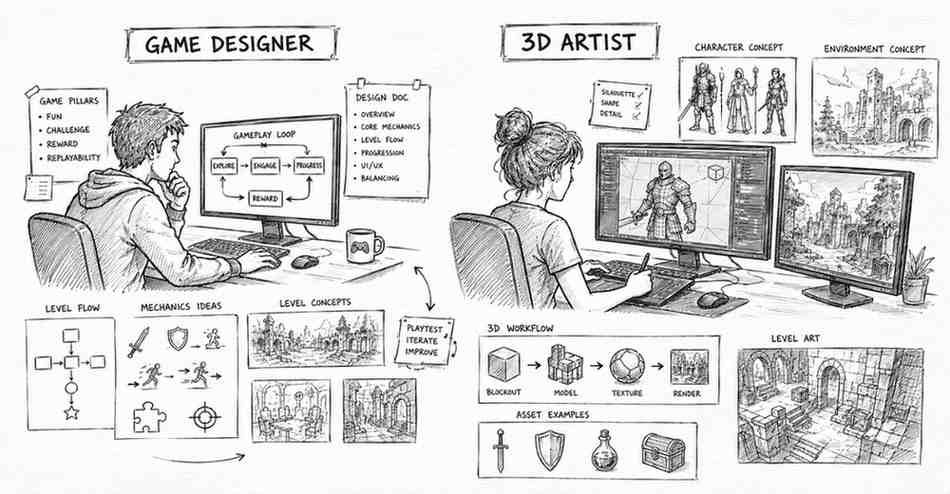
Game designers conceptualize gameplay, design game systems, create levels, and ensure games are engaging, balanced, and fun.
What game designers do: They design game mechanics defining rules and player interactions, create level designs building environments and encounters, balance gameplay tuning difficulty and progression systems, write design documents communicating ideas to development teams, prototype features testing concepts quickly, iterate based on testing refining designs through player feedback, and collaborate across disciplines working with programmers, artists, and writers.
Game design is creative work requiring both imaginative vision and analytical rigor about what makes games engaging.
Skills required: Deep understanding of games across genres knowing what works and why. Systems thinking seeing how game elements interact. Communication clearly articulating design intentions. Basic scripting or prototyping skills quickly testing ideas. User empathy understanding player psychology and motivation. Analytical skills balancing difficulty and progression.
Salary expectations: Game designers earn ₹33,000-1 lakh monthly at mid-career (3-5 years), translating to ₹4-12 lakhs annually. Senior game designers (8+ years) earn ₹71,000-1.25 lakhs monthly (₹8.6-15 lakhs annually). Lead designers or creative directors at major studios command higher compensation potentially reaching ₹18-25+ lakhs annually.
Game Artist & Animator: Creating Visual Worlds
Game artists create 3D models, textures, animations, and visual effects bringing game worlds to life.
Specializations: Character artists create player characters, NPCs, and creatures. Environment artists build game worlds and levels. Texture artists create surface details and materials. Animators bring characters and objects to life through movement. VFX artists create explosions, magic effects, and particle systems. UI artists design menus and interfaces. Technical artists bridge art and programming optimizing workflows and creating tools.
Skills required: 3D modeling proficiency in Maya, Blender, or 3ds Max. Texturing skills in Substance Painter or Photoshop. Animation knowledge for character work. Understanding game engines particularly Unity or Unreal asset pipelines. Artistic fundamentals including anatomy, composition, color theory, and design principles.
Compensation: Game artists earn similarly to animators and VFX artists in other industries—₹3-8 lakhs annually at mid-level, ₹8-15 lakhs for senior artists, and ₹15-25+ lakhs for lead artists or art directors at major studios.
Esports Business & Management
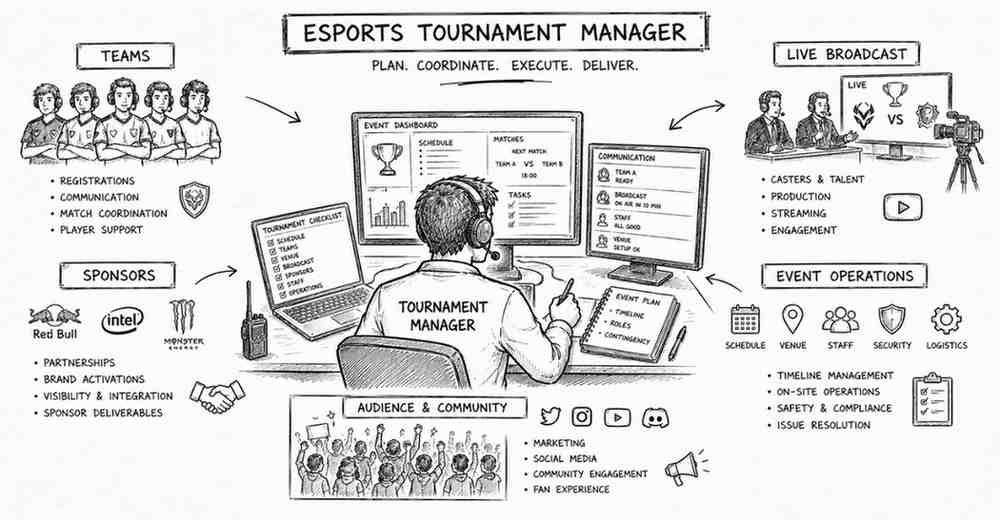
Tournament Organizer/Event Manager: Creating Competition
Tournament organizers and esports event managers produce competitive gaming events from online qualifiers to LAN finals and major championships.
Responsibilities: They plan tournament formats and structures, secure venues and equipment for LAN events, coordinate with teams and players managing registrations and logistics, manage broadcasting arranging streams and production, handle sponsorships securing financial support, ensure fair play implementing anti-cheat and rules enforcement, and manage prize distribution.
Tournament organization requires event management skills plus deep understanding of competitive gaming.
Compensation: Tournament managers and coordinators earn ₹3-8 lakhs annually at junior levels, ₹8-15 lakhs at mid-levels, and ₹15-30 lakhs as senior tournament directors or heads of esports at organizations.
Esports Marketing Manager: Building Brands
Esports marketing managers handle brand partnerships, sponsorship activation, fan engagement, and commercial operations for teams, organizations, or gaming companies.
Responsibilities: They develop marketing strategies for teams or gaming products, manage sponsor relationships ensuring deliverable fulfillment, coordinate content creation for social media and marketing channels, analyze marketing performance through metrics and ROI, engage fans through community management, and identify commercial opportunities.
Salary expectations: Esports marketing managers earn ₹4-30 lakhs annually depending on organization size and responsibility level. This breaks down to ₹4-8 lakhs for junior managers, ₹8-18 lakhs for mid-level managers, and ₹20-30 lakhs for senior marketing directors.
Team Manager: Operating Esports Organizations
Team managers handle day-to-day operations of esports teams coordinating logistics, managing contracts, organizing bootcamps, and supporting players.
Responsibilities: Managing player contracts and salaries, coordinating practice schedules and scrimmages, arranging travel and accommodation for tournaments, handling team social media and public relations, managing team conflicts or issues, coordinating with sponsors for content and events, and overseeing team support staff including coaches and analysts.
Compensation: Team managers earn ₹4-12 lakhs annually depending on organization size and team success.
Breaking Into Gaming & Esports
Educational Pathways
Game development education: Several institutions offer game development programs including SEAMEDU, Backstage Pass Institute of Gaming, Frameboxx, and others providing degrees or diplomas. These teach programming, design, art, and production. However, many successful game developers are self-taught using online resources like Unity Learn, Unreal Engine documentation, YouTube tutorials, and Udemy courses.
Esports has no formal education requirement: Professional players, coaches, content creators, and most esports business roles don’t require specific degrees. Skills, results, and network matter more than formal credentials. However, business roles might benefit from marketing, management, or communications backgrounds.
Building Skills and Portfolio
For aspiring professional players: Reach high competitive ranks, join or form amateur teams, compete in open tournaments, create highlight content showcasing skill, and network within competitive communities.
For game developers: Create games or prototypes demonstrating capabilities. Participate in game jams. Contribute to open-source projects. Build portfolio showcasing completed projects. Learn relevant programming languages and engines.
For content creators: Start creating content immediately with whatever equipment you have. Post consistently. Engage authentically with viewers. Study successful creators analyzing what works. Gradually improve production quality as you learn and earn.
For esports business roles: Volunteer with local esports organizations or teams. Organize amateur tournaments gaining experience. Create content about esports demonstrating knowledge. Network at gaming events and online communities. Apply for internships at esports companies or gaming startups.
Networking and Community
Gaming and esports are highly networked industries. Opportunities often come through connections made in Discord servers, at gaming cafes, at tournaments, or through online communities. Actively engage with the scene—attend events, participate in discussions, collaborate with others, and build genuine relationships. Many jobs never get publicly posted, filled through referrals and connections.
Challenges and Realities
Income Instability
Gaming careers, particularly professional playing and content creation, involve significant income variability. Tournament winnings are inconsistent. Sponsorships may not renew. Content monetization fluctuates. Building financial buffers and maintaining backup skills or income sources provides security.
Career Longevity
Professional gaming careers peak young—most pros are 18-25 with few remaining competitive past 30. Physical and mental demands, evolving metas, and younger competitors constantly emerging make longevity challenging. Planning post-playing transitions into coaching, content creation, or other roles matters.
Parental and Social Pressure
Despite improving acceptance, many families remain skeptical of gaming careers. Proving viability through early success, maintaining education or backup plans, and demonstrating professionalism helps overcome resistance.
Physical and Mental Health
Prolonged gaming sessions cause repetitive strain injuries, eye strain, and postural problems. Competitive pressure, online toxicity, and unstable income affect mental health. Maintaining physical fitness, taking breaks, setting boundaries, and seeking support when needed protects long-term wellbeing.
Geographic Limitations
While tier-2/3 cities have gaming communities, major opportunities concentrate in Bangalore, Mumbai, Delhi, and Hyderabad where studios, organizations, and events concentrate. Remote work helps but physical presence in hubs provides networking and opportunity advantages.
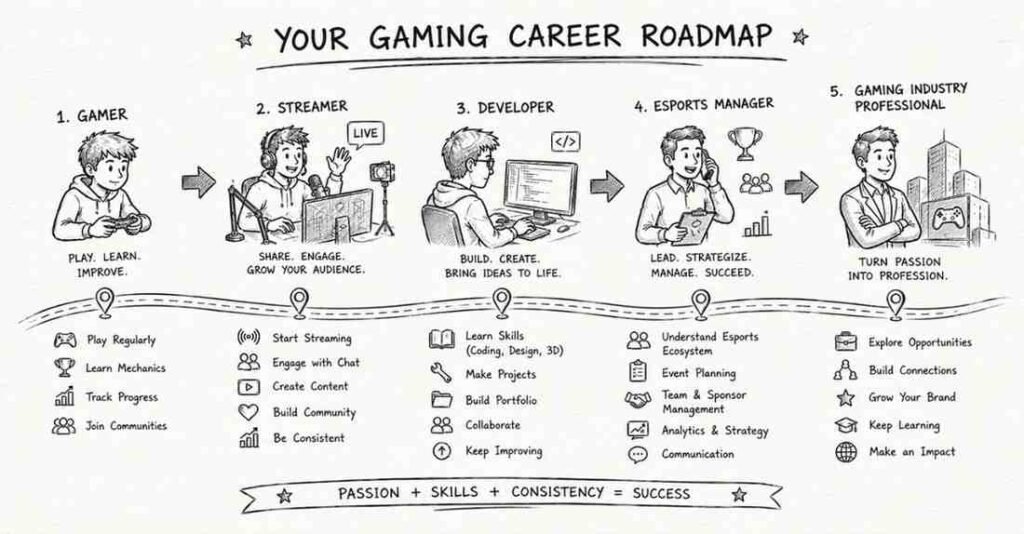
The Future of Gaming Careers in India
India’s gaming and esports industry trajectory suggests continued growth and opportunity expansion. Government recognition, corporate investment, infrastructure improvements, and cultural acceptance all trend positively. The projection of 20-25% growth in average player earnings over the next 1-2 years reflects industry optimism.
Emerging opportunities include virtual reality gaming, mobile esports expansion, gaming creator economy growth, regional language gaming content, and Web3/blockchain gaming. Professionals building skills now position themselves for these emerging segments.
Conclusion
Gaming and esports careers in India offer exciting, youth-friendly paths with strong growth prospects and diverse opportunities beyond professional playing. With gaming professionals earning an average of ₹23.7 lakhs annually, professional players earning ₹3-30+ lakhs depending on tier, game developers earning ₹4-25+ lakhs, and esports business roles offering ₹4-30 lakhs, the industry provides viable career paths.
Success requires combining gaming skill with complementary abilities—professional players who build personal brands, developers with strong portfolios, content creators with business sense, and business professionals who deeply understand gaming culture. Start wherever you are—play competitively, create content, learn development, organize local tournaments, or volunteer with organizations. Build skills, create proof of capabilities, network authentically, and maintain realistic expectations about timelines and challenges.
The Indian gaming industry needs talented, dedicated professionals across all functions. Whether you dream of competing at the highest levels, creating the next hit game, building massive streaming audiences, or running successful esports organizations, opportunities exist for those willing to work hard, adapt continuously, and maintain professionalism in this dynamic, rapidly evolving field. Your gaming career starts with the next match, the next line of code, the next stream, or the next networking conversation—begin today.