
FILM PRODUCTION CAREER PATHS
Table of Contents
Introduction
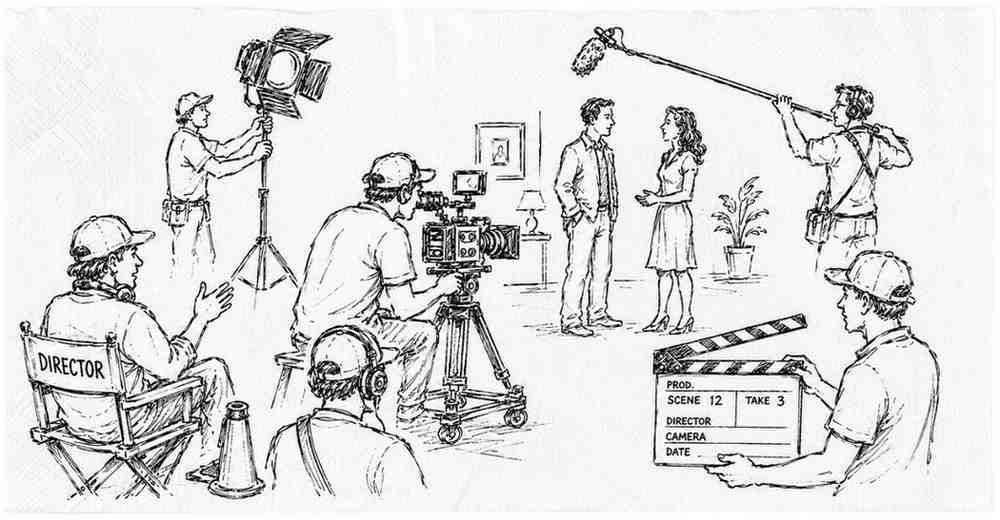
Picture this: you’re on a film set at 5 AM, the air buzzing with anticipation as dozens of crew members prepare for the day’s shoot. The director huddles with the cinematographer over shot composition. The production designer makes last-minute adjustments to the set. Gaffers position lights while grips secure camera rigs. Sound engineers test audio levels. And in a few hours, this coordinated chaos will produce moments of cinematic magic that audiences will watch on screen.
If this scenario excites rather than intimidates you, film production might be your calling. India’s film industry—the world’s largest by number of films produced—creates over 2,000 films annually across multiple languages. Film production professionals in India earn an average of ₹20.1 lakhs annually, with experienced professionals reaching ₹45 lakhs and the top 10% exceeding ₹31.9 lakhs. Beyond Bollywood, regional cinema in Tamil, Telugu, Malayalam, Kannada, Bengali, and other languages offers thriving opportunities with their own stars, budgets, and production ecosystems.
This comprehensive guide will walk you through every major film production role, from pre-production planning to post-production finishing. You’ll learn what each position actually does on set, the skills required, educational pathways, salary expectations, and practical steps to break into this competitive but rewarding field. Whether you dream of calling “Action!” as a director or prefer the technical artistry of cinematography, there’s a place for you in film production.
Understanding Film Production Workflow
The Three Phases of Filmmaking
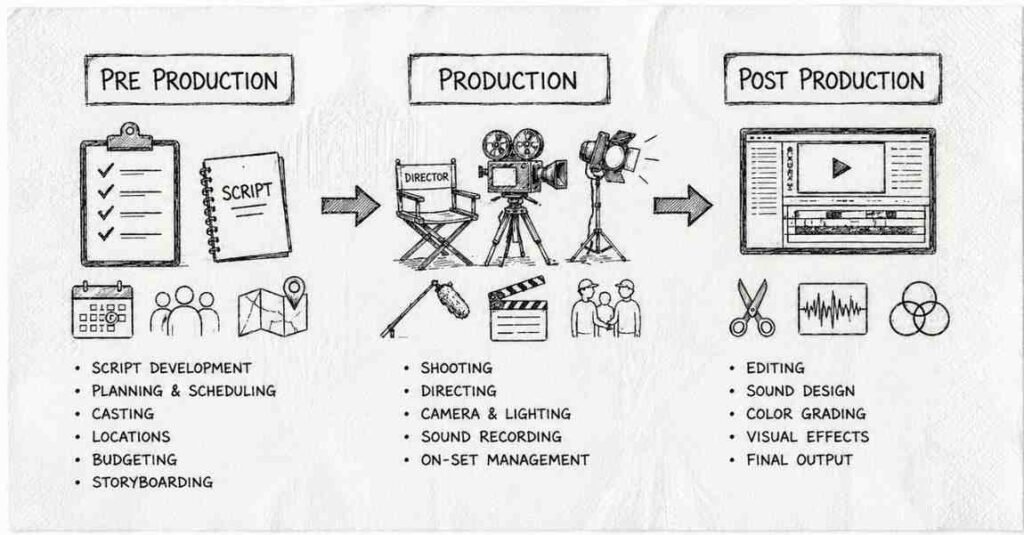
Film production divides into three distinct phases, each with specialized roles and requirements.
Pre-production is the planning stage where films are born on paper before cameras roll. This phase includes scriptwriting, budgeting, casting, location scouting, storyboarding, and scheduling. The director develops their vision, the producer secures financing, the casting director finds talent, the production designer conceptualizes the visual world, and the line producer creates detailed schedules. Pre-production can last weeks for small projects or months for large productions. Thorough pre-production prevents costly mistakes during shooting.
Production is the actual filming period—what most people imagine when they think of making movies. This is when the cast and crew gather on location or in studios to capture footage. Days are long, typically 12-14 hours. The pressure is intense because time literally equals money—every extra day of shooting costs money in crew salaries, equipment rentals, and location fees. Production crews must work efficiently while maintaining creative quality. For a typical feature film, principal photography might last 30-60 days, though this varies widely based on budget and complexity.
Post-production happens after filming wraps. Editors assemble footage into coherent sequences, sound designers create audio landscapes, VFX artists add digital elements, colorists enhance mood through grading, and music composers score the film. Post-production can take several months for complex films requiring extensive visual effects. This phase transforms raw footage into the polished product audiences eventually see. Many consider post-production “where films are truly made” because editing shapes storytelling, pacing, and emotional impact.
How Film Crews Are Structured
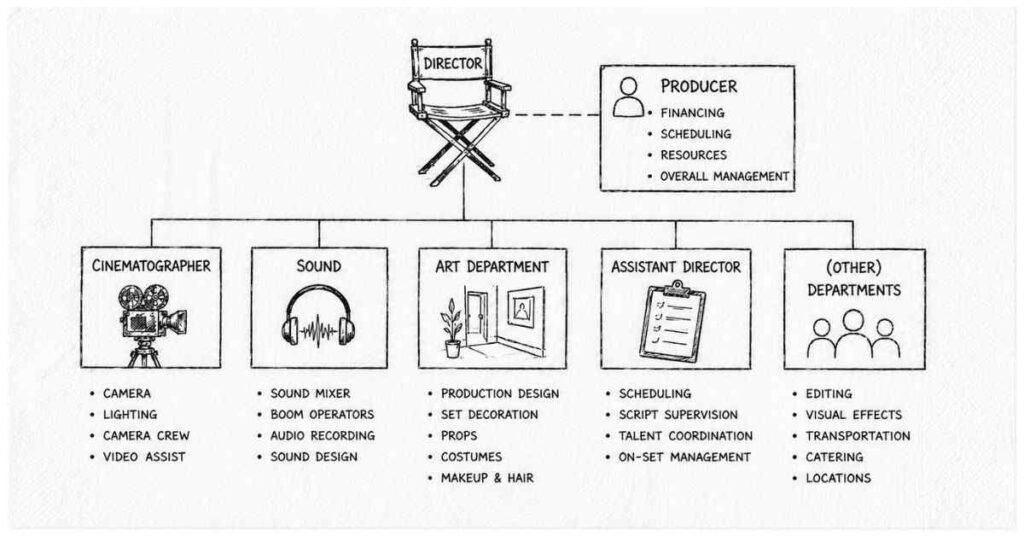
Film productions operate with clear hierarchies to ensure efficient decision-making under time pressure.
At the top sits the director, the creative leader responsible for the artistic vision. The producer manages the business side—financing, budgets, schedules, and ensuring the film’s completion. Large productions often have multiple producers with different responsibilities: executive producers (financing), line producers (day-to-day operations), and associate producers (specific aspects).
The director of photography (DOP) or cinematographer heads the camera and lighting departments, translating the director’s vision into visual reality. Under the DOP work camera operators, focus pullers, and camera assistants.
The production designer leads the art department, creating the film’s visual environment through sets, props, and overall aesthetic. Art directors, set decorators, and prop masters work under the production designer.
The sound department captures clean dialogue and ambient sound during shooting, led by the sound recordist or production sound mixer with boom operators assisting.
The assistant director (AD) team manages logistics—coordinating departments, managing extras, keeping the shoot on schedule. The first AD is essentially the director’s right hand, translating creative vision into practical execution.
Understanding this structure helps you identify where you might fit based on your interests and skills.
Pre-Production Roles
Director: The Creative Leader
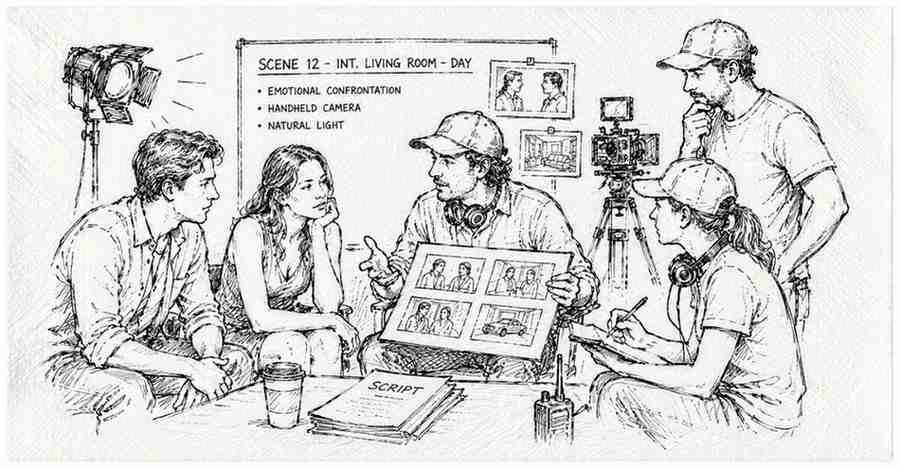
The director is the captain of the ship, responsible for the film’s overall creative vision. They interpret the screenplay, guide actors’ performances, make critical decisions about shot composition and pacing, and maintain artistic consistency throughout production.
What directors actually do: During pre-production, directors work closely with screenwriters (sometimes they’re the same person), conduct script readings, collaborate with department heads to establish visual style, oversee casting decisions, and plan each scene’s execution through shot lists and storyboards. During production, they direct actors, approve camera setups, decide which takes to use, and make countless creative choices under time pressure. In post-production, they work with editors shaping the final cut, collaborate with composers on music, and oversee sound design and color grading.
Skills required: Storytelling ability stands paramount—understanding narrative structure, character arcs, and emotional pacing. Visual literacy helps you conceptualize how scenes should look. Strong communication skills let you articulate vision to departments and elicit performances from actors. Leadership and decision-making capabilities help you navigate the pressures of production. Technical knowledge of cameras, lenses, and editing helps you make informed creative choices.
How to become a director: Most directors start by making short films with minimal resources—using smartphones, borrowing equipment, and recruiting friends as cast and crew. These early projects build your directing voice and create portfolio pieces. Film school helps but isn’t mandatory—many successful Indian directors are self-taught or learned through apprenticeships. Consider assisting established directors as an AD to learn on professional sets. Start with music videos, commercials, or digital content before attempting feature films. Build a showreel demonstrating your directorial capabilities and unique perspective.
Salary expectations: Directors’ earnings vary enormously based on experience, reputation, and project budgets. First-time directors might work for minimal compensation or deferred payment on independent productions. Established commercial directors earn ₹5-20 lakhs per project. Successful film directors command crores per film, plus backend percentages. The path to directing careers is less linear than other production roles—it’s about proving your vision through completed work.
Producer: The Business Mind
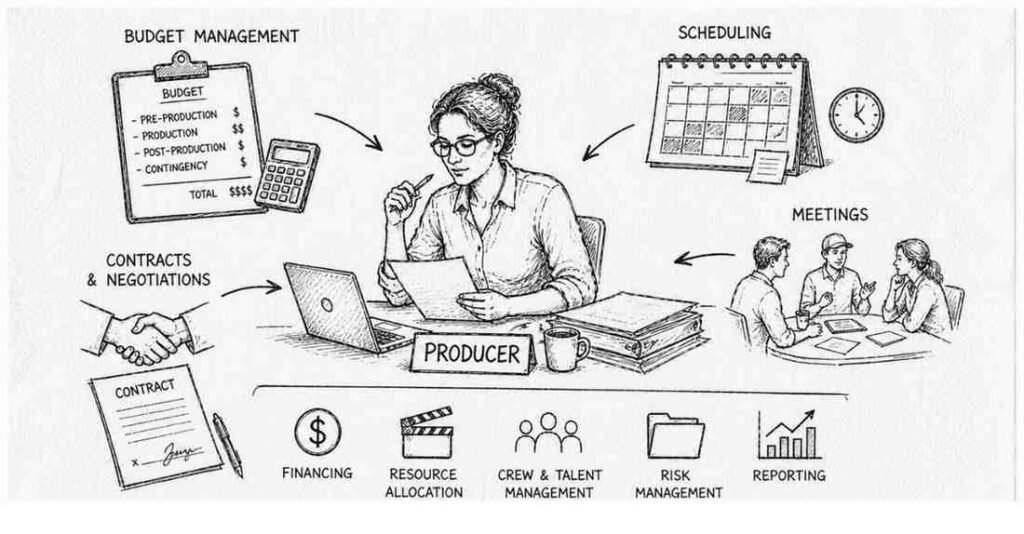
Producers are the business backbones of film production, handling everything from financing to distribution while supporting the director’s creative vision.
What producers do: Producers identify or develop projects worth making, secure financing through investors or studios, hire key personnel including directors and cast, manage budgets ensuring productions stay financially viable, solve problems that arise during production, and oversee marketing and distribution strategies. Different producer types have different focuses—creative producers involve themselves in artistic decisions while line producers handle operational logistics.
Skills required: Business acumen and financial management help you understand budgets, negotiate deals, and manage resources efficiently. Networking and relationship-building skills connect you with financiers, distributors, and talent. Problem-solving abilities help you navigate the countless challenges productions face. Understanding storytelling helps you evaluate scripts and creative decisions. Project management skills keep complex productions on track.
Educational pathways: While film production degrees help, business backgrounds (MBA, commerce) can be equally valuable for producers. Understanding contracts, negotiations, and financial structures matters enormously. Many successful producers start as production coordinators or line producers, learning the operational side before producing their own projects.
Breaking in: Entry-level positions include production assistant (PA) roles where you handle logistics, coordinate departments, and learn how productions function. Production coordinators manage paperwork, schedules, and communications. After gaining experience, you might become an associate producer on smaller projects, gradually building toward producing your own films. Building relationships with directors, investors, and industry professionals accelerates your path.
Earnings: Entry-level production roles pay ₹15,000-30,000 monthly. Experienced line producers earn ₹50,000-2 lakhs per project. Successful producers earn percentages of film profits, making earnings potentially unlimited for hit films but uncertain for unsuccessful ones.
Screenwriter: The Storyteller
Screenwriters create the blueprint every film builds upon—the screenplay containing dialogue, action, scene descriptions, and story structure.
What screenwriters do: They develop original concepts or adapt existing material (novels, plays, real events), create compelling characters with distinct voices, structure stories with proper pacing and emotional arcs, write authentic dialogue, and revise scripts based on director and producer feedback. Screenwriting is largely solitary work involving countless drafts before scripts are production-ready.
Skills needed: Storytelling ability is fundamental—understanding three-act structure, character development, conflict, and resolution. Strong writing skills let you craft natural dialogue and vivid scene descriptions. Understanding visual storytelling helps you write cinematically rather than novelistically. Research skills help you authentically portray settings, periods, or subjects. Thick skin helps you handle rejection and extensive revision notes.
Breaking in: Write constantly—complete multiple feature screenplays and numerous short film scripts. Enter screenwriting competitions like Mumbai Mantra, NFDC Screenwriters Lab, or Scriptapalooza. These offer exposure and credibility. Write spec scripts showcasing your voice, then actively pitch to producers and directors. Consider starting with short films or web series that require shorter scripts and have lower barriers to production. Join screenwriting groups for feedback and networking.
Education: Formal screenwriting courses at film schools like FTII, SRFTI, or Whistling Woods teach structure, format, and technique. Online courses from platforms like MasterClass, Udemy, or Coursera offer flexibility. However, the best screenwriting education comes from reading great scripts, watching films analytically, and writing prolifically.
Compensation: Screenwriters might earn ₹50,000-5 lakhs for independent film scripts, ₹5-25 lakhs for mid-budget productions, and ₹50 lakhs-2 crores for major Bollywood films, depending on their reputation. Web series writing offers ₹1.5-8 lakhs per episode. Many screenwriters supplement income through script doctoring, dialogue writing, or teaching.
Casting Director: Finding the Right Faces
Casting directors identify and audition actors for roles, matching talent to characters and helping directors make final casting decisions.
Responsibilities: They analyze scripts identifying character requirements, conduct auditions reviewing hundreds of actors, maintain databases of talent across age ranges and types, negotiate actor deals and schedules, and sometimes coach actors during auditions to bring out better performances. Casting directors must have encyclopedic knowledge of available talent and keen instincts about who will embody characters effectively.
Skills required: Understanding acting and performance helps you evaluate auditions. People skills and intuition help you read personalities and potential. Organizational abilities manage the logistics of coordinating numerous auditions. Networking connects you with talent agents and actors. Patience helps you sit through countless auditions finding the right fit.
Breaking in: Many casting directors start as casting assistants, handling administrative tasks and learning the talent pool. Building comprehensive knowledge of actors—from stars to character actors to newcomers—takes years of immersion in the industry. Attend theater productions, film festivals, and acting school showcases to discover emerging talent. Work with different directors on varied projects to build your reputation.
Earnings: Casting directors charge per project, with fees ranging from ₹1-10 lakhs depending on project size and their reputation. Established casting directors working on major productions earn significantly more.
Production Roles: On Set
Director of Photography (Cinematographer): The Visual Artist
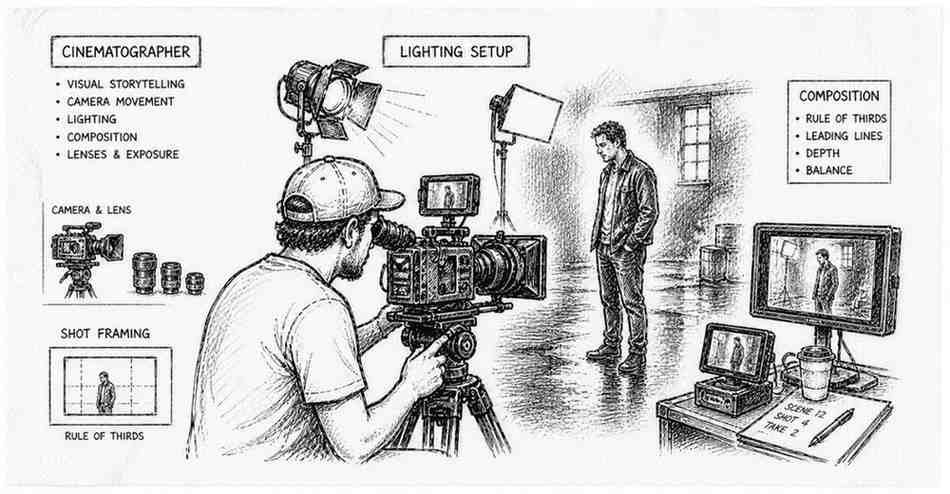
The Director of Photography (DOP) or cinematographer is responsible for the film’s visual look—lighting, camera work, shot composition, and overall cinematographic style.
What DOPs do: The cinematographer collaborates closely with the director during pre-production to establish the visual language of the film—color palettes, camera movements, lighting styles, and overall mood. They select cameras, lenses, and lighting equipment that best serve the story. During production, they supervise camera and lighting crews, compose shots, design lighting setups for each scene, and ensure visual consistency. They make critical technical decisions about exposure, focus, and movement while balancing creative vision with practical constraints like time and budget.
Skills required: Deep technical knowledge of cameras, lenses, lighting equipment, and exposure is fundamental. Visual artistry and understanding composition, color theory, and how light shapes mood elevates technical skill into art. Collaboration skills help you translate the director’s vision while contributing your own creative input. Problem-solving abilities help you adapt when weather changes, locations differ from plans, or equipment fails. Physical stamina is necessary—cinematographers spend long days on their feet, often in challenging conditions.
Career progression: Most cinematographers start as camera assistants, learning equipment and set protocols while building technical foundations. After 2-3 years, you might advance to camera operator, actually framing and executing shots under the DOP’s direction. From there, becoming an assistant cinematographer or DOP on smaller projects like commercials, music videos, or low-budget films builds your portfolio. Eventually, you graduate to DOP on feature films. Building a distinctive visual style through your work helps you stand out and command higher fees.
Education and training: Film schools like FTII, SRFTI, and Whistling Woods offer specialized cinematography courses covering technical and artistic aspects. However, many successful cinematographers are self-taught or learned through apprenticeships. Understanding camera manuals, practicing with affordable equipment, and studying the work of master cinematographers teaches fundamentals. Online tutorials, forums, and communities provide technical knowledge. Ultimately, hands-on experience on actual sets provides the best education.
Salary expectations: Entry-level cinematographer salaries in India start around ₹2-3 lakhs annually for camera assistants and junior cinematographers on smaller projects. With experience as camera operators or assistant DOPs, earnings rise to ₹4-6 lakhs annually. Mid-career cinematographers earn ₹6-15 lakhs per year. Established DOPs command ₹20-35 lakhs annually, while top cinematographers working on big-budget Bollywood or regional films can earn ₹5-8 crores per project with profit-sharing arrangements. Per-project rates for experienced cinematographers on low-budget films range from ₹4-5 lakhs, making ₹20-25 lakhs annually feasible with multiple projects
Director of Photography (Cinematographer): The Visual Artist
The Director of Photography (DOP) or cinematographer is responsible for the film’s visual look—lighting, camera work, shot composition, and overall cinematographic style.
What DOPs do: The cinematographer collaborates closely with the director during pre-production to establish the visual language of the film—color palettes, camera movements, lighting styles, and overall mood. They select cameras, lenses, and lighting equipment that best serve the story. During production, they supervise camera and lighting crews, compose shots, design lighting setups for each scene, and ensure visual consistency. They make critical technical decisions about exposure, focus, and movement while balancing creative vision with practical constraints like time and budget.
Skills required: Deep technical knowledge of cameras, lenses, lighting equipment, and exposure is fundamental. Visual artistry and understanding composition, color theory, and how light shapes mood elevates technical skill into art. Collaboration skills help you translate the director’s vision while contributing your own creative input. Problem-solving abilities help you adapt when weather changes, locations differ from plans, or equipment fails. Physical stamina is necessary—cinematographers spend long days on their feet, often in challenging conditions.
Career progression: Most cinematographers start as camera assistants, learning equipment and set protocols while building technical foundations. After 2-3 years, you might advance to camera operator, actually framing and executing shots under the DOP’s direction. From there, becoming an assistant cinematographer or DOP on smaller projects like commercials, music videos, or low-budget films builds your portfolio. Eventually, you graduate to DOP on feature films. Building a distinctive visual style through your work helps you stand out and command higher fees.
Education and training: Film schools like FTII, SRFTI, and Whistling Woods offer specialized cinematography courses covering technical and artistic aspects. However, many successful cinematographers are self-taught or learned through apprenticeships. Understanding camera manuals, practicing with affordable equipment, and studying the work of master cinematographers teaches fundamentals. Online tutorials, forums, and communities provide technical knowledge. Ultimately, hands-on experience on actual sets provides the best education.
Salary expectations: Entry-level cinematographer salaries in India start around ₹2-3 lakhs annually for camera assistants and junior cinematographers on smaller projects. With experience as camera operators or assistant DOPs, earnings rise to ₹4-6 lakhs annually. Mid-career cinematographers earn ₹6-15 lakhs per year. Established DOPs command ₹20-35 lakhs annually, while top cinematographers working on big-budget Bollywood or regional films can earn ₹5-8 crores per project with profit-sharing arrangements. Per-project rates for experienced cinematographers on low-budget films range from ₹4-5 lakhs, making ₹20-25 lakhs annually feasible with multiple projects.
Camera Operator: Executing the Vision
Camera operators physically operate cameras during shoots, executing the cinematographer’s planned compositions and movements.
Responsibilities: They frame shots according to the DOP’s specifications, execute camera movements smoothly (pans, tilts, tracking shots, crane moves), maintain focus during takes, adjust framing if actors move unexpectedly, and ensure technical quality of captured footage. On smaller productions, camera operators might also serve as cinematographers, but on larger sets they work under the DOP’s supervision.
Skills needed: Technical proficiency with various camera systems is essential. Steady hands and physical coordination help you execute smooth movements. Understanding composition and blocking helps you anticipate action and maintain proper framing. Concentration and focus let you stay sharp during long takes. Communication skills help you coordinate with focus pullers, grips, and other crew members.
Breaking in: Starting as a camera assistant (AC) provides the foundation. Second ACs handle equipment loading, battery management, and slate operation. First ACs (focus pullers) maintain critical focus during shots, requiring precision and technical skill. After proving yourself as an AC, transitioning to operator becomes possible. Building relationships with DOPs and demonstrating reliability and skill accelerates your path.
Earnings: Camera operators in India earn approximately ₹16,000-16,300 per month on average (₹1.9-2 lakhs annually) for regular employed positions. However, experienced operators working on commercial productions can earn significantly more on a day-rate or project basis, potentially reaching ₹5-10 lakhs annually with consistent work.
Gaffer and Key Grip: Masters of Light and Movement
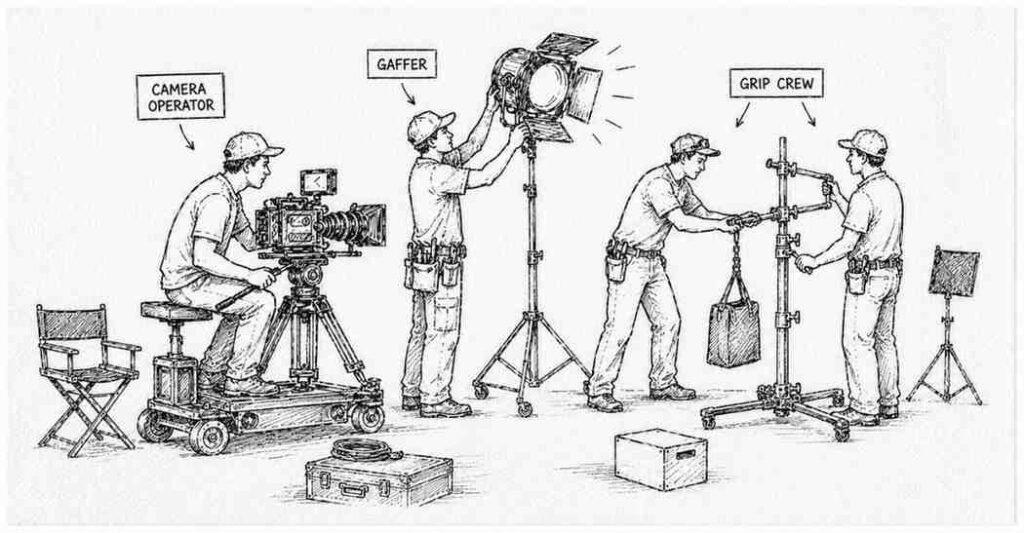
Gaffers and key grips are specialized technicians who handle lighting and camera support equipment respectively.
Gaffer is the head electrician responsible for executing the DOP’s lighting design. They supervise the lighting crew, position lights to achieve desired effects, manage power distribution on set, troubleshoot electrical issues, and ensure crew safety around electrical equipment. Gaffers translate the cinematographer’s creative lighting vision into practical electrical reality. Day rates for gaffers on Indian productions range from ₹40,000-50,000 ($505-605).
Key Grip heads the grip department, responsible for camera support equipment and set safety. Grips build and operate dollies, cranes, jibs, and stabilization equipment that allow camera movement. They rig cameras in vehicles, on buildings, or in precarious positions. They also handle flags, diffusion, and rigging equipment that shapes light. Key grips ensure all camera support and rigging is safe and stable. Day rates for key grips are similar to gaffers, approximately ₹40,000-50,000 ($505-605).
Swing crew members work flexibly between camera and lighting departments, assisting wherever needed. Day rates for swing crew are around ₹35,000-40,000 ($355-405). Regular grip and electric crew members earn ₹40,000-50,000 ($405-505) per day.[beverlyboy]
Skills required: Technical knowledge of lighting equipment, rigging, and electrical systems is fundamental. Problem-solving abilities help you achieve complex setups safely. Physical fitness is necessary—these roles involve heavy lifting and long days on your feet. Safety consciousness is paramount—improper rigging or electrical work can cause serious injuries.
Career path: Most gaffers and grips start as general crew members, learning equipment and protocols. After gaining experience as electricians or grip assistants, progressing to best boy (assistant to gaffer or key grip) and eventually to gaffer or key grip becomes possible. Many specialize based on preference—some love the artistic side of lighting while others enjoy the engineering challenges of rigging and camera support.
Sound Recordist: Capturing Clean Audio
Production sound mixers or sound recordists capture dialogue and ambient sound during filming, ensuring audio quality matches visual quality.
Responsibilities: They position microphones to capture clean dialogue without appearing in frame, mix multiple audio sources in real-time during takes, monitor audio levels and quality through headphones, coordinate with boom operators who position microphones on poles, record audio to multiple backup sources, and document audio notes for post-production. Good production sound saves significant time and money in post-production—poorly recorded dialogue requires expensive ADR (automated dialogue replacement) where actors re-record lines in studios.
Skills required: Technical understanding of microphones, recorders, and audio physics helps you capture clean sound. Good ears and attention to detail help you catch problems during recording rather than discovering them later. Concentration helps you monitor multiple audio sources while the visual chaos of production happens around you. Communication skills help you coordinate with actors and crew to minimize unwanted noise.
Equipment knowledge: Professional sound recordists work with equipment like Sound Devices recorders, Sennheiser and Schoeps microphones, wireless systems, and boom poles. Understanding polar patterns, frequency response, and audio troubleshooting is essential.
Earnings: Sound recordists in India earn day rates of approximately ₹25,000-58,000 ($305-705) depending on experience and project budget. Annual earnings vary based on how frequently they secure work, but experienced sound recordists can earn ₹5-12 lakhs annually with consistent projects.
Breaking in: Many sound recordists start by recording audio for independent films, corporate videos, or student projects with basic equipment. Assisting established sound mixers on professional sets teaches advanced techniques and industry practices. Building your own professional audio kit represents a significant investment but allows you to work independently.
Post-Production Roles
Film Editor: Shaping the Story
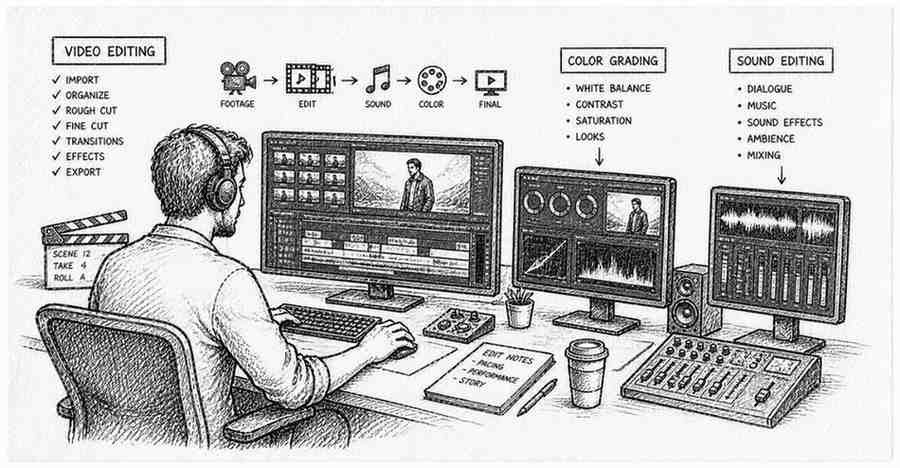
Editors are storytellers who assemble raw footage into coherent, emotionally engaging narratives. Many consider editing “the final rewrite” where films truly come together.
What editors do: They review all footage captured during production (often hundreds of hours for feature films), select the best takes of each shot, assemble scenes following the script, experiment with different cutting patterns and pacing, work with directors refining the edit through multiple revisions, add temporary music and effects to test emotional impact, and deliver final edited sequences for sound design, VFX, and color grading. Editors make countless decisions affecting story clarity, emotional impact, and pacing—which shots to use, when to cut, how long to hold on faces, when to cut away to reactions.
Skills required: Storytelling instinct helps you recognize what works narratively versus what doesn’t. Technical proficiency with editing software like Adobe Premiere Pro, Final Cut Pro, Avid Media Composer, or DaVinci Resolve is fundamental. Attention to detail helps you catch continuity errors, audio problems, or timing issues. Patience and concentration help you work through lengthy footage finding the story within. Collaboration skills help you work with directors who have strong opinions about their films while offering your own creative input.
Career progression: Many editors start as assistant editors, organizing footage, syncing sound, creating rough assemblies, and managing technical aspects of editing workflows. After demonstrating competence, you might edit smaller projects like commercials, corporate videos, or documentary scenes. Building a strong showreel demonstrating your editing sensibility eventually leads to feature film opportunities. Developing a reputation for specific genres (action, comedy, drama) or styles helps you command higher rates.
Education: Film school editing courses teach fundamentals of software, story structure, and editing theory. However, self-teaching is entirely viable—editing software tutorials are abundant online, and practicing by re-editing existing footage or cutting your own projects builds skills. Many successful editors are self-taught.
Salary expectations: Film editors in India typically earn within the broader ₹20.1 lakh average for film production roles. Entry-level assistant editors might earn ₹2-4 lakhs annually, while experienced feature film editors command ₹8-20 lakhs per project. Top editors working on major productions can earn significantly more, particularly on a project percentage basis.
Colorist: Painting with Light
Colorists enhance and manipulate the color and contrast of footage to achieve specific moods, ensure visual consistency, and create the film’s final look.
Responsibilities: They work with the director and cinematographer understanding the intended visual style, correct exposure and color inconsistencies between shots, create looks using color grading tools (adjusting hue, saturation, luminance), ensure skin tones appear natural and flattering, match shots from different cameras or lighting conditions for seamless sequences, and deliver final graded footage for mastering. Color grading profoundly affects emotional tone—warm colors feel inviting while cool tones feel clinical; high contrast feels dramatic while flat images feel naturalistic.
Skills required: Understanding color theory and how colors evoke emotions helps you make creative choices. Technical proficiency with grading software like DaVinci Resolve, Baselight, or Premiere Pro Lumetri is essential. Calibrated vision and attention to subtle color differences helps you work precisely. Understanding cinematography helps you enhance rather than fight the original footage. Communication skills help you translate director’s verbal descriptions of desired looks into visual reality.
Tools and workflow: Professional colorists typically work with DaVinci Resolve, the industry-standard grading software. They use calibrated reference monitors in controlled lighting environments to ensure accurate color representation. Many colorists work in specialized grading suites or post-production facilities.
Breaking in: Start by color grading your own projects or offering free grading for independent filmmakers building your portfolio. Online tutorials teach software and techniques. Practicing with RAW footage (available online) develops your skills. Eventually, charging for services on short films and commercials builds toward feature film work.
Earnings: Colorist salaries align with broader post-production roles. Entry-level colorists might earn ₹3-6 lakhs annually, while experienced colorists working on features and commercials earn ₹10-20 lakhs annually. Top colorists command premium rates, particularly working on high-budget productions or advertising campaigns.
VFX Artist: Creating the Impossible
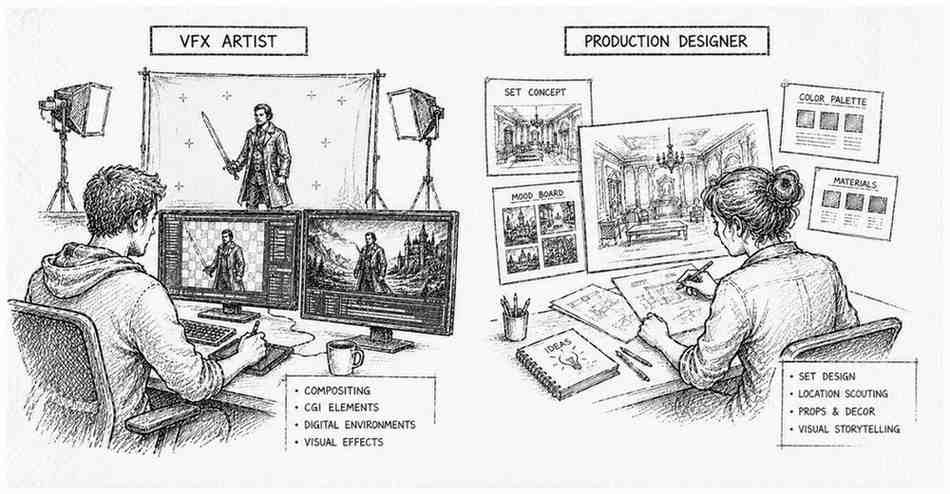
Visual effects artists create digital elements, enhancements, and impossible visuals integrated seamlessly with live-action footage.
Types of VFX work: Compositing artists combine multiple visual elements (green screen replacements, adding digital characters, removing unwanted objects). 3D artists create digital models, environments, and characters. Animators bring digital elements to life through movement. Matchmovers track camera movement in footage so digital elements move realistically with the scene. Rotoscope artists create mattes separating foreground elements from backgrounds. VFX supervisors coordinate teams and ensure visual consistency across sequences.
Skills required: Proficiency with VFX software like Adobe After Effects, Nuke, Maya, Houdini, Cinema 4D, or Blender depending on specialization. Understanding composition, lighting, and physics helps digital elements integrate believably. Attention to detail separates convincing effects from obvious ones. Problem-solving abilities help you achieve directors’ visions within time and budget constraints. Patience helps you work through complex, time-consuming processes.
Career path: Many VFX artists start by learning software independently, creating personal projects or offering services for low-budget productions. Building a strong demo reel showcasing your best work opens doors to VFX studios. Starting in junior roles like rotoscope artist or junior compositor provides entry into professional pipelines. Specializing in particular aspects (character animation, environment creation, effects simulation) helps you develop valuable expertise.
Education: Formal animation and VFX courses from institutions like FTII, NID, or specialized animation schools provide comprehensive foundations. However, many successful VFX artists are self-taught using online tutorials, practice projects, and personal initiative. The quality of your demo reel matters more than your educational background.
Salary expectations: Entry-level VFX artists in India earn ₹1.2-3 lakhs annually. With 1-4 years of experience, salaries rise to ₹3-4 lakhs annually. Mid-career VFX artists earn ₹5-10 lakhs, while senior specialists and supervisors command ₹12-20+ lakhs annually. Top VFX artists at premium studios earn significantly more, particularly those working on international projects where Indian VFX provides cost advantages.
Production Design & Art Department
Production Designer: Creating Visual Worlds
Production designers conceptualize and oversee the creation of a film’s entire visual environment—sets, locations, props, and overall aesthetic.
Responsibilities: They collaborate with directors during pre-production establishing the visual style, research historical periods, locations, or settings to ensure authenticity, create concept art, sketches, and mood boards visualizing the world, design or select sets, oversee art directors, set decorators, and prop masters who execute the designs, and manage art department budgets ensuring designs are achievable within financial constraints. Production designers shape everything viewers see besides actors—architecture, furniture, props, colors, textures, and overall atmosphere.
Skills required: Visual creativity and artistic sensibility help you imagine compelling worlds. Research skills ensure authenticity whether depicting historical periods, specific cultures, or futuristic settings. Technical drawing or digital design skills help you communicate your vision to teams. Understanding architecture, interior design, and art history provides vocabulary for creating varied environments. Collaboration helps you align your vision with directors while managing large art departments.
Career path: Many production designers start as art department assistants or production assistants learning various aspects of set creation. Progressing to set decorator, art director, or assistant production designer builds experience. Taking on production design for short films, theater productions, or commercials builds your portfolio. Developing a distinctive visual style attracts directors seeking your specific aesthetic.
Earnings: Production designers on Indian films earn widely varying rates depending on project budgets. Entry-level art department roles might pay ₹15,000-30,000 monthly. Experienced production designers on mid-budget films earn ₹5-15 lakhs per project, while top production designers on major films command ₹20-50 lakhs or more.
Art Director & Set Decorator
Art directors work under production designers executing specific aspects of the overall design vision. Set decorators furnish and dress sets with appropriate props, furniture, and details making environments feel lived-in and authentic. Props masters source, create, or manage all props actors interact with. These roles require organizational skills, creativity within constraints, and attention to detail that sells the reality of the world being created.
Assistant Director: The Logistical Backbone
Assistant Directors (ADs) manage the practical logistics of productions, keeping shoots on schedule and coordinating departments.
What ADs do: The First AD is essentially the director’s right hand, translating creative vision into practical shooting schedules, managing daily shoot logistics, coordinating with department heads, directing background actors and extras, maintaining safety on set, and keeping productions on schedule (often the most challenging job on set). Second and Third ADs assist with specific logistical aspects like coordinating actor arrivals, managing paperwork, and communicating between departments.
Skills required: Exceptional organizational abilities and multitasking capacity help you manage countless moving parts simultaneously. Strong communication skills help you coordinate diverse departments and personalities. Problem-solving abilities help you adapt when plans inevitably change. Calm demeanor under pressure helps you handle stressful situations professionally. Physical stamina is necessary—ADs are typically first to arrive and last to leave.
Career progression: Most ADs start as production assistants or third ADs learning set protocols. Proving reliability, initiative, and competence leads to second AD and eventually first AD roles. Some first ADs transition to directing, using their comprehensive understanding of production logistics.
Earnings: Junior ADs might earn ₹20,000-40,000 monthly, while experienced first ADs on feature films earn ₹50,000-1.5 lakhs monthly depending on project scale and budget.
Breaking Into Film Production: Practical Strategies
Building Your Skills & Portfolio
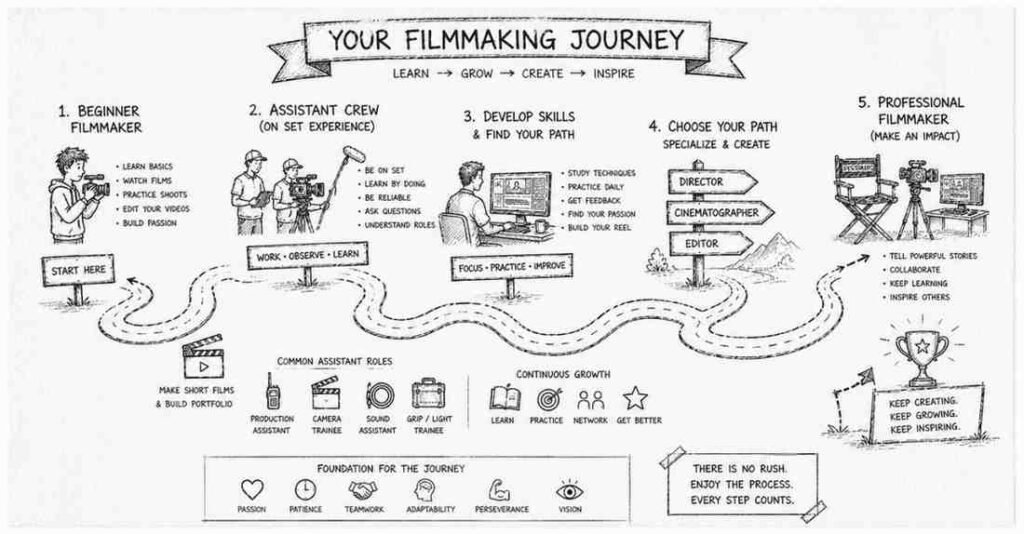
Start creating immediately with whatever resources you have. Smartphones shoot high-quality video—use yours to create short films demonstrating storytelling ability. Borrow or rent equipment for important projects. Collaborate with other aspiring filmmakers—you direct while they operate camera, then reverse roles on their projects. Enter film festivals and competitions showcasing your work and potentially winning recognition. Upload work to YouTube or Vimeo building an online portfolio. Quality matters more than quantity—three excellent pieces outweigh twenty mediocre ones.
Film School vs. Self-Learning
Film school advantages: Structured curriculum teaching fundamentals, access to professional equipment, collaborative environment with peers, industry connections through alumni and guest speakers, and credential recognition from employers. Top schools like FTII and SRFTI offer excellent education but admission is highly competitive.
Self-learning advantages: Flexibility to learn at your own pace, significantly lower cost, learning exactly what interests you rather than fixed curriculum, and building portfolios while learning. Countless successful filmmakers are self-taught.
Hybrid approach: Many combine approaches—taking specific courses or workshops for technical skills while self-teaching through practice and online resources.
Networking & Finding Opportunities
Join film clubs and communities in your city connecting with fellow enthusiasts. Attend film festivals, industry events, and workshops networking with professionals. Volunteer on film sets even in unpaid roles gaining experience and connections. Engage actively on social media following industry professionals and participating thoughtfully. Reach out for informational interviews with professionals whose work inspires you. Collaborative generously—help others on their projects knowing reciprocity benefits everyone.
First Steps Into Professional Work
Apply for internships with production companies, post-production facilities, or equipment rental houses. Work as production assistant accepting any role to get on sets and learn. Offer your services for low or no budget independent productions building experience and credits. Create spec work proactively—a compelling showreel opens more doors than any resume. Be persistent—rejection is universal in competitive creative industries. Keep learning, creating, and applying.
Conclusion
Film production offers diverse career paths for storytellers, technicians, artists, and organizers. Whether you’re drawn to the creative leadership of directing, the visual artistry of cinematography, the technical precision of sound or editing, or the logistical challenges of production management, there’s space for your talents. With average industry salaries of ₹20 lakhs and opportunities across Bollywood, regional cinema, OTT productions, commercials, and independent films, the financial and creative rewards can be substantial.[6figr]
Success requires combining technical skills with creative vision, building strong portfolios demonstrating your capabilities, networking persistently within the industry, and maintaining resilience through inevitable rejections and challenges. Start wherever you are with whatever you have—your smartphone, free editing software, and willing collaborators. Every great cinematographer, director, or editor started exactly where you are now: with passion, determination, and a willingness to learn.
The Indian film industry produces over 2,000 films annually and continues expanding through streaming platforms and regional cinema growth. Your unique perspective, voice, and skills contribute to this vibrant landscape. The question isn’t whether opportunities exist—they clearly do. The question is whether you’re ready to pursue them with dedication, creativity, and persistence.