
Degree Roadmap After Inter (Step-by-Step Guide)
Table of Contents
Introduction
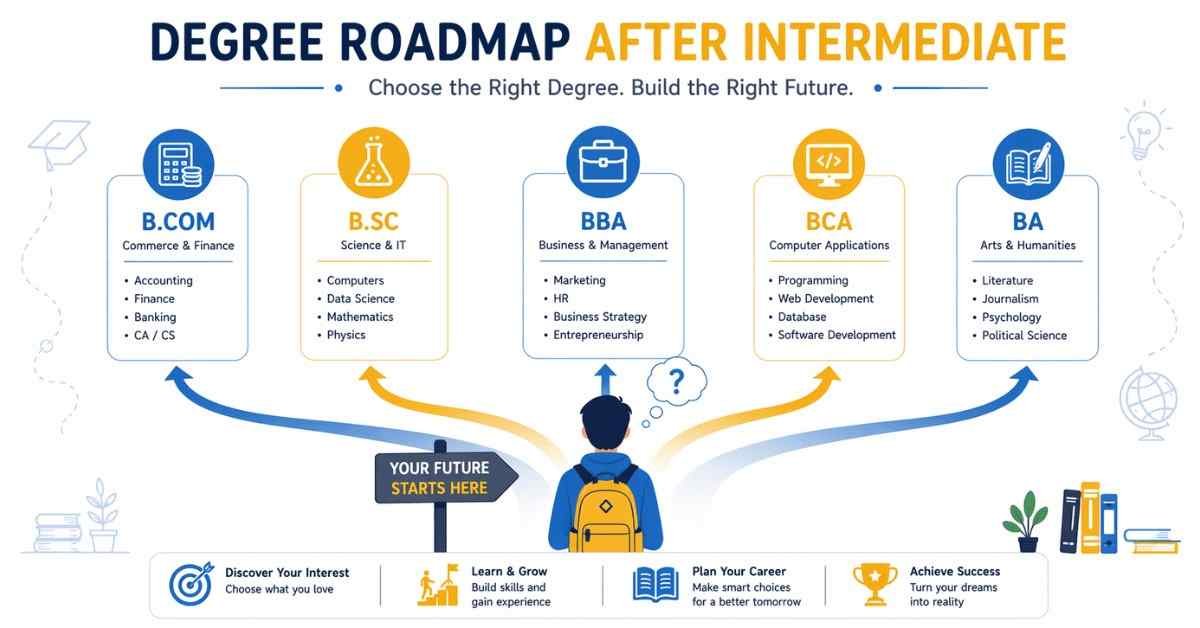
Choosing the right path after Intermediate (Inter) is one of the most important decisions in a student’s life. Many students feel confused due to multiple options, peer pressure, and lack of proper guidance. Some choose a degree randomly, while others follow friends or trends without understanding long-term career impact.
If you are planning to pursue a degree after Inter, this detailed guide will help you understand:
- Types of degree courses
- How to choose the right degree
- Step-by-step 3-year roadmap
- Skills you must learn
- Career opportunities
- Expert guidance for success
Let’s break everything down in a simple and practical way.
Confused after Inter? Start here.
Why Choosing the Right Degree Matters
Your degree is not just a certificate it is the foundation of your career. A well-chosen degree combined with the right skills can open doors to high-paying jobs, career growth, and global opportunities.
However, in today’s competitive world, a degree alone is not enough. You need:
- Skills
- Practical experience
- Industry knowledge
That’s why this roadmap focuses on both degree + skills.
Types of Degree Courses
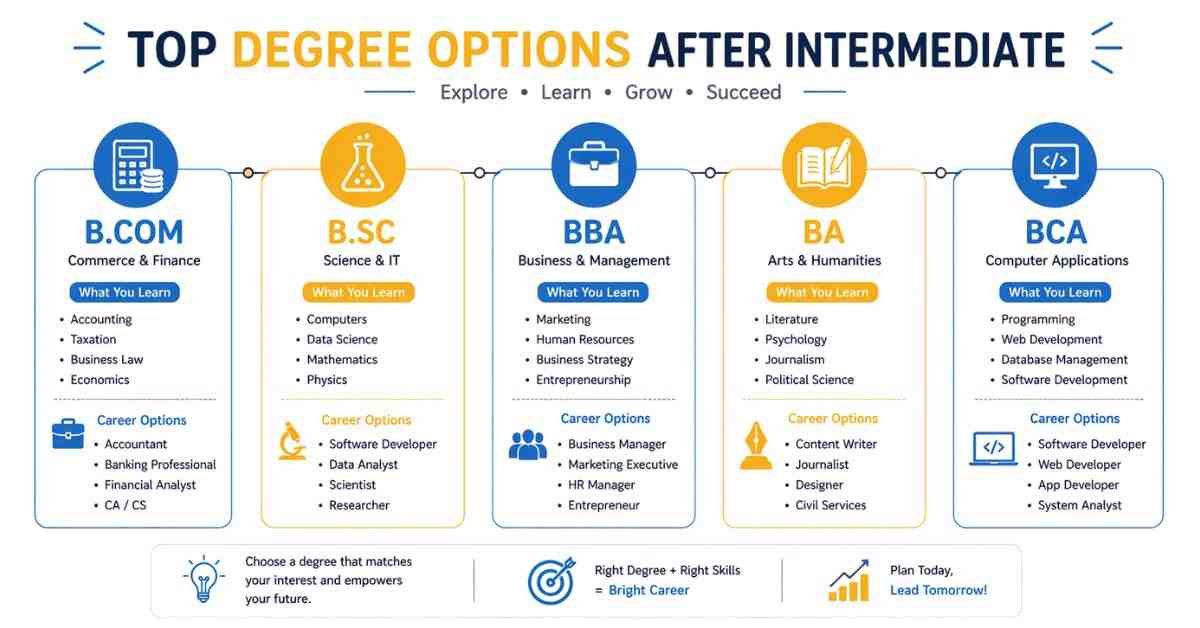
Let’s explore the most popular and career-oriented degree options.
1. B.Com – Commerce & Finance
B.Com is ideal for students interested in finance, accounting, and business operations.
What You Learn:
- Accounting
- Taxation
- Business Law
- Economics
Career Options:
- Accountant
- Banking Professional
- Financial Analyst
- Chartered Accountant (CA)
Best for: Students from Commerce background or those interested in money management.
2. B.Sc – Science & IT
B.Sc offers a wide range of specializations like Computers, Mathematics, Physics, and Data Science.
Popular Specializations:
- B.Sc Computers
- B.Sc Data Science
- B.Sc Mathematics
- B.Sc Physics
Career Options:
- Software Developer
- Data Analyst
- Scientist
- Researcher
Best for: Students interested in science, technology, and analytics.
3. BBA – Business & Management
BBA focuses on business strategies, marketing, and management skills.
What You Learn:
- Marketing
- Human Resources
- Business Strategy
- Entrepreneurship
Career Options:
- Business Manager
- Marketing Executive
- HR Manager
- Entrepreneur
Best for: Students who want to start a business or work in corporate roles.
4. BA – Arts & Creative Fields
BA is a flexible degree covering subjects like literature, psychology, journalism, and political science.
Career Options:
- Content Writer
- Journalist
- Designer
- Civil Services
Best for: Students interested in creativity, writing, or government jobs.
5. BCA – Computer Applications
BCA is one of the best degrees for students aiming for IT and software careers.
What You Learn:
- Programming (Python, Java)
- Web Development
- Database Management
Career Options:
- Software Developer
- Web Developer
- App Developer
Best for: Students who want to build a career in IT without doing engineering.
Not sure what to choose?Find your path.
Additional Degree Courses You Should Consider
Many students miss these valuable options:
B.Tech / Engineering
- Ideal for students with a strong interest in technology and innovation.
Streams: CSE, ECE, Mechanical, Civil, AI & Data Science
B.Des (Design)
- Best for creative students interested in UI/UX, fashion, or graphic design.
B.Pharmacy
- For students interested in the medical and pharmaceutical field.
Hotel Management
- Great for careers in hospitality, travel, and tourism.
Law (LLB – 5-Year Integrated Course)
- Perfect for students interested in legal careers.
Agriculture (B.Sc Agriculture)
- Growing field with opportunities in farming technology and agribusiness.
Which Degree Should You Choose?
Choosing the right degree depends on your interests and career goals:
- Interested in Computers → B.Sc (Computers), BCA, B.Tech
- Interested in Business → BBA
- Interested in Finance → B.Com
- Interested in Creativity → BA, B.Des
- Interested in Law → LLB
- Interested in Science/Research → B.Sc
Tip: Don’t choose a degree just because your friends are choosing it. Focus on your interest and future scope.
3-Year Degree Roadmap (Step-by-Step)
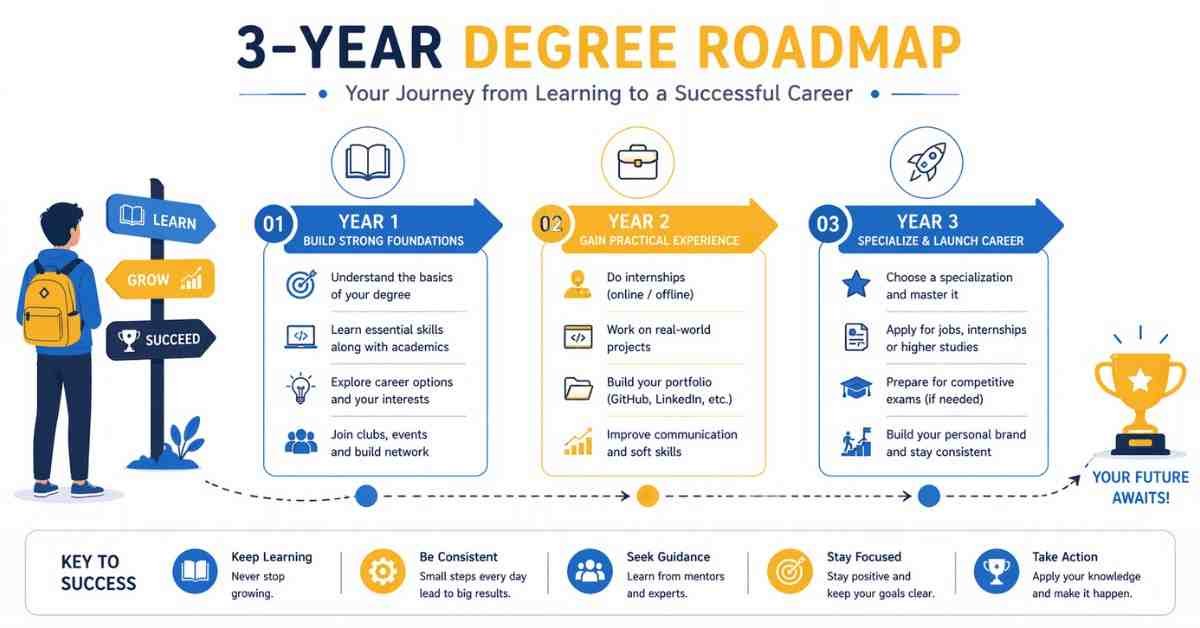
Year 1: Build Strong Foundations
- Understand the basics of your course
- Start learning additional skills (Coding, Digital Marketing, Design)
- Explore different career options
Year 2: Gain Practical Experience
- Do internships (online/offline)
- Start working on real-world projects
- Build a portfolio (GitHub, LinkedIn, personal website)
Year 3: Specialize & Prepare for Career
- Choose one skill and master it
- Apply for jobs, internships, or higher studies
- Prepare for competitive exams (if needed)
Important Skills to Learn Along with Degree
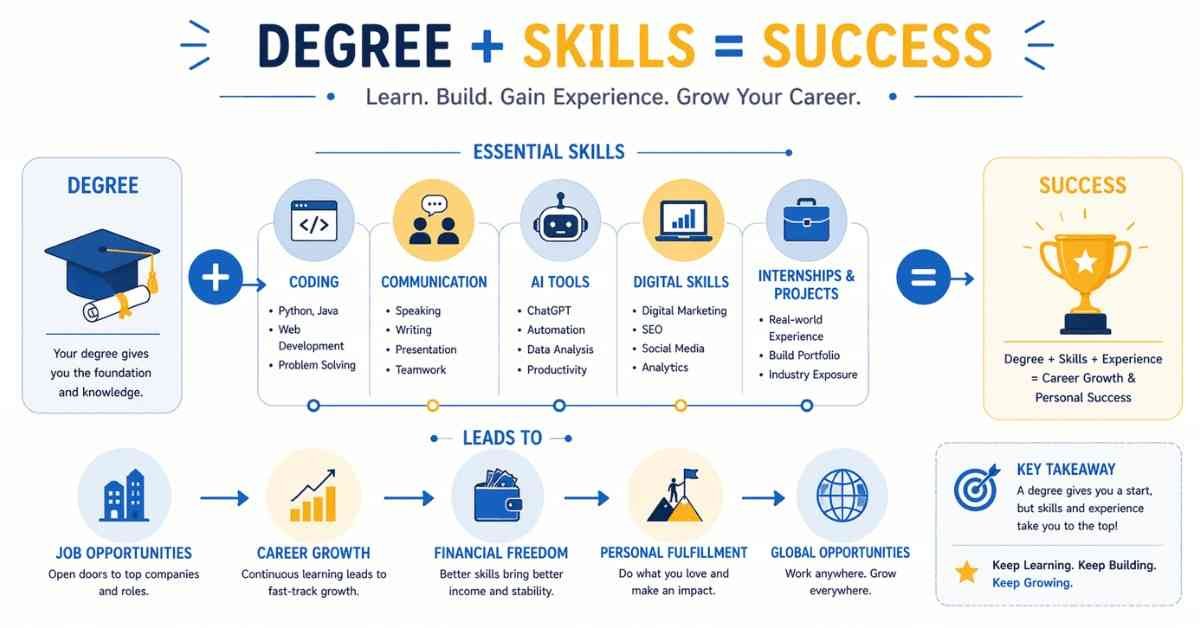
In today’s competitive world, skills matter more than just a degree.
Must-Have Skills:
- Coding: Python, Java, Web Development
- Communication Skills: Speaking, Writing, Presentation
- AI Tools: ChatGPT, Automation tools
- Digital Skills: SEO, Social Media Marketing
- Internships & Real Projects: Practical experience is key
Build skills that get you hired
Career Opportunities After Degree
Depending on your degree and skills, you can explore:
1. IT Jobs
- Software Developer
- Data Analyst
- Web Developer
2. Finance Jobs
- Chartered Accountant (CA)
- Banking Jobs
- Financial Analyst
3. Business & Management Roles
- Marketing Executive
- HR Manager
- Entrepreneur
4. Government Jobs
- UPSC, SSC, Banking Exams
- State Government Jobs
Final Advice
Many students think a degree alone guarantees success—but that’s not true anymore.
Degree + Skills = Success
If you only focus on your degree, your growth will be limited. But if you combine your degree with practical skills, internships, and real-world experience, you can build a strong and successful career.
Start your career today.