
Brand Identity & Logo Design Career Guide for Beginners
Table of Contents
Introduction: Why Brand Identity Design Is a Cornerstone Career Path
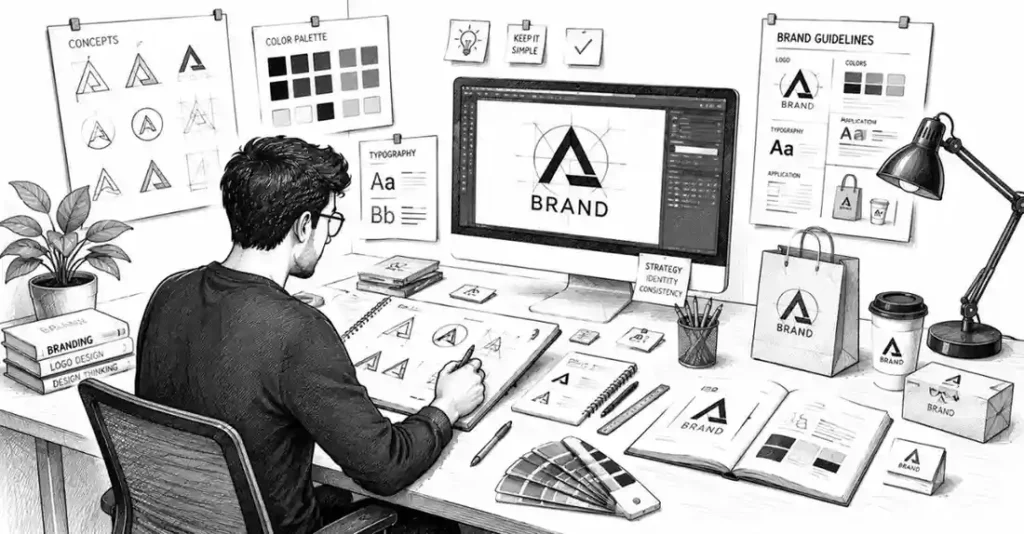
Every business from the neighborhood chai stall to India’s unicorn startups needs a visual identity that tells people who they are and what they stand for. That logo on your favorite clothing brand, the colors of the food delivery app you use daily, the fonts on that skincare product you bought last week all of these were carefully crafted by brand identity designers.
Brand identity design is more than just creating logos. It’s about building complete visual systems that help businesses stand out, build trust, and stay memorable. In India’s booming startup ecosystem and the digitization of traditional businesses, brand designers are in constant demand.
This guide will walk you through what brand identity design actually involves, the skills you need, how to build a portfolio that gets clients, realistic pricing in the Indian market, and how to grow from beginner to established brand designer.
What Is Brand Identity Design? (Simple Explanation)
Brand vs Logo: The Critical Difference
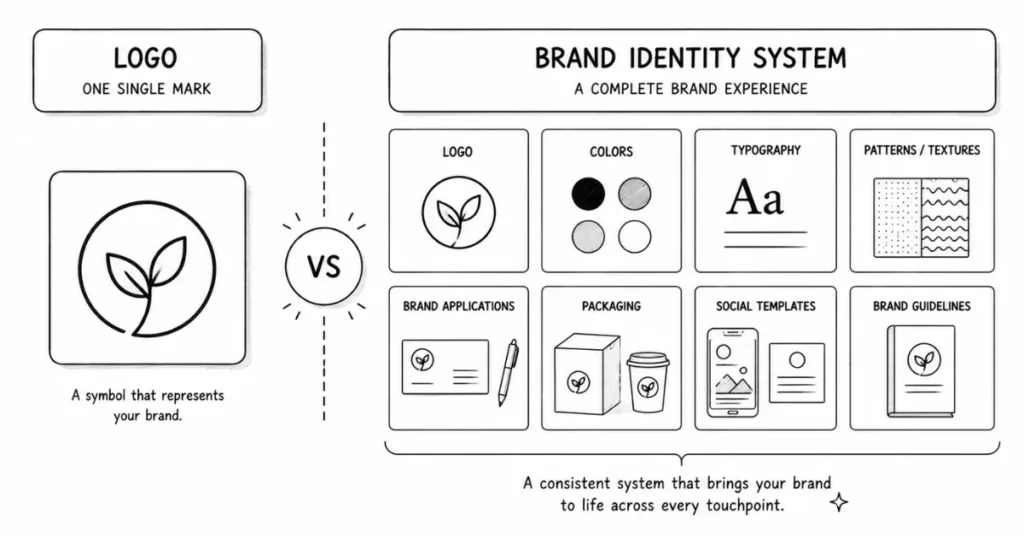
Many beginners confuse “logo design” with “brand identity.” Let’s clarify:
A logo is a single mark or symbol that represents a company.
Examples: The swoosh (Nike), the bitten apple (Apple), the orange ₹ symbol (PhonePe).
Brand identity is the complete visual system that defines how a brand looks everywhere
- Logo (primary mark, variations)
- Color palette (specific shades with codes)
- Typography (fonts for different uses)
- Graphic elements (patterns, icons, illustrations)
- Photography style
- Packaging design
- Marketing materials
- Website aesthetics
- Social media templates
Think of it this way: If a brand were a person, the logo would be their face, but brand identity would be their entire appearance clothes, style, way of speaking, and personality.
What Does a Brand Identity Designer Actually Create?
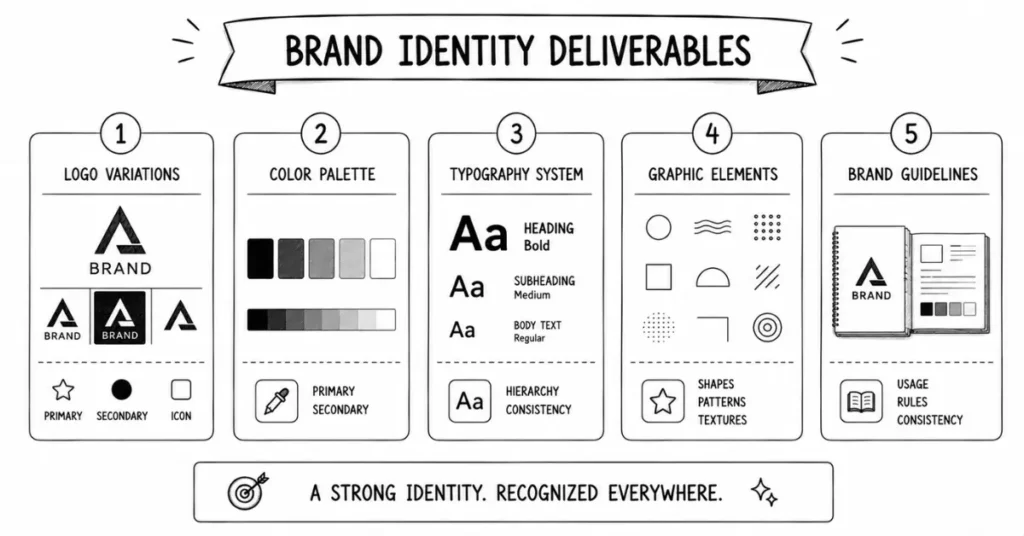
When you work on a complete brand identity project, you typically deliver:
1.Logo Design
- Primary logo
- Logo variations (horizontal, stacked, icon-only)
- Black and white versions
- Minimum size specifications
2.Color System
- Primary colors (main brand colors, 2-3 shades)
- Secondary/accent colors (supporting palette)
- Color codes (HEX for digital, CMYK for print, RGB, Pantone)
- Usage rules (which colors go where)
3.Typography System
- Primary typeface (for headlines, branding)
- Secondary typeface (for body text, details)
- Font hierarchy (sizes, weights for different uses)
- Web and print font specifications
4.Graphic Elements
- Pattrns or textures
- Iconography style
- Illustration approach
- Photography guidelines
5.Brand Guidelines Document
- How to use the logo correctly (and what NOT to do)
- Color specifications and combinations
- Typography rules
- Real-world applications (business cards, social media, packaging)
- Tone and personality description
In India, a basic brand identity package can range from ₹30,000 to ₹2,00,000 depending on scope, while full strategic branding from agencies can go from ₹2,00,000 to ₹6,00,000+.
Core Skills You Need for Brand Identity Design
1. Strategic Thinking (Not Just Visual Skills)
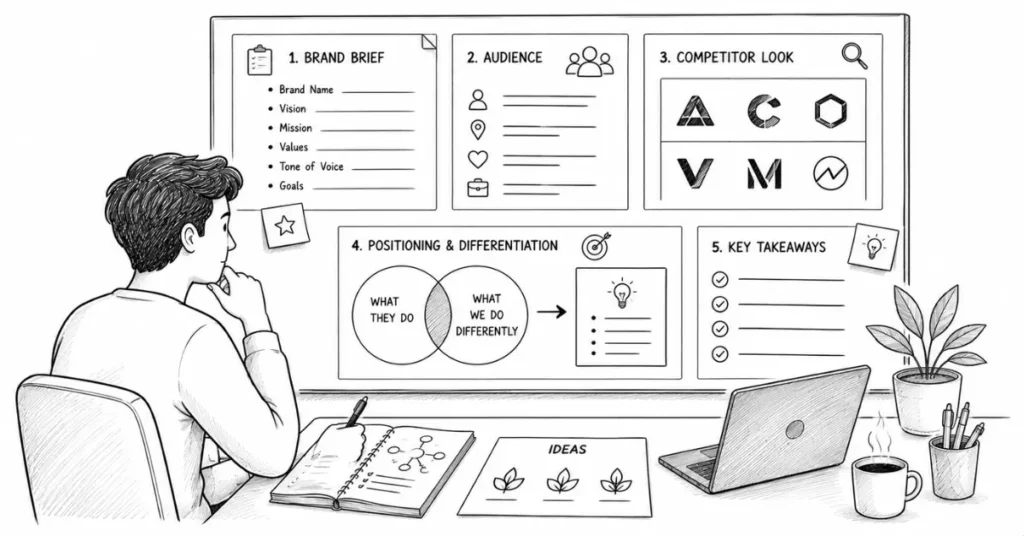
Before touching design software, you must understand the business:
- What does this company do?
- Who are their customers?
- Who are their competitors?
- What makes them different?
- What personality should the brand have? (Professional? Playful? Premium? Approachable?)
Example: Designing for a premium Ayurvedic skincare brand targeting urban women is very different from designing for a budget-friendly street food delivery app targeting students.
Good brand designers ask lots of questions before sketching anything.
2. Logo Design Fundamentals
Logos must be:
Simple: Easy to recognize and remember (think of Apple, Nike, Zomato).
Scalable: Looks good tiny (favicon) and huge (billboard).
Timeless: Won’t look dated in 5 years (avoid trendy effects).
Appropriate: Matches the industry and audience.
Versatile: Works in color and black/white, on any background.
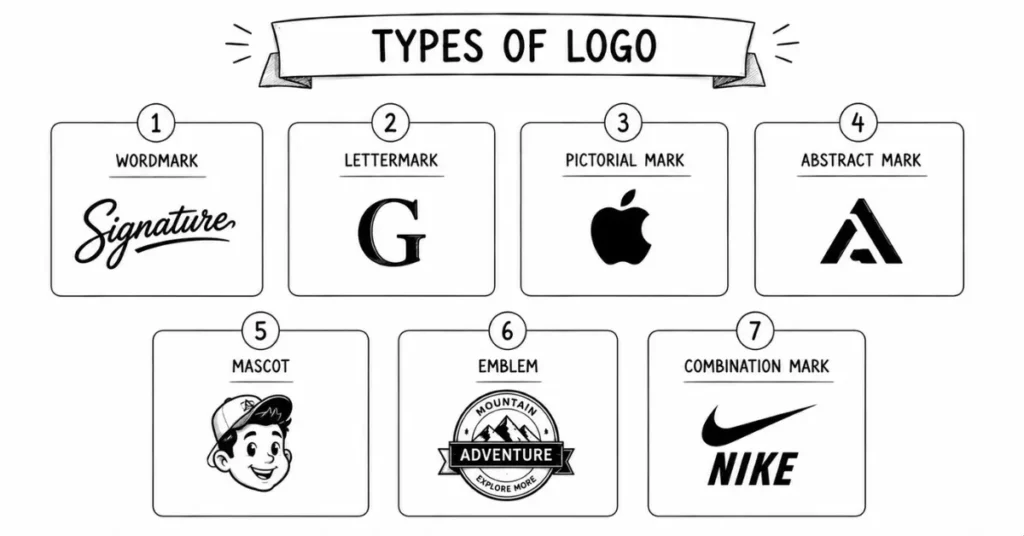
Types of logos you should know:
- Wordmark: Text-based (Google, Coca-Cola, Flipkart)
- Lettermark: Initials (IBM, HBO, LG)
- Pictorial mark: Icon or symbol (Apple, Twitter bird, Swiggy’s delivery partner icon)
- Abstract mark: Geometric/abstract shape (Pepsi circle, Adidas stripes)
- Mascot: Character-based (Amul girl, Zomato’s food icons)
- Emblem: Text inside a symbol (Starbucks, many university logos)
Combination mark: Symbol + text together (Zomato, Paytm, Ola)
3. Color Theory and Psychology
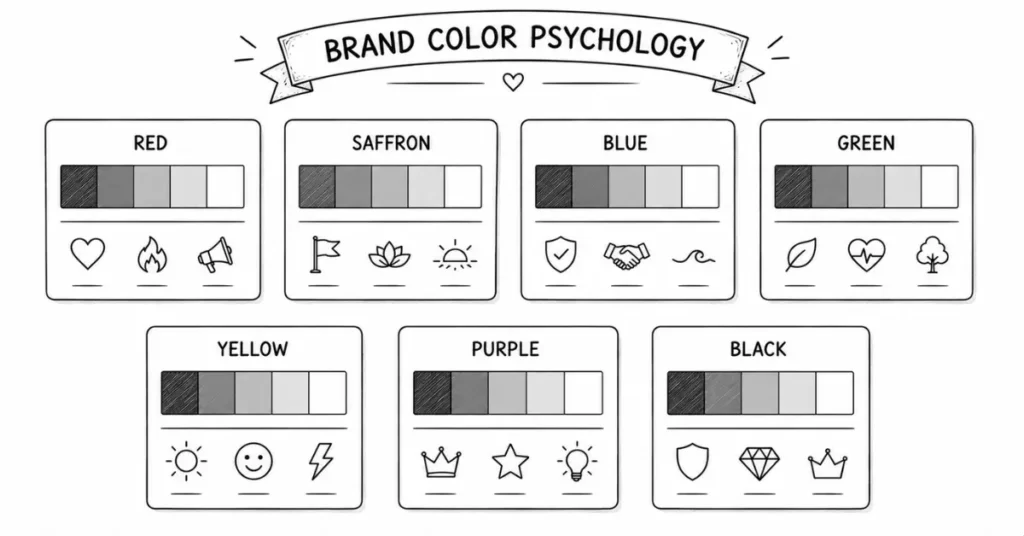
Colors carry meaning and evoke emotions:
In the Indian context:
- Red: Energy, passion, festivals, auspiciousness (often seen in wedding, food, and festive brands)
- Saffron/Orange: Courage, spirituality, cultural pride
- Blue: Trust, stability, technology (banks, tech companies like HDFC, Infosys)
- Green: Nature, health, growth (organic food, health apps, financial growth apps)
- Yellow/Gold: Optimism, wealth, premium (jewelry, premium services)
- Purple: Luxury, creativity, sophistication
- Black: Premium, sophisticated, modern (luxury fashion, upscale brands)
Cultural sensitivity matters: A color combination that works in Mumbai might need adjustment for rural markets or different regions. Brand designers understand these nuances.
4. Typography Skills
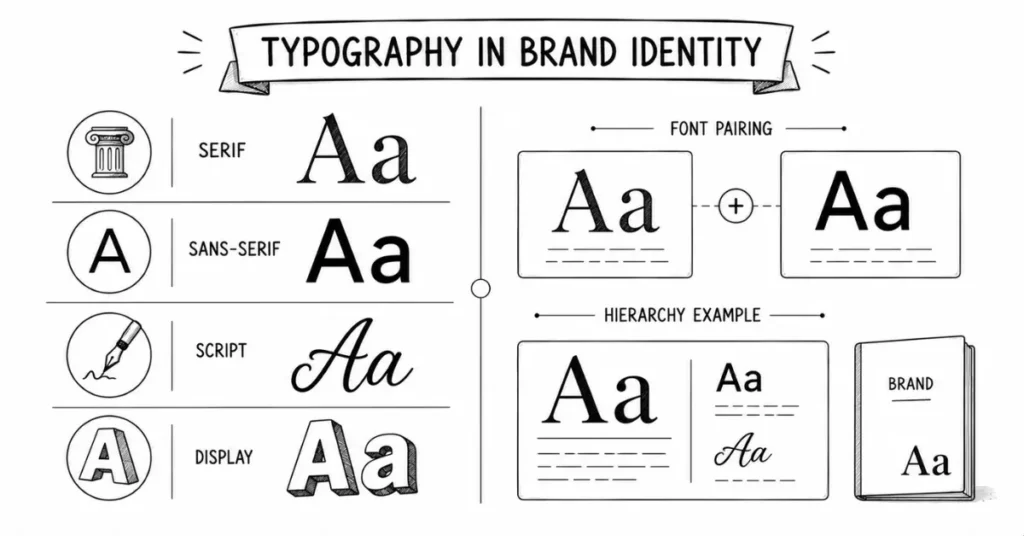
Fonts communicate personality before people even read the words:
- Serif fonts (with small lines at letter ends): Traditional, trustworthy, formal (newspapers, law firms, premium brands)
- Sans-serif fonts (clean, no decorations): Modern, clean, approachable (tech companies, startups, apps)
- Script fonts (handwritten style): Elegant, personal, creative (wedding services, boutiques, artisan brands)
- Display fonts (decorative): Attention-grabbing, unique (logos, headlines only—not body text)
Font pairing is an art: You typically choose 2 fonts (sometimes 3) that complement each other one for headlines, one for body text.
Indian language typography: Many brands need multilingual identities (English + Hindi, Tamil, Telugu, etc.). Understanding Devanagari, regional script aesthetics, and finding quality multilingual typefaces is a valuable skill.
5. Design Software Mastery
Primary tools:
Adobe Illustrator (essential): Logos must be created as vectors so they scale infinitely without losing quality. Illustrator is the industry standard.
Adobe Photoshop (supporting): For creating mockups, presentations, and any raster-based elements.
Adobe InDesign (for brand guidelines): To create multi-page brand guideline documents.
Figma (increasingly common): Many designers now create brand presentations and even basic identity systems in Figma for easy client collaboration.
Canva Pro/Adobe Express (for templates): Some designers create client-ready social media templates using these tools as part of the deliverable.
6. Presentation and Communication Skills
In India, you’ll often present work to:
- Business owners or founders (who may not know design terminology)
- Marketing teams
- Stakeholders with varied opinions
You must:
- Explain your design decisions clearly in layman’s language
- Present options professionally
- Handle feedback without ego
- Justify why certain choices work better strategically
Example: Instead of saying “I used Helvetica because it’s clean,” say: “I chose this font because it’s highly readable on small screens, feels modern and trustworthy, and works well in both English and Devanagari—perfect for your target audience of urban millennials across India.”
The Brand Identity Design Process (Step-by-Step)
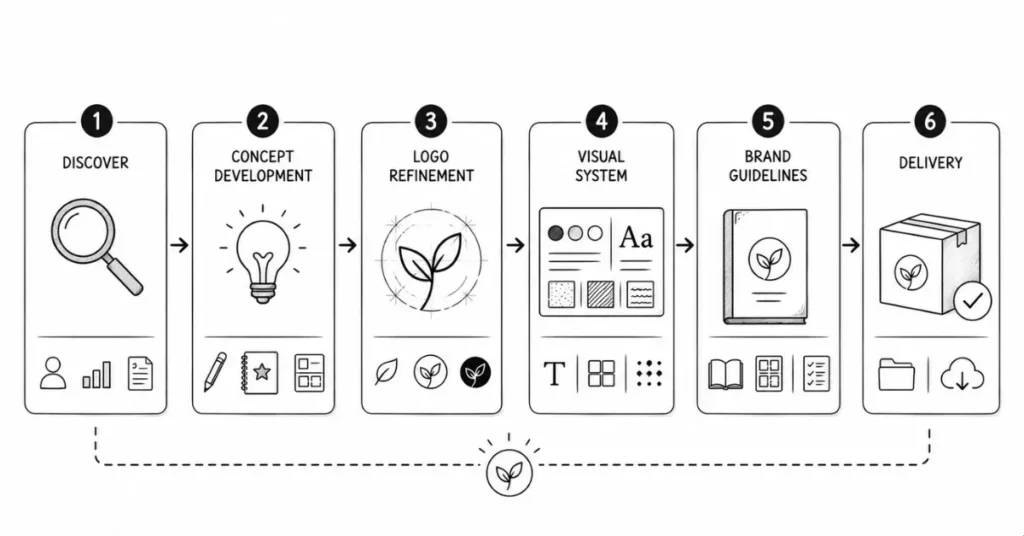
Step 1: Discovery and Research (Week 1)
What you do:
- Initial meeting or detailed questionnaire with the client
- Understand their business, goals, audience, competitors
- Research their industry (what do competitors look like?)
- Create a mood board (collect visual inspiration)
Questions to ask clients:
- Who are your ideal customers? (demographics, psychographics)
- What are 5 words that describe your brand personality?
- Who are your main competitors?
- What brands do you admire (in any industry) and why?
- How do you want customers to feel when they see your brand?
Deliverable: Research summary, mood board, project brief
Step 2: Strategy and Concept Development (Week 1-2)
What you do:
- Define brand positioning (what makes them unique)
- Develop brand personality traits
- Create initial design direction (minimalist? Bold? Organic? Tech-forward?)Sketch multiple logo concepts (on paper first!)
Pro tip: Don’t start on the computer immediately. Sketch 20-30 rough ideas on paper. This prevents you from getting too attached to the first digital version you create.
Deliverable: 3-5 distinct logo concepts to present
Step 3: Logo Design and Refinement (Week 2-3)
What you do:
- Present initial concepts to client with rationale for each
- Get feedback
- Refine chosen direction (usually 2-3 rounds of revisions)
- Test logo at different sizes
- Create variations (horizontal, stacked, icon-only)
What clients typically request:
- “Can we try a different color?”
- “Can the icon be bigger/smaller?”
- “Can we see it with our company name spelled out fully?”
Build 2-3 revision rounds into your pricing.
Step 4: Building the Visual Identity System (Week 3-4)
Once the logo is finalized, you expand to the full system:
- Color palette development (primary + secondary colors)
- Typography selection and pairing
- Graphic elements or patterns
- Photography style guidelines
Application examples (how it looks on business cards, website, packaging, social media)
Step 5: Brand Guidelines Creation (Week 4-5)
Create a comprehensive document (typically 20-50 pages for mid-sized projects) covering:
- Brand story and values
- Logo usage (correct and incorrect examples)
- Color specifications with all codes
- Typography rules
- Spacing and layout guidelines
- Real-world applications
- Do’s and don’ts
This document ensures anyone using the brand (employees, freelancers, vendors) maintains consistency.
Step 6: Delivery and Implementation Support (Week 5-6)
Final deliverables typically include:
Logo files:
- Vector files (AI, EPS, SVG)
- High-res PNG (transparent background, various sizes)
- JPG versions
- Favicon size for website
Brand guidelines PDF
Templates (depending on package):
- Business card design
- Letterhead
- Email signature
- Social media templates
- PowerPoint/Google Slides template
Implementation support:
- Guidance on applying branding
- Recommendations for printers, web developers
Sometimes: working directly with their web designer or developer
Pricing Your Brand Identity Services in India
Understanding realistic pricing helps you position yourself correctly.
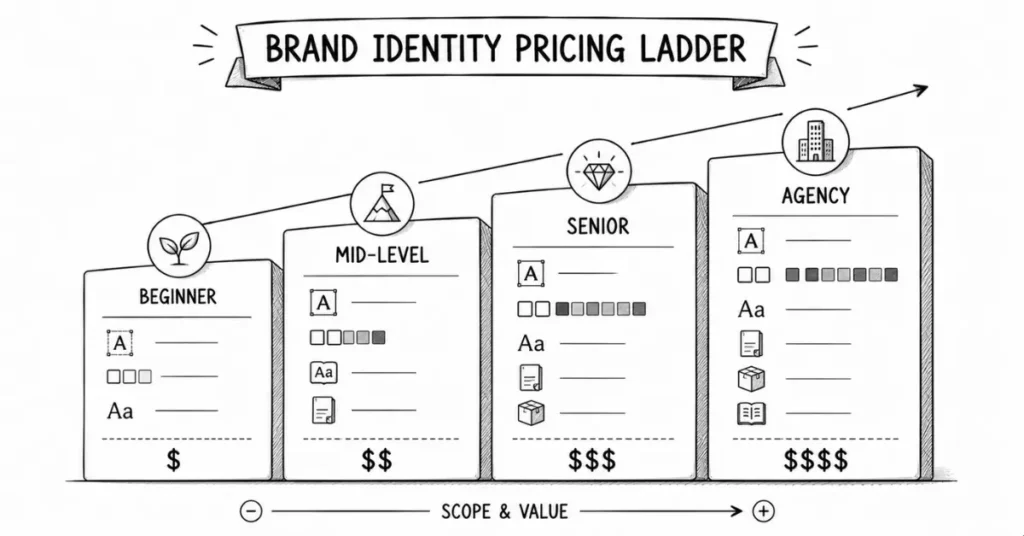
Beginner/Entry-Level Designer (0-2 Years Experience)
Logo only:
- ₹5,000 – ₹25,000
- Simple mark, 1-2 concepts, 2 revision rounds
- Delivered as digital files
Basic brand identity:
- ₹25,000 – ₹50,000
- Logo + color palette + typography
- Simple brand guidelines (5-10 pages)
- Basic business card design
Best clients at this stage:
- Local small businesses
- New startups with tight budgets
- Solopreneurs and freelancers
Student entrepreneurs
Mid-Level Designer (3-5 Years Experience)
Logo design:
- ₹30,000 – ₹70,000
- 3-4 concepts, multiple revision rounds
- Variations and all file formats
Complete brand identity:
- ₹70,000 – ₹1,50,000
- Strategy session
- Logo + complete visual system
- Comprehensive brand guidelines (20-30 pages)
- Business card, letterhead templates
- Social media template pack
Best clients:
- Established small-medium businesses
- Funded startups
- Businesses rebranding
Professional service providers (lawyers, doctors, consultants)
Senior Designer/Consultant (5+ Years)
Strategic brand identity:
- ₹1,50,000 – ₹3,00,000+
- In-depth research and strategy
- Competitor analysis
- Complete visual identity
- Extensive guidelines (40-60 pages)
- Multiple application designs
- Implementation support
Best clients:
- Growing companies
- Businesses in competitive markets
- Premium/luxury brands
Companies preparing for scale
Agency Pricing (Team-Based)
Small agencies: ₹80,000 – ₹2,00,000
Mid-sized agencies: ₹2,00,000 – ₹5,00,000
Premium agencies (metro cities): ₹5,00,000 – ₹15,00,000+
What affects pricing:
- Scope of work (logo only vs full brand ecosystem)
- Timeline (rush projects cost more)
- Revisions allowed
- Applications needed (just digital? Print? Packaging? Signage?)
- Geographic location (metro vs tier-2 city)
- Designer’s portfolio and reputation
Client’s budget and company size
Building Your Brand Identity Portfolio
Your portfolio is everything in this field. Here’s how to build one that attracts clients.
What to Include (Even as a Beginner)
5-8 complete brand identity projects showing:
1.The brief/problem: Who is the client? What did they need?
2.Research and strategy: Mood boards, competitor analysis, brand positioning
3.Exploration: Show multiple logo concepts (not just the final one)
4.Final logo: Multiple variations, different applications
5.Complete visual system: Colors, typography, graphic elements
6.Real-world applications: Mockups of business cards, website, packaging, social media, signage
Case study format example:
Project: Organic cold-pressed juice brand targeting health-conscious urban millennials in Bengaluru
Challenge: Stand out in crowded health beverage market, communicate “natural and trustworthy” without looking generic
Approach:
- Researched competitor visual strategies
- Developed brand positioning: “Farm-fresh wellness delivered daily”
- Created mood board emphasizing natural textures, vibrant produce colors, clean modern aesthetics
Logo concepts: [Show 3-4 sketches/concepts]
Final solution: [Present chosen logo with explanation]
Visual system: [Show color palette, fonts, patterns]
Applications: [Show mockups on bottles, delivery packaging, app interface, Instagram posts]
Result: Brand successfully launched, achieved 10,000 Instagram followers in first 3 months, featured in local food blogs
What to Include (Even as a Beginner)
Create fictional brand projects:
- Local cafe rebranding
- Sustainable fashion startup
- Regional travel tourism board
- Artisan food product line
- Tech startup for specific Indian problem (traffic, water management, education)
Make them realistic:
- Use proper business context
- Do actual research as if they’re real
- Create complete deliverables
- Show them in realistic mockups
Pro tip: Many successful designers built their initial portfolios entirely with self-initiated projects. Clients care about the quality of thinking and execution, not whether every project was paid.
What to Include (Even as a Beginner)
Behance: Industry standard for portfolio presentation. Create detailed case studies here.
Instagram: Share your work visually. Use relevant hashtags (#logodesign #brandidentity #indiandesign #graphicdesignindia).
Personal website: Eventually invest in your own portfolio site. Use platforms like:
- WordPress + Elementor (you’re already familiar with this!)
- Webflow
- Cargo/Format (portfolio-specific)
- Wix/Squarespace
LinkedIn: Share projects with professional context, client testimonials, case study snippets.
Common Mistakes Beginners Make (And How to Avoid Them)
1. Creating Overly Complex Logos
The mistake: Adding too many details, effects, gradients, and elements thinking “more = better.”
Why it’s wrong: Great logos are simple. They must work at favicon size (16×16 pixels) and on a massive billboard.
The fix: Challenge yourself to remove elements. If your logo has 7 elements, can it work with 4? Test your logo at thumbnail size—is it still recognizable?
2. Ignoring the Business Context
The mistake: Designing what YOU think looks cool rather than what serves the business and audience.
Why it’s wrong: A logo for a children’s hospital should feel very different from a logo for a craft brewery, even if you personally prefer minimalist geometric designs.
The fix: Always start with strategy. Ask: Who is this for? What should they feel? What’s the competitive landscape?
3. Not Testing in Real-World Contexts
The mistake: Only showing logos on white backgrounds in isolation.
Why it’s wrong: Logos need to work on packaging, signage, embroidery, small social media profile pictures, dark backgrounds, busy photos.
The fix: Create mockups showing realistic applications. Test logos on actual photos, colored backgrounds, and at tiny sizes.
4. Using Trendy Effects That Date Quickly
The mistake: Following every design trend (gradients in 2017, hand-lettering in 2019, overlapping geometric shapes, etc.).
Why it’s wrong: Brands need longevity. Rebranding is expensive. A trendy logo looks dated in 2-3 years.
The fix: Design for timelessness. Look at logos that have lasted 20+ years with minimal changes (Tata, Hindustan Unilever, Maruti). What makes them work?
5. Poor Typography Choices
The mistake: Using decorative fonts for everything, poor font pairings, or fonts that don’t support required languages.
Why it’s wrong: Typography is 50% of brand identity. Bad typography kills good logos.
The fix:
- Stick to clean, professional fonts until you deeply understand typography
- Test fonts in the languages your client needs (especially Devanagari or regional scripts)
- Limit to 2-3 fonts maximum
Ensure fonts are properly licensed
6. Not Providing Proper File Formats
The mistake: Only sending a JPG logo file.
Why it’s wrong: Clients need vectors for printing, web developers need SVGs, they need transparent PNGs for various uses.
The fix: Always deliver:
- AI or EPS (editable vector)
- SVG (web-friendly vector
- High-res PNG (transparent background, multiple sizes)
- JPG versions for basic use
Organized in clearly labeled folders
7. Underpricing or Not Having Clear Contracts
The mistake: Charging ₹2,000 for a complete brand identity, or starting work without written agreement.
Why it’s wrong: You devalue your work and the entire industry. Without contracts, clients can request unlimited revisions, use your work without payment, or claim ownership of concepts you created.
The fix:
- Research market rates and price appropriately for your experience level
- Always use a simple contract (even with friends/family)
- Specify number of concepts, revision rounds, timeline, payment terms
Get 50% upfront for first-time clients
Growing from Beginner to Established Brand Designer
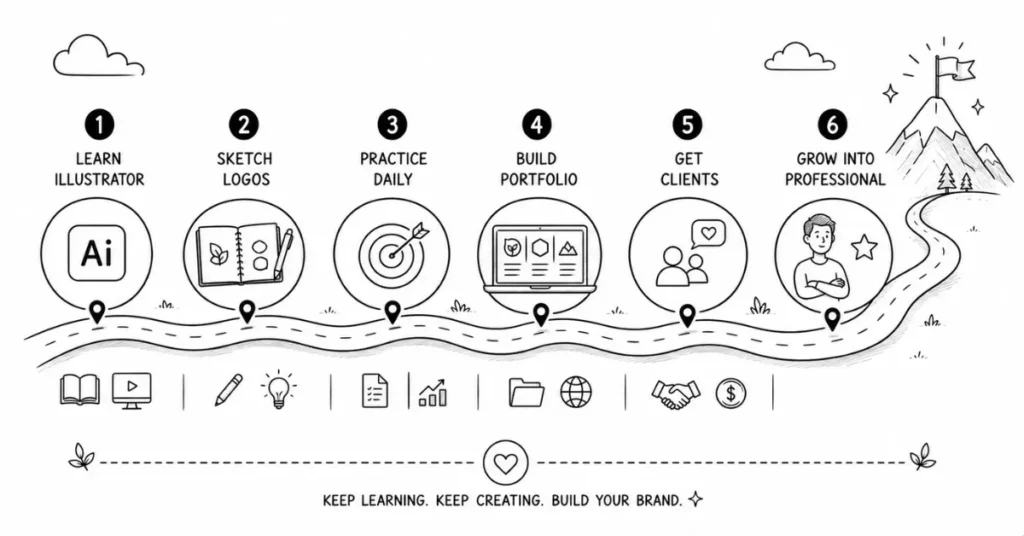
Months 1-3: Learning and Practice
- Master Illustrator (especially pen tool, pathfinder, typography tools)
- Study 50+ logos you admire—sketch them to understand construction
- Read about brand strategy basics
- Create 5 self-initiated brand projects (fictional but realistic)
- Start a Behance profile
Months 4-6: First Real Projects
- Offer discounted services to small local businesses
- Do 2-3 projects for friends/family (charge something, even if small)
- Join freelance platforms (Fiverr, Upwork) for experience
- Document everything as case studies
- Build portfolio to 8-10 projects
Months 7-12: Building Reputation
- Increase your rates gradually
- Focus on specific industries you enjoy or understand (food brands, wellness, fashion, tech)
- Share your work consistently on Instagram and LinkedIn
- Network with other designers and potential clients
- Aim for ₹25,000-50,000 per project
Year 2-3: Professional Establishment
- Charge ₹70,000-1,50,000 for complete identity projects
- Develop a signature style or approach
- Create templates and systems that speed up your process
- Consider niching (e.g., “I specialize in sustainable food brands” or “I design for Indian wellness startups”)
- Build client relationships that lead to referrals
Year 3+: Senior Level
- Charge premium rates (₹1,50,000-3,00,000+)
- Choose clients strategically
- Potentially start your own agency
- Mentor junior designers
- Speak at design events or teach workshops
- Create passive income (templates, courses, digital products)
Tools and Resources for Brand Designers
Essential Software
- Adobe Illustrator (primary tool)
- Adobe Photoshop (mockups and presentations)
- Adobe InDesign (brand guidelines)
- Figma (collaborative design and presentations)
Mockup Resources (To Show Work Professionally)
- Mockup World (free mockups)
- Freepik / Envato Elements (premium mockups)
- Smartmockups (online mockup generator)
- Yellow Images (premium realistic mockups)
Inspiration and Learning
- Behance: Study brand identity projects with high engagement
- Dribbble: Logo design exploration
- Brand New (by UnderConsideration): Reviews of real rebrands
- Logo Lounge: Huge collection of logo designs
- LogoDesignLove blog: Excellent articles on logo design process
Indian Design Inspiration
- Study successful Indian brands: Zomato, Swiggy, Cred, Nykaa, Boat, Mamaearth, Paper Boat, Chai Point
- Observe how they balance Indian cultural elements with modern aesthetics
- Notice how they handle multilingual branding
The Indian Brand Design Market: Opportunities and Realities
Why This Is a Growing Field in India
Startup boom: India has the third-largest startup ecosystem globally. Every startup needs brand identity.
Digitalization of traditional businesses: Kirana stores, local manufacturers, service providers are going online and need professional branding.
D2C (Direct to Consumer) explosion: Indian brands bypassing traditional retail need strong visual identities to compete online.
Regional brand growth: Tier 2 and Tier 3 cities are seeing entrepreneurial growth, creating demand for affordable brand design services.
Premium positioning: Indian consumers increasingly value premium, well-designed products and services, driving quality brand design demand.
Challenges to Be Aware Of
Price sensitivity: Many Indian small businesses undervalue design, expecting logo designs for ₹1,000-2,000.
Educating clients: You’ll often need to explain why brand identity costs more than “just a logo.”
Unlimited revision expectations: Some clients expect endless changes without clear boundaries.
Copyright and plagiarism: Some clients show reference images saying “make something exactly like this,” which is unethical and illegal.
How to navigate:
- Clearly educate clients on what they’re paying for
- Use contracts specifying deliverables and revisions
- Be patient but firm on professional standards
- Choose clients who value quality over cheapness
Your Next Steps: Action Plan
This Week
- Download Adobe Illustrator (or start with free trial)
- Sketch 20 rough logo concepts for a fictional business
- Study 10 brands you admire—what makes their visual identity cohesive?
- Create your first logo digitally (even if it’s simple)
This Month
- Complete one full brand identity project (fictional):
- Research and strategy
- Logo design with variations
- Color palette and typography
- Brand guidelines (simple version)
- Mockups showing applications
- Research and strategy
- Create a Behance account and upload this project as a case study
Within 3 Months
- Complete 3-5 brand identity projects (mix of fictional and any real opportunities)
- Reach out to 10 small local businesses offering affordable branding services
- Build a portfolio website or strong Behance profile
- Start sharing your work on Instagram with relevant hashtags
Within 6 Months
- Land 3-5 paying clients (even at beginner rates)
- Increase prices based on demand and portfolio strength
- Join brand design communities online
- Consider specializing in an industry you understand or enjoy
Final Thoughts: Building a Meaningful Brand Design Career
Brand identity design is one of the most impactful forms of graphic design. You’re not just making things look pretty—you’re shaping how businesses are perceived, helping them compete, and building visual systems that last for years.
In India’s rapidly evolving business landscape, the demand for thoughtful, strategic brand designers continues to grow. Whether you work as a freelancer serving small businesses across India, join a design agency in a metro city, or eventually start your own branding studio, the opportunities are substantial.
The key is to remember: brand design is equal parts creativity and strategy. The best logo in the world fails if it doesn’t serve the business. The most strategic positioning falls flat without strong visual execution.
Start with the fundamentals master your tools, understand strategy, and practice relentlessly. Build a portfolio that shows your thinking, not just your aesthetics. Price yourself fairly and professionally. Choose clients who value quality design.
Every major brand you admire started with a designer who understood this balance. That designer could be you.
What brand will you create today?