
Answer Strategy and Techniques
Table of Contents
Blog Content
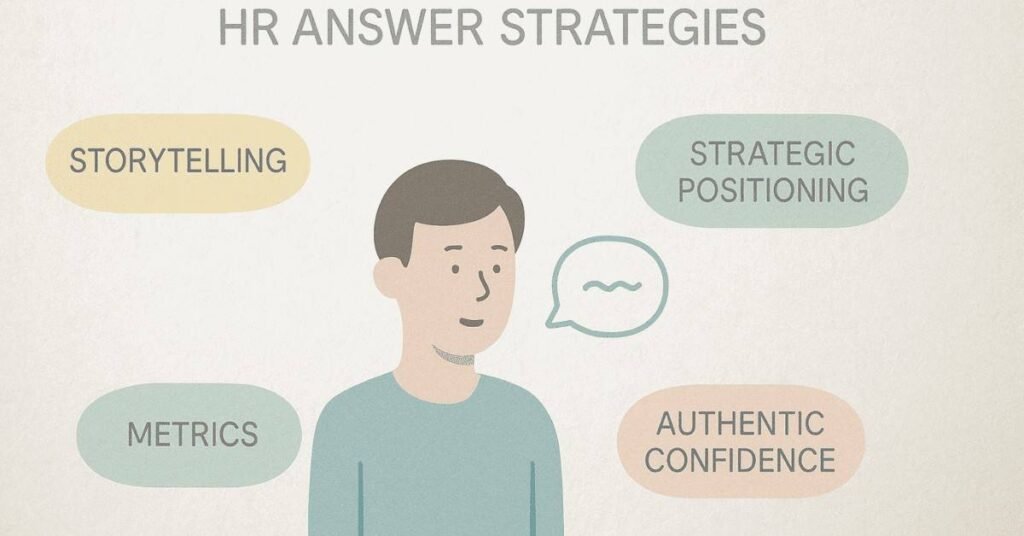
By now, you understand the common HR interview questions and the formats they take. But there’s a level beyond just knowing what to answer—it’s knowing HOW to answer in ways that stick in the interviewer’s mind and create genuine connection.
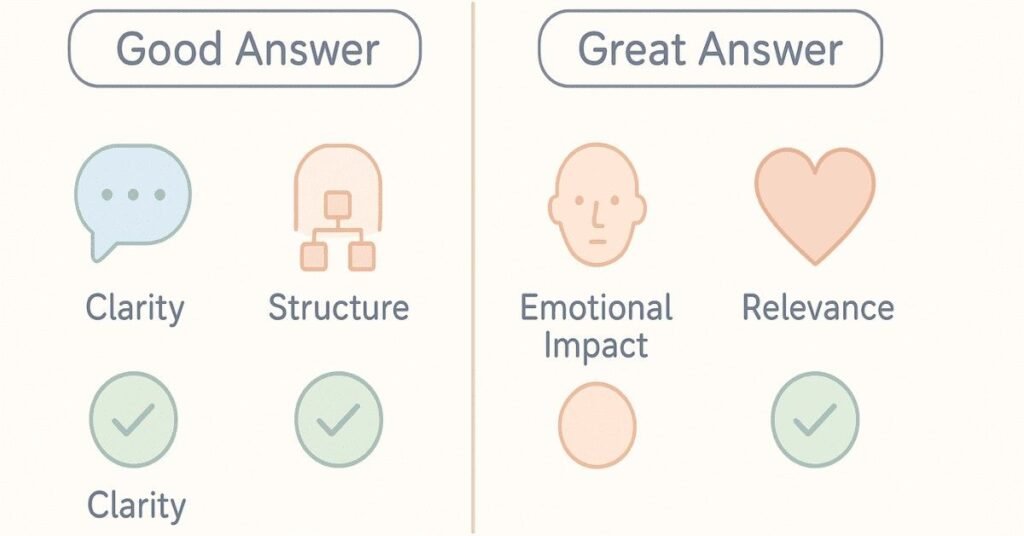
The difference between a good answer and a great answer isn’t luck. It’s strategy. It’s understanding the psychology of how interviewers listen, what makes them remember you, and how to position yourself as the clear choice. This section reveals the advanced techniques that separate candidates who get offers from candidates who don’t.
Strategy 1: The Power of Strategic Positioning
Strategic positioning isn’t about dishonesty—it’s about choosing which truths to emphasize based on what matters most to the role.
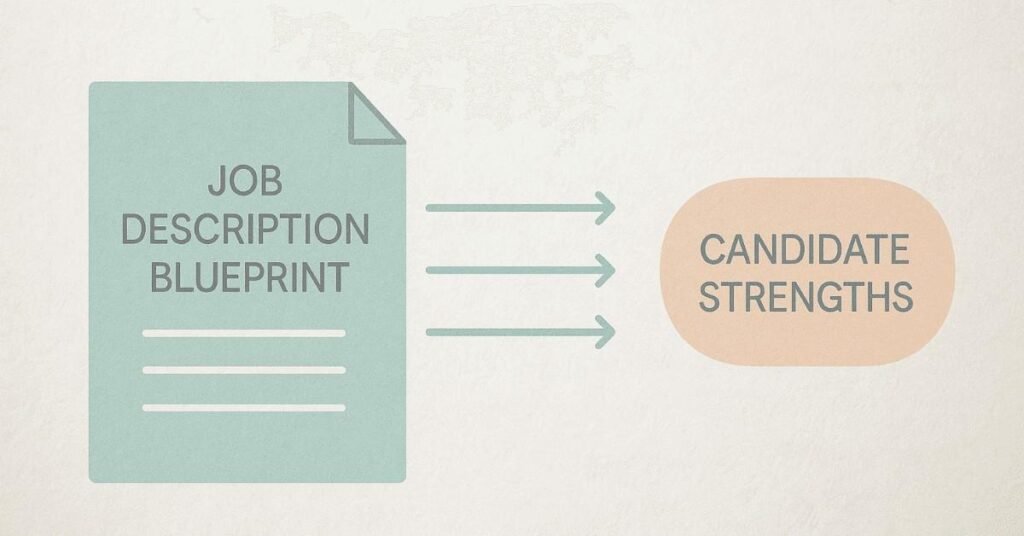
Understanding the Job Description as Your Blueprint
Every job description is an interviewer’s shopping list. They’ve written down exactly what they need. Your job is to show you have those things.
Real Example:
Job Description says: “We’re looking for a Content Manager who can lead a team, develop content strategy, and drive lead generation through SEO.”
Three candidates all did similar work. Here’s how they positioned themselves differently:
Candidate 1 (Weak Positioning):
“I’ve managed content, led a team, and done SEO. I have experience with all three.”
(Generic—doesn’t stand out)
Candidate 2 (Better Positioning):
“My core expertise is content strategy. I’ve led teams to execute that strategy and used SEO as one tactic within it.”
(Better—shows strategic thinking)
Candidate 3 (Best Positioning):
“My strength is connecting content strategy directly to business goals. I develop strategies that drive measurable lead generation. In my last role, I built a framework where we increased qualified leads by 280% using SEO-optimized content. I also led a team of 4 content creators to execute this strategy consistently.”
(Best—shows strategy, leadership, AND results)
Why Candidate 3 Wins:
They positioned their experience in the exact order of importance to the job. Strategy first (because that’s what differentiates), then team leadership (because it supports strategy), then tactical skills (because they support strategy).
The Positioning Framework
For any question, ask yourself:
Step 1: What does the role actually need?
Read the job description carefully. Identify the top 3 things they need most.
Step 2: What’s my relevant experience?
List achievements that demonstrate each requirement.
Step 3: What’s the priority?
Arrange your answer to emphasize the most important requirement first.
Step 4: What’s my differentiator?
What makes me different from other candidates? Lead with that.
Real Application:
If the role emphasizes “growing from ₹5 crore to ₹20 crore in 3 years” in the job description, your positioning should be:
“I’ve built scalable systems. In my last role, I took a ₹2 crore department and grew it to ₹8 crore in 2 years. Here’s what I learned about scaling that I’d apply to your ₹5-20 crore goal…”
Don’t lead with: “I have 8 years of experience…”
Lead with: “I’ve built scalable systems”
Strategy 2: The Art of Storytelling That Creates Emotional Connection
The human brain is wired for stories. A list of facts is forgotten. A story is remembered. But not all stories work equally well. Effective interview stories have a specific structure that creates engagement.
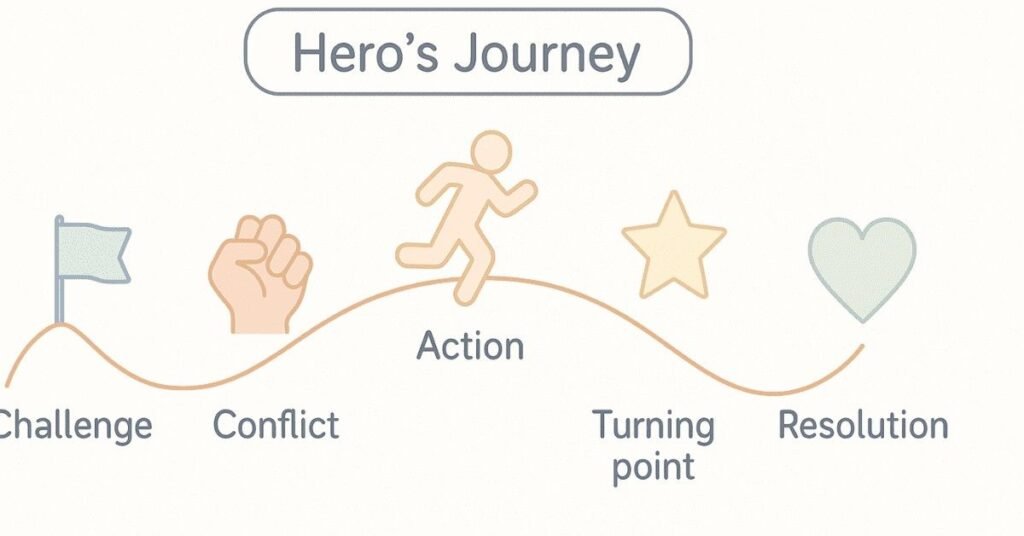
The Hero's Journey Framework for Interview Stories
Structure your story like a hero’s journey (simplified):
The Challenge (Hero faces an obstacle):
“When I joined, our team was fragmented. We had no content strategy, no systems, and individual team members working in silos.”
The Internal Conflict (Hero doubts themselves):
“Initially, I wasn’t sure if I could unite the team around a shared vision. People were attached to their individual ways of working.”
The Action (Hero takes decisive steps):
“I invited the team to a working session where I shared my vision. Instead of imposing it, I asked: ‘What’s missing in how we currently work? What would make your job easier?’ Their input shaped the final strategy.”
The Turning Point (The moment things change):
“When the first month of coordinated content launched and the engagement numbers jumped 35%, people saw the strategy worked. That’s when the team bought in.”
The Resolution (Success and what was learned):
“We maintained that strategy for 18 months, continuously improving. The team went from frustrated and siloed to collaborative and proud. People actually looked forward to our content reviews.”
The Lesson (What you took away):
“I learned that strategy isn’t imposed—it’s co-created. That’s how I approach leadership now.”
Why This Structure Works:
- Challenges create tension (people pay attention)
- Internal conflict creates relatability (the interviewer sees themselves in you)
- Action shows competence (you solved the problem)
- Turning point creates emotional satisfaction (the moment the struggle pays off)
- Resolution shows results (quantifiable impact)
Lesson shows growth (you’re not just successful, you’re wise)
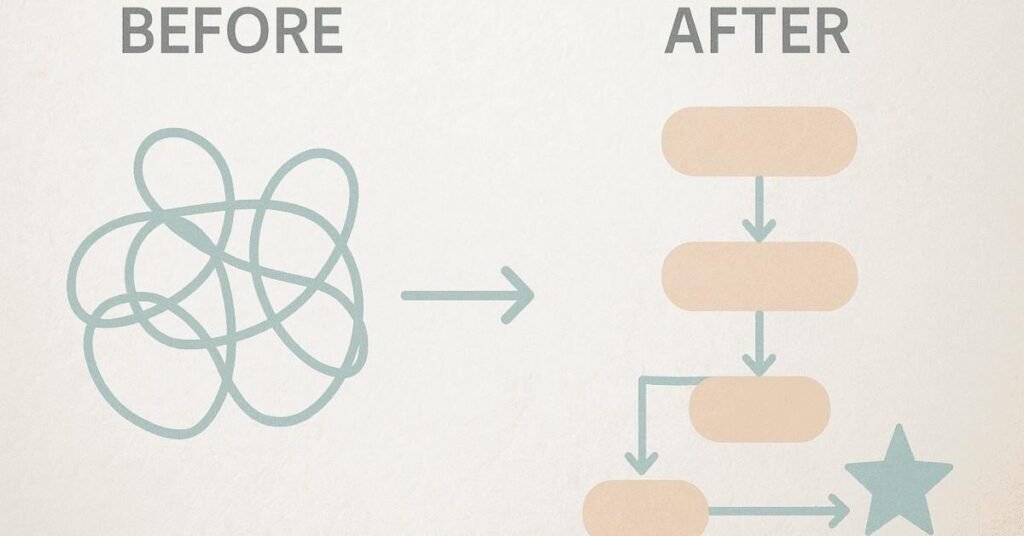
The Contrast Technique: Showing Before and After Clearly
When telling a story, make the before and after vivid and contrasting.
Weak Story:
“I improved our content process. It was better after I changed things.”
Strong Story:
“Before: Our content calendar existed only in my head. We missed deadlines 40% of the time. People didn’t know when their work was due or how it connected to business goals. We were constantly stressed and reactive.
After: We implemented a shared calendar system. Everyone knew their deadlines. We met deadlines 98% of the time. Team members could see how their work contributed to quarterly goals. The team went from stressed to confident.”
The contrast makes the improvement vivid and credible.
Strategy 3: Quantifying Impact with Specificity
Numbers stick in people’s minds better than vague claims. But not all numbers are equally effective. Learn to quantify strategically.
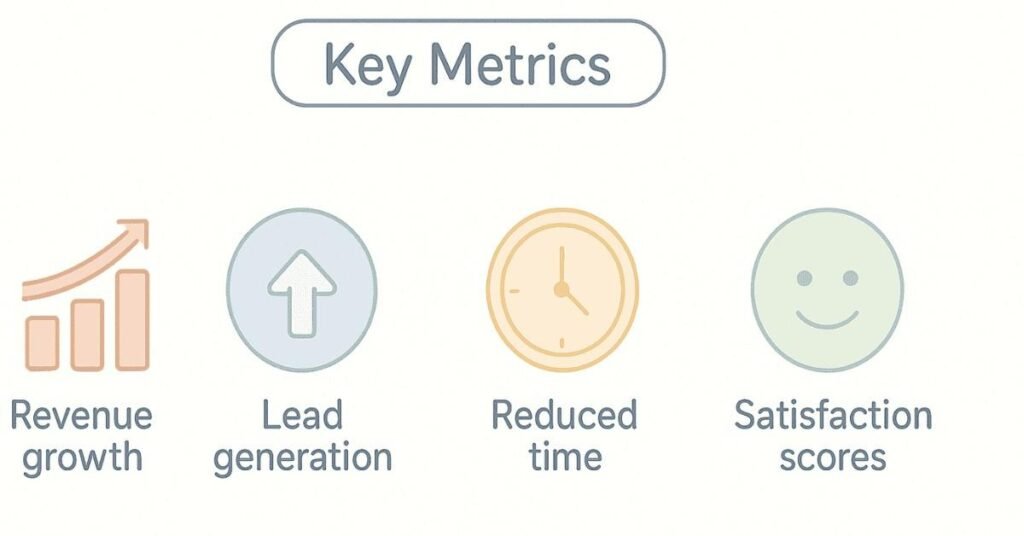
The Hierarchy of Impact Metrics
Tier 1 – Business Impact (Most Powerful):
“Generated ₹50 lakhs in additional annual revenue”
(This translates to the company’s most important metric)
Tier 2 – Functional Impact (Strong):
“Increased lead generation by 280%”
(Shows direct contribution to function)
Tier 3 – Process Impact (Good):
“Reduced processing time from 4 hours to 1.5 hours”
(Shows efficiency but less direct business impact)
Tier 4 – Volume Metrics (Weakest):
“Created 50 pieces of content”
(Just volume, no indication of effectiveness)
How to Quantify What Seems Unquantifiable
Sometimes your impact seems hard to quantify. Here are strategies:
For Soft Skills Impact:
Instead of: “I’m a good communicator”
Say: “I reduced client miscommunications by 60% (measured by complaint reduction from 5/month to 2/month)”
For Team Leadership:
Instead of: “I’m a good mentor”
Say: “Three team members I mentored were promoted within 18 months, with direct feedback that my coaching accelerated their readiness”
For Strategic Work:
Instead of: “I developed strategy”
Say: “The strategy I developed reduced cost-per-acquisition by 35% while increasing customer lifetime value by 22%”
The Numbers Combination Approach
The strongest impact statements combine multiple metrics:
Good:
“Increased revenue by 50%”
Better:
“Increased revenue by 50% while improving team satisfaction scores from 6.2 to 8.1 out of 10”
Best:
“Increased revenue by 50% (from ₹5 crore to ₹7.5 crore annually) while improving team satisfaction scores from 6.2 to 8.1 and reducing turnover from 30% to 8% annually”
The combination tells a story: You grew the business, improved team health, and increased retention. That’s the full picture of impact.
Strategy 4: Authenticity vs. Polish—Finding the Right Balance
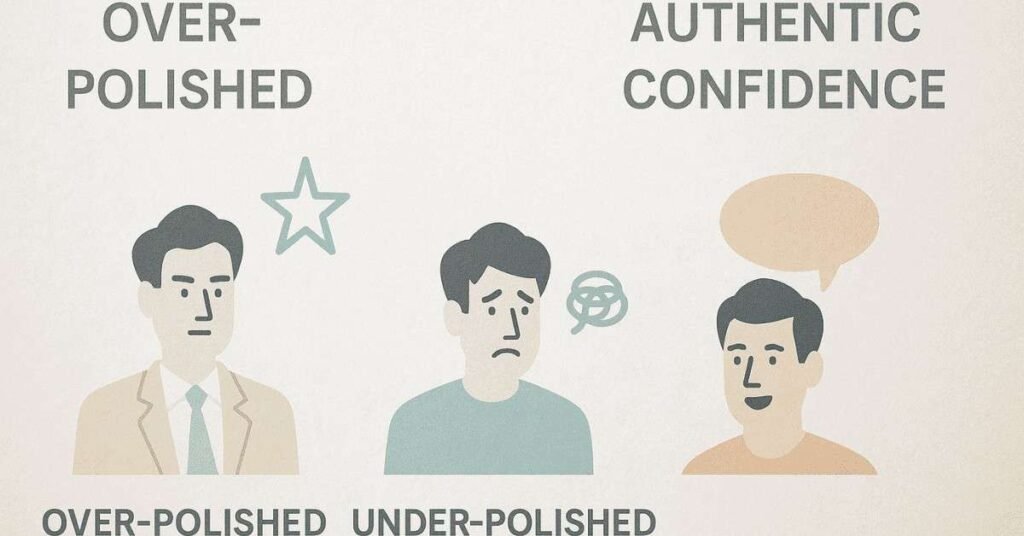
Many candidates think they need to be perfectly polished in interviews. The opposite is true. Over-polish sounds fake. Under-polish sounds unprepared. The sweet spot is authentic confidence.
What Authentic Confidence Sounds Like
Over-Polished (Sounds Rehearsed and Fake):
“My overarching leadership philosophy, predicated upon rigorous empirical analysis and synergistic team dynamics, prioritizes the cultivation of human capital through structured knowledge transfer mechanisms.”
Under-Polished (Sounds Unprepared):
“Um, I guess I just, like, try to help my team grow and stuff, you know?”
Authentic Confidence (Prepared but Natural):
“I believe my job as a leader is to help my team develop. I do this by setting clear expectations so people know what success looks like, giving them projects that stretch their abilities, and providing regular feedback. When people know what’s expected and have room to grow, they do their best work.”
Why Authentic Confidence Works:
- It’s understandable (no jargon)
- It’s specific (shows you’ve thought about this)
- It’s natural (sounds like you actually talk this way)
- It’s confident (you’re not hedging or apologizing)
The Personal Touch Strategy
Adding one genuine personal detail makes your answer memorable.
Generic:
“I’m excited about this role because it offers growth opportunities in a company I admire.”
With Personal Touch:
“I’m excited about this role because I’ve followed your company for about 8 months now. I watched your case study about bringing coding education to rural schools, and I actually got emotional. That’s the kind of impact I want my work to have. This role offers me that opportunity.”
The emotional honesty (you got emotional) makes it real. It also shows:
- You do research
- You’ve thought about this for months (not just applying randomly)
- Your values align with the company’s values
- You’re capable of emotional depth and meaning-making
When Vulnerability Strengthens Your Position
Strategic vulnerability (admitting a challenge you’ve overcome) makes you more likable and credible than perfection.
Perfect but Unconvincing:
“I’ve never struggled with deadlines. I always deliver on time.”
Vulnerable but Credible:
“Early in my career, I was really stressed about deadlines. I’d work late nights, and my quality would suffer. I realized the problem wasn’t time management—it was that I wasn’t realistic about estimates. Now I build in buffer time and communicate clearly about what’s actually feasible. I’m rarely stressed about deadlines anymore.”
Vulnerability + growth = credibility.
Strategy 5: The Handling Unexpected Questions Technique
Sometimes an interviewer asks something you didn’t prepare for. Your strategy here matters more than having a perfect answer.
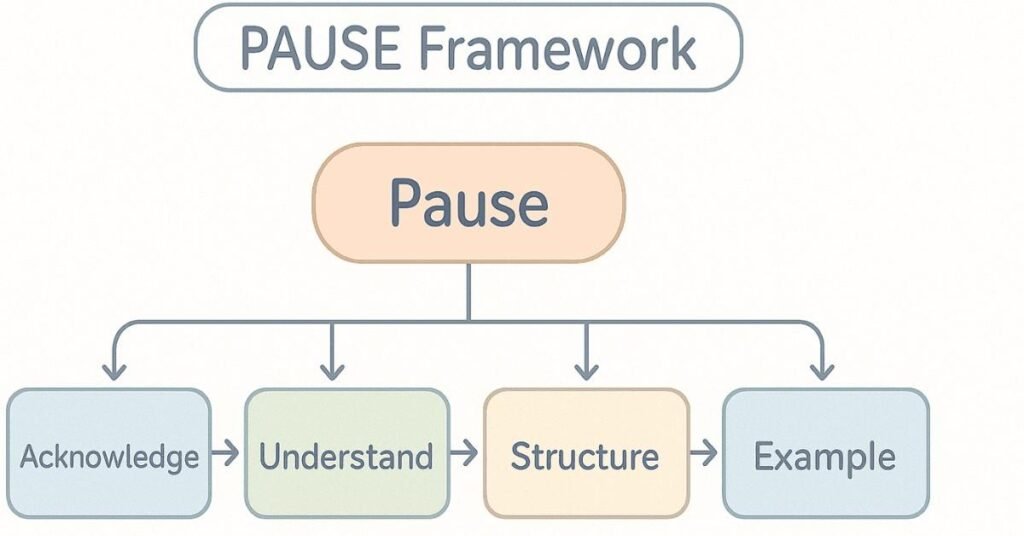
The PAUSE Framework for Unexpected Questions
P – Pause (3 seconds)
Don’t answer immediately. Take time to collect your thoughts. This looks thoughtful, not reactive.
A – Acknowledge (What you heard)
Repeat or acknowledge the question: “That’s an interesting question. You’re asking how I’d handle…”
This buys you time and confirms you understood.
U – Understand (What they’re really asking)
Ask if needed: “Can I understand what’s behind this question? Are you concerned about…”
Understanding the concern lets you answer what they actually want to know.
S – Structure (Your answer clearly)
Organize your response mentally before speaking: “Here’s how I’d think about that…”
E – Examples (Specific situations)
Use real examples: “A situation where this came up was…”
Real Example of PAUSE in Action
Unexpected Question:
“Tell me about a time when you completely failed—not just a setback, but a real failure.”
Your Response:
P (Pause): Takes 3 seconds, thinking
A (Acknowledge): “That’s a tough but fair question. You want to know how I respond to significant failure.”
U (Understand): “Can I ask—are you concerned about whether I can handle setbacks, or is there something specific about this role that involves high-risk decisions?”
S (Structure): “Here’s how I’d answer that…”
E (Examples): “About 3 years ago, I made a decision that didn’t work out…”
Strategy 6: The Leverage Curiosity for Depth Technique
Strong candidates don’t just answer questions—they use questions to show curiosity and demonstrate they’ve thought deeply.
How to Turn Simple Questions Into Demonstrations of Depth
Simple Question:
“Why do you want to work here?”
Surface-Level Answer:
“Your company does great work and I want to be part of that.”
Curious, Depth-Showing Answer:
“Your company interests me for a specific reason. I noticed you’re expanding into the Tier 2 cities market. Most EdTech companies ignore these markets, but you’re focusing there. That tells me your mission is genuinely about access, not just profit. I’m curious—as you expand, how do you maintain quality in a price-sensitive market? Is that something this role would tackle?”
Why This Works:
- You’ve done specific research (not generic)
- You’ve noticed something most candidates wouldn’t (shows attention)
- You’re asking intelligent questions (shows you’re thinking strategically)
You’re expressing genuine curiosity (shows engagement)
The Reverse Interview Technique
Treat the interview as a mutual assessment, not a one-way evaluation.
Not: “I hope you like me”
But: “I’m assessing whether this is the right fit for my growth and values”
This subtle shift makes you more confident and makes the interviewer respect you more. People respect people who have standards for themselves.
Strategy 7: Creating the "I'd Be Foolish Not to Hire This Person" Moment
There’s a technique to leave an interview where the interviewer thinks: “We need to hire this person or we’ll regret it.”
The Three Elements of This Moment
Element 1 – Competence
They believe you can do the job. You’ve proven this through examples and understanding of their challenges.
Element 2 – Cultural Fit
They believe you fit their culture and values. You’ve shown genuine interest in their mission.
Element 3 – Momentum
They believe you’ll add energy and positive momentum to the team. You’re engaged, curious, and solutions-oriented.
How to Execute This Strategy
During the interview:
- Ask thoughtful questions showing you’ve researched
- Reference specific things about their company (shows genuine interest)
- Show energy and engagement (not just going through the motions)
- Demonstrate you understand their challenges
- Share specific value you’d bring (not generic claims)
In closing:
“I’ve really enjoyed this conversation. I’m genuinely excited about this role because I can see exactly how I’d contribute to your team. I think I’d be valuable to your company, and I’m confident we’d work well together. I’d love to move forward.”
Notice the confidence here. You’re not asking permission—you’re expressing that you’ve assessed it’s a good fit.
Strategy 8: The Handling Salary and Tough Questions Approach
Some questions feel like traps. They’re not—they’re opportunities to show wisdom.
How to Answer Salary Questions Without Leaving Money on the Table
Question: “What are your salary expectations?”
Weak Answer: “I’m flexible, whatever you think is fair.”
(This signals you don’t value yourself)
Assertive but Risky: “₹15 lakhs annually.”
(If the range was ₹12-18 lakhs, you’ve anchored high but might price yourself out)
Strategic Answer: “I’m most interested in the right fit and growth opportunity. Based on my research of market rates for this role in this city with my experience level, the typical range is ₹12-16 lakhs annually. I’m flexible within that range based on the full package and growth potential.”
Why This Works:
- You’ve done research (not guessing)
- You’ve given a range (allows flexibility)
- You’ve expressed willingness to negotiate based on other factors (growth, learning, etc.)
You’ve mentioned growth potential (shows you’re thinking long-term)
Handling Negative Questions
Question: “Why should we consider you over the other candidates?”
Weak Answer: “I think I’m a good fit.”
Strategic Answer: “That depends on what you value most. If you value someone who thinks strategically about growth, I’d be the strongest choice—I’ve scaled two departments from startup to ₹10 crore+. If you value someone who’s great with team development, I’d point to the fact that three of my mentees were promoted. If you value technical depth, I’ve been doing this for 8 years and I stay current with trends. What matters most to your team?”
Why This Works:
- You’re not arrogant (you’re asking what they value)
- You’re confident (you have proof across multiple dimensions)
- You’re turning their question back to their priorities
- You’re showing you’ve thought about different candidate profiles
Strategy 9: The Active Listening Reflection Technique
Great interviewees don’t just answer—they listen and reflect. This makes them more likable and helps them answer what’s actually being asked.
How to Use Reflection
Interviewer: “We’re concerned about whether new people can adapt to our fast-paced culture. How would you handle that?”
Without Reflection (Missing the real concern):
“I’m good with fast-paced environments. I worked at a startup where everything moved quickly.”
With Reflection (Addressing the real concern):
“I hear your concern. You’re worried about new people struggling with the pace and either burning out or not delivering. That’s a valid concern. Here’s how I’d approach it: I’d take time to understand your specific pace and expectations. I’d ask questions instead of just jumping in. I’d communicate clearly about what I need to be successful at that pace. In my previous role, I ramped up quickly because I wasn’t afraid to ask clarifying questions.”
The reflection shows you’re listening to what they actually care about, not just giving a canned answer.
Strategy 10: Building Confidence Through Reframing
The most powerful strategy is how you think about the interview itself.
Reframe: From "They're Evaluating Me" to "We're Assessing Fit"
Scarcity Mindset:
“I hope they like me. I need this job. I should just agree with everything they say.”
(This makes you anxious and small)
Abundance Mindset:
“I’m assessing whether this is the right role for my growth. I have value to offer. I need to be authentic so we can see if we’re a good fit.”
(This makes you confident and clear)
Interestingly, the abundance mindset actually makes you MORE likely to get the job because you come across as confident, not desperate.
Reframe: From "I Might Say the Wrong Thing" to "I'm Learning About Them"
Anxiety Mindset:
“What if I say something that makes them think I’m not good enough?”
Learning Mindset:
“This conversation is helping me understand their priorities and challenges. I’m learning what matters to them so I can see if I’m the right fit.”
This reframe reduces your anxiety and makes you more present and engaged.
The Advanced Answer Preparation System
Now that you know these strategies, here’s how to apply them to prepare answers systematically.
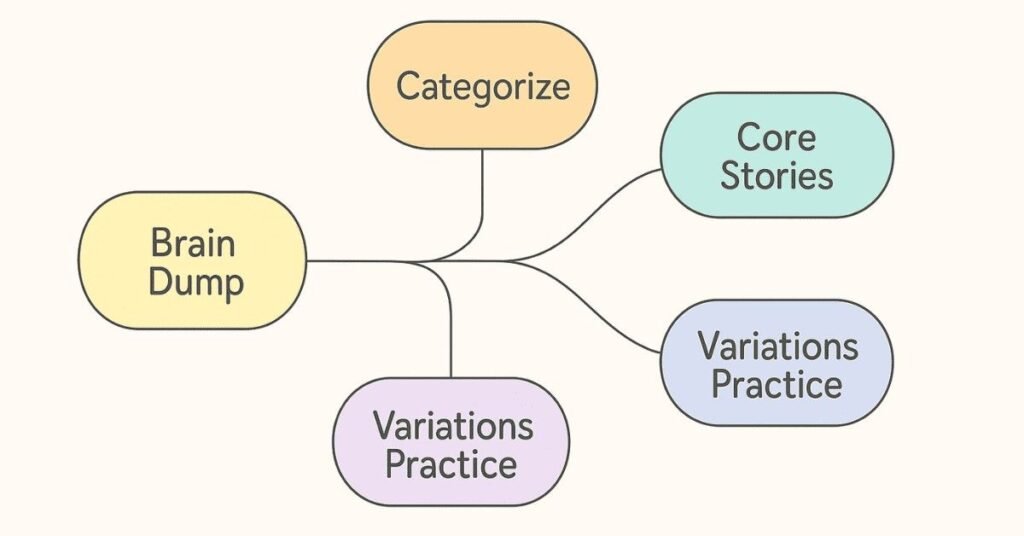
Step 1: Brain Dump (15 minutes)
Write down every achievement or story you can think of from your career. Don’t judge—just dump everything.
Step 2: Categorize (10 minutes)
Group your stories by competency:
- Leadership
- Problem-solving
- Communication
- Teamwork
- Resilience
- Learning/Growth
- Impact/Results
Step 3: Build 5-7 Core Stories (30 minutes)
Select 5-7 stories that showcase different competencies. For each story:
- Write out the STAR framework
- Identify what competency it demonstrates
- Add specific numbers/metrics
- Write out the personal learning
Step 4: Practice Variations (20 minutes)
For each story, practice answering different questions that could be answered with that story:
- “Tell me about a time you failed” → Use your failure story
- “How do you handle pressure” → Use your deadline story
- “Tell me about leadership” → Use your team story
Step 5: Deliver Authentically (Ongoing)
Don’t memorize word-for-word. Memorize the key points and practice speaking naturally. Each telling should sound slightly different but hit the same key points.
Your Pre-Interview Mental Preparation
24 Hours Before:
Don’t study more. This is about mindset. Remind yourself: “I’m prepared. I have value. I’m assessing fit, not begging for a job.”
One Hour Before:
Take deep breaths. Remember your 5 best stories. Remind yourself of the company’s mission and why you’re genuinely interested.
Right Before:
Smile and stand up straight. Confidence shows in posture. Take 3 deep breaths. Remember: The interviewer wants to like you. They hope you’re good. You start from a position of relative favor.