
Module 4: Advanced Communication Techniques
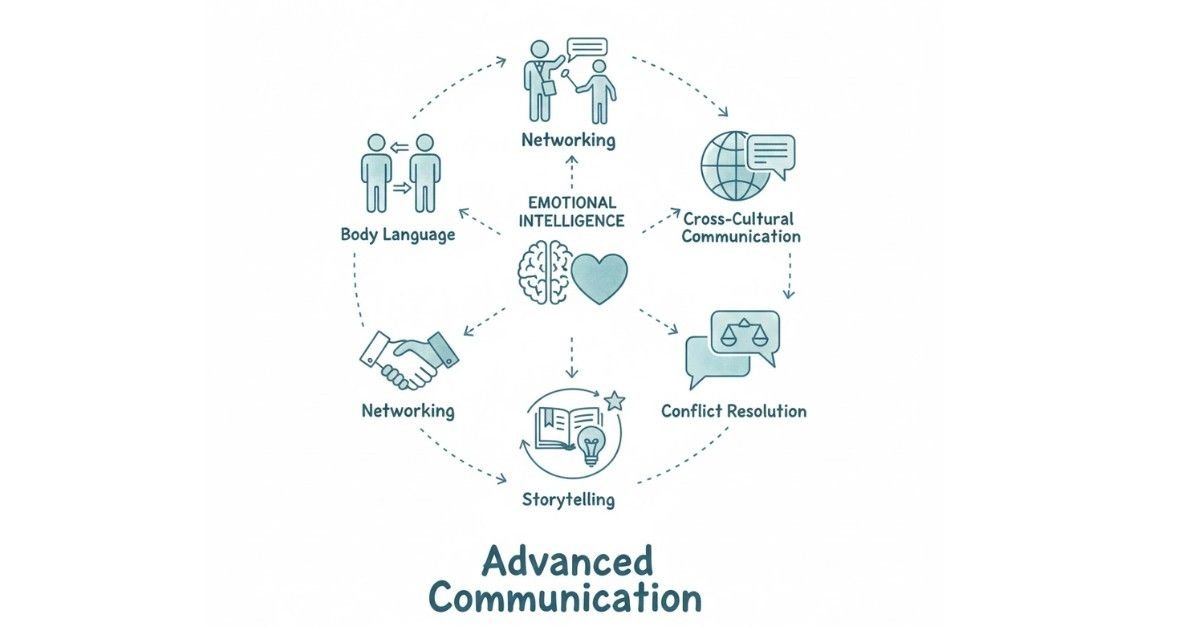
Table of Contents
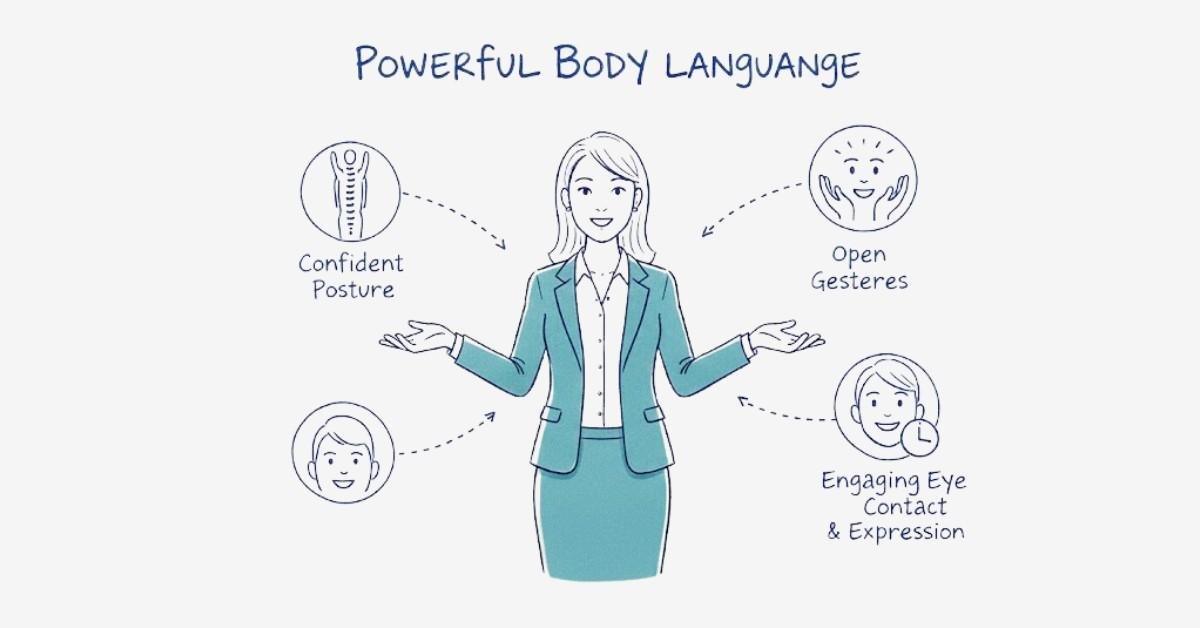
Nonverbal Communication and Body Language
Introduction
Consider a scenario: Two professionals are presenting the same proposal to your executive team. The first speaks confidently, but their arms are crossed and they avoid eye contact. The second speaks more quietly, but leans forward with open body language and makes genuine eye contact.
Who do you trust more? Who seems more confident? Who gets the project approved?
Research shows that people make judgments about you in the first seven seconds—before you even finish introducing yourself. Most of that judgment comes not from your words, but from your body language, facial expressions, and nonverbal cues. Yet many professionals focus entirely on what they’ll say while ignoring how their body communicates simultaneously.
This is where most people miss a major opportunity. Mastering nonverbal communication can amplify your message, build trust, and establish authority—often more effectively than words alone.
What Is Nonverbal Communication?
Nonverbal communication is everything you communicate without speaking. It includes:
- Body posture and positioning
- Facial expressions and eye contact
- Hand gestures and movements
- Physical proximity and personal space
- Tone of voice and pace (we covered this earlier)
- Physical appearance and grooming
Research on communication effectiveness suggests that 55% of how your message is received depends on body language, 38% on tone of voice, and only 7% on actual words. While these percentages are debated, the core finding holds: your nonverbal communication is extraordinarily powerful.
Why This Matters for Your Career
Nonverbal communication affects:
- How credible people perceive you to be. Open body language signals confidence; closed body language signals defensiveness or uncertainty.
- Whether people trust you. Inconsistency between your words and body language creates distrust, even if the listener can’t articulate why.
- How engaged people are with your message. Animated, open body language keeps people interested. Rigid, closed body language makes them tune out.
- How leadership-ready you appear. Leaders project confidence through their physicality. Whether it’s fair or not, people associate certain body languages with leadership qualities.
Part 1: Reading Nonverbal Signals from Others
Before you can manage your own body language effectively, you need to understand what others’ body language is telling you.
Signs of Engagement and Interest
When someone is genuinely interested in what you’re saying:
- Leaning forward slightly
- Maintaining steady eye contact
- Nodding or showing facial expressions that match the content
- Open body posture (arms uncrossed, facing toward you)
- Mirroring your gestures or posture
- Asking follow-up questions
Real workplace scenario:
During a meeting, you notice your colleague leaning back with arms crossed, checking their watch, and not making eye contact. This person isn’t engaged. They might be bored, disagreeing, or feeling rushed. Continuing your presentation without acknowledging this would be a mistake.
Signs of Disagreement or Skepticism
When someone disagrees or is skeptical:
- Furrowed brow or frown
- Eyes narrowing or looking away
- Arms crossed tightly over chest
- Jaw clenching
- Leaning back or away from you
- Touching their nose or chin (often an unconscious sign of doubt)
Signs of Discomfort or Anxiety
When someone is uncomfortable:
- Fidgeting or playing with objects
- Avoiding eye contact or looking down
- Touching their neck or pulling at collar
- Rapid blinking
- Leg bouncing or foot tapping
- Shifting weight from foot to foot
- Hand wringing or clenched fists
The Power of Mirroring
People feel more comfortable with those who mirror their body language. If someone sits back relaxed, and you sit forward tense, there’s subtle dissonance. Mirroring creates rapport.
However, avoid obvious mirroring—that feels manipulative. Subtle, natural mirroring (similar posture, similar pace of movement) creates connection without feeling forced.
Part 2: Projecting Professional Confidence Through Body Language
Now that you understand how to read others, let’s focus on what you’re communicating with your body.
Posture: The Foundation
Your posture communicates volumes about your confidence and respect for others.
Professional posture:
- Shoulders back (not rigidly, naturally)
- Spine straight but not stiff
- Chin level (not jutting forward or tucked down)
- Weight balanced (not leaning to one side)
- Standing or sitting at similar eye level to others when possible
❌ Unprofessional posture:
- Slouching (communicates disengagement)
- Chest collapsed inward (communicates low confidence)
- Leaning heavily on one leg (communicates weakness)
- Slouching while sitting (communicates lack of respect for the meeting)
Test yourself: Stand in front of a mirror. What does your posture communicate? Does it match how you want to be perceived?
Eye Contact: Building Trust
Eye contact is one of the most powerful tools in your nonverbal toolkit, yet it’s also one of the most challenging to master across cultures.
In Western business settings, appropriate eye contact means:
- Looking at the person speaking for 50-70% of the conversation
- Looking away briefly (at their nose, forehead, or notes) isn’t rude—staring constantly is
- Making eye contact when you’re speaking to show confidence
- Brief eye contact with different people in a group setting (don’t focus on just one person)
What appropriate eye contact communicates:
- Interest and attention
- Honesty and trustworthiness
- Confidence in your ideas
- Respect for the other person
What insufficient eye contact communicates:
- Dishonesty or hiding something
- Lack of confidence
- Disinterest
- Disrespect
Practical tip: If intense eye contact makes you uncomfortable, focus on their eyebrows or the bridge of their nose. From their perspective, it looks like eye contact.
In remote settings (Zoom, Teams, etc.):
- Look at the camera when speaking to create “eye contact” with your audience
- Look at the screen when listening to show attention
- Position the camera at eye level
Hand Gestures: Conveying Engagement
Hands are powerful tools for emphasis and engagement.
Effective hand gestures:
- Gesturing with open palms (communicates openness and honesty)
- Using hands to emphasize key points
- Hand movements that match your words
- Keeping hands visible (not in pockets or behind back)
❌ Ineffective hand gestures:
- Hands constantly in pockets (seems evasive)
- Hands behind back rigidly (seems stiff or hiding something)
- Fidgeting with objects, hair, or clothing (communicates nervousness)
- Excessive hand movements that distract from your message
- Pointing accusingly at others (aggressive)
Real-world example:
When explaining a process, use your hands to show progression: “First, we…” (gesture left), “then we…” (gesture center), “finally we…” (gesture right). This creates visual interest and helps people remember your sequence.
Facial Expressions: Matching Your Message
Your face should reflect the emotional content of what you’re saying.
Professional facial expressions:
- Warm smile when appropriate (shows friendliness)
- Serious expression when discussing serious topics
- Engaged eyebrows that show you’re paying attention
- Expressions that match your words
❌ Mismatched expressions:
- Smiling while delivering bad news (confuses the message)
- Blank face during engagement (seems disinterested)
- Continuous exaggerated expressions (seems fake)
- Frowning while sharing good news (undermines the message)
Personal space and proximity: Understanding boundaries
Different cultures have different norms for personal space. In Western business settings:
- 0-18 inches: Intimate space (only appropriate with close colleagues or friends)
- 18 inches to 4 feet: Personal space (appropriate for one-on-one professional conversations)
- 4-12 feet: Social space (appropriate for group meetings or presentations)
- 12+ feet: Public space (appropriate for large presentations)
Respecting personal space communicates professionalism and respect. Invading someone’s space (standing too close) makes them uncomfortable. Maintaining too much distance signals coldness or distrust.
Part 3: Managing Your Body Language in Specific Situations
During Presentations
✅ Professional presenter body language:
- Standing with weight balanced, feet shoulder-width apart
- Open arm gestures emphasizing key points
- Moving purposefully around the room (not pacing nervously)
- Making eye contact with different audience members
- Facing the audience (not turning your back or talking to the screen)
- Relaxed but engaged facial expressions
❌ Ineffective presenter body language:
- Pacing back and forth nervously
- Wringing hands or clutching notes
- Stiff posture with arms crossed or rigidly at sides
- Looking only at the screen or slides
- Avoiding eye contact with the audience
- Fidgeting with pointer, keys, or clothing
During One-on-One Meetings
✅ Professional one-on-one body language:
- Leaning slightly forward to show engagement
- Turning body toward the person (not angled away)
- Open posture (arms uncrossed)
- Mirroring their energy level appropriately
- Maintaining eye contact while they speak
- Taking notes if appropriate (shows you value their input)
❌ Unprofessional one-on-one body language:
- Checking your watch or phone
- Looking past them at your screen
- Arms crossed defensively
- Leaning back away from them
- Fidgeting or seeming impatient
During Difficult Conversations
Especially important when discussing conflicts, feedback, or tough decisions:
✅ Appropriate body language for difficult conversations:
- Calm, measured movements
- Open posture despite emotional content
- Steady eye contact showing you’re not avoiding
- Relaxed shoulders (tension shows in shoulders)
- Voice tone even and controlled
- Facial expression serious but not angry
❌ Body language that escalates conflict:
- Pointing fingers
- Crossed arms (defensive)
- Leaning aggressively forward
- Clenched fists
- Facial expression showing anger or contempt
- Turning away or dismissing gestures
Part 4: Cultural Considerations in Nonverbal Communication
What’s professional in one culture might be offensive in another.
Eye contact varies significantly:
- In Western cultures, direct eye contact shows confidence and honesty
- In some Asian, African, and Latin American cultures, direct eye contact with authority figures can be seen as disrespectful
- In some cultures, eye contact between genders in professional settings may be inappropriate
Personal space varies:
- Latin American, Middle Eastern, and Southern European professionals typically prefer closer proximity
- Northern European and North American professionals prefer more distance
- Asian professionals often prefer more distance than Western norms
Hand gestures vary:
- A thumbs-up is positive in Western cultures but offensive in some Middle Eastern contexts
- Pointing varies in appropriateness across cultures
Professionalism tip: When working across cultures, observe what’s normal in that environment. Ask colleagues how they prefer to communicate. Show respect by adapting where you can.
Part 5: Alignment: When Nonverbal and Verbal Don’t Match
The most powerful communication happens when your words and body language align perfectly.
When they don’t align, people trust the body language more.
Example scenarios:
❌ Misalignment that destroys credibility:
- You say “I’m confident about this decision” while avoiding eye contact and fidgeting
- You say “Great news!” while your face looks upset
- You say “I value your input” while checking your phone and glancing away
- You say “I disagree respectfully” while your arms are crossed and your face shows contempt
✅ Alignment that builds credibility:
- You say “I’m confident about this decision” while making eye contact, standing tall, and speaking clearly
- You say “This is important” while leaning forward with engaged expression
- You say “I want to hear your perspective” while turning toward them with open posture
- You say “I appreciate your work” while smiling genuinely and nodding
Practical Exercise: Assess Your Nonverbal Communication
This week:
- Video yourself in a practice presentation or meeting. Watch it without sound first. What does your body language communicate?
- Notice patterns. Do you tend to cross your arms? Avoid eye contact? Fidget? Look away when nervous?
- Pick one thing to improve. Maybe it’s maintaining eye contact for 5 seconds longer. Or uncrossing your arms. One change at a time.
- Ask for feedback. Ask a trusted colleague: “What do you notice about my body language in meetings? Do I seem confident? Engaged?” Their observations might surprise you.
- Practice the improvement in low-stakes situations. Before using it in important meetings, practice in casual conversations.
Conclusion
Nonverbal communication is the unspoken language of professional success. Your words might say one thing, but your body language, posture, eye contact, and facial expressions communicate on a deeper level. When these align, you become magnetic—people listen, trust, and follow you.
The professionals who advance fastest aren’t always the ones with the best ideas. They’re the ones who communicate those ideas with complete alignment between what they say and how they present themselves physically. Master your nonverbal communication and watch how people respond differently to you.
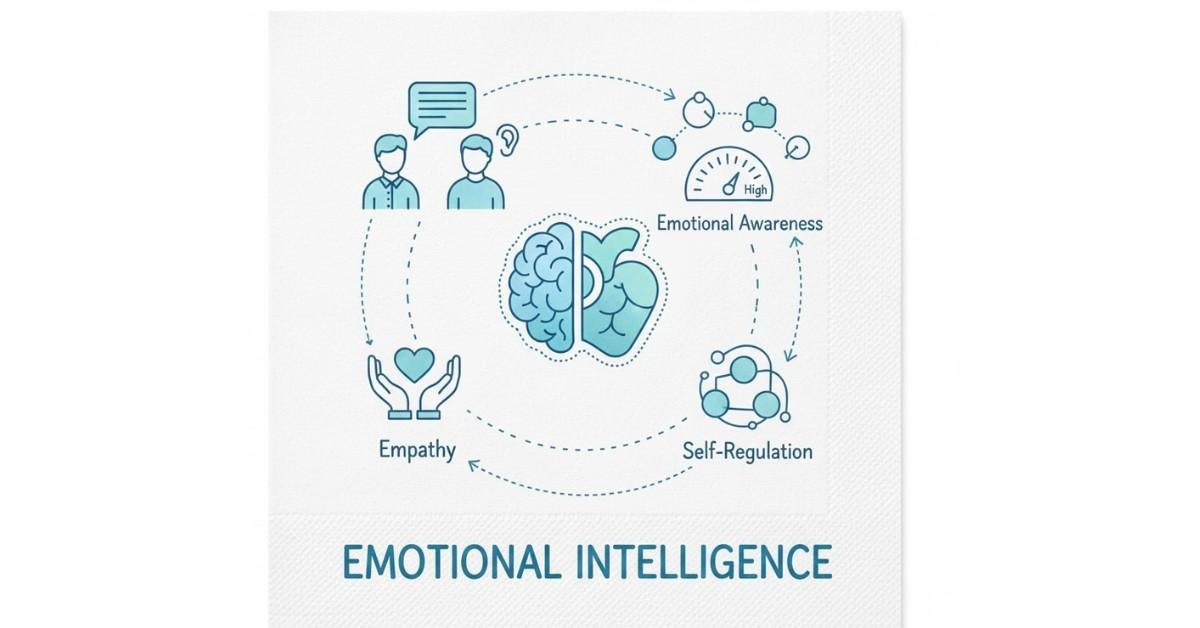
Emotional Intelligence in Communication
Introduction
You’re in a tense meeting. Your colleague just criticized your work in front of the team. Your heart rate increases. Your face gets hot. You feel embarrassed and angry. In this moment, you have a choice: you can react defensively or respond thoughtfully.
The difference between reacting and responding comes down to one skill: emotional intelligence.
Emotional intelligence (EQ) is your ability to understand, manage, and use emotions—both your own and others’—to guide your communication and decisions. While IQ determines your technical capabilities, EQ determines how effectively you communicate with people, navigate conflicts, and build lasting professional relationships.
Research shows that emotional intelligence is a stronger predictor of career success than IQ. Yet many professionals with brilliant technical skills fail to advance because they lack emotional intelligence. They react instead of respond. They blame instead of understand. They alienate instead of connect.
This subtopic teaches you how to develop the emotional intelligence that transforms your communication from transactional to transformational.
What is Emotional Intelligence?
Emotional intelligence consists of four core components:
- Self-Awareness
Understanding your own emotions, strengths, weaknesses, and how your emotions affect others. Self-aware people know when they’re stressed, angry, or defensive—and they acknowledge it.
- Self-Regulation
Managing your emotions rather than being controlled by them. This means staying calm under pressure, not saying things you’ll regret, and choosing your response rather than reacting automatically.
- Empathy
Understanding and sharing the feelings of others. Empathetic people recognize when someone is struggling, frustrated, or hurt—even when it’s not explicitly stated.
- Social Skills
Using your understanding of emotions to navigate relationships effectively. This includes communication, conflict resolution, influence, and collaboration.
- Motivation
Having internal drive and resilience. Emotionally intelligent people stay motivated despite setbacks and inspire others to do the same.
Why Emotional Intelligence Matters More Than You Think
In difficult conversations:
Without EQ, you might become defensive when receiving critical feedback. With EQ, you listen to understand what the person is really trying to help you with.
In conflicts:
Without EQ, conflicts escalate because you’re focused on winning. With EQ, you focus on understanding the other person’s perspective, which often leads to solutions that work for everyone.
In leadership and influence:
Without EQ, you might present brilliant ideas that people reject because you presented them arrogantly. With EQ, you present ideas in ways that make others feel valued and included in the solution.
In remote work:
Without EQ, you miss the emotional cues that text and video calls don’t convey, leading to misunderstandings. With EQ, you actively notice what’s not being said and check in appropriately.
In your career trajectory:
Without EQ, you might be technically excellent but difficult to work with, limiting your advancement. With EQ, you’re the person people want on their team and want to promote.
Component 1: Self-Awareness in Communication
Self-awareness is the foundation. You can’t manage emotions you don’t recognize.
Recognizing Your Emotional Triggers
What situations activate strong emotional responses? Common workplace triggers include:
- Being criticized or corrected publicly
- Feeling disrespected or dismissed
- Having your work questioned
- Being blamed unfairly
- Feeling excluded or left out
- Situations that remind you of past failures
When you identify your triggers, you can prepare for them.
Real example:
A professional realizes they become defensive whenever their manager questions their approach. Understanding this trigger, they can prepare mentally: “My manager asking questions doesn’t mean they doubt me—they’re trying to understand my thinking.” This reframe changes their entire response.
Understanding Your Communication Style Under Stress
Different people respond to stress differently. Under pressure, do you:
- Become aggressive? (Attack mode)
- Become withdrawn? (Flight mode)
- Become passive-aggressive? (Quiet anger mode)
- Become indecisive? (Freeze mode)
- Stay calm and methodical? (Optimal mode)
Knowing your pattern helps you catch yourself before it damages communication.
Recognizing Your Emotional State in Real-Time
Emotionally intelligent communicators develop the ability to pause and notice: “What am I feeling right now? Why am I feeling this?” This creates space between stimulus and response—where your power to choose lies.
Practical technique: Notice physical signals. When stressed, do you clench your jaw? Feel tension in your shoulders? Get a tight chest? Learn your body’s signals so you can intervene early.
Component 2: Self-Regulation in Communication
Self-regulation means choosing your response rather than reacting automatically.
The Pause Technique
When you feel strong emotion rising, pause. Even three seconds changes everything.
❌ Without pause: Someone criticizes your idea. You immediately respond: “That’s a terrible suggestion. You don’t understand the context.”
✅ With pause: Someone criticizes your idea. You pause. You recognize you’re defensive. You respond: “Help me understand your concern. What part doesn’t work for you?”
The second response opens dialogue instead of shutting it down.
Reframing Your Thoughts
Your thoughts create your emotions. Change your thoughts, change your emotions.
❌ Unhelpful thought: “They’re attacking me personally. They don’t respect my work.”
✅ Helpful reframe: “They disagree with my approach. This is valuable feedback I can learn from.”
Same situation. Completely different emotional response.
Managing Difficult Emotions Constructively
Emotionally intelligent people don’t suppress emotions—they process them productively.
When angry: Don’t send that email immediately. Write it, save it, read it tomorrow. Sleep on important decisions made in anger.
When anxious: Acknowledge it. “I’m nervous about this presentation because I want to do well.” Naming it reduces its power over you.
When disappointed: Feel it for a bit, then ask “What can I learn? How can I move forward?”
Component 3: Empathy in Communication
Empathy is the ability to understand what others are feeling and why. It’s the bridge between “I’m right and you’re wrong” to “I understand your perspective.”
Reading Emotional Cues
Emotionally intelligent communicators notice:
- Tone changes in voice (quieter, higher pitch, slower)
- Facial expressions (tightness around eyes, forced smiles)
- Body language (leaning away, crossed arms, nervous movements)
- What’s NOT being said (silence where there’s usually engagement)
Real scenario:
Your teammate is usually talkative in meetings but today is unusually quiet and their answers are brief. An emotionally intelligent person notices this and follows up: “You seem quieter today. Everything okay?” Maybe they’re fine. Maybe they’re stressed about something. Either way, they know you noticed and cared.
Listening to Understand, Not to Respond
Empathy requires genuine curiosity about what someone else is experiencing.
❌ Without empathy: Someone shares a problem. You immediately think of solutions and start offering advice.
✅ With empathy: Someone shares a problem. You ask “Help me understand what’s making this challenging. What do you need most right now?”
Often, people don’t need solutions—they need to be heard and understood first.
Validation: Making People Feel Understood
Validation doesn’t mean agreeing. It means acknowledging that their feelings make sense given their perspective.
✅ Validating: “I understand why you’re frustrated. From your perspective, that decision seems unfair.” (Then you can explain why the decision was made the way it was.)
❌ Dismissive: “You shouldn’t feel that way. The decision was fair.” (This makes them feel unheard and defensive.)
Component 4: Social Skills in Communication
Social skills apply emotional intelligence in practical relationships.
Building Trust Through Authenticity
People trust people who are genuine, not perfect. Emotionally intelligent communicators can admit mistakes, acknowledge limitations, and be real.
❌ Inauthentic: “I have it all figured out. Here’s what we need to do.” (Seems arrogant or like you’re hiding something)
✅ Authentic: “I’ve been thinking about this and here’s my perspective, though I might be missing something. What are your thoughts?” (Seems confident but open)
Navigating Disagreements Without Damage
Emotionally intelligent people can disagree without damaging relationships.
Framework:
- Acknowledge the other person’s perspective: “I hear what you’re saying…”
- Explain your perspective: “Here’s how I see it differently…”
- Look for common ground: “We both want what’s best for the project…”
- Move forward together: “How do we make a decision that works?”
Giving and Receiving Feedback with EQ
Emotionally intelligent feedback givers consider the other person’s emotional state and deliver feedback in ways that help rather than hurt.
✅ EQ-based feedback: “You’re detail-oriented, which is valuable. I noticed that sometimes we miss deadlines focusing on perfect details. Can we talk about how to balance both?”
❌ Without EQ: “You’re too perfectionist and it slows us down.” (Critical and defensive-making)
Component 5: Motivation and Emotional Resilience
Emotionally intelligent people stay motivated despite setbacks because they don’t take failures personally.
Separating Identity from Outcome
❌ Without this separation: Failed project = “I’m a failure”
✅ With this separation: Failed project = “We learned something valuable. Here’s what we’ll do differently next time.”
Building Emotional Resilience
Resilient communicators recover from difficult interactions quickly. Instead of dwelling on what went wrong, they extract the lesson and move forward.
Maintaining Optimism Without Denial
Emotionally intelligent people are realistic about challenges but maintain belief that solutions exist.
✅ Balanced: “This is a real problem AND we can figure this out.”
❌ Too negative: “This is a disaster. We can’t fix this.” (Demoralizing)
❌ Too positive: “Don’t worry, everything will work out.” (Dismissive of real challenges)
Practical Application: EQ in Five Common Scenarios
Scenario 1: Receiving Unwanted Feedback
Low EQ response: Get defensive, make excuses, blame others.
High EQ response: Listen fully, ask clarifying questions, thank them for the feedback, reflect on it, decide what to do with it.
Scenario 2: Conflict with a Colleague
Low EQ response: Avoid the person, talk negatively about them to others, escalate to management.
High EQ response: Schedule a conversation, listen to understand their perspective, share yours, find solutions together.
Scenario 3: Not Getting Promoted
Low EQ response: Assume you were wronged, become bitter, start looking elsewhere.
High EQ response: Ask for feedback on what would help you advance, create a development plan, stay motivated while working toward the goal.
Scenario 4: Someone Makes a Mistake That Affects You
Low EQ response: Blame them publicly, make them feel incompetent.
High EQ response: Acknowledge the impact, understand what happened, focus on solutions, support them in learning.
Scenario 5: Presenting an Unpopular Idea
Low EQ response: Push your idea aggressively, dismiss concerns, try to win.
High EQ response: Present your idea, listen to concerns, acknowledge valid points, find ways to address them, position it as collaborative problem-solving.
Building Your Emotional Intelligence
Week 1: Awareness
Notice your emotional triggers. Journal them. What situations activate strong emotions?
Week 2: Recognition
Practice naming your emotions in real-time. Before reacting, pause and identify: “I’m feeling angry/defensive/anxious right now.”
Week 3: Regulation
Practice the pause technique. When you feel strong emotion, wait three seconds before responding.
Week 4: Empathy
In conversations, focus on understanding others’ perspectives before sharing yours.
Week 5: Application
Use these skills in a challenging interpersonal situation. Notice the difference in outcomes.
Conclusion
Emotional intelligence is where raw technical skill meets human connection. It’s the difference between a competent professional and a leader people want to follow. It’s what transforms difficult relationships into collaborative ones. It’s what allows you to influence without authority and persuade without pressure.
The best news? Unlike IQ, which is relatively fixed, emotional intelligence can be developed throughout your career. Every difficult interaction is an opportunity to practice. Every conflict is a chance to strengthen your EQ. Every misunderstanding is a lesson in empathy.
Start with self-awareness. Notice your patterns. Then practice the other components. Within weeks, people will treat you differently because they’ll perceive you as more emotionally intelligent, more trustworthy, and more capable of handling the complexity of human relationships in professional settings.
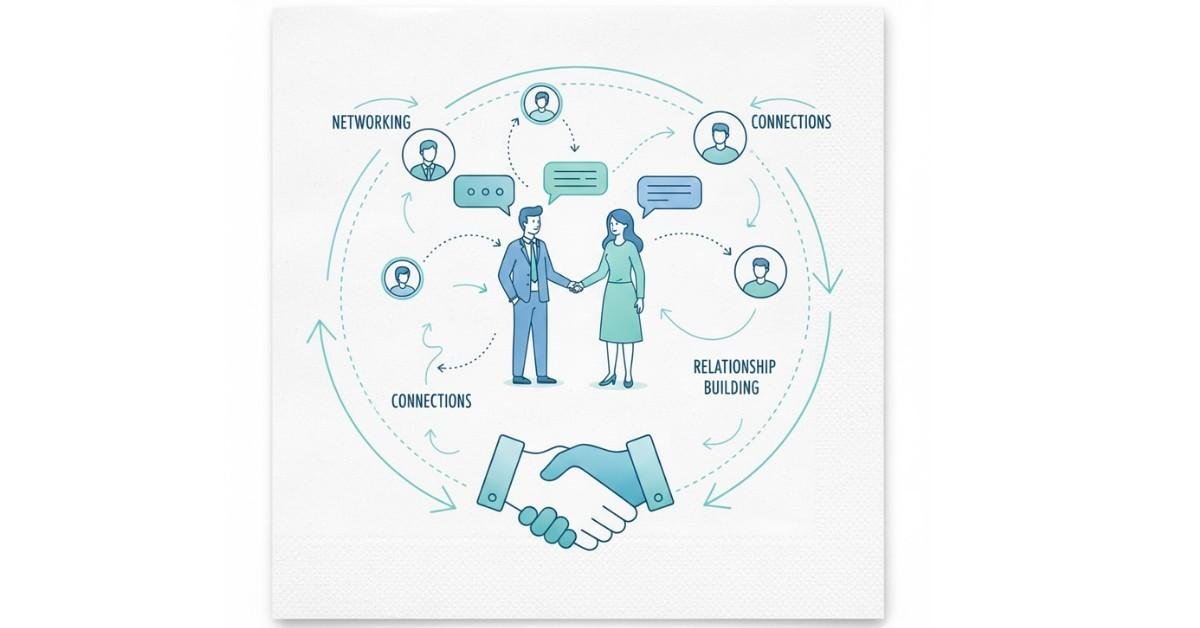
Networking and Relationship Building Through Communication
Introduction
Networking has a reputation problem. Many professionals hear the word and think of uncomfortable events where strangers exchange business cards, fake smiles, and forgettable conversations. That’s not real networking.
Real networking is something entirely different. It’s about building genuine, mutually beneficial relationships through authentic communication. It’s not transactional—it’s relational. And when done right, it becomes the foundation for career opportunities, collaborations, mentorships, and lasting professional friendships.
The professionals who advance fastest aren’t always the ones with the best technical skills. They’re often the ones who’ve built strong networks of relationships. These relationships open doors, provide insights, offer support during challenges, and create opportunities you couldn’t have created alone.
What Real Networking Actually Is
Networking isn’t about collecting contacts. It’s about building a community of professionals who know, like, and trust you.
The Networking Misconception:
Many people approach networking as a numbers game. How many business cards can I collect? How many LinkedIn connections can I gain? This approach makes networking feel transactional and inauthentic. It doesn’t work.
The Networking Reality:
Effective networking is about creating genuine connections with people you respect and who respect you. Quality over quantity. A relationship where both people benefit from knowing each other.
Think about your own experience. Are you more likely to help someone you’ve had authentic conversations with, or someone who just added you on LinkedIn and immediately asked for a favor?
Part 1: The Communication Foundation of Networking
Before you network, you need to understand how communication enables relationship-building.
Authenticity: The Networking Superpower
The professionals people want to network with are authentic. They’re not performing a version of themselves—they’re genuinely interested in connecting.
✅ Authentic approach: “I work in digital marketing and I’m interested in how companies like yours approach education technology. I’d love to learn from your experience.”
❌ Inauthentic approach: “I’m looking to move into edtech and maybe you could introduce me to people in your network.” (Immediately transactional)
Notice the difference? One is building a real relationship. The other is asking for favors from a stranger.
Active Listening in Networking
Most people approach networking wrong. They prepare what they want to say and then wait for their turn to talk. Effective networkers do the opposite—they listen more than they speak.
When you meet someone:
- Ask questions about their work, background, and interests
- Genuinely listen to their answers
- Ask follow-up questions that show you were listening
- Find genuine points of connection
This approach accomplishes two things. First, the other person feels heard and valued—which makes them want to continue the relationship. Second, you learn information that helps you understand how you might genuinely help each other.
Real-world networking scenario:
❌ Poor networking: You meet someone at an event. You tell them about yourself for 10 minutes, hand them your card, and move on.
✅ Good networking: You meet someone. You ask about their work. They explain they’re working on a project involving data analytics. You ask thoughtful questions about their approach. By the end, you’ve had a real conversation and identified that you might be able to help each other.
Part 2: Strategic Networking Communication
Effective networkers are strategic but not manipulative. They think ahead about how they can provide value.
Understanding Your Networking Value
What can you offer to your network?
- Knowledge in your field
- Connections to other people
- Insights into trends or changes
- Emotional support and encouragement
- Your unique perspective
- Help with projects or challenges
Most professionals underestimate their networking value. You don’t need to be a CEO to offer value. You can share knowledge, make introductions, offer perspective, or simply be a thoughtful person others enjoy talking to.
Identify what you naturally offer to people. Then look for people who might benefit from that.
The Give-First Networking Approach
The most successful networkers give first. They help without expecting immediate return.
Example:
Someone in your network mentions they’re struggling to find a marketing contractor. You know someone qualified. You make the introduction, no strings attached. Months later, when you need something, that person remembers your kindness and is quick to help.
This isn’t about keeping score. It’s about creating a culture of reciprocal helpfulness.
Real-world implementation:
- When you read an article relevant to someone’s work, send it to them with a note
- When you see a job posting that matches someone’s skills, let them know
- When you see an opportunity to connect two people, make the introduction
- When someone shares a challenge, offer perspective or resources if you have them
These small actions build goodwill and trust.
Part 3: Communication Skills for Different Networking Situations
At Networking Events
✅ Effective approach:
- Arrive early when there are fewer people (easier to start conversations)
- Ask opening questions: “What brings you here?” or “What industry do you work in?”
- Listen for genuine points of connection
- Be genuinely interested in people, not just collecting contacts
- Suggest staying in touch: “I’d like to continue this conversation—can I add you on LinkedIn?”
❌ Ineffective approach:
- Arrive late and crowd around the food
- Wait for others to approach you
- Launch into your elevator pitch without learning about them
- Exchange cards and disappear
- Contact them three months later with “We should grab coffee!”
One-on-One Networking Meetings
When you schedule a coffee or virtual meeting with someone:
✅ Before the meeting:
- Research their background and recent work
- Prepare 2-3 intelligent questions
- Clarify the purpose (are you asking for advice, making a connection, or just checking in?)
- Respect their time—suggest a specific timeframe
✅ During the meeting:
- Start with small talk but get to substance quickly
- Ask thoughtful questions
- Listen more than you talk (aim for 70% listening, 30% talking)
- Take notes if appropriate
- Look for ways to offer value
- Discuss next steps if relevant
✅ After the meeting:
- Send a thank-you note within 24 hours
- Mention something specific from your conversation (shows you were genuinely listening)
- Offer to help with something they mentioned if you can
- Follow up on any commitments you made
Real example of good networking follow-up:
“Hi Sarah, thanks so much for taking the time to talk with me yesterday. I really appreciated your insights about the shift toward AI in marketing—that’s exactly the challenge our team is grappling with. I came across an article about [relevant topic] and thought you might find it useful. Would love to continue the conversation in a few months when I’ve had time to implement some of your suggestions.”
LinkedIn and Online Networking
Many professionals neglect the power of consistent, authentic online presence.
✅ Good LinkedIn networking:
- Share relevant insights and articles (with your thoughts, not just links)
- Engage thoughtfully with others’ posts (genuine comments, not just emojis)
- Message people you’ve met with something personal: “Remember when you mentioned…?”
- Connect with people you want to learn from and engage with their content
- Share your own experiences and lessons learned
❌ Poor LinkedIn networking:
- Adding people you’ve never met without context
- Immediately pitching to new connections
- Connecting with hundreds of people but never engaging
- Sharing only promotional content
- Going silent for months then suddenly asking for introductions
Part 4: Building Different Types of Relationships
Peer Networks (People Your Level)
These are relationships with colleagues and professionals at your career stage.
Communication approach:
- Be collaborative, not competitive
- Share knowledge freely
- Create opportunities for mutual growth
- Be genuine about struggles and challenges
- Support each other’s wins
Mentor Relationships (People More Senior)
These are people with experience you want to learn from.
Communication approach:
- Respect their time—be specific about what you’re seeking
- Show genuine interest in their experience
- Ask for advice, not favors
- Implement their suggestions and report back
- Express genuine gratitude
Mentee Relationships (People You Can Guide)
These are people earlier in their careers or in different fields.
Communication approach:
- Be genuinely interested in their development
- Offer perspective without being prescriptive
- Make introductions that help their growth
- Be accessible but set realistic expectations
- Celebrate their progress
Industry Relationships
These are connections in your professional field.
Communication approach:
- Stay visible and engaged in your industry
- Attend relevant events and conferences
- Participate in professional associations or online communities
- Share industry insights and trends
- Help others navigate industry challenges
Part 5: Common Networking Communication Mistakes
Mistake 1: Making it Only About What You Want
Every conversation: “Can you introduce me to…?” or “Can you help me…?”
Better approach: Focus on mutual benefit. Ask “How can I help?” as much as “How can you help me?”
Mistake 2: Disappearing After You Get What You Want
You meet someone, they help you, then you vanish from their life.
Better approach: Maintain relationships regardless of immediate benefit. Stay in touch regularly.
Mistake 3: Being Transactional From the Start
“I need a job in your industry. Can we connect?”
Better approach: Build genuine relationship first. “I’m interested in learning more about your industry. Would you have 20 minutes for coffee?”
Mistake 4: Not Following Through on Commitments
You say “Let’s stay in touch!” then never reach out.
Better approach: Be specific about next steps and actually do them.
Mistake 5: Only Networking When You Need Something
You’re silent for a year, then suddenly reach out asking for help.
Better approach: Maintain consistent contact. Check in periodically with no ask attached.
Part 6: Long-Term Relationship Maintenance
Building a network is one thing. Maintaining it is another.
Stay Visible and Engaged
- Share updates about your work and growth
- Congratulate people on their achievements
- Engage with their professional content
- Attend relevant events in your industry
- Contribute to discussions in professional communities
Provide Consistent Value
- Share insights and articles relevant to people’s work
- Make introductions that benefit both parties
- Offer expertise when someone faces a challenge
- Be a thoughtful listener and advisor
Nurture Key Relationships
Some relationships will be more important than others. Nurture those strategically:
- Schedule regular check-ins (quarterly or biannually)
- Remember important details about their lives
- Be available when they need support
- Celebrate their wins
- Stay connected through life changes
Practical Exercise: Map Your Network and Set Networking Goals
This week:
- List 10-15 people in your professional network. People you know and respect.
- Identify one person in each of these categories:
- A peer you can support
- A mentor you can learn from
- A mentee you can guide
- An industry connection
- Someone you’ve lost touch with
- A peer you can support
- Reach out to one person with genuine interest: “I was thinking about our conversation about [topic]. I came across something relevant and wanted to share it with you.”
- Plan one networking activity (event, online community, LinkedIn engagement, etc.) for this month.
- Track relationship maintenance. Set reminders to check in with key relationships quarterly.
Conclusion
Networking is ultimately about authentic communication and genuine relationship building. It’s not about collecting contacts or manipulating people into helping you. It’s about creating a community of professionals who genuinely care about each other’s success.
The professionals who build the strongest networks are those who give first, listen actively, and maintain genuine interest in people’s wellbeing and growth—not just when they need something, but consistently over time.
Start viewing networking not as a transactional activity but as a natural extension of being interested in people and providing value. When you shift this mindset, networking becomes not just a career strategy—it becomes a genuine part of how you build a fulfilling professional life.
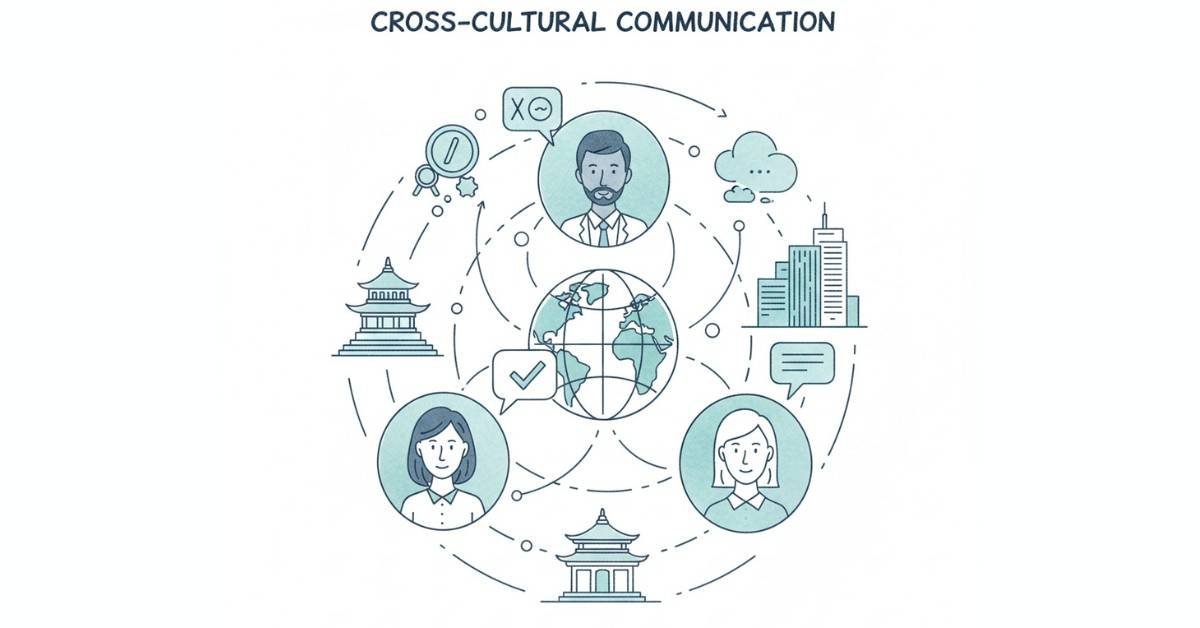
Cross-Cultural Communication Awareness
Introduction
Imagine this scenario: You’re leading a video meeting with team members from five different countries. You make direct eye contact with everyone and speak assertively, presenting your ideas with confidence. To you, this is professional and clear. But your colleague from Japan feels your directness is aggressive. Your teammate from Brazil thinks you’re unfriendly because you didn’t start with personal conversation. Your Indian colleague interprets your lack of hierarchy acknowledgment as disrespectful.
Same behavior. Five different interpretations. This is the reality of cross-cultural communication.
In today’s globalized workplace, you’re increasingly likely to work with people from different cultural backgrounds. Yet most professionals receive little to no training in cross-cultural communication. They assume that what works in their culture works everywhere. This assumption damages relationships, creates misunderstandings, and limits career opportunities.
Cross-cultural communication awareness isn’t about becoming an expert in every culture. It’s about understanding that culture profoundly shapes how people communicate—and approaching difference with curiosity rather than judgment.
What is Culture and Why It Matters in Communication
Culture is the shared system of beliefs, values, behaviors, and norms within a group of people. It’s learned from birth and deeply influences how we see the world, what we consider appropriate, and how we interact.
When you grow up in a culture, you internalize its communication norms so completely that they feel like “the right way” to communicate. You don’t realize they’re cultural choices—you think they’re universal truths.
Real-world example:
In the United States, directness is often valued. “Here’s my opinion” is considered honest and straightforward. In Japan, indirectness is valued. Direct statements can be seen as blunt or rude. The same message—direct or indirect—means something completely different depending on which culture interprets it.
Neither approach is right or wrong. They’re just different. But when an American manager tells a Japanese team member “Your idea won’t work,” the American thinks they’re being helpful and clear. The Japanese team member feels criticized and disrespected.
This is why cross-cultural communication awareness is crucial. It helps you understand that differences aren’t problems to fix—they’re variations to navigate respectfully.
Key Cultural Dimensions That Affect Communication
Researchers have identified several dimensions of culture that significantly impact how people communicate. Understanding these helps you anticipate differences and adapt accordingly.
- Direct vs. Indirect Communication
Direct cultures (United States, Germany, Australia, Netherlands): Value straightforward, explicit communication. “No” means no. Critical feedback is given directly.
Indirect cultures (Japan, China, Saudi Arabia, many Latin American countries): Value subtle, implicit communication. “No” might mean “maybe” or “I need to think about it.” Critical feedback is given privately and gently.
Workplace impact:
A German manager directly tells a Chinese employee their presentation was weak. The Chinese employee feels deeply embarrassed and loses confidence. A Chinese colleague would have given the same feedback privately with gentleness and face-saving language.
How to bridge it:
Recognize when you’re communicating with someone from an indirect culture and soften your directness slightly. Frame critical feedback as collaborative problem-solving, not judgment.
- High Context vs. Low Context Communication
High context cultures (Japan, China, Saudi Arabia, France): Rely heavily on unspoken context, history, and relationship. Much is implied rather than stated explicitly.
Low context cultures (United States, Germany, Scandinavia): Rely on explicit, clear information. Context is less important; what’s said matters more than what’s implied.
Workplace impact:
A high-context communicator from France assumes their boss understands the history and context behind their proposal. They present it briefly with minimal explanation. The American boss from a low-context culture thinks they didn’t prepare because they didn’t spell everything out.
How to bridge it:
In low-context cultures, provide explicit information and context. In high-context cultures, take time to establish relationships and shared understanding before jumping to business.
- Individualistic vs. Collectivistic Orientation
Individualistic cultures (United States, Australia, UK): Value personal achievement, individual recognition, and standing out.
Collectivistic cultures (Japan, India, Mexico, many African countries): Value group harmony, collective success, and fitting in.
Workplace impact:
An American professional highlights their individual achievements in a meeting. An Indian colleague from a collectivistic culture credits the whole team and downplays their personal role. The American seems arrogant. The Indian seems uncommitted.
How to bridge it:
In individualistic cultures, it’s appropriate to highlight your contributions. In collectivistic cultures, emphasize teamwork while subtly acknowledging individual efforts. Balance both perspectives.
- Relationship vs. Task Orientation
Relationship-oriented cultures (Latin America, Middle East, Southern Europe, many African countries): Prioritize building personal relationships before doing business. Small talk and getting to know colleagues matters.
Task-oriented cultures (Northern Europe, United States, Australia): Prioritize efficiency and getting the job done. Personal relationship is secondary.
Workplace impact:
A Mexican colleague wants to chat about their weekend before the meeting starts. An American colleague is frustrated—they want to get down to business. The Mexican person thinks the American is cold and unfriendly. The American thinks the Mexican is wasting time.
How to bridge it:
In relationship-oriented cultures, allow time for personal connection before business. In task-oriented cultures, schedule personal time but keep meetings focused. Respect both approaches.
- Power Distance (Attitudes Toward Hierarchy)
High power distance cultures (India, Mexico, Philippines, Saudi Arabia): Accept and expect hierarchy. Respect for authority is important. Questioning a boss is disrespectful.
Low power distance cultures (Denmark, Australia, Netherlands, United States): Minimize hierarchy. Questioning authority is encouraged. Everyone’s opinion matters.
Workplace impact:
A manager from the United States says “Call me by my first name” and invites open debate. An employee from India feels uncomfortable challenging their boss directly. The American manager thinks they’re being inclusive. The Indian employee thinks the American is breaking professional norms.
How to bridge it:
In high power distance cultures, respect hierarchy while explaining that you still value input. In low power distance cultures, explain that hierarchy exists but it’s not absolute.
Communication Norms That Vary Across Cultures
Beyond these dimensions, specific communication behaviors vary significantly.
Eye Contact
- Western cultures: Direct eye contact shows confidence and honesty
- Many Asian, African, and Middle Eastern cultures: Direct eye contact with superiors can be disrespectful
- Some cultures: Eye contact varies by gender and relationship
Personal Space
- Northern Europeans and North Americans: Prefer more distance (arm’s length)
- Latin Americans, Southern Europeans, Middle Easterners: Prefer closer proximity
- This affects how comfortable people feel in conversations and meetings
Silence
- Some cultures view silence as uncomfortable and fill it with talk
- Other cultures see silence as thoughtful and respectful
- A pause for thinking is normal in some cultures, awkward in others
Gestures
- Thumbs up is positive in Western cultures but offensive in some Middle Eastern and African contexts
- Pointing varies in appropriateness
- Different hand gestures mean different things across cultures
Formality and Titles
- Some cultures prefer formal titles (Mr., Dr., Professor)
- Others quickly move to first names
- Getting this wrong can seem disrespectful or cold
Practical Strategies for Cross-Cultural Communication Success
Strategy 1: Approach Differences with Curiosity, Not Judgment
When someone communicates differently than you expect, don’t assume they’re wrong. Ask: “Why might they communicate this way? What’s their background?” This simple shift transforms misunderstandings into learning opportunities.
Strategy 2: Research Before You Communicate
Before an important meeting with someone from a different culture, spend 10 minutes learning about their cultural communication norms. Don’t stereotype—just understand tendencies.
Strategy 3: Ask About Preferences Directly
“I want to communicate well with you. How do you prefer to receive feedback?” or “What’s important to you in how we work together?” These questions show respect and give you real information.
Strategy 4: Be Explicit About Your Assumptions
If you’re from a low-context culture explaining to a high-context culture, say “Let me give you the full context” rather than assuming they’ll ask. If you’re from a direct culture explaining to an indirect culture, soften your language: “This might be worth reconsidering because…” instead of “That won’t work.”
Strategy 5: Build Relationships Across Cultures
Invest time in understanding people as individuals, not just cultural representatives. Personal relationships make cross-cultural communication easier because people give each other more grace.
Strategy 6: Use Multiple Communication Channels
In cross-cultural settings, miscommunication is more likely. Use email to confirm what you discussed verbally. Use visuals to clarify written information. Redundancy prevents misunderstanding.
Strategy 7: Be Patient With Yourself and Others
You will make mistakes in cross-cultural communication. So will everyone else. Apologize genuinely, learn, and move forward. Most people appreciate efforts to bridge cultural differences.
Real-World Scenario: Bridging Cultural Differences
The Situation:
A project team includes:
- Sarah (American, low context, task-oriented, individualistic)
- Hiroshi (Japanese, high context, relationship-oriented, collectivistic)
- Carlos (Brazilian, relationship-oriented, indirect, high power distance to some extent)
Sarah sends an email: “Here’s my analysis. The current approach won’t work. We should implement my solution immediately.”
Without cross-cultural awareness:
- Hiroshi feels criticized and embarrassed. He doesn’t speak up for two weeks.
- Carlos thinks Sarah is dismissing the team’s efforts. He’s offended.
- Sarah doesn’t understand why they’re not responding and thinks they’re unmotivated.
With cross-cultural awareness:
Sarah adjusts: “I’ve been thinking about our approach and have an idea I’d like to explore with you. I know this has worked well so far, and I appreciate everyone’s work on it. I wonder if we might consider this alternative because of these factors. I’d love to hear what you think.”
Result:
- Hiroshi feels respected and valued. He takes time to think and responds thoughtfully.
- Carlos feels included and appreciated. He shares his perspective openly.
- Sarah gets the input she needs and the team makes a better decision together.
Same people. Different approach. Completely different outcome.
Common Cross-Cultural Mistakes to Avoid
Mistake 1: Assuming everyone communicates like you do
Your way isn’t the universal way. It’s just your way.
Mistake 2: Stereotyping based on culture
Yes, culture influences communication, but individuals vary. Someone from a “high context” culture might be direct. Don’t assume.
Mistake 3: Ignoring language barriers
Even fluent English speakers from other countries might miss nuance or take longer to process. Speak clearly and check for understanding.
Mistake 4: Making jokes about cultural differences
What you think is lighthearted, someone might find offensive. When in doubt, avoid cultural humor in professional settings.
Mistake 5: Never acknowledging the cultural difference
Pretending culture doesn’t exist makes misunderstandings worse. It’s okay to say “I realize we come from different communication styles. Let’s figure out what works for both of us.”
Developing Your Cross-Cultural Communication Competence
This Month:
- Identify one person in your professional circle from a different cultural background
- Ask them about communication preferences: “How do you prefer to receive feedback?” “What’s important in how we work together?”
- Observe how they communicate—timing, directness level, relationship focus
- Adapt slightly your communication toward their style while staying authentic
- Notice the difference in how they respond
This Quarter:
- Research one culture different from yours
- Learn three key communication norms from that culture
- Apply that knowledge in interactions with people from that culture
- Reflect on outcomes—what worked?
Conclusion
Cross-cultural communication awareness doesn’t mean abandoning your own communication style. It means understanding that your style is one of many valid approaches, and developing flexibility to bridge differences.
In a globalized workplace, this flexibility is invaluable. Professionals who navigate cultural differences respectfully become trusted team members. They build relationships across boundaries. They solve problems that monocultural teams can’t. Most importantly, they create workplaces where people from different backgrounds feel valued and respected.
The organizations that will thrive in the next decade are those where cross-cultural communication is strong. Be one of the professionals who makes that possible.
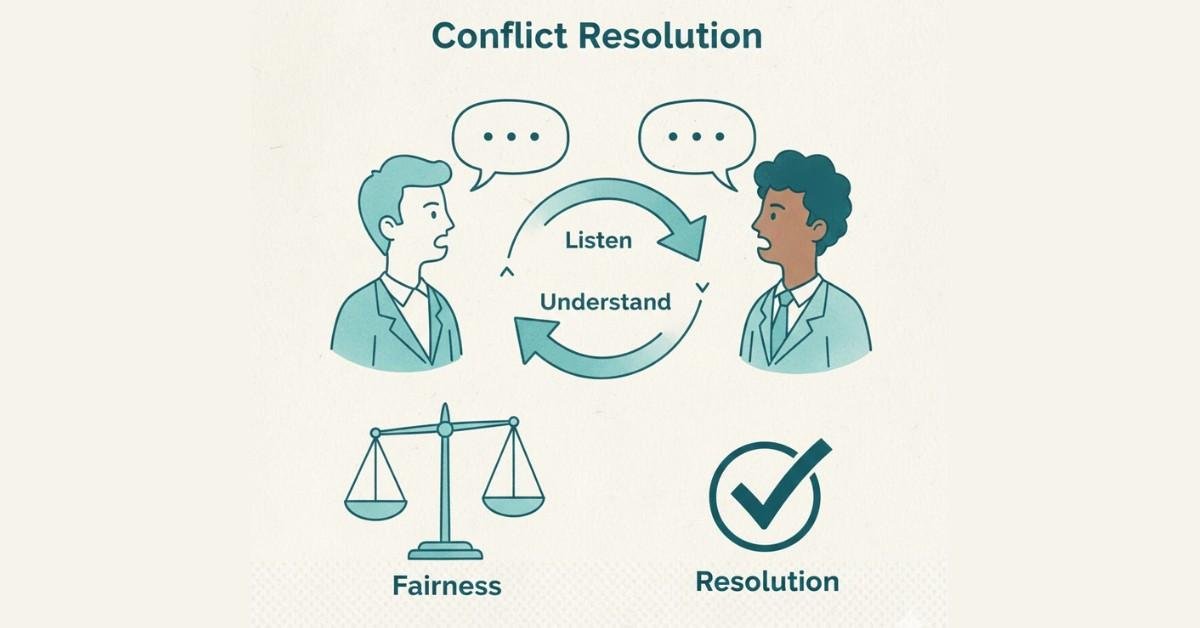
Conflict Resolution Through Effective Dialogue
Introduction
Conflict is inevitable in any workplace. Different people have different perspectives, priorities, and working styles. When these differences collide, conflict happens. But here’s what most professionals don’t realize: conflict isn’t the problem. How you handle it is.
Some professionals avoid conflict entirely, letting resentment build until it explodes. Others address conflict aggressively, damaging relationships in the process. A few navigate conflict skillfully, using it as an opportunity to strengthen relationships and find better solutions.
The difference comes down to one skill: the ability to engage in effective dialogue during disagreements. This subtopic teaches you how to transform conflict from something destructive into something constructive.
Understanding Workplace Conflict
Before you can resolve conflict effectively, you need to understand what’s actually happening when conflict arises.
Types of Workplace Conflict
Task conflict: Disagreement about what needs to be done, how to do it, or priorities.
Example: Two team members disagree about the best approach to a project.
Process conflict: Disagreement about how decisions should be made or how work should be organized.
Example: One person wants to discuss all options before deciding; another wants to decide quickly and adjust as needed.
Relationship conflict: Personal friction between people; disagreement rooted in personality clashes or past hurt.
Example: Two colleagues have been frustrated with each other for months, and any disagreement becomes personal.
Values conflict: Disagreement about fundamental principles or what matters most.
Example: One person prioritizes getting the job done fast; another prioritizes perfect quality.
Interestingly, task and process conflicts can be productive if handled well. They often lead to better solutions. Relationship and values conflicts are more damaging because they attack the person, not the problem.
Why People Avoid or Escalate Conflict
Understanding why conflict happens (and why people mishandle it) helps you intervene before things get worse.
Why people avoid conflict:
- Fear of damaging the relationship
- Fear of being disliked
- Discomfort with emotional intensity
- Belief that conflict will resolve itself (it rarely does)
- Previous negative experiences with conflict
Why people escalate conflict:
- Feeling unheard or disrespected
- Taking disagreement personally
- Reacting emotionally instead of responding thoughtfully
- Blame and accusation instead of curiosity
- Unwillingness to understand the other person’s perspective
The solution isn’t to avoid or escalate. It’s to engage in effective dialogue.
The Foundation: Psychological Safety
Before you can have effective dialogue about conflict, you need psychological safety—the belief that you can speak your mind without fear of punishment or humiliation.
Without psychological safety, people hide concerns until they explode or stay silent and build resentment.
With psychological safety, people address issues early and calmly because they trust it won’t damage the relationship.
As a communicator, you create psychological safety by:
- Taking concerns seriously instead of dismissing them
- Not punishing people for disagreeing with you
- Genuinely trying to understand their perspective
- Focusing on solving problems, not blaming people
- Keeping discussions private and confidential
Part 1: Preparing for Difficult Conversations
Most people jump into conflict conversations unprepared. This is a mistake.
Step 1: Clarify Your Own Perspective First
Before talking to the other person, get clear on:
- What exactly is bothering you? (Be specific, not general)
- Why does it bother you? (What need or value is being violated?)
- What do you want to change?
- What are you hoping will happen?
- What assumptions are you making about their intentions?
This clarity prevents you from rambling or seeming confused during the conversation.
Step 2: Assume Good Intent
Here’s something powerful: assume the other person isn’t trying to hurt you. They probably have reasons for their behavior that make sense to them, even if those reasons aren’t obvious to you.
This mindset shift transforms your entire approach from accusatory to curious.
❌ Without assuming good intent: “They deliberately undermined my idea in the meeting because they don’t respect me.”
✅ Assuming good intent: “They had concerns about my idea. I wonder what they saw that I didn’t.”
Step 3: Choose the Right Time and Place
Never have important conflict conversations when:
- Either person is very angry or upset
- You’re in a public setting
- Either person is rushed or distracted
- The other person is already dealing with something stressful
Do have them:
- When both people are calm
- Privately
- With enough time to talk fully
- When the other person has capacity to listen
Terrible timing turns manageable conflict into explosive conflict.
Step 4: Prepare Your Opening
How you start the conversation determines whether the other person gets defensive or opens up.
❌ Accusatory opening: “We need to talk about how you’ve been treating me badly.”
✅ Curious opening: “I’ve been bothered by something and I want to understand your perspective. Can we talk?”
The first opening puts them on defense. The second invites dialogue.
Part 2: The Dialogue Process
This is where the actual conflict resolution happens.
Phase 1: State the Situation Without Blame
Describe what you’ve observed, using specific examples, without accusing them of bad intent.
❌ Accusatory: “You always ignore my ideas in meetings. You don’t respect anyone’s input but your own.”
✅ Factual: “In the last two meetings, when I suggested approaches, they weren’t discussed before moving forward. I felt like my input wasn’t valued. Can you help me understand what happened?”
Notice the difference. One attacks. One invites explanation.
Phase 2: Ask for Their Perspective
This is crucial. Ask genuinely wanting to understand, not to argue.
“Help me understand your perspective. What was going through your mind?”
Then listen. Really listen. Don’t plan your rebuttal while they’re talking.
Phase 3: Look for the Valid Point in Their Perspective
Even if you strongly disagree, there’s usually something valid in their perspective. Find it and acknowledge it.
“I see your point that the timeline was tight and we needed to make quick decisions.”
This doesn’t mean you agree with everything. It means you’re validating that their reasoning makes sense.
Phase 4: Explain Your Perspective and Impact
Now share your side, focusing on impact rather than intention.
“When decisions get made without my input, I feel like my ideas and expertise aren’t valued. That affects my motivation and engagement with the project.”
Notice you’re explaining the impact on you, not attacking their character.
Phase 5: Collaborate on Solutions
This is where you move from problem to solution.
“Given both perspectives, how can we make decisions in a way that works for both of us?”
Generate options together. Look for solutions where both people’s needs are met.
Part 3: Advanced Techniques for Difficult Dialogues
The Empathy Bridge
When someone is angry or defensive, empathy can defuse tension.
“I can see why you’re frustrated. I would be too if I felt dismissed.”
This acknowledges their feelings without necessarily agreeing with their interpretation.
The Curiosity Question
When dialogue starts to escalate, ask a genuine question instead of making a statement.
Instead of: “That’s not fair,” ask: “Help me understand why you saw it that way?”
Questions open conversation. Statements shut it down.
Separating Person From Behavior
Attack the behavior, not the person.
❌ Attacking person: “You’re irresponsible and don’t care about quality.”
✅ Addressing behavior: “When deadlines are missed, it creates problems for the rest of the team. I’d like to understand what’s happening so we can find solutions.”
The “Yes, And” Approach
Instead of arguing with what someone said, build on it.
“Yes, efficiency is important, and quality matters too. How do we achieve both?”
This validates their point while adding your perspective.
Part 4: Common Mistakes in Conflict Dialogue
Mistake 1: Bringing Up Old Issues
“This is just like when you did [past issue]…”
Stick to the current issue. Past issues are separate conversations.
Mistake 2: Absolute Language
“You always…” or “You never…” Put anyone on the defensive.
Use specific language: “In this situation…” or “What I noticed was…”
Mistake 3: Mind Reading
“I know what you’re thinking” or “You obviously don’t care.”
You don’t know what they’re thinking. Ask instead of assuming.
Mistake 4: Giving Up Too Early
One difficult conversation doesn’t always resolve everything. Sometimes you need multiple conversations.
Mistake 5: Forgetting to Follow Up
If you agreed to change something, actually do it. Then check in: “I wanted to follow up on what we discussed. Here’s what I’ve done differently.”
This shows you were serious and builds trust.
Real-World Scenario: Conflict Dialogue in Action
The Situation:
Sarah is frustrated because her colleague Marcus didn’t include her in an important client meeting. She feels excluded and disrespected. Marcus feels she’s been defensive in recent conversations, so he didn’t want unnecessary tension.
Poor Dialogue Approach:
Sarah: “You deliberately excluded me from the client meeting. You don’t respect my work.”
Marcus: “I don’t know what you’re talking about. You’re way too sensitive about everything.”
Result: Both people get defensive. Conflict escalates. Nothing resolves.
Effective Dialogue Approach:
Sarah: “I wanted to talk about the client meeting. I noticed I wasn’t included and I want to understand why. What was your thinking?”
Marcus: “Oh, I didn’t think about it like that. I just knew you were busy on another project and didn’t want to overload you.”
Sarah: “I appreciate that you were thinking about my workload. At the same time, I felt excluded from something important. In the future, I’d prefer you ask me before assuming I can’t attend.”
Marcus: “That makes sense. I’ll check with you next time instead of assuming.”
Sarah: “Thanks. I also want to acknowledge that I have been a bit defensive lately. I appreciate your honesty about how that’s been affecting you.”
Result: Both people feel understood. They identify the actual issue (miscommunication about inclusion). They agree on how to do it differently. Relationship strengthens.
After the Conflict Resolution Conversation
Document what you agreed to (if appropriate for the context).
“So we agreed that I’ll keep you informed about timeline changes, and you’ll respond within 24 hours when possible. Is that right?”
Give it time to work
Change doesn’t happen immediately. People need time to adjust their behavior.
Celebrate progress
When the other person makes an effort toward the agreement, acknowledge it.
“I really appreciated how you handled that situation yesterday.”
Know when to escalate
If the behavior continues after multiple conversations, involve a manager or HR. Sometimes conflict requires intervention beyond dialogue.
Conclusion
Conflict is a natural part of working with other humans. The professionals who navigate it skillfully have a huge advantage. They build stronger relationships because they address issues directly and respectfully. They solve problems better because they understand all perspectives. They become leaders because they show they can handle difficult conversations with grace.
The next time you face conflict, remember: this is an opportunity to strengthen the relationship and find better solutions. Use the dialogue techniques in this guide. Approach the conversation with curiosity and good intent. Listen genuinely. Look for valid points in their perspective. Collaborate on solutions.
When you do this consistently, conflict becomes not something to fear, but something that deepens relationships and improves outcomes.