
Crypto Analyst Career Path : Trading & Market Analysis Guide
Table of Contents
Introduction : Reading Markets That Never Sleep
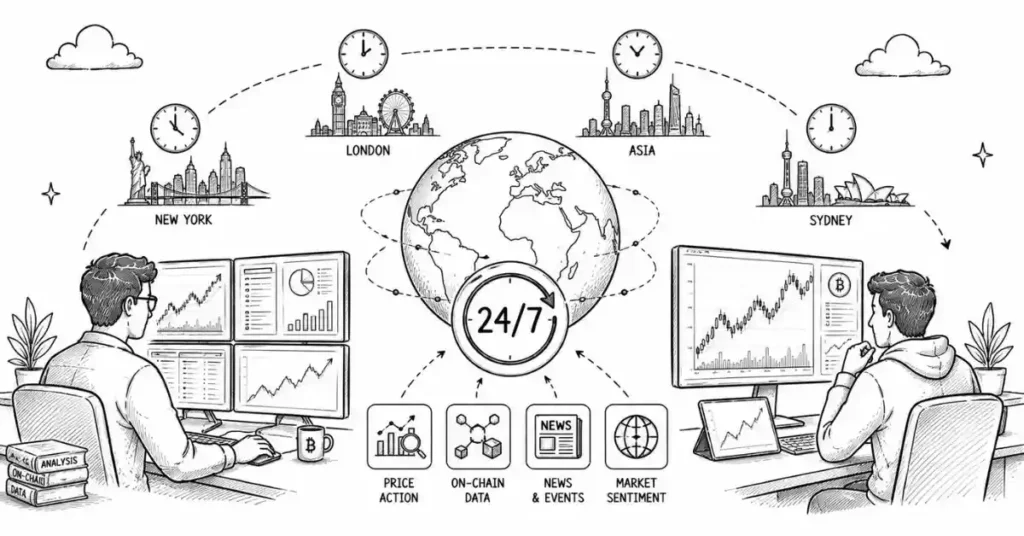
Traditional stock markets close at 3:30 PM and take weekends off. Cryptocurrency markets run 24 hours a day, 365 days a year, across every time zone simultaneously. For people fascinated by financial markets, economic analysis, and data interpretation, crypto analyst and trader careers offer something conventional finance simply cannot: a market that’s always moving, always generating data, and always creating opportunities for skilled analysts to extract insights worth real money.
Crypto analysts and traders in India earn impressive compensation. Research analysts earn average salaries of ₹23.6 lakhs at firms like Bitgenie, with top analysts earning significantly more. International crypto analyst positions pay $110,000–160,000 annually for senior roles. Even entry-level positions at Indian crypto exchanges offer ₹6–10 lakhs with rapid advancement opportunities as the market matures.Beyond compensation, this career path sits at the intersection of technology, economics, psychology, and mathematics—a genuinely rare combination that keeps work intellectually stimulating. No two days are identical when you’re analyzing protocols, tracking whale movements, modeling tokenomics, or executing trading strategies in markets that react instantly to global news.
This comprehensive guide covers every aspect of crypto analyst and trader career paths: different roles available, required skills, how to develop analytical capabilities, portfolio building, and breaking into the industry. Whether you’re a finance student looking for a modern alternative to traditional banking, a mathematics enthusiast drawn to quantitative analysis, or a trader wanting to transition from stocks to crypto, this guide shows you exactly how to build a career in cryptocurrency analysis.
The Crypto Analysis Landscape: Different Roles Explained
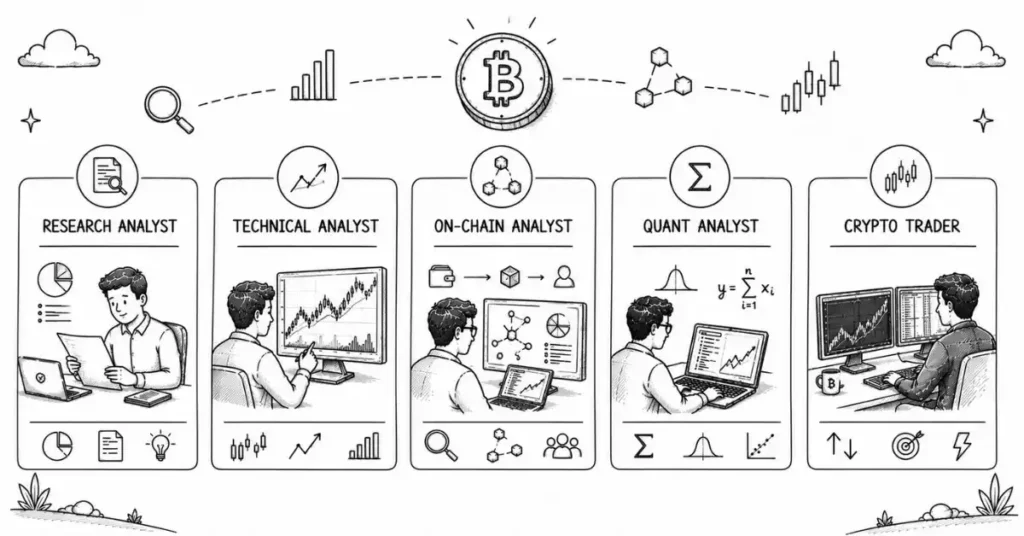
Research Analyst
What They Do:
Crypto research analysts study blockchain projects, evaluate their technology, assess team quality, analyze tokenomics, and produce investment research reports.
Think of them as the cryptocurrency equivalent of equity research analysts at banks except they evaluate entire blockchain ecosystems rather than just company financials.
Key Responsibilities:
- Evaluate new blockchain projects (Layer 1s, DeFi protocols, NFT platforms)
- Write investment memos and research reports
- Analyze protocol fundamentals: technology, team, tokenomics, competitive positioning
- Track portfolio of covered projects and update analysis
- Present findings to investment committees or publish for subscribers
- Attend conferences and meet protocol teams for qualitative assessment
Where They Work:
- Crypto venture capital firms evaluating investment opportunities
- Cryptocurrency exchanges providing research to traders
- Dedicated crypto research firms (Messari, Delphi Digital, The Block)
- Hedge funds with crypto mandates
- Traditional banks’ digital asset research desks
Salary (India): ₹8–24 lakhs depending on firm type and experience
International Remote: $60,000–140,000 for research analyst positions
Market Analyst (Technical Analyst)
What They Do:
Technical analysts study price charts, trading volumes, and market patterns to predict future price movements. Unlike fundamental analysts who ask “is this a good project?”, technical analysts ask “where is this price going next?”
Key Responsibilities:
- Analyze charts using technical indicators (RSI, MACD, Bollinger Bands, Fibonacci retracements)
- Identify support and resistance levels, trend patterns, chart formations
- Develop trading signals and market outlooks
- Create daily/weekly market commentary for clients or social media
- Build and test trading strategies based on technical signals
- Monitor correlations between crypto assets and traditional markets
Tools Used:
- TradingView (primary charting platform)
- CoinGlass (futures data, liquidation levels)
- Glassnode (on-chain data combined with market data)
- CryptoQuant (exchange flow data)
- Token Terminal (protocol revenue and metrics)
Salary (India): ₹7–16 lakhs at exchanges and trading firms
International: $80,000–145,000 for senior crypto market analysts
On-Chain Analyst
What They Do:
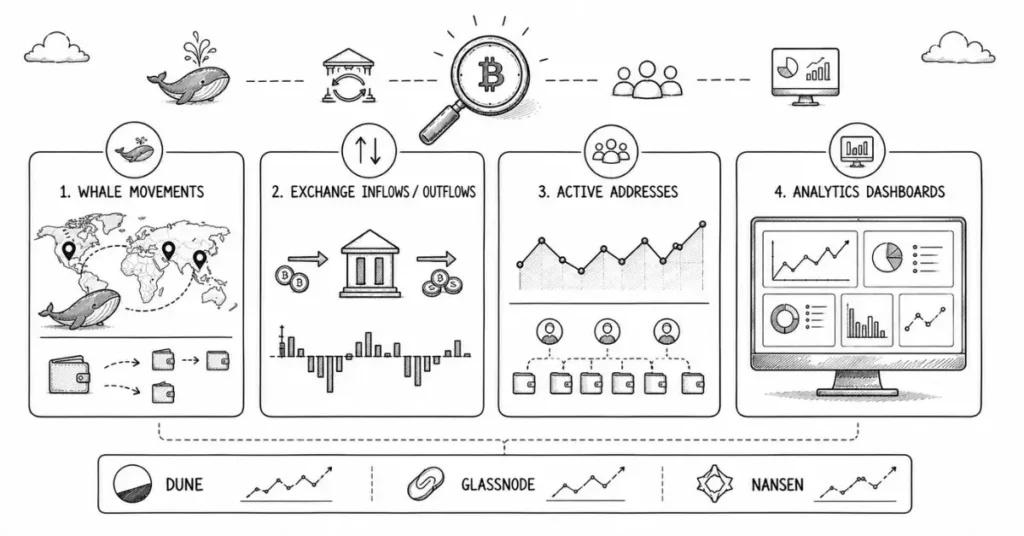
On-chain analysts read blockchain data directly—wallet movements, transaction patterns, exchange flows, miner behavior, whale activity—to derive insights invisible to traditional market analysts.
This is genuinely a new discipline that didn’t exist before blockchain. When you can see exactly which wallets hold tokens, when whales move funds, when exchanges see outflows (bullish—people withdrawing to hold long-term) vs. inflows (bearish—people depositing to sell), you have information advantages traditional markets never offer.
Key Responsibilities:
- Monitor whale wallet movements and institutional flows
- Track exchange inflow/outflow ratios as market sentiment indicators
- Analyze network health metrics: active addresses, transaction counts, fees
- Study miner/validator behavior for network security insights
- Build and maintain Dune Analytics dashboards for public or client use
- Write reports interpreting on-chain trends for non-technical audiences
Tools Used:
- Glassnode (premium on-chain data)
- Dune Analytics (custom SQL queries on blockchain data)
- Nansen (wallet labeling and smart money tracking)
- Arkham Intelligence (entity tracking)
- Etherscan/block explorers (raw data)
- Flipside Crypto (blockchain analytics)
Salary (India): ₹9–20 lakhs, reflecting rare and specialized skillset
International: $70,000–135,000
Quantitative Analyst (Quant)
What They Do:
Quant analysts develop mathematical models and trading algorithms. They combine financial theory, statistics, programming, and market knowledge to build systematic trading strategies that execute without emotional bias.
Key Responsibilities:
- Develop and backtest trading strategies using historical data
- Build statistical models for price prediction and risk management
- Program automated trading bots executing strategies
- Analyze strategy performance and optimize parameters
- Research market microstructure and inefficiencies
- Manage risk models and portfolio optimization
Required Technical Skills:
- Python programming (pandas, NumPy, scipy for data analysis)
- Statistical analysis and machine learning basics
- SQL for database queries
- Backtesting frameworks (Backtrader, Zipline, custom)
- Understanding of financial mathematics (statistics, probability, calculus)
- API integration for exchange data and execution
Salary (India): ₹12–25 lakhs at trading firms and hedge funds
International: $90,000–200,000+ with performance bonuses
Crypto Trader
What They Do:
Professional traders execute buy and sell decisions to generate profit from market movements. They work at hedge funds, trading firms, or crypto exchanges as market makers or proprietary traders.
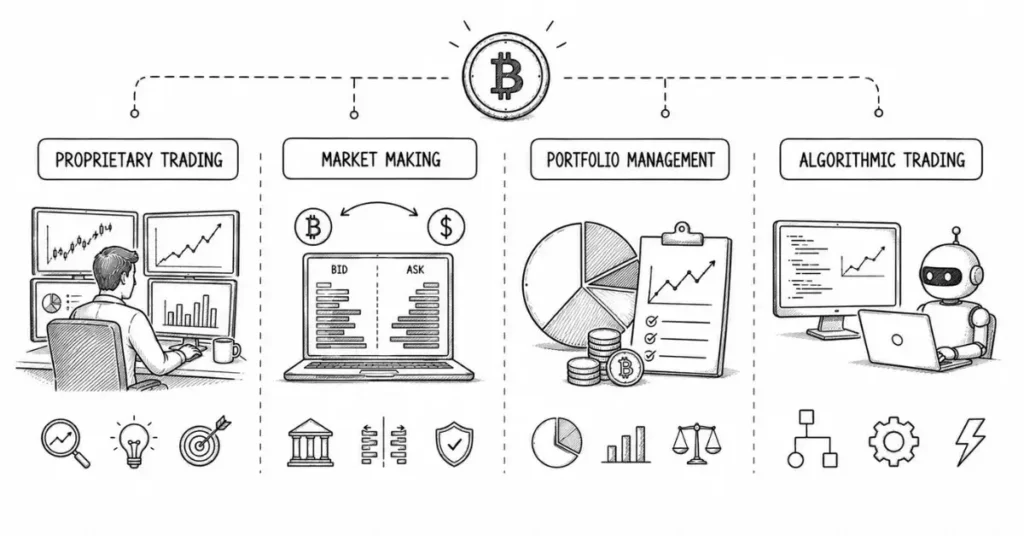
Types of Crypto Trading Careers:
Proprietary Trader: Trades firm’s capital using defined strategies. Compensated with base salary plus performance bonus.
Market Maker: Provides liquidity by simultaneously quoting buy and sell prices, earning the spread. Requires sophisticated technology and risk management.
Portfolio Manager: Manages investment portfolio for clients or internal fund. Makes asset allocation decisions across crypto assets.
Algorithmic Trader: Develops and runs automated trading systems, monitoring performance and making adjustments.
Salary (India): ₹10–30+ lakhs base, with performance bonuses potentially multiplying base compensation
International: $80,000–300,000+ with bonuses
Essential Skills for Crypto Analysts
Financial Analysis Foundation
Reading Financial Statements (Crypto Version):
Protocols don’t have P&L statements, but they have equivalents:
- Protocol Revenue: Fees collected by the protocol
- Token Emissions: New tokens created (inflation rate)
- Treasury Holdings: Protocol-controlled funds
- TVL (Total Value Locked): Assets deposited in protocol
- Active Users: Unique addresses interacting with protocol
Learn to evaluate these metrics using Token Terminal, DeFi Llama, and protocol documentation.
Tokenomics Analysis:
Understanding token economies is crucial:
- Supply schedule: How many tokens exist now and in the future?
- Vesting: When do team and investor tokens unlock (sell pressure)?
- Distribution: Who holds tokens? Is it concentrated?
- Value accrual: How does token capture protocol value?
- Governance: What can token holders actually control?
Competitive Analysis:
How does this protocol compare to alternatives?
- Market share analysis
- Feature differentiation
- Network effects and moats
- Team experience and execution track record
- Community strength
Technical Analysis Skills
Chart Reading:
- Candlestick patterns (doji, hammer, engulfing, etc.)
- Trend identification (higher highs/higher lows = uptrend)
- Support and resistance levels
- Volume analysis (confirming or questioning price moves)
- Moving averages (50-day, 200-day for trend context)
Technical Indicators:
- RSI (Relative Strength Index): Overbought/oversold conditions
- MACD (Moving Average Convergence Divergence): Momentum and trend changes
- Bollinger Bands: Volatility and price deviation from mean
- Fibonacci Retracement: Potential support/resistance levels
- Volume Profile: Price levels with high trading activity
Market Structure:
- Order book reading and interpretation
- Funding rates (futures market sentiment indicator)
- Open interest changes (positioning)
- Liquidation levels (where forced selling occurs)
On-Chain Analysis Skills
Key Metrics to Understand:
- SOPR (Spent Output Profit Ratio): Are holders selling at profit or loss?
- MVRV (Market Value to Realized Value): Is market overvalued vs. cost basis?
- NVT (Network Value to Transactions): Valuation relative to economic activity
- Exchange Netflow: Net movement onto/off exchanges
- Active Addresses: Network usage trends
- Hash Rate/Stake Rate: Network security trends
Data Sources:
- Glassnode: Most comprehensive on-chain data (premium subscription ~$29–799/month)
- Dune Analytics: Free, build custom queries using SQL
- Nansen: Wallet labeling for “smart money” tracking
- CryptoQuant: Exchange-focused on-chain data
Learning Path for On-Chain Analysis:
- Start with Glassnode Academy (free educational content)
- Practice building Dune dashboards using public data
- Follow on-chain analysts on Twitter for methodology examples
- Write public analysis pieces to practice explanation and get feedback
Building Your Analyst Portfolio
For Research Analysts
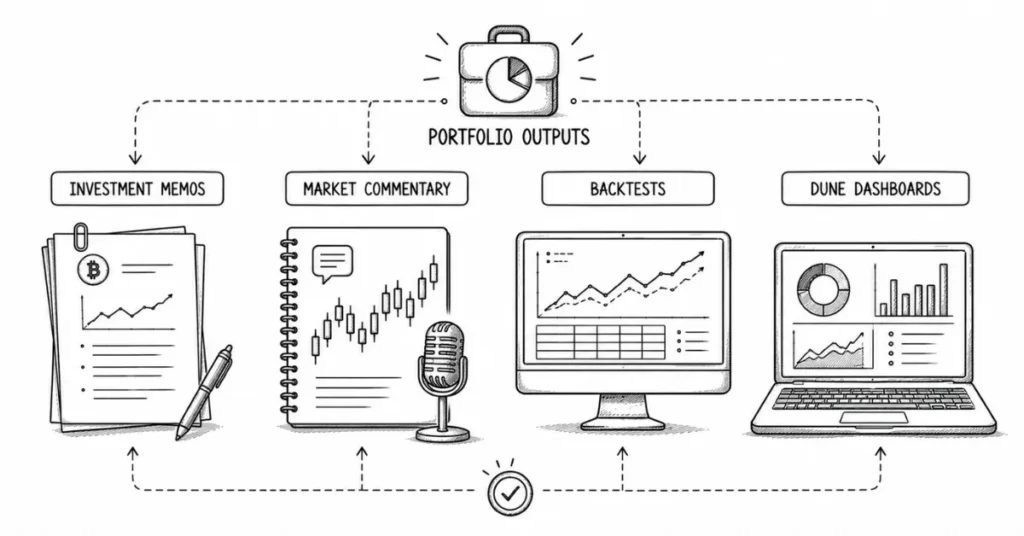
Investment Memo Portfolio:
Write 5–8 deep-dive analyses of blockchain projects:
Structure for Each Memo:
- Executive Summary (1 page)
- Protocol Overview (technology, use case, differentiators)
- Market Opportunity (TAM, current penetration)
- Tokenomics Analysis (supply, distribution, value accrual)
- Competitive Analysis (vs. 3–4 competitors)
- Team Assessment (background, track record)
- Risk Factors (technical, market, regulatory)
- Investment Thesis (bull/bear cases with price targets)
Publication: Post these on Mirror.xyz, Substack, or personal blog. Quality research attracts attention from employers and readers.
For Technical Analysts
Market Commentary Portfolio:
- Publish daily/weekly market commentary on Twitter for 3+ months
- Build a following by being consistently insightful (not just copying others)
- Maintain public track record of predictions vs. outcomes (honesty builds credibility)
- Create educational content explaining technical analysis concepts
Strategy Backtesting:
- Document 5–10 trading strategies with backtested performance
- Show methodology, assumptions, returns, drawdowns, and Sharpe ratios
- Demonstrate risk management discipline
For On-Chain Analysts
Dune Analytics Dashboards:
- Build 5–8 public dashboards tracking interesting metrics
- Examples: DEX volume market share, stablecoin distribution, NFT wash trading detection
- Share on Twitter with analytical commentary
- Quality dashboards get forked thousands of times—excellent visibility
Research Reports:
- Write reports interpreting on-chain trends
- Connect on-chain data to price implications
- Develop original thesis about market dynamics using on-chain evidence
Landing Your First Crypto Analyst Job
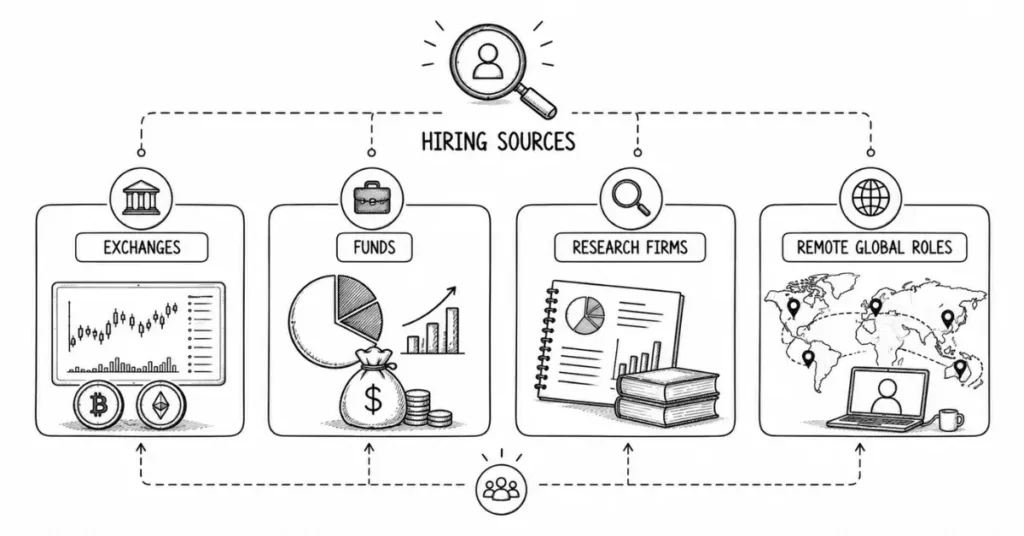
Where to Apply in India
Indian Crypto Exchanges:
- WazirX Research Team: Market analysis and research roles
- CoinDCX: Analytics and research department expanding rapidly
- CoinSwitch Kuber: Growing team needing market analysts
- Bitgenie: Active crypto research analyst hire, average salary ₹23.6 lakhs
Indian Crypto Funds and VCs:
- Multicoin Capital India operations
- Coinbase Ventures India presence
- Sequoia India crypto portfolio companies
- Elevation Capital crypto investments
Global Remote Opportunities:
Platforms actively hiring India-based analysts with competitive global salaries:beincrypto+1
- Messari (crypto intelligence firm)
- Delphi Digital (research and advisory)
- Nansen (blockchain analytics)
- CryptoQuant (on-chain data)
Interview Preparation for Analyst Roles:
Take-Home Projects: Most analyst interviews include a project:
- “Analyze this protocol and give us your investment thesis”
- “Build a dashboard tracking these on-chain metrics”
- “Write a market commentary for the past week”
Spend 8–12 hours doing exceptional work—this project often determines hiring decisions more than the interview itself.
Technical Assessment:
- Analyze provided chart and explain your interpretation
- Describe your process for evaluating a new blockchain project
- Walk through a model you’d build for protocol valuation
Market Knowledge:
- “What’s your current market thesis?”
- “Which protocols are you most interested in and why?”
- “How would you detect potential market manipulation using on-chain data?”
Challenges in Crypto Analysis Careers
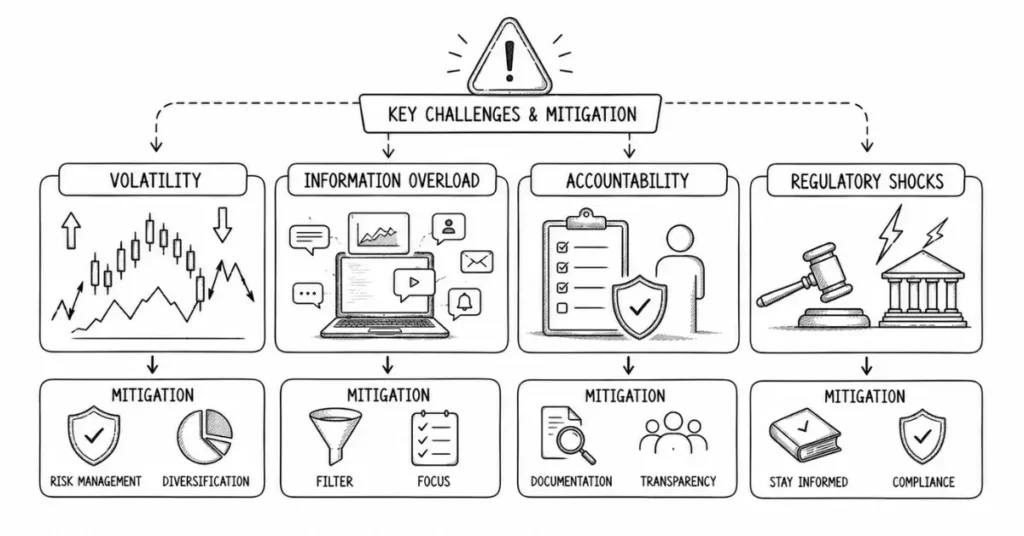
Challenge 1: Extreme Market Volatility
Crypto markets can drop 80%+ during bear markets. Research firms and exchanges cut staff during prolonged downturns.
Solution: Develop diversified skills applicable across market conditions. On-chain analysts and researchers add value even in bear markets by analyzing capitulation, accumulation, and protocol survival. Build savings during bull markets.
Challenge 2: Information Overload
Thousands of crypto assets, constant news flow, multiple blockchains—staying comprehensively informed is impossible.
Solution: Specialize. Become the best analyst for a specific sector (DeFi, Layer 1s, NFT markets, specific chains). Depth beats breadth for career differentiation.
Challenge 3: Prediction Accountability
Published analysis creates a track record. Wrong predictions are public. This accountability can be stressful.
Solution: Frame analysis probabilistically. “Based on current conditions, this scenario seems more likely” rather than “this will happen.” Focus on reasoning quality, not just outcomes. Being wrong thoughtfully is more respected than being right for undisclosed reasons.
Challenge 4: Regulatory News Shocks
Unexpected regulatory announcements (government banning crypto, exchange crackdowns) cause instant market crashes that no analysis could predict.
Solution: Always include regulatory risk in analysis. Recommend position sizing that accounts for binary risk events. Educate clients and readers about this risk class.
Conclusion : Analyzing the Most Fascinating Market in the World
Cryptocurrency markets combine the analytical richness of traditional financial markets with technological novelty, global accessibility, and on-chain transparency unavailable anywhere else. For analytically-minded professionals, this creates a uniquely stimulating career environment where skills compound rapidly and market feedback is immediate.
India’s growing crypto ecosystem needs skilled analysts to help exchange users, institutional investors, and protocol teams make better decisions. With research analyst salaries reaching ₹23.6 lakhs and international positions paying $110,000–160,000, the financial rewards match the intellectual challenges.
Start building your analyst career today. Create a Dune Analytics account and explore blockchain data. Write your first protocol analysis on Medium. Set up TradingView and study three months of Bitcoin charts. Build the analytical habit that separates successful analysts from spectators—and the crypto market will reward your discipline generously.